
Bihar assembly elections: 56 days and counting – where is Rahul Gandhi?

NEW DELHI: When Rahul Gandhi set out under Bihar’s unforgiving August sun for his ‘Voter Adhikar Yatra’, it was a test of whether he could still find takers in a land where the Congress survives mostly as a fading afterimage. For 16 days, his campaign carved a noisy trail through dusty highways and crowded colonies. Today, however, as Bihar’s election heat rises and the state readies for a two-phase assembly poll, the buzz is dominated by Prime Minister Narendra Modi’s fiery speeches, Amit Shah’s rallies, Tejashwi Yadav’s roadshows and Prashant Kishor’s groundwork. Amid all this, one voice remains missing – Rahul Gandhi. The Congress leaders’s last appearance in Bihar was nearly two months ago, when he wrapped up his yatra at Patna’s Gandhi Maidan on September 1. The campaign was pitched as a moral crusade to “protect the vote” – an attempt to awaken Bihar’s electorate against what he called ‘vote chori’ (theft of votes) by the ruling NDA. Over sixteen days, he covered 1,300 km across 25 districts and 110 assembly constituencies – riding motorbikes, donning ‘gamcha’ for local appeal, visiting makhana farmers – often joined by allies like Tejashwi Yadav, Hemant Soren and others. Rahul Gandhi's Voter Adhikar Yatra. But two months later, the narrative has shifted. Rahul, who had briefly stirred Congress’s dormant base through his yatra, seems to have lost the momentum. And instead of leading the charge from the front, its leader is missing in action. When the Mahagathbandhan announced Tejashwi Yadav as its chief ministerial candidate on October 23, the press conference banner carried only one face – Tejashwi’s. Rahul was missing, both on stage and in spirit. Within the alliance, the unspoken verdict seemed clear: he may be the face of opposition on the national level, but he was no longer its in-charge in Bihar. Though there has been no official seat-sharing arrangement, RJD is contesting 143 of the 243 seats of Bihar and Congress is contesting 61 seats. In the 2020 assembly elections, Congress had the worst strike rate in the opposition camp despite Tejashwi’s electrifying campaign that led RJD to emerge as the largest single party. Congress had contested 70 seats, the most in the opposition alliance after the RJD (144), and could win only 19. Pizza breaks and policy talk abroad Since his Patna rally, Rahul Gandhi has appeared in public only five times – none of them in Bihar. In late September, he was spotted at a pizza outlet in Gurugram. In early October, he travelled to Colombia, where he declared that “India’s democratic system is under attack from all sides.” During a talk at the University of Chile, he lamented that “free and scientific thinking” was under “tremendous attack” in India. On October 17, he visited singer Zubeen Garg’s village in Assam to pay tributes. Three days later, he was seen at a sweet shop in Old Delhi, rolling laddoos for the cameras. Congress general secretary KC Venugopal, however, maintained that the party’s “full-throttle campaign” will begin only after the Chhath festival. Rahul Gandhi, he said, will tour Bihar on October 29 and 30, followed by Priyanka Gandhi Vadra and party president Mallikarjun Kharge. A joint rally with Tejashwi is planned in Muzaffarpur and Darbhanga. But will this late entry work? For the past month, while PM Modi, Amit Shah and JP Nadda have flooded Bihar with rallies and Tejashwi has built emotional momentum across districts, Congress has remained in political limbo. Rahul’s absence has left party candidates and workers scrambling for visibility and credibility on the ground. His re-entry, barely a week before Phase 1 polling on November 6, feels less like a strategy and more like irrelevance. For now, Congress is trying to make up for his absence by circulating old clips from the yatra, calling Rahul Gandhi the ‘Jan Nayak’ — the “hero of the people.” — INCIndia (@INCIndia) The crisis within the camp Adding to the drift is Congress’s own internal turmoil in Bihar. Ticket distribution had triggered open rebellion, with state leaders accusing AICC in-charge Krishna Allavaru of corruption and favouritism. Disgruntled members were seen protesting at the party headquarters. Their slogan, “Ticket chor, gaddi chhodd,” was an ironic echo of Rahul’s own “Vote chor, gaddi chhodd” taunt at the NDA government. The dissent underscores the deep disconnect between the central leadership and the local cadre, even at the last leg of the election campaign. In recent days, senior leaders like Ashok Gehlot and Bhupesh Baghel were parachuted in to manage the fallout, both within the party and with allies like RJD. Hemant Soren, who walked with Rahul in Bihar in a show of strength, eventually walked out and decided not to contest elections. But through it all, Rahul has remained absent. BJP’s blitz Meanwhile, BJP has turned Bihar into a campaign battlefield. Prime Minister Modi has led from the front with rallies in Samastipur and Begusarai, urging voters to deliver a “record-breaking victory.” Home minister Amit Shah has addressed meetings in Siwan and Buxar, while BJP president JP Nadda has courted intellectuals in Vaishali. Uttar Pradesh chief minister Yogi Adityanath has been roped in to hold over 20 rallies. The optics are unmistakable, a full-spectrum show of power and coordination. Rahul’s partner, Tejashwi Yadav, has also been a relentless presence on the ground, addressing multiple rallies a day. When asked about Rahul’s absence, he sidesteps diplomatically, but the contract remains too stark to miss. The Chhath countdown Even after literally no presence till now, Congress insists that its campaign will finally shift gears after Chhath Puja (October 27). The party’s manifesto, focusing on social justice and women’s welfare, is scheduled for release on October 28. He is scheduled to address his first political rally along with Tejashwi Yadav on October 29. The duo will hold a joint rally in Muzaffarpur and Darbhanga. His late entry may well be planned. But ask any political pundit and they will tell you that in any election, presence on the ground matters the most, and
Stalin reiterates commitment to Cong alliance, talks about bond with Rahul
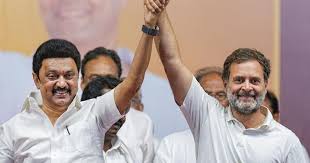
Chennai: Chief minister M K Stalin said on Monday that his bond with Congress leader Rahul Gandhi transcends politics. The alliance between DMK and Congress was for Tamil Nadu’s growth and India’s unity, he said. “DMK and Congress may have travelled different paths in the past. But today, we are travelling together, with the same ideals, for the welfare of the nation, for the growth of Tamil Nadu, and above all, for the unity of India. That is what makes this alliance significant,” he said speaking at the wedding ceremony of former Congress MLA Chokkar’s grandson in Chennai. Stalin’s remarks come amid growing demand among Congress functionaries for more seats in 2026 assembly elections. Stalin said his bond with Rahul Gandhi was defined by national welfare rather than individual interest. “I cannot express in words the affection he showers on me. When I speak about or refer to other political leaders, I have never used the word brother. But when I refer to Rahul Gandhi, I always call him my dear brother,” Stalin said. Stalin said it was because Rahul always addresses him as ‘Anna, as elder brother.’ Whether on phone calls or when they meet in person, Rahul greets him as ‘my dear brother,’ he said. “I am saying this because the bond between us goes far beyond political friendship; it has evolved into a deep ideological relationship that has today emerged as the united voice of India,” he said. Stalin said he expected the same spirit — that the welfare of the nation must come before personal interests — from everyone. “The friendship between the two movements, built on mutual understanding and shared ideals, will surely protect the future of this country. That is certain,” he said, as a reiteration that the alliance would not be disturbed by voices of discontent in Congress. Courtesy : TOI Note: This news is originally published on https:/timesofindia.com/bha and is used purely for non-profit/non-commercial purposes, especially human rights
Dalit members protest ‘police inaction’ after assault on local leader in Roorkee

ROORKEE: Dalit community members gheraoed Roorkee police station on Sunday, protesting against the alleged police inaction in arresting those accused of assaulting a local leader from Shankerpuri in full public view on Friday. The injured Dalit leader was initially admitted to a local hospital, but due to severe head injuries, he was later shifted to a facility in Dehradun. The victim, Yogesh Kumar, 40, was attacked with sticks and iron rods by over 10 men when he was returning to his village from Haridwar in a car with four friends. The attackers allegedly dragged him out of his vehicle and brutally beat him. Reason behind the attack was personal enmity, locals said. Police, meanwhile, said multiple teams have been deployed to trace the culprits. An FIR was registered on the complaint of Kumar under BNS sections related to rioting and assault. “We have arrested two accused and have also seized the vehicle used in the crime. The remaining accused will be arrested soon,” said SP (rural) SC Suyal. Members of the victim’s group staged a protest at the police station on Sunday, accusing the police of inaction. “Yogesh Kumar was attacked. His life remains in danger as the perpetrators are roaming free. Police should have arrested all of them by now. We have given a 48-hour ultimatum; if all arrests are not made, we will hold a massive protest,” said a protester. Earlier this week, Yogesh and his associates reportedly clashed with the accused over a car parking dispute. Enraged by that incident and allegedly seeking revenge, the accused are said to have carried out the attack. Members of the victim’s group staged a protest at the police station on Sunday, accusing the police of inaction. “Yogesh Kumar was attacked with an intent to kill. His life remains in danger as the accused are still roaming free. The police should have arrested all of them by now. We have given a 48-hour ultimatum; if all arrests are not made, we will hold a massive protest,” said Lokesh Katariya. Police, however, said that multiple teams have been deployed to trace the culprits and that they are closing in on all the accused. “We have arrested two accused in the case and have also recovered the vehicle used in the crime. The remaining accused will be arrested soon,” said SP (rural) SC Suyal. Courtesy : TOI Note: This news is originally published on https:/timesofindia.com/bha and is used purely for non-profit/non-commercial purposes, especially human rights
A dispute over goat grazing led to an attack on a Dalit family: Members of a specific community assaulted them in Karma village, Basti.
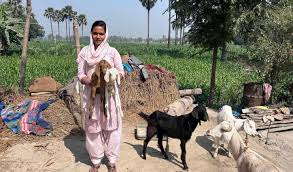
A Dalit family was attacked by members of a specific community in a dispute over goat grazing near Karma village, in the Gaur police station area. The incident occurred when the family was returning from a temple visit. According to reports, an argument broke out between the two parties regarding clearing the path while grazing goats. This altercation escalated into a physical altercation. Police took immediate action on the complaint of the victim’s family. Superintendent of Police (SP) Abhinandan took cognizance of the matter upon receiving the information. On the SP’s instructions, a case was immediately registered against the accused and orders were issued for their arrest. Upendra Kumar Courtesy: Hindi News
Madhya Pradesh shocker: Dalit man beaten to death over petty dispute; tension erupts between 2 villages

BHOPAL: A 35-year-old Dalit man was allegedly beaten to death by neighbours in Bhind district on Saturday evening following an altercation over petty monetary and other disputes, sparking tension between two nearby villages. The incident occurred around 6:30 pm within Daboh police station area, approximately 65 km from the district headquarters. The deceased, identified as Rudra Pratap Singh Jatav, was attacked with sticks by a group of men from the neighbouring village. Police stated that the deceased and the accused had an old enmity and had a history of minor disputes and verbal altercations. Additional SP Bhind, Sanjeev Kumar Pathak, told TOI, “They had fights in the past, too. The deceased lived in Raipura village while the accused lived in nearby Raniya village. Primary investigation has revealed that the accused, who are from the Kaurav community, have a shop in the village, and due to some petty monetary transactions, there were small disputes between the deceased and the accused. It escalated into a big fight on Saturday evening around 6:30 pm, leading to the murder,” Jatav was initially rushed to a local hospital and later referred to Gwalior but he succumbed to his injuries en route. Following Jatav’s death, tension escalated as the victim’s relatives and villagers vandalised a house belonging to one of the accused and set ablaze parked vehicles. Cops said a search is on for accused and the situation was brought under control. “No one from the accused side has so far complained of any vandalism,” he said. Courtesy : TOI Note: This news is originally published on https:/timesofindia.com/bha and is used purely for non-profit/non-commercial purposes, especially human rights
Dalit youth assaulted during religious festivals in Chhattisgarh, police fail to invoke SC/ST Act bookmark_border text_fields
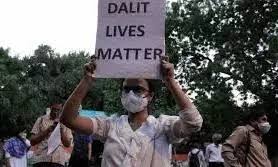
The omission is significant because the Atrocity Act ensures faster trials, special courts, and victim protection, unlike general charges under the IPC. In Chhattisgarh’s Bilaspur constituency, represented by BJP MP and Union Minister Tokhan Sahu, two brutal caste-based assaults on Dalit youth have sparked outrage. The attacks, which took place on consecutive nights during Hindu religious festivals, have once again highlighted how public religious spaces can become sites of caste violence The incidents occurred on October 19 and 20, 2025, in Mahmand and Bharda villages. Both victims — one a minor — sustained serious injuries. On October 19, 16-year-old Ashutosh Barle, a tenth-grade student at Massorie Shisu Mandir Bhawan, was home for a short vacation when he decided to attend a Kali Mata Puja celebration in his village. Drawn by the music and lights, he went to the event where a DJ had been set up behind the Panchayat Bhawan. There, the accused, identified as Pradeep Maharaj, noticed him and began hurling casteist slurs. He mocked the boy’s presence at the festival before physically attacking him. Soon, his friends — Deepeshwar, Rahul, and others — joined in. They verbally abused Ashutosh and beat him with “fists and rods.” Ashutosh fainted on the spot. A villager informed his mother, who rushed to bring him home. However, the attackers followed and began pelting stones at their house. Fearing for their safety, Sarita locked herself and her younger children inside. The following night, October 20, a similar attack took place in Bharda village during the Laxmi Utsav celebration. Lokesh Kumar Jangde, a 20-year-old Dalit farmer and part-time driver, was watching the program when Amit Yadav, from the dominant caste, confronted him and questioned his presence at the event. Amit hurled abusive remarks about Lokesh’s mother and sister. When Lokesh objected, he was dragged to the edge of the pandal and beaten by Amit, Roshan Yadav, Shiva Yadav, and others. Bharda village has only one Scheduled Caste family, while the rest belong to OBC and general castes. Though an FIR was filed, the Yadav family has allegedly been pressuring Lokesh to withdraw his complaint. Despite the clear caste-based nature of both attacks, neither FIR includes charges under the Scheduled Castes and Scheduled Tribes (Prevention of Atrocities) Act, 1989. The omission is significant because the Atrocity Act ensures faster trials, special courts, and victim protection, unlike general charges under the IPC. Activist Barman alleged that officers at the Torwa Police Station mishandled the complaint. He said they even abused the victim’s family and accused the minor of attending a “higher-caste festive function,” an act he described as blatant victimblaming. Barman added that “In Ashutosh Barle’s case, the POSCO Act is also missing.” He said he hopes to convince the police to apply the correct provisions in both cases. The attacks have revived memories of Chhattisgarh’s long struggle against caste discrimination. The state was once home to Guru Ghasidas, the 19th-century saint who founded the Satnami sect to promote equality and social reform. Many Dalit communities, especially the Chamar community, follow his teachings today. The back-to-back assaults in Mahmand and Bharda reveal how caste hostility continues to define rural Chhattisgarh’s social fabric — and how systemic failures in law enforcement leave Dalit victims without the justice the Constitution promises them. Courtesy : Madhyamam Note: This news is originally published on https:/madhyamam.com/bha and is used purely for non-profit/non-commercial purposes, especially human rights
Yrs of rejection, bias took trans teacher Jane Kaushik to SC. She finally got justice—‘it’s about dignity’
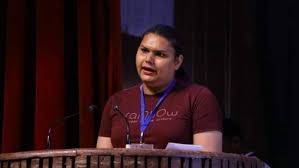
Jane faced discrimination while looking for employment in schools, and even from institutions meant to protect her rights. She now calls for systemic change. New Delhi: After years of facing rejection and prejudice for being a transgender, Jane Kaushik, a trained teacher, finally found justice in the Supreme Court, which held both private schools and state authorities accountable for failing to protect her rights. The court on 17 October delivered a landmark judgment addressing systemic discrimination against transgender persons in employment. The two-judge bench of Justices J.B. Pardiwala and R. Mahadevan criticised both central and state governments for failing to implement the Transgender Persons (Protection of Rights) Act, 2019, and the 2020 Rules, despite these laws being in force for several years. It noted that the absence of functional grievance redressal mechanisms, welfare boards, and complaint officers had rendered legal protections for transgender individuals largely symbolic. At the heart of the case is Jane Kaushik who faced discrimination in two private schools solely because of her gender identity. Her perseverance for justice culminated in the Supreme Court awarding her a total compensation of Rs 2 lakh: Rs 50,000 each from the Centre, the states of Uttar Pradesh and Gujarat, and Rs 50,000 from a private school in Gujarat. Speaking exclusively to ThePrint, Jane recounted her first experience of discrimination at a school in Uttar Pradesh. “One of the students discovered my gender identity, and the principal also found out. Immediately, I was terminated, not allowed to take classes that day, and asked to vacate the hostel even though there was no train available to Delhi. I had to take a late-night bus, traveling alone, which was terrifying,” she said. Despite being from Delhi and holding two Master’s degrees, one in political science and another in English, along with a Bachelor of Education degree, Jane said she faced repeated rejections while looking for a teaching job. “When I mentioned my gender identity while applying to schools in Delhi, there was silence. Some HR persons even told me that principals were not interested in entertaining my CV once they got to know I am a transgender,” she added. Jane’s experience in Gujarat in 2023 further highlighted deep-seated bias. She had been selected for a teaching position but was refused employment once the school became aware of her transgender identity. “They literally scolded me over the phone, asking whether I would negatively influence children. Instead of giving me a job, they suggested I should work in a big city area,” she told ThePrint. The recurrent bias left Jane traumatised, affecting her mental health. She continues to seek psychiatric help for depression and anxiety resulting from years of discrimination, she said. Institutional failure Before approaching the Supreme Court, Jane had sought help from key rights institutions, including the National Commission for Women, the National Human Rights Commission and the National Council for Transgender Persons. She said their committees often overlooked her testimony and were influenced by the schools. “A committee set up by the National Commission for Women didn’t even ask me about the discrimination I faced. They relied on statements from the school instead,” she asserted. Even the police failed to offer meaningful support. “I could have called the police when I was terminated, but as a transgender woman, I feared insensitivity or abuse. It was only through guidance from the Delhi Commission for Women that my complaint was registered (against the school) in Lakhimpur Kheri, UP,” she said. While the Supreme Court’s order of Rs 2 lakh compensation is a recognition of her ordeal, Jane said the amount does not fully reflect the financial and emotional losses she suffered. “I stayed at home for six-seven months with a salary of Rs 45,000 per month. This amount does not compensate for my mental trauma and the impact on my career,” she told ThePrint. Jane also highlighted a broader issue while urging for systemic change. “Even with NALSA 2014 (SC judgement recognising transgender people as ‘third gender’), Transgender Persons Act (2019), and the 2020 Rules, implementation is lacking. Without political and bureaucratic will, such discrimination continues. Transgender persons are often treated as second-class citizens,” she said. “It’s not just about money. It’s about visibility, dignity, and representation in schools, public offices and universities. Until the Supreme Court directions and laws are fully implemented, nothing will change.” Ruchi Bhattar (Edited by Nida Fatima Siddiqui) Courtesy : The Print Note: This news is originally published on https:/theprint.com/bha and is used purely for non-profit/non-commercial purposes, especially human rights
CU plans separate hostel for trans applicants
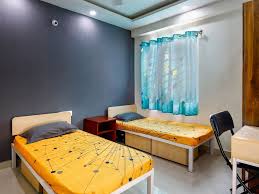
Kolkata: In a recent notification for hostel allocation, Calcutta University has asked transgender applicants to indicate their gender on the application form. The university uploaded a set of rules and regulations where it was mentioned, “Transgender students, please specify in the form by mentioning ‘TRANSGENDER’ on the right side of the form.” Officials said the university is planning separate arrangements for transgender students. Sources said the university is planning to conduct repairs across several hostels that are in poor condition. An official said, “There is a section in the admission portal for transgender students to specify their gender, and, as far as I can remember, there are some transgender students in some departments. If transgender students take admission, they may need hostel accommodation if they live far from campus.” Another official said, “We are a student-friendly university and keen to provide the most comfortable environment for them. We have girls’ hostels and boys’ hostels, but transgender students need separate arrangements, including gender-neutral washroom facilities.” Transgender activist Ranjita Sinha said: “This is a good move but we are living in a society where there is still stigma against trans people. So, the university needs to sensitise other boarders, and, in the name of making separate arrangements, trans students should not be isolated. The university should check all these matters before making separate hostel facilities.” Courtesy : TOI Note: This news is originally published on https:/timesofindia.com/bha and is used purely for non-profit/non-commercial purposes, especially human rights
Bihar polls: Congress to launch campaign after Chhath Puja; set to address ticket distribution allegations

NEW DELHI: Congress will launch its Bihar election campaign immediately after Chhath Puja, intensifying efforts for the INDIA bloc with Rahul Gandhi leading the charge on October 29 and 30. Senior leaders Priyanka Gandhi and Congress president Mallikarjun Kharge will also tour key constituencies across the state. Speaking to reporters Sunday, senior party leader KC Venugopal emphasised the momentum gained from the August Voter Adhikar Yatra, stating, “Our campaign will kick off right after Chhath Puja, with Rahul Gandhi’s visit on October 29 and 30. Priyanka Gandhi Vadra and Mallikarjun Kharge will also be actively touring Bihar to connect with voters.” The party is focused on fine-tuning campaign strategies and resolving internal challenges, particularly addressing allegations from some workers about ticket distribution irregularities. Former Rajasthan chief minister Ashok Gehlot acknowledged this issue but urged restraint, saying, “In every election, many aspire for tickets and get disappointed when those hopes aren’t fulfilled. I appeal to all party workers to hold back grievances until the elections conclude,” as quoted by PTI. Gehlot underscored the significance of the Bihar polls, calling them a “crucial contest” under national scrutiny. “The entire nation is watching Bihar, eager to see the arrogant BJP-led NDA defeated. This is a historic opportunity for us, and party workers must realize the pivotal role they play,” he said. The Election Commission has scheduled the Bihar Assembly elections across 243 seats in two phases — November 6 and November 11 — with vote counting slated for November 14, setting the stage for a fiercely contested battle. Courtesy : TOI Note: This news is originally published on https:/timesofindia.com/bha and is used purely for non-profit/non-commercial purposes, especially human rights
Shilpi Neha Tirkey Appointed as Observer by All India Adivasi Congress for Bihar Elections
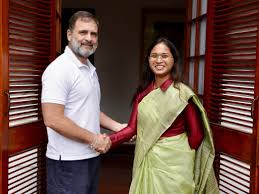
Ranchi: State agriculture minister and Congress leader Shilpi Neha Tirkey was appointed observer on behalf of the All India Adivasi Congress to oversee and support the election campaign during the Bihar assembly election. In a letter issued to Tirkey, the chairman of the All India Adivasi Congress, Dr Vikrant Bhuria, on Sunday, appealed to her to make all possible efforts to reach out to every tribal household and group before the election as an observer to strengthen the party’s base. “Adivasi Congress is expecting your support and dedication in strengthening the hands of Congress president, Mallikarjun Kharge, UPA chairperson Sonia Gandhi, MP and Leader of the Opposition (Lok Sabha), Rahul Gandhi,” the letter stated. After assuming the charge, Tirkey expressed her gratitude to the Congress high command for entrusting her with the responsibility. “I will devote all my efforts to ensure that every vote of the Adivasi community in the Bihar Assembly elections goes in favour of the INDIA bloc. This time, winds of change are blowing in Bihar, and a coalition govt is going to be formed in Bihar with the support of the Congress,” Tirkey said. BJP MP from Jharkhand, Deepak Prakash, who is the co-incharge of Bihar, said that there is no doubt that the NDA alliance will come back to power in Bihar. The party’s top leaders from Jharkhand will carry out an extensive campaign in Bihar in favour of the NDA alliance candidates there after the Chhatch festival is over. “You can say there is an ongoing wave in favour of the NDA alliance in Bihar. The Modi-Nitish pro-poor welfare schemes will turn out to be successful,” he said. People will go with the development that has happened in the state, especially development in the field of education, roads, electricity, and water, to mention a few, he said. “When I was a student, we waited for four to six years to sit for the graduation examination. The exams used to get postponed. People used to get older and could not go for higher education or sit for various entrance exams. All those days are gone,” Deepak Prakash explained. Students used to go out of the state. Mostly, they used to go to Delhi. Now that has stopped. The same thing has happened in the case of businessmen, he claimed. The BJP in Jharkhand will be issuing a list of candidates who will campaign in Bihar soon. Courtesy : TOI Note: This news is originally published on https:/timesofindia.com/bha and is used purely for non-profit/non-commercial purposes, especially human rights