
EC hits back at Rahul, asks why didn’t you file appeal
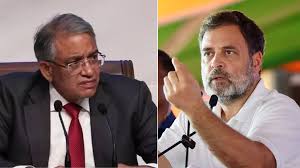
NEW DELHI: The Election Commission on Wednesday asked Rahul Gandhi why his party had not filed a single appeal after the final electoral roll used for Haryana assembly polls in 2024, was published. Reacting to his fresh allegations of ‘vote chori’ in Haryana – timed a day before the first phase of polling in Bihar and the day after enumeration started for Phase 2 of SIR – EC suggested the evidence of roll anomalies with respect to Rai and Hodal assembly constituencies in Haryana, may be placed before HC since it is hearing election petitions (EPs) challenging the result in both ACs. Overall, just 23 EPs were filed in Haryana after the poll. The EC official said that while Rahul, on the one hand, opposes SIR – aimed at purifying the electoral roll by removing voters who are dead, enrolled at two or more places, permanently shifted or non-citizens – “he keeps giving presentations to bring out impurities in the past rolls”. “It is clear he has warmed up to SIR after having criticised it in the beginning.” Pointing out the lack of any objections on the draft roll by its booth-level agents in Bihar or any appeals before the DM after publication of final rolls in Haryana and Bihar, EC said Rahul and Congress tend to raise irregularities after failing to avail of the multiple opportunities available under the law and relevant rules to have them corrected. “Besides, what were the polling agents of Congress doing? They are supposed to object if the elector who has already voted turns up again, or where his identity is under doubt,” said an EC official. The official also wondered how Rahul had, given the secret ballot, assumed duplicate voters had voted for BJP. On several voters being shown at the same address, EC sources said ‘house number zero’ is a generic description used where the house number has not been allotted by the panchayat or municipality. Haryana CEO said the draft roll and final roll were shared with all parties including the Congress. Over 4 lakh claims and objections were received against the draft roll but not a single appeal was filed with the DM after the final rolls were out. Courtesy : TOI Note: This news is originally published on https:/timesofindia.com/bha and is used purely for non-profit/non-commercial purposes, especially human rights
Haryana polls ‘stolen’, 25 lakh voters were fake in elections: Rahul Gandhi
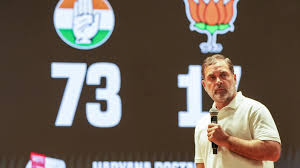
NEW DELHI: Alleging that the 2024 Haryana assembly elections were stolen through manipulation of voters list by Election Commission in collusion with BJP, leader of opposition in Lok Sabha Rahul Gandhi on Wednesday presented a deep dive on electoral rolls to claim that around 25 lakh fake voters, or 12.5% of the total 2 crore, participated in the state polls that Congress lost by 22,000 votes on eight seats and by 1.18 lakh votes in all. He also alleged, with a “few testimonies”, that 3.5 lakh voters were purged from Haryana’s electoral list and that most of them were Congress sympathisers, going on to predict that similar irregularities will take place in the Bihar polls. Accusing EC, BJP and PM Modi of destroying the foundations of India’s democracy, Rahul urged Gen Z and the youth to understand the nature of election theft – and that BJP govts, including at the Centre, are not “legitimate” govts and it is Congress that had won the elections – and “restore our democracy through truth and non-violence”. Calling his ‘vote chori’ expose “H-files” in place of the much-awaited “H-bomb”, Rahul said the Haryana rolls had 19 lakh bulk voters, 5.21 lakh duplicate voters and 93,000 with invalid addresses. The misuse of Forms 6 and 7 would have likely added another 7-10 lakh fake voters but no proof could be provided for the same because EC has since the last press conference blocked access to the data on voter addition and deletion, he said. Citing “documents”, Rahul created a flutter by showing a photograph of a registered voter that he said was actually of a Brazilian model, which was used to cast votes 22 times in 10 different booths under different names like Sweety, Saraswati, Seema and Vimla. He also came up with voter names which, he claimed, appeared 223 and 143 times in the rolls. “Why so many fake multiple voters? This is to create space so that fake voters can cast votes (in those places),” he explained. “With this kind of corrupted voters’ list, there is no chance of a fair election,” Rahul said. Similar vote theft had occurred in Chhattisgarh, Madhya Pradesh and Maharashtra elections. In a significant statement, he said a similar presentation can be done for Bihar once data for polls in the state is out – a few persons from Bihar gave “testimonies” at his presentation that they were removed from the voters list and not added despite efforts. Rahul claimed anomalies are more difficult to spot because the voter lists are provided to parties on the last day. With poll outcomes hinging on a margin as little as 2-3%, there can be no fair election if 8-12% of the voters are fake, he said. Courtesy : TOI Note: This news is originally published on https:/timesofindia.com/bha and is used purely for non-profit/non-commercial purposes, especially human rights
Telangana: Portfolio shift triggers Dalit anger as Azharuddin gets Minorities Welfare

The Congress government’s decision to reassign the Minorities Welfare portfolio from Dalit minister Adluri Laxman Kumar to Mohammed Azharuddin has triggered criticism and raised concerns over representation. The reshuffle has sparked speculation and discontent within party circles and beyond. Hyderabad: The Congress government’s approach towards the Dalit community came under scrutiny on Tuesday after Scheduled Castes Welfare Minister Adluri Laxman Kumar was stripped of the Minorities Welfare portfolio, which was handed over to Mohammed Azharuddin. Laxman Kumar, inducted into the cabinet on June 8 this year, was allocated SC, ST and Minorities Welfare portfolios. Azharuddin was offered a cabinet berth on October 31 and, after three days of suspense, he was allotted Minorities Welfare, held by Laxman Kumar, and the Public Enterprises portfolio held by Chief Minister A Revanth Reddy. Courtesy : Telangana Today Note: This news is originally published on https:/telanganatoday.com/bha and is used purely for non-profit/non-commercial purposes, especially human rights
Shimla: Teachers Booked for Assaulting Dalit Boy, Putting Scorpion in His Pants

Three teachers, including the headmaster of a government school in Shimla’s Rohru sub-division, face charges under the SC/ST Act and Juvenile Justice Act for allegedly torturing an eight-year-old Dalit student Three teachers of a government school in Shimla, including the headmaster, have been booked for repeatedly assaulting an eight-year-old Dalit boy and placing a scorpion in his pants, police said on Sunday. In a police complaint, the father of the boy – a Class 1 student of Government Primary School at Khaddapani area in Rohru sub-division of Shimla district – accused headmaster Devendra and teachers Babu Ram and Kritika Thakur of frequently physically assaulting his son for almost a year.The complainant said that continuous beating caused the child’s ear to bleed and damaged his eardrum. He also said the teachers took his son to the school’s toilet, where they placed a scorpion in his pants. Following the complaint, police have registered a case under Sections 127(2) (wrongful confinement), 115(2) (voluntarily causing hurt), 351(2) (criminal intimidation), 3(5) (criminal acts in furtherance of a common intent) of the Bharatiya Nyaya Sanhita and for cruelty towards a child under the Juvenile Justice Act. The teachers have also been charged under sections of the SC/ST (Prevention of Atrocities) Act pertaining to forcibly removing clothes or similar acts derogatory to human dignity, and crimes against a member of the Scheduled Caste or Scheduled Tribe. A communication is being sent to seniors for directions on whether the investigation is to be conducted by a gazetted officer, police said.According to the father, the teachers intimidated the boy, telling him that if he complained at home, they would have him arrested. He said that on October 30, the headmaster allegedly threatened to expel the child from the school. He said the complainant’s family would face severe consequences if the matter was made public and threatened them by saying, “We will burn you.” The boy’s father was also warned not to lodge a police complaint or post about the incident on social media, or he would have to “wash his hands of life.” The complainant also alleged that Kritika Thakur’s husband, Nitish Thakur, has been illegally teaching students at the school in her place for the last one year. He also alleged caste-based discrimination by teachers at the school. Nepali and Harijan students were made to sit separately from Rajput students during meals, he said. This is not the first incident of teachers assaulting students or caste discrimination in Rohru. Last week, a teacher at Government Primary School in Gawana area of Rohru was suspended for beating a student with a prickly bush. Earlier, a 12-year-old Dalit boy allegedly committed suicide at Limda village in Rohru after some upper-caste women locked him up inside a cowshed for entering their house. Courtesy : DC Note: This news is originally published on https:/deccanchronicle.com/bha and is used purely for non-profit/non-commercial purposes, especially human rights
Inhuman atrocities on Dalit students in Himachal Pradesh, Prakash Ambedkar’s anger

Mumbai – A deplorable incident of inhuman and caste discrimination by the headmaster and two teachers of an eight-year-old Dalit student of a government school under Congress rule in Himachal Pradesh has come to light. This incident has created an outcry across the country. Vanchit Bahujan Aghadi Chief Adv. Prakash Ambedkar has directly targeted the ruling party by registering a strong protest against the incident. Shocking information about atrocities According to the information, the victim student belonged to the Dalit community and was repeatedly subjected to derogatory remarks in school. He was constantly subjected to physical and mental torture by the headmaster and both teachers. In one incident of beating, blood started flowing from the student’s ears. Tyahoon inhuman type means – The accused teacher kept a live snake in the boy’s pants. Apart from this, another shocking allegation has been made that Nepali and Dalit students are kept separate from upper caste students in schools. This decline has once again exposed the ugly face of caste discrimination in the education sector. “The rulers change, but the pain of the Dalits remains” – Or giving a negative reaction ad. Prakash Ambedkar said, “BJP and Congress both wear different masks, but serve the caste system secretly. They trade the honor of Dalits for votes. They shout at each other, but their complicity in Dalit atrocities is obvious.” He further said, “The rulers change, but the pain of the Dalits continues. There is a need for Dalit society to accept the new path adopted by Baba Saheb and create a political alternative for itself.” Justice’s demand and expectation of action A demand has been made by the Vanchit Bahujan Aghadi to immediately investigate the matter and take strict action against the culprits. Meanwhile, an investigation into the incident appears to be underway by the local administration. Courtesy: Hindi News
Dalit student at DU commits suicide, BAPSA alleges serious ‘institutional pressure’
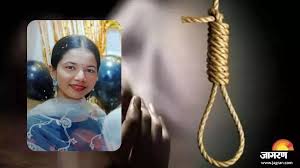
Student organization BAPSA blames ‘institutional pressure’ and discrimination; deceased was the sister of a JNUSU candidate, raising serious questions about mental health facilities New Delhi: A Delhi University (DU) student committed suicide on November 1. The student organization Birsa Ambedkar Phule Students’ Association (BAPSA) alleged that institutional pressure forced the student to take this extreme step. According to a report in Maktoob Media, the 19-year-old student was a Dalit student of Deshbandhu College and was found dead in her flat in Govindpuri. She was the sister of Jawaharlal Nehru University Students’ Union (JNUSU) presidential candidate Raj Ratan Rajoria, who represented BAPSA in the JNUSU elections. BAPSA said that this suicide reflects the continued neglect of mental health support for marginalized students at Delhi University and the systemic discrimination they face. Maktoob Media quoted Rajoria as saying, “The police’s handling of this case was extremely insensitive. The officers arrived at the scene without a doctor and rejected requests to call one, saying it was too late.” The student organization also alleged that the police asked Rajoria to check her sister’s vitals and verbally declared her dead. The student’s body was handed over to the family on November 2, after which the family left for Madhya Pradesh. Rajoria was scheduled to deliver the presidential address on November 2, but was unable to do so due to this incident. Given this sensitive situation, JNU student organizations, the DUSU Election Committee, and other presidential candidates, in solidarity, decided to postpone the debate so that Rajoria could participate later. Rajoria expressed concern over the absence of a single female officer during the initial investigation following her sister’s suicide. BAPSA stated that Delhi University provides hostel facilities to only 1 percent of its students. The organization said that high hostel fees, interview-based selection, and requirements such as a ‘local guardian’ make these hostels largely inaccessible to students from marginalized communities. This forces students to rent cramped and expensive, roofed or single-room accommodation. According to the association, the deceased lived in a poorly maintained flat that lacked proper ventilation and a safe environment. APSA said the incident highlights Delhi University’s ongoing “institutional apathy” towards marginalized students, especially those from Dalit and Bahujan backgrounds. The association also stressed that DU has only one visiting psychiatrist on North Campus for its over 700,000 students and thousands of staff, and no clinical psychologists. Rajan Chaudhary Courtesy: Hindi News
UP: 22-year-old Dalit woman brutally murdered in Jaunpur, throat slit body found, terror in the area
The incident took place in Sultanpur village of Sujanganj, where the body was found 200 meters from her home. Four special teams have been formed to investigate. Jaunpur (Uttar Pradesh): The Jaunpur district of Uttar Pradesh was shaken by a gruesome murder late Monday night. A 22-year-old Dalit woman was brutally murdered with a sharp-edged weapon in the Sujanganj police station area. The woman’s body was recovered from a deserted area a short distance from her home. The incident has gripped the entire area. Based on preliminary investigations, police suspect a love affair as the motive behind the murder. The woman did not return home until late at night. The incident occurred in Sultanpur (Narharpur) village, under the Sujanganj police station area. The deceased woman has been identified as 22-year-old Roshni alias Ruchi Gautam, daughter of Brijbhushan Gautam. According to reports, Roshni left home in the evening, but when she didn’t return until late at night, her family became concerned. They began searching for her. Roshni’s body, covered in blood and with her throat slit, was found lying in a secluded area about 200 meters from the house. Police are searching for the accused. The family was devastated upon seeing their daughter’s body. Upon learning of the incident, a crowd of local villagers gathered at the scene. Sujanganj police immediately arrived, brought the situation under control, and took custody of the body. Given the seriousness of the case, Superintendent of Police (SP) Dr. Kaustubh Kumar and other senior officers also arrived at the scene and conducted an investigation. The police have sent the body for a post-mortem examination. On the SP’s instructions, four special teams have been formed to investigate various aspects of this murder and immediately arrest the accused. Regarding the matter, CO Badlapur Vivek Singh stated, “Prima facie, the case appears to be related to a love affair. Based on the complaint received, a murder case has been registered. Four police teams have been formed to arrest the accused, and legal proceedings are underway. The situation in the village is currently tense, but due to the deployment of police forces, the situation is reported to be under control.” Rajan Chaudhary Courtesy: Hindi News
EC’s electoral roll revision in Bengal sparks citizenship concerns among transgender community
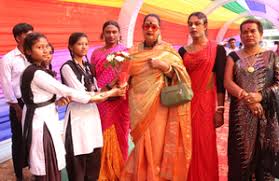
Kolkata: As the Election Commission of India (ECI) commenced the first phase of the three-stage Special Intensive Revision (SIR) in West Bengal on Tuesday, the state’s transgender community, particularly those who have undergone gender affirming surgery (GAS) or gender confirmation surgery (GCS), expressed an acute sense of uncertainty regarding their voter status. Their concerns, to an extent, are genuine, mainly on two grounds. The primary concerns among community members centre on significant mismatches in identity documents, namely, gender, name, and appearance after their transition. The second concern is that the “transgender identity card” issued by the Union government, as well as the certificate given through the National Portal for Transgender Persons, which are often required to update one’s gender in documents such as PAN, Aadhaar, and even passports, do not appear among the twelve supporting documents listed by the Election Commission for the SIR process. IANS spoke with several transgender activists in the city, as well as legal experts, to understand the community’s concerns regarding the SIR and possible ways to resolve them. Prominent activist and former member of the West Bengal Transgender Development Board, Ranjita Sinha, told IANS that there is a fear of having to fight once again for the right to an Indian identity for transgender persons. Sinha said, “People who changed their identity, whether through surgery or selfdeclaration, will face serious difficulty. If someone’s name was on the 2002 voters’ list, the photograph and name recorded then will not match their present identity. Booth Level Officers will also visit homes for verification. Many transgender persons were forced out of their homes after choosing to live according to their identity. Some parents even declared their children dead. What will happen to such individuals?” She added that many community members now stay in transgender shelter homes. Sinha said, “Many do not even possess the transgender cards issued by the government. How will they get their names added to the voters’ list when they will first be asked to prove their citizenship? The government formulates policy without taking into consideration the plight of the transgender community. There is uncertainty among our community members, and we need clear guidance from the government to remove this anxiety.” Speaking to IANS, Debangshi Biswas Chowdhury, founder of Transgender Odhikar Sanghati Mancha, said that recognising the “transgender identity card” as a valid proof would have supported a large section of the community. Chowdhury said, “Since the transgender card is not on the approved list, each individual must now approach the Booth Level Officer in their area to establish identity. This is troublesome, particularly for those whose families have already declared them dead. They must first prove they are alive and then prove who they are. Many also hold birth certificates, school leaving certificates, and other papers only in their previous identity. How will they now present documents that reflect their present identity? Our community is discussing the matter and plans to request the Election Commission to include the transgender card as an accepted proof.” Debika Barua, a social media figure and transgender activist, said that the affidavit made during a change of identity would assist many in linking their present identity to their earlier one. The difficulty, she pointed out, is that some members of the community lacked the means to file such an affidavit in court and, therefore, do not have this proof. “From what we have learnt, those who still hold old documents such as birth certificates or school leaving certificates, where their parents’ names appear, will be able to establish their identity. If their parents’ names were on the 2002 voters’ list, their citizenship will be accepted, and only an affidavit will then be required to confirm their present identity. The difficulty will arise for those who do not have such an affidavit,” Barua said. Senior advocate at Calcutta High Court, Kaushik Gupta, told IANS that many transgender persons fear their citizenship will be questioned through the SIR exercise. “If they do not appear in the 2002 voters’ list and their parents’ names are also missing, their right to vote may come under scrutiny. Citizens have the right to vote and also the right not to vote. The SIR cannot be used as the yardstick to establish both citizenship and identity. It places an unfair burden on the people, as several of them were thrown out of their houses by their parents years ago, and many do not even have proper documents with them. However, the saving grace is their affidavit or gazette notification, which they had done to change their identity. That document will be crucial to prove their identity,” Gupta said. An official within the Election Commission acknowledged that this remains a grey area in the SIR process and requires attention. The official said, “A solution will certainly be found to safeguard the voting rights of eligible transgender voters. In my view, the affidavit or gazette notification made during their identity change will serve as a useful document for establishing identity.” Courtesy : THI Note: This news is originally published on https:/thehansindia.com/bha and is used purely for non-profit/non-commercial purposes, especially human rights
Meet Akkai Padmashali, first transgender person from Karnataka to be part of SC-appointed panel
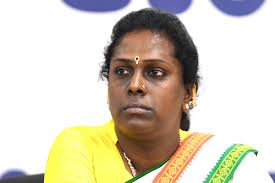
Trans rights activist Akkai Padmashali speaks about being named as a member of a Supreme Court-appointed committee. Trans rights activist Akkai Padmashali has been named as a member of a Supreme Court-appointed committee that has been to formulate an equal opportunity policy for the protection of the rights of transgender persons. With this, Ms. Padmashali becomes the first transgender person from Karnataka to be part of a panel appointed by the apex court. It is also the first Supreme Court-appointed committee to have representation from the transgender community. Reporting: Shilpa Elizabeth Courtesy : The Hindu Note: This news is originally published on https:/thehindu.com/bha and is used purely for non-profit/non-commercial purposes, especially human rights
Rahul gives Gaya town a miss again, campaigns in 3 other seats in region

Gaya: Congress leader Rahul Gandhi, while campaigning in Magadh division on Tuesday, emphatically said that if his alliance with the RJD and Left parties is voted to power, their govt would be like an umbrella, under which all disadvantaged and deprived sections, particularly dalits, EBCs and minorities, will get adequate cover, protection and participation. “It will not be the govt of any particular caste,” Rahul emphasised while holding public meetings in the Wazirganj constituency of Gaya district and neighbouring Aurangabad district’s Aurangabad and Kutumba seats. Though the LoP in Lok Sabha campaigned in both the seats of Aurangabad, he, like 2020 assembly election, gave Gaya town a miss once again this time, holding a meeting only in the Wazirganj constituency area of the district. Besides Wazirganj, Congress is contesting the Gaya town seat as well — the only two of the 10 seats in the district it has been allotted as part of the opposition Grand Alliance seat sharing. In Aurangabad district, Congress candidates are in the fray. The party’s state chief, Rajesh Ram, is contesting the Kutumba (Reserved) seat. Playing down Rahul’s failure to campaign for him, the Congress candidate from Gaya town, Akhauri Onkar Nath, alias Mohan Srivastava, said that it was not possible for a big leader like him to visit each and every constituency. “Rahul has already blessed my candidature by nominating me to contest the very important Gaya town seat,” said Srivastava, claiming he was very favourably placed in this election. Political observers believe that Rahul campaigned only in seats where the Congress performance has been good in the past. Both Aurangabad and Kutumba have sitting MLAs from the Congress. In 2015 too, the Congress won both Aurangabad and Kutumba. As far as Wazirganj is concerned, though the party lost the seat in 2020, it has been doing reasonably well in the elections here since 1980. Its candidate Awadhesh Kumar Singh won the seat six times between 1980 and 2015, five times as Congress candidate and once as an Independent (Feb 2005). But Gaya is a different ball game altogether. The last time the Congress won the seat was in 1985, when Jai Kumar Palit defeated his CPI rival Shakil Ahmad Khan. Political observers attribute this to the post-election analysis, which work out the strike rate of the top leaders. “Victory/defeat in the constituencies where the top leaders campaigned are examined threadbare. May be considering Gaya’s history, Rahul skipped the constituency,” feels an observer. The Congress leader, meanwhile, played to the gallery in all the three meetings. Deftly using the emotional card, Rahul alleged that both Prime Minister Narendra Modi and CM Nitish Kumar have converted the state into a labour producing factory. “The people of Bihar live in sub-human conditions on footpaths all over the country,” the Congress leader said. Rahul also asked the youth whether they wanted to make reels or get decent jobs. “Job” was the reply in chorus. Rahul the said that even the reel-making offer was designed to “help PM Modi’s rich friends like Ambani”. Rahul was accompanied by Chhattisgarh’s former CM Bhupendra Baghel and BPCC chief Rajesh Ram in the meetings. Courtesy : TOI Note: This news is originally published on https:/timesofindia.com/bha and is used purely for non-profit/non-commercial purposes, especially human rights