
Sikar News: ‘Entered the house and mistreated’, 10-15 people assaulted a Dalit woman
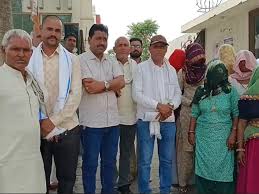
A case of assault and mistreatment of a Dalit family has come to light in Chatur Ki Dhani, Nangal, Gram Panchayat Dunga, Neemkathana area of Sikar district. The victim’s family and villagers demanded the immediate arrest of the accused from Prem Singh Bajor, Chairman of the Sainik Welfare Advisory Committee. Sikar News: Demand for action against the accused in the case of assault on a Dalit family in Chatur Ki Dhani, Nangal, Gram Panchayat Dunga, Neemkathana, Sikar district, Rajasthan. The victim’s family and villagers met with Prem Singh Bajor, Chairman of the Sainik Welfare Advisory Committee, and informed him about the entire incident. They also submitted a memorandum demanding the immediate arrest and strict punishment of the accused. Caste-based slurs were hurled at them. The victim, Santosh Devi, stated that she was working outside her house when about 10 to 15 people came and abused her and then assaulted her. They allege that the mine owner unnecessarily harasses them, hurling caste-based slurs at them, and assaulting them. Villagers reported that there is a mine in Dhani, where the mine owner brings in anti-social elements to assault and abuse Dalit women. They face unnecessary harassment on a daily basis. Assault on Women Today, they met with Prem Singh Bajor, Chairman of the Sainik Welfare Advisory Committee, regarding the incident of the mine owner summoning miscreants to assault women two days ago. The villagers stated that heavy blasting occurs on this lease, just 10 meters from the inhabited area, which has caused cracks in their houses and stones are thrown into their homes every day, posing a threat of loss of life and property. Furthermore, miscreants also engage in daily acts of bullying and abuse and assault in these lease areas. They even enter homes and misbehave and assault women. Incidents of assault against women were also reported on the 10th. A case was registered at the Patan police station. Edited by Sneha Aggarwal, Reported by Ashok Singh Shekhawat Courtesy: Hindi News
Kushinagar News: Life imprisonment for man accused of raping a mentally challenged Dalit girl
Padrauna. The court of Special Judge SC-ST Act, Ifraq Ahmed, sentenced a man convicted of raping and assaulting a mentally challenged Dalit girl to life imprisonment. He also imposed a fine of ₹56,500. Failure to pay the fine will result in an additional one year of imprisonment. Half of the fine will be given to the victim as compensation. The verdict states that a case of rape and assault of a mentally challenged Dalit girl was registered at the Kasya police station in 2019 based on a complaint from the victim’s uncle. On January 30, 2019, the girl had gone to the garden to graze goats. Ramnath Patel, son of Bhuteli Patel, resident of Nadah police station, Kasya, raped her and assaulted her when she resisted. The victim came to know about the incident upon returning home. The investigating officer filed a charge sheet against the accused, Ramnath Patel, in the court under sections of rape, the SC-ST Act, and assault. The plaintiff died during the trial. The victim’s parents had already passed away. A total of seven witnesses, including the plaintiff’s wife, were examined. The court found Ramnath Patel guilty of rape, violations of the SC/ST Act, and assault. He was sentenced on Wednesday. The accused was arrested after the case was registered and was later released on bail. After the verdict on Wednesday, the court sent him back to jail. Courtesy: Hindi News
Tamil Nadu-born trans politician is now in Scottish Parliament. They went there on student visa
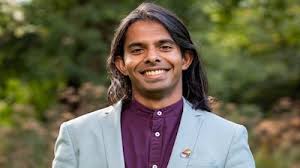
Q Manivannan hails from a lower-caste family in Tamil Nadu. They studied at OP Jindal Global University and completed their master’s degree in international peace studies in Dublin. New Delhi: Q Manivannan, a Tamil Nadu-born trans person, has been elected to the Scottish Parliament from the Scottish Green Party in the recent elections held on 7 May. Manivannan’s election marks a historic moment for representation in Scotland’s political landscape, particularly for the LGBTQ+ and immigrant communities, reported The Sunday Guardian. Mannivannan was also active in local Edinburgh politics before being elected to Holyrood as a Member of the Scottish Parliament (MSP). Their election is drawing attention since they have a student visa and were reportedly trying to raise £2,089 for a temporary graduate visa. Once they save up from their MSP salary of £77,711 per annum, they plan to apply for a global talent visa, which the UK offers to promising individuals. From India to Scotland Mannivannan studied at OP Jindal Global University, completed their master’s degree in international peace studies at Trinity College Dublin, and moved to Scotland in 2021 for doctoral research at the University of St Andrews. “I am a transgender Tamil immigrant, my pronouns are they/them. I am to some in this country everything that the hateful despise, and I am standing here as your MSP now with care,” Mannivan told the crowds at Edinburgh, reported The Telegraph. They added that they come from a lower-caste family in Tamil Nadu and had seen similar movements of resistance in Scotland. They said that they felt a strong connection with the region’s history of social and ecological justice. “I want to continue standing unwaveringly for solidarity for oppressed communities – whether its immigrants or asylum-seekers in Edinburgh… or suffering Palestinians,” Manivannan added. Visa woes Manivannan’s election was only possible after the Scottish National Parliament relaxed the rules around who could be a Holyrood candidate. Earlier, foreigners could become MSPs only if they were allowed to remain indefinitely in the UK. However, with the recent change in legislation, candidates can qualify for MSPs even with short-term visas, such as those of a student. “Q is on a valid visa with the right to work and live in Scotland, and is a Commonwealth citizen. The UK’s visa system is needlessly expensive and hostile, and we are determined to replace it with one that welcomes people with care rather than throwing up hurdles and barriers,” a Scottish Greens spokesperson told The Telegraph. Janaki Pande (Edited by Prasanna Bachchhav) Courtesy : The Print Note: This news is originally published on https:/theprint.com/bha and is used purely for non-profit/non-commercial purposes, especially human rights
NEET cancellation: Opposition takes on Centre, says ‘amrit kaal’ has turned into ‘vish kaal’
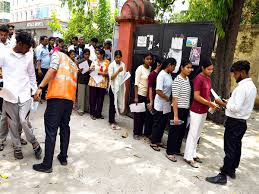
Rahul Gandhi said the hard work, sacrifices, and dreams of more than 22 lakh students have been “crushed by this corrupt BJP regime”. NEW DELHI: Several opposition leaders, including Congress leader Rahul Gandhi, on Tuesday slammed the government after the cancellation of the NEET-UG examination, alleging administrative failure and insensitivity toward students. Prime Minister Narendra Modi’s ‘amrit kaal’ has turned into a ‘vish kaal’ (poison-filled era) for the country, they added. Gandhi said the hard work, sacrifices, and dreams of more than 22 lakh students have been “crushed by this corrupt BJP regime”. In a post on X, Gandhi said, “The NEET 2026 examination has been cancelled. The hard work, sacrifices, and dreams of more than 22 lakh students have been crushed by this corrupt BJP regime. Some fathers took loans, some mothers sold their jewellery, lakhs of children stayed up all night studying, and in return, they got paper leaks, government negligence, and organised corruption in education.” “This is not just a failure—it’s a crime against the future of the youth,” the Leader of Opposition in the Lok Sabha said. CPM Rajya Sabha member John Brittas said repeated failures in national examinations were eroding public trust in the system. “NEET cancellation is yet another blow to lakhs of students who put in years of hard work. Repeated failures in national exams are destroying trust in the system. The government must fix this broken process,” he said in his X post. AAP national convener Arvind Kejriwal said affected students will have to resort to mass protests as the government only understands the language of agitation. At a press conference, he alleged “political patronage” in paper leaks, saying the NEET question paper was leaked four times in the past nine years and none of the accused were punished. RJD Rajya Sabha member Manoj Jha also attacked the NTA. “Do anything but first dismantle NTA, NEET,” he said on X. “Have you ever thought about the impact on students coming from ordinary backgrounds? The CBI probe is an eyewash,” he said. Preetha Nair Courtesy : TNIE Note: This news is originally published on https:/thenewindianexpress.com/bha and is used purely for non-profit/non-commercial purposes, especially human rights
NEET paper leak: Accused bought paper at Rs 10L, sold 10 sets for Rs 15L each
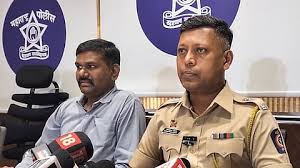
According to the Nasik police, the accused, who holds a Bachelor of Ayurvedic Medicine and Surgery degree runs a medical admission counselling centre in Nashik. MUMBAI: The Nashik Police arrested a 30-year-old youth on Tuesday in the NEET paper leak case. In the preliminary investigation, the police have discovered that the accused purchased the NEET question paper by paying rS 10 lakh and later sold it at rS 15 lakh per set to 10 people in different states. According to the Nasik police, the accused, who holds a Bachelor of Ayurvedic Medicine and Surgery degree, is a resident of the Nandgaon area in Nashik district and, along with some friends, runs a medical admission counselling centre in Nashik. The Nashik Police said, “The accused was arrested in Indira Nagar, Nandgaon, Nasik, on Tuesday noon. The accused had changed his attire and hairstyle to confuse the police. He bought the leaked paper at `10 lakh, and later, he made the 10 sets of it and sold each set for `15 lakh to students from other states through medical admission counselling centres.” It added that the paper leak network spanned Rajasthan, Maharashtra, Haryana, Andhra Pradesh, and Karnataka. The Nashik Police has decided to hand over the accused’s custody to a central probe agency. The Nashik Police said that the Rajasthan police had shared the accused’s details with them and further reference was obtained from social media. The police added that they are investigating if the accused operated in a network of agents. Sudhir Suryawanshi Courtesy : TNIE Note: This news is originally published on https:/thenewindianexpress.com/bha and is used purely for non-profit/non-commercial purposes, especially human rights
Sonia Gandhi undergoes routine check-up at Medanta Hospital
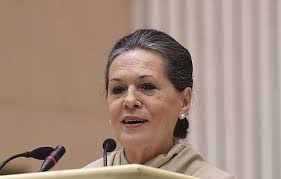
According to sources, Gandhi was admitted to the Medanta Institute of Digestive and Hepatobiliary Sciences at around 10.30 pm on Tuesday. NEW DELHI: Congress leader Sonia Gandhi visited Medanta Hospital for a routine medical check-up, party leader Jairam Ramesh said on Wednesday. “She is now back home,” said Ramesh, who serves as Congress general secretary. According to sources, Gandhi was admitted to the Medanta Institute of Digestive and Hepatobiliary Sciences at around 10.30 pm on Tuesday. The hospital did not issue any statement regarding her visit. Earlier, on 24 March, the former Congress president was admitted to Sir Ganga Ram Hospital with fever and remained hospitalised for seven days while recovering from a systemic infection. Courtesy : TNIE Note: This news is originally published on https:/thenewindianexpress.com/bha and is used purely for non-profit/non-commercial purposes, especially human rights
‘All discussions completed’: Congress to announce its CM pick for Kerala on Thursday

The comments came shortly after Congress leader Rahul Gandhi met party president Mallikarjun Kharge and held a final round of discussion at his residence. Congress will announce its chief minister pick for Kerala on Thursday as all discussions by the party high command has been completed, General Secretary in-charge Communications, Jairam Ramesh said on Wednesday. “As authorised by the members of the CLP in Kerala, the high command of the Congress has completed all discussions, and the decision on who the next chief minister of Kerala will be will be announced tomorrow,” Ramesh told reporters outside Kharge’s residence. He declined to comment on whether the announcement would be made in Delhi or Kerala. The statements came shortly after Congress leader Rahul Gandhi met party president Mallikarjun Kharge and held a final round of discussion, even as protests and suspense over the delay in chosing the CM marred the party’s humongous victory in the recently concluded Assembly elections. Rahul Gandhi drove down to Kharge’s residence for the meeting, which lasted about 40 minutes. The former Congress chief had previously met several leaders from Kerala and around eight former state unit chiefs to ascertain the ground situation. The party was expected to make the announcement on Wednesday night. However, according to sources, the decision was reportedly delayed as senior party leader Sonia Gandhi was unwell and had to be taken to Medanta Hospital in Gurugram for “routine check-ups.” The Congress leadership has been unable to decide on a chief ministerial face even after ten days since the results for the Assembly polls were announced, in which the United Democratic Front (UDF) registered a stunning perfomance, winning 102 seats, well over the majority mark. Protests at the ground level by ordinary party workers had prompted the party leadership to hold discussions with state leaders before finalising the next chief minister. The race for the state’s top post started after the powerful AICC general secretary for organisation, K C Venugopal, threw his hat in the ring. He enjoys the support of a majority of Congress MLAs. Leader of Opposition in the outgoing Kerala assembly, V D Satheesan, and senior party leader Ramesh Chennithala are also staking a claim for the post. Congress’s allies in the UDF favour Satheesan, who also enjoys huge support from the public as well as party workers on the ground. Large number of Congress workers have gathered outside the residence of Satheesan on Wednesday, expecting a decision in favour of the leader. Kerala is the fourth southern state where the Congress has come to power, after it won Karnataka and Telangana and shared power in Tamil Nadu with TVK. Courtesy : TNIE Note: This news is originally published on https:/thenewindianexpress.com/bha and is used purely for non-profit/non-commercial purposes, especially human rights
UP: Clashes between Thakur and Dalit groups over land in Saharanpur, several injured
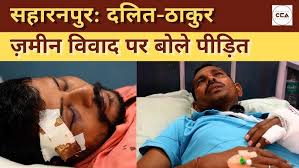
Police and paramilitary forces have been deployed in Deoband village. Both sides have accused each other of stone pelting and firing during the dispute. Half a dozen people were injured in a clash between members of the Thakur and Dalit communities over a land dispute in Lalwala village of Deoband in Saharanpur district on Saturday. The Uttar Pradesh administration has deployed police to prevent further incidents of violence. According to The Telegraph, Dalit villager Naresh Kumar told reporters that he had given two bighas of land to Ravindra Kumar Rana for contract farming a few years ago, but Rana refused to return the land after the deadline. Naresh further said, “Rana also manipulated the documents and got his name registered as the owner of the land in the revenue department records. Recently, I met with senior administrative officials in the district during a public hearing and requested their help in getting my land back. The officials called Rana, but they were unable to convince him to return the land to me.” Naresh said he contacted members of the Bhim Sena, who decided to help him. “They met me today (Saturday) and we went to get our land back. The Thakurs first threw stones at us and then started firing. As soon as the news spread, Dalit villagers gathered at the scene and pelted stones at the Thakurs.” He also alleged that the local administration and police were siding with members of the Thakur community because of their political connections. Circle Officer Abhitesh Bhati said, “The situation is peaceful after the violence. The injured have been admitted to the local community health center. We have deployed police and paramilitary forces to restore peace in the village.” Rana said he had purchased 32 bighas of land from Naresh’s father. Courtesy: Hindi News
TM Exclusive: The Wall of Caste—A study exposing healthcare discrimination against Dalits in South Asia reveals why a caste census is necessary in India!
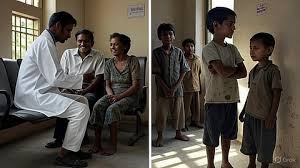
This study reveals that caste discrimination is a public health crisis. Despite Nepal’s ban on caste discrimination since 1962 and India’s affirmative action policies, implementation remains lacking. New Delhi—Amid preparations for India’s upcoming caste census, a study is worth discussing that exposes the deep-seated discrimination prevalent in South Asia’s healthcare sector. The study, conducted by researchers Raksha Thapa, Edwin van Teijlingen, Pramod Raj Regmi, and Vanessa Heaslip, was published in the Asia Pacific Journal of Public Health on May 24, 2021. It delved deeply into healthcare discrimination faced by Dalit communities, historically known as “untouchables,” in India and Nepal. This study, which analyzed nine research papers, demonstrated that socioeconomic inequalities and caste discrimination deprive Dalits of health services, affecting their health and quality of life. This study further strengthens the relevance of a caste census in India, which could be a crucial step towards understanding and addressing these inequalities. The Burden of Caste Dalits are neglected in health services. The caste system, a 3,000-year-old social structure, continues to perpetuate inequalities in social, economic, and health sectors in South Asia. While efforts have been made to eliminate it through legislation in India and Nepal, this study reveals that Dalit communities continue to face discrimination in health services. This study, which analyzed nine research papers conducted in India (seven studies) and Nepal (two studies) between 2000 and 2019, identified four main themes: Social stigma, 2. Poverty, 3. Cultural beliefs, 4. Access to health services. These themes highlight how Dalits, especially women, face social and economic barriers that severely impact their health. Key Findings of the Study Socioeconomic Inequalities and Health The study found that low socioeconomic status and low land ownership are directly linked to poor health outcomes for Dalits. Dalits have less access to education and good jobs, leading to lower household incomes. Due to low income and social discrimination, Dalits lack equal opportunities in the labor market, often limiting them to low-level jobs. Dalit Women Face Double Discrimination Dalit women face double discrimination not only due to their lower caste but also due to the lower status of women in Hindu society. These women face problems such as domestic violence, chronic illnesses, and lack of access to treatment beyond the local level. For example, Dalit women utilize antenatal care (ANC) services less than upper-caste women, which adversely impacts maternal and child health. Although access to ANC services is somewhat better among wealthier Dalit families, the combination of lower caste and poverty consistently leads to poorer health outcomes. Cultural and Social Barriers Cultural beliefs further exacerbate health inequalities. In many communities, Dalits are considered incapable of understanding health information, leading health workers to withhold crucial information. In some places, diseases are associated with ghosts and spirits, leading Dalits to rely on traditional remedies rather than modern medicine. This limits their access to and understanding of health services. Discrimination in Healthcare All nine studies confirmed that caste influences access to health services. In Uttar Pradesh, only 19% of Dalits suffering from chronic diseases receive treatment, as high costs, long travel times, and untrained health workers hinder them. In Nepal, weak health infrastructure and a lack of skilled staff disproportionately affect Dalits. Furthermore, Dalit health workers, such as auxiliary nurse midwives, face humiliation from colleagues and patients, which undermines their ability to provide care. Poverty and Social Stigma The Dilemma of Dalits The study found that poverty is a major barrier to accessing healthcare for Dalits. Most Dalits live below the poverty line and rely on low-paying jobs, such as manual labor or basket weaving. They are unaware of free healthcare services or government programs, and when they seek treatment, they are often charged exorbitant fees by unlicensed practitioners. Borrowing money to cover medical expenses is common, trapping them in debt. Social stigma also affects Dalit health. They are not allowed to enter upper-caste homes, sit with them, or share food and water. This discrimination is evident not only in social life but also in healthcare, where health workers avoid touching Dalit patients. Mental health problems among Dalits are often attributed to ghosts, leading them to resort to treatments like exorcism rather than modern medicine. Dalit Women Are the Biggest Victims of Discrimination The most vulnerable Dalit women are the biggest victims of this discrimination. Due to their low caste and gender, they are at greater risk of problems like malnutrition, anemia, and maternal mortality. The study found that approximately 70% of Dalit women are illiterate, making them unable to understand and access health systems. Economic dependence on men, limited mobility, and domestic violence further reduce their access to health services. For example, Dalit women often cannot go to the hospital alone, and their health-related decisions are made by men in the family. Policy Gaps and the Need for Change: This study shows that caste discrimination is not just a social issue, but a public health crisis. Despite the ban on caste discrimination in Nepal since 1962 and affirmative action policies in India, lack of implementation and cultural attitudes perpetuate inequalities. The authors argue that building hospitals alone is not enough to improve health services; socio-cultural factors, such as stigma and gender inequality, must be addressed. Programs like Self-Help Groups (SGHs) and ANC have provided some help, but they are insufficient without broader social change. Caste discrimination is often overlooked in global policy discussions, such as the Sustainable Development Goals (SDGs). SDG goals, such as poverty eradication, good health, quality education, gender equality, and reduced inequality, cannot be achieved unless caste discrimination is addressed. The authors call for programs to decentralize health systems, improve local access, and change social attitudes. Geetha Sunil Pillai Courtesy: Hindi News
Is there a connection between caste and untouchability and malnutrition? This research by two professors will surprise you!
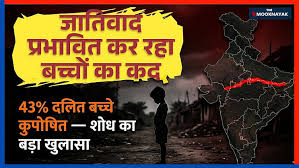
The research found that Scheduled Caste children living south of the Vindhyachal Mountains are, on average, 0.24 standard deviations taller than their counterparts living north of the Vindhyachal Mountains and have a 7 to 8 percentage point lower risk of stunting, a highly significant and statistically proven difference. Most importantly, no comparable difference was found among upper-caste Hindu children between those north and south of the Vindhyachal Mountains. New Delhi—The problem of child malnutrition in India is not limited to poverty or poor health services; it is also deeply rooted in the centuries-old caste system and social evils like untouchability. This startling finding comes from a recent study by Professor Ashwini Deshpande of Ashoka University and Professor Rajesh Ramachandran of Monash University Malaysia. This research paper was published in the prestigious international journal Journal of Economic Behavior and Organization in the year 2025. The Centre for Economic and Data Analysis at Ashoka University recently published an article on this. The researchers based their study on data from the Government of India’s National Family Health Survey (NFHS-4) 2015-16. This survey provides physical measurements and caste information for 230,898 children under the age of five. The study specifically compared 45,924 Scheduled Caste (SC) and 29,132 Upper Caste Hindu (UC-Hindu) children aged between 0 and 59 months. According to the research, stunting, i.e., extremely low height for age, is the most obvious sign of chronic malnutrition. This condition profoundly impacts a child’s brain development, educational potential, and economic opportunities in adult life. Nearly one-third of children under five in India suffer from stunting, a condition that has far-reaching and serious consequences for human capital development. Research findings clearly show that the rate of stunting among Scheduled Caste children is approximately 50 percent higher than that among upper caste Hindu children. According to the data, while the rate of stunting among SC children is 43 percent, it is only 29 percent among upper caste Hindu children. This difference is also clearly visible in the height parameter – the average height-for-age Z-score of UC-Hindu children is -1.12, while that of SC children is -1.64. This means that SC children are, on average, more than half a standard deviation shorter than their upper caste counterparts. This difference persists throughout every month of a child’s age, from 0 to 60 months. Researchers analyzed data from 585 districts across the country. Data from 467 districts for SC children and 369 districts for UC-Hindu children were studied. This analysis revealed that stunting rates among SC children were above 40 percent in 55 percent of districts, while stunting rates among UC-Hindu children were above 40 percent in only 15 percent of districts. In contrast, stunting rates among SC children were below 30 percent in only 15 percent of districts, while stunting rates among UC-Hindu children were below 30 percent in 54 percent of districts. The research found the situation to be most severe in Bihar, Chhattisgarh, Jharkhand, Madhya Pradesh, Rajasthan, and Uttar Pradesh, collectively known as the “BIMARU” region. This region accounts for 50.8 percent of the total survey sample. In 180 out of 220 districts in this region, or 82 percent of districts, stunting rates among SC children were above 40 percent. In 99 districts, or 45 percent, more than half of SC children are stunted. On the other hand, in the same region, stunting among UC-Hindu children is above 40 percent in only 20 percent of districts. The situation is relatively better in Southern India, where only 24 percent of districts have stunting among SC children above 40 percent. The Vindhyachal Mountains: A Historical and Social Divide Professor Deshpande and Professor Ramachandran made the Vindhyachal mountain range the most important and fundamental aspect of their research. According to the researchers, historically, the region north of the Vindhyachal was known as “Aryavarta,” defined in Manusmriti (2.22) as the land between the Himalayas and the Vindhyas. This region has been a cultural center of Hinduism and the caste system since the Vedic period (approximately 1500-600 BCE). The Vindhya Mountains historically served as a boundary between Aryan-influenced areas and non-Aryan areas. This is why untouchability and caste-based discrimination are more deeply rooted in the north. This historical evidence is supported by contemporary data. An analysis of the 2011-12 Indian Human Development Survey (IHDS-II) data shows that 49 percent and 40 percent of households in Central India and the North-Central Plains, respectively, admit to practicing untouchability. In contrast, only 17 percent of households in the southern states do so. A study by Shah et al. (2006) reported that Dalits were denied access to private health clinics in 74 of the 348 villages surveyed in rural India. In 30-40 percent of villages, public health workers refused to visit Dalit settlements, and in 15-20 percent of villages, Dalits were denied access to public health centers. The researchers used a well-established statistical method—Difference-in-Differences (DID)—to compare SC and UC-Hindu children living 100 kilometers north and 100 kilometers south of the Vindhyachal Mountains. This method is important because it compares within a single state, allowing the influence of economic, geographic, and administrative factors to be isolated. The results are extremely significant. SC children living within 100 kilometers of the Vindhyachal range are 21 percentage points, or approximately 70 percent, more likely to be stunted than UC-Hindu children. However, the most important finding is that SC children living south of the Vindhyachal range are approximately 8 percentage points less likely to be stunted than SC children living north of the Vindhyachal range. This difference is both statistically significant and economically significant. In terms of height, SC children living south of the Vindhyachal range are, on average, 0.24 standard deviations, or approximately 30 percent taller, than their counterparts in the north. On the other hand, for UC-Hindu children, living north or south of the Vindhyachal region makes no statistical difference. This means that the advantage of geographical location is not universal, but rather limited to SC children, suggesting that caste-based discrimination is the root cause of this difference.