
Congress attacks Mahoba Dalit student incident: BJP government accused ofdeflecting justice
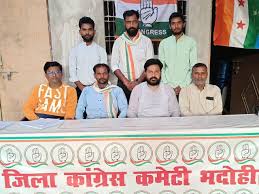
Bhadohi Congress Committee President Wasim Ansari addressed a press conference at his camp office in Suriyawan. Expressing concern over the incident involving the Dalit student from Mahoba, he said that this case has brought shame to the entire state. Ansari alleged that the BJP government and its leaders are trying to divert attention by resorting to AI-generated videos and propaganda instead of providing justice to the victim. He stated that when Uttar Pradesh Congress Committee President Ajay Rai was going to share the victim’s grief, an attempt was made to stop him. Wasim Ansari reiterated that the Congress party will always raise the voice of the oppressed and the exploited. Wasim Ansari hit back at the BJP, saying that BJP members are today talking about corruption and demanding an investigation into Ajay Rai’s assets. He challenged that every Congress worker, including state president Ajay Rai, is ready for investigation, but the assets of Bharatiya Janata Party MPs, MLAs, and ministers should also be investigated. He also mentioned the poor condition of the Ganga River despite thousands of crores of rupees spent on the Namami Gange project. Ansari also questioned the poor condition of the Jalkal and Nal Yojana schemes, where tanks are collapsing and water is not reaching other areas. Wasim Ansari accused the Agra Municipal Corporation of waiving ₹430 crore owed to Torrent, a private power company. He said that the BJP government has previously waived lakhs and crores of rupees for big capitalists, which he described as a “donate and do business” policy. Regarding the cases filed against Ajay Rai, Ansari clarified that these cases are related to political and public service. He said that the government took action against him because he helped people during the COVID-19 pandemic and participated in public movements. Many prominent leaders, including District Vice President Trilokinath Bind, Suriyawan Block President Suresh Chauhan, Youth Congress State General Secretary Nazim Ali, Youth Congress District President Shakti Mishra, OBC Wing District President Rakesh Pal, and Vishal Gautam, were present at the press conference. Nitesh Kumar Upadhyay | Suriyawan, Bhadohi (Sant Ravidas Nagar) Courtesy: Hindi News
Politics heats up over Dalit student case in Etah: Former District President says opposition to visiting the victim’s family is against democratic values
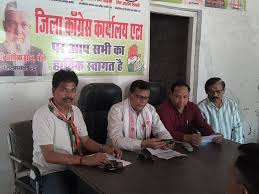
Politics has heated up over the controversial case involving a Dalit student in Etah. Late in the evening, the District Congress Committee, Etah, held a press conference, leveling serious allegations against the BJP government and expressing support for State Congress President Ajay Rai. Former District President Chob Singh Dhangar accused the BJP of adopting a repressive policy. He claimed that a Dalit student in Mahoba was kidnapped, held hostage for several days, and subjected to inhumane treatment. Congress leaders alleged that the government has failed to understand the victim’s pain. Meanwhile, Uttar Pradesh Congress Committee State President Ajay Rai’s visit to the victim’s home to inquire about her family was described as a humanitarian gesture. Congress workers also alleged that when Ajay Rai arrived at the victim’s home, BJP workers attempted to oppose him. Congress leaders accused the BJP of insensitivity, stating that opposition to visiting the victim’s family is against democratic values. The press note also demanded an investigation into the assets of ministers and MLAs of the BJP government. Congress leaders said that if the government is serious about combating corruption, it should initiate an impartial investigation of its own representatives. They also termed the demand for an investigation into Ajay Rai’s assets as political vendetta. This statement issued by the District Congress Committee, Etah, has sparked political activity in the district. However, no official response has yet been issued by the BJP on this matter. Nand Kumar | Etah 5 Courtesy: Hindi News
Bengal education institutes witness rapid RSS-affiliates expansion after BJP’s rise to power

ABVP leaders said the student body was present in 96 colleges before polls, but in two weeks, this has grown to over 400, with informal networks springing up even before membership drives from June 9. KOLKATA: Barely three weeks after the BJP’s emphatic victory in West Bengal, the ideological churn inside the state’s educational institutes has begun unfolding with remarkable speed, as organisations affiliated to the RSS move aggressively to expand their footprint across campuses, staff rooms and academic networks long dominated by the Left and the TMC. From college canteens in north Bengal to university departments in Kolkata, a quiet but unmistakable realignment is underway. The Akhil Bharatiya Vidyarthi Parishad (ABVP), which spent decades as a marginal force in Bengal’s student politics, is suddenly finding itself flooded with membership requests, WhatsApp enquiries and invitations to form campus units. Among teachers, professors and non-teaching staff, the Bharatiya Shikshan Mandal and the Akhil Bharatiya Rashtriya Shaikshik Mahasangh (ABRSM) are also reporting an unprecedented spike in outreach after the May 4 election results altered Bengal’s ideological and political landscape for the first time in nearly half a century. For years, the RSS ecosystem believed Bengal’s educational institutes were structurally hostile terrain where Left influence survived long after its electoral decline and where the TMC eventually built its own patronage networks through student unions, recruitment channels and campus-level control. The BJP’s victory has finally broken what one Sangh organiser described as the “psychological resistance barrier”. “It is from the land of Bengal where nationalism, which is Hindu nationalism, and ‘Vande Mataram’ (song) originated. For several decades, there was an effort to ensure that we forget our history, culture and roots. Now Bengal has decided to go back to its roots,” senior RSS leader Jishnu Basu told PTI, articulating the broader ideological confidence sweeping through Sangh circles after the election outcome. ABVP leaders claimed the student body had a presence in only 96 colleges before the election results. In just over two weeks, they said that number has crossed 400, with informal networks springing up even before formal membership drives will begin on June 9. “Many students from various colleges and universities are in touch with us and want to join ABVP and open ABVP units in their colleges or universities. But unlike TMCP, joining ABVP requires following proper procedure and scrutiny before induction,” ABVP South Bengal secretary Nilkantha Bhattacharya told PTI. In many campuses, instead of immediately announcing committees, ABVP organisers have opened WhatsApp groups, creating digital spaces for interested students while screening potential entrants. Unlike the BJP, which has temporarily halted mass induction amid fears of an influx of opportunistic entrants from rival parties, RSS affiliates are expanding carefully but steadily, attempting to balance rapid growth with ideological filtration. ABVP leaders privately admitted that many students now approaching them were until recently associated with the TMCP, the students’ wing of the TMC, and in some places with SFI, the students’ arm of the CPI(M). But they insisted that controversial figures accused of extortion, intimidation or involvement in admission rackets will not be accommodated. The Bharatiya Shikshan Mandal, primarily involved in education policy and intellectual discourse, has traditionally been less focused on numerical expansion. But its office-bearers argued that Bengal requires exceptional mobilisation because the state resisted implementation of the National Education Policy for years, despite many of its recommendations emerging from consultations involving ‘shikshan mandal’ thinkers. The ABRMS claimed its membership in Bengal, once below 10,000, may now cross one lakh as schoolteachers, college staff, and university employees increasingly seek association with groups perceived to be aligned with the new power structure. “Our network already has a presence across most blocks and educational circles in the state, but the post-election momentum has dramatically accelerated recruitment in districts where Sangh affiliates earlier struggled to gain institutional legitimacy,” state general secretary Bapi Pramanik told. Political observers saw the development as part of a deeper ideological consolidation project accompanying the BJP’s historic win in Bengal. For the Sangh, capturing administrative power was only one milestone. The more enduring battle, its strategists have long argued internally, lies inside classrooms, curriculum, teachers’ associations and student consciousness. That is why, even as the BJP leadership publicly speaks of governance and development, the Sangh ecosystem is quietly investing organisational energy into educational institutions, historically among the toughest arenas for Hindutva politics in Bengal. The immediate impact may remain organisational. But the longer-term implications could reshape the ideological character of Bengal’s campuses in ways unseen since the Left’s rise through colleges and universities in the 1960s and 1970s. Already, in several districts, teachers once reluctant to publicly associate with Sangh-linked bodies are attending closed-door orientation sessions, while students who previously avoided ABVP rallies for fear of political isolation are now volunteering to organise events themselves. Opposition parties dismissed the surge as a temporary byproduct of regime change and argued that institutional influence built over decades cannot be dismantled within weeks. Yet even critics privately conceded that the change in mood inside campuses is palpable. For the RSS and its affiliates, Bengal’s educational institutes are no longer merely hostile territory where survival itself was an achievement. After years of operating from the margins, they now sense a rare political opening to move from resistance to dominance within Bengal’s academic space. Whether that transformation sustains itself beyond the post-election euphoria may determine if Bengal’s next political generation continues to inherit the state’s ideological traditions or gradually shifts towards a nationalist political culture. Courtesy : TNIE Note: This news is originally published on https:/thenewindianexpress.com/bha and is used purely for non-profit/non-commercial purposes, especially human rights
Day after resigning as Karnataka CM, Siddaramaiah meets Kharge, Rahul Gandhi in Delhi

The former CM is also likely to press for Cabinet positions for his son and loyalists in the new Karnataka government, including the post of Deputy Chief Minister. A day after stepping down as Karnataka Chief Minister, senior Congress leader Siddaramaiah met President Mallikarjun Kharge and Rahul Gandhi in New Delhi on Friday morning, officials said. Siddaramaiah, accompanied by his son Yathindra, is understood to have discussed his future role within the party leadership. The meeting is seen as significance as the veteran leader has already declined a Rajya Sabha berth and expressed his preference to remain active in Karnataka rather than take up a role at the Centre. He is also likely to press for Cabinet positions for his son and loyalists in the new Karnataka government, including the post of Deputy Chief Minister, sources added. Siddaramaiah thanked Rahul Gandhi for giving him an opportunity to serve the state and informed him that he had resigned from the chief minister’s post as asked, the sources said. According to the sources, Siddaramaiah later met Congress chief Mallikarjun Kharge and discussed the new government formation in Karnataka and his future role in the party. Congress general secretary Randeep Surjewala, who was present during Siddaramaiah’s hour-long meeting with Rahul Gandhi, said, “It was a very pleasant meeting. They discussed multiple issues.” Asked if the transition will be smooth in Karnataka, he said, “Absolutely. There is no hurdle in the smooth tradition of power in the state.” Siddaramaiah is expected to meet Congress president Mallikarjun Kharge later in the day to discuss the political transition and government formation. Congress general secretary Randeep Surjewala was present during Siddaramaiah’s meeting with the Gandhis. Meanwhile, Karnataka Governor Thaawarchand Gehlot has accepted Siddaramaiah’s resignation as Chief Minister. According to sources, Deputy Chief Minister DK Shivakumar, who is expected to succeed Siddaramaiah as Chief Minister, will separately hold discussions on government formation with Congress general secretary (organisation) KC Venugopal. The Congress leadership is also expected to deliberate on restructuring the party organisation in Karnataka, sources said. The Congress will also work on rearranging the party organisation in Karnataka for which discussions will be held on Friday, the sources said. A meeting of the Congress Legislature Party in Karnataka is likely to be held on Saturday to elect the new chief minister, they said. A two-time chief minister, Siddaramaiah joined the Congress in 2006 after switching sides from the JD(S). Courtesy : TNIE Note: This news is originally published on https:/thenewindianexpress.com/bha and is used purely for non-profit/non-commercial purposes, especially human rights
‘Shaped political, social fabric of our state’: DKS expresses gratitude to Siddaramaiah after resignation

Stating that it has been a privilege to serve alongside him, Shivakumar said Siddaramaiah’s guidance would continue to inspire and strengthen everyone in the days ahead. Expressing “gratitude and deep respect” for Siddaramaiah, who resigned as Chief Minister of Karnataka, his probable successor DK Shivakumar on Friday said that he looks forward to carrying the journey forward together, and quoted a saying, “If you want to walk fast, walk alone. If you want to walk far, walk together.” Stating that it has been a privilege to serve alongside him, Shivakumar, who served as Deputy CM under Siddaramaiah, said his guidance would continue to inspire and strengthen everyone in the days ahead. In a post on ‘X’, Shivakumar, who is widely expected to be elected as the leader of the Congress Legislature Party in the next couple of days said, “As the saying goes – If you want to walk fast, walk alone. If you want to walk far, walk together – I look forward to carrying this journey forward together for the people of Karnataka.” Siddaramaiah’s resignation as Chief Minister was accepted and the Council of Ministers headed by him was dissolved by Governor Thaawarchand Gehlot on Friday. Both Siddaramaiah and his deputy Shivakumar are in Delhi to meet the Congress high command and discuss the transition of power, and formation of the new Cabinet. “God does not give boons or curses. He only gives opportunities. What truly matters is what we make of those opportunities. Siddaramaiah’s life is one of the finest reflections of this thought,” Shivakumar said. From a humble village in Mysuru to leading Karnataka as Chief Minister, his journey stands as a testament to resilience, perseverance, and an unwavering commitment to social justice, he noted. “As he steps down from the office of the Chief Minister, I express my heartfelt gratitude and deep respect for his years of service and leadership to the people of Karnataka,” Shivakumar, also the state Congress chief said. Noting that the impact of several public welfare schemes and the many developmental initiatives undertaken during Siddaramaiah’s tenure will remain significant chapters in Karnataka’s growth story, Shivakumar said, “Over nearly five decades in public life, he has shaped the political and social fabric of our state through people-centric governance and inclusive leadership.” “Ever since I was entrusted with the responsibility of serving as KPCC president in 2020, Siddaramaiah has stood firmly beside me like a pillar of strength. Together, we have worked shoulder to shoulder in strengthening the party and taking its vision to the people,” he recalled. It has been a privilege to serve alongside Siddaramaiah as Deputy Chief Minister and to continuously learn from his experience, wisdom, and political foresight, Shivakumar stated. “I sincerely hope his guidance will continue to inspire and strengthen all of us in the years ahead as we work towards Karnataka’s progress and welfare,” he added. Courtesy : TNIE Note: This news is originally published on https:/thenewindianexpress.com/bha and is used purely for non-profit/non-commercial purposes, especially human rights
Karnataka Congress legislature party to meet Saturday; DK Shivakumar likely to be elected leader

Following the high command’s instructions, Siddaramaiah had already declared Shivakumar as his successor, making his election as CLP leader largely a formality. BENGALURU: The Congress Legislature Party (CLP) will meet to elect its new leader, with Deputy Chief Minister DK Shivakumar widely expected to be chosen following the Congress high command’s decision to name him as Siddaramaiah’s successor. The meeting will be chaired by outgoing Chief Minister Siddaramaiah at the conference hall in Vidhana Soudha on Saturday at 4pm. The CLP secretary issued a circular in this regard on Friday. Following the high command’s instructions, Siddaramaiah had already declared Shivakumar as his successor, making his election as CLP leader largely a formality. AICC general secretary and Karnataka in-charge Randeep Singh Surjewala, the Congress floor leader in the Karnataka Legislative Council and minister NS Boseraju will also take part in the meeting. The 136 Congress MLAs are expected to elect the CLP leader in line with the high command’s directions. After securing letters of support from the MLAs, the new CLP leader will meet the Governor to seek permission to form the new government and finalise a date for the swearing-in of the Council of Ministers. According to sources, the swearing-in ceremony is likely to be held on Monday on the grand steps of Vidhana Soudha. Meanwhile, both Siddaramaiah and Shivakumar met the top Congress leaders in Delhi to discuss the transition of power, and formation of the new cabinet. Earlier in the day, Shivakumar also met other Congress leaders at a hotel in the national capital. Speaking to reporters in New Delhi, Shivakumar said discussions with the Congress high command were still underway and all party MLAs had been asked to remain present in Bengaluru for the meeting. “Everything is happening as requested by the high command. Nothing has been decided. Tomorrow we have called the CLP meeting, our central leaders have to come. We have to discuss with our high command. We have asked all MLAs to be present in Bengaluru. Apart from that, nothing else is there,” said Shivakumar. The developments come after Siddaramaiah resigned as the chief minister on Thursday, ending days of intense speculation over a leadership change. And on Friday, Siddaramaiah met Congress President Mallikarjun Kharge, Rahul Gandhi and other senior party in New Delhi to discuss the Karnataka cabinet reshuffle, Rajya Sabha elections and other organisational matters. The meeting is seen as significance as the veteran leader has already declined a Rajya Sabha berth and expressed his preference to remain active in Karnataka rather than take up a role at the Centre. Notably, Siddaramaiah and Shivakumar were locked in a keen contest for the chief minister’s post after the Congress won the May 2023 Assembly elections. The party eventually persuaded Shivakumar to accept the post of deputy chief minister. At the time, reports suggested a compromise under a “rotational chief minister formula”, whereby Shivakumar would take over as chief minister after two-and-a-half years. However, neither the party nor the two leaders officially confirmed the arrangement. Courtesy : TNIE Note: This news is originally published on https:/thenewindianexpress.com/bha and is used purely for non-profit/non-commercial purposes, especially human rights
16 Transgenders In Telangana Appointed As ‘Eagle Team’ In HYDRAA

Hyderabad: In a novel initiative the Telangana government’s Hyderabad Disaster Response and Asset Protection Agency (HYDRAA) has provided employment opportunities to 16 transgenders. Eleven trans women and five trans men have joined HYDRAA, which has been in the news in recent times for removing encroachments on water bodies and government lands in and around Hyderabad. The new recruits said that employment at HYDRAA has brought a new light into their lives and the dignity bestowed by this job has instilled a deep sense of self-confidence within them. According to an official release on Friday, these 16 people are ready to perform their duties anywhere and at any time. They are actively participating in the removal of encroachments on lakes and drainage channels, and are at the forefront of protecting public parks and lands designated for community use in the state. Undeterred by the stature or influence of encroachers, they perform their duties fearlessly and play an integral role in safeguarding public assets in Telangana. They assert that the employment they secured at HYDRAA represents far more than just a means of livelihood; it signifies a newfound identity for their lives. They express that wearing the HYDRAA uniform is a matter of great honour for them and shared their immense joy at being designated the ‘HYDRA Eagle Team’ and being fully integrated into operational duties. The transgender team members played a pivotal role in successfully protecting 862 acres of government land in Ailapur, located in the Aminpur Mandal of Sangareddy district. Recently, they played an active role in saving the Edulakunta lake in Madhapur. They play a key role in tasks such as persuading the public, engaging with women to de-escalate tensions, and facilitating coordination between officials and the community. HYDRA officials say they have a natural ability to understand and empathise with people’s emotions and have been commended for consistently achieving excellent results in their fieldwork. Transgenders currently working with HYDRAA are now providing financial support to their families. They are earning a steady monthly income, and their standing within society has improved. Most importantly, their self-confidence has been bolstered by the realisation that “we, too, are capable of making a meaningful contribution through our work.” “We were begging for a livelihood. In the past, wherever we went, we were subjected to ridicule. If we asked for work, we were turned away. But now, when we step out in uniform to perform our duties, everyone speaks to us with respect,” said Tanshi Rai. “Given the opportunity, transgender individuals can excel in any field. Our duties at HYDRAA serve as a living testament to this fact. At HYDRAA, everyone—from the officials to every other staff member—extends their full cooperation to us. We are treated as equals in the performance of our duties,” said Gayatri. Courtesy : Ommcom News Note: This news is originally published on https:/ommcomnews.com/bha and is used purely for non-profit/non-commercial purposes, especially human rights
‘Absolute bar’ offers legal clarity, but exposes social blindness
blindness If caste-based disadvantage persists irrespective of religion, excluding Dalit converts risks making the classification under-inclusive. When the Supreme Court reiterated that the exclusion of Dalit converts from Scheduled Caste (SC) status is “absolute and admits no exception”, it does more than settle a doctrinal question. It revives a foundational constitutional dilemma: can the law deny protection against caste-based discrimination simply because an individual has changed religion? More critically, does caste itself disappear upon conversion, or does the law merely choose not to see it? This tension between constitutional text and social reality lies at the heart of the debate on SC status for converts to Islam and Christianity. The legal position rests on Clause 3 of the Constitution (Scheduled Castes) Order, 1950. Originally limited to Hindus, and later extended to Sikhs and Buddhists, the order continues to exclude Muslims and Christians. The Supreme Court has consistently read this provision strictly: the SC status is a matter of legal recognition, not lived identity A Dalit who converts to Christianity or Islam immediately loses access to reservations, scholarships, and protections under the SC/ST (Prevention of Atrocities) Act, 1989. The court has clarified that this bar is categorical — possessing an SC certificate is irrelevant if the individual no longer professes a qualifying religion. This formal clarity sits uneasily with empirical reality. The NCRB data shows that tens of thousands of atrocities against Scheduled Castes are registered each year, with pendency rates exceeding 85%. Caste-based violence remains a structural feature of Indian society. Sociological studies further demonstrate that caste does not vanish upon conversion. Millions of Dalit Christians and Dalit Muslims continue to face social segregation, occupational immobility, and endogamy mirroring caste hierarchies within Hindu society. Yet the remain largely invisible in state policy. The result is a paradox: the law recognises caste within certain religions but denies its existence when it crosses religious boundaries. Persistent discrimination The constitutional validity of Clause 3 has been pending before the Supreme Court since 2004. Meanwhile, multiple institutional exercises have pointed toward the need for reconsideration. The Ranganath Mishra Commission (2007) recommended making SC status religionneutral, finding no empirical basis for exclusion. The Sachar Committee and subsequent studies reinforced this conclusion, documenting persistent discrimination among converts. In 2022, the Union government constituted a Commission of Inquiry under former Chief Justice K G Balakrishnan to examine whether SC status should be extended to Dalit converts. However, the commission has not submitted its report. What is striking is not just policy delay but judicial silence. The Supreme Court’s reaffirmation of the ‘absolute bar’ does not engage with the pending constitutional challenge, the Balakrishnan Commission, or the Mishra Commission’s findings. Nor does it revisit Soosai v. Union of India (1985), where the court acknowledged that resolving this issue requires contemporary socio-economic evidence. Instead, in C Selvarani (2024), the court characterised claims to SC status after conversion as a ‘fraud on the Constitution’. Together, these developments suggest not just doctrinal continuity but a narrowing of legal space at a time when evidence points toward reconsideration. The constitutional difficulty is clear. Articles 14, 15, and 16 permit affirmative action to remedy historical disadvantage. But if caste-based disadvantage persists irrespective of religion, excluding Dalit converts risks making the classification under-inclusive. The question is not whether affirmative action can differentiate, but whether it can do so while ignoring social reality. A religion-based exclusion begins to resemble constitutional evasion rather than reasonable classification. There is also a quieter constitutional cost. Article 25 guarantees the freedom to profess, practise, and propagate religion. Yet when conversion leads to the loss of legal protections and socio-economic safeguards, that freedom becomes conditional. Law penalises conversion The law does not prohibit conversion, but it penalises it. The price of changing religion is the forfeiture of constitutional benefits, even if the underlying disadvantage remains unchanged. The Supreme Court’s position has been consistent, if cautious. In Soosai v Union of India (1985), it upheld the exclusion of Christian converts due to insufficient evidence of continued backwardness. In S Anbalagan v B Devarajan (1984), it acknowledged that caste may persist after conversion but stopped short of extending benefits. In C M Arumugam v S Rajgopal (1976), it recognised that caste identity can revive upon reconversion, implicitly admitting that caste is not erased by religious change. In State of Kerala v Chandramohanan (2004), it reaffirmed that SC status is governed strictly by the Presidential Order under Article 341. Even in K P Manu v Chairman, Scrutiny Committee (2015), while allowing restoration of caste status after reconversion, the court maintained the rigid framework linking SC recognition to specified religions. These decisions reveal a consistent judicial pattern: acknowledgment that caste may endure beyond religion, combined with reluctance to extend constitutional protection accordingly. The recent reaffirmation of the ‘absolute bar’ reflects fidelity to statutory text but also institutional hesitation to engage with evolving social evidence. The consequences are tangible. Dalit converts are excluded from protections under the SC/ST (Prevention of Atrocities) Act, 1989. In E V Chinnaiah v State of Andhra Pradesh (2005), the court emphasised the rigidity of SC classification under Article 341. In Chandramohanan (2004), it reiterated that statutory protections cannot extend beyond those recognised under the 1950 order. This creates a legal paradox: caste-based violence may persist, but victims are denied protection because the law no longer recognises their caste identity. International human rights law offers a different approach. Instruments such as the ICCPR and CERD emphasise equality and prohibit discrimination based on descent, interpreted to include caste. These frameworks prioritise lived disadvantage rather than formal religious identity. In the United States, affirmative action is anchored in race and historical disadvantage, not religion. South Africa’s jurisprudence similarly prioritises substantive equality. India’s religion-linked approach to caste recognition, thus, stands out as an exception. The persistence of caste across religions presents a challenge that the current legal framework struggles to address. Delinking SC status from religion, as recommended by the Mishra Commission, would be one path forward. Alternatively, a parallel framework for Dalit
Dalit professor alleges massive scam in ‘digital evaluation’ at CURaj, removed from evaluation process due to strict marking!
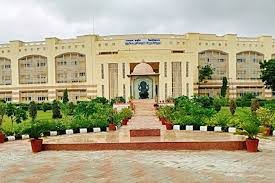
The professor also alleged malpractice in PhD admissions, research projects, and other examinations. He stated that the Vice Chancellor, Registrar, Controller of Examinations, Dean Academics, and some department heads are colluding to perpetrate large-scale academic scams. Ajmer – Amidst the ongoing criticism of the CBSE’s OSM system and the fear spread among students, serious allegations of similar irregularities have now been made at the Central University of Rajasthan, Ajmer. Dr. Rakesh Kumar, Associate Professor in the Physics Department at the Central University of Rajasthan, has accused the university administration of widespread academic scams. He stated that he had complained repeatedly over the past two years, but no one responded, and he was removed from the evaluation process. Earlier in April, Professor Rakesh Kumar had also complained about the university administration’s repressive actions, where he was forcibly taken from his office by the police and detained for approximately four hours. He was detained without any FIR or complaint simply because he had expressed his refusal to attend the Deputy Chief Minister’s program organized on the occasion of Ambedkar Jayanti. Dr. Kumar has described this as a conspiracy to suppress his voice and alleged that the university administration, in connivance with the police, treated him in a communal and discriminatory manner. In his recent post, Rakesh Kumar exposed the scams at the university, saying, “Organized scams, like the NEET scam, are taking place in the education system. I was silent for a long time, but now I felt it was no longer appropriate to remain silent. I wrote several emails to the Vice Chancellor, Registrar, Controller of Examinations, and Dean Academics over the past two years, but no one responded or corrected me. Therefore, I decided to bring such matters to the public domain.” The professor questioned the “digital evaluation” system adopted by the university. He explained that a few years ago, the current Vice Chancellor introduced a new system for evaluating answer sheets, which they call digital evaluation. This is a system of a private company, on which the university is spending crores of rupees. In a detailed post, Kumar wrote, “A few years ago, the current Vice Chancellor changed the system for evaluating answer sheets. He calls this new system “digital evaluation,” although it’s not actually digital evaluation. It’s provided by a private company, and the university pays the company several crores of rupees for the system. In this system, students’ answer sheets are scanned, their first page is hidden, and the resulting images are uploaded to a server. Access to these scanned copies is limited to a desktop located in a room in the university’s administrative building. Simple software supports these scanned copies. University teachers evaluate these scanned copies and write the marks obtained on the scanned pages using the software. Finally, the software adds up those marks. Therefore, there’s no significant benefit, although we waste crores of public money. The biggest drawback of this system is that students are not allowed to view their scanned answer sheets after evaluation. This is a complete violation of transparency.” It’s annoying and frustrating, but it helps scams happen.” Dr. Rakesh Kumar also gave some concrete examples. He explained, “Two years ago, I taught a master’s course and evaluated the answer sheets. The Vice-Chancellor didn’t like the final result of the course, so he withheld it for a few months. Afterward, the result was announced with a massive 160% change. I was shocked and wondered how I had made such a huge error in my evaluation. So, I wrote emails to the Controller of Examinations, the Registrar, and the Vice-Chancellor. I asked them to show me some samples of answer sheets that had been checked by another faculty member. They haven’t responded yet. This is where so-called digital evaluation helps perpetrate massive academic scams. Last year, the Vice-Chancellor did the same thing to me. I was a course instructor and had also prepared the exam question paper for that course. Sadly, without informing me, the university administration assigned the answer sheets for the course to another faculty member for evaluation. That faculty member took a few months. When I learned of this, I emailed the university administration and asked for an explanation.” I asked why they removed me from the evaluation process, and I also requested to see the results and some of the evaluated answer sheets. So far, they haven’t responded to any of my emails. This simply means the results were already decided, and the administration is trying to hide something suspicious.” The professor also alleged malpractice in PhD admissions, research projects, and other examinations. He said the Vice Chancellor, Registrar, Controller of Examinations, Dean Academics, and some department heads were colluding to perpetrate a massive academic scam. Rakesh Kumar says, “Recently, an exam was held for which I served as the course instructor. It’s common practice for the course instructor to set the exam question paper. However, in this case, the question paper was set by a faculty member who had never taught the course! The problem isn’t limited to this. The course has four equally important units. However, 50% weightage was given to just one unit, with obvious repetition and overlap in many questions. The question paper was of very poor quality and tampered with. In this regard, I wrote to the university administration about my concerns, but as usual, I haven’t received a response yet. In the last three Ph.D. admissions, I noticed that many students were selected who either didn’t answer a single question or had very unsatisfactory interviews. I feel that the university administration selects students first and then interviews them later. I’ve also raised these issues with the university administration.” I wrote to the university authorities. Unfortunately, there was no response. Similar scams are also taking place in students’ research projects, labs, and other regular examinations. Just to show good statistics, the Vice-Chancellor is compromising everything! He is perpetrating massive academic scams with the help of the Registrar, Controller of Examinations, Dean of
Honor Killing in Tamil Nadu: A Dalit youth was murdered a month ago, the case was buried under election noise, now the Evidence Report has caused a stir!

Due to the election campaign, the case received little media coverage. The family has demanded compensation of 25 lakh rupees and a separate law against honor killings. Sangottai (Tenkasi) – Sangottai in Tenkasi district, Tamil Nadu, has once again exposed the dark truth of caste-based honor killings. Subhash, a 21-year-old youth from the Devendrakula (Dalit) community, was brutally murdered while he was simply engaging in a friendly conversation with a minor. The killers hacked him with a sickle, crushed him with stones, and then threw him into a well, tying his hands and feet with weights. Due to the election campaign, the case received little media coverage, preventing widespread publicity. The Evidence Organization’s team inspected the scene, and the fact-finding report revealed the gravity of the matter. Subhash’s mother, Leela, and other relatives went to the Evidence Office on May 26th and submitted a formal complaint. Subhash was the youngest son of Sami and Leela. He worked at a private company in Bengaluru. According to reports, 21-year-old Subhash had come to Sangottai to attend his sister’s child’s tonsure ceremony. There, he had a friendly conversation with a 16-year-old girl from the Maravar community. Angered by this, Marichelvam (27), Dhanashankar (24), and a 17-year-old from the Asari community, confronted Subhash on April 15th. According to reports, Subhash worked at a private company in Bengaluru. At around 2:30 a.m. on April 16th, the accused, Dhanashankar, called him. As soon as Subhash arrived on Kannupuli Mettu Road, the three men surrounded him and asked, “How can you talk to a girl from our caste?” He was then severely beaten, his dhoti was torn, his throat was slit with a sickle, and his body was thrown into a ruined well after being covered with large stones. A case has been registered at the Sengottai Police Station under Crime No. 0166/2026, under sections 238 and 103(1) of the BNS Act, 2023, and sections 3(1)(r) and 3(2)(v) of the Scheduled Castes and Scheduled Tribes (Prevention of Atrocities) Act, 1989. All three accused have been arrested and remanded to judicial custody. Police investigations confirmed the presence of liquor bottles, blood-stained stones, and sand at the scene. Police have also recovered the weapon used in the murder. The family and relatives of the girl, with whom Subhash had spoken cordially, were not part of the murder group. Police have confirmed that the murder was committed solely because Subhash had spoken to a girl from an “upper caste.” Sangottai police initially registered a missing person case, but later added other sections. All three accused have been arrested and remanded in custody. The Gangsters Act has also been invoked against two of the accused. Subhash’s mother, Leela, sent a complaint to the Police Chief, Chief Secretary, DGP, and National SC/ST Commission on May 26. Her main demands are: The Tamil Nadu government should immediately enact a separate law against honor killings. The victim’s family should be given compensation of ₹2.5 million, a government job, a monthly pension of ₹20,000, and agricultural land. The three accused should not be granted bail until the verdict is announced. It is noteworthy that between 2021 and 2025, 59 people have been killed in caste-based honor killings in Tamil Nadu. Subhash was murdered in April this year, and a young man named Sanjay was murdered in Kovilpatti in May. Acting Director of Evidence, A. Kathir, says, “This case was overshadowed by the election noise, but now the truth must be revealed. We expect a strict sentence from the court.” Police have currently remanded the three accused in judicial custody, and further investigations are underway. Geetha Sunil Pillai Courtesy: Hindi News