
From ‘Untouchable’ to India’s Spin Bowling Legend: How Palwankar Baloo Became an Inspiration for Dr. B.R. Ambedkar and Thousands of Dalits
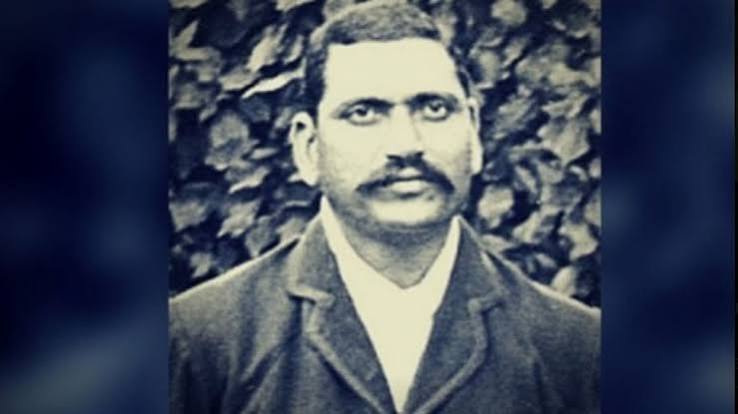
Palwankar Baloo was not only an inspiration for aspiring cricketers but also for young B.R. Ambedkar, who is known as the architect of the Indian constitution. CRICKET IN THE SUBCONTINENT is marked by spin tracks and a few masters of the art. Bishan Singh Bedi, Bhagwat Chandrashekhar, S. Venkataraghavan are some of the legends that come to mind when we speak of Indian spinners. However, Palwankar Baloo was a name that laid the foundation on which this fortress was built. He was not only an inspiration for aspiring cricketers but also for young B.R. Ambedkar, who is known as the architect of the Indian constitution. Despite his achievements on the field, Palwankar Baloo was never treated as an equal off it. At tea breaks, while his upper-caste teammates sat inside the pavilion drinking from porcelain cups, Baloo, a Dalit, was made to stand outside and drink from a separate clay cup. His story is not just about a legend of the sport, but an example of an era where caste discrimination persisted even in a sport often called the “gentleman’s game.” Palwankar Baloo: From Groundsman to India’s Greatest Spin Bowler Palwankar Baloo was born on March 19, 1876 in Dharwad to a family belonging to the Chamar community. According to historian and cricket enthusiast Ramachandra Guha’s book A Corner of a Foreign Field: The Indian History of a British Sport, Baloo’s father worked with the British Army in Poona, where Baloo and his younger brothers first learnt cricket using equipment discarded by British officers. Like many children in poor families, he began working at a young age. His introduction to the game was not as player but as a groundsman. “Baloo’s own first job was at a cricket club run by Parsis. Here he swept and rolled the pitch, and occasionally bowled to the members at the nets. For this work he took home Rs 3 a month,” Guha writes. Later, he joined the prestigious Poona Club, where he prepared pitches, set up nets and bowled to British club members. One of those members was English cricketer Captain J.G. Greig, who quickly realised Baloo’s spin bowling talent. According to Guha, Hindu cricket administrators were divided over selecting Baloo in the team because he belonged to a Dalit community. It was Greig who convinced them that leaving out such a talented bowler because of his caste would be foolish. Guha notes that Greig’s attempt shouldn’t necessarily be seen as him trying to reform society, but simply wanting to test himself against a talented net bowler in competitive matches. Once selected, Baloo soon became the biggest weapon of the Poona Hindus team. His left-arm spin troubled even the strongest European sides. His performances also earned him a place in the historic 1911 All-India team that toured England—the first Indian cricket team to play on British soil. Historian Prashant Kidambi writes in Cricket Country that it took “12 years and three failed attempts” before an Indian team could finally make “its debut on the playing fields of imperial Britain.” When the team returned to Bombay on September 15, 1911, thousands gathered at the harbour to welcome them. Baloo had finished the tour as India’s leading wicket-taker and returned home as one of the country’s biggest sporting heroes. The Spin Legend Who Was Still Treated as an ‘Untouchable’ The Indian society’s taboo was hard to forego especially in the early 20th century. Success on field did not change how Baloo was treated by his own teammates. According to Guha, caste discrimination continued even inside the cricket ground. “At the tea interval… Baloo was served the liquid outside the pavilion, and in a disposable clay matka, while his colleagues drank in white porcelain cups inside,” Guha writes. He faced similar treatment during lunch. “Baloo also ate his lunch off a separate plate, and on a separate table. But he took plenty of wickets all the same. Due chiefly to Baloo’s bowling the Poona Hindus defeated the Poona Europeans and other local sides as well,” Guha writes. Even then, Baloo’s performances were impossible to ignore. Social reformer Mahadev Govind Ranade publicly honoured him after one of his major victories, while Indian freedom fighter Bal Gangadhar Tilak also praised his achievements. Slowly, Baloo’s cricket started challenging many caste prejudices, even if they did not disappear. It was also reinforced in his own family as the Palwankar family became one of Indian cricket’s first great sporting families. His brothers Shivram, Vithal, and Ganpat all went on to play at a high level. In 1923, Baloo’s younger brother Vithal Palwankar became the first Dalit captain of the Hindu team in the Bombay Quadrangular and led the side to several famous victories. The Cricketer Who Inspired Ambedkar, But Later Became His Adversary Dr. B.R. Ambedkar sitting on desk signing documents Being a Dalit, Baloo’s influence reached far beyond cricket. After the 1911 England tour, Bombay’s Depressed Classes organised a public felicitation for him. According to Guha, the welcome address was delivered by a young college student who was then unknown—Bhimrao Ramji Ambedkar. Quoting historian Eleanor Zelliot, Guha writes that this was “the first public appearance” of the man who would later become the architect of the Indian Constitution. “By virtue solely of his deeds on the cricket field, Baloo had become a hero and inspiration to countless Untouchables. And the young B.R. Ambedkar was one of them,” Guha writes. However, when both of them became influential figures for their community, they later disagreed on the future of Dalits in India. Guha writes that Baloo strongly believed in Mahatma Gandhi’s view that caste discrimination could be removed through reform within Hindu society. Ambedkar, on the other hand, believed the Depressed Classes would get justice only through independent political rights and by moving beyond the Hindu social order. During Gandhi’s fast against the Communal Award in 1932—a proposal by the British government to allow ‘untouchables’ to become an electorate separate from the main Hindu community, Baloo was among those who appealed
UP: Dalit priests may be appointed for the Sapta Mandapam, a decision on the recruitment of new priests is likely on July 22nd.

A decision on the recruitment of new priests for the Ram Temple complex is likely to be made at the meeting on July 22nd. According to sources, for the first time, qualified Veda-reading priests from the Dalit community may be offered the opportunity to serve in the Sapta Mandapam temples. This initiative is being taken keeping in mind the increasing number of devotees and social harmony. The Shri Ram Janmabhoomi Teerth Kshetra Trust is preparing to appoint new priests for the Ram Temple complex. According to sources, the new recruitment process for priests may begin after the proposed trust meeting on July 22nd. For the first time, priests from the Dalit community are also likely to be included in this recruitment. If this happens, it will be considered an important step towards further strengthening the message of social harmony in the Ram Temple complex. According to sources, the proposed appointments may include priests from the Dalit community, who may be responsible for performing pujas in the Sapta Mandapam temples located in the Ram Temple complex. The Sapta Mandapam houses temples dedicated to Maharishi Valmiki, Maharishi Vashistha, Maharishi Agastya, Maharishi Vishwamitra, Nishadraj, Mata Shabari, and Mata Ahalya. All these figures and sages are considered symbols of social harmony and inclusion in Indian tradition. Opportunities for priests being considered Sources indicate that given the growing number of devotees and the expansion of the temple complex, there is a need for new priests. Keeping this need in mind, along with social representation, opportunities are being considered for qualified priests from the Dalit community. Recently, the Trust appointed Dr. Krishna Mohan, a Dalit, as interim General Secretary. Consequently, the proposed priest appointments are being seen as aligned with the Trust’s vision of harmony and inclusion. However, no official announcement has been made by the Trust in this regard. A final decision is expected to be made at the July 22nd meeting Currently, 35 priests are serving at the Ram Temple. Currently, a total of 35 priests are serving at the Ram Temple complex. Of these, 20 perform puja at Ram Lalla and Ram Darbar. Ten priests are deployed in two shifts, morning and evening, each with 10 priests. In each shift, five priests perform puja at Ram Lalla and five at Ram Darbar, while the responsibility of aarti is assigned to all priests in turn. The remaining 15 priests perform puja at the fort and Sapta Mandapam temples. Nitin Mishra, Amar Ujala Network, Ayodhya Published by: Akash Dwivedi Courtesy: Hindi News
Immerse in this new book that dives into the life of a Dalit boy in Gujarat
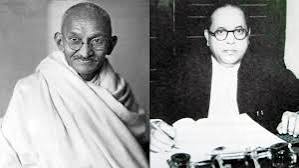
This is most prominently witnessed in the chapter exploring his relationship to Mahatma Gandhi and his ideas Title: Homes Without WindowsAuthor: Chandu MaheriaGenre: MemoirPublisher: JuggernautCost: Rs 699 Gujarati writer Chandu Maheria’s new book Homes Without Windows (Juggernaut), translated into English by Hemant Ashwinkumar, is an honest account of what it meant to grow up as a Dalit boy in the working-class suburb of Rajpur in Gujarat. We learn how several Dalit families left their villages after independence to settle in parts of Ahmedabad. Through 11 essays, Maheria helps readers draw a brief history of caste politics in Gujarat: from aggression in schools of the Khadol village in the 1960s, to the anti-reservation riots and the growing consciousness of Dr Babasaheb Ambedkar’s ideology across the state in the 1980s. Through it all, Maheria’s tone is understated and nuanced. This is most prominently witnessed in the chapter exploring his relationship to Mahatma Gandhi and his ideas. He excavates the reasons why a majority of the Dalit community resents Gandhi and prefers to advocate Dr Ambedkar’s views. Without disagreeing with the concerns of the community on the Gandhi-Ambedkar debate, he argues that one cannot disregard Gandhi’s role in bringing the subject of caste to the forefront of public discussion and politics. Maheria’s most distinctive quality is how he examines everyday objects and gives evidence from his personal experience to portray how deeply entrenched the caste system is in India. Chapters like ‘Your Chappals, Our Skulls’, which highlights footwear, or ‘The Mayor’s Bungalow’, which looks at public toilets, become significant in this regard. For instance, he recollects being turned away at the school gate as a kid, on the first day of school, because he couldn’t afford footwear and reached barefoot. The final chapter on fighting rumours and sicknesses with multiple hospitalisations offers a poignant closing to a sensitive and necessary book Nandini Varma Courtesy : Mid-Day Note: This news is originally published on https:/mid-day.com/bha and is used purely for non-profit/non-commercial purposes, especially human rights
The road to the Dalit settlement in Gorakhpur is dilapidated and muddy: Villagers face difficulties commuting, demanding repairs from the administration.

The road leading to the Dalit settlement in Mainabhagar Gram Panchayat, in the Jungle Kaudiya development block of Gorakhpur, is extremely dilapidated and muddy. Local villagers allege that the condition of this road has been poor for a long time, causing significant difficulties in commuting. According to villagers, children, women, elderly people, and other villagers travel this route daily. The situation becomes even worse during the rainy season, as the entire route is waterlogged and muddy. Local residents reported that while other roads in the village are in good condition, the road to the Dalit settlement has not been repaired. Consequently, schoolchildren face particular difficulties commuting to and from school. Villagers say they have lodged complaints several times in this regard, but no action has been taken yet. They have demanded that the administration and public representatives resolve the transportation problem by constructing the road as soon as possible. Sugreev Kumar Yadav | Bhauramal (Gorakhpur Sadar), Gorakhpur Courtesy: Hindi News
Dalit woman sarpanch alleges harassment, seeks arrest of accused

Rohtak: A woman sarpanch of Mokhra Khas village on Monday gave a representation to the Rohtak superintendent of police (SP), seeking the immediate arrest of two accused named in a case under the Scheduled Castes/Scheduled Tribes (Prevention of Atrocities) Act. She also sought permission to hold a peaceful dharna if no action is taken. In her representation dated July 13, sarpanch Manjubala stated that she belongs to the SC community, and became a permanent resident of Mokhra Khas after her marriage. She stated that she was elected as the village sarpanch in the 2022 panchayat elections from a general seat reserved for women, defeating her nearest rival by 32 votes. She added that all other candidates in the election belonged to the general category. The representation alleges that two villagers, identified as Rajnesh alias Dola and Manoj alias Bandu, have been hostile towards her and her family. Referring to an FIR registered in May 2026 under the SC/ST Act at Bahuakbarpur police station, Manjubala alleged that despite registration of the case, the accused have not been arrested so far. She claimed that the delay in arrest has created fear for the safety of her family. In the representation, she stated that if timely action is not taken, the accused may pose a threat to their lives, forcing them to leave the village. She also said she already met senior police officials twice regarding the matter, but no effective action has been taken. Speaking to TOI, Manjubala said she enjoys support from people of all communities in the village, but alleged that the two accused made caste-based and defamatory remarks against her. Meham DSP Tanuj Sharma confirmed that the representation has been received. Courtesy : TOI Note: This news is originally published on https:/timesofindia.com/bha and is used purely for non-profit/non-commercial purposes, especially human rights
Parliament passes Transgender Persons Amendment Bill, 2026 with Rajya Sabha approving it today

Parliament has passed the Transgender Persons (Protection of Rights) Amendment Bill, 2026, with the Rajya Sabha approving it today. The bill was passed by the Lok Sabha yesterday by a voice vote amid an Opposition-led walkout. The bill seeks to redefine the category of transgender, removes the provision of self-perceived gender identity and excludes several socio-cultural identities as well as transmasculine individuals from its ambit. It also further defines transgender persons within a biological framework, based on intersex variations and differences in sexual development. Replying to the discussion on the Bill in the Rajya Sabha, Social Justice and Empowerment Minister Dr Virendra Kumar said the government is compassionate towards the well-being of the transgender community. He said the Bill has provisions to empower the transgenders and give them dignity. The Minister said that the NDA government has taken several initiatives to bring transgender people to the mainstream and stop discrimination against them. Starting the discussion in the Upper House, Congress MP Renuka Chowdhury said this bill dilutes the privacy of an individual provided under the Constitution. Opposing the Bill, Ms Chowdhury said self-identification cannot be taken away through bureaucratic certification. Criticizing the government, she said that the proposed bill undermines the fundamental rights and dignity of transgender persons. Calling such a move wrong and illegal, she argued that forcing transgender persons to provide their identity through official certificates is against the spirit of equality and dignity guaranteed by the constitution. She also questioned the government’s approach for not properly consulting with the transgender community before bringing the Bill. She also referred to the Supreme Court’s landmark NALSA judgement of 2014, which recognized the right of transgender persons to self-identify their gender. Ms Chowdhury said the proposed Bill violates the principles laid down in that judgement and fails to respect an already established legal framework. DMK MP Tiruchi Shiva also opposed the Bill, saying that even if the Bill is passed in Parliament with a majority, it will be struck down by the Supreme Court. He further added that the Bill violates Articles 14, 15, 19 and 21 of the Constitution and it deprives the community of the right to freedom, dignity and self-determination. Supporting the Bill, BJP MP Medha Vishram Kulkarni said, ” This Bill ensures justice, dignity, protection from criminalisation and legal safeguards for transgender persons. She also thanked Prime Minister Narendra Modi for bringing this bill with certain amendments in order to ensure that the benefits reach the deserving people in a proper manner. She said there is a need for a law that brings justice to real transgender individuals and punishes fake ones. Mrs Kulkarni said the benefits should be extended to those who are transgender by birth. She said that the amendment to extend punishment will bring down the rate of crime and forced identities. TMC’s Saket Gokhale said that 31% of Transgender people in India have attempted suicide because of the discrimination that they are facing. He alleged that now the government is going to start discriminating against them as though social discrimination were not enough. He called it unacceptable. Mr Gokhale expressed concern that gender is going to be decided by the Chief Medical Officer and a District Magistrate, and the bill does not prescribe any qualifications for the Chief Medical Officer. Sanjay Singh of AAP said the Bill is a big let-down for the transgender community. He accused the government of not doing anything for the community. RJD’s Manoj Kr Jha said that prejudices against transgender people should stop, and they should be able to live with dignity. He added that self-determination of gender should not be taken away. CPI(M)’s John Brittas said it is a black-letter day and the Bill is taking India a century back. He pleaded with the government to either withdraw the Bill or refer it to a Select Committee. Jaya Bachchan of the Samajwadi Party also questioned the government over the legislation. She sought to know what the urgency was in bringing the Bill, without examining it with the depth and care that it deserved. Courtesy : NOA Note: This news is originally published on https:/newsonair.com/bha and is used purely for non-profit/non-commercial purposes, especially human rights
Bangladeshi man disguised as transgender nabbed in Delhi’s Bhalswa

Delhi Police arrested a 44-year-old illegal Bangladeshi national, Sukanta Chandra Das, under Bhalswa Flyover. He disguised himself as a transgender person at night to engage in illegal activities. Deportation proceedings have been initiated. In a continued drive against illegal immigration, Delhi Police apprehended one illegal Bangladeshi national during an operation conducted in the early hours of the morning under Bhalswa Flyover, within the jurisdiction of Jahangir Puri police station. Acting on specific intelligence, the team intercepted the suspect, who was found moving in the area disguised as a transgender person. During sustained questioning and verification, it was established that he was a Bangladeshi national illegally residing in India without any valid travel or identity documents. It was further revealed that he used to disguise himself as a transgender person during the night to engage in illegal activities. The Delhi police informed that in the case of the secret informer, the team apprehended one suspicious person. During initial questioning, the suspect failed to produce any valid travel or identity documents. Detailed verification of documents, digital footprints and sustained interrogation established that he was a Bangladeshi national illegally residing in India. During interrogation, he disclosed that he used to disguise himself as a transgender person during the night to engage in illegal activities, police said. Investigation Reveals Key Evidence During the investigation, one smartphone installed with the banned IMO application and Bangladeshi national identity documents stored in the phone gallery was recovered, press release stated. Necessary legal action was initiated as per the provisions of law. The apprehended Bangladeshi national was produced before the Foreigners Regional Registration Office (FRRO), and deportation proceedings were initiated as per the established procedure. Suspect Identified The Delhi Police disclosed the details and said the apprehended individual is identified as Sukanta Chandra Das, alias Madhuri, a 44-year-old male. A resident of Village Baria, P.O. Bhawal Baria 1700, P.S. Gazipur Sadar, District Gazipur, Dhaka, Bangladesh. The suspect was taken into custody following the recovery of evidence, which includes one smartphone containing the banned IMO application and various Bangladeshi National Identity documents recovered from the phone gallery, police said. (ANI) (Except for the headline, this story has not been edited by Asianet Newsable English staff and is published from a syndicated feed.) Courtesy : Asianet News Note: This news is originally published on https:/asianetnews.com/bha and is used purely for non-profit/non-commercial purposes, especially human rights
Maharashtra TET paper leak: Rahul Gandhi’s 3 demands to CM Fadnavis

NEW DELHI: Leader of Opposition Rahul Gandhi on Tuesday intensified his attack on the Centre over recurring examination paper leaks, citing the cancellation of the Maharashtra Teacher Eligibility Test (TET) and accusing the system of failing lakhs of candidates. In a post on X, Rahul made three demands to the Maharashtra government, urging an immediate announcement of a fresh examination date, strict action against those responsible for the leak, and relief measures for affected aspirants. “Maharashtra TET paper leaked, exam cancelled. 6 lakh candidates left in limbo. Two weeks have passed, no trace of a new date. The leakers roam free, the system remains spotless, and the one paying the price is the one who toiled with honesty,” Rahul wrote. He said the affected candidates were future teachers who had spent years preparing for the examination, paid application fees, and travelled to distant examination centres, only to be left waiting “without a date, without answers.” “These are the country’s working and future teachers, the ones who hold India’s future in their hands – these are the very people who prepared year after year, filled out forms, paid fees, traveled to far-flung centers. And now they’re just waiting, without a date, without answers,” he wrote. Further addressing Maharashtra chief minister Devendra Fadnavis, Rahul Gandhi issued a three-point demand, making an immediate announcement of a fresh Maharashtra TET schedule the centrepiece of his appeal. He urged the state government to announce the new examination date without further delay, take strict action against those responsible for the paper leak instead of penalising candidates, and grant age limit relaxations to aspirants whose eligibility may have been affected by the postponement. He wrote, “Chief Minister ji, three things, today itself: Timeline: Announce the new TET date right now; Accountability: Action against those responsible for the leak, not against the candidates; Protecting the future: Those whose year was ruined by this leak should get age limit relaxations.” Rahul said the government must act swiftly to restore confidence among lakhs of candidates left in uncertainty following the cancellation of the examination, arguing that the burden of administrative failures should not fall on those who had prepared honestly for years. He further said, “The mistake is the institution’s, the punishment the candidate’s, this is not justice.” He also announced that he would hold a public interaction on July 17 in Dehradun, where he would address the broader issue of paper leaks. “On July 17 in Dehradun, I will discuss the growing crisis of paper leaks with you in detail. The time has come for an education revolution, to build a system where the youth reap the rewards of their hard work, not the failures of the system.” Paper leaks have emerged as a recurring political issue in recent years, with opposition parties repeatedly accusing governments of failing to ensure the integrity of competitive examinations and recruitment tests, while demanding stronger safeguards and accountability. Courtesy : TOI Note: This news is originally published on https:/timesofindia.com/bha and is used purely for non-profit/non-commercial purposes, especially human rights
From Rahul Gandhi to Vijay to Nadda: CJP invites leaders across party lines to back NEET protesters
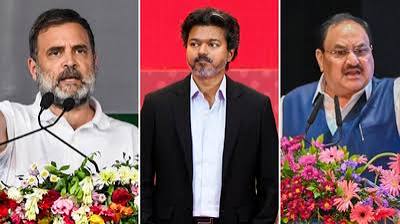
NEW DELHI: The Cockroach Janta Party on Tuesday wrote to leaders across the political spectrum, inviting them to join its protest at Delhi’s Jantar Mantar to stand in solidarity with youth protesting against NEET UG leak. The protest, led by climate activist and educator Sonam Wangchuk, who is on an indefinite hunger strike, has gained national attention. In its appeal, the CJP urged leaders, including former BJP president Jagat Prakash Nadda and Lok Sabha leader of opposition Rahul Gandhi, to support students’ demands for accountability and justice over the alleged examination irregularities. One of the major demand of the protesting group is the resignation of Union education minister Dharmendra Pradhan over NEET fiasco. In a post on X on Tuesday, CJP chief spokesperson Saurav Das said he and the outfit’s founder, Abhijeet Dipke, wrote to political leaders on July 9 and 10, inviting them to join the group’s peaceful protest against the alleged NEET paper leak, which has now entered its 25th day. The letters were sent to BJP chief Nitin Nabin, Andhra Pradesh chief minister N Chandrababu Naidu, TDP MP Lavu Sri Krishna Devarayalu, JD(U) Rajya Sabha MP Sanjay Kumar Jha and YSRCP MP P V Midhun Reddy. Among opposition leaders, the CJP reached out to Congress leader Rahul Gandhi, Congress president Mallikarjun Kharge, DMK leaders Kanimozhi and Tiruchi Siva, Samajwadi Party supremo Akhilesh Yadav and Rajya Sabha member Ram Gopal Yadav, Shiv Sena (UBT) MP Sanjay Raut, Jammu and Kashmir chief minister Omar Abdullah, National Conference MP Aga Syed Ruhullah Mehdi, RJD leader Tejashwi Yadav and MP Misa Bharti. The outfit also sent letters to TVK president and Tamil Nadu chief minister Joseph Vijay, Azad Samaj Party chief Chandra Shekhar Azad and AIMIM president Asaduddin Owaisi. “Even before these letters, and in the days since, several political leaders from the list and their party members have extended their support to our youth movement. Many have visited Jantar Mantar, while others have invited our delegation for discussions. We sincerely thank each one of them for standing with India’s youth,” Das said. He said the organisation “continue to await responses from several others”. “We again sincerely appeal to the leaders to keep aside their politics and lend their voice to the voice of the young. This movement is about an entire generation demanding accountability for examination paper leaks, recruitment failures, and justice and compensation for the families of students who lost their lives at the hands of this corrupt, broken education system,” he said. “History will remember who stood with the youth when they called for justice. We only appeal that all of us stand on the right side of history,” Das added. In a separate post on X, Dipke said the organisation had taken its demands to leaders across the political spectrum. “The Cockroach Janta Party has reached out to all political parties regarding our demand of sacking the education minister and Rs. 1 cr compensation to the families of students who died by suicide,” Dipke said. The protest, which began on June 20, has drawn support from Opposition leaders, academicians, activists and public figures. Among those who have visited the protest site are former Delhi chief minister Atishi along with AAP leaders, Samajwadi Party MP Pushpendra Saroj, TMC MPs Mahua Moitra and Sagarika Ghose, CPM MP Amra Ram, veteran CPM leader Subhashini Ali, former Kerala ministers K K Shailaja, Thomas Isaac, K N Balagopal and P Rajeev, Tripura Leader of Opposition and CPM Polit Bureau member Jitendra Chaudhury, and Shiv Sena (UBT) MP Arvind Sawant. The agitation has also received support from actor Prakash Raj, Punjabi singer Kaka (Ravinder Singh), delegations from the Samyukta Kisan Morcha (SKM), the Assam Jatiya Parishad Youth Wing, and several academics and members of civil society. In the latest development, Dipke said former Delhi CM AAP supremo Arvind Kejriwal and Shiv Sena (UBT) chief Uddhav Thackeray separately called him to enquire about Wangchuk’s health. According to Dipke, both leaders expressed concern over Wangchuk’s deteriorating condition and extended support to the proposed march to Parliament on July 20. Courtesy : TOI Note: This news is originally published on https:/timesofindia.com/bha and is used purely for non-profit/non-commercial purposes, especially human rights
Rahul Gandhi, Haryana Congress in-charge Sanjay Dutt discuss strategy to strengthen party in state

CHANDIGARH: Haryana Congress in-charge Sanjay Dutt on Tuesday met Leader of Opposition in the Lok Sabha Rahul Gandhi and discussed the political situation in the state, with the party deciding to intensify efforts to strengthen its organisation and expand outreach to workers. Dutt said Gandhi reviewed the political scenario in Haryana and gave guidance on building a stronger, more active and people-centric organisation. The discussions also centred on maintaining regular engagement with party workers and effectively raising public issues. Referring to his recent visit to the Haryana Pradesh Congress Committee headquarters in Chandigarh, Dutt said he held meetings with office-bearers, district presidents, representatives of frontal organisations and party workers over several days. He said the interactions focused on strengthening the organisation down to the booth level, increasing workers’ participation and preparing them to take up public issues more effectively. Expressing confidence in the party’s prospects, Dutt said the Haryana Congress would emerge stronger and more responsive under Rahul Gandhi’s leadership. He said the party would continue its organisational expansion drive across the state while maintaining close coordination with workers and office-bearers. The meeting comes as the Congress steps up organisational activities in Haryana ahead of its future political programmes and campaigns in the state. Courtesy : TOI Note: This news is originally published on https:/timesofindia.com/bha and is used purely for non-profit/non-commercial purposes, especially human rights