
Evening news wrap: Meta CEO Mark Zuckerberg apologises to Centre; Rahul Gandhi meets student protesters, targets PM Modi & more

Meta CEO Mark Zuckerberg apologises to Centre over CSAM, deepfakes. Rahul Gandhi meets student protesters, attacks PM Modi and Amit Shah over crackdown. Dramatic visuals show India-flagged ship ablaze before sinking in Red Sea attack. Rijiju holds talks with Rahul Gandhi to break Parliament deadlock. Trump-era crackdown detains families of active-duty US military personnel. Here are the top stories of the day: Meta apologises to Centre over CSAM, deepfakes; safe-harbour under scrutiny Meta CEO Mark Zuckerberg has reportedly apologised to the Centre over child sexual abuse material (CSAM), deepfake content and platform moderation issues during talks with government officials. The Centre questioned Meta’s compliance with Indian laws and warned its safe-harbour protection under the IT Act could be at risk. Read full story Rahul meets NEET protesters, says students defended India’s future Congress leader Rahul Gandhi met five student protesters involved in the NEET agitation, praising them for standing up against what he called a “broken” education system. He alleged the students were assaulted during protests and later harassed online, while accusing Prime Minister Narendra Modi and Union home minister Amit Shah of failing the country’s youth. Read full story Visuals emerge of Indian tanker engulfed in flames before sinking off Yemen Dramatic visuals released by Iran’s Press TV show an India-flagged cargo vessel engulfed in flames moments after it was hit by a projectile in the Red Sea before sinking off Yemen’s western coast. The MSV Faize Noore Oliya was carrying 14 crew members, all of whom were rescued safely. Read full story Rijiju meets Rahul Gandhi as Centre seeks to break Parliament deadlock Parliamentary affairs minister Kiren Rijiju held a nearly 50-minute meeting with Rahul Gandhi to discuss the ongoing Parliament logjam and the proposed Delimitation Bill amid repeated disruptions in the Monsoon Session. The talks came as the Lok Sabha was adjourned again over opposition protests on issues including the alleged police action against student protesters. Read full story Trump’s immigration crackdown hits US military families: Report The Trump administration has detained dozens of parents and spouses of active-duty US service members as part of its immigration crackdown, according to an AP investigation. At least 51 family members have been detained and six deported, reversing decades of practice that largely shielded military families. Read full story Courtesy : TOI Note: This news is originally published on https:/timesofindia.com/bha and is used purely for non-profit/non-commercial purposes, especially human rights
Parliament passes Transgender Persons Amendment Bill, 2026 with Rajya Sabha approving it today
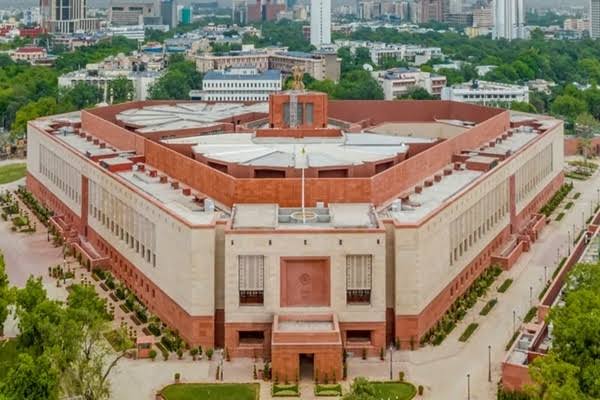
Parliament has passed the Transgender Persons (Protection of Rights) Amendment Bill, 2026, with the Rajya Sabha approving it today. The bill was passed by the Lok Sabha yesterday by a voice vote amid an Opposition-led walkout. The bill seeks to redefine the category of transgender, removes the provision of self-perceived gender identity and excludes several socio-cultural identities as well as transmasculine individuals from its ambit. It also further defines transgender persons within a biological framework, based on intersex variations and differences in sexual development. Replying to the discussion on the Bill in the Rajya Sabha, Social Justice and Empowerment Minister Dr Virendra Kumar said the government is compassionate towards the well-being of the transgender community. He said the Bill has provisions to empower the transgenders and give them dignity. The Minister said that the NDA government has taken several initiatives to bring transgender people to the mainstream and stop discrimination against them. Starting the discussion in the Upper House, Congress MP Renuka Chowdhury said this bill dilutes the privacy of an individual provided under the Constitution. Opposing the Bill, Ms Chowdhury said self-identification cannot be taken away through bureaucratic certification. Criticizing the government, she said that the proposed bill undermines the fundamental rights and dignity of transgender persons. Calling such a move wrong and illegal, she argued that forcing transgender persons to provide their identity through official certificates is against the spirit of equality and dignity guaranteed by the constitution. She also questioned the government’s approach for not properly consulting with the transgender community before bringing the Bill. She also referred to the Supreme Court’s landmark NALSA judgement of 2014, which recognized the right of transgender persons to self-identify their gender. Ms Chowdhury said the proposed Bill violates the principles laid down in that judgement and fails to respect an already established legal framework. DMK MP Tiruchi Shiva also opposed the Bill, saying that even if the Bill is passed in Parliament with a majority, it will be struck down by the Supreme Court. He further added that the Bill violates Articles 14, 15, 19 and 21 of the Constitution and it deprives the community of the right to freedom, dignity and self-determination. Supporting the Bill, BJP MP Medha Vishram Kulkarni said, ” This Bill ensures justice, dignity, protection from criminalisation and legal safeguards for transgender persons. She also thanked Prime Minister Narendra Modi for bringing this bill with certain amendments in order to ensure that the benefits reach the deserving people in a proper manner. She said there is a need for a law that brings justice to real transgender individuals and punishes fake ones. Mrs Kulkarni said the benefits should be extended to those who are transgender by birth. She said that the amendment to extend punishment will bring down the rate of crime and forced identities. TMC’s Saket Gokhale said that 31% of Transgender people in India have attempted suicide because of the discrimination that they are facing. He alleged that now the government is going to start discriminating against them as though social discrimination were not enough. He called it unacceptable. Mr Gokhale expressed concern that gender is going to be decided by the Chief Medical Officer and a District Magistrate, and the bill does not prescribe any qualifications for the Chief Medical Officer. Sanjay Singh of AAP said the Bill is a big let-down for the transgender community. He accused the government of not doing anything for the community. RJD’s Manoj Kr Jha said that prejudices against transgender people should stop, and they should be able to live with dignity. He added that self-determination of gender should not be taken away. CPI(M)’s John Brittas said it is a black-letter day and the Bill is taking India a century back. He pleaded with the government to either withdraw the Bill or refer it to a Select Committee. Jaya Bachchan of the Samajwadi Party also questioned the government over the legislation. She sought to know what the urgency was in bringing the Bill, without examining it with the depth and care that it deserved. Courtesy : NOA Note: This news is originally published on https:/newsonair.com/bha and is used purely for non-profit/non-commercial purposes, especially human rights
The Regressive Turn in India’s Transgender Law
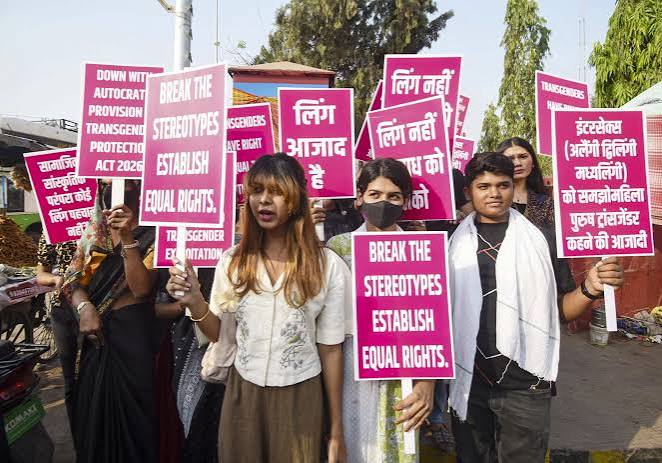
Woes of a transgender person begin at birth. Cursed, cussed, and ostracised, transgender people live on the margins of society. The spectre of hopelessness and despondency looms over them from cradle to their grave. They find safe harbour and joy not within but outside the society. My recent participation in a congregation organised by Vikalp and Gujarat Queer People’s Alliance brought this reality vividly to the forefront. Their struggle in getting a place under the sun exemplified what is wrong with the Transgender Amendment Act, 2026. Every testimonial that was presented at the jan sunvai (people’s hearing) revealed egregious flaws in the Act. The amendment seeks to alter the fundamental principle of self-identification governing laws related to transgender persons. Gender self-identification allows a person to alter their legal gender marker on official documents by making a self declaration without having to go through the excruciating process of a medical exam, psychological evaluation or gender affirming surgeries. The 2026 amendment has overturned this fundamental principle by necessitating a medical exam to determine gender identity, thereby hollowing out the agency conferred on an individual without regard to the havoc brought by it. The rationale provided by the state is “fakery”; the constant refrain one hears is that a section of persons could avail of benefits that are meant for transgender persons. Why the state’s reasoning is flawed First, is this not the same problem the state is confronted with when configuring benefits for minority communities like Scheduled Castes, Scheduled Tribes, Other Backward Castes and others. Therefore, would the state deny benefits to a vast majority who fall under these groups only because of the possibility of a fraudulent claim being made? It is evident that this logic is often employed by the state to strip that section of the citizenry of their rights which is not electorally significant, requiring courts to intervene. Sadly, courts, instead of the beneficent state, are called upon to make the course correction which invariably drains the transgender community of their time and resources. This pattern is familiar to most marginalised groups. A case in point is horizontal reservations which were fructified after hard-fought court battles. Good examples of those who received benefits of horizontal reservation, among others, are persons with disabilities and former servicemen. Second, is the state’s failure to recognise transgender persons’ right of self-identification. Self-identification received the imprimatur of the Supreme Court via its NALSA judgment (2014), followed by the legislature with the enactment of the 2019 Transgender Act until the roll out of the 2026 Transgender Amendment Act. The United Nations too has passed several resolutions urging nation states to align their domestic laws with the aforementioned principle. Of the many problems that have sprung up with the enactment of the 2026 amendment, the core grievance is the state’s inability to appreciate that a transgender person is a one whose mind is not in tune with the body the person is born with. Third, what is the benefit that a person will secure who, purportedly, falsely claims to belong to the trans community. Presently, apart from insurance, there is no substantial benefit available to a transgender individual. There are no safe houses or shelters; there is no provision for reservation despite the NALSA judgment observing that transgender persons should be categorised as “Socially and Economically backward class”; there is no provision for financing gender affirming surgeries for those who wish to adopt that route. Empirical data would show that many do not go through surgery because of the expense involved, paucity of doctors who specialise in this field, and more importantly the low success rate of such surgeries and the long after care period involved post the surgery. Stigma attached with being declared a transgender disincentivises persons not belonging to this group from registering as transgenders. Pejorative slurs such as ‘chakka’, ‘hijra’, and ‘bhand’ chase transgender people all their lives, rehabilitated or not. Fourth, the 2026 amendments are founded on mistrust and invasion of privacy. Medical exams and certification by an official who is untrained and unexposed in the field of gender-affirmation or therapy is a recipe for disaster. At the jan sunvai, the testimony of Ramesh, who said, “mein alag hoon magar galat nahin hoon (I am different but I am not wrong)” struck me. Another transman, Yogesh, said that while his family of origin accepted him for who he was, his neighbours stripped him naked to know what lay below the waistline. He also spoke of the builder’s refusal to allow a “kinnar” from occupying a flat, which they had bought with their own legitimate funds, because of opposition from other residents in the society. These testimonies brought to the fore the deep sense of hurt that transgenders carry and the flawed understanding of a vast section of the society. Some of us are, perhaps, unable to fathom the future, i.e., what if our children or grandchildren have the same dilemmas or challenges. What left me speechless was Maria’s retort to a bystander who ridiculed her for begging and not working because she was otherwise able-bodied: “Agar kaam nahi deh sakte ho , Aap koh koi adhikar nahi hai yeh kehna ka ki mein apni aajivika kaise kammah hoon” What needs to be done Plainly, the 2026 amendment is regressive for a variety of reasons. It moves away, as indicated above, from self-identification, to medical examination; it does nothing for providing shelter to those in distress, has no provision for employment, funding gender-affirming care, or for ensuring that specialised public facilities are setup in sufficient number which are run and managed by domain experts; and significantly, there is no attempt bring about legislative and administrative changes to increase awareness about issues concerning transgender persons, within the society at large, in particular, among those who manage institutions, i.e., police, doctors, judges and lawyers. Lack of awareness and sensitivity to what affects the lives of transgender people begins at the elementary level. Transgender persons, as wrongly understood, are not a “Third Gender”, an
Uproar over high-tension line in Banda! Allegations of the line being laid over a Dalit settlement, complaint to DM
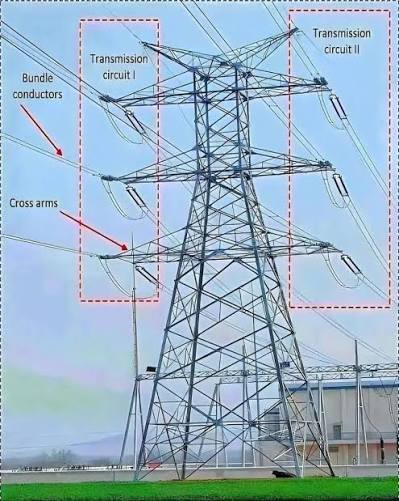
A dispute has escalated over an 11,000-volt high-tension line in Parsaunda village, Banda. Villagers allege that the line is being laid over the houses of the Dalit settlement. A memorandum has been submitted to the DM demanding a rerouting. 4PM News Network: A controversy has erupted over the proposed 11,000-volt high-tension line during road widening in the Gram Panchayat Parsaunda, located in the Tindwari block of Banda district. Villagers allege that the electricity department is preparing to lay the high-voltage line over the houses of the Scheduled Caste settlement. Regarding this, residents have submitted a memorandum to the District Magistrate demanding a rerouting of the line. Villagers ask, “Why is the line over a populated area despite vacant land?” Residents of Pradhan Ka Purwa (a Scheduled Caste settlement) say that there is ample vacant land available on the other side of the road, yet plans are being made to lay the power line over the populated area. Villagers say that if a high-tension line passes over their homes, there will be a risk of serious accidents in the future. They say that the line’s route should be changed, prioritizing public interest and safety. Memorandum submitted to DM, administrative action awaited Villagers submitted a memorandum to the District Magistrate demanding that the proposed 11 kV power line be rerouted to the other side of the road. The memorandum bears the signatures and thumbprints of several villagers. Currently, no official statement has been issued by the administration or the electricity department on this matter. Locals are now watching the administration’s decision following the complaint. Report – Iqbal Khan, Banda Courtesy: Hindi News
High Court Takes Major Action in Basti’s High-profile Dalit Girl Case, Commission Issues Notice to DM, SP
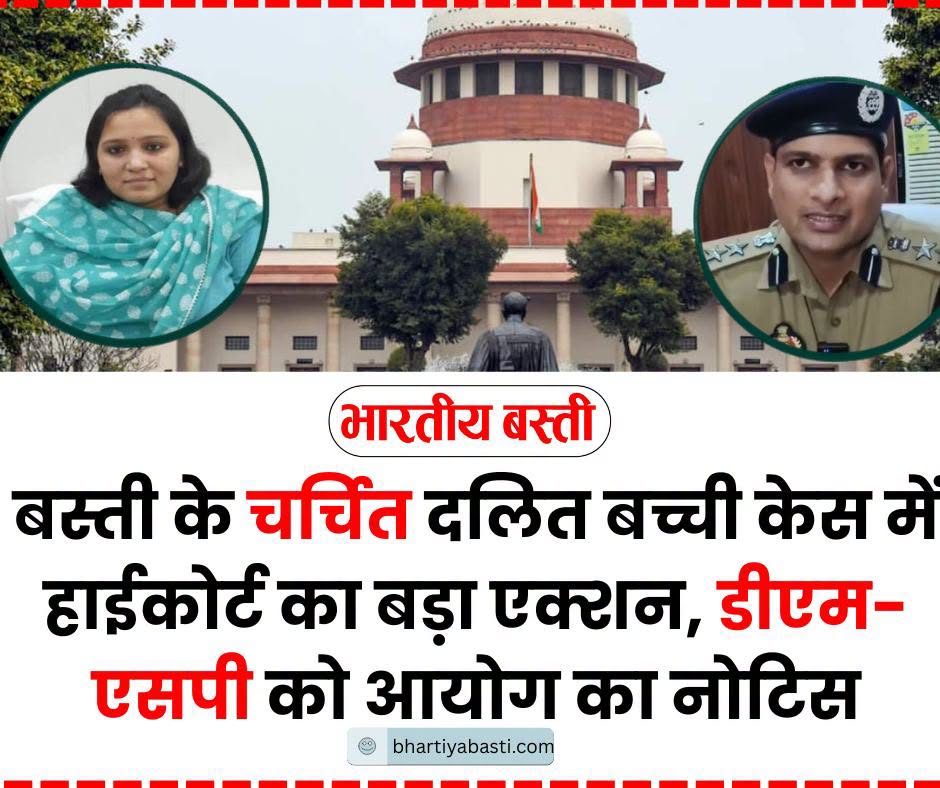
The Allahabad High Court has taken a tough stand in the highly publicized case of the alleged rape and murder of a five-year-old Dalit girl in Siddhnath village, under the Lalganj police station area. A press release issued by the Bhim Yuva Vahini organization claims that the High Court’s double bench has directed the Director General of Police (DGP) of Uttar Pradesh to personally monitor the case and ensure necessary action. According to the press release, the organization alleges that the local administration failed to take effective action against the accused in this incident, which occurred approximately 14 months ago. The organization states that after persistent advocacy and efforts in the court, the High Court took cognizance of the matter and issued directives to the DGP on July 30, 2026. The release states that the High Court has directed the DGP to take appropriate action against the concerned officials, if necessary, and to file an affidavit within three weeks. The organization also claims that the case is being monitored under the supervision of its national president, Sonu Rao, and senior advocate, Hanuman Deen Verma. According to a press release, the National Commission for Scheduled Castes (Government of India) has also issued a notice to the District Magistrate and Superintendent of Police, Basti, directing them to submit a report on the action taken in the case to the Commission within 15 days. Sonu Rao, National President of the Bhim Yuva Vahini, welcomed the action taken by the High Court and the National Commission for Scheduled Castes and expressed hope for justice. By Vikas Kumar Courtesy: Hindi News
5 juveniles held for gang-raping 9-year-old Dalit girl in UP
The accused are being questioned in the presence of their guardians, police said. Lucknow: Five minors have been booked for allegedly gang-raping a nine-year-old Dalit girl in a village in Uttar Pradesh’s Shahjahanpur, police said on Saturday, August 1. Circle Officer (Tilhar) Vidush Saxena told PTI that the incident took place on July 31 evening when the girl was playing with other children on a school ground, and the minors, aged between 10 and 14 years, allegedly took her to a nearby field. Citing the first information report (FIR) registered in the case, Saxena said the girl’s family alleged that the accused gang-raped her in the field and fled after the owner of the field spotted them there. The girl later reached home and informed her mother about the incident, following which a complaint was lodged and a case was registered late on Friday night, the CO said. “All five minors have been held and will be produced before the Juvenile Justice Board for further legal proceedings,” the station house officer said. Police have registered a case of gang rape under the Bharatiya Nyaya Sanhita (BNS), the Protection of Children from Sexual Offences (POCSO) Act and the Scheduled Castes and the Scheduled Tribes (Prevention of Atrocities) Act. MS Degree College Admissions Admissions 2026-27 The accused are being questioned in the presence of their guardians, police said, adding that the rape survivor has been sent for medical examination. Courtesy : TSD Note: This news is originally published on https:/thesiasatdaily.com/bha and is used purely for non-profit/non-commercial purposes, especially human rights
The rampage of a controversial Milak police inspector: Caste-related abuses against a Dalit youth, causing a stir as the audio goes viral
A Milak police inspector has been accused of violating the law by hurling caste-related abuses at a Dalit youth. Correspondent, Milak (Rampur). The law enforcers themselves are accused of breaking the law. The way an inspector, disregarding his oath of office, has once again put the police’s image in the dock. An inspector, who was transferred from Milak police station on July 7th, has been accused of using abusive language, caste-related abuses, and threatening to implicate him in a false case. After the audio of the conversation between the victim and the inspector went viral, questions have been raised about the police’s functioning. The victim has now filed a complaint with the National Human Rights Commission and the National Scheduled Caste Commission seeking justice against this harassment. According to Ajay Singh, a resident of Bhaisodi in the area, a minor dispute over a transaction of two thousand rupees was resolved amicably on August 2nd. However, the very next day, a sub-inspector posted at Milak police station called him on his mobile phone and created a ruckus. It is alleged that the uniformed man immediately began abusing him without any investigation. The victim alleges that the sub-inspector used casteist slurs and other abusive language, which violated his social dignity. When the victim attempted to express his views and stated that he was recording the conversation, the sub-inspector’s true nature was revealed. The sub-inspector threatened to file a false case. This incident raises a serious question about the police’s working style. While the police claim to serve and protect the public, caste discrimination and threats are being perpetrated under the guise of uniform. The sub-inspector has already been embroiled in controversy. One of the two sub-inspectors placed on the line on July 7th has previously been embroiled in controversy. He had previously been involved in disputes with another inspector posted on the same beat. They would pass the buck to each other in cases that offered no financial gain, and would fight to gain access to the areas where they expected to earn money. In this case, Superintendent of Police Somendra Meena had placed both of them under suspension. BY ANIL KUMAR AWASTHIEDITED BY: ANSHUL BHARTARIYA Courtesy: Hindi News
‘Anti-poor, anti-Dalit’: Chennai hunger strikers demand NEET abolition
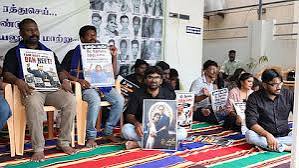
A group of hunger strikers in Chennai are on an indefinite fast, demanding a complete ban on the National Eligibility-cum-Entrance Test (NEET) and demanding that education be moved from the concurrent list to the state list. The protest, led by S Manirathinam — brother of the late S Anitha — is taking place at Thiruvaliur Illam in Koyambedu, even as nationwide student protests that forced the resignation of Education Minister Dharmendra Pradhan have been called off. The Ban NEET Movement – Tamil Nadu released an official statement hailing Pradhan’s resignation on July 25 as “the triumph of the people and the principles of democracy over an autocratic government.” The movement, which describes itself as fighting for a “deeply unequal and corrupt education system,” acknowledged the symbolic weight of the resignation but warned that it brings “no concrete change” for students. The context for this achievement was a remarkable wave of student protests led by the self-styled “Cockroach Janata Party” (CJP), sparked by the leak of the 2026 NEET medical entrance exam paper. The movement forced an unprecedented political concession in India: Dharmendra Pradhan became the first cabinet minister to resign due to social protests in recent history. In his resignation letter, Pradhan stated he stepped down “considering the situation” and to ensure that “anti-national forces should not take advantage,” urging students to focus on their studies. Despite the victory in Delhi, the Ban NEET Movement insists the struggle is far from over. Their statement expresses deep disappointment that protests were dispersed before concrete policy changes were enacted. They have now escalated their campaign with an indefinite hunger strike, which began on August 1. The movement states, “We have two demands. 1) The union government must ban NEET and allow states to evaluate medical college entrances on the basis of 12th standard/plus two marks. 2) The union government must move education from the concurrent list to the state list, allowing states to shape their own education policy. The strike will continue until these demands are met.” The movement also invokes the memory of S Anitha, a student who died by suicide in 2017 after failing to secure a medical seat under the NEET system, a tragedy that has become a rallying cry for opponents of the exam. The hunger strikers are drawing attention to the findings of the Justice AK Rajan Committee, a government-commissioned body in Tamil Nadu that studied the impact of NEET. According to the movement’s statement, the 2021 report provides “abundant proof” that NEET has had a devastating effect in the state. The movement alleges that NEET reduces access for students from poor, rural backgrounds and those educated in government schools, drastically reduces access for SC, ST, and OBC students, has led to the suicide of almost 100 young Indians (most of them Dalits) who dreamed of becoming doctors, and forces students to depend on a “new ecosystem of costly private coaching centres,” making wealth a barrier to education. The AK Rajan Committee, as reported by The Hindu, concluded that NEET is “anti-poor, anti-social justice and favoured students from affluent families” and those who could afford expensive coaching. The movement has framed its struggle as a constitutional and federalist issue. They argue that NEET “prevents states of the Indian union from deciding how their own educational institutions are run and therefore stands in violation of the principle of federalism.” This echoes the long-standing position of the Tamil Nadu government, which has consistently sought an exemption from NEET. The activists’ second demand — moving education from the concurrent list to the state list — is a fundamental restructuring of India’s federal system that would grant states the sole power to shape their education policies. In their statement, the Ban NEET Movement is urgently reaching out to “all movements, political parties, unions, student organizations and individuals interested in protecting our democracy” to join them. They are calling for supporters to come to the protest site at Thiruvaliur Illam in Koyambedu, spread the word through social media, and organize solidarity protests across the country. As the hunger strike continues, the movement’s stance poses a fundamental challenge to the Indian government. While the resignation of Dharmendra Pradhan is a major victory for the youth protest movement, the activists in Tamil Nadu insist that until NEET itself is abolished and states gain full control over education, the fight for a “democratic” and “equal” education system is not over. By A Representative Courtesy : Counterview Note: This news is originally published on https:/counterview.com/bha and is used purely for non-profit/non-commercial purposes, especially human rights
Rahul Gandhi questions Private role in Sainik schools at parliamentary panel meet
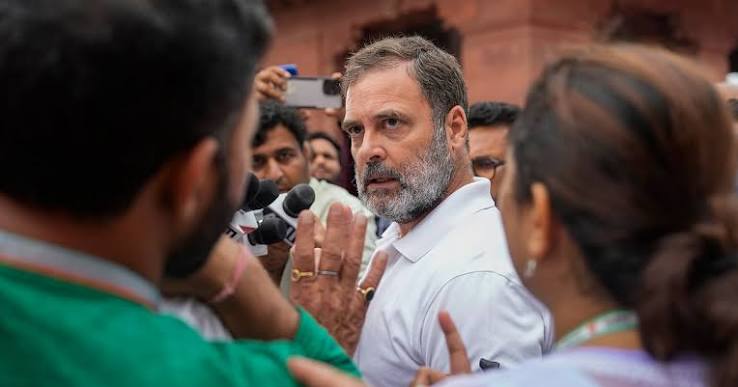
The Centre has been expanding the Sainik School network through a public-private partnership (PPP) model. A parliamentary panel on Tuesday reviewed the functioning of Sainik Schools, with Leader of the Opposition Rahul Gandhi questioning the Centre’s decision to involve private institutions in running the defence ministry-administered schools. During a meeting of the Parliamentary Standing Committee on Defence, Gandhi, a member of the panel, sought an explanation on how “private institutions are given the task of running the Sainik Schools” under the Ministry of Defence, sources said. He also asked the reasons behind the involvement of private institutions in managing the schools, the sources added. The committee, chaired by BJP MP Radha Mohan Singh, examined the “Review of Sainik Schools, Rashtriya Indian Military College (RIMC) and Rashtriya Military Schools”. The Centre has been expanding the Sainik School network through a public-private partnership (PPP) model. Addressing the Diamond Jubilee celebrations of Sainik School, Ghorakhal, in March 2026, Defence Minister Rajnath Singh had said the government had decided to establish 100 new Sainik Schools across the country in the “public-private partnership model”. Earlier, then Minister of State for Defence Ajay Bhatt had informed Parliament in December 2022 that the government had approved setting up 100 new Sainik Schools in partnership with NGOs, private schools and state government schools across all states and Union Territories. Courtesy : TNIE Note: This news is originally published on https:/thenewindianexpress.com/bha and is used purely for non-profit/non-commercial purposes, especially human rights
Students in severe pain need PM Modi’s apology, not forgiveness: Rahul Gandhi
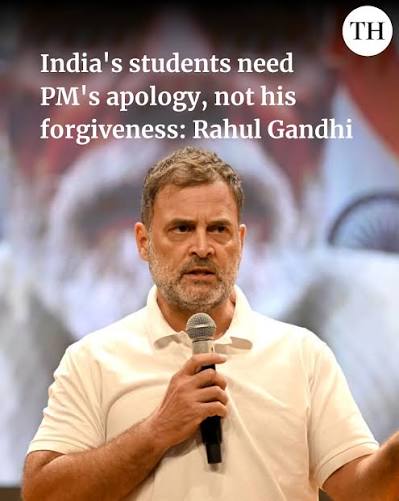
Rahul Gandhi said students are on the streets because of the RSS’ attempts to rewrite the country’s history, adding that “India will not tolerate its history to be trampled upon by anybody”. Congress leader Rahul Gandhi on Tuesday said students across the country were in “severe pain” and asserted that they did not need Prime Minister Narendra Modi’s forgiveness, but an apology for his government’s actions against them. Speaking at the launch of a book by former MP Vaiko, the leader of the opposition said that the students are on the streets because of the RSS’ attempts to rewrite the country’s history, adding that “India will not tolerate its history to be trampled upon by anybody”. Gandhi said every state has the right to be treated fairly and express its own culture and language, but the “RSS wants that only the history subscribed by it should be followed and that is why the fight”. “We are going through strange times as the students are on the streets and are in severe pain. They don’t have work and are asking for fairness in exams and an education system that works. On the other hand, the prime minister is forgiving them. Who is he to forgive me or them, I don’t know. Where does he get this idea that he can forgive me or the future of India, I don’t know,” he said at the event. Gandhi claimed that behind the prime minister or the RSS is a “dangerous idea – the idea that this country is not an expression of the many”. He said that in the Constitution, it is clearly written that India, that is Bharat, is a union of states and the state is an expression of the people of India. Add as a preferred source on Google “When you say Tamil Nadu, inside is the history of Tamil people, their pain, suffering, happiness. The Constitution says every state represents one history, tradition, language. Every single state has the right to that, which must be treated fairly. Every state has the right to express itself, its own culture and language. “Here are some ignorant people who don’t understand Tamil, Marathi, Bengali people and say none of these histories and imaginations are relevant. The only history that is important is the one ascribed by the RSS. This is why this fight is important. This is why the students are out on the streets. India will not tolerate its history being trampled by anybody,” Gandhi said at the book launch event. The Congress leader thanked Vaiko for his service to the country, saying that it was an honour to be at his book launch event. “He is an inspiration for all of us,” he said. Among others who were present at the book launch were Tamil Nadu Education Minister A Rajmohan, TMC leaders Sagarika Ghosh, Congress leaders P Chidambaram and Manickam Tagore, besides former Jammu and Kashmir chief minister Farooq Abdullah, CPI-M general secretary M A Baby, CPI general secretary D Raja, Shiv Sena (UBT) leader Sanjay Raut, RJD leader Manoj Kumar Jha, RSP’s N K Premchandran and NCP-SP leader Supriya Sule. Courtesy : TNIE Note: This news is originally published on https:/thenewindianexpress.com/bha and is used purely for non-profit/non-commercial purposes, especially human rights