
Madras HC orders probe into allegations of Dalit prisoners being forced to clean toilets
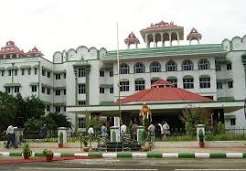
A division bench of Justices CV Karthikeyan and R Sakthivel passed the directions while hearing a Public Interest Litigation (PIL) filed by Madurai-based advocate KR Raja. The Madurai bench of the Madras High Court on Monday, August 31, directed authorities to investigate allegations of prisoners from marginalised communities being forced to clean toilets and carry out manual scavenging work in prisons in Madurai, Trichy and Tirunelveli districts. A division bench of Justices CV Karthikeyan and R Sakthivel passed the directions while hearing a Public Interest Litigation (PIL) filed by Madurai-based advocate KR Raja. Raja alleged that prisoners belonging to marginalised communities were being assigned sanitation work, including toilet cleaning and manual scavenging, at the Madurai Central Prison. He alleged that similar practices existed at the Palayamkottai Central Prison in Tirunelveli district and the Trichy Central Prison. According to the petitioner, certain blocks and barracks in the Madurai and Palayamkottai prisons had allegedly been demarcated for prisoners from marginalised communities. The prisoners in those blocks were allegedly made to clean around 150 toilets, both inside cells and outside barracks. The petitioner claimed that only two sanitary workers had been appointed for the entire prison despite overcrowding. Raja also alleged that similar practices were being followed at the Special Prison for Women in Trichy. According to him, some women prisoners had been permitted to work at the Freedom Petrol Bunk operated by the prison authorities as part of rehabilitation measures. However, the petitioner claimed that instead of working at the petrol bunk, they were made to clean toilets and other sanitary areas on the premises. The petitioner also disputed the prison authorities’ claim that municipal services alone were engaged to clean toilets. Raja, the co-founder of Global Network for Equality, India, an organisation that supports the education of children of inmates and crime victims, said he had made representations to prison authorities in 2025 seeking an end to caste discrimination and legal action against officials responsible for such practices. He also sought preservation of CCTV footage from January 16, claiming that it would help establish whether prisoners had been made to clean toilets and drainage systems. Referring to the Supreme Court’s 2024 judgement in Sukanya Shantha vs Union of India, which dealt with caste discrimination in prisons, and the prohibition of Employment as Manual Scavengers and Their Rehabilitation Act, 2013, the petitioner argued that such practices were discriminatory and violated the dignity of prisoners. The petitioner had alleged that conditions in several district prisons in southern Tamil Nadu were even worse and sought directions to prevent caste discrimination, manual scavenging and the assignment of toilet-cleaning work to prisoners from marginalised communities. However, the prison authorities denied that such practices existed. After hearing the petition, the High Court directed the Principal District Judges and the District Legal Services Authority (DLSA) secretaries of Madurai, Trichy and Tirunelveli to inspect the respective prisons and verify the allegations. The DSLAs were also directed to inquire the prisoners, examine CCTV footage and submit status reports to the court. The superintendents of the respective prisons were separately directed to file reports on the allegations. The matter has been posted for further hearing on October 4. Courtesy : TNM Note: This news is originally published on https:/thenewsminute.com/bha and is used purely for non-profit/non-commercial purposes, especially human rights
Editorial: Our casual practice of caste

India bristles when international agencies point fingers at varna-based discrimination but takes no exception to the casual practice of prejudice in real and symbolic forms in everyday politics. It is of course a coincidence that India’s two biggest political parties are engaged in a row over symbolic cleansing (shuddhi) rituals just at a time when a United Nations committee has yet again expressed concern over the country’s treatment of Dalits. India bristles when international agencies point fingers at varna-based discrimination but takes no exception to the casual practice of prejudice in real and symbolic forms in everyday politics. On August 10, two days after Congress president Mallikarjun Kharge spoke at a Ramlila ground in Haldwani, Uttarakhand, a Sangh Parivar-affiliated group carried out a purification ritual at the venue. They sprinkled ‘holy water’ around the spot where the Dalit leader had delivered his speech and performed a ‘shuddhikaran yagna’ with a ritual fire. Kharge later said in Parliament that he felt subjected to untouchability in a symbolic form. The BJP has made light of the matter, stating that it was a routine cleanup after a political event with no purport to ritual untouchability. Indeed, political parties in India perform purification rituals as a matter of course. It is common to see supporters of a political party wash the statue of a hero with water or milk after it was ‘desecrated’ by opponents. This casual practice of symbols and customs that are redolent of ritual untouchability gives the lie to the Indian state’s protestations that it has low tolerance for varna prejudice. The fact that such practices are considered a legitimate tool of politics, and are employed by the whole spectrum of parties, underscores the fact that prejudice remains lodged in our political culture and expresses itself in codified forms, which the subject of the insult perceives but its perpetrator can always deny by feigning injured innocence or righteous indignation. A fortnight after the insult to Kharge, the UN Committee on the Elimination of Racial Discrimination (CERD) issued its latest findings on India pointing out poor treatment of “ethnic and ethno-religious groups, indigenous and tribal peoples, including Scheduled Tribes, Scheduled Castes, particularly Dalits, and non-citizens”, citing racially motivated violence, excessive use of force, extrajudicial killings, detention without due process, torture, ill-treatment and sexual violence against them. India has a history with UNCERD. In 1996, the UN committee formally ruled that prejudice against Dalits satisfies the definition of descent-based discrimination. That observation strengthened efforts by international human rights groups and Dalit activists to equate varna prejudice with racial discrimination. In subsequent reviews in 2002 and 2007, CERD noted the abiding practice of ritual prejudice in India and criticised the state for trying to obfuscate data on abuse against Dalits. Typically, the Indian government’s reaction to CERD reports has tended to be vituperative. This time too, the Ministry of External Affairs spokesperson Randhir Jaiswal dismissed the findings “with the contempt they deserve”. Responses like that, and the argument that caste discrimination is an internal social issue that is adequately addressed by India’s own constitutional protections, have done nothing to ward off international scrutiny. Although India lobbied to keep caste out of the text of the 2001 UN World Conference Against Racism, the issue now figures prominently in the international agenda against discrimination. It has even made it into legislation abroad. Local laws in Seattle and California and universities like Harvard explicitly outlaw caste discrimination. So, treating caste scrutiny as bad press does not help India’s case. The only solution is to make all those constitutional protections do some real work. Courtesy : DT Next Note: This news is originally published on https:/dtnext.com/bha and is used purely for non-profit/non-commercial purposes, especially human rights
Congress and the Politics of Purification: Rahul Gandhi Is Making a Long-Term Electoral Move Against Mallikarjun Kharge’s ‘Dalit’ Pawn

The Congress party is working tirelessly to capitalize on the Haldwani purification controversy in Uttarakhand. The Congress party sees the primary focus of this issue as the Chief Minister’s seat in Punjab, a position it could hold until 2029. New Delhi: The political underpinnings of the Haldwani incident in Uttarakhand, after a long hibernation, are becoming clear. Congress President Mallikarjun Kharge dropped the alleged ‘purification’ bombshell in Parliament on the final day of the monsoon session. However, Rahul Gandhi hesitated in responding. Now, it appears the party has a strategy in place. On the last day of the monsoon session, Leader of the Opposition in the Rajya Sabha, Mallikarjun Kharge, alleged that after his rally in Haldwani, the venue was allegedly “purified” because he is a Dalit. A week later, Rahul Gandhi raised the issue in a press conference, for which elaborate preparations had been made. Now, with an FIR filed against Rahul Gandhi in this case, the Congress has made it a major part of its political campaign. Congress’s Last Hope in the Punjab Elections If we try to understand the politics behind this late raising of the issue by the Congress, it seems that it sees it as a straw to hold on to in the Punjab Assembly elections. This is because the Dalit or Scheduled Caste population in Punjab is approximately 32 percent. Speculation of a BJP-Akali alliance increases tension Some political pundits, long supporters of the Congress, saw the party as having considerable potential against the Aam Aadmi Party in Punjab. Because, apart from urban areas, the BJP has not been able to achieve much in rural areas. However, in the last few weeks, speculation about an electoral rift between the top leadership of the BJP and the Akali Dal has suddenly intensified. These speculations are pulling the rug from under the feet of Congress strategists. The Dalit CM card failed in 2022. In the 2022 Punjab Assembly elections, a large portion of the Dalit vote bank went to the Aam Aadmi Party. Its unexpected victory speaks for itself. A few months before the elections, after turning its back on Captain Amarinder Singh, the Congress tried Charanjit Singh Channi, but he proved to be a counterproductive for the party. It could not attract enough Dalit votes to Congress to put a brake on AAP. Hoping to capitalize on the ‘Constitution in Danger’ idea Charanjit Singh Channi is already said to be disgruntled in the internal politics of the state Congress. In such a situation, Congress believes that slogans like “Dalits are in danger” can keep its hopes of returning to power alive, even despite a possible BJP-Akali Dal alliance. In the 2024 Lok Sabha elections, Congress and its allies have already tasted the “Constitution is in danger” election slogan. Congress confident of repeating 2024 in UP The “Constitution is in danger” narrative worked most favorably for the India Bloc in Uttar Pradesh. Even Samajwadi Party supporters were surprised to see a large number of Jatavs abandoning the elephant and opting for the paw and cycle. Congress sees the same hope in the “Dalits are in danger” slogan. Assembly elections are also being held in UP along with Punjab, where approximately 20 percent of the population is Dalit. Challenge from BSP, ASP, and BJP However, with the BSP and Chandrashekhar Azad’s Azad Samaj Party (Kanshi Ram), it will not be easy for the Congress and SP to break into the Dalit vote bank in UP in the assembly elections. Furthermore, the BJP has also maintained a strong hold among this community through its governments’ welfare schemes, especially among non-Jatav Dalits. However, the Congress is hopeful that the “Dalits are in danger” slogan, like the “Constitution in danger,” could also work in UP this time. Congress hopes for a slogan for 2029 If leaders like Rahul Gandhi are truly thinking ahead, they may also consider this narrative for the 2029 Lok Sabha elections. The Scheduled Caste population across the country is approximately 16 percent, and the Congress believes that if this strategy works, it could prevent the BJP from achieving an absolute majority in 2024, and this time it could even come close to power. Authored by: Anjan Kumar About the Author Anjan Kumar is an Assistant Editor at Navbharat Times Online and has been a journalist for over 24 years. He joined Navbharat Times Online in April 2025 and has covered politics in digital media for the past 10 years. Courtesy: Hindi News
Dalit brothers allege custodial torture, move SC commission
Patiala: Two Dalit brothers from Kakrala village in Nabha, Patiala district, have complained to the National Commission for Scheduled Castes, alleging that personnel at Chhintanwala police post tortured them in custody over a suspected theft. The daily-wage masons alleged that they were stripped, severely beaten, verbally abused and given electric shocks before being released. They sought an independent inquiry, legal protection and action against the personnel involved. The brothers said they had been working at the house of fellow villager Baghel Singh, where a theft was reported on the night of Aug 24. They alleged they were handed over to the police without any preliminary investigation or credible evidence. In their Sept 1 petition, they urged the commission to take suo motu cognisance of the alleged human rights violation and caste-targeted abuse. They sought an investigation by a senior independent officer or agency rather than the local police. They also sought preservation of CCTV footage, DVRs, daily diary registers and custody records, an independent medico-legal examination, removal of the accused personnel from active duty and security for their family. Punjab BJP Scheduled Caste Morcha vice-president Paramjit Singh Kainth, who visited the family with community leaders, demanded a transparent, time-bound investigation. He warned that the organisation would launch a statewide agitation if officers were shielded. Chhintanwala police post in charge, sub-inspector Chamkaur Singh, rejected the torture allegations. He said the brothers had been questioned only four days earlier as part of the investigation and accused them of using pressure tactics. Chamkaur Singh claimed CCTV footage showed that a son of one of the suspects had left a small gate open, through which burglars later entered the house on the night of Aug 24 and stole gold ornaments worth Rs 10 lakh. He said a case would be registered only after the investigation and collection of evidence, including call details. Courtesy : TOI Note: This news is originally published on https:/timesofindia.com/bha and is used purely for non-profit/non-commercial purposes, especially human rights
Karnataka: BJP’s Vijayendra, Ashoka accuse Congress govt of failing farmers, Dalits

Raichur (Karnataka), State BJP President B.Y. Vijayendra and Leader of Opposition in the Assembly R. Ashoka on Tuesday launched a scathing attack on the Congress government in Karnataka, accusing it of corruption, failing farmers and Dalits, and mishandling recruitment and welfare schemes. Speaking at the launch of the BJP’s Ballari Chalo padayatra in Lingasugur, Vijayendra alleged that the government led by Chief Minister D.K. Shivakumar was a “government of the corrupt, by the corrupt and for the corrupt” and asserted that the BJP’s agitation would continue until the government was removed from power. Vijayendra said the BJP would not withdraw its agitation merely because former Minister B. Nagendra had resigned in connection with the alleged Rs 187 crore Valmiki Corporation scam. “We will continue our fight until the entire money is returned to the Valmiki Corporation, SCP/TSP funds are restored for the welfare of Dalits, justice is delivered to victims of atrocities, and justice is ensured to farmers,” he said. Questioning Shivakumar’s remarks on why the BJP was continuing the padayatra after Nagendra’s resignation, Vijayendra alleged that the Congress government was anti-poor, anti-Dalit, anti-youth and anti-women. He also accused the government of using “drama” and shedding “crocodile tears” over Dalit welfare while allegedly diverting funds meant for their development. Vijayendra said Nagendra’s resignation was the “first victory” of the BJP’s agitation and questioned why he was re-inducted into the Cabinet despite having earlier resigned following allegations linked to the Valmiki Corporation. Ashoka also said the BJP’s struggle would not end with Nagendra’s resignation and claimed that more ministers would have to quit because of the party’s protests. “BJP’s struggle will not stop merely because B. Nagendra has resigned. We are fighting on issues including drought, the KPSC scam and Bidadi Township. Because of our agitation, more ministers will have to resign,” Ashoka said. He alleged that drought conditions prevailed in 175 taluks but the government had declared drought in only 101 taluks. He demanded that all 175 taluks be declared drought-affected and sought Rs 50,000 per acre as relief for farmers. Ashoka alleged that farmers growing sunflower, jowar and tur had suffered heavy losses and claimed that the government had not provided relief despite the worsening situation. He also alleged that villagers were facing difficulties in accessing drinking water. Turning to the Valmiki Corporation case, Ashoka alleged that Rs 187 crore meant for Dalits had been diverted and claimed that the money was used during the Telangana and Ballari elections. He said Nagendra was only a “scapegoat” and demanded accountability from the wider Congress leadership. On the alleged KPSC recruitment scam, Ashoka claimed that posts were being “sold” for large sums and alleged that rates had been fixed for various government positions. He said the BJP would raise the issue in the next Assembly session and demanded that everyone involved in the alleged irregularities be arrested and punished. Ashoka also alleged that Minister Priyank Kharge’s name had surfaced in connection with exam irregularities and claimed that another minister’s resignation was imminent. He said the BJP would continue its agitation over pending pensions, ration card cancellations, alleged garbage tender irregularities, the tunnel road project and Bidadi Township, among other issues. Ashoka further demanded the resignation of Minister Basavaraj Rayareddy over his recent remarks praising Islam. He urged Shivakumar to remove Rayareddy from the Cabinet, alleging that the minister had insulted Hinduism. The Ballari Chalo padayatra was attended by several BJP leaders, including Union Minister Pralhad Joshi, former Chief Ministers B.S. Yediyurappa, Jagadish Shettar and Basavaraj Bommai, former minister B. Sriramulu, BJP leaders and legislators, and a large number of party workers. Courtesy : Social News XYZ Note: This news is originally published on https:/socialnewsxyz.com/bha and is used purely for non-profit/non-commercial purposes, especially human rights
Rahul Gandhi: How did Maharashtra’s draft SIR list drop 2 crore voters, but add 39 lakh in 2024?

Mumbai: The Opposition lashed out at the exclusion of 2 crore votes in the draft SIR list in Maharashtra, with Congress MP Rahul Gandhi alleging this meant the 39 lakh voters added before the assembly polls in 2024 was vote theft. “Maharashtra 2024 – Suddenly 3.9 million voters were added between the Lok Sabha and Vidhan Sabha elections. I said it then and I say it today. This was vote-theft,” he said on X. “And now in Maharashtra, 2.07 crore voters have been removed from the draft list – that’s every fifth voter. Which list was correct?,” he stated. “The BJP and the ‘Vote Theft Commission’ keep changing their tactics and they will continue to do so – the goal remains just one: BJP’s victory at any cost, and the end of India’s democracy.” Congress MP Pawan Khera added on X, “Either the electoral rolls for the 2024 Maharashtra assembly election were flawless – in which case the SIR has led to wrongful deletions. Or those rolls were questionable – in which case Fadnavis is heading an illegitimate government.” “But either way, one conclusion is inescapable. The integrity of India’s election has been compromised. And Gyanesh Gupta is the culprit.” NCP (SP) leader Rohit Pawar said on X, “There is a Damocles sword hanging on those with unmapped and anomalies statuses as well. In Maharashtra a large number of eligible citizen’s names have been excluded. We suspect that a significant number of duplicate voters have been included in this list published after the SIR process.” Anti-corruption activist Anjali Damania tweeted, “Every fifth voter in the state has been tossed out of the list. This has happened most severely in Pune, Thane and the Mumbai suburbs – places where the population of labourers, migrants and slumdwellers. This does not seem like a coincidence.” Damania said the sudden disappearance of 2 crore voter’s names from the list is “not merely an administrative blunder; it is a massive assault on democracy”. She demanded an independent inquiry and an extension of the period to file objections. Courtesy : TOI Note: This news is originally published on https:/timesofindia.com/bha and is used purely for non-profit/non-commercial purposes, especially human rights
‘Political vendetta’: TMC’s Abhishek Banerjee cries foul after police grilling over scuffle case

NEW DELHI: Trinamool Congress leader Abhishek Banerjee on Tuesday claimed that Bharatiya Janata Party-led West Bengal government was pursuing “political vendetta” against his party after he was questioned for nearly six hours by Kolkata Police over the removal of an unauthorised billboard.The Trinamool Congress MP from Diamond Harbour said that the Suvendu Adhikari-led government was selectively targeting TMC by removing its signboards, freezing party accounts and initiating cases against its leaders and workers. “If they think they can silence us through false cases and arrests, they are mistaken,” Abhishek Banerjee told reporters as he walked out of Shakespeare Sarani police station after questioning. “They can question me but I am not scared, they are,” he said, adding that the police action was a bid to weaken TMC. The TMC leader also alleged that several party workers arrested in connection with the incident were subjected to “custodial torture”. “One of our workers, Tarik, was arrested and subjected to custodial torture. He secured bail yesterday, but 12 or 13 others remain in judicial custody,” he alleged. This comes days after a confrontation broke out when Kolkata Municipal Corporation officials, accompanied by police, entered the office premises to dismantle the billboard mounted on an iron structure facing the road. Private security guards, party supporters and some TMC leaders resisted the move, leading to a scuffle with police and civic officials. Police subsequently registered three FIRs and arrested several people. Abhishek, who has been named as an accused in two of the cases, was served a notice to appear before the police and arrived at the station around 12.15 pm, as TMC supporters gathered outside and raised slogans alleging that he was being targeted by the state government. The cases include sections pertaining to obstruction of government officials in the discharge of their duties, unlawful assembly, assault and harassment of women police personnel. Courtesy : TOI Note: This news is originally published on https:/timesofindia.com/bha and is used purely for non-profit/non-commercial purposes, especially human rights
Cong fields 30 candidates under 30 for Jaipur civic polls

Jaipur: Congress is banking on younger faces in the Jaipur municipal polls, with 30 candidates below the age of 30 and 110 below 50 years. This takes the average age of its nominees to around 37, according to Jaipur in charge Rohit Bohra. The youngest candidate is Suman Bhati, aged 22, contesting from Ward 72. Bhati, from Jhalana slums, runs a laundry business. She said her own experience had shaped her priorities. “I‘m from an underprivileged area and have seen what situations women face in slums. If elected, I want to work on skill training, drug de-addiction camps and better policing. I also want CCTV cameras in my locality and regular patrolling by women police personnel,” she said. Breaking caste barriers is another issue on her agenda. For 23-year-old graduate Harshit Jain from Ward 46, transparency and accountability would be priorities. He wants a technology-based grievance-redressal system through which complaints can be categorised and routed to the departments concerned for resolution. Jain said he admires Priyanka Gandhi Vadra and followed Rahul Gandhi’s ‘Chhatron Ki Goonj’ initiative. Both young candidates acknowledged their limited experience but said they are willing to learn. Jaipur in charge Rohit Bohra said the party had deliberately increased its focus on younger candidates. “Around 20% of our candidates are from Gen Z. Among all 309 urban local bodies going to polls, Jaipur has the highest number of Gen Z candidates,” he said. The party’s Jaipur district president Sunit Sharma could not be contacted for comment. Courtesy : TOI Note: This news is originally published on https:/timesofindia.com/bha and is used purely for non-profit/non-commercial purposes, especially human rights
Kharge event row: Cong protests FIR against Rahul, alleges vendetta

Varanasi: Scores of Congress leaders and functionaries took out a protest march on Tuesday demanding immediate cancellation of the FIR lodged against party MP Rahul Gandhi in Haldwani district of Uttarakhand, alleging political vendetta by the BJP govt. Led by party district chief Rajeshwar Patel and city unit president Raghvendra Chaubey, the protest march began from Bageshwari Devi temple near Jaitpura police station and headed towards the Gandhi statue at Town Hall, Maidagin. Police stopped the march at Ausanganj crossing and accepted a memorandum addressed to the governor. Chaubey accused the BJP govt of double standards, alleging that no action had been taken even 20 days after the alleged insult of Congress president Mallikarjun Kharge and the reported “purification” of a rally venue. Congress said its struggle would continue until the FIR is withdrawn and issues of justice are addressed. Congress functionaries said Rahul speaks for Dalits, backward classes, tribals, the poor and other deprived sections and is being targeted for raising issues of social justice, democracy and constitutional rights. A case was registered against Rahul at Kotwali police station on Sunday night. The FIR — lodged under BNS sections 196 and 299, along with section 3(1)(q) of the SC/ST (Prevention of Atrocities) Act, 1989 — followed a complaint by Amit Kumar, a resident of Jawahar Nagar Colony in Haldwani and member of Shriram Sena Dharmarth Seva Samiti. Kumar, who belongs to the SC community, alleged that Gandhi gave a caste angle to routine cleaning work carried out at Ramlila Maidan on Aug 11, characterising the clean-up as an act of untouchability and a criminal offence during a news conference in Delhi. Courtesy : TOI Note: This news is originally published on https:/timesofindia.com/bha and is used purely for non-profit/non-commercial purposes, especially human rights
Parliament passes Transgender Persons Amendment Bill, 2026 with Rajya Sabha approving it today

Parliament has passed the Transgender Persons (Protection of Rights) Amendment Bill, 2026, with the Rajya Sabha approving it today. The bill was passed by the Lok Sabha yesterday by a voice vote amid an Opposition-led walkout. The bill seeks to redefine the category of transgender, removes the provision of self-perceived gender identity and excludes several socio-cultural identities as well as transmasculine individuals from its ambit. It also further defines transgender persons within a biological framework, based on intersex variations and differences in sexual development. Replying to the discussion on the Bill in the Rajya Sabha, Social Justice and Empowerment Minister Dr Virendra Kumar said the government is compassionate towards the well-being of the transgender community. He said the Bill has provisions to empower the transgenders and give them dignity. The Minister said that the NDA government has taken several initiatives to bring transgender people to the mainstream and stop discrimination against them. Starting the discussion in the Upper House, Congress MP Renuka Chowdhury said this bill dilutes the privacy of an individual provided under the Constitution. Opposing the Bill, Ms Chowdhury said self-identification cannot be taken away through bureaucratic certification. Criticizing the government, she said that the proposed bill undermines the fundamental rights and dignity of transgender persons. Calling such a move wrong and illegal, she argued that forcing transgender persons to provide their identity through official certificates is against the spirit of equality and dignity guaranteed by the constitution. She also questioned the government’s approach for not properly consulting with the transgender community before bringing the Bill. She also referred to the Supreme Court’s landmark NALSA judgement of 2014, which recognized the right of transgender persons to self-identify their gender. Ms Chowdhury said the proposed Bill violates the principles laid down in that judgement and fails to respect an already established legal framework. DMK MP Tiruchi Shiva also opposed the Bill, saying that even if the Bill is passed in Parliament with a majority, it will be struck down by the Supreme Court. He further added that the Bill violates Articles 14, 15, 19 and 21 of the Constitution and it deprives the community of the right to freedom, dignity and self-determination. Supporting the Bill, BJP MP Medha Vishram Kulkarni said, ” This Bill ensures justice, dignity, protection from criminalisation and legal safeguards for transgender persons. She also thanked Prime Minister Narendra Modi for bringing this bill with certain amendments in order to ensure that the benefits reach the deserving people in a proper manner. She said there is a need for a law that brings justice to real transgender individuals and punishes fake ones. Mrs Kulkarni said the benefits should be extended to those who are transgender by birth. She said that the amendment to extend punishment will bring down the rate of crime and forced identities. TMC’s Saket Gokhale said that 31% of Transgender people in India have attempted suicide because of the discrimination that they are facing. He alleged that now the government is going to start discriminating against them as though social discrimination were not enough. He called it unacceptable. Mr Gokhale expressed concern that gender is going to be decided by the Chief Medical Officer and a District Magistrate, and the bill does not prescribe any qualifications for the Chief Medical Officer. Sanjay Singh of AAP said the Bill is a big let-down for the transgender community. He accused the government of not doing anything for the community. RJD’s Manoj Kr Jha said that prejudices against transgender people should stop, and they should be able to live with dignity. He added that self-determination of gender should not be taken away. CPI(M)’s John Brittas said it is a black-letter day and the Bill is taking India a century back. He pleaded with the government to either withdraw the Bill or refer it to a Select Committee. Jaya Bachchan of the Samajwadi Party also questioned the government over the legislation. She sought to know what the urgency was in bringing the Bill, without examining it with the depth and care that it deserved. Courtesy : NOA Note: This news is originally published on https:/newsonair.com/bha and is used purely for non-profit/non-commercial purposes, especially human rights