
Rahul’s claims absurd, bring into disrepute Cong’s own polling reps, say EC officials
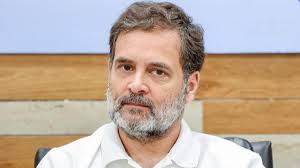
Add Your Heading Text HereNEW DELHI: Election Commission officials on Saturday slammed Leader of the Opposition Rahul Gandhi for accusing it of “fixing” Maharashtra polls, saying that the “absurd” allegations – already dismissed in a letter to the Congress dated Dec 24, 2024 – not only demotivate lakhs of govt staff who work untiringly to deliver transparent elections but also “bring into disrepute” party’s own representatives from the polling station to the constituency level. “Any misinformation being spread, by anyone, is a sign of disrespect towards the law, under which polls are held. After an unfavourable verdict by the voters, trying to defame the Election Commission by saying that it is compromised, is completely absurd,” an EC functionary told TOI.EC also found it strange that the LoP, instead of directly writing to the EC, has thus far chosen to air his grievances at various other forums – party meetings, Lok Sabha, even interactions on foreign soil and, now, an Op-Ed article. “If he is aggrieved, why is he shying from write to EC directly or seeking a meeting?” asked the functionary mentioned above. On Rahul faulting the appointment process of CEC and election commissioners, officials underlined that it was only under Modi govt that the law was amended to allow LoP a say in the appointments. “All CECs and election commissioners under previous Cong govts were appointed at the sole will of the Executive,” said an officer. Stating that Rahul, in his Op-ED article, has only harped on the allegations denied by the poll panel in December 2024, with additional clarifications published in TOI on April 22, EC officials rejected his charge of extraordinary surge in last two hours. It emphasised that over 6.4 crore electors in Maharashtra, who reached the polling station from 7 am to 6 pm on November 20, 2024, had voted. Thus, about 58 lakh votes were polled per hour on an average. “Going by these average trends, nearly 116 lakh voters could have voted in the last two hours. Therefore, casting of 65 lakh votes by electors in two hours is much below the average hourly voting trends,” an EC functionary pointed out. As regards the anomalies alleged by Rahul in roll revision, the functionary underlined that over 27,000 booth level agents (BLAs) appointed by the Congress were actively involved at every step of the summary revision of Maharashtra rolls ahead of the state polls, including raising claims and objections against the draft roll. Interestingly, while electors increased by 8.1% in Maharashtra since the last assembly poll, the corresponding rise was 13.4% for Jharkhand and 16.2% for Telangana. Congress won both Jharkhand (in alliance with JMM) and Telangana polls. Even after the final roll was published with a total 9.7 crore electors and its copies shared with all political parties including the Congress – allowing them to file two-point appeals, if dissatisfied – only 89 appeals were filed before the first appellate authority (district magistrate) and one before the second (chief electoral officer). “It is thus amply clear that there was no grievance of Congress or any other political party before the conduct of Maharashtra polls,” said the EC functionary. As regards allegations of irregularities in polling, EC officials shared that polling agents of all candidates and parties, including Congress, were present at the polling stations. “Congress’s nominated candidates or their authorized agents did not raise any substantiated allegations with regard to any kind of abnormal voting at the time of scrutiny before the returning officer and the election observers,” said an officer. “It appears that all these facts brought to the Congress notice by EC in its letter dated December 24, 2024, have completely been ignored,” said an EC functionary. Courtesy : TOI Note: This news is originally published on https://timesofindia.com/ and is for use by the non-military/non-commercial community, especially those in the human rights sector.
Reflection of inclusivity: Delhi Chief Minister sets up transgender welfare board
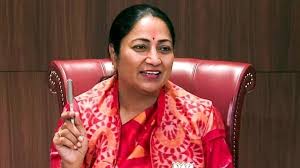
BJP leader Rekha Gupta-led Delhi government has set up a Transgender Welfare and Empowerment Board to frame policies, recommend welfare schemes and address the grievances of the transgender community. The Delhi government has set up a Transgender Welfare and Empowerment Board in a landmark initiative aimed at upholding the dignity and rights of the transgender community. Chief Minister Rekha Gupta described the move as a “reflection of inclusive governance”. She stressed that the decision goes beyond administrative action to reflect the government’s deep commitment to equity and social justice. The newly formed board will be tasked with framing policies, recommending welfare schemes, coordinating with departments, and addressing grievances related to the transgender community. A key provision under the new framework will be the simplified process for transgender individuals to obtain identity certificates and ID cards by self-declaring their gender at the District Magistrate’s office. To further support the community, the government has announced a series of targeted initiatives, including the construction of third-gender toilets in government buildings, dedicated hospital wards and healthcare services, and a transparent online ID card issuance system. Additional plans include sensitisation campaigns in schools and workplaces, temporary shelters, employment training programmes, and tailored social security schemes. Chief Minister Rekha Gupta reiterated that these initiatives aim to make Delhi a model of equality and inclusion. “This is not just a legal step but a reflection of our resolve to empower the transgender community and uphold the constitutional values of justice and dignity for all,” she said. Sharing the details, Rekha Gupta added, “This is a practical and powerful step towards building an empowered viksit (developed) Delhi. Our government is committed to ensuring equal rights for all.” Anmol Nath Bali, Sushant Mehra Edited & Published By:Atul Mishra Courtesy : India Today Note: This news is originally published on https://indiatoday.com/ and is for use by the non-military/non-commercial community, especially those in the human rights sector.
Officials must treat transgender persons with respect, says Udupi DC
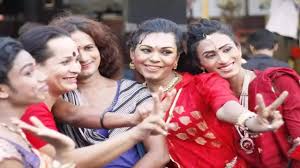
Udupi: Deputy commissioner Vidya Kumari K stressed that officials must treat transgender persons with dignity and respect when they visit govt offices and ensure their work is carried out as per the rules. At an awareness workshop on transgender rights held at the deputy commissioner’s office in Rajathadri, she said, “Everyone is equal before the law. The Constitution prohibits discrimination based on caste, community, or gender. Any disrespectful behaviour towards transgender persons by govt staff will invite legal action.” The DC noted that the govt has introduced various schemes and welfare programmes for the upliftment of the transgender community. She said awareness must be created about these schemes so that transgender persons can benefit from them. “They are also eligible for guarantee schemes. They must be ensured access to benefits such as housing and employment,” she added. Zilla panchayat CEO Prateek Bayal said that transgender individuals can avail themselves of income-generating opportunities through the National Rural Livelihood Mission. “If they form self-help groups, they can receive skill training and financial assistance for self-employment,” he said. If transgender persons apply for housing or sites at the gram panchayats, they will be given priority. Those with the required qualifications will be considered for employment in govt outsourcing agencies, he added. Akkai Padmashali, activist and founder of Ondede, said that achievement has no gender. “India’s legal system upholds the rights of the transgender community and supports their right to live independently. They should be given opportunities to become educated and attain high positions,” she said. Further, she said, “When someone is born male but grows into a woman, the transgender community is forced to face many challenges. Society must accept us as women and create opportunities for us to live with dignity and become part of the mainstream.” During the interaction, several transgender individuals shared their concerns. They said that as they enter adolescence, they are often forced to leave their families and move to other cities. “We struggle to find housing. Even if we are educated, we hardly get jobs, forcing us into begging. We urge that opportunities be created for us in terms of jobs and housing,” they appealed. Courtesy : TOI Note: This news is originally published on https://timesofindia.com/ and is for use by the non-military/non-commercial community, especially those in the human rights sector.
Allahabad High Court order: Inter-caste marriage couple should get security, SSP will be responsible if any harm is caused
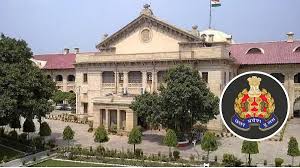
The court gave security instructions to Bulandshahr SSP, the couple had petitioned the High Court after receiving threats from the girl’s family. Uttar Pradesh— Allahabad High Court has given clear instructions to the Senior Superintendent of Police (SSP) of Bulandshahr while ordering to provide security to a newly married couple who have married inter-caste. The court said that if any kind of obstruction or harm is caused by the girl’s family, then the SSP will be held personally responsible for it. This order was given by Justice J.J. Munir while hearing the petition in which the 24-year-old girl and her 26-year-old husband had demanded cancellation of FIR and protection. The girl had also expressed apprehension in the court that her family may plot their ‘honor killing’. The case was registered in May at Khurja police station in Bulandshahr, in which the girl’s father alleged that the upper caste youth kidnapped his daughter and forcibly married her in an Arya Samaj temple. The complaint was registered under Section 87 (kidnapping) of the Indian Penal Code (BNS). However, the High Court made it clear during the hearing that an adult woman has the full right to choose her life partner. The court stayed the arrest of the youth and ordered the SSP to ensure that there is no interference in the married life of the newlywed couple in any way. Courtesy : Rajan Chaudhary, Hindi News
14-year-old Dalit Girl Repeatedly Violated; Accused Suspected to be TDP Members
A shocking incident in Ramagiri of erstwhile Anantapur district has come to light, exposing the atmosphere of fear created by the TDP government in Andhra Pradesh. A 14-year-old Dalit girl was allegedly repeatedly raped by a group of 14 people, purportedly members of the TDP, in Edugurrapalli, a village located a short distance from Venkatapuram, the hometown of former Women Empowerment Minister Paritala Sunitha. The incident came to light as the girl got pregnant. It has been learned that the gang had been committing the crime for the past six months. The Class 9 student was reportedly raped 14 times. The accused allegedly shot videos of the gruesome act and threatened the girl from complaining about the crime. Under pressure from TDP leaders, the girl and her family reportedly moved from the village. The girl’s father had died in a road accident a year ago, while her mother was mentally ill. The 14-member gang, reportedly from Perur Panchayat, took advantage of her vulnerability and committed the atrocity against her. Despite being aware of the crime, locals did not dare to speak up as they were afraid of facing consequences from the TDP government. They believed that the gang of criminals was receiving external support from Paritala Sunitha and her son. It has been learned that TDP leaders also warned the girl against complaining. Fearing the ire of political leaders, the girl has decided against approaching the police and instead plans to resolve the matter at the panchayat meeting. The accused have been identified as Badagorla Abhishek, Bhullu Rajesh, Basi Giri, Basi Karthik, Basi Rajendra, Basi Sonappa, Basi Anji, Talari Murali, Roddakampalli Mahesh, Harijan Suresh, and Harijan Hemanth. Three other suspects are yet to be identified. It has been learned that some of the accused have already fled the village. Courtesy : Sakshi Post Note: This news is originally published on https://sakshipost.com/ and is for use by the non-military/non-commercial community, especially those in the human rights sector.
Slogans of Pakistan Zindabad raised in Bahraich, video viral, 5 arrested and 2 absconding
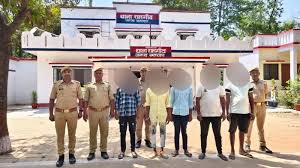
UP News: A shocking incident has come to light in Bahraich. A video of seven youths of Dalit community raising slogans of Pakistan Zindabad and Bhim Army Zindabad has gone viral. Azim Mirza, Bahraich: A video of 7 youths of Dalit community has gone viral in Bahraich, Uttar Pradesh. In which they are seen raising slogans of Pakistan Zindabad and Bhim Army Zindabad. In this case, the police have arrested 5 youths and sent them to jail and the search for two is on. Mahsi CO DK Srivastava said that on June 3, a video of raising slogans of Pakistan Zindabad was being circulated on social media. Taking cognizance of the video, a case has been registered against the accused. When the video was investigated, all the seven youths raising slogans in the video have been identified. They are residents of village Ambedkarnagar police station Ramgaon. Out of those seven, five Avinash, Ajit Kumar, Vijay Pratap, Ankul and Satpal were detained and interrogated and further action was taken. The voice in the viral video is not clear. For its clear investigation, the mobile is being recovered and sent to the forensic lab. Dalit youths raised slogans In most of the cases, it has been seen that only some crazy Muslim youths have been found raising slogans of Pakistan Zindabad. But this time Dalit youths raised slogans of Pakistan Zindabad. After all, is there some kind of change happening among the Dalits or has someone tampered with their video? All these things will be revealed only when the investigation report of the video comes. BSP District President said In this regard, District President of Bahujan Samaj Party Ajay Gautam said that the Dalit community raised the slogan of Pakistan Zindabad. This is wrong but in the same village, someone had broken a statue of the temple. In that case, the police had detained about 15 people. In which these seven people were called to the police station and harassed. It is possible that those people must have been dissatisfied due to that reason. About the author Edited by: Vishal Chaubey I have studied journalism from Lucknow Public College of Professional Studies, Lucknow. I am working in Navbharat Times Digital. I am working on political and many other news related to UP and Uttarakhand. Earlier, I got a chance to report on Madhya Pradesh Assembly Election and UP Municipal Corporation Election. I have worked in many other institutions before Times Group. Courtesy: Hindi News
LoP Gandhi Slams CM Nitish; Calls Bihar Crime Capital of India
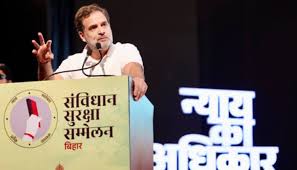
PATNA — In a fiery address at the Constitution Security Conference held at the International Convention Centre in Rajgir, Congress leader Rahul Gandhi launched a sharp attack on both the Central and Bihar governments, accusing them of allowing lawlessness to prevail and undermining the Constitution. Speaking from Chief Minister Nitish Kumar’s home turf of Nalanda, Leader of the Opposition (LoP) in the Lok Sabha, Rahul Gandhi said on Friday, “Bihar, the land of truth, justice and non-violence, is today becoming the ‘Crime Capital’ of India.” The Congress MP lamented the breakdown in law and order, alleging that the public in Bihar now feels unsafe and stated that “Chief Minister Nitish Kumar and Prime Minister Narendra Modi are responsible for this situation.” “The law and order here is in shambles. Basic facilities like education, employment, and healthcare remain out of reach of the common people,” Rahul Gandhi said. Targeting PM Modi, LoP Gandhi said, “Attempts are being made to spread hatred and fear in the country. But the Congress will not let this conspiracy succeed. We began ‘Bharat Jodo Yatra’ for this reason, and we are not backing down.” He also ridiculed CM Nitish Kumar’s frequent political flip-flops. “The Chief Minister keeps changing sides — sometimes here, sometimes there. The people of Bihar have now understood that real issues are being sidelined,” he said. Positioning himself as a defender of constitutional values, LoP Gandhi warned against attacks on social justice and democracy. “We will not let the Constitution be destroyed. This country will run on the Constitution drafted by Baba Saheb Ambedkar, not on the instructions of two or three capitalists,” Rahul Gandhi said. He urged the youth of Bihar to unite in defence of democracy and constitutional values, calling the present struggle a fight against hatred and violence. “Together we will move the country forward on the path of justice and brotherhood,” he said. This was LoP Gandhi’s first public event in Nalanda, making it politically symbolic given CM Nitish Kumar’s stronghold in the region. The event saw significant participation from Congress workers and local residents. –IANS Courtesy : Clarion Note: This news is originally published on https://clarion.com/ and is for use by the non-military/non-commercial community, especially those in the human rights sector.
Dalits, OBCs, Tribals, Intellectuals, and Religious Minorities Seek to Forge Unity
Growing concerns over the consolidation of political power and resources in the hands of a select few and the systematic exclusion of historically oppressed groups from public discourse, development, and democracy NEW DELHI – In a significant move to forge solidarity among the country’s marginalised communities, a diverse group of intellectuals, civil society activists, and representatives of Dalit, OBC, tribal, and religious minority communities met here on Friday and launched a new civil society initiative aimed at resisting the growing tide of communalism, authoritarianism, and economic marginalisation under the current BJP regime. The meeting was convened amid growing concerns over the consolidation of political power and resources in the hands of a select few and the systematic exclusion of historically oppressed groups from public discourse, development, and democracy. Speakers at the event emphasised the urgent need for unity among the 85% of India’s population—comprising Dalits, Other Backward Classes (OBCs), Adivasis, Muslims, Christians, and other marginalised groups—against what they termed “communal, Manuwadi, and fascist forces” attempting to divide the country along religious and caste lines. “This is not just a political call, but a social and moral responsibility,” said Dr Udit Raj, a prominent Dalit leader and former parliamentarian. “We have seen how the upper caste-dominated leadership has aligned itself with communal forces. We must now create our own leadership and solidarity among the marginalised to save democracy and the Constitution.” “The current regime and its ideological affiliates are not just attacking individuals—they are attacking the very idea of India as a diverse, secular, and democratic republic,” said Dr Raj. “Our Constitution guarantees equality, dignity, and justice to all. But today, only a few privileged sections are controlling resources, dictating narratives, and deciding who belongs and who doesn’t,” he added. “It is no longer just a matter of politics. It is a matter of survival for the majority of India’s population,” emphasised the former lawmaker. Challenging Economic and Institutional Capture Participants decried the increasing corporatisation of national wealth, arguing that public resources, jobs, education, and business opportunities are being systematically handed over to a small group of crony capitalists aligned with those in power. “The rampant privatisation of government assets is not just economic policy—it is social exclusion,” said Dr Syed Zafar Mahmood, former civil servant and president Zakat Foundation of India. “We must view this economic dispossession as a continuation of the social injustice we have historically faced.” “This is not merely a political crisis—it’s a moral and civilisational crisis,” said Dr Mahmood. “The socio-political contract of this country is being rewritten without the consent of its marginalised communities. The silence of the state and complicity of the media have normalised atrocities.” He warned that the privatisation of national wealth, destruction of public institutions, and unbridled media propaganda have pushed millions into joblessness and despair. “The bulldozer politics and criminalisation of dissent are all designed to silence the voices of the poor, the backward, and the minorities,” said Dr. Mahmood, who was also associated with the famed Sachar committee. The speakers argued that media, political institutions, and government bodies are now controlled by the same nexus of power, leaving no space for the marginalised to voice their concerns or participate meaningfully in the democratic process. Civil Society Must Lead Participants underlined that institutions of democracy—from Parliament to the judiciary to the media—are now largely captured by a Brahminical-capitalist nexus, which promotes majoritarianism while excluding the aspirations of the Bahujan masses. Historically, social and cultural movements in India have been led by upper caste individuals and groups, speakers noted. However, they pointed out that in the current political climate, these groups have largely aligned themselves with Hindutva ideologies, making it imperative for civil society from among the oppressed communities to assume leadership. “Dalits, minorities, backward and tribal people must take charge of their future,” said Sardar Ajmer Singh, a veteran activist. “We cannot depend on those who have always benefited from our exclusion to lead us out of oppression.” New Campaign for Social, Cultural Solidarity One of the key resolutions of the meeting was to promote inter-community bonding through practical and symbolic means, such as shared meals, joint celebrations, and collaboration in business ventures, to build trust and solidarity among diverse marginalised communities. “Social trust is our biggest weapon,” said Qayamuddin, another activist. “Only when we stand together can we resist hate and build a society based on justice and equality.” The campaign aims to become a nationwide movement, culminating in a large national gathering scheduled for June 15 at the NDMC Auditorium, Jantar Mantar in the national capital, where representatives from across the country are expected to participate and endorse the collective agenda. Questioning the EVM System Another point of concern raised at the meeting was the continued use of Electronic Voting Machines (EVMs) in elections. Several participants noted that even developed countries have phased out EVMs due to transparency issues and potential manipulation. “In a democracy, trust in the electoral system is paramount. When doubts persist, the system must be reviewed,” said Advocate Shahid Ali. “We demand a return to ballot papers to restore public faith in democratic processes.” A Moral Responsibility Speakers called upon all non-political citizens’ groups, students, professionals, and cultural collectives to come forward to defend the Constitution and democracy. “When democracy is under threat, neutrality is not an option,” declared Bhante Sumit Ratan. “History will not forgive those who stood silent while tyranny thrived.” Strong Representation, Broader Message The message was clear that India’s oppressed and marginalised communities will no longer wait for justice. They will organise, mobilise, and lead a new civil society movement to reclaim their rightful place in the democratic and constitutional framework of the country. Despite short notice, the event saw significant participation from activists, legal professionals, educators, and religious leaders. Among the prominent attendees were Syed Mahmood Akhtar, Sardar Ajmer Singh, Dr Anthony, AP Khan, Adv Shahid Ali, Bhante Sumit Ratan, Adv Satish Sansi, Irfan Baig, SM Shakeel, Naved Khan, Faiz O Hashmi, Usman Khan, Hakeem Jamaluddin, Rev Prakash
An Anti-Caste Counterculture Is Gradually Taking Root in UK Universities
In a darkened lecture theatre in the School of Oriental and African Studies (SOAS) in London, about 50 people gathered on a Sunday morning for a special screening of Court by Chaitanya Tamhane, a movie that critiques casteism in the Indian legal system. Meanwhile, 400 kms away in northwest England, a book stand in the library of Lancaster University showcased a special collection on caste and Ambedkar. And in another part of the UK, at the University of Leeds, students gathered to commemorate Ambedkar’s birth anniversary and discuss plans for the newly formed Dr Ambedkar Society. These scenes from Dalit History Month celebrations in April this year in different parts of the UK represent a quiet but growing assertion taking root in many English university campuses. With more Dalit, Bahujan and Adivasi students going to the UK for higher education in recent years, they are creating a counterculture on campus, challenging how ‘India’ and ‘South Asia’ are understood among British and international students and faculty. Through organising lectures, workshops and film screenings, and by forming anti-caste and Ambedkarite student societies on campus, marginalised students in the UK are amplifying voices from within their communities on an international platform and contributing to the global understanding of caste and resistance to it. Some are taking the effort further by trying to push for their universities to recognise caste in their policies, to help address the familiar patterns of discrimination and structural inequality marginalised students experience in the UK. Creating a new cultural presence on campus With tens of thousands of Indian students enrolling in UK universities every year, it is commonplace to find ‘India Societies’ and ‘Hindu Societies’ among the many student-run clubs on campuses across the country. In fact, societies that promote Hindu religion and culture on campus have been around in the UK since at least 1991. Through these groups, students organise a variety of events including Bollywood nights, aartis, Diwali and Garba celebrations, and discussions on Indian politics and society Dalit students who came to the UK to study did not feel represented by any of these existing societies, said Abhishek Bhosale, PhD scholar and current President of the SOAS Ambedkar Society. When the society was formed in 2018, the idea was to create a safe space where Dalit students could get together, as well as to democratise and diversify the campus by putting forward their stories and perspectives, he said. In the past year, during Abhishek’s tenure as president, the society has organised several public events including a discussion with The Wire’s Sukanya Shantha and her lawyer Disha Wadekar on their petition in the Supreme Court about caste-based discrimination in Indian prisons. The society also organised discussions on Shahu Patole’s book Dalit Kitchens of Marathwada and Anand Teltumbde’s book Iconoclast. What impact do students hope to have through these events? Abhishek explained that by telling the story of caste in a university like SOAS with an international, politically engaged student body, sensitisation about caste inequalities can reach the wider world through these students when they return to their home countries. “We want to internationalise the authentic stories of people from Dalit backgrounds. For example, if not for the SOAS Ambedkar Society, there wouldn’t be a discussion in London on Patole’s book about Dalit food,” Abhishek said. They also try to bring the academic discussions to life through cultural events such as the Anti-Caste Film Festival they organised in April this year, where the Court was screened. With support from the filmmakers who obliged without a screening fee, the students also showed Jai Bhim Comrade, Fandry, Kaala, and Dr B R Ambedkar to a diverse audience of 60-70 members in London. Poster of the Anti-caste film festival organised by the SOAS Ambedkar Society (Left). A scene from the screening (Right). Photo: Abhishek Bhosale/ SOAS Ambedkar Society. SOAS is also home to the first known Adivasi student society in the UK, the Maki Munda Indigenous Studies Society. In the 2023-24 academic year, a few students from Jharkhand who were at SOAS on various government scholarships created this society to engage with Adivasi issues on an international platform. In their public events, they make it a point to invite Adivasi scholars and grassroots activists as panelists, often joining virtually from India, to share their indigenous knowledge and first-hand experiences. During a student fair in January 2024, the society also organised an Adivasi dance from the Chotanagpur region. “People write about the poverty among Adivasis, their trauma and rights abuse but rarely do they embrace Adivasi culture. As Adivasis, we constantly battle damnation and shame in being who we are. Through the dance, we wanted to showcase our rich heritage and give it due regard in an international space,” said Madhuri Xalxo, a PhD scholar and founding member of the society. A handful of universities in the UK now have Ambedkarite or anti-caste societies formed by students. The Ambedkarite Society of Edinburgh at the University of Edinburgh was formed in January 2024 as a response to various incidents of casteism that marginalised students experienced from fellow Indian students of privileged caste backgrounds. “I was very taken aback by the lack of sensitivity among many Indians. So we formed the society to promote an anti-caste consciousness among students from India, among diaspora and among international students,” said Aniruddha Mahajan, PhD scholar and founding president of the society. At the prestigious London School of Economics and Political Science (LSE), a few Dalit students started an LSE Ambedkar Society in January 2024 to give the iconic social reformer’s ideas due regard in his alma mater. Ambedkar enrolled as a student in LSE in 1916 and completed a master’s degree and a PhD from the university. Ritu Kochar, PhD student and founding president of the society, said, “I was very proud to join the same university where Babasaheb once studied. But when I came here, I realised that even though Ambedkar is featured prominently as a notable alumni of LSE, there is hardly any engagement
‘Match-fixing will come to Bihar next’: Rahul Gandhi attacks BJP over Maharashtra polls; alleges ‘rigging’
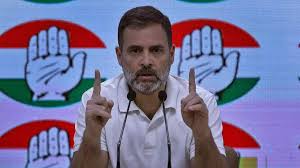
NEW DELHI: Leader of opposition in Lok Sabha Rahul Gandhi on Saturday again accused the Bharatiya Janata Party of engaging in “poll rigging”. Citing last year’s Maharashtra polls, he cautioned against similar “match-fixing” activities by the saffron party in the upcoming Bihar polls. “How to steal an election? Maharashtra assembly elections in 2024 were a blueprint for rigging democracy,” he said as he went on to list out the alleged sequence. He noted that the alleged tampering begins by “rigging the panel for appointing the Election Commission”. Step 1: Rig the panel for appointing the Election Commission Step 2: Add fake voters to the roll Step 3: Inflate voter turnout Step 4: Target the bogus voting exactly where BJP needs to win Step 5: Hide the evidence “It’s not hard to see why the BJP was so desperate in Maharashtra. But rigging is like match-fixing – the side that cheats might win the game, but damages institutions and destroy public faith in the result. All concerned Indians must see the evidence. Judge for themselves. Demand answers. Because the match-fixing of Maharashtra will come to Bihar next, and then anywhere the BJP is losing. Match-fixed elections are a poison for any democracy,” he added. The opposition parties have consistently raised the allegations of poll rigging in Maharashtra polls, with leader of opposition in Rajya Sabha Mallikarjun Kharge even calling for a going back to ballot paper system terming electronic voting machines (EVMs) as “fraud” and something that put the opposition at “disadvantage”. — kharge (@kharge) The Election Commission, has however, rejected Rahul’s charge of unexpected voter’s spike in the Maharashtra polls calling it “nothing unusual”. “During the assembly elections in Maharashtra 6,40,87,588 electors, who reached the polling station from 7 am to 6 pm, voted. About 58 lakh votes were polled per hour, on an average. Going by these average trends, nearly 116 lakh voters could have voted in the last two hours. Therefore, casting of 65 lakh votes by electors in two hours is much below the average hourly voting trends,” a senior EC functionary had said earlier this year. They also pointed out that Congress’s own polling agents were present at every booth during the elections and did not raise any credible complaints about irregular voting — neither during the scrutiny by returning officers nor before election observers the following day. Courtesy : TOI Note: This news is originally published on https://timesofindia.com/ and is for use by the non-military/non-commercial community, especially those in the human rights sector.