
‘Where Is Humanity?’: Khan Sir Reacts To Muzaffarpur Rape Case Of Minor Dalit Girl
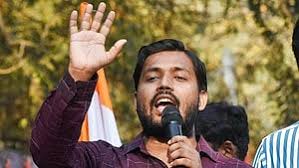
His remarks came after the tragic death of an 11-year-old Dalit girl, who was reportedly sexually assaulted and then denied timely medical care, ultimately succumbing to her injuries. Patna: Responding stronly to Muzaffarpur rape case, popular educator and YouTuber Khan Sir on Saturday questioned the very fabric of humanity in today’s society. His remarks came after the tragic death of an 11-year-old Dalit girl, who was reportedly sexually assaulted and then denied timely medical care, ultimately succumbing to her injuries. Speaking to IANS, Khan Sir said, “This is not just a case of crime, this is a question of our collective humanity.” Describing the inhumanity of the incident, he said, “Arif Mohammad Khan (Bihar Governor), who came to meet me, was very shaken. He told us, ‘How can a human being be so devoid of empathy that a child – a 11-year-old girl – comes out limping after being raped, and even then, the system fails to respond?’ She was taken away in an ambulance, and even then, she was shuttled between hospitals without proper treatment.” “Where are we going as a society? The pain of another should feel like our own – this is the essence of humanity. If we lose this, then what is the difference between humans and animals?” he told IANS. “Why do some lawyers take up the cases of such criminals—rapists, acid attackers, and murderers? I know many responsible lawyers who refuse to fight for someone they know is guilty. It’s time more people follow this principle. The unity and conscience of the legal community can make a real difference.” He also wished the nation on Bakra Eid, expressing his deep respect for Bihar Governor Arif Mohammad Khan, who visited his classroom on the occasion. “It’s our good fortune that someone as intellectual and compassionate as Arif Mohammad Khan is serving as our Governor,” he said. Sharing an anecdote from the visit, Khan Sir recalled how the Governor insisted on visiting the classroom and was moved by the inclusive atmosphere. “We have reserved front-row benches for a person with disability. They study free of cost, and we make sure they get the best experience. When the Governor saw this, he was impressed and even expressed interest in taking a class here someday.” Calling it a proud moment, Khan Sir added, “He said, ‘Tell me a topic and I will come to teach your students.’ It’s a great honour, and we are looking forward to that day.” When asked about his personal life, as he was recently married, he said, “Everything is normal, just like any other couple.” Khan Sir further responded to the Bihar government’s action of suspending the Medical Superintendent of Sri Krishna Medical College and Hospital in Muzaffarpur, where the girl was allegedly denied timely treatment. “The suspension is a start, but it’s not enough. There should be a clear protocol for critical cases. If someone is shot or raped, you don’t delay treatment for paperwork. She died in the ambulance, waiting for admission. This is not just negligence – it’s criminal apathy.” He proposed systemic reforms in hospital operations. “In big hospitals, there is always a separate corridor for emergencies. Why don’t we have one in Bihar’s biggest government hospital? There should be a direct route for super-critical cases. A building alone doesn’t make a hospital – it’s the system and intent inside that matter.” “In smaller towns or villages, you can understand some lack of infrastructure. But in Muzaffarpur? This is unacceptable. It brings shame to the entire district, the entire state.” Khan Sir concluded with a plea: “We need to look within. These brutal crimes are becoming frequent. The time for silence is over. We have to stand up – as citizens, as educators, as humans. Because if we don’t, we fail not just the victim, but the idea of humanity itself.” (Except for the headline, this article has not been edited by FPJ’s editorial team and is auto-generated from an agency feed.) Courtesy : TFPJ Note: This news is originally published on https://thefreepressjournal.com/ and is for use by the non-military/non-commercial community, especially those in the human rights sector.
Congress attacks BJP over rising atrocities on Dalits, weaker sections in Gujarat
New Delhi (PTI) The Congress on Saturday launched an offensive against the BJP governments at the Centre and Gujarat, claiming an increase in atrocities on Dalits and weaker sections in the state. Congress leader Jignesh Mevani alleged that the BJP-RSS do not believe in the Constitution of Babasaheb Ambedkar but believe in the values of ‘Manusmriti’. Mevani claimed this mindset has led to a rise in atrocities against the oppressed and weaker sections of society, citing instances such as Rohith Vemula’s suicide, the family of a rape victim in Hathras not allowed to see her after her death, and Dalit youths brutally beaten at Una in Gujarat. He also cited Home Minister Amit Shah saying in Parliament that “it has become a fashion nowadays to chant Ambedkar-Ambedkar…” The Congress leader told reporters that several incidents of Dalit atrocities have been reported from Gujarat, including a 19-year-old man who was killed in Amreli and an elderly Dalit man who was burnt alive in Patan. Mevani also alleged that Dalit boys going to lodge a complaint against atrocities in Surendranagar district were shot with AK-47. He further highlighted the horrific case of gang-rape of a Dalit girl for 11 days in Santrampur, alleging that three BJP leaders were involved in the case. Citing the low conviction rate in cases of atrocities on Dalits, Mevani said at the national level, this figure is 30-35 per cent, but in Gujarat it is only 3-5 per cent, which meant 95 per cent of the culprits go scot free. The Congress leader also criticised Gujarat Chief Minister Bhupendra Patel for attending a programme organised by the accused instead of meeting the victim after the kidnapping and torture of a Dalit youth in Gondal, Rajkot. He also claimed that Dalit, OBC and Adivasi students were being discriminated against by the Gujarat Public Service Commission as part of a conspiracy, alleging that they were deliberately given less marks in interviews. The Congress is preparing for a big demonstration in August-September against the atrocities on Dalits, Adivasis and weaker sections in Gujarat, he said. PTI SKC ARI This report is auto-generated from PTI news service. ThePrint holds no responsibility for its content. Courtesy : The Print Note: This news is originally published on https://theprint.com/ and is for use by the non-military/non-commercial community, especially those in the human rights sector.
Dalit Girl Gangraped By 13, Pregnant
The pregnancy came to light on Thursday when parents who were getting her treated for her frequent illnesses, were told by one of the RMPs that she was six months pregnant ANANTAPUR: The pregnancy of a Class 9 Dalit girl revealed how she was raped by her boyfriend and 12 of his friends, at Edugurralapalli in Ramagiri mandal of Satya Sai district. The pregnancy came to light on Thursday when parents who were getting her treated for her frequent illnesses, were told by one of the RMPs that she was six months pregnant. The incident came to the notice of the Ramagiri police who questioned the girl in the presence of her parents where she revealed that 13 youths had molested her over time. Police identified the boyfriend as Abhishek from the same village who faked his love for her. He took her to a secluded sport and raped her. Later, he disclosed the act to one of his close friends who also lured her to a secluded place and forcibly raped her. He also recorded the act on his cellphone which he shared with his friends. In all, apart from Abhishek 12 youths raped her by threatening to make her video viral. However, the video went viral with names of the accused. On Thursday some community elders forced the parents of all the accused and the victim to settle the issue monetarily. With social media blaming that the accused parents were with the Telugu Desam and allegedly misusing the power, Satya Sai superintendent of police P.V. Rathna along with Dharmavaram division police identified the victim’s family and registered a case on Friday. Ramagiri inspector Sridhar said they shifted the minor girl to Dharmavaram government hospital. Cases under Pocso and SC/ST atrocities Acts were registered against all the accused — Abhishek, Pratheek, Mahesh, Vardhan, Giri, Rajesh, Jukku, Anji, Murali, Hemanth, Karthik, Nanda, H. Nagaraju and two elders of the village for tyring to suppress the issue. YSRC incharge T. Prakash Reddy accused that children of TD followers were behind the heinous acts while MLA Paritala Sunitha was allegedly guarding the accused instead of providing justice. Sunitha denied the allegations and said that she had already instructed police to take serious action against all the accused. Courtesy : Deccan Chronicle Note: This news is originally published on https://deccanchronicle.com/ and is for use by the non-military/non-commercial community, especially those in the human rights sector.
Standoff between Dalits, upper caste people in Mandya over temple entry
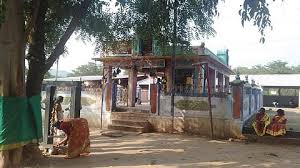
Efforts to mediate through separate peace meetings with leaders of both groups have so far failed. MANDYA: Tension gripped Elechakanahalli village in Mandya taluk after Dalits were allegedly denied entry into Maramma temple by upper caste people. As the situation escalated, heavy police deployment was made to prevent any untoward incidents. The controversy began when upper caste villagers reportedly blocked Dalits from entering Maramma temple, leading to clashes between the two communities. Taluk authorities temporarily sealed the temple and enforced tight security in the area. Later, leaders from both communities placed separate locks on the temple doors, further deepening the standoff. Efforts to mediate through separate peace meetings with leaders of both groups have so far failed. Dalit representatives have demanded equal access to the temple, while upper caste leaders have continued to oppose it. The situation worsened on the night of June 3, when miscreants vandalised a car belonging to a Dalit man, Vijaykumar, near his house. He filed a complaint against six — Shivalinga aka Papu, Dinesh, Janardhan, Chethan Kumar, Roopesh and Manu — at the Mandya Rural police station. Mandya Superintendent of Police Mallikharjuna Baladandi confirmed that security has been intensified in the village to maintain law and order. He said that a peace meeting, chaired by the deputy commissioner, will be held on June 9 in an effort to resolve the dispute. “We hope to arrive at a solution during the meeting,” he added. Courtesy : TNIE Note: This news is originally published on https://thenewindianexpress.com/ and is for use by the non-military/non-commercial community, especially those in the human rights sector.
An Anti-Caste Counterculture Is Gradually Taking Root in UK Universities
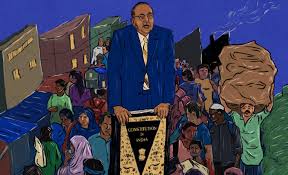
With more Dalit, Bahujan and Adivasi students going to the UK for higher education in recent years, they are creating a counterculture on campus, challenging how ‘India’ and ‘South Asia’ are understood among British and international students and faculty. In a darkened lecture theatre in the School of Oriental and African Studies (SOAS) in London, about 50 people gathered on a Sunday morning for a special screening of Court by Chaitanya Tamhane, a movie that critiques casteism in the Indian legal system. Meanwhile, 400 kms away in northwest England, a book stand in the library of Lancaster University showcased a special collection on caste and Ambedkar. And in another part of the UK, at the University of Leeds, students gathered to commemorate Ambedkar’s birth anniversary and discuss plans for the newly formed Dr Ambedkar Society. These scenes from Dalit History Month celebrations in April this year in different parts of the UK represent a quiet but growing assertion taking root in many English university campuses. With more Dalit, Bahujan and Adivasi students going to the UK for higher education in recent years, they are creating a counterculture on campus, challenging how ‘India’ and ‘South Asia’ are understood among British and international students and faculty. Through organising lectures, workshops and film screenings, and by forming anti-caste and Ambedkarite student societies on campus, marginalised students in the UK are amplifying voices from within their communities on an international platform and contributing to the global understanding of caste and resistance to it. Some are taking the effort further by trying to push for their universities to recognise caste in their policies, to help address the familiar patterns of discrimination and structural inequality marginalised students experience in the UK. Creating a new cultural presence on campus With tens of thousands of Indian students enrolling in UK universities every year, it is commonplace to find ‘India Societies’ and ‘Hindu Societies’ among the many student-run clubs on campuses across the country. In fact, societies that promote Hindu religion and culture on campus have been around in the UK since at least 1991. Through these groups, students organise a variety of events including Bollywood nights, aartis, Diwali and Garba celebrations, and discussions on Indian politics and society Dalit students who came to the UK to study did not feel represented by any of these existing societies, said Abhishek Bhosale, PhD scholar and current President of the SOAS Ambedkar Society. When the society was formed in 2018, the idea was to create a safe space where Dalit students could get together, as well as to democratise and diversify the campus by putting forward their stories and perspectives, he said. In the past year, during Abhishek’s tenure as president, the society has organised several public events including a discussion with The Wire’s Sukanya Shantha and her lawyer Disha Wadekar on their petition in the Supreme Court about caste-based discrimination in Indian prisons. The society also organised discussions on Shahu Patole’s book Dalit Kitchens of Marathwada and Anand Teltumbde’s book Iconoclast. What impact do students hope to have through these events? Abhishek explained that by telling the story of caste in a university like SOAS with an international, politically engaged student body, sensitisation about caste inequalities can reach the wider world through these students when they return to their home countries. “We want to internationalise the authentic stories of people from Dalit backgrounds. For example, if not for the SOAS Ambedkar Society, there wouldn’t be a discussion in London on Patole’s book about Dalit food,” Abhishek said. They also try to bring the academic discussions to life through cultural events such as the Anti-Caste Film Festival they organised in April this year, where the Court was screened. With support from the filmmakers who obliged without a screening fee, the students also showed Jai Bhim Comrade, Fandry, Kaala, and Dr B R Ambedkar to a diverse audience of 60-70 members in London. Poster of the Anti-caste film festival organised by the SOAS Ambedkar Society (Left). A scene from the screening (Right). Photo: Abhishek Bhosale/ SOAS Ambedkar Society. SOAS is also home to the first known Adivasi student society in the UK, the Maki Munda Indigenous Studies Society. In the 2023-24 academic year, a few students from Jharkhand who were at SOAS on various government scholarships created this society to engage with Adivasi issues on an international platform. In their public events, they make it a point to invite Adivasi scholars and grassroots activists as panelists, often joining virtually from India, to share their indigenous knowledge and first-hand experiences. During a student fair in January 2024, the society also organised an Adivasi dance from the Chotanagpur region. “People write about the poverty among Adivasis, their trauma and rights abuse but rarely do they embrace Adivasi culture. As Adivasis, we constantly battle damnation and shame in being who we are. Through the dance, we wanted to showcase our rich heritage and give it due regard in an international space,” said Madhuri Xalxo, a PhD scholar and founding member of the society. A handful of universities in the UK now have Ambedkarite or anti-caste societies formed by students. The Ambedkarite Society of Edinburgh at the University of Edinburgh was formed in January 2024 as a response to various incidents of casteism that marginalised students experienced from fellow Indian students of privileged caste backgrounds. “I was very taken aback by the lack of sensitivity among many Indians. So we formed the society to promote an anti-caste consciousness among students from India, among diaspora and among international students,” said Aniruddha Mahajan, PhD scholar and founding president of the society. At the prestigious London School of Economics and Political Science (LSE), a few Dalit students started an LSE Ambedkar Society in January 2024 to give the iconic social reformer’s ideas due regard in his alma mater. Ambedkar enrolled as a student in LSE in 1916 and completed a master’s degree and a PhD from the university. Ritu Kochar, PhD student and founding president of the society,
Rajasthan Dalit men forced to clean plates after drinking water from shop

One of the men used a metal tumbler to drink from the pot, angering the shop owner. Two Dalit men were subjected to casteist abuse, denigration, and forced to clean plates after drinking from a pot in front of a shop. The incident occurred in Kantia village in Rajasthan’s Nagaur district. The incident took place on June 1 when Omprakash Meghwal and his friend from the Dalit community stopped to drink water from a pot in front of the shop while on their way to attend a family function. Meghwal used a metal tumbler to drink from the pot, angering the shop owner, Kaluram Jat. He, along with two others, Narsiram and Omprakash, enquired about their names and caste Upon learning the men were Dalits, Kaluram, Narsiram and Omprakash hurled casteist slurs before launching a violent attack on them. They also forced them to clean the plates. After some time, Meghwal and his friend managed to run home safely. In an act of intimidation, the three men returned in a camper vehicle the same night, circling Meghwal’s predominantly Dalit neighbourhood. Locals spent the night in panic. Lakdikapul Gated CommunitySt JosephsGermanten Hospital According to local reports, Meghwal’s family allege that the police were initially reluctant to register a complaint. However, pressure mounted on them after local leaders interrupted. Based on the Dalit man’s complaint, an FIR was lodged against Kaluram, Narsiram and Omprakash. They have been booked under the Scheduled Castes and Scheduled Tribes (Prevention of Atrocities) Act and other relevant charges. On Tuesday, June 3, Azad Samaj Party chief and Nagina MP Chandrashekhar Azad flagged the incident on his X handle, calling it another example of the caste discrimination pervading India. “In Kantia village, Dalit youths were abused, humiliated, and forced to clean utensils just for drinking water. This isn’t a mere dispute—it’s a reflection of systemic, centuries-old hatred,” he said. “Does a Dalit still not have the right to drink water?” his X post read. Azad further demanded that the victims be given special protection and proper compensation. He further demanded that the state administration look into the matter and deploy forces to the village to ensure that social harmony is maintained. Courtesy : TSD Note: This news is originally published on https://thesiasatdaily.com/ and is for use by the non-military/non-commercial community, especially those in the human rights sector.
Mevani attacks BJP over atrocities on Dalits, weaker sections in Gujarat
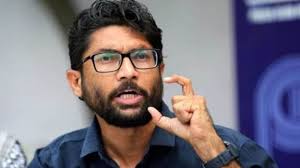
Add Your Heading Text HereCiting the low conviction rate in cases of atrocities on Dalits, Mevani said at the national level, this figure is 30-35%, but in Gujarat it is only 3-5% DalitsThe Congress leader told reporters that several incidents of Dalit atrocities have been reported from Gujarat such as the murder of a 19-year-old Dalit youth in Amreli (File) Congress’s Vadgam MLA Jignesh Mevani on Saturday questioned Prime Minister Narendra Modi and Home Minister Amit Shah’s silence on alleged incidents of atrocities against Dalits, adivasis and other weaker sections in Gujarat, and announced that the party will hit the streets to raise the issue. Addressing a press conference at the AICC headquarters in the Capital, Mevani accused the PM, the Home Minister and the RSS of “putting the values of Manusmriti above the Constitution”. Citing the low conviction rate in cases of atrocities on Dalits, Mevani said at the national level, this figure is 30-35%, but in Gujarat it is only 3-5%, which means 95% of the culprits in the state go scot-free. Story continues below this ad The Congress leader told reporters that several incidents of Dalit atrocities have been reported from Gujarat such as the murder of a 19-year-old Dalit youth in Amreli, the alleged setting ablaze of a Dalit senior citizen in Patan and the alleged gangrape of a Dalit girl in which BJP members are alleged to have been involved. “The Congress is preparing to launch a massive demonstration in August-September against atrocities being afflicted on Dalits, adivasis and those from the weakened sections in Gujarat,” he announced. Courtesy : TIE Note: This news is originally published on https://theindianexpress.com/ and is for use by the non-military/non-commercial community, especially those in the human rights sector.
Bihar sanctions compensation, pension for family of Dalit minor rape victim
11-year-old girl succumbed to injuries after being denied timely treatment; political outrage intensifies The Bihar government on Thursday (June 5, 2025) sanctioned compensation of ₹8.25 lakh under the Scheduled Castes and the Scheduled Tribes (Prevention of Atrocities) Act, 1989, to the family members of the 11-year-old Dalit girl who was raped and brutally assaulted with a knife, and later succumbed to her injuries at the Patna Medical College and Hospital (PMCH) on June 1. The State also announced a monthly pension of ₹7,700 for the victim’s family, in addition to the allotment of a house under the Mukhyamantri Awas Yojana. According to officials, the girl, who was transferred from Muzaffarpur, had to wait in an ambulance for nearly five hours before being admitted to PMCH, as a bed was not allotted promptly. Muzaffarpur District Magistrate Subrat Kumar Sen made the announcement at a press briefing at the Muzaffarpur Collectorate. “There is a provision under the SC/ST Atrocities Act that if any murder of an SC/ST person takes place, then a compensation of ₹8.25 lakh is given. Based on the FIR and post-mortem report, we have given the first instalment of ₹4,12,500 to the mother of the girl,” Mr. Sen said. The opposition, including the Rashtriya Janata Dal (RJD), Congress, Left parties, and the Vikasheel Insaan Party (VIP), has been consistently attacking the State government over the incident. On Tuesday (June 3, 2025), the RJD’s women’s wing held a protest march against Chief Minister Nitish Kumar and Health Minister Mangal Pandey in Patna, while Congress leaders staged a demonstration outside Mr. Pandey’s official residence. Congress MP Rahul Gandhi lent support to the protests, writing on X: “The brutality against a minor Dalit girl in Muzaffarpur and subsequent negligence in her treatment is extremely shameful. If she had received timely treatment, her life could have been saved. But the ‘double-engine’ government was negligent not only in providing security but in saving her life.” Mr. Sen also announced additional welfare measures. “Apart from the pension, a house under Mukhyamantri Awas Yojana has been sanctioned for the family. I have instructed the Block Development Officer to ensure the house is built. In 2011-12, the family received a house under the Indira Awas Yojana but could not construct it. In this special case, we have taken the decision to provide ₹1.20 lakh for house construction and ₹12,000 for a toilet,” he said. He added that the second instalment of ₹4,12,500 would be disbursed once the chargesheet is filed by the police. According to the police, the minor was raped and found with around 20 knife wounds on and around her neck in a pit at a brick kiln in Muzaffarpur on May 26. The accused was arrested the same evening. Union Minister and ruling party leader Chirag Paswan wrote to Chief Minister Nitish Kumar on Wednesday, calling the incident “a failure of the state’s law and order and public health infrastructure”, and demanded strict action against those responsible. Former Uttar Pradesh Chief Minister and Bahujan Samaj Party president Mayawati also criticised the State government, describing the incident as evidence of Bihar’s poor law and health systems. Amid mounting outrage, the State Health Department, on June 3, took disciplinary action against two senior medical officials of PMCH and Sri Krishna Medical College and Hospital (SKMCH), Muzaffarpur, for dereliction of duty. Courtesy : Amit Bhelari, The Hindu Note: This news is originally published on https://thehindu.com/ and is for use by the non-military/non-commercial community, especially those in the human rights sector.
Sonia Gandhi undergoes routine check-up in Shimla after blood pressure complaint
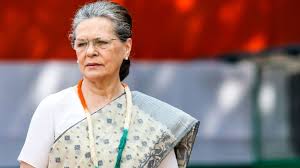
NEW DELHI: Senior Congress leader and former party president Sonia Gandhi experienced high blood pressure following which she underwent routine medical tests at a hospital in Shimla, Himachal Pradesh chief minister Sukhvinder Singh Sukhu’s advisor said on Saturday. “She was taken to the hospital after she complained of high blood pressure. It was a routine check-up and she is going back home now,” Naresh Chauhan, media advisor to CM Sukhu, told news agency PTI. — PTI_News (@PTI_News) The Congress parliamentary party chairperson arrived on a personal trip to Shimla along with her daughter Priyanka Gandhi Vadra on Monday. They are staying in Priyanka’s house at Chharabra, located on the outskirts of the popular hill station, the capital of Congress-ruled Himachal Pradesh. In February, Gandhi was admitted to Delhi’s Sir Ganga Ram Hospital after experiencing stomach-related issues. The ex-Rae Bareli MP, who will be 79 in December, did not contest last year’s Lok Sabha polls due to health reasons, and moved to the Rajya Sabha. The seat was won by her son Rahul Gandhi, now the leader of opposition in the Lok Sabha. Courtesy : TOI Note: This news is originally published on https://timesofindia.com/ and is for use by the non-military/non-commercial community, especially those in the human rights sector.
Maharashtra polls were match-fixed, Bihar next: Rahul Gandhi
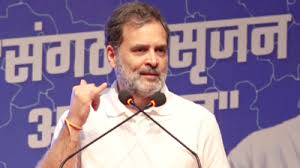
NEW DELHI: Congress leader Rahul Gandhi on Saturday hit out at the Election Commission after the poll watchdog rejected his allegations of rigging in the 2024 Maharashtra assembly election. Reacting to the EC’s refutation attributed to the commission officials who spoke on anonymity, Gandhi said, “Evasion won’t protect your credibility. Telling the truth will”. Sharing his op-ed published in ‘The Indian Express’, headlined “Match-fixing Maharashtra”, on X, Rahul reiterated the allegations he has been making since the poll’s result was announced. The 2024 Maharashtra assembly election was a “blueprint for rigging democracy”, he said, alleging that this “match-fixing” would next happen in Bihar and “then anywhere BJP is losing”. If you have nothing to hide, answer questions in my article and prove it by: publishing consolidated, digital, machine-readable voter rolls for the most recent elections to LS and Vidhan Sabhas of all states Rahul told EC On EC officials rejecting his claims, Rahul said, “Dear EC, you are a constitutional body. Releasing unsigned, evasive notes to intermediaries is not the way to respond to serious questions.” “If you have nothing to hide, answer the questions in my article and prove it by: Publishing consolidated, digital, machine-readable voter rolls for the most recent elections to the Lok Sabha and Vidhan Sabhas of all states including Maharashtra and by releasing all post-5 pm CCTV footage from Maharashtra polling booths,” he demanded. Rahul further said, “My article shows how this happened, step by step: Step 1: Rig the panel for appointing the Election Commission. Step 2: Add fake voters to the roll. Step 3: Inflate voter turnout. Step 4: Target the bogus voting exactly where BJP needs to win. Step 5: Hide the evidence.” He said, “It’s not hard to see why BJP was so desperate in Maharashtra. But rigging is like match-fixing – the side that cheats might win the game, but damages institutions and destroys public faith in the result.” Courtesy : TOI Note: This news is originally published on https://timesofindia.com/ and is for use by the non-military/non-commercial community, especially those in the human rights sector.