
Case of assault on Dalit wedding party in Badaun: Victim says, “The miscreants got enraged after seeing the Ambedkar statue in the car, police suppressed it.”
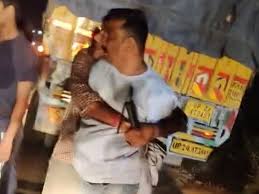
A case of assault on Dalit wedding party members has come to light in the Faizganj Behat police station area of Badaun. It is alleged that some miscreants attacked the wedding party members after seeing the vehicle carrying the Ambedkar statue. The victim’s side has accused the police of inaction, while the police are denying receiving a complaint. A video related to this incident has also surfaced. This incident occurred on the night of November 12th. In the Faizganj Behat police station area of Bisauli tehsil, wedding party members were allegedly assaulted, pistols were brandished, and assaulted. The police are accused of suppressing the matter for two days. The incident came to light when a video surfaced. Dharampal Singh, a resident of Mewali village in the Ughaiti police station area, stated in his complaint to the police that he was traveling by car to attend his relative’s wedding procession. On the way, two men overtook his car, stopped him, and misbehaved with him. Dharampal Singh alleges that the vehicle had a statue of Dr. Ambedkar, and upon seeing this, the attackers used casteist slurs and even attacked with a knife. The victim’s side says they filed a complaint with the police, but the police suppressed it. Meanwhile, the police still claim they have not received any complaint related to this matter. They say appropriate action will be taken upon receipt. Courtesy: Hindi News
Dalits and Muslims in Bihar
In the 2025 Bihar Assembly elections, the mandate has defied all established traditions and electoral conventions, creating new equations that have created a new chemistry within Bihar’s social structure. This indicates that when the public decides on its own alliances and coalitions, it pushes aside traditional beliefs. This Bihar mandate is shocking in many ways because it has shattered the very assumptions of Bihar’s electoral mathematics, based on which political parties calculate their victory and defeat. For example, in Muslim-dominated areas, this time’s mandate has shattered the Muslim-Yadav alliance, while also completely altering the election results in seats reserved for Scheduled Castes and Scheduled Tribes. Although in Bihar’s past history, the ruling NDA won 206 seats in the 2010 elections, far exceeding the current 202 seats, the social equations were not resolved the way they have been in this election. This time, the public has sent a clear message that it will not accept any other equations in place of good governance and public welfare. In the 2010 elections, Nitish Kumar’s party, the Janata Dal (United), contested 141 seats and won 115. The BJP contested a total of 102 seats and won 91. This time, the BJP and the JDU contested an equal number of seats, winning 101 each, with the BJP winning 89 and the JDU winning 85. However, these seats represented participation from all sections of society. JDU fielded four candidates from the Muslim community, all of whom won, while NDA ally Chirag Paswan’s LJP fielded one Muslim candidate. The Seemanchal region of Bihar is considered a stronghold of Muslim votes, comprising the four districts of Kishanganj, Katihar, Araria, and Purnia. These four districts have 24 seats. It was believed that the Muslim vote bank in Seemanchal would remain unspoiled, but a split occurred, and five candidates from Asiduddin Owaisi’s Ittehad-e-Muslimeen party won from this region. The same number of candidates from this party were victorious in the 2020 elections. The Muslim vote was divided between the opposition Grand Alliance and Ittehad-e-Muslimeen, resulting in the NDA’s greatest victory, with the largest number of its candidates winning from Seemanchal. In Seemanchal, where there was a buzz about consolidation of Muslim votes, Hindu votes consolidated in favor of the NDA without any caste discrimination, resulting in the highest number of victories for this alliance’s candidates. Of the 24 seats in Seemanchal, the NDA secured 14, with the BJP winning seven, the JDU five, and Chirag Paswan’s LJP two. In the opposition Grand Alliance, the Congress secured four, the RJD only one, and Asiduddin Owaisi’s party won five. While it was believed that the Seemanchal region would be more favorable for Lalu Yadav’s RJD party because of the Muslim majority here and the Muslim-Yadav equation being active, the opposite happened. Due to the division of Muslim votes, all four JD(U) Muslim candidates won. Kishanganj district has the highest Muslim voter turnout at over 67 percent, while Katihar has 45 percent, Araria 43 percent, and Purnia 39 percent. The Congress Party’s performance in Seemanchal is considered very poor, although it won four seats. This is despite the region’s Muslims’ goodwill toward Rahul Gandhi. Thus, the NDA’s improved performance in Seemanchal this time compared to 2020, demonstrating that the Grand Alliance’s perceived Muslim bias has not affected it. Similarly, the state’s reserved seats for Dalits have been in a similar state. Of the 40 reserved seats in Bihar, only two are reserved for Scheduled Tribes or Adivasis, while the remaining 38 are for Scheduled Castes. By capturing 34 of these 40 seats, the NDA demonstrated that the opposition Grand Alliance’s caste census strategy failed to work, and that the proponents of social justice, Lalu Prasad Yadav’s party, have only marginalized the Scheduled Castes. Although Lalu Prasad Yadav’s party, the RJD, received the highest number of votes in these 40 seats, with over 22 percent, it failed to win any seats. The Grand Alliance won only four out of 38 seats and one tribal seat. In the previous elections in 2020, the NDA won 21 reserved seats and one tribal seat, while the Grand Alliance won 17 reserved seats and one tribal seat. Given the Grand Alliance’s poor performance in the reserved seats, it can be said that Rahul Gandhi’s Save the Constitution campaign was very weak in these areas. Thus, the NDA defeated the Grand Alliance on all fronts and created new electoral equations while strengthening its concept of public welfare. Aditya Chopra Courtesy: Hindi News
The man who made Dalit voices rise
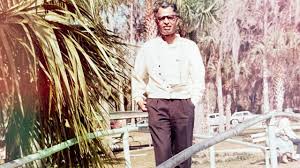
Dr M N Wankhede, on his 100th birth centenary, is remembered for mapping the Dalit vidrohi canon and urging writers to speak out, linking India’s caste struggle with global movements for justice The Ambedkarite thinker, fierce essayist, and mentor of the Dalit rebellious canon is, of course, known in academic circles, but not in the national or regional consciousness. It is to him that the arc of Marathi Dalit writing (and its translations) can be traced. From Baburao Bagul’s Sood (whose foreword he wrote) through Daya Pawar’s Baluta, Laxman Mane’s Upara, Baby Kamble’s Jina Amucha, and Urmila Pawar’s Aaydaan, the genre found its most forceful voice in memoir and autobiography — work that today stands translated in several foreign languages and remains a matter of pride in Maharashtra. Behind this lineage stood Wankhede, who wrote, spoke, and organised around the need for rebellious literature that would name oppression and speak in its own cadence. His years were few, but his impact was decisive: through his essays, speeches, institution-building, travel and study abroad, and his work at Aurangabad’s (now Sambhajinagar) Milind College, he shaped the very definition of rebellion in letters. Dr Wankhede (second row, third from left) and other students travelling to UK with Babasaheb AmbedkarDr Wankhede (second row, third from left) and other students travelling to UK with Babasaheb Ambedkar A new Marathi volume titled Krantdarshi Dr M N Wankhede — which includes the scholar’s select English quotes — edited by senior litterateur Yashwant Manohar, brings together some 60 scholars from across Maharashtra. Manohar excerpts from Wankhede’s speeches, public interviews, and English writings. He, in fact, calls Dr Wankhede “Maharashtra’s Sartre”, whose influence, he notes, has never faded. The collection situates the aesthetics of Dalit literature within a global frame, where Wankhede’s thought carries the existentialism of total revolution, anchored in Dr Ambedkar’s foundational sadvivekvaad — the reasoned humanism that defined his worldview. The volume highlights Wankhede’s profound grasp of Dr Ambedkar’s teachings and his eloquent insistence that Dalits must write fearlessly from their own lived experience. He challenged inherited heroes of history and myth, urging Dalit writers to create their own protagonists — shaped by their time and struggle. For him, the Dalit quest was inseparable from the human one. PM Jawaharlal Nehru and Dr Wankhede (right) in Aurangabad to inaugurate Marathwada UniversityPM Jawaharlal Nehru and Dr Wankhede (right) in Aurangabad to inaugurate Marathwada University Dr Wankhede went to the UK on an Indian government scholarship, and later became a Fulbright scholar in the US, completing his PhD at the University of Florida on “Walt Whitman and Tantrism: A Comparative Study.” There, he witnessed the African American civil rights movement firsthand, profoundly shaping his understanding of social justice and equality. As a scholar of English literature, deeply influenced by Martin Luther King Jr, Langston Hughes, Walt Whitman, and James Baldwin, he urged Dalit youth to pursue education as a tool for transformation. He felt fortunate to have been chosen by Dr Ambedkar to head the English department at Milind College, the institution Ambedkar founded, hoping others would follow this dnyānmārga, enabling them to tell their stories in their own idioms. Returning to Sambhajinagar, he brought insights from the Black Panther movement in the US, transforming Milind College into a crucible of cultural resurgence. Dr Wankhede (seated on the left in the foreground) with former Prime Minister Indira Gandhi Dr Wankhede (seated on the left in the foreground) with former Prime Minister Indira Gandhi As Arjun Dangle, Dalit Panther leader, wrote in the new volume — and reiterated at the Mumbai centenary gathering — “revisiting Dr Wankhede is vital today”, as the values sustaining our welfare state are under threat. In his time, Wankhede urged writers to practise vidroh (rebellion) against the caste establishment. That call resonates till date. Dangle notes that certain figures in history remind us of the need for counter-revolution; Wankhede is one such defining figure. Many writers of the Dalit vidrohi canon remember Dr Wankhede with deep gratitude, acknowledging that much of their own writing owes its inspiration to him. Many hail from Marathwada, especially Milind College, where Wankhede was either their guru or contemporary; a vatvriksha whose canopy sheltered writers, translators, and theatre-cinema-art creators. The volume showcases the Dalit intelligentsia across generations and geographies, including ideologue-thinker Janardan Waghmare (Latur), Hindi translator Aruna Lokhande (Sambhajinagar), educationist Chetana Sonkamble (Kolhapur), and poet-writer Vandana Mahajan from Mumbai. Literary critic and editor of Phule-Ambedkari Vangmaykosh, Dr Mahendra Bhaware, situates Wankhede at the heart of Maharashtra’s cultural renaissance — a force that introduced the revolutionary intensity of African American writing. Tapping into the moral and aesthetic upheaval after the 1956 mass conversion to Buddhism, Wankhede urged Dalits to question all entrenched powers — god and religion included. He institutionalised his ideas through journals such as Asmita, Asmitadarsh, Milind Magazine, and Milind Manuscript Fortnightly, building platforms for new voices. Dalit theatre also took shape under his patronage: he directed Yugyatra, the first Dalit play, performed in Ambedkar’s presence at Sambhajinagar and again before a massive audience at Nagpur’s Dhammadeeksha in 1956. Wankhede’s engagement with Marathi and Indian literary discourse was balanced: never an extremist, he was always open to new ideas. In the preface to Sood, he initially described Dalit literature as Dalit expression fuelled by anger against perpetrators, but later adopted a more nuanced diverse construct. How many public intellectuals are willing to revisit and correct their own definitions? Dr Mangesh Bansod, professor at the University of Mumbai’s Academy of Theatre Arts and an active member of the centenary celebrations, notes that Wankhede was a towering figure who refused to let narrowness or hatred shape the canon he built. He remained in dialogue with scholars of all persuasions, and his engagement with non-Dalit thinkers reflected the intellectual openness highlighted in the Krantdarshi volume through reflections by samavichari such as R G Jadhav, M P Rege, and V L Kulkarni. Renowned reformist writer-critic M B Chitnis — who shared Wankhede’s belief that Dalit literature must be intellectually rigorous yet
Mirzapur News: Government serious about oppression and exploitation of Dalit community
Jigna. Dr. Lalaji Prasad Nirmal, Chairman of the Natural Disaster Management Inquiry Committee, who holds the rank of Minister of State, addressed a gathering in Bihasra Bazaar on Saturday, stating that the Chief Minister has implemented numerous public welfare schemes for the development and upliftment of the community. Advertisement: 0:02 He stated that the government is serious about oppression and exploitation of Dalit community. He said that it is best for the community to remain with the BJP. The Chairman stated that he has donated money from his own funds for the construction of a road in Bihasra. The meeting was conducted by Lalji Verma. Deepak Verma, Vinay Kumar Singh, Ajay Jaiswal, Lal Saheb, Raj Mishra, Indrajit Verma, Shyam Babu Verma, Sanjay Sonkar, Sunil Verma, etc. were present. Dalits are free from fear, land encroachments are no longer prevalent under Yogi’s rule: Dr. Nirmal Vindhyachal. The BJP government is empowering Dalits socially, economically, and politically. Dalits are completely free from fear under Yogi’s rule. Their lands are no longer being illegally encroached upon. Dr. Lalji Prasad Nirmal, Member of the Legislative Council/Chairman of the Natural Disaster Management Inquiry Committee, Uttar Pradesh, stated this in a press conference held at the Ashtabhuja Dak Bungalow auditorium on Saturday. He stated that the Chief Minister has accomplished significant work for Dalits. As a result of this strictness, no gangster or mafia dares to encroach upon the land of Dalits or those from the marginalized communities. Now, Dalit and backward class employees recruited through outsourcing in the state will receive the benefits of reservation. Dr. Nirmal stated that the Chief Minister will inaugurate the world-class Dr. Bhimrao Ambedkar Memorial and Cultural Center being built in Lucknow on April 14, 2026, on the occasion of Baba Saheb’s birthday. Courtesy: Hindi News
World News | NY Consul General Meets Dalit Chamber of Commerce to Strengthen Business Ties
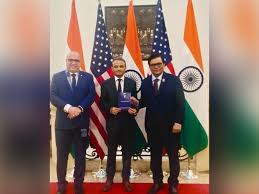
Get latest articles and stories on World at LatestLY. India’s Consul General in New York, Binaya Pradhan met a delegation from the Dalit Indian Chamber of Commerce and Industry and discussed strengthening of business opportunities for entrepreneurs of DICCI. New York [US], November 16 (ANI): India’s Consul General in New York, Binaya Pradhan met a delegation from the Dalit Indian Chamber of Commerce and Industry and discussed strengthening of business opportunities for entrepreneurs of DICCI. In a post on X, the Consulate stated, “Consul General Binaya Pradhan met a Dalit Indian Chamber of Commerce and Industry delegation led by Milind Kamble and Mr. Sanjiv Dangi. The discussion focused on strengthening business opportunities for entrepreneurs of DICCI in the US-India economic cooperation.” Earlier on Saturday, External Affairs Minister S Jaishankar chaired the Consul Generals Conference and appreciated the Embassy and Consulates for strengthening India-US ties. He reviewed bilateral ties with the US. In a post on X, he said, “Chaired a Consul Generals Conference in New York today, attended by Embassy of India in Washington DC, Consulate General of India in New York, Consulate General of India in Los Angeles, Consulate General of India in Seattle, Consulate General of India in San Francisco, Consulate General of India in Atlanta, Consulate General of India in Houston, Consulate General of India in Chicago and Consulate General of India in Boston. Reviewed our bilateral ties and support for diaspora activities. Appreciate the commitment and efforts of our Embassy and Consulates to strengthening the India-US partnership.” The Consulate General of India in New York said in a post on X, “Team CGI New York was honoured to welcome External Affairs Minister S Jaishankar. His vision, guidance and leadership strengthen our commitment to work for the India-USA partnership.” Earlier on Friday, Jaishankar met United Nations Secretary-General Antonio Guterres in New York on Thursday and discussed the current global order, regional flashpoints and the role of multilateralism. In a post on X, Jaishankar said he valued Guterres’ assessment of global developments and thanked him for his “clear and consistent support” for India’s growth. “Good to meet with UNSG @antonioguterres in New York today. Valued his assessment of the current global order and its implications for multilateralism. Also appreciated his perspectives on various regional hotspots. Thank him for clear and consistent support for India’s growth and development. Look forward to welcoming him in India,” he wrote. (ANI) (The above story is verified and authored by ANI staff, ANI is South Asia’s leading multimedia news agency with over 100 bureaus in India, South Asia and across the globe. ANI brings the latest news on Politics and Current Affairs in India & around the World, Sports, Health, Fitness, Entertainment, & News. The views appearing in the above post do not reflect the opinions of LatestLY) Courtesy : LatestLY Note: This news is originally published on https:/latestly.com/bha and is used purely for non-profit/non-commercial purposes, especially human rights
BJP MP alleges forced conversion racket targeting transgender community in Maharashtra

Bonde told reporters on Saturday that some transgender persons from Amravati approached him with a complaint of forced religious conversion. BJP Rajya Sabha member Anil Bonde has alleged that a racket is operating in Maharashtra’s Amravati and Yavatmal districts to forcibly convert transgender individuals to Islam. Bonde told reporters on Saturday that some transgender persons from Amravati approached him with a complaint of forced religious conversion, which has created an atmosphere of fear among the community. Some of the affected individuals reconverted to Hinduism through a ritual at the Kumbh Mela (held earlier this year at Prayagraj in Uttar Pradesh), he said. Bonde said he will inform Chief Minister Devendra Fadnavis about the issue and demanded immediate police action into the matter. Courtesy : Money Control Note: This news is originally published on https:/moneycontrol.com/bha and is used purely for non-profit/non-commercial purposes, especially human rights
BJP’s Anil Bonde Alleges Forced Conversions Of Transgender Persons In Maharashtra

The Rajya Sabha MP claims a network is coercing transgender individuals in Amravati and Yavatmal to convert to Islam, urges urgent police action. Anil Bonde alleges a coercive conversion racket targeting transgender persons in Amravati and Yavatmal. Some affected individuals reportedly reconverted to Hinduism at the Kumbh Mela in Prayagraj. Bonde plans to inform Chief Minister Devendra Fadnavis and has demanded immediate police action. A BJP Rajya Sabha member has claimed that a racket is forcing transgender persons in Maharashtra’s Amravati and Yavatmal districts to convert to Islam, prompting demands for immediate police action. PTI reported that Anil Bonde told reporters on Saturday that several transgender individuals from Amravati had approached him alleging forced religious conversion, which he said had created fear within the community. Some of those who complained had reconverted to Hinduism through a ritual at the Kumbh Mela held earlier this year in Prayagraj, Uttar Pradesh, he said. According to PTI, Bonde added that he would inform Chief Minister Devendra Fadnavis about the matter and pressed the state government to initiate urgent police action. Courtesy : Outlook India Note: This news is originally published on https:/outlookindia.com/bha and is used purely for non-profit/non-commercial purposes, especially human rights
Revanth–Rahul show unity after bypoll win; cabinet expansion talks gain buzz
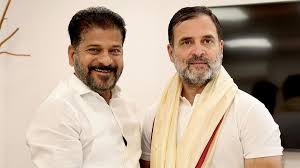
Hyderabad: In a clear display of unity after the decisive Jubilee Hills bypoll victory, AICC leader Rahul Gandhi on Saturday praised the ‘teamwork and coordination’ that powered the Congress win — setting the tone for a strategy reset ahead of local body and GHMC elections.Rahul is set to hold a detailed review meeting with chief minister A Revanth Reddy and his council of ministers to assess the bypoll performance, the political climate in Telangana, and the road map for upcoming electoral battles. At the heart of this upcoming huddle is also a key political question: When will Revanth fill the two vacant cabinet berths? Rahul is learnt to have directly asked the chief minister about his expansion plans, a move that has re-energised conversations within the party. Revanth, along with deputy CM Bhatti Vikramarka, AICC Telangana in-charge Meenakshi Natarajan, TPCC president B Mahesh Kumar Goud, and newly-elected MLA V Naveen Yadav, called on Rahul Gandhi, AICC president Mallikarjun Kharge, and AICC general secretary KC Venugopal in Delhi. All three national leaders congratulated Naveen Yadav and the Telangana team for the bypoll win. The meeting came just a day after the result — significant because opposition parties had been alleging a widening rift between Rahul and Revanth. The coordinated outreach by the CM, accompanied by Naveen Yadav and top state leaders, worked as a public reaffirmation of smooth communication between Hyderabad and the high command. Though it was widely speculated that Revanth’s team discussed the evolving political situation, local body elections, GHMC polls and cabinet expansion — and that the CM invited Rahul and Kharge to the Congress govt’s two-year celebrations and the Global Summit in Dec — senior leaders maintained that there was no formal confirmation on these points. “It was a brief meeting where Naveen was introduced and all three AICC leaders complimented the new MLA and the TPCC team. There wasn’t much discussion on other issues,” Mahesh Goud clarified, attempting to cool the buzz. Yet, the very composition of the delegation — the CM, deputy CM, Meenakshi, Mahesh Goud — triggered intense speculation in Telangana Congress circles. Their collective presence in Delhi fuelled talk of imminent cabinet expansion or even a reshuffle, despite the CM’s official reason for travel being participation in Kapil Sibal’s book release. Names doing the rounds for the two vacant berths include Komatireddy Raj Gopal Reddy, Malreddy Ranga Reddy, Actor-MLC Vijayashanti, Mahesh Goud himself, and Naveen Yadav. And after Mohammed Azharuddin’s recent entry into the cabinet, many senior leaders believe a reshuffle cannot be ruled out. Courtesy : TOI Note: This news is originally published on https:/timesofindia.com/bha and is used purely for non-profit/non-commercial purposes, especially human rights
Nationalists in Congress upset with ‘namdar’: PM Modi rips into Rahul; slams anti-EC campaign
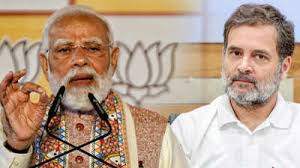
NEW DELHI: Prime Minister Narendra Modi, a day after the NDA’s historic win in Bihar, launched a sharp attack on the Congress, saying dissatisfaction was spreading among senior nationalist leaders who had once worked closely with Indira Gandhi and Rajiv Gandhi. Taking a veiled dig at Rahul Gandhi, Prime Minister said that their frustration stemmed from the conduct of what he called the party’s “namdar” leadership. He further accused the opposition of now turning its anger towards institutions instead of accepting the verdict. Addressing a gathering of Bihari residents in Surat, PM Modi said the Congress and its allies had turned to blaming institutions instead of introspecting. “Opposition can’t explain poll rout even to their workers and blaming EVMs, EC and electoral rolls’ revision,” he said, calling it part of a “habitual” attempt to discredit constitutional bodies. He also pointed to what he described as growing frustration among younger opposition MPs, saying, “When we meet young Congress members or INDIA alliance members in the Parliament, they say, ‘Sir, what can we do? Our careers are coming to an end. We don’t even get a chance to speak in Parliament because these people keep saying, ‘Lock Parliament,’ every time.’ They’re unable to answer their own constituencies…” — ANI (@ANI) Turning to Bihar, PM Modi praised the state’s voters for delivering a decisive mandate and setting what he described as a global example. He said Bihar’s political clarity had strengthened the NDA while exposing weaknesses in the opposition’s message. “Bihar is famous worldwide today… Bihar’s women and youth formed a combination that strengthened the foundation of politics for decades to come,” he said. He highlighted the 10 per cent vote gap between the NDA and the Mahagathbandhan as evidence of a clear preference for development. He sharply criticised opposition leaders, accusing them of attempting to divide voters. “For the past two years, these ‘jamanati’ politicians, who are out on bail, were going around in Bihar giving speeches about casteism… This election in Bihar has completely rejected that poison of casteism. This is a very bright sign for the country.” He also referred to controversies over Waqf properties, saying Bihar’s voters had dismissed what he called “communal poison”. The NDA secured a massive mandate in the Bihar assembly elections winning 202 seats while the Mahagathbandhan secured 35. Rahul meets Kharge to discuss Cong’s Bihar poll drubbing Meanwhile, the Congress on Saturday questioned the role of the Election Commission in the Bihar poll process as its top leaders, including Rahul Gandhi and party president Mallikarjun Kharge, met in Delhi to assess the party’s poor performance. Gandhi and Kharge were joined by K C Venugopal, Ajay Maken and Bihar in-charge Krishna Allavaru. Sources said the meeting focused on the Congress winning only six of the 61 seats it contested, its second-worst tally in the state since 2010. After the discussions, Venugopal blamed the Election Commission for the outcome, alleging that “the entire poll process is questionable and there is no transparency”. Calling the result “unbelievable for all of us”, he said alliance partners were also “not believing it”. He argued that a “90 per cent plus strike rate for a political party” had never happened in Indian history and said the Congress was collecting data from across Bihar and would present “concrete proof” within one or two weeks. Venugopal said the conduct of electioneering was “completely questionable” and alleged that “the Election Commission is totally one-sided”. Courtesy : TOI Note: This news is originally published on https:/timesofindia.com/bha and is used purely for non-profit/non-commercial purposes, especially human rights
Siddaramaiah met Rahul Gandhi in Delhi, now DK Shivakumar is going to meet him. Is something going to happen in Karnataka?
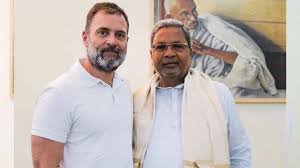
Amidst speculation about a cabinet reshuffle in Karnataka, Chief Minister Siddaramaiah met with Rahul Gandhi, the Leader of the Opposition in the Lok Sabha, in New Delhi. Sources said that Siddaramaiah, along with Energy Minister KJ George, held a 30-minute discussion with Gandhi at former Congress President Sonia Gandhi’s residence. Bengaluru: Karnataka Chief Minister Siddaramaiah met Rahul Gandhi in Delhi. The two held a half-hour discussion at Sonia Gandhi’s residence. Siddaramaiah’s Energy Minister KJ George was also present during the meeting. It is believed that this meeting was about the reshuffle in Karnataka. Siddaramaiah’s two-and-a-half-year term is coming to an end. There is speculation that DK Shivakumar could be replaced as Chief Minister, and that a cabinet reshuffle would give new faces a chance. However, Siddaramaiah dismissed these speculations, stating that the only discussion during their meeting was the Bihar election results. Meanwhile, DK Shivakumar’s statement on this meeting sparked speculation. Siddaramaiah kept this meeting a secret, although the news spread in the media. He did not want his meeting with Rahul Gandhi to become public. Siddaramaiah, who usually shares photos of every meeting, big or small, on social media, did not post a single photo of his meeting with Rahul Gandhi. This sparked all sorts of speculation. Siddaramaiah’s Claim The Karnataka Chief Minister said, “Yes, I met Rahul Gandhi. We only discussed the Bihar elections. He is our leader, so we encouraged him after the Bihar election defeat. He said he was not worried about it. We told him not to lose heart. There was no discussion on a cabinet reshuffle. If I get time, I will meet the Prime Minister on Monday.” What DK Shivakumar Said Reacting to Karnataka Chief Minister Siddaramaiah’s meeting with Congress leader Rahul Gandhi on Saturday, Deputy Chief Minister DK Shivakumar said he was unaware of the meeting. He said, “I am not aware of the Chief Minister’s meeting with Rahul Gandhi. I am not aware of any discussion on a cabinet reshuffle… I don’t know if I will meet (with Rahul Gandhi) on Sunday.” Amid growing curiosity about potential changes in the Karnataka leadership, Shivakumar said, “If you have any questions about leadership changes, talk to the Chief Minister. We have to listen to the party.” Shivakumar further said that the Chief Minister has every right to meet Mallikarjun Kharge, the Home Minister, or the Prime Minister. What is wrong with that? Siddaramaiah’s Claim In addition to statements from various ministers and Congress leaders, Siddaramaiah himself hinted on Tuesday that a cabinet reshuffle was likely, as two positions had become vacant due to the resignations of ministers KN Rajanna and B Nagendra. A source familiar with the meeting said that Rahul Gandhi has given his approval for a reshuffle in the state cabinet. The source added that it is now up to the Chief Minister to decide. Meanwhile, amid discussions of a leadership change, KPCC President DK Shivakumar also arrived in New Delhi on Saturday and is expected to meet with Gandhi and other senior leaders. It is reported that he now wants to include MLAs from his faction in the cabinet expansion. Curated by: Shashi Mishra About the Author Shashi Pandey Mishra is a senior journalist at Navbharat Times Online. She writes stories on politics, crime, health, and the human angle. She also enjoys writing on issues related to women and children. She also writes ground reporting and interesting stories. She has 18 years of experience in journalism. Courtesy: Hindi News