
Dalit IAS Officer Rinku Singh Rahi Resigns from U.P. Cadre Alleging Harassment and Bureaucratic Corruption

2022-batch Dalit IAS officer Rinku Singh Rahi resigns from Uttar Pradesh cadre, alleging harassment, sidelining, and bureaucratic corruption, calling the system morally flawed. Rinku Singh Rahi, a 2022-batch IAS officer of the Uttar Pradesh cadre, resigned from his position on March 31, 2026, alleging systematic harassment and a denial of meaningful work. Rahi, who belongs to the Dalit community, claimed he was “sidelined” and kept in an “attached” position at the U.P. Revenue Board without any public-service responsibilities. Despite receiving a salary, the officer termed his lack of duties as a “form of corruption” and a moral failure of the administrative system. His resignation has sparked criticism from political figures like Nagina MP Chandra Shekhar Aazad, who highlighted the struggle of honest officers within the current bureaucracy. A “Moral Decision” Against Bureaucratic Inertia In his resignation letter, Rahi articulated that being paid to do no work was fundamentally against his principles of integrity. He alleged that a “parallel system” exists within the administration where honest officials are effectively neutralised by being denied active roles. Rahi’s marginalisation intensified in July 2025 after a video went viral showing him performing sit-ups as a gesture of “moral responsibility” for the poor state of public toilets in Shahjahanpur. Following this incident, he was removed from his post as Sub-Divisional Magistrate (SDM) of Puwayan within just 36 hours. “In the system, there is perhaps a special kind of punishment reserved for honest people they get paid, but no work is assigned to them,” Rahi stated, describing his tenure at the Revenue Board as a period of forced inactivity. A Legacy of Defiance and Survival Rinku Singh Rahi’s journey to the Indian Administrative Service is one of extraordinary resilience. Before becoming an IAS officer, he served in the Provincial Civil Service (PCS), where in 2009, he exposed an ₹83-crore scam in the social welfare department. His whistleblowing led to a brutal assassination attempt where he was shot seven times, leaving him disfigured and blind in one eye. Despite the trauma, he cleared the UPSC examination in 2021 under the disability quota. His recent resignation is seen by supporters as the final straw in a long-standing battle against a system he feels has consistently opposed his efforts to instill transparency. Member of Parliament Chandra Shekhar Aazad echoed this sentiment, stating, “A Dalit IAS officer was forced to quit due to neglect. It raises a question mark on the entire administrative system.” The Logical Indian’s Perspective At The Logical Indian, we believe that the strength of a democracy lies in the protection of its whistleblowers and the empowerment of its honest officers. Rinku Singh Rahi’s resignation is not just the story of one individual; it is a distressing symptom of a system that often prioritises silence over accountability. When an officer who survived seven bullets for the truth feels forced to leave because he is “denied work,” it reflects a failure to foster an inclusive and ethical work environment. We advocate for a bureaucracy that values empathy and transparency over rigid hierarchies and political convenience. True social change can only occur when those within the system are allowed to work with dignity, regardless of their background or their refusal to stay silent against corruption. Sandipta Ghosh Courtesy : TLI Note: This news is originally published on https:/thelogicalindia.com/bha and is used purely for non-profit/non-commercial purposes, especially human rights
SC/ST Commission Chief Warns Against Discrimination
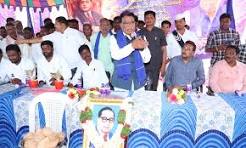
Dalits allowed to enter temple, community dining programmes held NIZAMABAD: SC/ST Commission chairman Bakki Venkataiah,, warned that strict action would be taken under the SC/ST Atrocities Act against any injustice or discrimination towards Dalits, and urged victims to come forward and file complaints without fear. He said the Indian Constitution guarantees equality and stressed the need to eliminate caste-based discrimination and divisions in society, adding that it is a collective responsibility to ensure equal rights for all. A social equality programme was conducted in Narsampalli village of Kamareddy district on Wednesday, aimed at addressing caste discrimination in rural areas. As part of the initiative, Dalits were allowed entry into temples in the village, and community dining programmes were organised. Officials and villagers also visited the Anjaneya Swamy and Shiva temples and performed prayers, with participation from all sections. Venkataiah said coordinated efforts by the government, officials and the public were necessary to address discrimination, and emphasised equal access to temples, social events and festivals. Additional collector (revenue) Victor, SC Corporation official Venkateshwarlu, sarpanch Ravi, DTDVO Soujanya and tahsildar Himabindu were present. At the start of the programme, Venkataiah paid tributes to B.R. Ambedkar by garlanding his portrait. Community meals were later organised, with participation from villagers across sections. Narender Pulloor Courtesy : Deccan Chronicle Note: This news is originally published on https:/deccanchronicle.com/bha and is used purely for non-profit/non-commercial purposes, especially human rights
IAS officer row: Akhilesh alleges ‘systemic neglect’ under BJP; Bhim Army chief raises Dalit angle
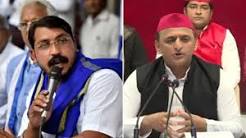
IAS officer Rinkoo Singh Rahee sought to return to Provincial Civil Services due to a lack of work. Opposition leaders, including Akhilesh Yadav and Chandrashekhar Aazad, alleged administrative bias and neglect of honest officers under the BJP government. They criticized the sidelining of competent officials, with Aazad noting Rahee’s past anti-corruption efforts despite his Dalit identity. *AI-generated summary. Check context in original text. Lucknow, Political reactions poured in on Wednesday after Uttar Pradesh cadre IAS officer Rinkoo Singh Rahee sought to return to his parent service, with opposition leaders alleging administrative bias and neglect of “honest officers” under the BJP government. Rahee, a 2023-batch IAS officer currently attached to the Board of Revenue in Lucknow, has written to the president requesting repatriation to the Provincial Civil Services (PCS), citing a lack of work for several months and the absence of meaningful responsibilities. Samajwadi Party chief Akhilesh Yadav alleged that capable officers are not valued under the present dispensation. In a post on X, he said efficient officers have “no importance” in the BJP government and are often sidelined, while those involved in corruption are given preference. He urged officers not to take decisions in haste, expressing hope that a future government would ensure “due respect and proper roles for competent officials.” Yadav also said that quality governance requires skilled officers and maintained that his party has always valued professional competence in administration. Azad Samaj Party chief and Bijnor MP Chandrashekhar Aazad termed the development “deeply concerning” and indicative of larger issues within the administrative system. In his remarks, Azad highlighted that Rahee, who belongs to the Dalit community, had earlier exposed corruption and survived a life-threatening attack, and yet he now finds himself without work. He also pointed to what he described as contradictions in the administrative setup, alleging instances where ministers, including those from marginalised communities, were not accorded due protocol by officials. Such developments raise serious questions about institutional functioning and suggest deeper imbalances within the governance structure, Aazad said. PTI KIS CDN VN VN This report is auto-generated from PTI news service. ThePrint holds no responsibility for its content. Courtesy : The Print Note: This news is originally published on https:/theprint.com/bha and is used purely for non-profit/non-commercial purposes, especially human rights
Dalit groups protest alleged saffronisation of KSOU
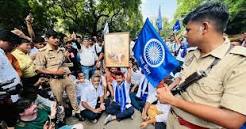
Mysuru: Several Dalit and progressive organisations held a protest in front of the Karnataka State Open University (KSOU) administrative block at Mukthagangotri in Mysuru on Wednesday, accusing the varsity administration of saffronisation of the university. They alleged that VC Sharanappa V Halse allowed the conclave to commemorate 60 years of Deendayal Upadhyaya’s lectures on ‘Ekatma Manav Darshan’ for his personal gains and urged the state govt to take stern action against him. Activists, writers and artists who gathered in front of the university shouted slogans against the VC for allowing the ‘Ekatma Manav Darshan: Bharat’s Worldview’ event, which, they claimed, was anti-democratic and anti-people. They urged the governor to sack the VC pending inquiry over various allegations against him. The agitators urged the state govt to register FIR against the VC for violating its order. BJP MLC AH Vishwanath, who met the agitators, assured them that he will raise the issue with the governor. Later, they submitted a memorandum to the governor through university registrar SK Naveen Kumar. In the memorandum, the agitators alleged that the VC is following communal policies and his decisions are affecting the functioning of the varsity. AHINDA leader Javarappa alleged that even though the KSOU is now facing acute shortage of students, there is no end to the new recruitments. “The university has become a den of corruption. There is no fear of law to those who are committing corruption,” he charged. “Several previous judicial committee investigative reports are lying idle. As a result, corrupt are carrying out misdeeds without the fear of law. There is an urgent need for action against the VC for his various controversial decisions,” he said. Courtesy : TOI Note: This news is originally published on https:/timesofindia.com/bha and is used purely for non-profit/non-commercial purposes, especially human rights
Dalit girl manhandled in hostel
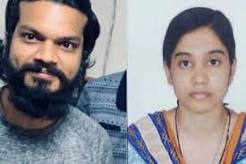
Lucknow: A Dalit girl residing at Lucknow University’s BR Ambedkar Hostel was allegedly manhandled and targeted by a group of girls from the same hostel for uploading a photograph of BR Ambedkar as the display picture in the WhatsApp group of the hostel, of which she was an admin. The incident took place on March 26 at LU’s second campus. On Wednesday, the panel formed by the proctor started a probe into the incident and recorded the statements of the complainant and accused girls. The complainant, an LLB III student, told TOI, “I was physically manhandled and verbally abused with casteist slurs by some girls in the hostel just because of the WhatsApp group profile picture. The provost and Dean Students’ Welfare also came to meet me but did not offer any help, after which I mailed my complaint to the proctor of the university.” The video of the incident also went viral on Instagram. Courtesy : TOI Note: This news is originally published on https:/timesofindia.com/bha and is used purely for non-profit/non-commercial purposes, especially human rights
Over 65 Dalit, Adivasi groups back UDF ahead of Kerala polls, criticises Left govt’s development model
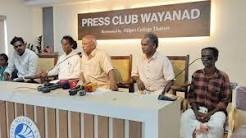
The Ambedkarite Democratic Front (ADF) on Wednesday announced its support for the Congress-led United Democratic Front (UDF), alleging that development initiatives undertaken by the Left government have sidelined Adivasi, Dalit, and other marginalised communities. In a statement, the ADF said that large infrastructure projects such as the Vizhinjam Port, national highways, and tunnel roads follow a development model that does not benefit ordinary taxpayers, including Dalits, Adivasis, fishermen, and low-income groups. Addressing a press conference, ADF working president K Ambujakshan claimed that only 10% of the Plan Fund, constituting just one-seventh of the State’s total budget, is allocated for SC/ST development, and that a substantial portion of this remains underutilised. He alleged that ₹7,411 crore earmarked for SC/ST welfare has been wasted over the past nine years, adversely affecting sectors such as education. According to him, delays in the disbursement of e-grants have forced nearly 150 SC/ST students to drop out of their studies. The ADF, a joint platform representing around 65 SC/ST organisations, said there is growing concern among these communities that the continuation of Left rule could threaten the survival and welfare of marginalised sections. The organisation also disputed Minister O R Kelu’s claim that e-grants were distributed without arrears. ADF general convenor M Geethanandan alleged that merely renaming colonies as “Unnathi” has not resulted in meaningful change. He further claimed that 19,000 acres of land allocated by the central government for landless people remain undistributed. Additionally, he alleged that although a significant share of funds under the LIFE housing scheme comes from SC/ST allocations, beneficiaries from these communities continue to be overlooked. The Kerala Legislative Assembly Election 2026 will be held in a single phase on April 9, 2026, with the counting of votes scheduled for May 4, 2026. Courtesy : Makytoob Media Note: This news is originally published on https:/maktoobmedia.com/bha and is used purely for non-profit/non-commercial purposes, especially human rights
‘Where Will I Go?’: Inside Delhi’s Trans Shelter Home As Care Networks Face Uncertainty
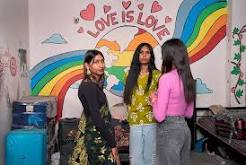
Denial of self-identification and narrowing definitions have left residents worried about identity recognition, access to schemes and the future of care systems. Summary of this article Shelter homes often face chronic underfunding and limited reach, with staff warning that existing facilities are far from sufficient. New provisions raise concerns that offering shelter or support could be legally challenged, while stricter identity requirements may restrict access to care networks. Despite fear and instability, community members continue to rely on each other for emotional and practical support, even as their futures grow uncertain. ‘Panchhi banoo udti phiroon mast gagan mein, Aaj main azad hoon duniya ke chaman mein.’ (Like a bird, I wish to soar merrily in the boundless sky; Today I am free in this garden of the world.) Sanam, who identifies as a trans woman, quoted this song to describe how she felt after India overturned a 19th-century ban on homosexuality. However, she feels differently now. On the day the Trans Amendment Bill was tabled in the Rajya Sabha, Sanam, 22, was in Delhi’s Kalkaji, overwhelmed by anxiety. Unable to collect her thoughts, she broke down and cried all the way to the Garima Greh where she lives. “Men were catcalling me even as I struggled to catch my breath. They misbehave with us all the time, now they’ll feel emboldened to do so,” Sanam said gazing blankly from the balcony, her expression settling into a faint smile. It has just been four days since she began hormone therapy. Now, with the President’s assent, she feels her existence hangs by a thread. It has been over a year since Sanam left her home, where she said she was constantly monitored, and began living in the shelter home. She says she feels familiarity there—accepted for who she is. After the new Act, she questioned, quietly: “Where will I go? I don’t know what to do.” Sanam lives with at least 25 other transpeople in Delhi’s Garima Greh, the only one enlisted on the government’s website in the national Capital. As per the 2011 Census, Delhi has 4,213 transgender persons, while India’s total stands at 4,87,803; a number the community members say is grossly underreported. As per an August 2025 Press Release, at present, the Department of Social Justice and Empowerment runs 18 such shelters across India, and approval has been granted to set up three more in 2025-26. A total of 429 people are currently residing in these shelters. “These facilities are simply not enough,” said Ankit*, a trans man who works as a project manager at the shelter home. He explained that the shelter accepts anyone who comes seeking help, and while they try their best to manage, finances are often strained. With lack of access to shelter, the homeless transpeople may never come out, or take extreme steps like suicide, he said. Kanta, the programme manager at the Garima Greh, which has been running since 2021, said they struggle with funding and sometimes go up to six months without support. The point of this scheme was to provide transpeople with a home, she said. “This is a government-run shelter home. We have not received a single penny from the government in this financial year,” she claimed. The new act has removed the right to gender self-identification recognised by the Supreme Court in the landmark National Legal Services Authority v. Union of India in 2014 and introducing medical certification for identity recognition. It has also changed the definition of a transgender person, only including intersex people and socio-cultural identities as kinner, hijra, aravani and jogta, or eunuch. With the changes, the community is faced with a range of unanswered questions about the funding of government run shelter homes, welfare schemes, the validity of the transgender identity cards which have already been issued, and access to the care community. “If the process of recognising identity becomes more restrictive, then access to these schemes will also become more uncertain,” Don Hasar, a Queer-Trans rights activist explained. It will affect how beneficiaries are identified, she said. She continued to note that ideally, shelter homes should not require a trans ID card for entry. People often arrive through informal networks, referred by someone they trust, even if they do not yet have a trans ID. Shelters do not turn them away; instead, they provide support and help them obtain the necessary documents. “Many of these shelters are run by community members,” she said. However, certain clauses in the new act raise concerns about how such support could be interpreted. “Even if somebody wants to help somebody who needs shelter home access, a case could be filed against them, saying that this is allurement. So how will organisations function now?” she questioned. In the new act, the government has introduced four new offences in addition to the existing ones, one of which carries a punishment of 10 to 14 years’ imprisonment, said Kanmani Ray, a trans woman and advocate based in Chennai. One provision addresses cases where a child is, by “force, threat, coercion, allurement, deception, inducement, undue influence or otherwise”, made to present as a transgender person and is then exploited for begging, solicitation, servitude, or any form of forced or bonded labour. Ray stated that there are already kidnapping and abduction provisions under the Bharatiya Nyaya Sanhita, which are regularly being invoked. Introducing a new set of offences was not needed. “Of course, as long as it is a criminal offence and it is not explicitly stated, the State has the burden to prove that they have a case. But let me make this clear, it is not about whether you did the offence or not. It is about the fact that the process is the punishment,” Ray said. At Delhi’s shelter home, hope has dimmed. Community members, some employed, some undergoing hormone therapy, some recovering from traumatic experiences at home, and others still finding their footing, are struggling to understand why the new law has redefined their identities. “I had so
Community members seek repealing of Transgender Bill, warn of protest

Hisar: Members of the transgender community have warned of a nationwide protest if the proposed Transgender Bill is not withdrawn, with a demonstration planned at Jantar Mantar in New Delhi on April 6. Speaking at the national convention of the Kinnar Samaj (transgender community) in Hisar on Wednesday, Chandni Kinnar said if their demands were not met, they would move the Supreme Court and might also launch a hunger strike at Ramlila Maidan. The convention, held at Agrasen Bhawan, saw participation from around 1,500 transgender representatives from across the country. Chandni Kinnar, a head figure of the community, was joined by Raj Haseena and Shobha Nehru during the media interaction. Chandni criticised the provision of mandatory medical examination in the proposed legislation, calling it “insulting and discriminatory”. “In a country where individuals are not required to produce medical proof of identity, imposing such a condition on the transgender community is unjust,” she said. Appealing to Prime Minister Namenda Mode, Chandni sought the withdrawal of the proposed bill. In an emotional address, she called for dignity and respect for the community, stressing that their identity should not be subject to medical validation. Community leaders at the event described the bill as a threat to their existence, arguing that it would disrupt long-standing social structures and traditions. They maintained that the community had historically regulated its own social systems and identity. Responding to media questions, Chandni said the community was not issuing threats but making a peaceful appeal for the bill’s repeal. She added that the transgender community sought recognition, respect and protection of its identity in return for its contributions to society. Caption of photo: Chandni Kinnar, along with Raj Haseena and Shobha Nehru, interacts with journalists in Hisar. Courtesy : TOI Note: This news is originally published on https:/timesofindia.com/bha and is used purely for non-profit/non-commercial purposes, especially human rights
‘Hat-trick of defeat for Congress certain’: PM Modi takes ‘rajkumar’ dig at Rahul Gandhi in Assam

NEW DELHI: Prime Minister Narendra Modi on Wednesday launched a sharp attack on the Congress in Assam, taking a swipe at Lok Sabha leader of opposition Rahul Gandhi by calling him a “Rajkumar” and predicting a string of defeats for the grand old party, even as he expressed confidence that the Bharatiya Janata Party-led NDA would secure a “hattrick” in the state, mentioning the strong state leadership under Sarbanand Sonowal and now of Himanta Biswa Sarma. Addressing a public rally in Gogamukh, the Prime Minister struck an aggressive tone, targeting former Congress president Rahul Gandhi with an indirect jibe, referring to him as a “self-proclaimed prince”. PM Modi said, “This is my first public meeting after the announcement of the Assam elections. This ocean of people in front of me, the enthusiasm of the youth, the blessings of the sisters and daughters, this love is an open declaration that this time a hat-trick is certain.” Reiterating his confidence, PM highlighted both his own electoral record and the party’s performance in the state. Prime Minister Narendra Modi said, “With the blessings of all of you, I received the opportunity to achieve a hat-trick as Prime Minister. With your blessings, I also received the opportunity to hit a hat-trick on this ground. I have come here for the third time. And with your blessings, the government in Assam is also going to achieve a hat-trick.” He credited the state’s governance over the past decade to former chief minister Sarbananda Sonowal and incumbent CM Himanta Biswa Sarma, asserting that Assam had entered a new phase of development and stability. Prime Minister Narendra Modi said, “First under the leadership of Sarbananda Sonowal and then under the leadership of Himanta Biswa Sarma, Assam has witnessed a new era of service and good governance in the past 10 years. These Assam elections are the election to build a developed Assam for a developed India. This time, the BJP-NDA government is set to complete a hat-trick. And the Congress is also set to face a hat-trick of defeats… The self-proclaimed prince of Congress is set to score a century of defeats.” The Prime Minister also referred to the BJP’s recently released manifesto, describing it as a blueprint for the state’s future. Prime Minister Narendra Modi said, “…The Assam BJP released a splendid manifesto yesterday. It was Tuesday yesterday, and this manifesto released on Tuesday is set to bring more ‘Mangal’ (auspiciousness) to Assam… This is the ‘Mangal Patra’ that arrived on Tuesday.” Highlighting key promises, PM Modi spoke about governance reforms and social initiatives, including the proposed implementation of a Uniform Civil Code in the state. PM Modi said, “To ensure that no deceit is done to our daughters, many major announcements have also been made to ensure the dignity, respect, and safety of our daughters’ lives. Implementing Uniform Civil Code in Assam and protecting the traditions of our tribal society, Sixth Schedule areas, or saving Assam’s identity are very big announcements. The BJP does what it says.” Drawing a contrast with past governments, the PM accused Congress of presiding over a period marked by instability and violence, while crediting the NDA for ushering in peace and development. Prime Minister Modi said, “In the past decade, Assam has traversed a long journey of development. These 20-25-year-old youngsters have only witnessed the good governance of BJP-NDA. They have not seen the dark era of Congress rule, when news from Assam was only about bombs, guns, riots, and curfews. The double-engine government has shown Assam a new path to lasting peace. Thousands of Assam’s sons and daughters have, in the past decade, put down the gun and connected to a new future.” He also outlined plans to position Assam as a hub for modern technology, including semiconductor manufacturing. PM Modi said, “There was a time when Assam was discussed in the world for its tea. Now, Assam will be recognised by the world not only for tea but also for chip. That day is not far when chip production will begin from Assam’s semiconductor plant. This will develop Assam as a major hub for modern technology. In the coming times, be it phones, cars, TVs, or fridges, all these products will run on chips from Assam. This is our roadmap for a developed Assam.” On infrastructure, PM Modi accused previous Congress governments of neglect, particularly in building connectivity over the Brahmaputra river. Prime Minister Modi said, “Assam has been gifted so much by nature; Assam has never lacked resources. But for the sake of power, Congress divided the society of Assam and never allowed the two banks of the Brahmaputra to connect. In 60-65 years, Congress built only 3 bridges over the Brahmaputra. Due to the lack of bridges, we lost so many people. The double-engine government understood this problem and completed 5 major bridges over the Brahmaputra in just 10-11 years.” The Prime Minister also took aim at Congress over the issue of illegal infiltration, asserting that the NDA government would continue strict action. Prime Minister Narendra Modi said, “Congress wants to settle foreigners in Assam and make the native sons and daughters of this land a minority…The BJP-NDA government will not allow the land of our farmers, tribals, and our forests to be under the occupation of infiltrators. Against illegal occupation, the BJP-NDA government’s action will continue. Assamese pride and identity will continue. This is Modi’s guarantee.” The rally marked a high-voltage campaign event in Assam, which is set to vote in a single phase on April 9, with results to be declared on May 4. Courtesy : TOI Note: This news is originally published on https:/timesofindia.com/bha and is used purely for non-profit/non-commercial purposes, especially human rights
Pushed out by Jyoti Basu, eclipsed by Mamata, crushed by BJP: Congress’ 50-year exile in West Bengal
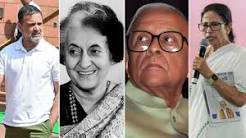
NEW DELHI: Nearly 50 years have passed since the Congress party’s Indira Gandhi era, when stalwart Siddhartha Shankar Ray helmed West Bengal as chief minister. His tenure ended in 1977, giving way to a sweeping communist surge led by veteran marxist Jyoti Basu, who would become the state’s longest-serving chief minister. The decades of Left dominance systematically eroded the Congress’s influence. The party of the iconic Bidhan Chandra Roy was pushed so far to the margins that it now struggles to project itself even as a credible third force. The Left’s long hegemony was eventually shattered by Mamata Banerjee. Her political ascent relegated the communist brigade to the sidelines, but in the most recent elections, it was the Bharatiya Janata Party (BJP) that emerged as the primary challenger to her Trinamool Congress (TMC) in last elections that took place in 2021. Amidst these seismic shifts, the Congress’s footprint remains a shadow of its former self as the next assembly polls approach. The decline is stark when compared to 1972, when the Congress secured a landslide victory with over 200 seats and nearly half the total vote share. However, following the rise of the CPM-led Left Front under Jyoti Basu, the party began a long retreat from the center of power. In the 1977 elections, the grand old party suffered a crushing defeat, eclipsed by the CPM wave. This collapse was fuelled in part by the backlash against Indira Gandhi’s Emergency, which also led to the Congress’s first-ever defeat in Centre, losing general election that same year. By 1977, the party had lost more than half the vote share it held in 1972. It never returned to a commanding position. While Congress remained a relevant opposition force for years, the turn of the millennium saw its political space seized by Mamata Banerjee. Having broken away to form the Trinamool Congress in 1998 under the “Jora Ghas Phul” symbol, Banerjee achieved power within 15 years, filling the vacuum left by the declining Left and a stagnating Congress. In many ways, the TMC managed to ascend to the top while more than a century older Congress languished. Even as national leadership transitioned from Indira to Rahul Gandhi, West Bengal’s electorate showed little interest in returning to the Congress fold. The 2021 elections marked a final turning point. The BJP surged to 77 seats, becoming the principal opposition. While the BJP could not unseat Mamata Banerjee, its rise dealt a devastating blow to the Congress, which failed to win a single seat, cementing its position as a distant third. Now, facing an uphill battle for relevance, the Congress is preparing to fight back. As the state gears up for elections across 294 seats, the party hopes to transition from a faded memory to a renewed political force in a state where the results will define the next chapter of Bengal. Courtesy : TOI Note: This news is originally published on https:/timesofindia.com/bha and is used purely for non-profit/non-commercial purposes, especially human rights