
The anatomy of audacity: Why India’s trans community is bracing for legal redaction
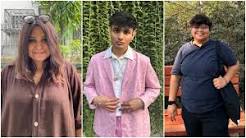
From medical tribunals to the criminalisation of chosen families, trans activists reveal how India’s new legislation weaponizes the healthcare system to exhaust its trans population into invisibility The anatomy of audacity: Why India’s trans community is bracing for legal redaction The 2026 Amendment to the Transgender Persons (Protection of Rights) Act has effectively gutted the soul of trans dignity in India: the right to self-identification. This move stands in direct defiance of the landmark 2014 NALSA v. Union of India verdict, in which the Supreme Court of India ruled that the individual—and only the individual—is the sovereign authority over their own gender. Today, that sovereignty is being subdued by a state that treats legal history as something that can be undone with a single signature. The scale is staggering. While the 2011 Census officially recorded 4.87 lakh transgender individuals, the National AIDS Control Organisation and community advocates estimate the actual figure is closer to one crore. By replacing self-identification with a medical tribunal, the state is attempting to funnel millions of diverse lives through a single clinical needle—a bureaucratic bottleneck designed to exhaust a population into invisibility. For Priyadarshini, a 29-year-old non-binary femme lesbian brand manager, and gender and sexual rights activist in Kolkata, the speed of the legislation felt like a physical strike. “The bill came to the floor of the lower house—passed amidst opposition—and within a week it went to the upper house, and the President gave it an assent,” she recalls. Priyadarshini, who has spent years balancing a corporate career with front-line advocacy, sees the timing as a deliberate tactic of exhaustion. “By 11 o’clock at night, we start hearing things, and by the very next morning, there’s a gazetted copy. If our government really works so fast, why does our country have so many issues?” She says wearily, “It feels like they are moving under the cover of night to overwrite our humanity before we can even organise a response. How can the legislature go against what the Supreme Court has already said?” The intrusion of the cis gaze The ‘audacity’ at the heart of this crisis doesn’t belong to the protestors screaming in the streets— it belongs to the architects of this erasure. There is a grotesque irony in watching a room of cisgender politicians legislate the boundaries of trans existence. “Imagine a stranger, who has never lived a day in your skin, deciding if you are ‘real’ enough to exist in the eyes of the law. It is a profound violation to have your truth treated as a debatable topic by people who have no skin in the game,” counters Priyadarshini. This is the institutionalisation of the ‘cis gaze’—the state’s declaration that an internal truth is a mere suggestion, while a clinical observation is the absolute fact. When laws are built on the assumptions of those who have never navigated the vulnerabilities of gender nonconformity, the result is a framework of indifference. By reversing the burden of proof, the Act forces trans individuals to justify their existence to a committee of cisgender strangers, transforming a birthright into a medical permit. “It forces my trans siblings to stand before a medical board, to potentially strip, to be ‘assessed’ by people who have likely never read the NALSA judgment. We are being told to wait for a stranger’s verdict on our own identity. This amendment is fundamentally broken,” she insists. The clinical weapon: Assessment as assault The amendment introduces a mandatory ‘District Screening Committee’ and a medical verification process for anyone seeking a gender certificate. This isn’t just a new layer of red tape—it is a psychological siege. Adityuh, a 24-year-old trans-masculine psychology student and community support worker in Delhi, views the move as state-sponsored gaslighting. “Identity isn’t something you prove; it’s something you are,” they say. This clinical turn is particularly harrowing given the existing healthcare landscape. According to a report by the National Human Rights Commission, roughly 92 per cent of transgender people in India are deprived of the right to participate in any form of economic activity, due to institutional discrimination. For Adityuh, the hospital—a place that should theoretically be a sanctuary of healing—is being repurposed. “When I think of a hospital now, I don’t think of care. I think of trauma and doctors with God complexes who treat you like a fascinating specimen,” they recoil. Under the 2026 amendment, the clinic is transformed into an outpost of the police station—a site for reporting and verification. The white coat becomes a uniform of the state. “The state is saying, ‘We’ll let you live, provided you transition on our terms’. But who is ensuring that process isn’t a nightmare? Trans individuals are treated with blatant transphobia by the very staff supposed to ‘verify’ us,” Adityuh questions. A safety net in flames Beyond the individual struggle for a piece of identification, the Act threatens the informal support systems the community has spent decades weaving together. In India, where traditional family structures often reject queer children, the ‘chosen family’ or the Gharana system has been a literal life-saver. Rio, a 25-year-old trans-masculine non-binary corporate professional and community advocate in Delhi, points to the calculated vagueness of the amendment as a tool for systemic erasure. “The language here is a trap,” Rio elaborates. “By making self-identification illegal and requiring ‘medical proof’ for legal recognition, the bill endangers the safe homes, the NGOs, and even the families who choose to stand by us. If you aren’t legally recognised, anyone harbouring you could be accused of kidnapping or enticing a minor, even if you are an adult.” Rio, the primary earner for their family, faces a terrifying paradox. Even their supportive mother now lives in terror, “My mom told me, ‘Don’t leave me if you are thinking of doing that.’ The government criminalises her with the kind of vague language it brings into action. That fear is now a permanent resident in our home.” This ambiguity systematically abolishes the support systems that have historically buffered trans individuals from
Beyond the Ghetto: Ambedkar, the Double Stage and the Decasting of Thought
in Life/Philosophy Dr. Babasaheb Ambedkar with Mr. Wallace Stevens at Columbia University after receiving Doctor of Laws (LLD) on June 5, 1952. Courtesy: Wikimedia Commons The Paradox of Recognition On Ambedkar’s birth anniversary, he will be praised. The headlines will call him a “Dalit leader,” the “architect of the Constitution,” a “social reformer,” the “voice of the oppressed.” Memorial lectures will be delivered. Statues will be garlanded. Political leaders across the spectrum will compete to claim his legacy. All of this is true. And all of it is a confinement. The language of praise, as it is currently structured, performs a subtle but systematic reduction. To call Ambedkar a “Dalit leader” is not incorrect, but it is incomplete. It suggests that his thought is for Dalits, about caste, relevant only to those who share his identity or his specific political project. It implies that his intellectual corpus belongs to a community, a moment, a struggle, not to the universal history of ideas. Consider the contrast. Karl Marx is not reduced to a “workers’ leader” and left there. Michel Foucault is not confined to “prison reform.” Antonio Gramsci is not dismissed as merely a “communist activist.” These thinkers are read not because of the specific struggles they engaged, but because their concepts travel—because they speak to the human condition, because they illuminate structures of power that transcend any single context. A student of political theory in Japan reads Marx. A sociologist in Brazil reads Foucault. A philosopher in South Africa reads Gramsci. No one asks whether they have the “right” identity to engage these thinkers. Ambedkar deserves the same. He is not merely a leader of a community; he is a political philosopher of the first rank. His analysis of graded inequality is a contribution to the sociology of stratification. His critique of majoritarianism is a contribution to democratic theory. His insistence on the interlocking of liberty, equality, and fraternity is a contribution to the philosophy of rights. His turn to conversion as a political act is a contribution to the study of religion and power. And yet, he is not taught alongside Marx in political theory. He is not read alongside Weber in sociology. He is not cited alongside Rawls in philosophy. He is confined to “Dalit Studies,” to “South Asian Studies,” to the margins of the academy where his thought can be safely contained, acknowledged as important for those who study “caste,” but not required for those who study “society,” “power,” or “justice.” This is the paradox of recognition: Ambedkar is honoured, but he is not heard. He is celebrated, but he is not read. He is present everywhere as a symbol, and nowhere as a thinker. The Double Stage of Ambedkar Reception What I call the “double stage” is a concept that resonates with, though it is not reducible to, existing distinctions between the visible and its constitutive outside—whether in Foucauldian analyses of power or Marxian accounts of structure. The term captures a specific operation of power: an official public scene that renders certain phenomena visible, speakable, and governable coexists with a social obscene that is strategically placed off-stage yet constitutively supports the scene. The scene provides legitimacy; the obscene provides substance. In my earlier work on caste’s persistence in modern India, I have argued that caste operates through precisely this split. An official constitutional scene disavows hierarchy while a social obscene reproduces it through endogamy, social capital, informal networks, and episodic violence. The scene allows the obscene to flourish precisely by refusing to see it. The reception of Ambedkar follows the same logic. On the official scene, Ambedkar is publicly honoured. His portrait hangs in Parliament. His statue stands in courthouses. His birth anniversary is commemorated by the state. He is invoked by politicians across the ideological spectrum—from the Left to the Right, from Dalit parties to Savarna-dominated formations. He is credited as the “architect of the Constitution,” the “father of social justice,” the “champion of the oppressed.” This is the scene of recognition. It is real, it is visible, and it is partial. In the social obscene, beneath this official scene, Ambedkar’s thought is engaged very differently across different social locations. The fragmentation of his reception is not accidental; it is structural. It follows the logic of caste itself. The central claim is this: Ambedkar circulates because he is fragmented. The radical whole is threatening; the fragmented parts are useful. The academy, the media, the political class, they all have a stake in keeping him in pieces. A whole Ambedkar would demand annihilation. Fragmented Ambedkar can be managed, cited, contained. The pattern is unmistakable: the more powerful the group, the more partial the engagement. Dalits have no choice but to read Ambedkar whole, his thought is their only intellectual resource, their only weapon. Savarnas have the privilege of reading him in fragments, taking what is useful, setting aside what is threatening, keeping his radical edge at a safe distance. This is the double stage of Ambedkar reception. The same logic that structures caste society structures the circulation of anti-caste thought. Consider the Savarna sociologist who teaches a course on social stratification. They assign Ambedkar’s analysis of graded inequality, the concept that caste organizes groups in a descending scale where each is both oppressed by those above and oppressor of those below. Students learn this concept. They find it useful. But the course moves on. It never returns to Ambedkar’s central claim: that graded inequality cannot be reformed; it must be annihilated. The fragment taken up is the analytical tool. The fragment left behind is the political demand. Consider the Savarna political theorist who teaches a course on democracy. They assign Ambedkar’s warning that political democracy without social democracy is a facade. Students learn this critique. They appreciate its force. But the course focuses on institutional design, electoral systems, and constitutional rights. It does not ask what social democracy would require, the redistribution of land, the transformation of kinship, the destruction of endogamy. The fragment taken
Hyderabad: MRPS chief questions denial of SC status to Dalit Christians
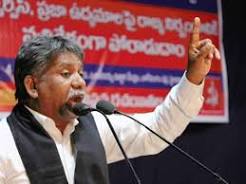
MRPS chief Manda Krishna Madiga questions why Dalit Christians are denied SC status, urges repeal of 1950 Presidential Order and calls for equal rights. Hyderabad: The founder-president of the Madiga Reservation Porata Samithi (MRPS), Manda Krishna Madiga, has strongly questioned why restrictions on reservation benefits apply only to Dalits who convert to Christianity, while other communities do not face similar limitations. Speaking at a meeting by MRPS on Monday, April 13, at the Somajiguda Press Club, Madiga raised concerns over what he termed as continued discrimination against Dalits. He said that historically, Dalits were denied entry into temples, and now they are being discouraged from adopting another religion, asking how long such discrimination would persist. Madiga questioned whether Dalits have the same freedom as other communities to choose a religion of their own choice. Citing Articles 14, 15, and 25 of the Indian Constitution, he emphasised that freedom of religion is a fundamental right. He criticised the 1950 Presidential Order that denies Scheduled Caste (SC) status to Dalits who convert to Christianity, and urged the President to revoke it. He also appealed to Prime Minister Narendra Modi to take the initiative on the issue. Disappointed with SC decision: MRPS chief The MRPS leader expressed disappointment over the recent decision of the Supreme Court of India, which upheld the denial of SC status to Dalit Christians. He opined that key historical figures, including former Prime Minister Jawaharlal Nehru and former President Rajendra Prasad, played a role in shaping policies that disadvantaged Dalits. Madiga stated that Dalits turned to Christianity because they were historically excluded from Hindu temples, and missionaries provided them access to education and healthcare. He termed any attempt to restrict their religious choice as a grave injustice. He further demanded that Dalit Christians be granted SC status on par with Dalits who converted to Sikhism or Buddhism, and vowed to continue the movement until equality is achieved. Madiga also called for reforms within Hindu religious institutions, suggesting that non-Brahmins should be appointed as chief priests in temples across the country, inspired by social reformer Ramanujacharya. Courtesy : TSD Note: This news is originally published on https:/thesiasatdaily.com/bha and is used purely for non-profit/non-commercial purposes, especially human rights
PM Balen Shah Backtracks on Decision to Apologize to Nepal’s Dalits for the First Time! Breaks Promise, Quietly Withdraws Decision

Nepal Dalit Apology: The government’s decision to backtrack on its plan to apologize to Dalits has sparked dissent within Ravi Lamichhane’s party. Santosh Pariyar, a prominent Dalit leader within the RSP, has emotionally distanced himself from both the party and his official roles. He stated, “An apology consisting merely of words—without concrete policies or legal documentation—holds no meaning.” Nepal Government Backtracks on Proposal to Apologize to Dalits! Kathmandu: Nepal’s Balen Shah administration has quietly backtracked on its proposal to issue an apology to the Dalit community. The government has surreptitiously all but abandoned the initiative to apologize to Dalits. Just last month, the Balen Shah government had announced that it intended to introduce a proposal wherein “an apology would be tendered to the Dalits, who have been persecuted for centuries.” According to *The Kathmandu Post*, any further discussion regarding the government’s proposed apology is now rendered futile, as the initiative has been quietly shelved. The newspaper wrote, “The government led by the Rastriya Swatantra Party (RSP) has shamelessly broken its promise and has effectively sidestepped the issue through an emotional speech delivered by Ravi Lamichhane.” Raising pertinent questions, the newspaper asked: How—and why—did the Balen administration withdraw its own decision to issue a formal apology to the Dalits? The publication noted that while some argue that Ravi Lamichhane did indeed apologize to the Dalits in Parliament on April 2—promising the nation that, unlike in times past, no individual or caste group would henceforth face discrimination—there remains a significant distinction between an apology offered by an individual and one issued officially by the government. What exactly had the Balen Shah government promised? In fact, when a new government led by Balen Shah was formed in Nepal in March 2026, he announced in his 100-point common minimum program that the government would issue a formal state apology to the Dalit community for historical discrimination within 15 days. This was hailed as a revolutionary step. True to this promise, on April 2, Home Minister and RSP Chairman Rabi Lamichhane delivered an emotional speech in Parliament, apologizing for the injustices inflicted upon Dalits. However, Nepali experts and newspapers argue that this was merely a “political speech,” not an official “state apology.” This is because a formal state apology requires a Cabinet decision, followed by the President’s seal of approval, and finally, it must be published in the Government Gazette. The government failed to complete any of these legal procedures. An apology was merely tendered in Parliament—a gesture deemed incomplete. No legal motion was passed to formalize this. According to *The Kathmandu Post*, even after the 15-day deadline had elapsed, the government failed to present any written documentation. It is alleged that the government backtracked on this initiative under pressure from conservative factions within the ruling coalition and from established political parties. **Dissent Within the National Independent Party** The government’s decision to renege on its promise to apologize to Dalits has sparked dissent within Rabi Lamichhane’s party. Santosh Pariyar, a prominent Dalit leader within the RSP, has emotionally distanced himself from both the party and his official roles. He stated, “An apology consisting merely of words—without a concrete policy or legal documentation—is utterly meaningless.” The party, however, maintains that it *did* issue an apology. Speaking in Parliament, Rabi Lamichhane declared, “I apologize—not in my capacity as Home Minister, but as a citizen of this country—to all those Dalits who have been subjected to humiliation.” Yet, Dalit activists have denounced this as an act of betrayal and deception. According to reports, the government had been advised by various quarters that issuing an apology to Dalits at the official state level would imply an admission of guilt regarding past atrocities—a move that could potentially trigger demands for financial compensation. Furthermore, the government feared that once ‘historical injustice’ was officially acknowledged, the Dalit community could put forward significant legal claims for job reservations and land rights. Curated by: Abhijat Shekhar Azad About the Author Abhijat Shekhar Azad is an International Affairs and Defense Journalist at Navbharat Times Online. He possesses approximately 17 years of experience across various news channels and digital journalism platforms. Courtesy: Hindi News
‘Himanta most corrupt in country’: Rahul Gandhi backs Pawan Khera as passport row escalates
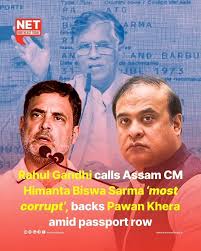
NEW DELHI: Even as the dust of Assam’s poll campaign has settled, the ugly faceoff witnessed during the high-octane showdown between chief minister Himanta Biswa Sarma and the Congress escalated on Monday, with Rahul Gandhi calling the Assam CM “the most corrupt in the country” who is “abusing state power to harass his political opponents”. Backing his party colleague Pawan Khera, whose Delhi house Assam police raided after an explosive claim against Himanta’s wife, the leader of opposition in Lok Sabha said the “Congress stands with Pawan Khera” and that the “party will not be intimidated”. “The present CM of Assam is the most corrupt in the country. He will not escape the law. His abuse of state power to harass his political opponents and critics is against the Constitution. The questions that are being raised have to be probed. Transparency, accountability of power and rule of law are the basis of our Constitutional values. The Congress Party stands with Pawan Khera. We will not be intimidated,” Rahul Gandhi wrote against Himanta, who switched from Congress to the BJP in 2016. Khera struck Himanta’s nerve after he alleged, in a press conference, the Assam CM’s wife held multiple foreign passports, prompting a sharp rebuttal and legal threat from the BJP leader. “We have documents showing that Assam chief minister Himanta Biswa Sarma’s wife Riniki Bhuyan Sharma holds three passports. The first is a UAE Golden Card, the second an Antigua and Barbuda passport, and the third an Egyptian passport. Two of these belong to Islamic countries, yet they continue to claim religious adherence publicly,” Khera said. Later, Sarma dismissed the claims as politically motivated and said that both he and his wife will file a defamation case against Khera within 48 hours. “Today’s press conference by Pawan Khera reflects the deep frustration and panic within the Congress party. As Assam moves decisively towards a historic mandate, such desperate and baseless attacks only expose their sinking ground,” he wrote on X. As the faceoff began to worsen, Telangana High Court granted anticipatory bail to Khera in connection with a case registered against him over his alleged defamatory remarks against CM Sarma and his wife. Courtesy : TOI Note: This news is originally published on https:/timesofindia.com/bha and is used purely for non-profit/non-commercial purposes, especially human rights
‘Deeply flawed’: Sonia Gandhi slams women’s quota bill, calls it ‘assault on Constitution’
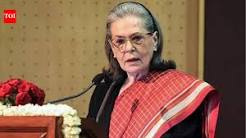
NEW DELHI: Congress Parliamentary Party chairperson Sonia Gandhi on Monday warned that the Centre’s reported push on delimitation—not women’s reservation—is the “real issue” behind the special Parliament session, calling it “extremely dangerous” and an “assault” on the Constitution. In an article published in The Hindu, Congress Rajya Sabha MP argued that any exercise to increase the strength of the Lok Sabha must be “politically and not just arithmetically equitable”, stressing that states which have performed better on population control must not be disadvantaged. She also accused the government of rushing legislation during an ongoing election cycle in states like Tamil Nadu and West Bengal to “derive political advantage and place the Opposition on the defensive”. “There can be only one reason for the extraordinary hurry,” she said, alleging it was to gain political advantage. She further accused the prime minister of being “economical with the truth.” Women’s reservation ‘not the issue’, says Congress Referring to the Nari Shakti Vandan Adhiniyam, 2023, Sonia noted that Parliament had already unanimously passed the law in September 2023, linking women’s reservation to a future Census and delimitation exercise under Article 334-A. “The Opposition had not asked for this condition,” she said, adding that Congress had pushed for implementation from the 2024 Lok Sabha elections itself. She questioned the reported move to amend the provision to enable implementation from 2029, asking why the government was making a “U-turn” after 30 months. She also pointed out that Leader of Opposition in the Rajya Sabha Mallikarjun Kharge had demanded immediate implementation, which the government declined. Leader of Opposition Rahul Gandhi echoed her concerns, stating that the risks of a “rushed delimitation” were central to the debate. Sonia also highlighted that the law provides for “reservation within reservation” for SCs and STs, and noted that a similar demand for OBC women’s reservation had been raised during the 2023 debate. Census delay, caste count under fire Fomer Lok Sabha MP also linked the issue to delays in the Census, noting that the 2021 exercise had been postponed and that enumeration has only recently begun after a five-year delay. She added that the delay had deprived over 10 crore people of their legal entitlements under the National Food Security Act, 2013. She argued that claims that a caste census would slow down the process were unfounded, citing quicker surveys conducted by states like Bihar and Telangana. She also referenced statements by officials that most Census 2027 data would be available the same year due to its digital format, calling the government’s urgency “hollow.” Alleging inconsistency, she said the government had earlier rejected a caste census before later announcing it as part of Census 2027. “The Prime Minister’s real intention now is to further delay and derail the caste census,” she claimed. Govt pushes ahead with special session The remarks come ahead of a special Parliament sitting from April 16 to 18, where amendments linked to women’s reservation are expected. The government is also considering a separate delimitation bill, with projections suggesting Lok Sabha seats could increase from 543 to 816. Prime Minister Narendra Modi is set to address a ‘Nari Shakti Vandan Sammelan’ in New Delhi, aimed at building support for enhancing women’s representation in legislatures. Former Congress President said Opposition leaders had written thrice seeking an all-party meeting after April 29 to discuss the proposals, but the request was rejected. She criticised the government for instead resorting to op-eds and public outreach, calling it an “underhand tactic” reflecting a “my way or the highway” approach. She also argued that there is no urgency, noting that the Monsoon session begins in mid-July and that proposals could have been discussed then, after wider consultation and public debate. Sonia, however, maintained that the process being followed is “deeply flawed and anti-democratic,” asserting that “reservation for women is not the issue here… the real issue is delimitation.” “Reservation for women is not the issue here. That has already been settled. The real issue is delimitation which, based on the information unofficially available, is extremely dangerous and an assault on the Constitution itself,” Sonia wrote. Courtesy : TOI Note: This news is originally published on https:/timesofindia.com/bha and is used purely for non-profit/non-commercial purposes, especially human rights
Outrage Follows Death of Dalit Student at Kerala Dental College; Faculty Accused of Humiliation
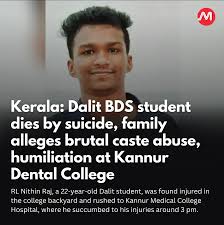
There is widespread outrage following the death of a Dalit student at a dental college in Kerala. The family has accused the college faculty of humiliating the student over his caste and the fact that his parents are daily-wage laborers. The police are investigating the matter. Student Dies at Kannur Dental College Kannur: Intense public anger has erupted following the death of a 22-year-old Dalit student at the Kannur Dental College in Kerala. It is alleged that college faculty members repeatedly humiliated and tormented the student regarding his caste and his parents’ status as daily-wage laborers. Nithin Dies After Falling from Building The student has been identified as Nithin Raj R.L., a native of Uzhamalakkal village in Thiruvananthapuram. He was a first-year student pursuing a Bachelor of Dental Surgery (BDS) degree at Kannur Dental College. The student died on Friday after falling from a building located within the college campus. Case Registered Against Two Faculty Members The student’s family has expressed suspicion that there may be a conspiracy behind Nithin’s death. The Kannur police had initially registered a case of unnatural death. However, on Sunday, the police added charges of abetment to suicide under Section 108 of the Bharatiya Nyaya Sanhita (BNS), as well as relevant sections of the SC/ST Act. A case has been registered against two faculty members in connection with this incident. Nithin Had Taken a Loan via an Online App According to *The Indian Express*, a special investigation team led by Kannur Assistant Commissioner of Police Hariprasad has been constituted to probe this case. The police stated that preliminary investigations have revealed that Nithin had taken a loan through an online application; when he failed to repay the loan, agents from the lending company began making threatening calls to him. The police also claimed that these agents had contacted faculty members of the college regarding this matter. The Cyber Police have registered another case based on the alleged threats issued by the agents of the loan app. **Audio Clip of Nitin Surfaces** Meanwhile, the management of the self-financing college has also taken action following allegations regarding the humiliation of the student. On Sunday, the management suspended a Department Head and an Associate Professor and ordered an inquiry into the allegations. This action was taken after an audio clip—purportedly featuring Nitin—surfaced on Sunday. **’Teacher Publicly Humiliated Me’** In this audio clip, Nitin can allegedly be heard stating that a teacher publicly humiliated him. Nitin says, “My answer sheets were distributed among all the students in the classroom, and some spelling errors were pointed out. Yesterday, when I was in his class, he mocked my mother. After stepping out of the staff room, he called me a fool. The staff room is a place where we are collectively targeted and attacked. The teacher told me that if I dared to speak up, my hands and feet would be chopped off.” In response, Nitin reportedly challenged him to do exactly that. **’Nitin Was Humiliated in the Classroom’** Nitin’s sister, Nikita, revealed that her brother was repeatedly humiliated over his complexion, caste, and his parents’ profession. Nikita stated, “He told me that the Department Head used to humiliate him by calling him a ‘mad dog.’ He was also subjected to humiliation within the classroom. Whenever the Department Head humiliated Nitin in class, he would do so in a manner that made the other students laugh.” Other students had also previously lodged complaints against the Department Head, but no action was ever taken against him. “Nitin spoke to us just two hours before he fell from the building. We suspect a conspiracy and want to know exactly what happened to him.” He did not fall from his own college building, but rather from the medical college building located within the same campus. **Widespread Protests Across the State** Nitin had enrolled in this self-financing dental college in September of last year. Principal Vinod Moni has not responded to requests for comment. Following the student’s death, widespread protests have erupted across the state. The State Human Rights Commission has sought a report on this incident from the Kannur City Police Commissioner. Union Minister Suresh Gopi also met with the family following the student’s demise. **Demand for a High-Level Inquiry into the Student’s Death** Congress Working Committee member Ramesh Chennithala has demanded a high-level inquiry into the death of Nitin Raj. In a statement, he asserted that the police must take seriously the allegation that Nitin faced humiliation on the basis of caste and skin color. Any action taken against faculty members should not be limited merely to suspension. He remarked that in Kerala—which prides itself on being a bastion of progressive and renaissance movements—discrimination based on caste is shocking. Over the past decade of LDF rule, attacks against SC/ST communities have witnessed a manifold increase. Authored by: NBT Desk Courtesy: Hindi News
Ex-IAS officer P Sivakami releases Dalit Women’s Manifesto 2026; Calls for land rights, economic autonomy in TN
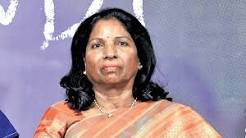
Addressing safety and justice, the manifesto calls for the formation of a dedicated Dalit Women’s Protection Wing in every district under women IPS officers. CHENNAI: Releasing the ‘Dalit Women’s Manifesto 2026’ ahead of the state Assembly election, former IAS officer and convenor of the All India Forum for Women’s Intellect P Sivakami called for a rights-based framework to ensure economic sovereignty, social justice and political representation of the marginalised. The manifesto places emphasis on land rights, proposing the establishment of a High-Powered Land Recovery Commission within 100 days to retrieve encroached panchami lands. These land parcels, it states, will be redistributed to landless Dalit women and utilised through collective farming models, including through the formation of farmer-producer organisations exclusively led by women. Housing security also features prominently, with priority allocation of concrete houses or apartments for homeless women in Dalit settlements. In the economic sphere, the document proposes the creation of an “Iyothee Thass Women’s Bank” to offer collateral-free and zero-interest loans for micro-enterprises. It also envisages the transformation of Dalit habitations into agro-industrial hubs and 25% reservation for Dalit women in industrial land allotment by agencies such as Sipcot and Sidco. Addressing safety and justice, the manifesto calls for the formation of a dedicated Dalit Women’s Protection Wing in every district under women IPS officers. It also seeks fast-track courts to dispose of cases under the SC/ST (Prevention of Atrocities) Act within six months and a fully funded legal aid mechanism allowing survivors to choose their advocates. Notably, it recommends that compensation for survivors of atrocities include guaranteed access to agricultural lands and sustainable livelihoods. On the education front, the manifesto proposes 100% government-funded international scholarships for Dalit women and digital skill vouchers covering emerging fields such as artificial intelligence (AI) and data science. S Kumaresan Courtesy : TNIE Note: This news is originally published on https:/thenewindianexpress.com/bha and is used purely for non-profit/non-commercial purposes, especially human rights
Custodial death row: Dalit man dies in police custody after alleged poisoning in Madhya Pradesh
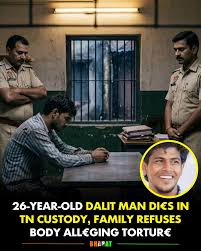
Chhatarpur, Madhya Pradesh: A 22-year-old Dalit man, Ram Vishal Ahirwar, died under mysterious circumstances inside Chandla police station this week, sparking serious concerns over custodial safety, police accountability, and possible negligence. Ram Vishal, a resident of Naharpur village, had gone to the police station along with his wife Leela to resolve a long-standing domestic dispute. The couple, married for two years and parents to a three-month-old baby, had been living separately due to frequent fights. According to police, both families were called for a reconciliation meeting. During the discussions, Ram Vishal’s condition suddenly deteriorated. He started vomiting, and officers later recovered a suspicious substance, believed to be poison, from his pocket. The exact time and manner in which he consumed the poison remain unclear. He was immediately rushed to a local hospital and then referred to the district hospital, where he was declared dead on arrival. His wife Leela gave a heart-wrenching account of his final moments. “He was writhing in pain and repeatedly begged for water, but no one gave him even a drop,” she said. “He died in my lap on the way to the hospital. After that, I blacked out.” The family has strongly alleged custodial violence. Ram Vishal’s mother, Mulia Ahirwar, claimed that police brutally beat her son inside the station. “We could hear his screams from outside. When I tried to reach him, they pushed me away,” she alleged. The family believes the police are trying to cover up a custodial assault by calling it a suicide or self-poisoning. Police officials have defended their actions, stating that giving water to a person suspected of consuming poison can be medically dangerous. However, this explanation has only intensified public outrage and questions about whether basic first-aid protocols were followed. In response to the incident, Superintendent of Police Agam Jain promptly suspended the Chandla station in-charge, Sandeep Dixit, and ordered a judicial inquiry. Additional SP Aditya Patle also visited the district hospital to review the situation. Ram Vishal reportedly had a history of alcohol abuse and had previously assaulted his wife, which led Leela to return to her parental home. The domestic issue had brought the couple to the police station for mediation. The tragic death has left behind a grieving young widow, a three-month-old infant without a father, and mounting scrutiny on the police force regarding human rights and accountability in custody. The judicial inquiry is expected to establish the exact sequence of events and fix responsibility. Courtesy : MM Note: This news is originally published on https:/muslimmirror.com/bha and is used purely for non-profit/non-commercial purposes, especially human rights
Kerala: Dalit BDS student dies by suicide, family alleges caste discrimination by faculty members; probe launched
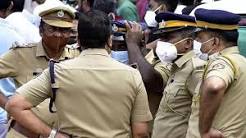
The 22-year-old student’s family has alleged that he was subjected to emotional and verbal harassment by the faculty members over his caste identity, complexion and financial background. The Kerala police have launched a probe against faculty members of Kannur Dental College after a Dalit student at the institute died by suspected suicide on Friday, with his family alleging he was subjected to caste abuse, threats and emotional harassment. The deceased has been identified as Nithin Raj RL, a native of Uzhamalackal, Puthukulangara, Thiruvananthapuram and a first-year BDS student of the college located in Kannur’s Anjarakandy. According to police, Raj was found critically injured near the medical college block after falling from the building on the afternoon of April 10. Though he was rushed to the medical college and given treatment, he later succumbed to his injuries. Following the incident, the college initiated an internal inquiry and on Saturday suspended Dental Anatomy Department Head MK Ram and Associate Professor KT Sangeetha Nambiar. Raj’s family has claimed that the 22-year-old was subjected to emotional and verbal harassment over his caste identity, complexion and financial background by the faculty members. According to a PTI report, Raj’s sister Nikitha claimed that he was once called a “rotten dog” by a faculty member in the classroom in front of other students. “He used to tell us about such discrimination and harassment regularly. He was once called to the staff room where he was severely harassed,” she was quoted as saying by the PTI. She said Raj had filed a complaint with the college principal, but no action was taken. “Once, when the harassment became unbearable, he reacted, after which the verbal abuse intensified,” Nikitha added. Raj’s father Rajan, told reporters that the faculty members allegedly threatened to harm his son academically. “He worked hard without any support to secure admission on a merit seat in the dental college. But he was harassed by faculty over his caste and complexion. They also threatened to harm him academically,” Rajan said. He said that they have lodged a complaint against the faculty members with the police and are expecting a fair probe into the death of his son. The case has been registered at the Chakkarakkal police station. In an audio clip, purportedly of Nithin, that surfaced after his death, he is heard detailing the harassment and targeted humiliation from the faculty members at the institution. “I tolerated the insults as far as I could. They insulted my mother and her surgery. My answer sheet was circulated among students, highlighting my spelling mistakes,” Nithin is heard saying in the clip, circulating on social media. The Chakkarakkal police has confirmed that Raj had sent an audio message to his friends alleging harassment by faculty members, including threats of physical assault and academic repercussions. They said a detailed probe is underway into the incident, with digital evidence being collected. Also, statements by Raj’s classmates, college authorities and family members will be recorded soon, police added. The body of Raj was brought to his residence in Thiruvananthapuram on Sunday and buried on the land owned by the family. Several political leaders condemned the death and demanded a detailed probe into the incident. Congress leader Ramesh Chennithala called for a high-level inquiry into Raj’s death. He said the government should take seriously the allegations by the student’s parents and relatives that caste-and-complexion-based harassment led to the death and take urgent steps to bring those responsible to justice. Chennithala said the issue should not be closed by merely suspending two teachers and noted that the parents had firmly alleged severe caste discrimination. Leader of the Opposition in the outgoing Kerala Assembly VD Satheesan visited Raj’s house and demanded a thorough probe. “Teachers are expected to guide students. How did such people become teachers? There should be a detailed probe,” he said. He added that strict intervention was needed to ensure such incidents are not repeated in the state. CPI(M) Rajya Sabha MP A A Rahim also visited the family and described the incident as painful. Rahim said Raj was the hope of his family, which had supported his education despite hardship. “CPI(M) will stand with the family until justice is delivered. Such an incident should not have happened in a society like Kerala,” he said. He also compared the incident with the death of Rohith Vemula at the University of Hyderabad. “The family has told us that Raj faced repeated caste discrimination and was deeply affected by it. A detailed probe must be conducted and justice ensured. The action taken should set an example so that such incidents are not repeated in Kerala,” Rahim said. Meanwhile, the Kerala State Human Rights Commission on Sunday directed the police to conduct a detailed probe into the death of the student and submit a report within a week. The Commission took a case on its own based on media reports. Commission Judicial member K Baijunath issued directions to the Kannur City Police Commissioner to investigate the allegations surrounding the incident and file a report within the stipulated time, according to a statement. (Assistance for those having suicidal thoughts is available on TN’s health helpline 104 and Sneha’s suicide prevention helpline 044-24640050) Courtesy : TNIE Note: This news is originally published on https:/thenewindianexpress.com/bha and is used purely for non-profit/non-commercial purposes, especially human rights