
Supreme Court Pulls Up Delhi High Court, Says Justice Asha Menon Panel Can’t Decide Transgender Job Rights Cases

The Supreme Court of India ruled that the Justice Asha Menon Advisory Committee has no power to decide legal disputes on transgender recruitment. It granted relief to petitioners and said courts—not committees—must decide such rights-based issues. The Supreme Court of India has recently raised serious concerns over how the Delhi High Court handled a case related to the recruitment rights of transgender persons in public employment. While issuing notice in the matter, the apex court observed that the High Court made a prima facie mistake by disposing of the petitions and asking the petitioners to approach an advisory body instead of deciding the legal issues itself. The case revolves around the rights of transgender individuals seeking fair representation and opportunities in government jobs. The Supreme Court bench comprising Justice J. B. Pardiwala and Justice K. V. Viswanathan made it clear that the Advisory Committee headed by former Delhi High Court judge Justice Asha Menon does not have the power to decide legal disputes. The Court observed, “Prima facie, we are of the opinion that the High Court committed an error in disposing of the writ petition by directing the petitioner to approach the Advisory Committee as the Committee possesses no adjudicatory powers.” The Supreme Court clarified that the role of the Advisory Committee is limited. It is only meant to study issues and give policy recommendations to the government. It cannot decide individual legal cases or grant relief to petitioners. During the hearing, the Court also recalled that the petitioner had earlier approached the Supreme Court directly under Article 32 while the case was still pending before the High Court. Referring to that, the bench stated, “We must note at the outset that in 2023, the petitioner had also approached this Court under Article 32 of the Constitution during the pendency of the aforesaid writ petition before the High Court. The petitioner prayed for reliefs pertaining to the framing of an equal opportunity policy, the implementation of various provisions of the TPPR Act and TPPR Rules including various other reliefs in the specific facts of her case. While dealing with the said petition, this Court delivered the judgment titled Jane Kaushik v. Union of India, reported in 2026 (1) SCC 336, wherein several binding directions relating to the implementation of the TPPR Act and TPPR Rules, respectively were issued.” The Court further explained that the Advisory Committee is still working on several important issues related to transgender rights. These include creating an Equal Opportunity Policy, improving grievance redressal systems, ensuring inclusive healthcare, and addressing gaps in the law. Highlighting this, the Court said, “The Advisory Committee is currently in the process of working on the aspects broadly delineated in their remit including the formulation of a model equal opportunity policy in employment and education.” Importantly, the Supreme Court granted interim relief to the petitioner. It allowed the petitioner to apply for government job vacancies under the transgender category, even if the vacancy mentions a specific gender. This is in line with an earlier interim order passed in January 2023, ensuring that transgender candidates are not excluded from opportunities due to rigid gender classifications. The original petitions filed before the Delhi High Court had sought several directions to strengthen transgender rights in public employment. These included demands for separate vacancies, reservation in jobs including teaching posts in Delhi, age and qualification relaxations, and allowing changes in name and gender on official recruitment portals. While deciding the case earlier, the Delhi High Court had relied on important judgments like NALSA v. Union of India, which recognized transgender persons as the “third gender” and directed the government to treat them as socially and educationally backward classes. The High Court had also referred to the Supreme Court’s recent decision in Jane Kaushik v. Union of India, which highlighted gaps in implementing the Transgender Persons (Protection of Rights) Act, 2019 and its 2020 Rules. Based on this, the High Court felt that since the Supreme Court had already formed an Advisory Committee to deal with these issues, the petitioners should approach that body instead. However, the Supreme Court has now clarified that such committees cannot replace courts when it comes to deciding legal rights. The matter will now be heard further after notice has been issued. In a related development, the Advisory Committee led by Justice Asha Menon has reportedly recommended that the Union Government withdraw the proposed Transgender Persons (Protection of Rights) Amendment Bill, 2026, indicating ongoing concerns about the legal framework governing transgender rights in India. This case is likely to have significant implications for how transgender rights are enforced in public employment and how courts balance policy-making bodies with judicial authority in protecting fundamental rights. By Hardik Khandelwal Courtesy : Law Chakra Note: This news is originally published on https:/lawchakra.com/bha and is used purely for non-profit/non-commercial purposes, especially human rights
No State Can License a Life: National Transgender Day in India 2026

On April 15, 2014, the Supreme Court of India issued one of the most important judgments in the country’s modern human rights history: NALSA v. Union of India. In that decision, the Court recognized transgender people as a third gender and affirmed something profound and simple at the same time: gender identity is bound up with dignity, autonomy, and the freedom to live as oneself. The Court did not treat identity as a favor to be granted by the state. It treated it as part of personhood itself. Twelve years later, National Transgender Day arrives in a far darker political atmosphere. This year, the anniversary is not only a moment to honor a legal breakthrough. It is a moment to defend it. The Transgender Persons (Protection of Rights) Amendment Act, 2026 has triggered protests across India because it strikes at the heart of what made NALSA so historic: the principle that trans people have the right to self-identify. The amendment removes the 2019 law’s explicit protection for self-perceived gender identity, narrows who counts under the law, and pushes recognition back through medical and bureaucratic gatekeeping. That is why this day in 2026 cannot be marked with easy language about progress For years, even imperfect law carried the promise that India was moving, however unevenly, toward a society where trans people would not have to justify their existence before officials, doctors, or hostile institutions. The new law pulls in the opposite direction. It says, in effect, that the state knows your identity better than you do. It suggests that recognition must come after scrutiny. It replaces lived truth with paperwork, and autonomy with permission. That is not a technical change. It is a moral one. When a government takes away self-identification, it is not merely revising procedure. It is asserting control over the deepest parts of a person’s life. It is saying that your name, your body, your documents, your future, and even your social legibility can be filtered through state approval. For marginalized people, this kind of control is never abstract. It shapes access to healthcare, housing, education, work, mobility, family recognition, and safety. It determines who is seen as real and who is pushed into administrative shadow. The protests erupting across India have understood this clearly. Demonstrations have taken place in Delhi, Bengaluru, Mumbai, Pune, Lucknow, Madurai, and other cities, with participants warning that the law erases many trans people, criminalizes lived realities, and turns identity into something the state can police. In Delhi, hundreds gathered at Jantar Mantar demanding rollback. In Bengaluru, recent protests at Freedom Park again centered opposition to medical certification, privacy violations, and the exclusion of gender-diverse communities from recognition. The resistance has moved into the courts as well. Challenges to the 2026 law are now being heard in the Delhi and Kerala High Courts, with petitioners arguing that the amendment rolls back constitutional protections and replaces self-identification with a rigid, medically determined framework controlled by the state. That matters because this is not only a political dispute. It is also a constitutional one. NALSA did not frame gender identity as a discretionary matter. It located it within equality, liberty, dignity, and self-expression. This is the larger lesson of National Transgender Day in 2026: a society reveals itself by how badly it wants to regulate the people who do not fit its preferred order. Authoritarian politics always has a fascination with classification. It wants sharp borders, rigid categories, obedient paperwork, and bodies that can be sorted, watched, and disciplined. Trans freedom challenges that impulse at its root. It insists that human beings are not state property. It insists that dignity does not begin at the district magistrate’s desk. That is why solidarity today must be more than symbolic. It means defending self-identification not as a niche demand, but as a basic democratic principle. It means listening to trans communities when they say this law will deepen precarity. It means refusing the lie that bureaucratic control equals protection. And it means understanding that whenever the state claims the right to overrule a person’s own account of who they are, everyone’s freedom becomes smaller. National Transgender Day should still be a day of pride, memory, and gratitude. We remember the courage of those who fought for NALSA. We honor the trans people who forced India to confront truths it had long refused to see. But in 2026, this day is also a warning. Courtesy : Hindus for Human Right Note: This news is originally published on https:/hindusforhumanright.com/bha and is used purely for non-profit/non-commercial purposes, especially human rights
‘PM Modi is a deshdrohi’: Rahul Gandhi repeats his ‘sold India in US trade deal’ claim
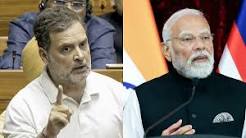
NEW DELHI: Sharpening his anti-government tirade over the India-US trade deal, Congress leader Rahul Gandhi on Tuesday called Prime Minister Narendra Modi a “deshdrohi” (traitor), doubling down on his claim that “PM Modi sold off India”. Addressing a poll rally in Bengal, the Lok Sabha leader of opposition accused the Modi government of “handing over India’s energy security to the US by succumbing to Washington’s pressure”. “India’s agricultural sector will be devastated. Modi sold off India in the trade deal with the US. He is not ‘desh bhakt’ (patriot), he is ‘deshdrohi’ (traitor),” Gandhi alleged as per news agency PTI while addressing the rally in Malda, where the Congress traditionally has had a strong presence. Stating that data security is of paramount importance as a country’s strength is built on it, Gandhi accused the Modi government of giving up India’s data to the USA. “National security has been badly harmed by this,” he said. Alleging that the Modi government has given a commitment to the US that it would buy goods from it worth Rs 9.5 lakh crore, Gandhi said, “If American goods enter India like a tsunami, then our country’s small and medium scale factories will close down.” “This will cause double loss for Bengal since Chief Minister Mamata Banerjee has already closed down industries in the state,” he said. US trade deal will lead to closure of small, mid-size industries, cause job loss in India: Rahul Gandhi in Bengal. PM not ‘desh bhakt’ (patriot), he is ‘deshdrohi’ (traitor): Rahul Gandhi at poll rally in Bengal. In a two-pronged attack , Rahul Gandhi accused the BJP and the RSS of destroying the Constitution with their “hate-filled thinking”, while claiming the ruling TMC has failed in fulfilling its promise of providing jobs to the state’s youth. Addressing poll rallies in Raiganj and Malda, Gandhi claimed that 84 lakh youths in Bengal have applied for the unemployment allowance promised by the Mamata Banerjee government. “Chief minister Mamata Banerjee promised jobs to five lakh people. But 84 lakh youths have applied for unemployment allowance,” he said. Targeting the BJP and RSS, the leader of the opposition in the Lok Sabha accused the two outfits of destroying the Constitution by their “hate-filled thinking” and being “involved in vote theft”. Gandhi termed the Special Intensive Revision (SIR) of electoral rolls “unconstitutional” and alleged that wherever the BJP and RSS get a chance, they make insinuations against the Constitution. Courtesy : TOI Note: This news is originally published on https:/timesofindia.com/bha and is used purely for non-profit/non-commercial purposes, especially human rights
Tamil Nadu elections 2026: Kejriwal to campaign for Stalin; Rahul, Priyanka Gandhi to also hold rallies
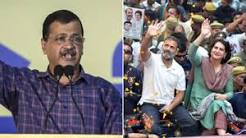
NEW DELHI: Aam Aadmi Party (AAP) national convener Arvind Kejriwal is scheduled to visit Tamil Nadu on April 20, where he will address election rallies in support of the DMK and chief minister MK Stalin on April 20 and 21, the party said on Tuesday. AAP has not fielded any candidates in the Assembly elections and has extended support to the Secular Progressive Alliance (SPA). Meanwhile, Tamil Nadu and Puducherry Congress in-Charge Girish Chodankar said that Congress leader Rahul Gandhi, along with Telangana chief minister Revanth Reddy and Karnataka deputy chief minister DK Shivakumar, is expected to campaign in the state. The Congress is part of the DMK-led SPA. Chodankar said an official announcement regarding Rahul Gandhi’s visit would be made soon and that Priyanka Gandhi is also expected to participate in the campaign. He added that Rahul Gandhi and MK Stalin are likely to campaign together. “Rahul Gandhi will come and campaign for the Tamil Nadu elections, and all our leaders will come. All our leaders will start campaigning when the campaigning becomes very aggressive. We have already appointed party cadres and formed special committees in all 234 assembly constituencies so that we can help all the allied parties’ candidates with whatever forces we have in each assembly constituency, ” he added. He reiterated that an announcement regarding Rahul Gandhi’s visit would be made within the next two to three days. Separately, chief minister and DMK candidate from Kolathur, MK Stalin, conducted a door-to-door campaign in Vellore. Tamil Nadu will go to the polls in a single phase on April 23, with counting scheduled for May 4. The main contest is expected to be between the DMK-led Secular Progressive Alliance, which includes the Indian National Congress, DMDK and VCK, and the National Democratic Alliance led by the AIADMK, with the BJP and PMK as allies. Actor-turned-politician Vijay is also set to make his electoral debut with his party, TVK, which could make the contest triangular. Courtesy : TOI Note: This news is originally published on https:/timesofindia.com/bha and is used purely for non-profit/non-commercial purposes, especially human rights
Rahul: TMC paving way for BJP through dictatorship raj
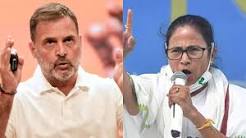
Kolkata/Malda/Behrampore: Rahul Gandhi on Tuesday accused Trinamool of ushering in a “dictatorship raj” in Bengal and paving the way for BJP, saying people in the state were “stuck” between an “anti-people” TMC and a “hate-spreading” BJP. Addressing a rally at Shamsherganj in Murshidabad, the Congress neta alleged governance failure under CM Mamata Banerjee. “There is complete dictatorship raj in Bengal. Teachers’ jobs are being sold, factories are closed and women are being tortured in Bengal. There is no accountability in the state,” he said. Rahul, who addressed three rallies across North Dinajpur, Malda and Murshidabad, reiterated his 2016 charge of “dictatorial” functioning, drawing parallels between Banerjee and PM Narendra Modi. “Five years back, the CM (Mamata Banerjee) had promised five lakh jobs. The reality is that 84 lakh youths have filed applications for unemployment allowance now,” he said. Blaming TMC for the dismal condition of industries in the state, Rahul said, “They have shut down factories and spread hatred. Unemployment is the highest in Bengal and the state has broken all records of corruption. 17 lakh investors were cheated in the Saradha scam and nobody got a penny from Rs 1,900 crore looted from people. Rose Valley has duped 31 lakh investors.” He alleged that industries in Bengal face a “double blow” — with Banerjee closing factories in the state while Modi was “destroying the broader industrial sector”. Rahul also came down heavily on BJP, saying, “BJP and RSS have deleted the names of lakhs of voters from the electoral roll. We will ensure that everyone’s name is included in the voter list again. They are stealing votes in the name of SIR.” Claiming Congress to be the only “challenger”, he said: “BJP knows that Trinamool cannot challenge them nationally. It is only Congress which can stop them.” Courtesy : TOI Note: This news is originally published on https:/timesofindia.com/bha and is used purely for non-profit/non-commercial purposes, especially human rights
Massive Outrage Over Dalit Student’s Suicide Due to Alleged Caste Discrimination
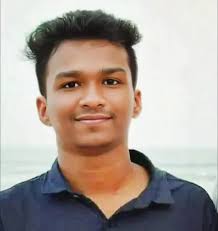
The suicide of a first-year BDS Dalit student in Kerala’s Kannur district has sparked widespread outrage, with various organizations taking to the streets to demand strict action against the teachers held responsible. (DC) Student, youth, women organisations, call it “institutional murder” demand stringent action against accuse Thiruvananthapuram: The suicide of a first-year BDS Dalit student in Kerala’s Kannur district has sparked widespread outrage, with various organizations taking to the streets to demand strict action against the teachers held responsible. On Monday, student, youth, and women’s groups linked to the CPM, Congress, and BJP staged separate protest marches to Kannur Dental College in Anjarakandy, accusing the police of protecting the culprits. Protesters called the death an “institutional murder” and demanded justice. Nithin, 26, was found on April 10 lying on a stone-paved area between the campus’s administrative block and hospital building. The police registered a case of unnatural death under Section 194 of the Bharatiya Nagrik Suraksha Sanhita (BNSS). They also booked two teachers, Dr. K. M. Ram, head of the department, and K. T. Sangeetha Nambiar, after Nithin’s family alleged harassment and caste-based abuse. The absconding teachers have been charged under Section 3(1)(r) of the Scheduled Castes and Scheduled Tribes (Prevention of Atrocities) Act, which addresses intentional insult or intimidation of an SC/ST community member in public, and Section 108 of the BNS for abetment of suicide. The case followed the emergence of audio clips in which Nithin alleged caste-based harassment. On Monday, a police team from Kannur visited Nithin’s home in Uzhamalakkal, Thiruvananthapuram district, to record statements from his parents and relatives. A seven-member Special Investigation Team (SIT), including cyber experts, has been formed to investigate the case. Three audio clips linked to Nithin have emerged, in which he accuses a faculty member of making casteist remarks, insulting him, and issuing threats. In one clip, he says he was called an “idiot” in the staff room and threatened with physical harm. “I tolerated the insults as much as I could,” he says in the recording. Dental College Principal Vinod Moni, however, told media persons on the day of the incident that no complaints related to caste abuse have been received. He said the academic administration will fully cooperate with the police for a detailed probe. Police are also looking into a loan angle Kannur City Police earlier mentioned a loan repayment issue as a possible factor in Nithin Raj’s death by suicide. His family stated that he had taken the loan with their knowledge to pay for his mother’s treatment. Kannur City police commissioner Nidhinraj said that an analysis of Nithin’s mobile phone call records showed he had taken a loan through a mobile app between December and January. Nithin had received several calls about the loan, and the lending agency had even obtained the contact number of one of his teachers. When the loan went unpaid, the agency reached out to the teacher, with similar calls made on April 10, which may have caused mental stress. However, the family said neither the teacher nor the institution informed them about the matter. “They have my contact details; they could have told me at least once. I would have cleared my son’s dues,” said Nithin’s father. Students allege harassment Some students from Ancharakandi Dental College revealed on Monday that the accused teacher, Ram, was a constant source of trouble. “He often uses foul language, body shames girls, tells boys to hit girls, and threatens to lower marks,” said one student. “Even though we faced harassment, we stayed silent out of fear. He would claim that all the external examiners were his colleagues or juniors, and if we complained, he’d instruct them to fail us,” added another studen Courtesy : Deccan Chronicle Note: This news is originally published on https:/deccanchronicle.com/bha and is used purely for non-profit/non-commercial purposes, especially human rights
GTU study maps Dalit entrepreneurship in Gujarat
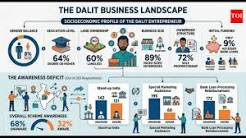
Ahmedabad: A doctoral study from Gujarat Technological University (GTU) offers one of the most comprehensive assessments to date of Dalit entrepreneurship in Gujarat, detailing how many within the community are turning to business ownership as a means of economic independence and self reliance, an idea articulated by Dr B R Ambedkar. The PhD thesis, titled ‘An In Depth Study of Dalit Entrepreneurship in Gujarat’, by research scholar Jay Raval, is based on a survey of 263 Dalit entrepreneurs across all 31 districts of the state. The study is supported by 35 in depth interviews, discussions with eight bankers and government officials, and case studies from Ahmedabad, Bhavnagar and Sanand. Raval says, “The absence of land makes formal finance almost inaccessible. That one structural gap shapes everything.” According to the study, the lack of land ownership affects access to institutional finance and influences business operations. One entrepreneur from the outskirts of Gandhinagar reported that his vehicle sales remained at 2-3 units a month until he changed his surname, after which sales rose to 8-10 units a month. Another entrepreneur, originally surnamed ‘Parmar’, adopted an upper caste name. Overall, 45% of respondents said they actively conceal their surnames to avoid bias. The research also notes the limited presence of Dalit entrepreneurs in food and hospitality. Raval writes that “caste notions of ‘purity’ govern consumer behaviour,” resulting in Dalit entrepreneurs being more concentrated in sectors such as construction and labour contracting. Bindiya Soni, Raval’s research guide and a professor at Anand Institute of Management and Information Science, described entrepreneurship as “the most powerful tool for social reform” while pointing out that access to government support remains uneven. The study found that 68% of respondents were unaware of any entrepreneurship scheme, including 195 out of the 263 who had no knowledge of the Special Marketing Assistance Scheme. At the same time, 55% of Dalit entrepreneurs reported employing workers from other communities. “As first generation entrepreneurs, our money mathematics is different,” said Devendra Khuman, an entrepreneur from Ahmedabad and former functionary of the Dalit Indian Chamber of Commerce & Industry (DICCI). “The barrier is not only caste: it’s capital, confidence, and an ecosystem that is still forming.” The study records relatively high educational attainment, with 64% of respondents holding a graduation degree or higher. However, 60% of those surveyed are landless. Among those who own land, 23% possess less than 0.5 acre, limiting their access to collateral-based institutional lending. As a result, 89% of Dalit-owned enterprises are micro-sized, and 72% operate as sole proprietorships. Half of the respondents reported a median annual turnover of less than Rs 6.5 lakh. The community’s entrepreneurial participation also remains skewed by gender, with 92% male and 8% female entrepreneurs. Raval describes the financing gap as a “chicken and egg” situation. Only 9% of respondents secured bank loans for startup capital. Instead, 44% relied on family savings, 28% on loans from friends, and about 100 respondents used their own funds entirely. The study finds that 88% of entrepreneurs own a single business, reflecting limited scope for expansion. Courtesy : TOI Note: This news is originally published on https:/timesofindia.com/bha and is used purely for non-profit/non-commercial purposes, especially human rights
Vaanam Art Festival’s Fifth Edition Reclaims Dalit Narratives

At Lalit Kala Akademi, 36 artists confront caste through powerful works Segregation isn’t always loud; most times it’s in the quiet differences that remind you where you stand. For many Dalits, even today, this isn’t a thought experiment, it’s a lived reality. Exploring the struggles, resistance, and evolving identities of Dalit communities; histories that have long been marginalised or overlooked, in observance of Dalit History Month, is The Whole Story. The fifth edition of Vaanam Art Festival by the Neelam Cultural Centre, brings together 36 artists from across India. The art works here are not just paint on canvas or clay shaped into sculptures. Each one carries a clear sense of identity, shaped by histories of exclusion, everyday negotiations of dignity, and acts of quiet defiance. As you walk through the exhibition, certain elements repeat. Eyes appear in many of the paintings, almost as if they are watching back, making it hard to just pass by. They hold your gaze, making you more aware and accountable. Mirrors placed around the hall and within some artworks pull you into the frame, making you part of what you are looking at. Nothing feels random; every detail seems to be shaped by a long history of caste and exclusion, much like the histories these works reflect. Continue further, and a mud wall stands firm, representing the spaces these women come from, with fibre sculptures of Dalit women emerging from it, as if stepping out of those confined environments into new spaces. “Despite their work and contributions, Dalit women have long remained sidelined, their contributions rarely finding space in recorded histories,” says artist and curator Natarajan Gangadaran. The work resists their historical erasure and insists on visibility in spaces that once excluded them. Among the figures is Annai Meenambal, the first woman president of the South India Scheduled Castes Federation, who is seen reclaiming a place in history that has often left women like her out. “Thambi, left ah right ah?” (used in Thirunelveli to determine Pallar as left and Paraiyar as right), “Neenga enna aalunga?”— phrases like these which are often used casually, carry embedded markers of caste. As a student, Purushothaman did not fully understand their meaning until much later. Today, he brings these expressions into his artwork. “As a non-Dalit, I feel it’s important for me to be part of this. If we are moving towards caste abolition as a society, I think the responsibility lies more with non-Dalits,” he says. How deeply rooted are discrimination and pain, that one begins to find moments of happiness within them? Catherine, born and raised in Chennai, draws from her childhood to answer this. Growing up in confined spaces, she recalls how rainwater, often mixed with sewage, would enter their homes. Yet, amid this, there were small moments of joy, making paper boats from old notebooks with her brother and letting them float in the water. She brings this memory through a stone sculpture. “The landscapes have not changed in these places,” she says. “Most people here are workers who are oppressed and segregated and that’s why I wanted to present this here.” One of the works that stands out is Rajasekar’s depiction of Savitribai Phule, highlighting how she used education to empower women, what the artist calls a “silent revolution”. At the centre of the painting, Phule sits surrounded by a small group of students, an open book in her hands from which light emerges, symbolising knowledge being passed on to the widowed and Dalit women. “In the next frame, I’ve portrayed her as a metaphor, almost like an angel,” Rajasekar explains. “She holds a cage and opens it, and the women inside are like birds. When birds are freed, we usually offer them grains, but here, the angel holds stars. The stars represent knowledge,” he adds. As the women, imagined as birds, reach out to these stars, they move towards an endless blue sky, a space that opens up beyond the frame. These are just five stories of artists, their thoughts, and lived experiences. The art works at the exhibition make it harder to look away from the caste system. The Whole Story, the fifth edition of the Vaanam Art Festival, is on view until April 18 at the Lalit Kala Akademi. Raksha Maalya RV Courtesy : TNIE Note: This news is originally published on https:/thenewindianexpress.com/bha and is used purely for non-profit/non-commercial purposes, especially human rights
Man is the architect of his own destiny
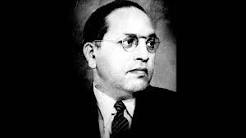
Behind the success of every individual is his or her thinking, perception, and the society around. The world recognizes the greatness of the person through great contributions and deeds. The person becomes eternal in history through education, culture, practices, the scientific approach and attitude. April 14th is Bhim Jayanti, celebrating the birth of Dr Bhimrao Ambedkar, ‘’Father of the Indian Constitution’’. It is also Equality Day. Ambedkar is not a brand or a banner being used by politicians very freely. His legacy goes beyond politics-he is a philosophy, a set of principles, and a symbol of struggle and success. His name represents passion meeting purpose. He lived by his words: “Life should be great rather than long”. A fighter in the cause of annihilation of caste, he was born in a low caste Mahar family. His life was one of struggles as his radical proposals to deal with the caste system met with stiff hostility from upper castes. He suffered bitter caste humiliation and finally succeeded by making the downtrodden politically aware of their situation. What he said to Dalits then bears immense importance even today– “educate, agitate, and organize”. He believed that education is more important than temple entry for the downtrodden because God whom we consider the most powerful is omnipresent. He believed that education is a tool to empower every citizen to build an egalitarian society. This tool he believed would break the social shackles and discriminatory social practices. He faced humiliation in school and college and at all levels and even after he joined Baroda Public service. But that did not deter him from pursuing his goal. He turned to legal practice and teaching. He soon established his leadership among Dalits, founded several journals on their behalf and succeeded in obtaining special representation for them in the legislative councils of the government. Babasaheb said, “I measure the progress of a community by the degree of progress which women have achieved”. He was the lonely man standing for women’s rights those days. He passed a Hindu Code Bill Law for women and all the committee members rejected as they considered women as zero, but later it was successfully passed in 1955, 56 and women now equally stand with the men because of Ambedkar. He was not a man for Dalits, he was a man for women’s rights. He said that in politics, Bhakti or hero worship is a sure road to degradation and to eventual dictatorship. We are Indians firstly and lastly. Babasaheb strongly desired to have Sanskrit as the national language, keeping in mind the ancient and historical greatness of the language. Unfortunately, due to the disapproval of other members, Sanskrit could not be recognized as our national language, a distinction that was accorded to Hindi, much to his disappointment. For him destiny is not a matter of chance but of choice. It is not a thing to be waited for; it is a thing to be achieved. By destiny he meant our future. In other words, our future does not come about by chance and is not something that merely happens to us. A person often meets his destiny on the road he took to avoid it. Ambedkar was first man in Asia to get 32 degrees. He believed that it is not in the stars to hold our destiny but within us. With all odds stacked against him he achieved a great deal. His knowledge was deep as an ocean and wide as sky. He was dedicated in his life to seeking knowledge and enlightenment. Columbia University made a list of the world’s top 100 scholars in 2004 and the first name in that list was Dr Bhimrao Ambedkar. Character cannot be developed in ease and quiet. Only through experience of trial and suffering can the soul be strengthened, vision cleared, ambition inspired, and success achieved. It is in the most trying times that our real character is shaped and revealed. Success is not measured by what you accomplish but by the opposition you have encountered and the courage with which you have maintained the struggle against overwhelming odds. A dream does not become reality through magic; it takes sweat, toil and determination. Dr Ambedkar even surpassed Ashoka the Great in his greatness. Samrat Ashoka had all the access to bring positive changes in his kingdom being an emperor, but Ambedkar only had his personal qualities to rely upon and the most fantastic dream of equality, liberty, fraternity and justice for all. “Man becomes great by deeds not by birth. Cultivation of mind should be the ultimate aim of human existence”. By Dr Hyma Moorty Courtesy : THI Note: This news is originally published on https:/thehansindia.com/bha and is used purely for non-profit/non-commercial purposes, especially human rights
Noida traffic advisory: Traffic diversions announced in Noida for Ambedkar Jayanti Event at Dalit Prerna Sthal
The traffic police in Gautam Buddh Nagar have issued a detailed traffic advisory ahead of a major public event scheduled on April 14, 2026, at Dalit Prerna Sthal in Sector 95, Noida. The programme is being organised to mark the birth anniversary of Dr. Bhimrao Ambedkar, and is expected to draw a significant number of visitors, prompting authorities to implement temporary traffic diversions and parking arrangements across key routes in the city. According to the advisory posted by the official handle of Noida Traffic Police (@Noidatraffic) on X, traffic congestion is anticipated particularly along the Noida–Greater Noida Expressway and adjoining sectors, which serve as major access points to the event location. For commuters travelling from Greater Noida towards Noida via the Noida–Greater Noida Expressway, diversions will be enforced in case of increased traffic pressure near Dalit Prerna Sthal. Vehicles will be rerouted from the Mahamaya Flyover towards Sector 37. From there, commuters can continue their journey via Atta Peer Chowk, Rajnigandha Chowk, and Sector 15 Golchakkar to reach their destinations. In another contingency plan for the same route, if congestion intensifies near Gate No. 04 of the Dalit Prerna Sthal, traffic will be diverted from the Film City Flyover towards Sector 18. Vehicles will then be able to proceed through Rajnigandha Chowk, Sector 15 Golchakkar, or use the Sector 18 underpass and elevated road network for onward travel. Traffic movement from Noida towards Greater Noida will also be affected. In the event of congestion near the DND Flyway or Film City Flyover, vehicles will be redirected from the Sector 14A Flyover towards Sector 15 Golchakkar. From this point, commuters can take the route via Rajnigandha Chowk, Atta Peer Chowk, and Sector 37 to continue towards their destination. In addition to traffic diversions, authorities have outlined specific parking arrangements for attendees arriving from different directions. Light vehicles coming from Pari Chowk, Sector 37, and Greater Noida West will be accommodated inside Gate No. 01 of the Dalit Prerna Sthal premises. Vehicles approaching from Delhi will be directed to use the designated multi-level parking facility within Film City. For travelers coming from the Kalindi Kunj end, provision of parking space has been made at the underground parking adjacent to the Sector 95 nala (Ganda Nala), near the Dalit Prerna Sthal. This has been done to ease vehicular management and prevent crowding on the roads. Further, the notice states that ambulances, fire engines, and other emergency vehicles will not be hindered by the traffic diversion and will have free access to all points during the period. The traffic police will manage traffic at important intersections and help commuters where required. It is requested that the citizens follow the traffic management plan and use alternate routes to reduce traffic. In case of any problem or help, they can call the traffic helpline number at 9971009001. Given the massive attendance expected for Ambedkar Jayanti, it becomes essential that citizens follow the notice strictly. Courtesy : TOI Note: This news is originally published on https:/timesofindia.com/bha and is used purely for non-profit/non-commercial purposes, especially human rights