
Telangana caste survey: Dalits nearly four times more likely to avail loans for medical treatment than upper castes

The Expert Working Group recommended a shift in how the state delivers financial protection, moving away from population-share models toward what the report calls a “social justice 2.0” framework. Synopsis: The survey also revealed a troubling divide regarding where marginalised communities borrowed money for medical treatment. STs reported the highest dependency on informal moneylenders at 9.7%, followed closely by SCs at 8.8%. General Caste households reported just 5.1% reliance on moneylenders and access to private banks at a rate of 19.3%, compared to only 5.9% among ST households. The Telangana government’s Socio, Economic, Educational, Employment, Political and Caste (SEEEPC) Survey 2024, which covered 3.55 crore individuals across the state, has found that Scheduled Caste households are nearly four times more likely to borrow money for medical treatment than General Caste households, even when both earn the same income. The survey identified dependency on medical loans as one of its primary indicators of financial insecurity and the absence of savings to absorb sudden health shocks. Across Telangana, 11.5% of urban households and 10.2% of rural households reported borrowing specifically for medical purposes. But those averages conceal a deeply unequal distribution across caste categories. In urban areas, Scheduled Caste households reported the highest medical loan dependency at 17.3%. Backward Classes follow at 12.4%, Scheduled Tribes at 12.6%, and General Caste households at just 4.9%. In rural areas, the SC figure stood at 15.9%, against a General Caste average of just 4.7%. Across both urban and rural settings combined, SCs report a state-wide medical loan dependency of 10.9% against 3% for General Caste households, a gap of nearly fourfold. The SC Beda community was identified as the most financially exposed in the entire state, with 14.7% of households dependent on medical loans. At the other end, OC Jains reported the lowest reliance in the state at just 1%. Poverty is not casteless The most significant finding on medical borrowing is what happens when income is removed as a variable entirely. The Independent Expert Working Group isolated only those households earning below ₹1 lakh annually, the survey’s definition of the extreme poor, and examined their medical loan dependency across caste categories. Among the extremely poor, 12% of SC households carried medical debt. Among General Caste households at the same income level, the figure was just 4%. A poor Dalit family and a poor upper-caste family earning the same amount faced fundamentally different financial risks when a health crisis struck. The Expert Working Group concluded that this reflected a structural absence of family support networks, savings buffers and informal financial safety nets among marginalised communities, advantages that General Caste families retain even in poverty. Also Read: Telangana releases caste survey, reveals BCs make up 56% of state’s population Who is lending, and at what cost The survey also revealed a troubling divide regarding where marginalised communities borrowed money for medical treatment. STs reported the highest dependency on informal moneylenders at 9.7%, followed closely by SCs at 8.8%. General Caste households reported just 5.1% reliance on moneylenders and access to private banks at a rate of 19.3%, compared to only 5.9% among ST households. The distinction mattered enormously. Loans from scheduled or private banks come with regulated interest rates and formal repayment structures. Loans from moneylenders do not. For SC and ST families, borrowing out of desperation rather than investment, unregulated interest rates could convert a medical emergency into a multi-year or even generational debt burden. The district picture The scale of the problem varied considerably across Telangana’s districts, but the caste hierarchy within it remained consistent. In Jayashankar Bhupalpally, 32.1% of urban SC households reported medical loans, compared to 10.8% of OC households in the same district. In Jagitial, the urban SC figure stood at 28.2% against 9.3% for OCs. In Rajanna Sircilla, 26.9% of urban SCs reported medical borrowing compared to 11.4% for OCs. Even in Greater Hyderabad, the gap persisted. SC households in GHMC reported medical loan dependency of 12.5%, while OC households in the same area reported just 5.2%. In rural areas, SC households in Jagitial reported 23% medical loan dependency against 4.9% for OCs. In Peddapalli, the rural SC figure was 26.3% versus 7.4% for OCs. In Jayashankar Bhupalpally, 25.2% of rural SC households reported medical borrowing, compared to 6.8% for OCs in the same district. One consistent pattern across districts was that the OC figure rarely crossed 12% even in the most medically stressed districts, while SC figures regularly exceeded 20%, and in some districts, they approached 30%. The welfare paradox The survey’s findings on medical debt become more striking when placed alongside data on welfare access. Scheduled Castes already make up 21% of Aarogyasri health scheme beneficiaries, a share higher than their 17% population share in the state. SCs are over-represented among those receiving the state’s primary health welfare scheme, and they are still borrowing for medical treatment at nearly four times the rate of upper-caste households. The implication is direct: existing health coverage is not sufficient to prevent medical emergencies from pushing Dalit households into debt. The Expert Working Group described the findings as a “severe indictment” of existing financial inclusion models, arguing that access to a welfare scheme is not the same as financial protection against health shocks. One nuance the data reflected was the relative financial exposure of rural General Caste households. In rural areas, OC households reported medical loan dependency of 4.7%, which, while still far below the SC rural figure of 15.9%, was notably higher than the 4.9% figure for urban OC households. This suggested that the absence of healthcare infrastructure in rural areas created additional financial pressure even for relatively privileged communities. But the gap with SC households remained wide regardless of geography. Even in rural Telangana, SC households borrowed for medical treatment at roughly three times the rate of their OC neighbours in the same districts. What the survey recommends The Expert Working Group recommended a shift in how the state delivers financial protection, moving away from population-share models toward what
Baba Saheb Ambedkar’s Statue Vandalized During BJP Leader’s Birthday Party; Angry Mob Resorts to Violence

A video of the incident is going viral, in which people can be seen running helter-skelter amidst stone-pelting. It is reported that a birthday celebration for BJP leader Ajay Pratap was being held in the village last night, attended by a large number of people. During the festivities, news spread that a finger on the statue installed in Ambedkar Park had been broken, and almost instantly, the atmosphere turned tense. Ambedkar Park Statue Vandalism: In the Moradabad district of Uttar Pradesh, just two days after Ambedkar Jayanti, the situation suddenly deteriorated on Friday when reports emerged that the statue of Baba Saheb installed in Ambedkar Park had been vandalized. It is alleged that between 10:00 PM and 11:00 PM last night, as news spread that a finger on the statue in Ambedkar Park had been broken, the atmosphere became tense; within moments, stone-pelting ensued, leaving several people injured. A video of the incident is circulating online, showing people running in panic amidst the stone-pelting. It is reported that a birthday party for BJP leader Ajay Pratap was being celebrated in the village last night, attended by a large gathering. It was during this time that the news regarding the broken finger on the statue in Ambedkar Park spread, and the situation quickly escalated into tension. BJP Leader Ajay Pratap’s Birthday Celebrated in the Village According to reports, the entire incident took place in Narayanpur Chhanga village, located within the jurisdiction of the Thakurdwara Kotwali police station. A birthday celebration for local BJP leader Ajay Pratap was underway in the village, attended by a large crowd. Amidst the festivities, news spread that a finger on the statue in Ambedkar Park had been broken; the atmosphere immediately turned tense, and stone-pelting began, reportedly resulting in injuries to several individuals. Dalit Community Members Level Serious Allegations Regarding the Incident Members of the Dalit community have leveled serious allegations regarding the incident. They claim that a group of individuals first entered Ambedkar Park, consumed alcohol there, and subsequently used offensive language. The locals further allege that casteist slurs were directed against them and that the atmosphere was deliberately vitiated. Following the incident, reports have emerged that villagers vandalized several homes and vehicles belonging to 50 Dalit families, creating an atmosphere of fear and tension throughout the village. Police arrived at the scene and have deployed a heavy force to bring the situation under control. The police are continuously patrolling the area to ensure the situation does not deteriorate further. **Allegations of Disrespectful Acts Against Baba Saheb’s Statue** Women have alleged that disrespectful acts were committed against the statue of Baba Saheb (Dr. B.R. Ambedkar), sparking outrage across the entire community. Following these allegations, a large number of people gathered at the site, bringing the two opposing factions face-to-face. This confrontation escalated into physical altercations and stone-pelting, leaving more than a dozen people injured. **’Baba Saheb’s Statue Vandalized by Supporters of a BJP Leader’** A local resident named Vishal stated that a birthday party for a BJP leader was being held in the village when his supporters vandalized Baba Saheb’s statue; they also allegedly hurled casteist slurs and beat people with sticks and clubs. Another villager, Rajkumar, explained that a rally was organized in the village on April 14th to celebrate Bhimrao Ambedkar Jayanti. He noted that the BJP leader had not been invited to this rally, and it was precisely out of resentment over this exclusion that his supporters vandalized Baba Saheb’s statue. The aggrieved party has filed a written complaint with the police, demanding strict action against the accused. Regarding the matter, police officials have stated that an investigation is underway and that appropriate action will be taken after considering all aspects of the case. One of the injured victims, Mansi, alleged, “Baba Saheb’s statue was broken, and casteist slurs were directed at us.” **’Statue Vandalized Out of Anger Over BJP Leader’s Exclusion’** According to Shweta, a local woman, Baba Ambedkar’s statue had been installed just last year. She recounted that this year, on April 14th, Bhimrao Ambedkar Jayanti was celebrated, but the BJP leader was not invited. Angered by this omission, the leader and his supporters allegedly vandalized Baba Saheb’s statue; furthermore, they reportedly barged into people’s homes to assault them, engaged in stone-pelting, and damaged vehicles. Also Read: Bike-borne robbers flee after tearing both ears of an elderly woman to snatch her gold earrings; blood-soaked victim left writhing in agony on the road. Reported by: Mirza Ghalib, Edited by: Shiv Om Gupta Courtesy: Hindi News
Paint meets protest at this dalit art exhibition in Chennai

Chennai: A sketch of Ambedkar burning the only book he hated, the Manusmriti; a sculpture of a cracked foot symbolising social discrimination; Rohith Vemula’s iconic words, ‘My birth is my fatal accident’. The fifth edition of the Dalit Aesthetics Art Show 2026 titled ‘The Whole Story’, on at the Lalit Kala Akademi, brings together 36 artists from across the country. Presented by Neelam Art Collective, founded by filmmaker Pa Ranjith, the show is held as part of the Vaanam Festival, an annual cultural initiative that brings together artists, thinkers, and audiences to engage with issues of social justice, identity, and creative expression. This year’s edition honours senior artist Savindra Sawarkar. “He was the first person who started using the word ‘Dalit art’, in the 1960s and 1970s, says Prema Revathy, who represents Neelam Art Collective. “His work speaks about Varnashrama, how Buddhism is an alternative to that and how dalits are taking up Buddhism.” The show is loosely divided into two sections, says Revathy. “On the one hand are the everyday crises and the struggles of resistance. But more important is the other side, the joy, the celebrations and contributions of dalit people to society. We also have a whole gallery of work on Ambedkar,” she says. The exhibition is being held in April as it is Ambedkar’s birth month and observed as dalit history month. Natarajan Gangadaran’s installation speaks about six dalit women who have done incredible work but whose struggles, he says, have “always been invisible”. “They include Krishnammal Jagannathan, Meenammal, Veerammal, Annapoorniammal and Sathyavani Muthu,” he says. Melody Dorcas’ work looks at war and genocide while Tamil artist Osheen Siva’s is futuristic and dystopic, employing the fluorescent colours of the black art movement. “My works have been influenced by Afrofeaturism and indigenous featurism. Another area I’m interested in is counter mythology, which looks into denaturalising and foregrounding marginalised histories and culture and looks into stories and histories that are not within the dominant Hindu canon,” says Osheen. “Ajay Kumar is a non-Dalit artist but has created an animation about his own struggles forming a relationship with Ambedkar’s works. The show will be on till April 18. Courtesy : TOI Note: This news is originally published on https:/timesofindia.com/bha and is used purely for non-profit/non-commercial purposes, especially human rights
The Big Battle for transgender certificates—official apathy, confusion, red tape, bias

The cloud of confusion for India’s transgender community has been compounded by the 2026 amendment, which many say could make the tyranny of bureaucratic paperwork a Sisyphean endeavour. New Delhi: Twenty-nine-year-old Manveer still can’t forget his first visit to a government office in Delhi four years ago. An official looked at his application to change his gender from female to transgender in official documents. Then he looked at him and said: “Why do you need a transgender card? You look just fine to me.” It’s a familiar script for many transgender persons who approach District Magistrates’ offices. Routine submissions land on the desks of officials who seem unaware of the law, make insensitive remarks, and often ask applicants to explain the rules themselves. They frequently conflate Section 6 with Section 7 of the Transgender Persons (Protection of Rights) Act, 2019, or remain unclear about the distinction between self-declaration and post-transition certification. Now, that cloud of confusion and ignorance is compounded by the recently amended law, which many say could make the tyranny of bureaucratic paperwork a Sisyphean endeavour. The paperwork process that many in the transgender community undergo often turns into an encounter with open official apathy and ignorance, retraumatising many in their fragile emotional state. Without a transgender certificate, the ability to make name and gender corrections across Aadhaar, PAN, and voter ID cards remains restricted, limiting access to employment, housing, and trans-specific welfare schemes such as SMILE and Ayushman Bharat’s TG-plus health insurance card. “The exchanges feel like cross-examination. When we explain, officials simply nod along,” said Manveer. He has adjusted to using his ‘masculine look’ in everyday situations, whether buying medicines or finding work. It is only at the official level that he remains stuck in what he calls his “dead” identity. This struggle existed even when the earlier law was in place, granting the community the right to self-identify. Under Section 6 of the 2019 Act, applicants could obtain a certificate recognising them as transgender; under Section 7, they could have a binary gender—male or female—reflected in their documents. Now, the amended Act has done away with this right, replacing it with mandatory verification by a “medical board”, throwing the whole documentation process into further confusion. While many foresee a more restrictive system ahead, India’s transgender community has long found even the existing process stacked against it. Applications for transgender certificates are delayed, procedures vary across districts, and government offices become just another public space where ‘appearance’ gets judged or draws quizzical looks. At the centre of this system is the District Magistrate’s office, which is responsible for issuing transgender identity certificates. On paper, the process is simple: submit the application through the national portal and receive the certificate within 30 days. In practice, it rarely works that way. By late 2023, the National Portal for Transgender Persons received over 24,000 applications, but only around 15,800 certificates had been issued. Thousands remained pending well beyond the mandated timeline, with little clarity on the reasons for delay. Activists estimate that fewer than 5 per cent of India’s 4.87 lakh transgender population has been able to obtain these identity cards so far. A cycle of explanation, correction, refusal Securing a transgender certificate is only the first step in an unending battle for legal recognition. For Manveer, that process has stretched over years. He left his home in Najafgarh in 2014 and began working early, trying to move toward an identity that felt like his own. Over time, he managed to change his name and update his gender on his Aadhaar card. These were partial, hard-won victories. Getting a transgender certificate itself was a long process. He applied multiple times at different District Magistrate offices—first in Delhi, then in Dholpur, Rajasthan, after being told the process would be faster there. But that did not work out, as officials asked him to change his address to Rajasthan permanently. In the end, he received his TG card from the DM office in Noida in 2023, under Section 6 of the Act. Back in 2021, during an Aadhaar card camp organised by an NGO, he was able to select a binary gender. Yet two reminders of his past remain and continue to create practical difficulties. The document still carries an older photograph. On the back, it continues to read “D/O”—daughter of. “Whenever I try to rent an apartment, people notice it and ask why it says ‘daughter of’ here. I just tell them it’s a mistake,” he said. It doesn’t always work out smoothly. Sometimes, he finds himself in uncomfortable situations, such as staying in a women’s hostel despite identifying as male. In Sonipat, where he once worked, landlords would refuse accommodation. Even after updating parts of his Aadhaar, other documents—such as his PAN card and educational certificates—remain unchanged. “These mismatches keep causing problems with my job, my bank, and even getting my PF,” he said. “I spent money trying to fix my PAN card, but it didn’t work.” Manveer has worked a range of jobs over the years, from call centres to consultancy roles, hospital security, and even at Amazon. He also learned stenography and once cleared a government exam, but chose not to pursue it because he feared he wouldn’t be able to live authentically in that environment. Medical transition brought its own challenges. He started Hormone Replacement Therapy (HRT) in 2018, but had to stop due to financial constraints, resuming it two years later. The process required a Gender Identity Disorder (GID) letter from a psychiatrist and a prescription from an endocrinologist, which he found expensive. “Initially, I received injections every 15 days. But I stopped going to the doctor and started getting medication from a local chemist,” he said. “I already looked masculine, so it was easier, but I often had to say it was for the gym.” After undergoing a hysterectomy in June 2025, he applied for a Section 7 transgender ID card to update his gender and have it reflected across official documents. About six
Kerala transgender couple to legally identify as ‘parents’

Backed by their lawyer, Padma Lakshmi, they successfully lobbied for a certificate that honours their transition while documenting their daughter’s lineage. KOZHIKODE: In a significant victory that redraws the boundaries of family law in India, transgender couple Zahad and Ziya Paval have secured a gender-neutral birth certificate of their daughter Zabiya. The document, which replaces the traditional ‘Father’ and ‘Mother’ labels with the inclusive term ‘Parents’, marks the culmination of a determined three-year struggle against bureaucratic rigidity. The couple captured the nation’s attention in February 2023 when Zahad made history by becoming the first transgender man in India to conceive and give birth. However, the joy of parenthood was quickly met with a legal hurdle: the Kozhikode corporation insisted on recording Zahad as the ‘mother’ and Ziya as the ‘father’ officially. For the couple, accepting the labels meant denying their true selves. “Our fight was for our identity. We insisted from the beginning that our official documents must reflect who we truly are,” said Ziya. When the couple faced technical issues in the documentation process, they moved the High Court. There, they argued that forcing gendered roles onto their family structure infringed upon their fundamental rights. Backed by their lawyer, Padma Lakshmi, they successfully lobbied for a certificate that honours their transition while documenting their daughter’s lineage. On the court’s intervention, the couple expressed a profound sense of relief. “Replacing the gender-specific columns with ‘Parents’ is a huge recognition of our transition and our lives,” Ziya said. Beyond the courtroom, the couple has become digital pioneers, using social media to normalise their lives. From celebrating Vishu to teaching their daughter her first letters, they share their daily routine with thousands of followers to dismantle prejudice. “When we shared photos of the maternity shoot, we severe hate comments on social media. Now, the entire situation has changed and we are getting all positive comments. We express our lives through our videos… Be it celebrating festivals like Vishu and Onam or simply little moments like the baby learning letters while we sit together, every moment we create is from our real-life events,” Ziya said. The response to their videos has been increasingly supportive, with followers often commending the couple for their parenting skills and the evident warmth within their household. This transparency is credited with shifting public perspective on the capabilities and rights of transgender individuals to build traditional family structures. Lesly Joseph Courtesy : TNIE Note: This news is originally published on https:/thenewindianexpress.com/bha and is used purely for non-profit/non-commercial purposes, especially human rights
‘Smells of politics’: Priyanka Gandhi targets PM Modi over women’s quota bill, says delimitation plan ‘attack on democracy’
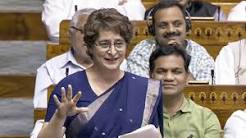
NEW DELHI: Congress leader Priyanka Gandhi Vadra on Thursday delivered a sharp critique of the government in the Lok Sabha during a debate on the women’s reservation law and the delimitation bill, warning that the proposed changes represent an “open attack” on democracy. Participating in a debate on three bills related to amendments in the women’s reservation law and the setting up of a delimitation commission, she said the core issue was being diverted. “In 2023, when this law was passed, the Congress supported it and today also, the Congress is strongly in support of women’s reservation. But the truth is that the debate is not on women’s reservation. The bill that the government has brought has changed the direction of the debate,” she said. She questioned why the government could not implement 33 per cent reservation for women within the current 543 Lok Sabha seats. Referring to the proposal to increase Lok Sabha seats to as many as 850 based on the 2011 Census, she said it carried deeper implications. “This seems fine on the surface but the real meaning comes to the fore when one carefully reads it. It smells of politics,” she said. “The government began finishing off democracy by putting pressure on institutions, such as the Election Commission, the judiciary, the media etc., but now, an open attack on democracy is being launched,” Priyanka Gandhi said. She added that if the Constitution amendment bill is passed, democracy in India would be finished. Reaffirming her party’s position, she said, “There should be no doubt that the Indian National Congress stands firmly in favour of women’s protection and reservation, and will continue to do so.” She also criticised the PM’s remarks on the issue. “Prime Minister’s remarks today suggested that the BJP have been the champions, proponents, and biggest supporters of women’s reservation. This was the theme throughout his speech, even while claiming he didn’t want any credit for it.” She further said, “Any woman would tell you that women easily recognise those who try to mislead them,” and urged the BJP to be careful. Providing historical context, she said the issue of women’s reservation has long roots. She noted that the foundation was laid by Motilal Nehru and later advanced by Congress governments. She said that under former prime minister Rajiv Gandhi, a bill for reservation in panchayats and municipalities was introduced, and was later passed during the tenure of P V Narasimha Rao. She added that during the UPA government led by Manmohan Singh and Sonia Gandhi, the women’s reservation bill was passed in the Rajya Sabha but could not secure consensus in the Lok Sabha. She also mentioned that Rahul Gandhi had written to PM Modi in 2018 urging implementation. Priyanka Gandhi also raised concerns about the representation of the OBC community, alleging delays since 2011 had led to injustice. She claimed PM Modi avoided fully addressing the issue in his speech and accused the BJP of previously opposing such measures. The Constitution (131st Amendment) Bill, along with the Delimitation Bill and the Union Territories Laws (Amendment) Bill, was introduced in the Lok Sabha following a division of votes. Courtesy : TOI Note: This news is originally published on https:/timesofindia.com/bha and is used purely for non-profit/non-commercial purposes, especially human rights
Kerala Dalit student death: Family raises suspicion on hospital treatment

His sister Rekha said the college authorities were yet to disclose details of the treatment provided to him after he was found injured. Thiruvananthapuram: The family of a BDS student who died after falling from a building at a dental college in Kannur in a suspected suicide case on Wednesday, April 15, alleged that he was denied timely treatment after the incident. Nithin Raj RL (22), a first-year Bachelor of Dental Surgery student, was found critically injured near the medical college block after falling from a building on April 10 and later succumbed to his injuries. The family alleged that Raj ended his life following harassment over caste and colour by faculty members. Delay in identifying his blood group Speaking to reporters, his sister Rekha said the college authorities were yet to disclose details of the treatment provided to him after he was found injured. “He was admitted to the medical college for two hours. There was a delay in treatment as his blood group could not be identified. How much time does it take for a medical college to identify a blood group,” she asked. The family does not believe the claims made by the institution, Rekha added. “They claim five units of blood were given. We want to know what treatment was provided to him. Students who saw him said he had only suffered a fracture in one leg,” she said. Rekha alleged that no clarification has been given so far by the medical college, which is part of the dental college. She also denied claims by the college authorities that the family could not be contacted after a loan app-related issue surfaced. Something suspicious happened at college, sister alleges The college had claimed that Raj was under pressure after borrowing money through a loan app, whose operators had even contacted one of the teachers seeking repayment. “If his father was unavailable on phone, they should have asked for an alternative contact number,” she said. “There is something suspicious that has happened at the college. Raj would not end his life out of sympathy for a teacher who was disturbed over loan app operators contacting her,” Rekha said. She further alleged that Raj’s phone had been taken by the college authorities before his death. “If the phone was with him, he could have contacted us and changed his mind. But they did not give it to him,” she alleged. Rekha said the family was aware of a loan issue involving Raj, but alleged that he had been subjected to harassment from college faculty. Accused suspended from college, but absconded Earlier, police had registered a case against two faculty members for abetment of suicide and under provisions of the Scheduled Caste/ Scheduled Tribe (Prevention of Atrocities) Act, following allegations that Raj was harassed over his caste and complexion. The two accused, who have been suspended, are currently absconding. Meanwhile, television channels aired a purported voice message of Raj in which he alleged harassment by faculty members and expressed apprehension about being intentionally failed in the exam, though he also voiced hope of completing his course. A Special Investigation Team probing the case has recorded statements from Raj’s classmates, some of whom also alleged that they faced hardships from college teachers. RL Nithin Raj Courtesy : TSD Note: This news is originally published on https:/thesiasatdaily.com/bha and is used purely for non-profit/non-commercial purposes, especially human rights
How Dalit outreach is peaking in Uttar Pradesh in run-up to 2027 polls

From the BJP restoring statues of social justice icons to Rahul Gandhi and Akhilesh Yadav invoking Kanshi Ram, the politics of symbolism is hard to miss As Uttar Pradesh moves closer to next year’s assembly polls, the politics of symbolism is getting harder to miss. Statues, memorials and historical figures are once again at the heart of the messaging, and it’s not a one-party phenomenon. The ruling BJP is taking the lead. The Yogi Adityanath administration has rolled out a Rs 403 crore scheme to upgrade and maintain statues of B.R. Ambedkar and other social justice icons, such as Sant Ravidas, Sant Kabirdas, Jyotiba Phule and Maharishi Valmiki, across the state’s 403 assembly constituencies. The plan goes beyond routine upkeep and focuses on making these sites more attractive. Accordingly, funds are being allocated for lighting, landscaping, boundary walls and protective structures. Each constituency is expected to get funds for multiple statues, but there will be a cap on spending per site. While officials say the aim is to honour social reformists and improving public spaces around their memorials, the timing has a clear electoral context. Since the 2024 Lok Sabha polls, when its tally in Uttar Pradesh fell by almost half to 33 seats and the Samajwadi Party (SP)-Congress alliance made significant gains, the BJP has been looking to rebuild its social coalition in the state. That electoral shift in 2024 was visible even within reserved constituencies. Of the 17 Scheduled Caste seats, the BJP won eight while the SP won seven and the Congress one seat. The result suggested that the Dalit vote, once seen as tightly aligned, was now more open and contested. For the BJP, reinforcing its outreach within these communities has become a priority. Alongside the memorial upgrade, chief minister Adityanath has spoken about installing protective canopies over the statues of Ambedkar and other icons. The effort is seen as one to project the BJP as a party that cherishes the legacy of social justice leaders. In political terms, it is a way of countering the SP’s Pichada, Dalit, Alpasankhyak (PDA) pitch, which seeks to consolidate the backward classes, Dalits and minorities into a single bloc. The Opposition is responding with its own push. Consider SP chief Akhilesh Yadav’s moves. At his ancestral home in Etawah, a large temple complex is coming up, blending personal legacy with a broader cultural signal. For a leader often framed through a narrow political lens, it all appears designed to widen that perception. In western Uttar Pradesh, his outreach has taken another form. At a rally in Dadri, a Gurjar-dominated area, Akhilesh announced that a statue of the 9th century king Mihir Bhoj would be installed in Lucknow. The choice seemed well crafted as Bhoj is revered by both Gurjars and Rajputs. The announcement seemed to fit into a larger effort by the SP to expand its social base. All this symbolism is also tied to a deeper churn around the Dalit vote. Scheduled Castes make up roughly 21 per cent of Uttar Pradesh’s 243 million population and are spread widely across communities such as the Jatavs, Pasis and Valmikis. For decades, this base was firmly anchored with Mayawati’s Bahujan Samaj Party (BSP), but that grip has loosened in recent years. The BSP drew a blank in the parliamentary elections in Uttar Pradesh in 2024. Dalit voters have also opened up to newer faces outside the BSP, such as Chandrashekhar Azad, the Lok Sabha MP from Nagina. The legacy of Kanshi Ram too is acquiring newer political meaning. The late BSP founder, who reshaped Dalit politics in north India, is being invoked by several parties. Congress leader Rahul Gandhi has described Kanshi Ram as a figure who transformed political representation for the marginalised communities. He wrote to Prime Minister Narendra Modi for a Bharat Ratna for Kanshi Ram. Akhilesh too has been invoking Kanshi Ram’s legacy while recalling his party’s past alliances with the BSP. While this seeks to position the SP within that broader history of social justice politics, the party has also sharpened its PDA narrative, placing Dalits at the centre of its electoral strategy. The Dalit push from political opponents has drawn a sharp response from BSP chief Mayawati. She accused the SP and Congress of trying to appropriate Kanshi Ram for electoral gains, warning Dalit voters against such ‘opportunistic’ politics. Her argument rests on the familiar claim that the BSP alone represents the interests of Bahujan Samaj. As Dalit outreach peaks in Uttar Pradesh a year before a decisive election, no party can claim exclusive control over this vote base. Instead, it has become the site of active competition, wherein both policy and symbolism are being used to breach walls and build connections. Avaneesh Mishra, Edited By: Ashish Mukherjee Courtesy : India Today Note: This news is originally published on https:/indiatoday.com/bha and is used purely for non-profit/non-commercial purposes, especially human rights
BSP Chief Mayawati Backs Women’s Quota, Seeks Separate Reservation For Dalit And OBC Women

BSP chief Mayawati on Wednesday supported the proposed 33% reservation for women in Lok Sabha and state assemblies but demanded a separate quota for Dalit and OBC women. Addressing a press conference in Lucknow, she said ensuring representation of marginalised sections is crucial and reiterated her party’s long-standing demand for 50% reservation in legislatures. BSP Chief Mayawati Backs Women’s Quota, Seeks Separate Reservation For Dalit And OBC Women | Lucknow: Bahujan Samaj Party chief Mayawati on Wednesday welcomed the decision to provide 33 percent reservation for women in the Lok Sabha and state assemblies, but demanded a separate quota within it for women from Dalit and Other Backward Classes. Addressing a press conference, Mayawati said her party has consistently advocated 50 percent reservation for women in legislatures. She said that while the BSP supports the proposed 33 percent quota as a step towards improvement, it is equally important to ensure representation for marginalised sections among women. The BSP supremo also targeted the Indian National Congress, alleging that it had not taken concrete steps to introduce women’s reservation during its time in power. She accused the party of attempting to stall the reform now by raising new issues. Reiterating her party’s stand, she said the BSP supports the decision in principle but will continue to press for sub-categorisation to protect the interests of Dalit and OBC women. Referring to the birth anniversary of B. R. Ambedkar observed across the country on Monday, Mayawati said she paid tributes to the architect of the Constitution. She also criticised other political parties for what she described as attempts to woo Dalit voters by adopting symbols associated with the BSP. She said several parties have recently used the colour blue in their programmes to attract Dalits, but asserted that the community remains aligned with the BSP’s ideology and such efforts would not succeed. BISWAJEET BANERJEE Courtesy : TFPJ Note: This news is originally published on https:/thefreepressjournal.com/bha and is used purely for non-profit/non-commercial purposes, especially human rights
Dalit woman’s suicide: Anbumani demands ban on DMK’s Rs 8,000 coupon campaign

CHENNAI: A political firestorm has erupted in Tamil Nadu following the suicide of a young dalit woman at Manachanallur in Trichy, allegedly after being harassed and insulted by DMK workers. The incident has prompted PMK president Anbumani Ramadoss to demand an immediate ban on the DMK’s controversial “Rs 8,000 coupon” campaign, labelling it a fraudulent election manoeuvre. In a post on X, he said the victim, identified as Sindhuja of Manachanallur, reportedly entered into an argument with local DMK functionaries over the distribution of “model coupons” for the proposed Illatharasi (homemaker) scheme. When Sindhuja questioned why she had not received the coupon being distributed in her area, DMK workers allegedly targeted her with “obscene language” and intimidated her. Distressed by the humiliation and the verbal abuse, the young woman reportedly took her life by hanging. The scheme, a key promise in the DMK’s 2026 manifesto, pledges a Rs 8,000 coupon for non-income tax-paying households to purchase home appliances. In another post on X, he said a college student was brutally attacked with a sickle by a gang of drug addicts at her residence in Vallur village near Minjur. Anbumani while condemning the incident alleged that even women inside their homes are no longer safe under the current DMK regime. The victim, a college student, was at home preparing for her upcoming examinations. A three-member gang, allegedly under the influence of ganja, barged into her house. The gang members attempted to sexually assault the student. When she resisted and fought back, the assailants hacked her with a sickle, inflicting severe injuries. The student has been hospitalized in a critical condition. Anbumani linked the assault directly to the widespread availability of narcotics. “This horrific event is a grim testament to the uncontrollable spread of drugs like ganja under the DMK rule,” he stated. “Until now, there was a sense of fear regarding women’s safety in public spaces. But now, the situation has deteriorated to a level where women are not safe even within the four walls of their homes,” he said. Courtesy : TOI Note: This news is originally published on https:/timesofindia.com/bha and is used purely for non-profit/non-commercial purposes, especially human rights