
Unrest in Varanasi village over Ambedkar Jayanti flag hoisting row

The flags and posters were torn and burnt by some individuals, triggering tensions between the Dalit community and members of the opposing group, bringing them face-to-face. LUCKNOW: An Additional Commissioner of Police (ACP) was injured after protests over alleged burning and removal of Dr BR Ambedkar’s posters and flags turned violent in a Varanasi village on Friday, with agitated villagers pelting stones at police during a road blockade. A major uproar broke out following allegations of burning and removal of posters and flags of Dr BR Ambedkar in Varanasi. Members of the Bhim Army, who staged a sit-in protest by blocking the road, turned aggressive when police attempted to remove them, leading to stone pelting that injured a police personnel in the rank of Additional Commissioner of Police (ACP). As per police sources, following the stone pelting by villagers, ACP Sarnath Vidush Saxena suffered a head injury, while two station officers from Cholapur police station also sustained injuries. The protests erupted in Nehia village under the Cholapur police station area, where Dalit residents under the aegis of the Bhim Army had put up flags and posters to mark Ambedkar Jayanti on April 14. During this time, some members attempted to hoist Dr Ambedkar’s flag. It is alleged that some villagers affiliated with the Hindu Yuva Vahini opposed it. The dispute escalated, leading to an argument between both parties. The flags and posters were torn and burnt by some individuals, triggering tensions between the Dalit community and members of the opposing group, bringing them face to face. Local sources claimed that the Dalit community alleged that the police took one sided action in the matter and registered an FIR based only on the complaint of the opposing group. Following the FIR, angered members of the Dalit community blocked the Babatpur Chaubepur road on Friday afternoon. On receiving information about the blockade, police reached the spot and tried to persuade the protesters, but they refused to disperse. After this, police resorted to a lathi charge to clear the road. Enraged by the action, protesters began pelting stones at police personnel. However, the police later brought the situation under control using force. In view of the prevailing tension in the village, more than 300 police personnel, including four IPS officers and two ACPs, have been deployed in the area. On receiving information about the commotion in Cholapur, the SDM Pindra and the Tehsildar, along with police force, also reached the spot. Meanwhile, forces from five police stations and the PAC were called to the spot. Currently, DCP Varuna Zone Pramod Kumar, along with the station house officers of Pandeypur and Sarnath police stations, were at the spot. According to DCP Varuna Zone Pramod Kumar, “Police had received information about road blockade and sit-in protest in the village, action was being taken against anti-social elements. Additional CP along with several officers were at the spot, the injured were being treated. The situation was under control.” Namita Bajpai Courtesy : TNIE Note: This news is originally published on https:/thenewindianexpress.com/bha and is used purely for non-profit/non-commercial purposes, especially human rights
Progress masks PREJUDICE

Manifolds are the manifestations of caste: There are untouchables and unapproachable, those whose sight itself is a damnation, and those who do not mix in marriage or even in eating food…” These lines from Duravastha (The Tragic Plight), the 1922 poem by Kumaran Asan, exposed the rigid caste discrimination of his era. A century later, Kerala, celebrated for its progressive outlook, continues to grapple with caste, albeit in subtler, metamorphosed forms. Extreme untouchability has largely receded, but it has been replaced by less visible yet persistent manifestations: Verbal abuse, social exclusion, and physical violence rooted in caste, skin colour, and class prejudice. Several incidents underscore the continuing challenges faced by marginalised communities, scheduled castes, scheduled tribes, and dalit Christians. The lynching of Madhu, a tribal man in Palakkad; the suicide of tribal police officer Kumar N K, allegedly driven by harassment from colleagues; and the killing of dalit Christian Kevin P Joseph by his wife’s family have each exposed deep-rooted caste bias. More recently, the reported suicide of dalit medical student Nithin Raj K L, allegedly linked to faculty harassment, reflects the barriers marginalised communities continue to face in the 21st century. Despite its strong social indicators, Kerala reports over 1,000 cases annually under the SC/ST (Prevention of Atrocities) Act. Writer and dalit activist Sunny M Kapikad argues that the roots of discrimination lie within households. The ‘othering’ begins early, children absorb prejudiced ideas about caste, colour, and race through parental influence, ideas reinforced within the educational system, allowing discrimination to endure across generations. “A high level of education does not automatically eliminate caste-based attitudes,” says Kapikad, pointing to deep-rooted hypocrisy in Kerala society. People may publicly denounce caste discrimination, but in private spaces, caste conditioning persists in subtle yet pervasive ways. He recounts a disturbing incident involving his grandchild. “One day, she came back from nursery claiming that ‘all black-skinned people are thieves.’ When I asked who had said this, she named a classmate. I approached the nursery and requested a meeting with the girl’s parents. When I confronted them, they appeared embarrassed and tried to deflect responsibility.” As long as caste functions as a powerful social institution, he argues, people engage with one another not as individuals but through the lens of caste identity. Geo Mathew, son of noted writer Dr Mathew Ulakamthara, has alleged repeated caste-based violence against his minor son at a school in Attapady, raising concerns about institutional inaction and the safety of tribal students. Geo, who is married to a tribal woman, says they consciously chose to raise their child with that identity. He alleges his son faced sustained abuse and physical violence from classmates, and was also pressured to adopt the religious practices of a particular group. “He was brutally assaulted by students. The repeated attacks traumatised him badly. He is now afraid of attending school. I filed complaints with the police, Childline, and the district collector, all in vain. I now plan to approach the high court,” he says. Poet Mrudula Devi S calls for collective organization among marginalized communities. Drawing a parallel with the Ezhava community, which unified under Sree Narayana Guru, she notes that similar cohesion remains elusive among other oppressed communities due to differing cultural practices and social backgrounds. “Despite sharing the same historical pain, these divisions hinder a unified socio-political force. A transformative leader like Dr B R Ambedkar is needed. Sadly, after Ambedkar, we have not seen a figure of that magnitude,” she says. Academic Rekha Raj offers a critical reading of Kerala’s social fabric. While Keralites project progressiveness in public, caste continues to operate covertly, particularly in the preservation of customs. Caste discourse re-emerged in the 1970s when dalit communities began engaging with Ambedkar’s writings and questioning land reforms, spatial segregation, and limited access to political power. “Dismantling caste discrimination is not solely the responsibility of dalit communities. Upper-caste and socially organized communities need to critically examine their entrenched privilege. Failure to do so reflects a lack of intellectual and moral progress,” she says. Social anthropologist Dr Anil Gopi of MG University points to a telling paradox: Communities historically marginalized by upper-caste groups now sometimes seek ritual services from them, believing this elevates their social status. In reality, he argues, this represents an unknowing submission to the very system that oppressed them, making it harder to identify discrimination that persists. “At one point, it may appear that untouchability has withdrawn from the public arena as people from various castes interact in secular and religious contexts. But this does not translate into genuine equality. Even today, tribal communities are often treated as secondary or tertiary citizens,” Dr Gopi notes. He adds that caste-type discrimination is not confined to Hinduism, it manifests across religions. Increasingly, class and skin colour are becoming equally powerful tools of social marginalisation. Meaningful change, Dr Gopi says, requires both rigorous implementation of constitutional safeguards and a grounded social movement. Without both, he warns, “the vulture of caste evils will continue to hover in our skies for years to come.” Courtesy : TOI Note: This news is originally published on https:/timesofindia.com/bha and is used purely for non-profit/non-commercial purposes, especially human rights
CCTV Inside Kerala Principal Office Shows Moments Before Dalit Student’s Death
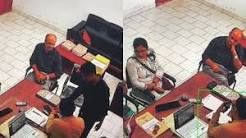
Teachers had earlier stated that Nithin Raj was called to the principal’s office after they began receiving repeated calls from the recovery agent, which they described as persistent harassment. The visuals also show Nithin Raj explaining his situation to teachers inside the principal’s room.Kannur: Days after Nithin Raj, a Dalit student, fell from the fifth floor of his college building and died, NDTV has accessed CCTV footage from inside the principal’s room at Anjarakandy Dental College in Kerala’s Kannur that captured the events that unfolded about 25 minutes before his death. According to police sources, the footage shows teachers speaking to representatives of an instant loan app that had allegedly been making repeated recovery calls linked to a loan taken under Nithin Raj’s name. The agent on the call is heard refusing to remove contact numbers of people connected to the student, including that of a professor, from the reference list until the payment is completed. The visuals also show Nithin Raj explaining his situation to teachers inside the principal’s room. In another CCTV clip, Nithin Raj is seen walking away in tears – a development that investigators are treating as significant in reconstructing the sequence of events leading up to his death. Teachers had earlier stated that Nithin Raj was called to the principal’s office after they began receiving repeated calls from the recovery agent, which they described as persistent harassment. Meanwhile, two teachers named as accused in the case, Dr Ram and Dr Sangeetha Nambiar, have approached the Thalassery Sessions Court seeking anticipatory bail, arguing that they had no role in the suicide and that threats from the loan app may have led to the student’s death. Nithin Raj, a Dalit from a daily wage labourer’s family in Thiruvananthapuram, had secured a BDS seat at Anjarakandy Dental College in Kannur. On the afternoon of April 10, he fell from the fifth floor of his college building and died. What followed was a storm: audio clips of a young man describing caste-based humiliation by his professors, a loan app whose recovery agents had been threatening his teachers, a meeting in the principal’s office, and a family that says they knew none of this was about money. The parents held the caste-based ill treatment by teachers responsible for their son’s death. But the latest police investigation has also revealed continuous harassment from a loan recovery app as a parallel thread that authorities are now probing. Chakkarakkal police initially registered a case of unnatural death. By April 12, they added charges of abetment of suicide under Section 108 of the Bharatiya Nyaya Sanhita and invoked the SC/ST Prevention of Atrocities Act. The FIR was based on a complaint filed by Nithin’s father, Rajan. Kannur City Police Commissioner P Nidhinraj confirmed the formation of a Special Investigation Team headed by Assistant Commissioner of Police Hari Prasad, with cyber cell experts included in the team. Reported by: Aswin Nandakumar Courtesy : NDTV Note: This news is originally published on https:/ndtv.com/bha and is used purely for non-profit/non-commercial purposes, especially human rights
Dalit labourer abducted and killed in UP’s Muzaffarnagar, police book three

The deceased has been identified as Suresh (45), a resident of Ibrahimpur village under Ramraj police station limits in Muzaffarnagar district. A Dalit labourer was allegedly abducted, strangled to death and his body disposed of in a Ganga canal following an altercation, police said on Saturday. Based on CCTV footage and investigation, police have registered a case against three persons and arrested one accused, identified as Vikal (32). The deceased has been identified as Suresh (45), a resident of Ibrahimpur village under Ramraj police station limits in Muzaffarnagar district. Station House Officer (SHO) Ravindra Yadav said a case has been filed against Vikal, Kartik Bhati and Aadesh Goswami under charges of murder and provisions of the Scheduled Castes and Scheduled Tribes (Prevention of Atrocities) Act. According to police, Suresh had left for work at a brick kiln on April 16 but did not return home thereafter. Courtesy : TNIE Note: This news is originally published on https:/thenewindianexpress.com/bha and is used purely for non-profit/non-commercial purposes, especially human rights
‘Horrific’: New transgender law sparks panic among parents, worries doctors

The government claims the Transgender Persons (Protection of Rights) Amendment Act, 2026 increases access to welfare and strengthens legal framework, critics argue it erases many trans identities, threatens their existence and rights Mahua Seth, founder of The Rainbow Room and member of Sweekar, a support group for parents of LGBTQIA+ individuals, says that she has been flooded with calls and messages from panic-stricken parents and members of the transgender community since early March. This is because the controversial Transgender Persons (Protection of Rights) Amendment Act, 2026 has introduced unclear definitions, medical gatekeeping, and criminalisation of key support networks for transgender people. These changes aim to impose stricter certification processes and limit previously protected self-identification rights, making the main argument a concern over reduced rights and increased barriers for the transgender community. The Act has drawn criticism from the LGBTQIA+ community, queer collectives, student groups and gender sensitisation groups. Opposition parties and even government panel members have spoken up against the Act. While the government claims the new law increases access to welfare and strengthens the legal framework, critics argue that it erases non-binary, gender-fluid, and other transgender identities, threatening their existence and rights. “These swooping changes are downright horrific, retrograde, and violate every fundamental human right,” Seth tells The Telegraph Online. This has caused deep anguish, casting a cloud of despair not only over transgender, non-binary, and queer individuals, but also their parents, chosen families, and friends. Uncertainty about Transgender ID card One of the major challenges introduced by the Act is the potential restriction on access to the Transgender ID card, which is crucial for legal identity and documentation. This certificate of identity is the official gender recognition of transgender individuals. It also provides them with access to government welfare schemes. Post-amendment, the process now mandates approval by a medical board. The district magistrate can seek assistance from medical experts in issuing ID cards. The move has instilled fear among parents, with Nilanjan Majumdar, father of a transmasculine person, worried about the validity of his child’s existing identity card. “It is like a bulldozer bulldozing the lives and dreams of lakhs of trans-queer children, including my own,” he says. “I do not know what this will mean for my child, who is currently living in a gender-neutral hostel while pursuing his master’s degree at one of the top colleges in India. Would he be thrown out of the hostel now? Would his Transgender ID card still be valid?” The data on the National Portal for Transgender Persons, Ministry of Social Justice and Empowerment, shows that more than 32,000 transgender (TG) ID cards have been issued under the 2019 Transgender Persons (Protection of Rights) Act as of early 2026, before the amendment took effect. The ambiguity over what fate awaits the existing identity documents is a cause of concern among activists and legal experts. “What we are missing is that the transgender identity and, by extension, the Transgender ID card, is not merely a document used to access ‘special benefits’, targeted welfare schemes or reservations,” Prithviraj Nath, founder director of Bridge India, a non-profit working on LGBTQ+ rights and inclusion,” says. “It is, in essence, an identity card and is crucial in establishing that a trans person is a valid citizen of the country.” Transgender is an umbrella term The amendment limits the definition of a transgender person to specific traditional socio-cultural groups such as Hijras, Jogtis and Kinnars, as well as intersex individuals and those who have undergone forced mutilation or castration. A primary survey conducted by Bridge India in 2023–24 across seven states in eastern and northeastern India, including Assam, Arunachal Pradesh, Manipur, Nagaland, Odisha, Jharkhand and West Bengal, had over 900 LGBTQIA+ respondents. Of these, 415 identified within the broader transgender umbrella. Only 30 identified as Hijra, one of the socio-cultural identities recognised under the Transgender Persons (Protection of Rights) Amendment Act, 2026. The remaining 385 respondents identified across a diverse range of gender identities, including trans men, trans women, genderfluid, non-binary, gender non-conforming and queer. The new Act risks denying these individuals legal recognition in their self-identified gender and may even exclude them from full citizenship rights. Parents flag mental health risks Majumdar, who is also a therapist, highlights the psychological distress of gender dysphoria. He raises concerns about the Act’s potential impact on the mental health of transgender individuals. He talks about the distress experienced by individuals who are forced to fit into the gender binary. “I am scared that this amendment will make them feel lost, suicidal or push them to self-harm and substance abuse. They may even feel forced to join the sociocultural identities mentioned to express their gender, which is as fundamental a right as the air we breathe in,” Majumdar says. Kaustubh Mukherjee, father of a transfeminine child, says he has always been concerned about his child’s future. “Like a bolt from the blue, this Transgender Persons (Protection of Rights) Amendment Act, 2026, turning into law, has pushed my child and many such boys and girls towards uncertainty,” Mukherjee says. “For people like us who think in terms of a binary understanding of gender, it is not possible to truly understand the pain these children feel. Because of the mismatch between mind and body, they are as if imprisoned for life,” he adds. Indrani Chakraborty, mother of another transgender child, is outraged. “As a parent, I understand the vulnerability of transgender individuals,” she says. “After a long struggle, the NALSA judgement came with great relief for transgender individuals, giving them their identity and a hope to live with dignity. And now it’s snatched away! The amendment is very dehumanising and against basic human rights. They are simple humans and deserve all the basic human rights. The amendment should have focused on education, livelihood, social stigma, health, and other serious issues they face.” Doctor flags ‘public health concern’ Retired Air Cmde Dr Sanjay Sharma, founding director and CEO of the nonprofit Association for Transgender Health in India, warns that the amendment
‘Dual citizenship’: Allahabad high court directs UP Police to file FIR against Rahul Gandhi
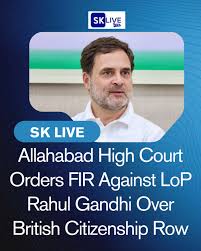
LUCKNOW: A Lucknow bench of the Allahabad high court on Friday directed the Uttar Pradesh police to register an FIR against Cong MP and leader of opposition in Lok Sabha, Rahul Gandhi, for allegedly concealing his British citizenship as he had claimed himself to be a UK citizen while getting a company incorporated in England in 2003. The bench of Justice Subhash Vidyarthi permitted the state government to hand over the probe to any central agency. In its order, the bench said that from a bare perusal of the allegations, prima-facie cognizable offences were made out against Rahul and hence the allegations required investigation. The order came after the deputy solicitor general submitted relevant documents on the court’s direction. The petitioner, Karnataka BJP Worker Vignesh Shishir, alleged that Rahul is a UK citizen and had incorporated a company named M/S Backops Ltd., which was registered in August 2003. It was further submitted that Rahul categorically admitted and voluntarily declared his nationality as British, providing a Director Identification ID and London and Hampshire addresses. Passing the order, the bench set aside the special MP/MLA court Lucknow order of Jan 28, 2025 whereby it had refused to order the registration of an FIR against Rahul. The bench said that the special court should have looked into whether the allegations prima facie made out any cognizable offences but failed to consider it. Earlier, deputy solicitor general of India , SB Pandey produced the central government’s records in the court relating to Rahul’s citizenship controversy. The government advocate VK Singh also consented on behalf of the UP government that the allegations prima- facie made out cognizable offences. After a detailed hearing, the bench found that the material on record showed that Rahul had committed cognizable offences in by having dual citizenship and these allegations required to be probed. In his petition, Shishir claimed that Rahul had submitted the company’s annual returns in Oct 2005 and Oct 2006, listing his nationality as British. Thereafter, the company was dissolved by filing a dissolution application in Feb 2009. He has sought registration of FIR against Rahul under BNS, the Official Secrets Act, the Foreigners Act, and the Passport Act. The petitioner had initially filed the complaint before the special MP/MLA Court, Rae Bareli but on Shishir’s own petition, the Lucknow bench of the HC transferred the said criminal complaint case from Rae Bareli to Lucknow on Dec 17, 2025. Lucknow’s MP/MLA court rejected the plea on Jan 28, 2026, against which the petitioner had moved the HC. According to the petitioner, the material placed before the court includes records suggesting that Rahul may have been listed as a voter in the United Kingdom and participated in electoral processes there. Courtesy : TOI Note: This news is originally published on https:/timesofindia.com/bha and is used purely for non-profit/non-commercial purposes, especially human rights
Fall of constitutional amendment bill a defeat for delimitation, not women’s reservation: Opposition
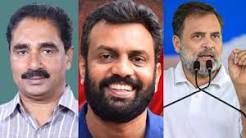
NEW DELHI: A triumphant opposition hailed the fall of the constitutional amendment bill as a defeat for delimitation, and not women’s reservation. After the opposition prevailed in voting, Congress leader Rahul Gandhi spoke with TMC heir apparent and MP Abhishek Banerjee and thanked him for the support. There was concern that only a few of the 28 TMC MPs may turn up in Parliament because of the election campaign in Bengal. But TMC sent 21 MPs after repeated requests from INDIA bloc leaders who impressed upon Mamata Banerjee that presence in debate and voting was important to thwart the Modi govt’s plan on delimitation. According to sources, Banerjee told Rahul, “The tide is turning against the BJP”. Akhilesh Yadav called it a defeat of BJP’s malice. RSP’s N K Premachandran said the bill’s failure to pass shows that BJP must consult with the opposition on important issues concerning the nation. “This defeat is not of women’s quota, but of delimitation by the backdoor,” he said. Priyanka Gandhi Vadra accused PM Narendra Modi of maliciously linking the women’s quota to delimitation based on 2011 Census. “But his hollow attempt to pose as messiah of women has failed today,” she remarked. Priyanka said if the three bills had passed in Parliament, democracy in India would not have survived. Rahul Gandhi said, “They used an unconstitutional trick in the name of women to break the Constitution.” Congress whip Manickam Tagore said, “We have defeated arrogance.” CPI MP Sandosh Kumar said the fall of the govt legislation shows that there is a strong opposition to any attempt to change the balance of representation in the country. He said the women of the country must see through the BJP’s approach of delaying women’s quota by linking it to census and delimitation. “This defeat is similar to what we saw during the farmers’ movement, when people’s unity forced the govt to repeal the farm laws.” DMK chief M K Stalin, who led the protests in Tamil Nadu, said his party’s concern was about delimitation, “which requires careful thought to ensure it is fair, especially for southern states”. He said the govt should have delinked women’s quota from delimitation. Courtesy : TOI Note: This news is originally published on https:/timesofindia.com/bha and is used purely for non-profit/non-commercial purposes, especially human rights
‘Black day for Centre, they felt a shock for first time’: Priyanka on delimitation bill defeat
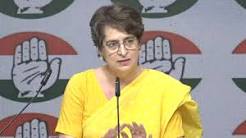
NEW DELHI: Wayanad MP Priyanka Gandhi Vadra on Saturday hailed the defeat of the Delimitation Bill in the Parliament as a “victory of democracy” and accused the Centre of hatching a conspiracy to alter the federal structure of the country. While addressing a press conference, Priyanka said that Centre is planning to stay in power using Women. “What happened yesterday was a huge victory for democracy. The government’s conspiracy to alter the federal structure and weaken democracy was defeated and stopped. This was a victory for the Constitution, a victory for the country, and a victory for the unity of the opposition, and it was clearly visible on the faces of the ruling party leaders,” the Congress leader said.”I think it’s a conspiracy that somehow they need to stay in power… So, to achieve this, they’re planning how to permanently stay in power using women… They thought that if it was passed, they’d win. If it’s not passed, they’ll become the saviours of women by branding other parties as anti-women… We know that becoming a savior for women isn’t easy,” she added. Priyanka also asked the Centre to bring back the bill that was passed unanimously in 2023. “It’s a Black Day for them (centre) because they’ve felt a shock for the first time, which they deserved. The problems of women today are growing exponentially. The struggle is growing. Women aren’t fools. They see everything. That PR and media hype won’t work anymore. If you want to do something concrete, bring back the bill that was passed unanimously in 2023, supported by all parties,” Priyanka said. “If you need to make a few small amendments to it so it can be implemented now, do it and implement it now. Give women their rights, right now. But don’t try to mislead them by twisting it around and attaching it to other things. Do it now. We’re all ready,” she said. Her remarks came after the bill proposing women’s reservation through a delimitation exercise could not secure the required two-thirds majority in the Lok Sabha, with 298 members voting in favour and 230 opposing it. Lok Sabha Speaker Om Birla announced that the Constitution Amendment Bill had not been passed. Following the outcome, Parliamentary Affairs Minister Kiren Rijiju said the government would not proceed with the remaining two interlinked bills. The BJP has accused opposition parties of blocking a historic reform aimed at ensuring 33 per cent reservation for women in Parliament and state assemblies. Union Home Minister Amit Shah alleged that parties like Congress, TMC, and others prevented the passage of the bill and warned of political consequences. However, the opposition has maintained that it supports women’s reservation in principle but opposes linking it with delimitation and census processes. Leader of the Opposition in the Lok Sabha, Rahul Gandhi, described the bill as an attempt to alter India’s electoral structure, while several Congress leaders termed the vote a defence of democratic values Courtesy : TOI Note: This news is originally published on https:/timesofindia.com/bha and is used purely for non-profit/non-commercial purposes, especially human rights
Parked Bolero Row Sparks Dalit–Upper Caste Clash in MP’s Sidhi on Ambedkar Jayanti, Over 200 Storm Police Station

Clashes during Ambedkar Jayanti rally in Sidhi left over 12 injured, police station vandalised amid caste tensions. Violence erupted during an Ambedkar Jayanti rally in Sidhi, Madhya Pradesh, after a minor dispute escalated into a major clash between two groups, leaving over a dozen people injured and a police station vandalised. According to officials, the incident took place in the Amiliya area on April 14 when members of the Bhim Army were taking out a rally to mark the birth anniversary of B. R. Ambedkar. The situation turned tense when rally participants asked two men sitting in a parked vehicle to move it. An argument broke out, which quickly escalated into violence. Eyewitnesses said the two men were dragged out of the vehicle and beaten. “One of them collapsed unconscious, but people kept hitting him,” a local resident said, adding that another victim tried to escape but was chased and assaulted inside a nearby house. Clash Turns Into Caste Violence As the rally moved forward, tensions deepened and the incident reportedly took on a caste angle, turning into a clash between Dalit and upper-caste groups. Stone-pelting began from both sides, creating panic in the area. ‘Nida Khan at Home, No Police Visit’: Family Alleges Foul Play in Nashik TCS Case, Moves for Anticipatory Bail Eyewitness Ramakant Shukla said, “Stones were being thrown from all sides. Even my car was hit, and I got injured when I tried to understand what was happening.” Another local, Dinesh Kumar Shukla, said, “Around 20 people were beating the two men. They were not listening to anyone and kept attacking them.” Mob Attacks Police Station The violence escalated further when a large group reached the local police station after the rally ended. Police said more than 200 people stormed the premises, vandalised property, and attacked personnel, including the station in-charge. Officials confirmed that CCTV cameras were damaged, vehicles were destroyed, and officers were assaulted. Station in-charge Rakesh Bais was reportedly chased and beaten during the chaos. Additional Superintendent of Police Arvind Shrivastava said, “The attack was sudden. A group tried to free some people brought to the police station, which led to vandalism and violence.” Injuries and Security Measures Authorities said over 12 people were injured in the violence. While some sustained minor injuries, others required medical attention. District Collector Vikas Mishra said, “We immediately sent teams to the spot. The situation is under control now, and we are ensuring proper treatment for the injured.” Heavy police deployment remains in the area, with more than 200 personnel stationed across key points. Officials have restricted large gatherings and intensified patrolling to prevent further escalation. Allegations and Counterclaims Dalit leader Rani Verma alleged that members of Bajrang Dal were involved in the violence and claimed she was threatened. “They told people to finish me because I support Babasaheb,” she said, adding that the station in-charge intervened and ensured her safety. Meanwhile, police have not confirmed these allegations and said the matter is under investigation. Despite the tension, the local market reopened the next day under heavy security presence. Authorities say the situation is currently under control but remain cautious. Officials have assured strict action against those responsible. “Law and order will not be compromised. Anyone involved in violence will face action,” a senior officer said. The administration is continuing its investigation to determine the sequence of events and identify those behind the clashes. Courtesy : TOP Note: This news is originally published on https:/theobserverpost.com/bha and is used purely for non-profit/non-commercial purposes, especially human rights
Protests erupt at Kannur Dental College over Dalit student’s death following alleged harassment

Student representatives told reporters that the college management has not addressed key concerns even days after the incident. Students of Kannur Dental College on Thursday staged a protest on campus following the death of BDS student Nithin Raj, who was allegedly subjected to caste-based harassment by faculty members. Students from all batches, except those appearing for university examinations, took out a march within the campus and held a dharna in front of the dental college at Anjarakandy. As part of their protest, they also decided to boycott wearing white coats until justice is delivered and action is taken against the accused faculty members. Nithin Raj R L (22), a first-year BDS student, was found critically injured near the medical college block after allegedly falling from a building on April 10. He later succumbed to his injuries. Police have registered a case against two faculty members for abetment of suicide and under provisions of the SC/ST (Prevention of Atrocities) Act, following allegations that he was harassed on the basis of caste and complexion. Student representatives told reporters that the college management has not addressed key concerns even days after the incident. They said a detailed petition outlining their demands would be submitted to the administration. Among their key demands is the removal of Dental Anatomy Head of Department M K Ram, who is named as a prime accused in the case. They also demanded action against other staff allegedly involved. The students alleged that the institution lacks transparency in its functioning and said they are not aware of the composition of the college management. They further said the students’ union has limited effectiveness due to lack of institutional support. They stressed that the inquiry into Nithin Raj’s death must be transparent and time-bound, and said protests would continue until their demands are met. With university examinations underway, they are currently observing a silent protest. Meanwhile, apart from the police investigation, separate inquiries have been initiated by the Kerala SC/ST Commission, the Kerala State Human Rights Commission, the Kerala State Youth Commission, and the Medical Education Department. The accused faculty members, including M K Ram and Dr Sangeetha, remain untraced. In a related development, DYFI activists allegedly damaged the nameboard of Dr Dilna’s Dental Clinic in Edakkad, Kannur, during a protest march. Police said the march was initially stopped by barricades, but a few protesters entered the premises and vandalised the clinic signage before erecting party flags and banners. Separately, the Muslim Youth League staged a march to the office of the Kannur City Police Commissioner, protesting the delay in arresting the accused. Police blocked the march with barricades and used water cannons after protesters refused to disperse, continuing their agitation into the afternoon. Courtesy : TNIE Note: This news is originally published on https:/thenewindianexpress.com/bha and is used purely for non-profit/non-commercial purposes, especially human rights