
Tamil Nadu saw 67% rise in atrocities against Dalits under DMK rule

Tamil Nadu’s 67.9% increase in cases against Scheduled Castes (SC) and Scheduled Tribes (ST) is the highest in India, surpassing Madhya Pradesh (55.3%) and Odisha (42.9%). Tamil Nadu recorded a 67 per cent rise in atrocities against Dalits between 2019 and 2023, the highest increase in the country,according to a report by the National Campaign on Dalit Human Rights (NCDHR). This data has gained significant attention following the DMK’s defeat in the 2026 Assembly elections, suggesting that the state’s failure to address caste violence contributed to voter dissatisfaction despite the party’s “social justice” rhetoric. Tamil Nadu’s 67.9% increase in cases against Scheduled Castes (SC) and Scheduled Tribes (ST) is the highest in India, surpassing Madhya Pradesh (55.3%) and Odisha (42.9%). According to NCRB data, murders of Dalits rose by 40.4 per cent, increasing from 52 to 73 cases, while incidents of grievous hurt surged by 240 per cent and cases of criminal intimidation witnessed a sharp 584.8 per cent rise, climbing from 46 to 315 cases. Total rape cases rose by 36.1%. While the rape of adult Dalit women dropped by 14%, the rape of Dalit girls increased by 73.2% (from 56 to 97 cases). Assaults with “intent to outrage modesty” grew by 289.5%. The report highlights a breakdown in the justice system. In 2023, the conviction rate for these crimes was a mere 12.2%, while the acquittal rate stood at 87.8%. Additionally, the case pendency rate is 87.7%, exacerbated by a shortage of exclusive special courts; Tamil Nadu currently has only 20. The state government has also been criticized for administrative negligence. The state-level vigilance and monitoring committee, chaired by the Chief Minister, is legally required to meet twice a year. However, it met only once annually between 2021 and 2023, and failed to meet at all in 2024. Prison Statistics India (PSI) indicates a disproportionate targeting of Dalits under preventive detention. In 2021, SC individuals made up 37% of detainees in Tamil Nadu, accounting for 84.5% of all SC detainees across India. By 2023, this figure rose to 42.2%, despite Dalits making up only 20% of the state’s population. The sharp rise in atrocities against Dalits in Tamil Nadu has drawn particular attention because the Dravida Munnetra Kazhagam (DMK) has historically positioned itself as a champion of “social justice,” anti-caste politics, and the upliftment of backward classes, Dalits, and minorities through the broader Dravidian movement. Notably, the debate around caste violence and the DMK’s “social justice” claims intensified following the 2026 Tamil Nadu Legislative Assembly election, in which the Dravida Munnetra Kazhagam (DMK) suffered a major defeat. Tamilaga Vettri Kazhagam (TVK), led by actor-turned-politician Vijay, emerged as the single largest party with 108 seats, while the DMK was reduced to 59 seats. The All India Anna Dravida Munnetra Kazhagam (AIADMK) secured 47 seats. Courtesy : Maktoob Media Note: This news is originally published on https:/maktoobmedia.com/bha and is used purely for non-profit/non-commercial purposes, especially human rights
What is Dalit joy? It’s a threat to savarnas
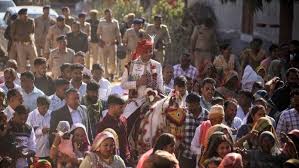
In ‘Dalit Women and the Fullness of Life’, Christina Dhanuja dismantles the stereotypes that freeze Dalit women as victims or icons of resilience. Caste minds have constructed worlds and cultivated cultures that are inherently anti-joy and actively anti-Dalit. This is our crooked room. And this is precisely why even the most mellowed expressions of joy from Dalits are threatening to those around us. Like in 2018, Mahesh Rathod, a 13-year-old Dalit boy from Vithalapur 8 in Ahmedabad, Gujarat, was beaten up for having a Darbar-like etiquette. Meaning, Mahesh was wearing jeans, a shirt, a thick gold chain around his neck, and Rajwadi Mojaris. In 2015, Sagar Shejwal, a twenty-three-year-old Dalit man from Shirdi in Maharashtra, was beaten to death by seven men belonging to the Maratha and OBC communities for having an Ambedkar song as a ringtone on his phone. In 2019, Jitendra in Kot, Uttarakhand was beaten up and killed for sitting on a chair and eating at a wedding in the presence of upper castes. The same year, four wedding processions of Dalits were attacked in a single week in Gujarat. A moustache. A dance. Riding a horse. An unbuttoned shirt. Leather shoes. Simple things and small joys that lead to thrashing, beating, stabbing, humiliation and death. This is what caste is. It emboldens joy-killing monsters that sit at the top of the pyramid, obese from eating the joys of Dalits. Urban savarnas are no different. They may not kill you, but they too cause damage. When I noticed that my hair was so thick, my friend piped, ‘That’s ’cause you’re nicely eating mutton and chicken.’ When I texted another about a new gadget I had bought, he replied, ‘All you rich, privileged people.’ When I announced that I had got a new job, a colleague said, ‘That’s because I didn’t apply for it.’ Prick that bubble. Dull that shine. Kill that moment. Savarnas believe in the impossibility of Dalit joy—and if and when it happens, they are convinced of their right to rob it. To discover joy as Dalit thus means that we first deconstruct this ridiculous inadequacy we have been rationed. We have to take apart their lies not just with rage, but with jeer. Call it silly. Call it absurd. See how foolish it is to treat joy as an individualistic pursuit that is sheathed, hidden within the self, from the self. See how wearisome it is to restrict something so available. See how fabricated it all sounds. Mediocre, even. I don’t want this warped notion of joy. I want no part in this laboriousness. I’d rather relish fruits like Vijeta Kumar’s father. I could go on morning walks with my mother, listening to little birds heralding the dawn. I could eat mutton curry andgaré at my mother-in-law’s. I could sit on a rocky beach and let the thick, salty air wash over me. Joy should be free to take. Still, I suspect that learning new ways of pursuing, sustaining, and savouring joy takes practice. Every time something beautiful happens, however small or big, my mind has no idea what to do with it. Instead of revelling in it, it searches for something that could go wrong. My mind believes it’s protecting me from unnecessary hurt, but in so doing, it has (almost) rid me of the ability to be in the moment. To relish, to enjoy, to experience. Dr Brené Brown calls it foreboding joy—an experience of joy immediately followed by worry or dread. It’s a form of self-protection against vulnerability, she says. I used to admire Brown’s work, but I now find her a tad too simplistic in the way white American worldviews generally are. Indeed, while‘foreboding joy’ as a term makes sense, its explanation does not. It is not without reason that Dalits fear joy. For Mahesh, Suman, and Delta, appearing joyful can literally get them killed. And it exposes the rest of us to ridicule, hurt and ‘lessons’. In this sense, joy is not an easy thing to embrace. Joy seems lethal. Joy seems unnecessary. So, what does Brown even mean when she says, ‘In moments of joyfulness, we try to beat vulnerability to the punch’? That, ‘when we lose our tolerance to be vulnerable, joy becomes foreboding’? Disappointingly enough—but not surprisingly—a number of South Asian influencers and brown therapists also resonate with Brown’s dare-to-be-vulnerable rhetoric. Perhaps they would advise Dalits to embrace vulnerability in order to realise joy. Here’s the thing though: Dalits’ foreboding isn’t because they are scared of vulnerability. They are already systemically vulnerable and have even been told that they have a victim mindset if and when they speak of it. So, how is a performance of vulnerability, in the way Brown is advocating for—which is to ‘daringly’ show the world how soft and gooey we all are—going to work? How will it lead to joy? If anything, the opposite happens. Caste minds respond with disgust, name-calling and more exploitation. A Dalit’s vulnerability is a reminder of their evil. Vulnerability is not our magic potion. Recognition is. Reconstruction is. Our foreboding joy is our minds grappling with the real cost of what joy demands of us—the history and the reality of our joy being robbed and the usual trauma that follows it. It is a warning, a writing on the wall that has been passed down through generations. Perhaps we must ignore the likes of Brown and stop calling our minds and bodies chicken-hearted. Perhaps we must see them as intelligent beings that are understandably tempered in their enthusiasm. Perhaps we must empathize with the fear that bubbles from within. Perhaps only by validating it can we and our communities truly pursue joy. This is why resilience and resistance feel more authentic than vulnerability. Indeed, a foreshadowing of what could happen and the fear that it will all fall apart is entirely reasonable, but it is also true that we are our ancestors’ wildest dreams. Our fore-parents fought hard for our joy. Not in one grand
From Gharana Gurus to Pandemic Flatmates, Trans Motherhood in India Has Always Made a Place for Itself

From hijra gharanas to pandemic flatshares, trans women across India have long built matriarchal families the law refuses to name. With the 2026 amendment threatening chosen family autonomy, three trans women speak about what motherhood really means. Meena* was twelve when she fled a small town with nothing and no one. She found factory work in the city and, slowly, found herself, first through cross-dressing, then through conversation, then through the gradual understanding that some friendships, deepened over years, become something for which no adequate word exists. “Achanak se ek maa ban gayi thi,” she says: I had suddenly become a mother. She had not planned it. The role arrived quietly, like an understanding reached between two people who had each been looking, without knowing it, for the same thing. For RudraniChettri, trans rights activist, actor and model, who also starred in Vikas Khanna’s directed The Last Colour, whose themes almost run parallel to this story on chosen families, and one of the most visible figures of India’s trans movement, motherhood arrived in much the same way. “I never really saw myself as a trans mother,” Chettri told Local Samosa. “I was simply there for people who needed love, care, and support. Over time, these relationships naturally evolved on their own.” Her closest bond is with a non-binary person who is son, sister, brother, mother, and father to her all at once, a bond that goes “beyond labels and traditional definitions of relationships.” For trans women across India, this is what family looks like: not given, but built, through accumulated time and the willingness to stay. The hijra gharana system is among the oldest surviving kinship structures in South Asia. Rooted in a guru-chela lineage, in which a guru takes on chelas, who may in turn take poti-chelas, it has for centuries provided trans women with shelter, sustenance, social standing, and belonging, functioning as a matriarchal institution documented by scholars including Gayatri Reddy and Serena Nanda. But structure is not always warmth, and not every guru becomes a mother. Meena, who spent time within a gharana, recalls the hierarchy as legible but cold. “Guru aayi hai toh boss aayi hai,” she says, when the guru arrived, it felt like a boss, not a mother. What she had been given was a household; what she had been searching for was intimacy. Over time she found it elsewhere, in a friendship that slowly became something more. “Hum ek doosre ki life mein rehte the,” she says: we lived inside each other’s lives. Meena is careful not to dismiss what the gharana gave her: a roof, company, someone who would come in illness. But the chosen family she has since built is held together by something the old system rarely offered, what she calls “mamtapan”, the quality of genuine, tender care. Rudrani Chettri puts the figure plainly: more than ninety, perhaps ninety-five, per cent of India’s trans community is sustained not by biological family but by chosen family. Family rejection remains one of the most consistent and damaging experiences of trans life in India, beginning in childhood and persisting through every significant life transition. The chosen family is not a romantic alternative to the biological one. It is the infrastructure of survival. For 34-year-old Delhi-based trans woman and community organiser Sana*, chosen family emerged not through a traditional gharana but through shared precarity. During the pandemic, she began informally housing younger trans and queer people who had been pushed out of hostels, denied rental accommodation, or cut off financially by their families while in college. What began as temporary shelter slowly became permanence. “At first it was just, ‘Stay here till things get better,’” she says. “Then suddenly we were cooking together, fighting over groceries, helping each other through breakups and hormone appointments. One day someone introduced me as their mother and I realised the relationship had already become real before we named it.” “None of us planned this structure,” Sana says. “But when the world keeps telling you that you do not belong anywhere, even small acts of staying become family.” Chettri is precise: “For many of us, building a chosen family was never the first choice, it became necessary because the first priority was choosing ourselves, choosing our truth, and surviving as who we are.” For transmasculine people, she notes, the situation has historically been far bleaker, without comparable support structures, they remain significantly more isolated. Indian law has not caught up with the families trans people have already built. The Transgender Persons (Protection of Rights) Act, 2019 made no provision for trans persons seeking to adopt and did not address chosen family bonds in any meaningful way. CARA, India’s central adoption authority, has issued no guidance for trans-led families, leaving prospective trans parents in a legal grey zone navigated through bureaucratic discretion and, more often than not, refusal. The NALSA vs. Union of India judgment of 2014 affirmed transgender personhood but left family law untouched. For trans mothers and their chosen children, the legal relationship remains, in most cases, invisible. Sana has encountered that invisibility in ordinary bureaucratic situations, rental agreements, hospital paperwork, emergency contacts. “There is no column for the people who actually take care of you,” she says. “When one of the kids was hospitalised, I was the person speaking to doctors, arranging money, staying awake all night. But legally I was nobody.” The contradiction, she says, is exhausting: “The state keeps asking us to prove relationships that we are already living every day.” The Transgender Persons (Protection of Rights) Amendment Bill, 2025, signed into law in early 2026, sharpened these contradictions considerably. The legislation drew sustained criticism for expanding the role of biological families and state-run rehabilitation centres in matters of trans welfare, provisions that activists read as mechanisms for family-sanctioned confinement dressed in the language of protection. It retained requirements around institutional certification of gender identity, eroding the self-identification principle established by NALSA, while continuing to offer no recognition to chosen family bonds. Chettri names
Karnataka High Court directs continuation of hormone replacement therapy on two transgenders

The petitioners challenged the validity of the Transgender Persons (Protection of Rights) Amendment Act, 2026, and claimed that despite being midway through treatment, the attending doctors are unwilling to continue the prescribed course of therapy. Bengaluru: The High Court of Karnataka has directed the doctors of a private hospital in Bengaluru to continue with hormone replacement therapy (HRT) upon two transgenders as per the existing medical protocol. The petitioners challenged the validity of the Transgender Persons (Protection of Rights) Amendment Act, 2026, and claimed that despite being midway through treatment, the attending doctors are unwilling to continue the prescribed course of therapy. “The concerned doctors and medical authorities shall facilitate continuation of such treatment without interruption. The continuation of treatment shall, however, be subject to the outcome of the present writ petition and any orders that may be passed by the Supreme Court, including in any transfer proceedings initiated by the Union of India,” Justice Sachin Shankar Magadum stated in the interim order passed on Thursday. The petitioners submitted that they are transgender persons identifying as women and are aggrieved by the consequences flowing from the amended definition of “transgender person” under Section 2(k) of the 2026 Amendment Act. The petitioners claimed that they have been undergoing hormone replacement therapy (HRT) in a hospital since November 11, 2023, and have also been issued Transgender Identity Cards. They contend that denial of treatment midway, infringes their fundamental rights guaranteed under Articles 14, 15, 16, 19, and 21 of the Constitution of India. They also relied on an interim order passed by the Kerala High Court in an analogous matter, where similarly placed persons were permitted to continue the therapy and appropriate directions were issued to facilitate uninterrupted treatment. The Additional Solicitor General, appearing for the Union government, submitted that no material is placed on record to demonstrate that the authorities have initiated or proposed coercive action restraining such treatment. It was further submitted that the issue relating to the validity of the amendment is presently sub judice and before the Supreme Court. The Union government is contemplating filing an application seeking transfer of all similar petitions pending before various high courts, the court was informed. Justice Magadum noted that the medical records produced by the petitioners, prima facie, indicate that both have been undergoing the therapy since November 11, 2023. “At this stage, it cannot be disputed that abrupt discontinuation of such ongoing medical treatment may have adverse and detrimental consequences on their physical and mental well-being. It is also not in dispute that the issues raised in the present petition, including the challenge to the amended statutory provision, are engaging the attention of the Supreme Court and are likely to be authoritatively settled. In the facts and circumstances of the case, this court is of the considered view that, pending adjudication of the larger issues, limited interim protection is required to be extended to the petitioners to ensure that ongoing medical treatment is not disrupted,” the court said. Ambarish B Courtesy : DH Note: This news is originally published on https:/deccanherald.com/bha and is used purely for non-profit/non-commercial purposes, especially human rights
Protests, flex wars and online battles mark Kerala Congress CM race
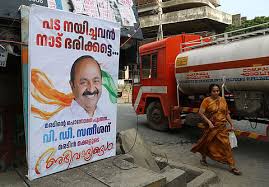
Supporters also marched from Martyrs’ Column to the Secretariat in Thiruvananthapuram carrying Satheesan’s placards. KOCHI: The delay by Congress in naming the next chief minister even four days after the UDF swept the Kerala assembly election has triggered an unprecedented show of strength by supporters of senior leaders V D Satheesan, K C Venugopal and Ramesh Chennithala across the state. From Kozhikode to Thiruvananthapuram and Kottayam to Ernakulam, Congress workers have taken out rallies, erected giant boards and flooded social media demanding that their preferred leader be elevated to the top post. Large demonstrations backing Satheesan were organised at Muthalakulam, Koyilandy, Kuttiady and Vadakara in Kozhikode, where supporters installed towering cut-outs portraying him as ‘kingmaker’ and ‘Bahubali’. Similar marches were organised in Malappuram under the banner “Mathethara Keralam VD-ku Oppam”, while a rally titled “Secular Keralam with Satheesan” was held at Pampady. Supporters also marched from Martyrs’ Column to the Secretariat in Thiruvananthapuram carrying Satheesan’s placards. In some places, posters of Venugopal were reportedly torn down and replaced with Satheesan’s banners. Congress workers in Ernakulam and Kalamassery also witnessed flex-board rivalry. Meanwhile, the Congress leadership in Idukki cracked down on pro-Satheesan demonstrations. The DCC removed four office-bearers who led a march demanding Satheesan be made the CM. . Interestingly, while grassroots leaders, including booth and mandalam committee presidents, have openly joined rallies, most senior leaders have refrained from participation. Several seniors across factions are understood to be backing Venugopal internally, arguing that the CM should be selected through organisational consensus rather than public pressure. The battle has shifted online, too. Under a social media post by senior leader Rahul Gandhi thanking Kerala voters, Satheesan’s supporters urged the high command not to appoint Venugopal, arguing that choosing a sitting MP would trigger unnecessary by-elections. However, another Congress supporter countered online: “Any leader, no matter how big, who imagines that they can blackmail the party by sending fans and supporters to the streets, is mistaken. The party must take decisions within its own organisational framework and discipline.” Another widely shared post defending Venugopal questioned why so many MLAs continued to support him despite Satheesan’s strong media backing, arguing that party workers value leaders who quietly strengthen the organisation rather than build personality cults. Though relatively subdued, supporters of Chennithala too entered the online contest, circulating posters calling him the “People’s Chief Minister”, adding another layer to the Congress succession battle now spilling from party corridors onto Kerala’s streets and social media feeds. Courtesy : TNIE Note: This news is originally published on https:/thenewindianexpress.com/bha and is used purely for non-profit/non-commercial purposes, especially human rights
‘BJP has built system to steal elections, but time will come when it will face public anger,’ says Rahul Gandhi
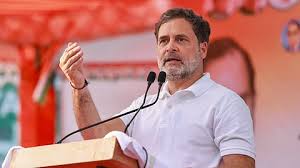
Rahul Gandhi alleged voter manipulation, institutional control and corruption by the BJP, claiming rising public anger will eventually challenge the ruling party. Rahul Gandhi on Friday launched a sharp attack on the BJP, alleging that it has built a system to “steal” elections, while asserting that people have understood the situation and will respond with public anger. Addressing a gathering in Gurugram after participating in the ‘Sadbhav Yatra’ led by Haryana Congress leader Brijendra Singh, Gandhi accused the BJP of manipulating elections in Madhya Pradesh, Haryana and Maharashtra, and also recently in West Bengal and Assam. “They delete lakhs of names and add lakhs of names. The ECI and bureaucracy are under their control,” he alleged, adding, “They think that their rule will not stop.” “But their time is going to come. People have understood that Narendra Modi and Amit Shah are selling the country. Airport, ports, infrastructure. Nicobar Island is being sold to Adani,” he said. Gandhi also raised concerns over the Indo-US trade deal, claiming it would hurt Indian farmers and small industries. “Our agri sector has been opened for US farmers who can now sell their produce in Indian markets,” he said. He further alleged that India would have to purchase goods from the US every year under the agreement, which he said would impact domestic industry. “And all your data, what you speak, messages you send, medical data, hospital data, all of that Modi has handed over to America. What did India get in this deal, nothing. Zero, we got nothing,” he said. Gandhi also brought up the Epstein files issue while accusing the government of compromising India’s interests under the trade deal. He intensified his criticism of Prime Minister Narendra Modi, saying, “Narendra Modi and (industrialist) Adani are one and the same.” “Though the company’s name is Adani, it should be renamed as ‘Modani’,” he said, adding, “The entire nation knows that the BJP’s financial system is Adani. US President Donald Trump also knows it…” He further alleged that Modi cannot act without approval from the US President and also claimed he was prevented from speaking in Parliament for four hours. “What was I attempting to speak about? I was about to speak about Epstein, Adani. But Narendra Modi simply got up and went out of Parliament,” he said. Before his speech, Gandhi walked about a kilometre with Brijendra Singh, Haryana Congress chief Rao Narender Singh and other leaders as part of the yatra. Leader of Opposition in Haryana Bhupinder Singh Hooda, senior leaders Randeep Singh Surjewala and B K Hariprasad were also present. “Take it in writing, Narendra Modi tick nahi payenga kyon ki janta mein itna gussa hai,” Gandhi said, adding, “No matter how many elections you have to steal you may do, but you will have to face the anger which is there in the people.” He said unemployment remains the biggest issue in Haryana and across the country, and claimed the Congress would defeat the BJP. “And then you would see what action we would take against Modi as they (BJP) have launched a direct assault on the country, democratic system and the Constitution drafted by B R Ambedkar,” he said, holding up a copy of the Constitution. “We will not forget it, come what may. This is an ideological battle. There are only two ideologies: one is of RSS’s hatred and division, and the other represented by the Congress party – of love and unity,” he added. Gandhi also said that no other party would be able to challenge the BJP and claimed that ultimately only the Congress would remain and defeat it. He referred to the Bharat Jodo Yatra, saying, “A few years ago, we undertook a journey from Kanyakumari to Kashmir’ a distance of 4,000 km. We walked from Kanyakumari all the way to Kashmir; millions of people walked alongside us, and we raised a slogan: ‘To open a shop of love in the marketplace of hate.’” “This slogan was not merely our slogan; it emerged from the crowd itself,” he said, adding that the country still needs this message today. He also praised Brijendra Singh for undertaking the Sadbhav Yatra, which began on October 5, 2025 from Danoda village in Narwana, Jind. The foot march has so far covered 85 of 90 Assembly constituencies in Haryana and over 2,700 km, according to organisers. The yatra aims to highlight issues including “vote chori”, unemployment, law and order concerns, agrarian distress, and issues faced by government employees, labourers and traders. It has been described as a continuation of the Bharat Jodo Yatra, with the slogan “Congress ka haath Bhaichara kay Saath.” Former Chief Minister Bhupinder Singh Hooda said Gandhi has a special affection for Haryana and praised him for raising issues of farmers, labourers and women, adding that he had helped stop the BJP’s farm laws. Courtesy : TNIE Note: This news is originally published on https:/thenewindianexpress.com/bha and is used purely for non-profit/non-commercial purposes, especially human rights
Rahul Gandhi, Congress top brass to attend Vijay’s swearing-in as Tamil Nadu CM

The development comes as Vijay appears set to assume office after securing crucial support from several political parties, including the Congress and its five MLAs, enabling TVK to cross the majority mark in the 234-member Assembly Senior Congress leaders, including Leader of Opposition in the Lok Sabha Rahul Gandhi, are expected to attend the swearing-in ceremony of TVK chief C Joseph Vijay as the next Chief Minister of Tamil Nadu, according to Congress sources. The development comes as actor-turned-politician Vijay appears set to assume office after securing crucial support from several political parties, including the Congress and its five MLAs, enabling TVK to cross the majority mark in the 234-member Assembly, party leaders and sources said on Friday. The move follows Vijay’s meeting with Tamil Nadu Governor Rajendra Vishwanath Arlekar at Lok Bhavan, where he formally staked claim to form the government after consolidating support from multiple parties in the wake of the fractured mandate delivered in the recently concluded Assembly elections. TVK leader and Tamil Nadu CM designate Joseph Vijay Vijay moves closer to forming Tamil Nadu government as Left parties extend support; VCK decision awaited TVK had emerged as the single-largest party with 108 seats, but remained short of the majority mark of 118 required to form the government on its own. The Congress later formally announced its support to TVK and Vijay in forming the next government in the state, effectively ending its alliance with the Dravida Munnetra Kazhagam (DMK) in favour of backing the new political formation. Congress had contested the elections as part of the DMK-led alliance before extending support to TVK. With the backing of the Congress, the Communist Party of India, the Communist Party of India (Marxist) and the Viduthalai Chiruthaigal Katchi (VCK), Vijay’s party has crossed the majority threshold in the Assembly. The CPI, CPI(M) and VCK, which won two seats each, extended support to TVK, taking the alliance tally beyond the halfway mark along with the Congress’ five MLAs. In an official letter, the CPI(M) conveyed its support to TVK for the formation of the government in the state, while the CPI extended “conditional support” to the Vijay-led party in favour of “stable, secular and democratic governance for the people of Tamil Nadu.” Courtesy : TNIE Note: This news is originally published on https:/thenewindianexpress.com/bha and is used purely for non-profit/non-commercial purposes, especially human rights
UoH student fined for assaulting Dalit student, ASA protests inadequate action
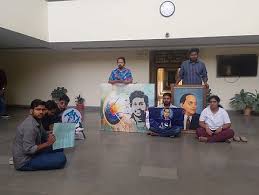
The Ambedkar Students’ Association is on strike against the University of Hyderabad administration, alleging institutional bias and inadequate action in a case of an alleged caste atrocity over a Dalit student, where a mere fine Rs 5,000 was imposed. Protests at the University of Hyderabad (UoH) entered their third day on Thursday, May 7, with students led by the Ambedkar Students’ Association (ASA) launching an indefinite relay hunger strike. The students are demanding the release of a fact-finding committee report into the alleged assault and casteist abuse of a Dalit student. According to the ASA, a Dalit student, Anuj Kumar, was allegedly assaulted and subjected to casteist slurs by fellow student Suryavardhan Singh Bablu following a personal dispute on December 11, 2025. After sustained student protests demanding official action, the university constituted a fact-finding committee. On May 4, Anuj was orally informed that the accused had been fined Rs 5,000, directed to issue a private apology through the Office of Anti-Discrimination, and barred from taking admission to any future course at UoH. Both students are second-year MA students. The ASA has strongly opposed the recommendations, calling them a “mockery of justice” and evidence of “institutional bias”. The student body argued that Dalit students had previously been fined ₹10,000 for minor infractions such as washing bikes near hostels, while an alleged caste assault had attracted only a ₹5,000 penalty. “The administration is effectively signalling that caste atrocities can be settled with a small fine,” the ASA said in a statement. “We demand justice and will not accept this cheap valuation of our lives and dignity.” Anuj Kumar, a second-year MA Sociology student, and his roommate Vinod were allegedly assaulted by Suryavardhan Singh Bablu, a second-year MA History student and former president of the All India Other Backward Castes Students’ Association (AIOBCSA). “He called me, ‘Dalit saale tum log naali ke keede hote ho. Tum jaison ko main apne ghutne ke niche rakhta hoon,’” Anuj told TNM. He alleged that the abuse took place in front of around seven people and that he was beaten with a thick wooden stick. The ASA had earlier protested over the issue in February and has continued to accuse the university administration of displaying “continued institutional bias” in handling the case. “After the protest, the administration addressed my complaint and formed a fact-finding committee,” Anuj said. According to him, the committee, headed by SC/ST liaison officers, submitted its report to the Vice Chancellor and Registrar, but the findings were never shared with him. Anuj alleged that despite assurances from university authorities that the matter would be resolved by April 30, he received no official communication until he emailed the Registrar on May 4. He said the Registrar directed him to meet P. Thukaram, a member of the Equal Opportunity Cell, who verbally informed him of the disciplinary action against the accused. The ASA criticised the administration for not releasing the fact-finding committee report or issuing the recommendations in writing. “They have not released the fact-finding committee report. They have only verbally communicated the recommendations of the anti-discrimination cell,” ASA president Dayanidhi told TNM. In a press release, the ASA described the recommendations as an “insult to the dignity of Dalits” that “exposes the deep-rooted Manuvadi mindset prevailing in the university”. The student body also pointed out that the university website routinely uploads details of disciplinary cases and recommendations, but claimed that Anuj’s case had not been uploaded or formally communicated. “I’m not satisfied with the verdict. I am the victim in this case,” Anuj said, adding that he wants the fact-finding report released so he can appeal the decision. “We want the university to acknowledge this as a caste atrocity. We also want the fact-finding committee report and recommendations to be made public,” Dayanidhi said. When TNM contacted university Registrar Devesh Nigam, he said the administration had acted in accordance with the committee’s recommendations. Written by:Syed Shahid Edited by:Azeefa Fathima Courtesy : TNM Note: This news is originally published on https:/thenewsminute.com/bha and is used purely for non-profit/non-commercial purposes, especially human rights
SC panel orders removal of encroachments on Dalit lands, graveyards

Andhra Pradesh State Commission for Scheduled Castes member Ravada Seetharam on Friday directed Revenue Department officials to clear encroachments on lands and graveyards belonging to Dalit communities in Cheepurupalli, Garividi, Rajam, Santakavti and other parts of Rajam constituency. He held a high-level meeting on Thursday in Rajam with Cheepurupalli Revenue Divisional Officer Sudha Rani and tahsildars of eight mandals of the district. He told the revenue officials that he had received 45 complaints from villagers of various places, and directed them to ensure justice to the petitioners after verification of the veracity in the complaints. Mr. Seetharam further directed the Rajam municipal authorities to allocate 22% works to societies belonging to the Scheduled Castes. He said that a consolidated report of the field visits and review meetings would be submitted to K. S. Jawahar, chairperson of the Commission for further follow up action on the subjects related to Scheduled Castes. The Hindu Bureau, K Srinivasa Rao Courtesy : The Hindu Note: This news is originally published on https:/thehindu.com/bha and is used purely for non-profit/non-commercial purposes, especially human rights
Tamil Nadu: A massive 67% increase in violence against Dalits, a huge gap between government claims and ground reality
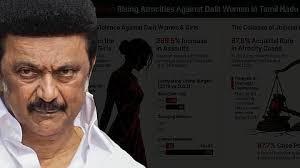
A shocking 67% increase in crimes against Dalits in Tamil Nadu: NCRB and NCDHR reports expose the state’s claims of ‘social justice’. New Delhi: The 2026 Tamil Nadu Assembly election results have created a major stir in the state’s politics. The DMK’s defeat and the TVK’s rapid rise have sparked numerous discussions. While anti-incumbency and political strategies are being blamed for this defeat, the ongoing violence against Dalits and the government’s lackadaisical response to it also point to a serious crisis. The DMK has long touted Tamil Nadu as a model of governance for social justice. However, data from the National Crime Records Bureau (NCRB) and the National Campaign on Dalit Human Rights (NCDHR) tell a different story. A deeper analysis of these reports reveals a massive 67 percent increase in atrocities against Dalits and tribals in the state. It’s noteworthy that both the AIADMK and the DMK were in power during this period. According to the NCDHR report “Five Years of Caste-Based Atrocity,” Tamil Nadu saw a 67.9 percent increase in crimes against Dalits between 2019 and 2023, the highest in the country. Madhya Pradesh, with 55.3 percent and Odisha, with 42.9 percent, came in second and third. These figures demonstrate a wide gap between the language of social justice and the real lives of Dalits in the state. The NCRB 2023 data paints an even more alarming picture. Cases of murder of Dalits saw a 40.4 percent increase, from 52 in 2019 to 73 in 2023. Cases of grievous hurt have increased by 240 percent, while criminal intimidation cases have seen a staggering 584.8 percent jump. These figures prove that whenever Dalits raise their voices for their rights, the caste system attempts to suppress them through violence. Crimes against Dalit women and girls have also seen an alarming increase. The total number of rape cases increased from 97 in 2019 to 132 in 2023, a 36.1 percent increase. In particular, atrocities against Dalit girls have increased by 73.2 percent. These are not just individual crimes; rape is often used as a weapon of caste oppression. Attacks intended to outrage the dignity of women have also seen a 289.5 percent increase. The failure of the justice system is also exacerbating this situation. In 2023, the conviction rate for Dalit atrocity cases was only 12.2 percent, while the acquittal rate was high at 87.8 percent. The pendency rate is also 87.7 percent, primarily due to the lack of special courts. Tamil Nadu has only 20 special courts for speedy trials, which is woefully inadequate for the caseload. According to law, the State-Level Vigilance and Monitoring Committee, chaired by the Chief Minister, must meet twice a year. However, these meetings have been ignored in Tamil Nadu since 2021. Only one meeting each was held in 2021, 2022, and 2023, while none was held in 2024. This reflects not an administrative lapse but the government’s priorities and attitude towards marginalized communities. Dalits are also being targeted in cases of violence in police custody. According to the 2021 Prison Statistics, 37 percent of those detained in the state were Dalits. Tamil Nadu alone accounts for 84.5 percent of India’s total Scheduled Caste prisoners. By 2023, this number was projected to rise to 42.2 percent, while Dalits constitute only around 20 percent of the state’s total population. The DMK’s electoral defeat is partly a result of growing discontent among Dalits over hollow slogans of social justice and the perceived insecurity of the state. On the other hand, the rise of the TVK is a result of cinematic influence and the search for an alternative among young people. However, celebrity culture or anti-incumbency alone cannot provide justice to marginalized communities. The TVK’s silence on issues like the recent honor killing of Dalit tech professional Kavin Selvaganesh has also raised questions. It will be important to see whether new political forces will engage in mere symbolic politics or work to ensure real protection and justice for victims by strictly enforcing the SC/ST (Prevention of Atrocities) Act. Rajan Chaudhary Courtesy: Hindi News