
Congress leader Jairam Ramesh questions Centre over environment clearances for Great Nicobar project
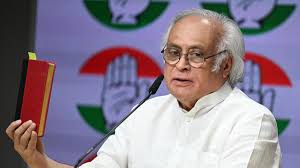
Ramesh alleged that the clearances were based on hurried assessments conducted over a few days and weeks in one of India’s most ecologically sensitive island regions. NEW DELHI: Senior Congress leader Jairam Ramesh on Sunday intensified his attack on the Centre over the Rs 72,000 crore Great Nicobar Island Development Project, alleging that the environmental studies used to grant clearances for the mega infrastructure venture were “grossly inadequate” and reduced the Environmental Impact Assessment (EIA) process to a “mockery”. In a letter to Union Environment Minister Bhupender Yadav, Ramesh questioned the Ministry of Environment, Forest and Climate Change’s claim that the ecological impacts of the project were being “effectively managed”. He alleged that the clearances were based on hurried assessments conducted over a few days and weeks in one of India’s most ecologically sensitive island regions. The Congress MP said the government’s own regulations require detailed and multi-season environmental studies for projects of this scale, particularly in the Andaman and Nicobar Islands. Citing a November 3, 2009 Office Memorandum issued by the Ministry, Ramesh said port projects in the islands must undergo “comprehensive Environmental Impact Assessment including physical and mathematical modelling and ground verification”. He said a proper baseline assessment should cover at least three seasons to capture ecological variations and biodiversity patterns. Ramesh said he could not find the “comprehensive and robust EIA studies” referred to in the ministry’s Frequently Asked Questions issued on May 1, 2026. Instead, he pointed to the Final EIA report submitted in March 2022, which showed that baseline environmental studies were conducted only during the winter season between December 2020 and February 2021. Congress general secretary in-charge communications, Jairam Ramesh. Bulldozer ignores concerns of locals: Congress flays Great Nicobar project Calling the exercise a “Rapid EIA”, the Rajya Sabha MP said a three-month, single-season study was insufficient to assess the environmental consequences of a large-scale port and infrastructure project in a biodiversity-rich island ecosystem. He also alleged that biodiversity assessments linked to the project were conducted over short periods. According to the letter, a “Quick Primary Survey of Ecology and Biodiversity” was carried out between December 14 and 22, 2020, while the survey on leatherback turtles lasted from February 12 to 18, 2021. Ramesh cited passages from the EIA report, claiming the study acknowledged that biodiversity mapping remained incomplete because of the island’s dense forests. Quoting the report, he said: “Based on our site observations, it appears that what is uncovered so far is not complete and what is hidden may be even more valuable.” He also questioned studies conducted by institutions including the Zoological Survey of India and the Wildlife Institute of India. According to Ramesh, the Zoological Survey relied on baseline data collected between February and March 2021, while the Wildlife Institute’s report described itself as a “Rapid Assessment Study” conducted over five days in April 2021. Congress general secretary in-charge communications, Jairam Ramesh. Controversial Rs 80,000 crore Great Nicobar Project gets NGT green light Describing the environmental studies as “an insult to science”, the Congress leader alleged that the clearances were granted on the basis of incomplete ecological data. Ramesh also objected to the Centre’s refusal to publicly release the report of the High-Powered Committee constituted after proceedings before the National Green Tribunal examining clearances linked to the project. Questioning the “logic and legality” behind classifying the report as confidential, he said that when EIA reports, detailed project reports and airport DPRs related to the project were already in the public domain, there was no justification for withholding the committee’s findings. Warning that the island’s “globally unique” ecosystem faced irreversible damage, Ramesh said compensatory afforestation could not offset the environmental destruction likely to be caused by the project. He added that several security experts had argued India’s strategic interests could be safeguarded without causing “such ecological devastation”. Mukesh Ranjan Courtesy : TNIE Note: This news is originally published on https:/thenewindianexpress.com/bha and is used purely for non-profit/non-commercial purposes, especially human rights
Thol Thirumavalavan’s VCK: The Dalit Political Party That Emerged As Kingmaker In Tamil Nadu
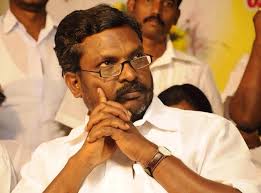
(As Tamilaga Vettri Kazhagam (TVK), the single largest party in Tamil Nadu Assembly election 2026, scrambles to find numbers to stake claim to form the government, it is Thol Thirumavalavan’s Viduthalai Chiruthaigal Katchi (VCK) that has emerged as the kingmaker. So far, the TVK has managed to earn the support letters from the Congress, the Communist Party of India (CPI) and Communist Party of India (Marxist) – CPI(M). Even with the support of three parties, the TVK remains short of a seat.Politics But there is speculation that the TVK is eyeing a plum post, including the Deputy chief minister post. Not just this, TVK also hopes that Thirumalavalan should be fielded from the Tiruchirapalli East constituency in the event of TVK founder Vijay vacating it. People also ask AI powered insights from this story .5 QUESTIONS1What is the Viduthalai Chiruthaigal Katchi (VCK)?⌵ The Viduthalai Chiruthaigal Katchi (VCK) is a Dalit political party in Tamil Nadu founded in 1982. It is dedicated to the liberation of the working class, advocating for the annihilation of caste, social justice, and secularism. 2How did VCK become a kingmaker in Tamil Nadu?⌵ VCK emerged as a kingmaker in Tamil Nadu when the Tamilaga Vettri Kazhagam (TVK), the single largest party after the 2026 Assembly election, needed support to form the government. VCK’s two seats were crucial for TVK to reach the majority mark. 3What are VCK’s political goals?⌵ VCK strives to bring Dalits and the marginalized into the political mainstream. The party aims to unite all people to transform society through social empowerment and political authority. 4What is the history of VCK’s electoral participation?⌵ VCK first entered the electoral arena in September 1999, contesting in the Chidambaram Parliamentary constituency. R Thirumavalavan was elected to the Tamil Nadu Legislative Assembly from the Mangalore constituency in 2001. 5What role did VCK play in the 2026 Tamil Nadu government formation?⌵ VCK discussed a share in power, including key posts like the Deputy Chief Minister’s post for Thol Thirumavalavan, with TVK. The party’s support was essential for TVK to form the government. Vijay, who won from two constituencies, has to vacate one and is likely to retain Perambur in Chennai. A source, quoted by PTI, said the VCK discussed a share in power, including two or three key posts for the VCK at the virtual meeting chaired by Thirumavalavan on Friday evening. It deliberated on seeking deputy chief minister’s post for Thirumavalavan and a Cabinet post for its newly elected members. The party won two seats in the April 23 Assembly election. Justifying the demands, VCK deputy general secretary Vanni Arasu told reporters that the party’s stance on a share in power reflected the people’s feelings. As the VCK now emerges as the kingmaker in the Tamil Nadu politics, here is everything you need to know about the party. According to the Viduthalai Chiruthaigal Katchi website, the party is dedicated to the“liberation of the working class.”It says,“Our movement is built on the unwavering pillars of Annihilation of Caste, Social Justice, and Secularism.” “We strive to bring Dalits and the marginalized into the heart of the political mainstream, uniting all people to transform society through true Social Empowerment and political authority,” it says. Formerly known as Dalit Panthers Iyyakkam, the party was founded in 1982 by M Malalchami aiming to protect Dalits from caste-based violence. In September 1999, VCK entered the electoral arena for the first time. Contesting in the Chidambaram Parliamentary constituency in alliance with TMC (Moopanar), Thiru R. Thirumavalavan (Thol) secured a remarkable 2,25,768 votes. In 2001, R Thirumavalavan was elected to the Tamil Nadu Legislative Assembly from the Mangalore constituency. In 2006, VCK joined the AIADMK alliance to contest the Assembly General Elections. In 2013, the party expanded and launched the movement in Andhra Pradesh under ‘Vimuktha Chiruthalu’. It also has an official channel ‘Velicham TV’. Courtesy : MenaFN Note: This news is originally published on https:/menafn.com/bha and is used purely for non-profit/non-commercial purposes, especially human rights
Two-thirds of the BJP’s first government in Bengal is comprised of Dalits, tribals, and backward classes: Only two of the six ministers, including the Chief Minister, are upper castes, as the party strikes a balance in social relations.

The BJP’s first government in West Bengal has prominently featured Dalits, tribals, and backward classes, with only two of the six ministers being upper castes. KOLKATA: On May 9, 2026, a historic Bharatiya Janata Party government was formed in West Bengal. Suvendu Adhikari was sworn in as the state’s first BJP Chief Minister. Five other cabinet ministers were sworn in alongside him. The BJP has carefully attempted to strike social balance based on caste and region in its first cabinet in Bengal. The party won 207 seats in the 2026 assembly elections, ending the 15-year rule of the Trinamool Congress (TMC). Today, it formed a new government, with Chief Minister Suvendu Adhikari and five ministers sworn in. The new cabinet is prominently representing ethnic and social groups. Key faces in the cabinet and their social alignment Suvendu Adhikari (Chief Minister): Suvendu comes from the Bengali Brahmin community. The party projected Adhikari, who joined the BJP from the TMC, as a “giant killer.” His appointment to the Chief Minister’s post will strengthen the party in coastal Bengal. A longtime TMC strategist, Suvendu will also be responsible for eliminating Mamata Banerjee’s remaining strength. Dilip Ghosh: Dilip Ghosh, who has been sworn in as a minister in the Suvendu Adhikari government, is the former state president of the party and has been elected as an MLA from Kharagpur. He is considered the OBC face of the BJP in Bengal. His role will be crucial in appeasing the party’s long-time workers and Hindutva base. Agnimitra Paul: Agnimitra Paul was elected as an MLA from Asansol South. She represents the Kayastha community, which holds a significant position in Bengal politics. Additionally, Agnimitra, as a female face, is part of the BJP’s strategy to expand its reach to women voters. Ashok Kirtania: Elected MLA from the Bongaon North Assembly constituency, Ashok Kirtania belongs to the Dalit Matua community. The Matua vote bank has been a major strength for the BJP in the North 24 Parganas and Nadia regions of Bengal. The Matua community’s vote is decisive in approximately 24 seats in West Bengal, directly influencing election results. Khudiram Tudu: Khudiram Tudu, a Scheduled Tribe (Santhal) member, was elected MLA from Ranibandh in Bankura district. Tribal voters play a decisive role in the Jhargram-Jangalmahal region of Bengal. The BJP has secured a strong electoral lead in this region. Khudiram Tudu has been appointed minister to further strengthen the BJP’s hold on the tribal community and Jangalmahal. He took oath as minister today wearing traditional tribal attire. Nisith Pramanik: Former Union Minister of State, Nisith Pramanik, was elected MLA from Mathabhanga this time and was appointed a minister today. He is considered a prominent leader of the Rajbanshi community in North Bengal. The Rajbanshi caste is the largest Scheduled Caste community in Bengal. Nisith Pramanik has been appointed a minister to strengthen the BJP in North Bengal along with the Rajbanshi community. What is the BJP’s strategy? In West Bengal, the BJP has long worked on polarizing Hindu votes and social alignment. In contrast to the TMC’s Muslim-centric politics, the BJP attempted to bring together groups such as the upper castes (Brahmins and Kayasthas), OBCs, Dalits (Matuas), tribals, and Rajbanshis, and achieved significant electoral success. In the BJP’s first cabinet, representation was given to South Bengal, North Bengal, and Jangalmahal to maintain regional balance. For social inclusion, Brahmins, Kayasthas, OBCs, Matuas, tribals, and Rajbanshis received representation. Women were also represented through Agnimitra Paul. Political analysts believe this cabinet represents a reflection of social arithmetic. While retaining long-standing organizational leaders, the party is also prioritizing new faces and the backward, Dalit, and tribal communities. The Suvendu Adhikari government now has to focus on issues such as development, law and order, and the CAA-NRC. It remains to be seen how sustainable this caste-regional balance will be and how it will manage Bengal’s traditional cultural diversity. However, this is just a first step. Further changes will become clearer in the full cabinet expansion. Mukesh Srivastava Courtesy: Hindi News
Chaos at wedding! Dalit bride removed from horse in Udaipur, protest march again on horse
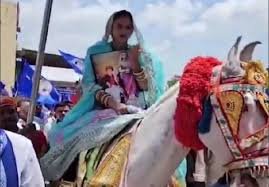
Udaipur Mare Bride Removal Controversy: The case of Dalit bride Pooja Meghwal being removed from a horse during her wedding in Hariyau village of Udaipur is gaining momentum. The family alleges that some people, protesting, forced the bride to dismount and even assaulted her. Following the incident, the Dalit community and various organizations protested in Udaipur. During the protest, Pooja Meghwal arrived again riding a horse. The protesters demanded a fair investigation and strict action against the accused. The police have registered a case and arrested four accused so far. Udaipur. A wedding in Hariyau village of Udaipur district, Rajasthan, sparked controversy and protest when the incident of removing a Dalit bride from a horse came to light. The joy of the bride Pooja Meghwal’s wedding quickly turned into tension, and now the matter has spread beyond the village and become a topic of discussion across the state. Following the incident, anger grew among the Dalit community and various organizations, leading to protests in Udaipur. It is reported that on April 29, in Hariau village, under the Dabok police station area, Pooja Meghwal rode a horse during her wedding ceremony. Some villagers objected and allegedly forced her to dismount. The family alleges that they were assaulted for protesting. The incident left the bride and her family traumatized. This is not a family issue, but a social issue. Pooja Meghwal alleged that she was treated disrespectfully on a special occasion like her wedding. She says this is not just a family issue, but a social issue. Following the incident, tension prevailed in the village, and the matter gradually spread on social media. Many people reacted to the incident and expressed concern about such incidents. BSP and Dalit community protested against the incident. On Thursday, members of the Bahujan Samaj Party and the Dalit community marched to the Udaipur District Collectorate to protest the incident. Notably, Pooja Meghwal again joined the protest, riding a mare. The protesters raised slogans against the administration and submitted a memorandum to the Governor, demanding a fair investigation. Only four people have been arrested. Protesters allege that nearly a dozen people, including women, were involved in the incident, but only four have been arrested so far. They also questioned the impartiality of the investigation and demanded that a different officer handle the case. Bhim Army state president Jitendra Hatwal said that if strict action is not taken against the accused, a major protest will be held in Jaipur. Meanwhile, Rajasthan Police stated that a case has been registered at the Dabok police station and the investigation is ongoing. Police have arrested four accused so far. The administration is closely monitoring the situation to ensure peace and order in the area. Edited by: Deep Ranjan About the Author Deep Ranjan Singh has been working in media since 2016. He has worked for Hindustan, Dainik Bhaskar, ETV Bharat, and Dailyhunt. He has been working for News18 Hindi since 2022. Courtesy : Hindi News
Nandyal MP assures TDP support towards Dalits, Christians

Byreddy Shabari says she will bring the legitimate demands of Dalits and Christians to the notice of Chief Minister N. Chandrababu Naidu and get them resolved during a rally in Nandyal Nandyal MP Byreddy Shabari claimed that protection and justice for Dalits and Christians are ensured only under Telugu Desam Party (TDP) rule. She assured that she would bring the legitimate demands of Dalits and Christians to the notice of Chief Minister N. Chandrababu Naidu and get them resolved during the State-level ‘Dalit and Christian Garjana’ rally held in Nandyal on Saturday. Ms. Shabari said that the founder of TDP and former Chief Minister, late Nandamuri Taraka Rama Rao, strove to eradicate untouchability and provided Dalits with permanent housing and agricultural land. Ms. Shabari emphasised that the credit for establishing the SC Commission to safeguard the interests of Dalits belongs solely to TDP government. “Both in united Andhra Pradesh and after the State’s bifurcation, Mr. Naidu has been working with unwavering dedication towards the upliftment of Dalits and Christians,” the MP said. Meanwhile, Ms. Shabari participated in the consecration ceremonies of the flagstaffs and idols at Sri Abhayanjaneya Swamy temples in Murvakonda and Nehru Nagar. The events took place in Nehru Nagar village of Pagidyala mandal within Nandikotkur constituency in Nandyal district, where she also inaugurated cement roads constructed at a cost of ₹25 lakhs. Speaking on the occasion, she expressed happiness over the cement roads, check dams, and water tanks that were constructed during her father, Byreddy Rajasekhara Reddy’s tenure as an MLA, continue to benefit the people to this day. She asserted that comprehensive development is possible only through the leadership of Mr Naidu. The Hindu Bureau Courtesy : The Hindu Note: This news is originally published on https:/thehindu.com/bha and is used purely for non-profit/non-commercial purposes, especially human rights
Thol Thirumavalavan: Champion of Dalit liberation and kingmaker of Tamil Nadu politics
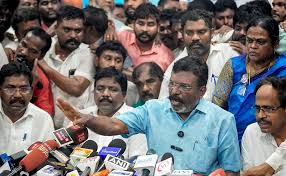
From forensic scientist to the political king maker, the VCK founder’s journey reflects a lifelong commitment to Dalit emancipation and Tamil identity In the aftermath of the 2026 Tamil Nadu Assembly elections, Thol Thirumavalavan and the Viduthalai Chiruthaigal Katchi (VCK) emerged as a pivotal force in government formation. Recognizing the importance of upholding the people’s mandate and preventing a constitutional crisis, Thirumavalavan announced VCK’s decision to extend unconditional support to Vijay’s Tamilaga Vettri Kazhagam (TVK), which had fallen short of a simple majority. Demonstrating strategic foresight, he coordinated closely with allied Left parties to ensure a long-term vision for the state while maintaining VCK’s continued association with the DMK-led Secular Progressive Alliance. By placing the public interest above short-term political calculations, Thirumavalavan positioned his party as a kingmaker, ensuring that the mandate of the electorate was respected. With the support of VCK’s two MLAs, along with backing from the IUML and other allies, TVK crossed the 118-seat threshold, securing the numbers necessary to form a stable government. Thirumavalavan emphasized that his party’s intervention was aimed at preventing President’s rule and safeguarding democratic norms, reflecting his enduring commitment to both Dalit empowerment and broader state governance. Thol Thirumavalavan, born Tholkappiyan Thirumavalavan on August 17, 1962, in Anganur, Tamil Nadu, is a scholar, social reformer, and one of the most prominent Dalit leaders in India. He is the founder and president of the Viduthalai Chiruthaigal Katchi (VCK) and currently serves as a Member of Parliament representing the Chidambaram constituency. Known for his unflinching advocacy for social justice, Thirumavalavan has been a pivotal figure in Tamil Nadu politics for over three decades. Thirumavalavan completed his early schooling in his hometown before earning a Bachelor’s degree in Chemistry from Presidency College, Chennai, followed by a Master’s in Criminology in 1988. He initially worked as a Scientific Assistant in the Government Forensic Science Department until 1999. Later, he pursued law at Madras Law College and earned a Ph.D. from Manonmanium Sundaranar University in 2019, focusing on the religious conversion of Meenakshipuram Dalits. His political journey began in 1982 when he joined the Dalit Panthers Iyyakam (DPI) in Tamil Nadu, inspired by the Dalit Panthers of India and the Black Panther Party in the United States. Mentored by A. Malaichamy, he coordinated student protests for Eelam Tamils and organized campaigns for Dalit rights. Following Malaichamy’s death in 1989, Thirumavalavan became the state organizer of DPI, later renaming the organization Viduthalai Chiruthaigal. Influenced by the ethnic conflict in Sri Lanka and the Tamil identity struggle, the organization formally became the Viduthalai Chiruthaigal Katchi (VCK) in 1990, marking its transition into a political party. Thirumavalavan initially avoided electoral politics, focusing on raising awareness about caste discrimination. However, in 1999, he resigned from his government position to contest his first Lok Sabha elections from Perambalur in alliance with the Tamil Maanila Congress, securing over 2.25 lakh votes despite losing. In 2001, he won his first Assembly seat from Mangaloree constituency (later dissolved), and in 2009, he was elected to the Lok Sabha from Chidambaram with a victory margin of over 1 lakh votes. Since then, he has contested multiple elections, winning significant victories and establishing VCK as a recognized state party with the permanent election symbol of a “Pot.” Under Thirumavalavan’s leadership, VCK has become a powerful political force in Tamil Nadu, forming alliances with both major Dravidian parties and unexpected partners such as the Pattali Makkal Katchi (PMK), reflecting a pragmatic approach to electoral politics. His slogans and speeches, such as the 1996 call to “Refuse to be subdued, Transgress, Rise vehemently, Retaliate,” have inspired generations of Dalit youth to challenge systemic oppression and assert their rights. Ideologically, Thirumavalavan draws from a rich tapestry of thinkers and movements. He combines Ambedkarite principles of social justice and Dalit empowerment, Periyar’s rationalist and anti-caste philosophy, and Marxist critiques of capitalism, while also embracing the revolutionary activism of the Black Panthers. VCK’s core principles include the abolition of the caste system, opposition to social exclusion, protection of Tamil culture and language, advocacy for women’s liberation, and support for the working class. His influences range from Gautama Buddha and Dr. B.R. Ambedkar to Thanthai Periyar and Velupillai Prabhakaran. Beyond politics, Thirumavalavan has engaged in cultural and social initiatives. He has acted in Tamil films like Anputhozhi and Kalagam, HE HAS authored several books and launched the VCK’s television channel, Velicham TV, in 2016. He has promoted Tamil naming conventions to eliminate caste and religious identifiers and spearheaded environmental projects, including planting 1 lakh palm seeds across Tamil Nadu in 2018. Thirumavalavan’s career has not been without controversy. He has faced criticism for remarks on Manusmriti, Hindu deities, differently-abled persons, and LGBTQ+ issues. Legal cases have been filed against him, ranging from alleged incitement during public speeches to bus-burning incidents in 1999, although he has often successfully contested these charges in court. He has also been accused by former associates of receiving funds from Christian missionary organizations, a claim he has consistently denied. Despite such controversies, Thirumavalavan’s commitment to Dalit emancipation and social reform remains unwavering. Thirumavalavan has received multiple awards for his social and political contributions, including the Icon of Social Liberation Award (2025), the Quaid-e-Milleth Award for probity in public life (2019), and recognition as one of the best-performing MPs (2024). VCK under his leadership also honors social activists through awards such as the Ambedkar Sudar Award and Periyar Oli Award. As a lifelong bachelor, Thirumavalavan has dedicated his life to the upliftment of marginalized communities, blending scholarship, activism, and political strategy. From grassroots organizing to becoming a kingmaker in state politics, he has shaped Tamil Nadu’s political landscape while consistently advocating for equality, justice, and Tamil identity. Courtesy : TNIE Note: This news is originally published on https:/thenewindianexpress.com/bha and is used purely for non-profit/non-commercial purposes, especially human rights
Tension in UP Village After Dalit Women Object to Maharana Pratap Jayanti Procession Route

Tension briefly prevailed in Maheshpura village on Saturday after members of the Dalit community, especially women, allegedly objected to a procession being taken out on the occasion of Maharana Pratap Jayanti and blocked its route. According to police officials, the disagreement took place over the path of the procession, leading to a standoff between two groups in the village. Police said the situation was later brought under control after talks between both sides and a written agreement reached in the presence of authorities. Police deny reports of violent clash Superintendent of Police (City) Manush Pareek said reports claiming that a violent clash had taken place were “completely misleading.” He said, “A disagreement had arisen between two groups regarding the procession route, but the matter was resolved peacefully through dialogue.” After receiving information about the dispute, Station House Officer Satish Kumar reached the village along with a heavy police force. Officials said the protesting women and villagers initially refused to allow the procession to move forward, leading to heightened tension in the area. Police first tried to convince both sides at the spot. However, as the disagreement continued, representatives from both groups were later called to the police station for discussions. Agreement reached after negotiations According to police, prolonged negotiations were held between both parties before a written compromise was reached around 1 pm. SP Pareek said the agreement was achieved “in an atmosphere of mutual coordination and harmony.” Following the settlement, the procession resumed around 5 pm on its scheduled route and concluded peacefully by around 7 pm. Situation under control Police said the situation in the village remains peaceful and under control. Additional security personnel were deployed during the procession to prevent any untoward incident. Authorities have not reported any injuries or arrests in connection with the dispute. Courtesy : TOP Note: This news is originally published on https:/theobserverpost.com/bha and is used purely for non-profit/non-commercial purposes, especially human rights
High command yet to decide on Kerala CM amid intense factional campaigns

Poster wars, public demonstrations and hectic consultations in Delhi intensify as Congress leadership moves closer to announcing Kerala’s next chief minister The suspense over Kerala’s next Chief Minister persisted on Saturday as Congress leaders held an extended round of discussions in New Delhi, but no final decision emerged from the meeting. Sources said senior leader Rahul Gandhi reprimanded the leaders over the public show of factionalism, warning that the unrest was tarnishing the party’s massive electoral mandate. The chief ministerial deadlock remained unresolved even after top leaders held nearly three hours of discussions with the frontrunners. According to sources, Rahul Gandhi was unhappy that the lobbying for the top post had begun almost immediately after the election results, saying the leaders could not wait even a few days for the high command’s decision. He also urged the leaders to rein in workers and end internal divisions. AICC general secretary and Congress state in-charge Deepa Dasmunshi told reporters that deliberations on the leadership issue were still ongoing. She confirmed that all Congress MLAs had signed a one-line resolution authorising the high command to take the final call on who will lead the new United Democratic Front (UDF) government in Kerala. Deepa Dasmunshi said the ultimate decision will be made by Congress president Mallikarjun Kharge and senior leader Rahul Gandhi. The crucial discussions in Delhi are reportedly nearing it’s end after intense lobbying, public campaigns and internal consultations within the Congress-led United Democratic Front (UDF) following its sweeping Assembly election victory. The high-level meeting, which commenced at 4 pm at the residence of Congress president Mallikarjun Kharge, is being attended by senior leaders Rahul Gandhi, V D Satheesan, K C Venugopal, Ramesh Chennithala and KPCC chief Sunny Joseph. AICC observers Mukul Wasnik and Ajay Maken, who submitted their report to Kharge on Friday after consulting MLAs and alliance partners, are also participating in the deliberations. The leadership question has triggered visible factional mobilisation across Kerala, with supporters of senior Congress leaders V D Satheesan, K C Venugopal and Ramesh Chennithala openly campaigning for their respective leaders through posters, flex boards, road shows and demonstrations. Senior Congress leader K Muraleedharan on Saturday indicated that the decision-making process in New Delhi had entered its final phase. “The information from Delhi is that discussions on the chief ministerial candidate will be completed within 24 hours,” Muraleedharan told reporters in Thiruvananthapuram. However, he cautioned that public displays of support alone would not determine the leadership issue. “Flex boards and demonstrations cannot decide who becomes Chief Minister. I conveyed the sentiments of the people from my constituency to the party leadership,” he said, adding that seniority was not the only criterion and that the opinions of coalition partners and MLAs would also be taken into account. The Congress-led UDF registered a decisive victory in the Assembly elections, winning 102 of the 140 seats, while the Left Democratic Front (LDF) was reduced to 35 seats and the BJP secured three constituencies. Following the victory, the Congress Legislature Party had passed a resolution authorising the All India Congress Committee (AICC) leadership to decide the next leader of the legislature party, effectively handing the final call to the party high command. The focus has now shifted entirely to New Delhi, where senior Kerala Congress leaders, including Satheesan, Chennithala and KPCC president Sunny Joseph, arrived on Friday night for consultations with the central leadership. Sunny Joseph said a key meeting involving the top contenders would be held at Congress president Mallikarjun Kharge’s residence and expressed hope that a consensus would emerge quickly. “We expect a quick decision. The matter has been completely left to the AICC leadership,” he said. At the same time, Joseph appealed to party workers to refrain from public demonstrations and poster campaigns over the Chief Ministerial issue. The political atmosphere within the Congress has become increasingly tense over the past few days, with supporters of different factions openly projecting their preferred candidates. Posters backing Chennithala appeared in Idukki, while flex boards supporting Venugopal surfaced in Thiruvananthapuram soon after the UDF’s landslide victory. Supporters of Satheesan also organised marches and demonstrations demanding that the Leader of Opposition be elevated as Chief Minister. The growing factional activity has drawn criticism from several senior Congress leaders. Veteran leader P J Kurien condemned incidents involving the destruction of flex boards and attempts to pressure the party leadership through public campaigns. “Everyone has the right to express opinions. But destroying flex boards and pouring black oil on them is wrong. A Chief Minister cannot be decided through pressure tactics,” he said. Congress MLA T Siddique also expressed concern over public attacks against senior leaders and urged workers to maintain party discipline. “Leaders who dedicated their lives to public activity should not be humiliated in public. This is not Congress culture,” Siddique said. He nevertheless expressed confidence that the Congress high command would resolve all differences through a unanimous decision. Congress MP Rajmohan Unnithan further intensified the debate on Saturday after strongly criticising the destruction of a flex board featuring K C Venugopal and late Congress stalwart Oommen Chandy. Calling such actions “divisive tactics,” Unnithan said all three leaders — Satheesan, Venugopal and Chennithala — were legitimate contenders for the Chief Minister’s post and that supporters were free to campaign for them within the limits of party discipline. “People who destroyed the flexboard of Venugopal, which also carried Oommen Chandy’s image, cannot be seen as part of Congress,” he said. Unnithan also defended the Indian Union Muslim League’s right to comment on the leadership issue after remarks by Congress MLA Mathew Kuzhalnadan suggesting that the IUML should not interfere in Congress internal affairs. The Kasaragod MP argued that all UDF constituents, including the IUML, Kerala Congress and Revolutionary Socialist Party, had a stake in the formation of the next government and were entitled to express their opinions. “In fact, all the minority and religious groups who helped the UDF win are eligible to express their views on the matter,” he said. He
Vijay to take oath as Tamil Nadu CM on Sunday 10 am as VCK, IUML extend support
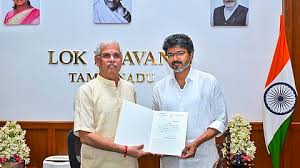
The Governor has directed the newly appointed Chief Minister to prove his majority in the Tamil Nadu Assembly by seeking a confidence vote on or before May 13 Ending the five-day-long suspense over government formation in Tamil Nadu, the VCK on Saturday declared unconditional support to the Vijay-led TVK, enabling the actor-politician to stake claim to form the government with a clear majority in the Assembly. Following the announcement, TVK founder-chief Vijay met Governor Rajendra Vishwanath Arlekar at Lok Bhavan in Chennai and formally staked claim to form the new government. The swearing-in ceremony for the Council of Ministers, to be led by Vijay, is scheduled to take place in Chennai at 10 AM on Sunday. The Leader of Opposition in Lok Sabha, Rahul Gandhi, is likely to attend the swearing-in The Governor has directed the newly appointed Chief Minister to prove his majority in the Tamil Nadu Assembly by seeking a confidence vote on or before May 13, according to Lok Bhavan sources. This was the fourth time Vijay met the Governor since the election results, but unlike the previous occasions, he now enjoys majority support in the 234-member Tamil Nadu Assembly. Soon after the VCK extended support to TVK, another DMK ally, the Indian Union Muslim League (IUML), also announced its backing for Vijay. The IUML has two MLAs. With the support of the VCK and IUML, the numbers in favour of TVK rose to 120 — two above the simple majority mark of 118 in the Assembly. Earlier in the evening, TVK leader Adhav Arujuna confirmed the development and announced that the VCK had formally decided to support the party. VCK legislature party leader Vanni Arasu also submitted a letter to the Governor declaring the party’s support to TVK. “Victory,” Arujuna said, while thanking the Congress, Left parties and VCK chief Thol Thirumavalavan for backing TVK, and expressed confidence that Vijay would soon become the Chief Minister of Tamil Nadu. Sources in the VCK said the party would, for now, extend outside support to the TVK-led government. Before finalising its decision, the VCK had reportedly considered placing several conditions before extending support, including the continuation of welfare schemes introduced during the previous DMK regime. Tamil Nadu Governor Rajendra Vishwanath Arlekar hands over the letter of appointment to TVK chief C Joseph Vijay as the new state Chief Minister, at the Lok Bhavan, in Chennai, Saturday, May 9, 2026. The party had also prioritised the continuation of two commissions — one constituted to recommend legislation against honour killings and another examining reservation in promotions for government employees. Sources further indicated that internal discussions within the VCK also explored the possibility of seeking a share in power, including ministerial positions and even a proposal projecting Thirumavalavan for the Chief Minister’s post with the backing of both the DMK and AIADMK, sources privy to the meeting told TNIE. It is this proposal that prompted Thirumavalavan to visit DMK president MK Stalin at his Cenotaph Road residence for a consultation. Stalin was reportedly receptive to the idea, but raised questions about future electoral politics, including in which alliance VCK plans to contest the next elections if both Dravidian majors backed Thirumavalavan for the top post. The same proposal was also taken to AIADMK general secretary Edappadi K Palaniswami. Sources close to EPS, however, said he outrightly rejected it, noting it would damage his core vote bank. On Saturday morning, EPS posted in a social media platform X, extending his greetings to the party set to form a new government. Vijay’s Tamilaga Vettri Kazhagam (TVK), which emerged as the single largest party with 108 seats in a stunning electoral debut, was denied permission to form the government by the Governor, who was insisting that proof of majority should be provided before a floor test in the Assembly. The party earlier obtained support from the Congress, which won five seats in the Assembly elections as part of the DMK-led alliance. On Thursday, Left parties extended support to Vijay, upping the prospects for the TVK to form the government. The Viduthalai Chiruthaigal Katchi (VCK), a long-time ally of the Left parties, also followed suit but did not send any letter of support, thereby prompting the Governor to call off the swearing-in ceremony scheduled on Saturday. Thirumavalavan had already announced that his party’s decision would align with the decision of the Left parties. Tamil Nadu Governor Rajendra Vishwanath Arlekar hands over the letter of appointment to TVK chief C Joseph Vijay as the new state Chief Minister, at the Lok Bhavan, in Chennai, Saturday, May 9, 2026. Horse-trading allegations against TVK Meanwhile, the AMMK, a constituent of the NDA alliance, on Saturday loged a complaint with the Guindy police alleging TVK chief Vijay used a “forged” support letter by its MLA to stake claim for government formation. According to Guindy police, the petition was filed by AMMK General Secretary T T V Dhinakaran. However, no First Information Report (FIR) has been registered in the matter as of Saturday morning. Speaking to reporters, Dhinakaran accused the TVK of submitting a forged photocopy of a letter to the Governor, falsely claiming the support of AMMK’s lone MLA-elect from Mannargudi, S Kamaraj. “The TVK, which claims to be a ‘pure force,’ has indulged in forgery and horse-trading,” Dhinakaran stated. Meanwhile, the TVK has dismissed the allegations as “false news,” releasing a counter-video purportedly showing MLA Kamaraj signing the support letter voluntarily. Courtesy : TNIE Note: This news is originally published on https:/thenewindianexpress.com/bha and is used purely for non-profit/non-commercial purposes, especially human rights
Rahul Gandhi slams Bihar police action on teacher aspirants, targets BJP over unemployment
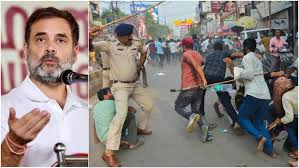
He said the incident reflected the government’s indifference towards the concerns of unemployed youth. Rahul Gandhi on Saturday accused the BJP-led government of failing to address rising unemployment among young people and condemned the police action against protesting teacher aspirants in Bihar. The Congress leader alleged that the Bihar Police used force against candidates who were peacefully demonstrating over employment-related demands in Patna. He said the incident reflected the government’s indifference towards the concerns of unemployed youth. In a post on X, the Congress leader wrote, “Yesterday in Patna, teacher aspirants who were peacefully protesting for their right to employment were brutally beaten by the Bihar Police–again. BJP’s response to unemployed youth: Lathis. Unemployment is the biggest disease in India today, and its most devastating impact is falling on the youth of Bihar and Uttar Pradesh.” Gandhi added that the Congress party stands with the unemployed youth. “Millions of youth, armed with degrees and skills in hand, are wandering from door to door. But the BJP government neither cares for them nor for you. When youth take to the streets to demand their rights, they are not given jobs in their hands–instead, lathis are rained down on their backs. India’s youth are fed up with the BJP’s lies–they will no longer stay silent. And the Congress stands with them at every turn,” the post read. Meanwhile, on Thursday, the Bihar government witnessed a major cabinet expansion as 32 ministers, including senior leaders and first-time entrants, were inducted into the Council of Ministers at a grand ceremony held at Gandhi Maidan in Patna. The expansion comes after the Bharatiya Janata Party (BJP)-led National Democratic Alliance (NDA) formed the government in Bihar, with Chief Minister Samrat Choudhary strengthening the administrative structure following a decisive electoral mandate. As part of the expansion, leaders from the BJP (15), Janata Dal (United) (13), Lok Janshakti Party (Ram Vilas) (2), Hindustani Awam Morcha (Secular) (1) and Rashtriya Lok Morcha (1) were inducted into the Council of Ministers. Courtesy : TNIE Note: This news is originally published on https:/thenewindianexpress.com/bha and is used purely for non-profit/non-commercial purposes, especially human rights