
The Dalit clock: From Ambedkar to Thirumavalavan
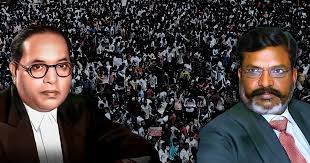
Much like Ambedkar did in his time, the VCK chief has chosen a path of principled pragmatism over moralistic traps set by those who haven’t sufficiently acknowledged his political and intellectual stature, writes V Geetha. How might one engage with the here and now of politics, without getting instrumental and cynical? How might one be productive in the present, without surrendering entirely to what it offers by way of power and self-achievement? The time of politics for India’s Dalits has been one that straddles the present as well as the future; pragmatic concerns, as well as a near-mythic yearning for a new world, and a new life, as Dr Ambedkar put it. At present these questions have come alive for at least one Dalit leader and party – Thol Thirumavalavan and the Viduthalai Chiruthaigal Katchi (VCK). They took their time to extend support to Joseph Vijay’s Tamilaga Vettri Kazhagam (TVK), which had emerged as the single largest party in the elections, but did not have the required majority. The left parties, VCK, and the Indian Union Muslim League decided to support the TVK’s claim to form the government. Meanwhile, speculation was rife as to Thirumavalavan’s intentions: was he demanding to be made deputy chief minister? Is it true that he was offered the Urban Affairs Ministry? How can Thiruma do this? All along he was with the DMK and supported them at every turn, in spite of their dubious record with respect to Dalit rights. So, how could he now endorse Vijay’s candidature? Is this, or is this not betrayal? Apart from such asides, there has been no dearth of advice thrown at him. As a Dalit leader, he was expected to continually affirm his moral credibility and agree to be baptised by the fire of other people’s righteousness. In extending their support to the TVK and Vijay, Thirumavalavan and VCK made it clear that they were doing this in the interests of democracy and in ensuring that a party elected by a majority of the people can take office. Predictably, this earned both leader and party snide asides from a small section of TVK fans who asked him to move on and let their leader take charge, and so on. At the same time, for Thirumavalavan’s constituency, the prospect of him being part of the government must have appeared enticing, considering that both the Dravidian majors have ensured that he remained a ‘junior’ partner within their respective alliances and failed to sufficiently acknowledge his political and intellectual stature. In this context, it is important to understand a dilemma that Dalit parties are forced to reckon with again and again: to respond to the present moment, to explore what it might hold for Dalits, and judge its potential for opening up options to do with rights, and due share in resources, including political power. If this requires a tactical compromise, how might one work with that? Or if it requires political co-option, is that worth risking? In the past too, Thirumavalavan has had to deal with such questions. He (and the VCK) have been responsive to a range of concerns, from the plight of Tamils in Sri Lanka to questions to do with the environment; with the subplan for Scheduled castes to the Hindu right’s affirmation of the Manusmriti and much more. In all this, he has foregrounded a point of view that is anchored in a broad vision of democracy. The challenge has been this: that even when he speaks for the greater common good, he is viewed as a Dalit leader, which he is, but he is seldom seen as one who is capable of and possesses the conceptual clarity and moral credibility to speak for all of us. Veering between being mindful of Dalit concerns and grounding his politics in a democratic vision, Thirumavalavan has found himself caught in uneasy political situations. While he and his party have remained valuable partners within any alliance, he was expected to stay within limits set by the dominant party. Thus, he has not always found it easy to voice his opinion on, say, party policy to do with Dalits, or the working of the criminal justice system when it comes to violence against them. To further understand and interrogate the social and political contexts that hedge Dalit political choices, it is useful to review the ways in which Babasaheb Dr Ambedkar engaged with the promises of the present, without losing sight of his ultimate objective – the annihilation of caste and untouchability and the making of a new social order. The architect of Dalit autonomy Throughout his political life, Ambedkar had to avail of the possibilities presaged by particular moments in time, in the full realisation that these were likely meagre. Yet he did so, responding to the historical hour in order to state and claim a denied right, or to make a case for new rights for Dalits. At the same time, whatever the demand, and however modest, he utilised the occasion to renew and re-state his transformative and imaginative vision for a just, free, fraternal and equal world. The Mahad Satyagraha was a protest against a specific expression of injustice among many others that Dalits endured. As we know, the second phase of the satyagraha did not proceed as planned because the caste Hindus had obtained a court injunction against the Dalits accessing the tank on the argument that it was a private tank. While Ambedkar was initially inclined to go against the injunction, a discussion with the Collector convinced him that to do so would pit them against the local government that was supportive of Dalit claims. This disappointed the satyagrahis, but yet they accepted his argument. On the one hand, this might appear a cautious move, but it is evident that he had made a choice: it was not possible for the Dalits to take on both the government and the caste Hindus. It was important to step back and re-arm oneself. Thus, he utilised
Dalit youth died by hanging: Postmortem report in Badaun reveals; family had alleged murder
The case of a Dalit youth’s death in Badaun has taken a new turn following the release of the postmortem report. The report confirmed that the youth died by hanging. However, the deceased’s family continues to allege murder. Police are currently investigating the cause of suicide. The case occurred in Narau village, located in the Ujhani Kotwali area. The body of Aman (20), son of Pintu, was found lying in the cattle shed outside his house on Monday morning. The incident caused chaos within the family. The deceased’s family filed a complaint with the police, accusing five villagers of murder. A dupatta noose found hanging from a tree Police arrived at the scene and found a dupatta hanging from a nearby tree, forming a noose. A forensic team then arrived and examined the length of the dupatta, the length of the body, and the height of the tree. Initial investigations by the police suggested the case was a suicide. Brother alleges murder The deceased’s brother, Amarpal, openly alleged murder. The family claimed the young man was murdered and then hanged. However, after the post-mortem report confirmed death by hanging, the police’s suspicions of suicide have deepened. Rumors of being upset by a physical assault There is talk in the area that the young man was assaulted a few days ago. It is alleged that the police failed to take any concrete action in the case, leading to the young man’s suicide. Currently, the police are investigating all angles and trying to find the reason behind the suicide. Courtesy: Hindi News
Transgender Indian on a student visa gets elected to Scottish Parliament
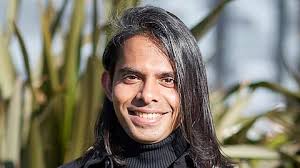
Tamil Nadu PhD student’s election victory fuels UK immigration debate An Indian doctoral student from Tamil Nadu, who moved to Scotland on a student visa just four years ago, has turned a local election victory into a wider debate on immigration, identity and representation in UK politics. Q Manivannan, who identifies as non-binary and claims to represent “diversity in power”, is among the newest members of the Scottish Parliament, also referred to as Holyrood. The PhD student was elected to the devolved Scottish Parliament on the Edinburgh and Lothians East regional list for the pro-independence Scottish Greens. The results for the elections held last week were announced on May 9. “My name is Dr Q Manivannan, I am a transgender Tamil immigrant, my pronouns are they/them,” said Manivannan, standing among his supporters. “I am to some in this country everything that the hateful despise and I am standing here as your MSP (Member of the Scottish Parliament) now with care. They say politics is the art of the possible, a politics of care I would say expands what is possible for everyone left behind, pushed out or never invited in,” the Indian student said. Born in Tamil Nadu, Manivannan moved to Scotland in 2021 on a student visa to pursue a course in international relations at the University of Andrews. Ahead of the election victory, the Indian national was in the process of online crowdfunding for a Graduate Visa, which grants doctoral students the right to live and work in the UK for three years beyond their student visa. “Every barrier placed before me with the Greens was the reason also that we pushed further. This is what diversity looks like in power,” said Manivannan, who uses the pronouns they/them. Their election has drawn criticism from anti-immigration voices over rules that allow some foreign nationals living in Scotland to contest elections. “Dr Manivannan may be a nice young person. But I don’t want to live in a country where people on student visas can become elected representatives to national parliaments,” said Robert Jenrick, former Tory minister and now shadow chancellor in the anti-immigration Reform UK. The Indian student’s MSP candidature was possible as a Commonwealth national under a rule change that allows foreigners on even short-term visas and without indefinite leave to remain (ILR) or those with permanent residency to be eligible for elections in Scotland. “Politicians should commit to removing the automatic right of Commonwealth citizens to vote in UK elections, and the ability of non-British citizens to stand in British elections,” stated Migration Watch, an independent pressure group campaigning for immigration curbs. Co-leader of the Scottish Greens, Gillian Mackay, told reporters that the party would be supporting Manivannan through the process of a new visa application. “There will have to be a renewal of Q’s visa. That is a process they will have to complete over the session of Parliament,” Greens said. Manivannan’s campaign pamphlet describes him as a politics PhD student, arts worker, co-convenor of Scottish Green Party’s Palestine Solidarity Group, former United Nations health and disability worker and immigrant. “If my mere existence causes this much trouble, I’m excited to see how much my words will,” Manivannan said in a social media post after the election results on Saturday. The Scottish Greens said the Scottish Parliament had “rightly and explicitly” chosen to permit people like the “queer Tamil immigrant” to contest the May 7 elections to “bring a politics of care and compassion to Holyrood”. “Q is on a valid visa with the right to work and live in Scotland, and is a Commonwealth citizen. The UK’s visa system is needlessly expensive and hostile, and we are determined to replace it with one that welcomes people with care rather than throwing up hurdles and barriers,” a party spokesperson said. The leftist Scottish Greens made significant gains in last week’s election, in Scotland and in local councils across England. Courtesy : The Tribune Note: This news is originally published on https:/thetribune.com/bha and is used purely for non-profit/non-commercial purposes, especially human rights
3 transgender persons held for assault in Chennai
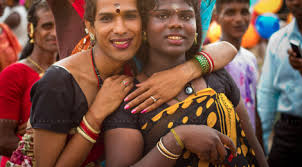
Chennai, Three transgender persons were arrested for allegedly assaulting members of a rival group with stones and beer bottles following a long-standing dispute over territory and alms collection, police said on Monday. The incident, which occurred on May 10, was triggered by a conflict between two groups operating in the Pulianthope and Moolakothalam areas. According to the Basin Bridge police, Salma (42), a transgender person residing in Pulianthope, leads a group involved in alms collection. Trouble began a month ago when a member of her group, identified as Parthiban (alias Surekha), defected to join a rival faction based in Moolakothalam. Tensions escalated on the early morning of May 9, when members of the rival group allegedly trespassed into the residence of Dilsha, a member of Salma’s group, in the K P Park area. The intruders reportedly vandalised household items, including a television, washing machine, and bureau. The following morning, on May 10, while Salma and another associate, Kavya, were en route to the police station to lodge a formal complaint, they were intercepted near the K P Park bus stop. A group of approximately 10 persons, including Surekha, allegedly attacked them with stones and beer bottles while issuing death threats. Kavya, who sustained bleeding injuries in the attack, was admitted to a government hospital for treatment. Based on a complaint filed by Salma at the P-4 Basin Bridge Police Station, a case was registered. A special police team led by the Station Inspector conducted an investigation and apprehended three suspects — Deepan (alias Diya), Vijayakumar (alias Sumithra) and Rajiv (alias Swathi), 20, of Korukkupet — on May 10. Police officials stated that a manhunt is underway to nab the remaining suspects who are currently absconding. PTI JR JR SA This report is auto-generated from PTI news service. ThePrint holds no responsibility for its content. Courtesy : The Print Note: This news is originally published on https:/theprint.com/bha and is used purely for non-profit/non-commercial purposes, especially human rights
Kerala CM selection: Sonia Gandhi steps in, ex-KPCC chiefs summoned to Delhi

The move comes after former party president Sonia Gandhi and Wayanad MP Priyanka Gandhi Vadra favoured detailed discussions with former KPCC presidents to resolve the deadlock. THIRUVANANTHAPURAM: With the deadlock over the selection of the next Kerala chief minister continuing even a week after the UDF swept the assembly polls, the Congress high command has summoned former Kerala Pradesh Congress Committee (KPCC) presidents to New Delhi for detailed discussions on Tuesday. The high command has also asked party state president Sunny Joseph and working presidents A P Anil Kumar, P C Vishnunadh and Shafi Parambil to be present in Delhi for further deliberations. The three CM contenders — K C Venugopal, Ramesh Chennithala and V D Satheesan — have pinned their hopes on these meetings. The move comes after former party president Sonia Gandhi and Wayanad MP Priyanka Gandhi Vadra favoured detailed discussions with former KPCC presidents to resolve the deadlock. However, there are indications that the move is aimed at warding off criticism that all stakeholders were not taken into confidence. The high command appears to have concluded that detailed deliberations with former KPCC presidents would create an impression that the final decision was taken after considering all factors and consulting leaders at every level. A man rides past posters supporting KC Venugopal and VD Satheesan near the Congress headquarters, in Thiruvananthapuram, Friday, May 8, 2026. Except for Mullappally Ramachandran, former KPCC chiefs V M Sudheeran, K Muraleedharan, K Sudhakaran and M M Hassan are expected to reach Delhi by Tuesday. According to party sources, Rahul had a telephone conversation with Mullappally on Monday after the latter expressed his inability to reach Delhi at a short notice. Sources said the high command is likely to meet the leaders individually. Though former KPCC presidents and other senior leaders had met the two central observers during their visit to Kerala, the latest decision is learnt to have been taken in view of the continuing stalemate over CM selection. Sources said both Rahul and party president Mallikarjun Kharge would meet these leaders and seek their opinion on the choice of the new CM and the overall political atmosphere. After the meetings, the high command may summon the three contenders to Delhi and inform them of the final decision in the presence of both Rahul and Kharge, they said. Meanwhile, the IUML, which had earlier aggressively canvassed for Satheesan, has now reportedly decided to accept the Congress high command’s decision. There is also growing criticism among some newly elected Congress MLAs against what they described as “stage managed protests” organised against them at private functions. A man rides past posters supporting KC Venugopal and VD Satheesan near the Congress headquarters, in Thiruvananthapuram, Friday, May 8, 2026. “There is a concerted effort behind these activities. One or two individuals raise slogans demanding that Satheesan must become the CM, while another group records the scenes on mobile phones and later circulates them on social media,” said a Congress MLA from the Malabar region. Some Congress leaders alleged that certain fringe religious organisations, representing less than 1% of the Muslim community, and their workers were trying to sabotage Congress’ organisational process. They also pointed to the sudden halt in protest marches, after the high command warned of stringent action, as evidence that the campaign was orchestrated. CM announcement likely today? Indicating that the Congress high command may announce the party’s chief minister pick on Tuesday, AICC president Mallikarjun Kharge, who is on a visit to his home state, is returning to Delhi on Tuesday. Kharge, who was scheduled to return on Wednesday, decided to cut short his visit. Meanwhile, there are indications that the central leadership would seek the advice of veteran leader A K Antony too before taking the final decision. K S Sreejith Courtesy : TNIE Note: This news is originally published on https:/thenewindianexpress.com/bha and is used purely for non-profit/non-commercial purposes, especially human rights
IUML expresses displeasure over prolonged delay in choosing next Kerala CM, warns of political ‘repercussions’

The IUML also stated that the party had conveyed its views on the chief ministerial candidate to the Congress leadership and expressed confidence that the Congress would take the ally’s opinion seriously. The Indian Union Muslim League (IUML), a key constituent of the Congress-led UDF in Kerala, on Monday reiterated its displeasure over the delay in deciding the next chief minister, warning that the uncertainty could cause political repercussions. The Congress-led front, which swept the recently concluded Assembly elections in Kerala, winning 102 seats, is yet to decide the CM, even as public protests have erupted projecting support for the contenders, including Leader of the Opposition V D Satheesan, senior party leader Ramesh Chennithala and AICC general secretary (Organisation) K C Venugopal. Stating that the prolonged suspense has already caused dissatisfaction among party workers and the public, IUML Malappuram district general secretary P Abdul Hameed said, “The decision has already been delayed. If it is prolonged further, there will be repercussions. We hope the AICC leadership realises this.” He said people across the state were questioning the delay and claimed that even women voters from the district were calling party leaders to ask why they had been made to vote for the UDF. “There is dissatisfaction everywhere. People are raising only this issue wherever we go, including at marriage functions and funerals,” he said. Hameed said Kerala was politically different from north Indian states and that such prolonged indecision would not be accepted by politically aware voters in the state. He also said the UDF, despite securing a massive mandate, had been unable to properly celebrate its victory due to the uncertainty over the CM’s post. “In many places, victory celebrations are not taking place. There are situations where elected MLAs are being advised not to attend public events because of the growing dissatisfaction,” he said. The IUML leader further said the League had conveyed its views on the chief ministerial candidate to the Congress leadership and expressed confidence that the Congress would take the ally’s opinion seriously. Uncertainty continues within the Congress over the selection of Kerala’s next CM, even two days after Congress president Mallikarjun Kharge and senior leader Rahul Gandhi held discussions in New Delhi with the three contenders for the post. Courtesy : TNIE Note: This news is originally published on https:/thenewindianexpress.com/bha and is used purely for non-profit/non-commercial purposes, especially human rights
CM Revanth Reddy calls PM Modi’s gold remark ‘irresponsible’, seeks all-party meet on West Asia crisis
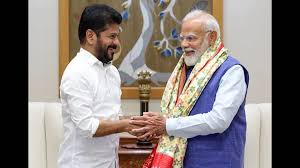
Telangana chief minister said the situation had arisen due to the failure of foreign policy. HYDERABAD: Telangana Chief Minister A Revanth Reddy on Monday termed Prime Minister Narendra Modi’s appeal to avoid buying gold for a year and adopt austerity measures as an “irresponsible call,” saying it reflected the failure of the Central government and amounted to an “undeclared ban” on the people. Speaking to reporters, Revanth Reddy said the situation had arisen due to the failure of foreign policy. He said, Opposition leader Rahul Gandhi had been raising concerns over foreign policy for the last six months and that Modi had now indirectly admitted it. Ridiculing the Prime Minister’s remarks, Revanth Reddy said: “the Prime Minister told the people to survive on air and live in the air”. The Chief Minister demanded that the Centre convene an all-party meeting and consult experts to prepare a roadmap to address the crisis arising from the West Asia conflict. “The US is involved in the war. India is not a part of the war, yet we are facing problems. The Centre should negotiate with other countries to overcome the crisis,” Revanth Reddy said. Clarifying Modi’s “mere se hi judo” remark made during a meeting in Hyderabad on Sunday, Revanth Reddy said it was related to development and not politics. “I suggested at the meeting that the Central and State governments should work in tandem for the development of the country. Modi merely endorsed my statement. The PM’s comment was about development and not politics,” he said. Revanth Reddy said the meeting focused on development and Centre-State relations despite ideological differences between parties. He also said he became Chief Minister after defeating the BJP in Telangana. Responding to Modi’s criticism of the Congress at a BJP meeting in Parade Grounds, Revanth Reddy said: “Modi criticising the Congress in the State means criticising me.” On Modi’s remarks describing the Congress as a “Muslim League-Maoist Congress,” Revanth Reddy said Muslims and Maoists were people of the country. He termed the remarks unfortunate and said while the BJP believed in eliminating Maoists, the Congress aimed to bring them into the mainstream. He said BJP-ruled States resorted to encounter killings, whereas under the Congress government in Telangana, around 818 Maoists had surrendered and joined the mainstream. He added that the Prime Minister should appreciate the Telangana Police. On the Special Intensive Revision (SIR), Revanth Reddy expressed concern over the alleged inclusion and deletion of votes before Assembly elections. He also reiterated his proposal on delimitation, suggesting that 50% of seats should be based on population and the remaining 50% on development. Rejecting claims that the BJP was winning elections across the country, Revanth Reddy pointed to the BJP’s defeats in the Jubilee Hills bypoll, local body elections in Telangana, and Assembly elections in Tamil Nadu and Kerala. The Chief Minister also said he would never indulge in vindictive politics or misuse the powers of his office. Courtesy : TNIE Note: This news is originally published on https:/thenewindianexpress.com/bha and is used purely for non-profit/non-commercial purposes, especially human rights
PM Modi repeats austerity call amid West Asia crisis, urges WFH, fuel savings, reduced gold buys
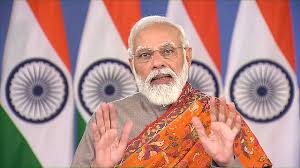
He stressed the need for reduced imports — India heavily relies on West Asia for crude oil and LPG — and avoiding unnecessary expenditure involving foreign currency. Prime Minister Narendra Modi on Monday reiterated his call for austerity measures, urging people to cut fuel consumption, use public transport and electric vehicles more frequently, and defer gold purchases amid disruptions caused by the West Asia crisis. Addressing a gathering in Vadodara after inaugurating the Sardar Dham Hostel built by the Patidar community, Modi also asked citizens to opt for work from home wherever possible and reduce foreign travel. “The West Asia crisis is one of the worst in the decade; just as we overcame the COVID-19 pandemic, we will come out of this also,” he asserted. #WATCH | Gujarat: Prime Minister Narendra Modi says, “… I appeal to every citizen of my country to reduce the use of petrol-diesel as much as possible. Use the metro, make greater use of electric buses and public transport, and promote carpooling. Those who have a car should… pic.twitter.com/85GGOgBh2W Modi noted citizens had always fulfilled their responsibilities whenever the country faced war or any other major crisis. “Whenever India faced war or any other major crisis, citizens fulfilled their responsibilities upon the government’s appeal; we need to do the same today,” the PM told the gathering. Prime Minister Narendra Modi addresses an event in Vadodara on Monday, May 11, 2026. The prime minister stressed the need for reduced imports — India heavily relies on West Asia for crude oil and LPG — and avoid unnecessary expenditure involving foreign currency. “We must make every effort to reduce the use of imported products and avoid personal activities that involve spending foreign currency,” Modi maintained. Calling for fuel conservation measures, he urged people to reduce fuel consumption and shift to public transport or electric vehicles. He appealed to citizens to defer gold buying in view of the prevailing global situation as a significant amount of foreign exchange goes into importing the precious metal. Modi had spoken about these austerity measures for the first time in the backdrop of the West Asia crisis while speaking at an event in Telangana on Sunday and reiterated them in Gujarat a day later. Courtesy : TNIE Note: This news is originally published on https:/thenewindianexpress.com/bha and is used purely for non-profit/non-commercial purposes, especially human rights
NCRB: Madhya Pradesh Ranks No. 1 in Atrocities Against Tribals, What’s the Reason? TM Exclusive
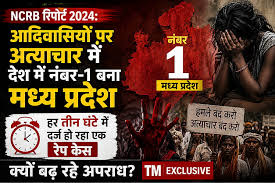
Crimes against women, children, and Dalit-tribal communities raise concerns; MP also ranks among the top states in dowry deaths, kidnappings, and POCSO cases. Bhopal. The latest NCRB data has raised serious questions about the law and order situation in Madhya Pradesh. The increasing crimes against women, tribals, children, and vulnerable groups have raised concerns about the state’s security system. Opposition parties and social organizations believe that the government’s indifferent attitude and administrative laxity are contributing to the steady rise in criminal incidents. They allege that criminals are losing their fear of the law, while victims are unable to access timely justice and protection. The “Crime in India 2024” report, released by the National Crime Records Bureau (NCRB), a nationwide crime data center, has raised serious questions about the law and order situation and social security in Madhya Pradesh. According to the report, Madhya Pradesh has reached the top spot in the country in crimes against the Scheduled Tribes (ST). The state also ranked among the top states in the country for crimes against women, dowry deaths, crimes against children, kidnapping, murder, and POCSO cases. The data revealed in the report indicates that the safety of women and vulnerable groups continues to be a challenge in the state. The NCRB released this report on May 6, 2026, and includes crime statistics for the year 2024. Normally, this report should have been released by September 2025, but this time, due to delays in data verification and matching of crime information, the report was released nearly eight months later. Rape every three hours in MP According to the report, a total of 32,832 cases against women were registered in Madhya Pradesh during 2024, ranking the state fifth in the country for the fourth consecutive year. According to the data, an average of more than 90 crimes against women were registered daily in the state. These include rape, dowry harassment, domestic violence, kidnapping, and other serious crimes. The report also states that a rape case is being registered every three hours in the state, which raises serious questions about the safety of women. The situation in Madhya Pradesh regarding dowry deaths is also extremely worrying. According to the NCRB, a total of 450 cases of dowry deaths were registered in the state in 2024. Of these, 232 cases were registered under sections of the Indian Penal Code (IPC) and 218 under sections of the Indian Penal Code (BNS). Madhya Pradesh ranked third in the country in this category. Uttar Pradesh ranked first with 2,038 cases, while Bihar ranked second. Experts believe that dowry practices and domestic violence against women remain serious social problems in both rural and urban areas. Increase in kidnapping cases The report also expressed concern about murder and kidnapping cases. Madhya Pradesh ranked fourth in the country for both murder and kidnapping. However, murder cases have seen a slight decline in the last two years. In 2022, 1,978 murder cases were reported in the state, which decreased to 1,832 in 2023 and 1,813 in 2024. This means a decrease of 173 murder cases was recorded in two years. In contrast, kidnapping cases have steadily increased. In 2022, 10,409 kidnapping cases were registered in the state, which increased to 11,768 in 2023 and 11,847 in 2024. This means that on average, 32 kidnapping cases are being reported daily in the state. Madhya Pradesh ranks fourth in kidnapping cases, after Uttar Pradesh, Maharashtra, and Rajasthan. Crimes against tribals on the rise Madhya Pradesh’s rise to first place in the country in crimes against the Scheduled Tribe (ST) category is considered a matter of great concern. According to the NCRB, 3,165 cases were registered against the ST community in the state in 2024. Madhya Pradesh ranked second in the country with 7,765 cases of crime against the Scheduled Caste (SC). Social organizations and human rights activists say that incidents of violence, land disputes, social discrimination, and harassment against tribal and Dalit communities continue to emerge, but effective measures to prevent them remain insufficient. Madhya Pradesh’s situation remains dire when it comes to crimes against children. However, it’s a matter of relief that while last year the state ranked first in the country in this category, this time it has slipped to third place. According to the NCRB report, 21,908 cases of crimes against children were registered in 2024. These include cases such as child sexual abuse, kidnapping, child marriage, child labor, and violence. 3,721 cases were also registered in the state under the Protection of Children from Sexual Offences (POCSO) Act, placing Madhya Pradesh fourth in the country. Tamil Nadu ranked first in this list with 5,320 cases, followed by Maharashtra with 4,829 cases, and Uttar Pradesh with 3,671 cases. Experts believe that this NCRB report not only reflects crime statistics but also presents a picture of social inequality, insecurity of women, oppression of vulnerable groups, and administrative challenges. The steadily increasing crime has raised questions about the functioning of the state government and police administration. Social organizations say that strict laws alone are not enough to control crime; instead, grassroots education, social awareness, sensitive policing, and a speedy justice system are also needed. Tribal Congress raises questions In a conversation with The Mooknayak, Ramu Tekam, State President of the Congress Scheduled Tribe Department, launched a scathing attack on the state government over the NCRB report. He said that the continuous increase in crimes against tribal communities in Madhya Pradesh is extremely worrying. The state’s ranking first in the country in cases of ST atrocities is proof of the complete breakdown of law and order in the state. He alleged that tribal communities are still victims of violence, exploitation, land grabbing, and social oppression, but the government has failed to take action with sensitivity. Ramu Tekam said that the government is only busy making announcements and advertisements, while the tribal community on the ground is feeling unsafe. He said that the increasing crimes against women, children, and vulnerable sections prove that criminals have
The Key to Power and the Voice of the Dalits: Find out who is Tamil Nadu’s New ‘Kingmaker’, Thol Thirumavalavan
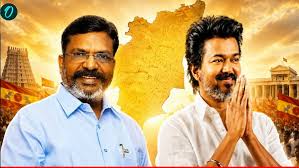
From a forensic scientist to becoming the ‘kingmaker’ of Tamil Nadu politics, learn the full story of VCK founder Thol Thirumavalavan’s struggle and success. New Delhi: Following the 2026 Tamil Nadu Assembly elections, Thol Thirumavalavan and his party, the Viduthalai Chiruthaigal Katchi (VCK), emerged as a decisive force in government formation. Respecting the public mandate and avoiding any constitutional crisis, Thirumavalavan announced unconditional support to actor Vijay’s party, the Tamil Nadu Vetri Kazhagam (TVK). Vijay’s party fell short of the magic number of a simple majority. Displaying strategic foresight, he ensured a long-term vision for the state by working with allied left parties. He also maintained his alliance with the Secular Progressive Alliance led by the Dravida Munnetra Kazhagam (DMK). By prioritizing public interest over momentary political gains, Thirumavalavan established his party as a strong ‘kingmaker’. With the support of two VCK MLAs, as well as the IUML and other allies, the VCK managed to surpass the majority of 118 seats. This move paved the way for a stable government in the state. Thirumavalavan clarified that the primary objective of his decision was to prevent President’s rule in the state and protect democratic values. Born on August 17, 1962, in Anganoor, Tamil Nadu, Thol Thirumavalavan, originally named Tolkappiyan Thirumavalavan, is one of India’s most prominent Dalit leaders, scholars, and social reformers. As the founder and president of the VCK, he is currently the Member of Parliament from the Chidambaram constituency. His outspoken advocacy for social justice has made him a prominent figure in Tamil Nadu politics for over three decades. After completing his primary education in his hometown, he graduated in Chemistry from Presidency College, Chennai. He then earned a Master’s degree in Criminology in 1988. He served as a Scientific Assistant in the Government Forensic Science Department until 1999. He later studied law at Madras Law College and completed his PhD in 2019 from Manonmaniam Sundaranar University on the subject of conversions of Dalits in Meenakshipuram. His political journey began in 1982 when he joined the Dalit Panthers Iyyakam (DPI) in Tamil Nadu. This organization was inspired by the Dalit Panthers of India and the Black Panther Party of the United States. Under the guidance of A. Malaichami, he led student protests for the Eelam Tamils and campaigned for Dalit rights. After Malaichami’s death in 1989, he became the state organizer of the DPI and later renamed the organization ‘Viduthalai Chiruthaigal’. Deeply influenced by Sri Lanka’s ethnic conflict and the struggle for Tamil identity, the organization formally transformed into a political party called the Viduthalai Chiruthaigal Katchi (VCK) in 1990. Initially, it maintained a distance from electoral politics and focused on spreading awareness against caste discrimination. In 1999, he resigned from government service and contested his first Lok Sabha election from Perambalur in alliance with the Tamil Manila Congress. Despite losing this election, he received over 2.25 lakh votes. In 2001, he won his first assembly seat from the Mangalore (now dissolved) constituency. Subsequently, in 2009, he was elected to the Lok Sabha from Chidambaram by a landslide victory, establishing the VCK as a recognized state party. Since then, he has contested several elections, winning resounding victories, establishing the VCK as a recognized state party. His party has been granted the “Matka” permanent election symbol by the Election Commission. Under Thirumavalavan’s leadership, the VCK has exemplified pragmatic politics by forming alliances with major Dravidian parties and unexpected allies like the Pattali Makkal Katchi (PMK). His slogan, coined in 1996, “Refuse to be suppressed, transcend boundaries, rise fiercely, fight back,” has always inspired generations of Dalit youth to challenge systemic oppression. Ideologically, he represents a unique amalgamation of Ambedkarite principles of social justice and Dalit empowerment, Periyar’s rationalist and anti-caste philosophy, and Marxist critiques of capitalism. The core principles of his party include the abolition of the caste system, opposition to social exclusion, protection of Tamil culture and language, women’s liberation, and support for the working class. His inspirations include Gautam Buddha, Dr. B.R. Ambedkar, Thanthai Periyar, and Velupillai Prabhakaran. Beyond politics, he has also made significant contributions to the cultural and social sphere. He has acted in Tamil films such as “Anputhozhi” and “Kalagam” and has written several books. In 2016, he launched his party’s “Velicham TV” channel. He promotes Tamil naming to eliminate caste and religious identities and led environmental initiatives such as planting one lakh palm seeds across Tamil Nadu in 2018. His political career has also been marked by controversy. He has frequently faced criticism for his comments on the Manusmriti, Hindu deities, the disabled, and LGBTQ+ issues. He faced several legal cases for his involvement in the 1999 bus burning and inflammatory speeches, though he successfully fought these charges in court. Former colleagues also accused him of accepting funds from Christian missionary organizations, a charge he has consistently denied. Despite numerous controversies, his commitment to Dalit liberation and social reform has remained unwavering. He has received numerous honors for his social and political contributions, including the 2025 Icon of Social Liberation Award, the 2019 Quaid-e-Millat Award for Integrity in Public Life, and the 2024 Best Performing Parliamentarian Award. Under his leadership, the VCK also honors social activists with the Ambedkar Sudar and Periyar Oli awards. Thirumavalavan, a lifelong bachelor, has dedicated his entire life to the upliftment of marginalized communities. His journey from a forensic scientist to becoming a kingmaker in Tamil Nadu politics is a masterful blend of social activism and political strategy. He has shaped the state’s political landscape by advocating for equality, justice, and Tamil identity. Rajan Chaudhary Courtesy: Hindi News