
Indian legislation borrows UK’s gatekeeping to limit what being Trans+ looks like
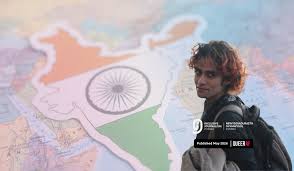
This article is from our (award-winning) free weekly newsletter that helps you understand the LGBTQIA+ news and support queer creatives to change the media. Join 10,000+ curious queer readers every Saturday morning. When India passed the 2026 Transgender Persons (Protection of Rights) Amendment Bill, nationwide protests erupted against the changes that will devastate the fundamental rights of transgender people in the country. As India is home to almost 1.5 billion people, this bill changes the rights of 1 in 5 Trans+ people in the world. Protesters have demanded that the amendment be revoked, accusing the legislators of acting with “undue and unjustifiable haste” in passing the bill and calling for consultations with transgender and gender diverse communities. The bill is an amendment to Transgender Persons (Protection of Rights Act) 2019. One of the most crucial and devastating changes is to narrow the definition of who a transgender person is. The Act now requires a medical transition to take place in order for someone to receive legal gender recognition. Historically integrated Trans+ groups such as hijra and kinner, as well as intersex persons, will still be legally recognised, but anyone who self-identifies as a trans man, trans woman, or non-binary person is no longer included in the category of a legally recognised transgender person, unless they go through a medicalised process. As a trans person, it is obvious to me that the right to self-identify without approval from a doctor is a crucial aspect of what it means to be Trans+ and, for most of us, this self-identification occurs before medical intervention (if we choose to pursue that). Social transitioning is not enough for many, and those Trans+ people who need more are often stuck on long wait lists with no other way to further their transition. And yet, even as we wait for treatment on someone else’s timeline, that first moment of defiance and expression is our power. Self-identification is about our autonomy. This power of self-identification is a scarf in the wind, a moment of unauthorised, nonmedicalised determination away from the proscription of gender. When the scarf blows, anyone can see it: it offers that freedom to the world. In her writing, Indian academic ‘VQueer’ Aditya Sahai said “this is the difference between the amendment and its critique, state and the people — one sees trans as population that needs to be controlled, an identity, the other understands it as possibility. The fight is not for the rights of some people who identify as trans but for trans to be a possibility.” When transgender becomes a category in legislation, that power shifts away from the Trans+ community and to the lawmakers who write the definitive, singular definition for all of us. As often happens, this was done without our consultation, consent, or representation. Part of the reason I left India was to transition in the relative safety and peace of the UK. As I began the medical process here, I was advised by my friends to contort my story to increase my likelihood of fitting the antiquated profile the UK system requires in order for me to get a ‘diagnosis’ of gender dysphoria, which is what opens up support for gender affirming care. My friend sent me a template of their ‘trans story’ that I could use. Toy cars, gym clothes, wrestling with brothers. Another friend told me he was sick of lying about himself and committed to telling the truth to doctors. I didn’t quite know which option made sense to me. Throughout my journey through this medicalised process, I paused at many moments to consider what would get me healthcare and what felt true to who I am. I delicately rode the balance of truth and exaggeration. On reflection, the real and more substantive reason I returned to the UK to transition was to be within my established trans community. Not for our broken medical system, whose historical bias and decades of malpractice have been thoroughly reported on. The medicalised route being introduced in India like the UK’s is designed to control and limit what being Trans+ looks like. The fear of giving us rights, autonomy, and self-definition comes from the patriarchal system that knows that if Trans+ people can challenge the gender binary, anyone can. In other words, this bill reflects that their fear of us is stronger than their fear for us. Aliyy Azad Malik (A Writer & Artist) Courtesy : QueerAF Note: This news is originally published on https:/queeraf.com/bha and is used purely for non-profit/non-commercial purposes, especially human rights
Britain rolls out landmark transgender rules for single sex toilets, NHS wards and women-only spaces

From public toilets and hospital wards to gyms, schools and women-only refuges, Britain is preparing for one of the biggest changes to its equality guidance in years after the government formally unveiled new transgender access rules. The updated guidance outlines when transgender people can legally be excluded from certain single-sex spaces under UK law, a move that is already triggering intense national debate over privacy, safety, inclusion and equality rights. The new code follows a landmark ruling by the Supreme Court of the United Kingdom in 2025, which stated that under the Equality Act 2010, the legal definition of “sex” refers to biological sex rather than gender identity. The judgment effectively means a transgender woman is legally considered male under equality law, while a transgender man is legally considered female for the purposes of single-sex protections. The guidance was prepared by the Equality and Human Rights Commission (EHRC), Britain’s independent equality watchdog, and formally presented to Parliament by the UK Government Equalities Office under Women and Equalities Minister Bridget Phillipson. Parliament now has a 40-day scrutiny period before the code becomes fully enforceable across public bodies, workplaces and service providers throughout England, Scotland and Wales. The updated rules replace earlier guidance dating back to 2011 and are expected to influence policies across the National Health Service (NHS), schools, universities, gyms, sports organisations, employers and local councils nationwide. UK’s single-sex spaces rules The new code states that organisations can lawfully exclude transgender individuals from certain single-sex services if doing so is considered a “proportionate means” of protecting privacy, dignity, safety or fairness. The guidance applies to places and services including: Public toilets Changing rooms Domestic abuse refuges Hospital wards Sports competitions Schools and colleges Gyms and leisure centres Under the updated framework: Trans women may be excluded from women-only spaces. Trans men may be excluded from men-only spaces. Organisations are encouraged to consider gender-neutral or third-space alternatives where possible. The EHRC also stressed that transgender people still remain protected under the Equality Act through the protected characteristic of gender reassignment. However, the guidance says organisations must balance those protections with the rights of women and other service users. The code repeatedly emphasises “case-by-case” assessments rather than blanket bans. One significant point is that the guidance warns organisations against creating “double exclusion” situations where transgender people are unable to access either male or female facilities. Workplaces could see major changes Some of the most immediate impacts are expected in healthcare, workplaces and sports. The draft guidance states hospitals can legally place patients in wards based on biological sex rather than gender identity. NHS policies may now require revision following the publication of the updated code. In sports, the code says participation in sex-separated competitions should generally be based on biological sex. For workplaces, employers may need to reconsider toilet and changing-room arrangements. Legal experts have noted that many organisations are still trying to understand how to apply the ruling practically without creating discrimination risks. The guidance also acknowledges practical complications. For example, it says it would usually be unrealistic to routinely ask people for proof of biological sex before using ordinary public facilities like toilets. The code further notes that excluding trans men from certain healthcare services such as gynaecology or obstetrics could itself become disproportionate or discriminatory. Debate erupts over trans rights law The publication of the guidance has triggered intense debate across politics, legal circles, LGBTQ+ organisations and women’s rights groups. Supporters argue the new rules finally provide legal clarity after years of confusion around the Equality Act. Many campaigners for women-only spaces welcomed the code as a necessary step following the Supreme Court decision. Critics, however, warn the guidance could marginalise transgender people and create fear around accessing public facilities. Some LGBTQ+ activists and advocacy groups say the practical impact could lead to exclusion and humiliation for trans individuals. Legal challenges have already surrounded earlier versions of the EHRC’s interim guidance. While one High Court challenge failed earlier this year, debate over how the law should be interpreted remains far from settled. International human rights experts have also urged Britain to ensure that both women’s rights and transgender rights are protected equally under future policy implementation. Courtesy : TOI Note: This news is originally published on https:/timesofindia.com/bha and is used purely for non-profit/non-commercial purposes, especially human rights
Ratan Kelkar appointed as Kerala chief minister’s secretary
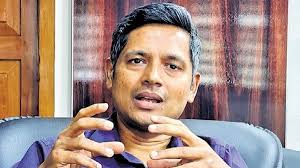
The 2003 batch Kerala cadre official, a native of Maharashtra, has earlier held different key positions in the state government. THIRUVANANTHAPURAM: In a major development, senior IAS officer Ratan U Kelkar has been appointed as the chief minister’s secretary. Notably, he’s being appointed to the crucial post while serving as the chief electoral officer, Kerala. The 2003 batch Kerala cadre official, a native of Maharashtra, has earlier held different key positions in the state government. The government order appointing him as secretary to CM V D Satheean will be issued on Saturday. Sreekumar T, a retired additional secretary, has been appointed special private secretary of the CM. The team also includes Siji G S as press secretary and Roy Mathews as media secretary. Thilakan K P K and Mohanachandran M S have been named additional private secretaries, while Padmakumar M, Abimon P A, Manojkumar P N, Jafarkhan S, Jayachandran A and Prakash O T will serve as assistant secretaries. Courtesy : TNIE Note: This news is originally published on https:/thenewindianexpress.com/bha and is used purely for non-profit/non-commercial purposes, especially human rights
Karnataka Congress MLAs set 15-day deadline for party top brass on Cabinet reshuffle decision
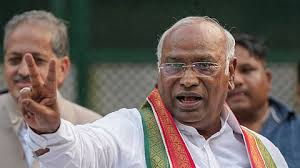
Sagar MLA Gopalakrishna Belur said that if no decision is taken in 15 days, the MLAs will take “aggressive steps”. SHIVAMOGGA: Congress MLA Gopalakrishna Belur on Friday said a group of 30-35 legislators is planning to visit Delhi by May 28 or 29 to press for decisions related to Cabinet expansion and reshuffle in Karnataka. He also said that if no decision is taken in 15 days, the MLAs will take “aggressive steps”. Gopalakrishna represents Sagar in the Assembly. Speaking to reporters, Gopalakrishna said the visit was initially scheduled after the selection of the Kerala Chief Minister and that the legislators would hold a meeting within the next few days before heading to the national capital. “We have taken a firm stand this time. Nearly three years have passed, but no concrete action has been taken on the issue,” he said. Referring to discussions around cabinet expansion, Gopalakrishna said Chief Minister Siddaramaiah had recently indicated that around 15 legislators could be accommodated, but the group was demanding opportunities for more than 20 MLAs. “Many leaders have already enjoyed positions of power for three years. Opportunities should now be given to others if the Congress has to become stronger in Karnataka,” the MLA said. Gopalakrishna said around 25 legislators had travelled to Delhi earlier and that the number was now expected to rise to over 35. When asked about a possible Cabinet reshuffle, he said party legislators were strongly seeking one. “We are not asking only for newcomers to be inducted. We are asking for changes in the existing structure as well,” he said. On speculation over a possible change in the CM, Gopalakrishna said such decisions rest with the party’s national leadership. “The chief minister issue is not in our hands. We are demanding what we believe is our right,” he said. He also indicated that legislators seeking Cabinet positions expected clarity within the next 15 days and hinted at further steps if their demands were not addressed. “If we are not given an opportunity, we will discuss our future course of action and take a decision,” he said. Krishna Byre Gowda, 4 other MLAs in Delhi Amid speculation over a possible change in leadership in Karnataka, Revenue Minister Krishna Byre Gowda and four other MLAs visited New Delhi on Friday. They are expected to meet the Congress high command leaders, including AICC General Secretary (Organisation) KC Venugopal. Speculation is rife as to whether Gowda will meet Leader of Opposition in Lok Sabha Rahul Gandhi before the latter embarks on a 10-day foreign trip from May 24. Shivajinagar MLA Rizwan Arshad, Shiggaon MLA Yasir Ahmed Khan Pathan, Hangal MLA Srinivas Mane, and Kalaburagi North MLA Kaneez Fatima have accompanied Gowda. After May 26, Chief Whip in the Assembly Ashok Pattan is likely to coordinate a group of MLAs for a Delhi visit to insist on the cabinet reshuffle. In a similar exercise in the recent past, Pattan had led 25 MLAs to the top brass. Courtesy : TNIE Note: This news is originally published on https:/thenewindianexpress.com/bha and is used purely for non-profit/non-commercial purposes, especially human rights
CM VD Satheesan to meet top Congress leaders in Delhi on May 23
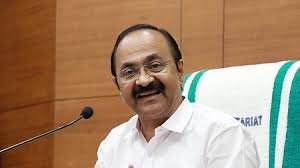
“Efforts are on to get an appointment with the prime minister. However, there’s no confirmation yet,” an official with the Chief Minister’s Office said. THIRUVANANTHAPURAM: In his first visit to the national capital after assuming office, Chief Minister V D Satheesan is set to meet senior Congress leader Sonia Gandhi on Saturday. Though there are reports that Satheesan will also meet Prime Minister Narendra Modi, sources said there is no confirmation on the same. “Efforts are on to get an appointment with the prime minister. However, there’s no confirmation yet,” an official with the Chief Minister’s Office said. Satheesan, who left the state capital on Friday night, is scheduled to stay at the Kerala House. He will meet Congress president Mallikarjun Kharge, Leader of the Opposition in the Lok Sabha Rahul Gandhi, and Wayanad MP Priyanka Gandhi as well. However, no official programme has been charted for the Kerala chief minister in Delhi during this visit. He is expected to return to Kochi later in the day. Though Satheesan planned to meet the Congress’ central leadership soon after taking oath as the chief minister, the prolonged discussions on cabinet formation and portfolio allocation delayed his visit to Delhi. In his meeting with the top party leaders, the chief minister is expected to discuss about the future plans for the state. Courtesy : TNIE Note: This news is originally published on https:/thenewindianexpress.com/bha and is used purely for non-profit/non-commercial purposes, especially human rights
Vijay expands TN cabinet with 23 ministers; Congress joins state government after 60

Tamil Nadu Chief Minister C Joseph Vijay has executed a massive Cabinet expansion and portfolio reshuffle, inducting 23 new ministers. In a politically historic move, the Congress party makes a comeback to the TN Cabinet after nearly six decades. The expansion also signals a futuristic administrative reset with the creation of a dedicated Artificial Intelligence (AI) ministry under R Kumar. Watch the video for a complete breakdown of the major shifts, including N Marie Wilson taking over Finance from senior leader K. A. Sengottaiyan, new portfolios retained by CM Vijay, and updates on alliance partners like IUML and VCK joining the government. Courtesy : TNIE Note: This news is originally published on https:/thenewindianexpress.com/bha and is used purely for non-profit/non-commercial purposes, especially human rights
Hope for justice and ruin Homes: Dalits being evicted from land in Kerala express anger, FIR filed against 50
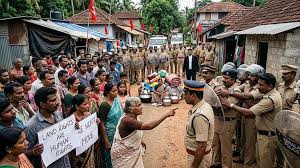
Massive protests erupt in a Dalit settlement in Ernakulam, Kerala, over a land dispute. FIR filed against 50 people for obstructing police action. A Dalit settlement in Kerala’s Ernakulam district witnessed a massive uproar during an eviction drive. Police announced on Thursday that a case has been filed against approximately 50 identified individuals for obstructing government work during the drive. The incident occurred in the Pariyathukavu area, where a long-standing dispute has been ongoing over the ownership of a piece of land. Residents prevented the police and the accompanying Advocate Commission from carrying out the eviction proceedings. This action stems from a property dispute in which a private individual has legally established ownership of the land where these Dalit families have lived for many years. An officer from the Thadiyittaparambu police station stated that a case has been registered under relevant provisions of the Indian Penal Code (IPC) for obstructing a public servant from performing his official duty, taking a tough stand against the protesters. Amid this tense situation, political activity has also intensified. The CPI(M) has formed a special protection committee to ensure the safety of families in the area from any potential police action. Subject to a visit to the affected area, senior CPI(M) leader P. Rajeev spoke to reporters. He clarified that the previous LDF government intended to grant land rights to the residents in accordance with the rules after the survey work was completed. Rajeev stated that the government in the state changed before the survey process was completed, leading to the administration’s use of force, which is highly condemnable. He stated that a protection committee has been formed to address this situation. The CPI(M) leader also claimed that while they could have protected these people without a committee, the situation has now changed and only a public protest can provide security to these families. He urged the state government to take the necessary steps to complete the survey process as soon as possible. He also demanded that no other punitive action be taken regarding the disputed land until the survey is completed. This eviction drive in Pariyathukavu has been a contentious issue for several years. According to reports, the administration has made several attempts to clear the area in the past, but all were unsuccessful. On Wednesday, the dispute turned violent when protesters began threatening suicide. They completely blocked the path of the heavily deployed police personnel equipped with anti-riot equipment. Given the presence of women and children at the protest, State Home Minister Ramesh Chennithala immediately intervened. To prevent the situation from getting out of control, he ordered the police to withdraw from the area. Meanwhile, the affected Dalit families have repeatedly approached the courts against their eviction. However, their appeals have been dismissed each time. These families have consistently claimed that the land they live on is government property and not owned by any private individual. On the other hand, the Supreme Court has upheld the ownership rights of the private individual in the legal battle. In light of this decision, the Kerala High Court directed the enforcement of the private individual’s rights, forcing the administration to launch the eviction drive. Rajan Chaudhary Courtesy: Hindi News
Karnataka: Caste-Based Insults at Madeeshwara Temple Festival; Shobha Yatra Denied Entry to Dalit Settlement Despite Receiving Donations!
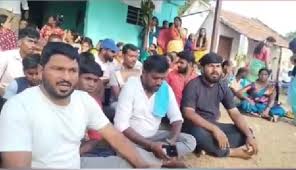
The Dalit community alleges that they face such disrespectful treatment every year. The procession never enters their settlement, and if they do visit the temple, they are forced to stand at a distance. Members of the Dalit community in Machalli, a remote village in Krishnaraja Nagar taluk of Mysuru district, have alleged severe untouchability and caste discrimination surrounding the Madeeshwara Temple and the deity’s Shobha Yatra. According to local residents, it is a long-standing tradition in the village that during the annual festival of Lord Madeeshwara, the bull procession is taken to every home and every settlement. This tradition was not followed in the Dalit settlement during last week’s festival. The Dalit community alleges that they are forced to perform puja in a humiliating and unequal manner. As soon as their festival is over, the idol is immediately removed and taken away, depriving them of the opportunity to worship the deity. Residents of the Dalit neighborhood reported waiting for two to three hours, but no arrangements were made for their worship. The temple doors were closed, and people left. One member said, “This is happening even in the 21st century, which is very sad.” The community alleges that this happens every year. The procession never comes to their settlement, and if they go to the temple, they are forced to stand at a distance. According to the Dalit community, this time the village elders had agreed in a public meeting and promised that full arrangements would be made for the worship in the Dalit settlement as well. Trusting this promise, every Dalit family contributed thousands of rupees for the worship. But when the deity’s procession reached the Dalit settlement, the situation suddenly changed. Within just two minutes, the idol was snatched away, and the worship was not performed. Following this, some elders and young people of the village gathered and openly declared, “They only have 15 houses, what can they do?” Members of the Dalit community allege that they were subjected to severe abuse, death threats, and other atrocities. Dalit residents also stated that they pay taxes and volunteer for public and religious events in the village, yet they are not allowed to enter the temple’s sanctum sanctorum, touch the deity, or worship on an equal footing. The village is home to approximately 60 Dalit families, most of whom are agricultural laborers. Following this incident, members of the Dalit community have protested in the village, demanding immediate action from the district administration and equal rights in the temple. They have also accused the Social Welfare Department and local authorities of failing to reach the village despite repeated complaints. Geetha Sunil Pillai Courtesy: Hindu News
She Trained With a Secret & Fought Closed Gates To Become India’s First Trans Woman Cricket Umpire
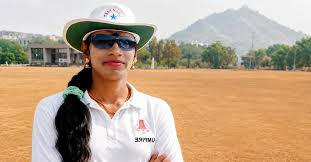
Rithika Sri from Salem, Tamil Nadu, once feared losing her cricket dream if she revealed her truth. Today, she is India’s first trans woman cricket umpire, officiating matches and aiming for the BCCI panel. Rithika Sri’s journey to the cricket field began with a late-night IPL broadcast and a dream she initially kept hidden. Photograph: (AI-assisted image) There is a particular kind of courage required to stand at the crease in a white coat, arm raised, the eyes of twenty-two players on you, knowing that every call you make will be scrutinised, and that getting there at all was in itself a battle that had nothing to do with cricket. That is the world Rithika Sri inhabits every time she walks onto a ground in Tamil Nadu’s Salem, Namakkal, or Coimbatore. At 31, she has become India’s first trans woman cricket umpire, officiating league fixtures and association matches across the State. But before the white coat, before the “ma’am” from players who now address her with ease, there was a gate — and a security guard who would not let her through. An unlikely beginning Rithika’s love affair with cricket umpiring was born not in Tamil Nadu but in Punjab. In 2019, she was working at a BPO company in Mohali under her birth name, Muthuraj, when she found herself riveted to the IPL on television. The athleticism of the players was one thing; what arrested her attention was the stillness of the umpires — their authority, their calm. She went online, researched the pathway, and discovered a clear ladder: district panel, state panel, BCCI panel. Then the pandemic came. Job opportunities dried up for outsiders in Punjab, and she returned to her hometown of Salem. But what looked like a setback became a turning point. A mentor who said ‘Yes’ Back in Salem, Rithika tracked down Jayaraman, the chairman of the Salem District Association’s umpire committee, through an online search and he offered her a chance. For months, she trained, made errors, felt discouraged, and considered giving up. She also carried a secret — her gender identity — terrified that revealing it would cost her the only professional dream she had allowed herself. It was Jayaraman’s wife who eventually broke the silence for her, after observing Rithika over time. The umpire committee chairman’s response, when he learned the truth, was decisive. If the government extended opportunities to the third gender, he said, why wouldn’t he? Cricket He encouraged her to build her qualifications first, transition when she felt ready, and return to the field. It was the kind of acceptance that changes a life. In 2024, Rithika underwent gender-affirming surgery in Coimbatore and, through Jayaraman’s reference, was introduced to Ramesh, the umpire committee chairman of the Coimbatore District Cricket Association, who welcomed her immediately. ‘Cricketers call me ma’am’ Her debut as a trans woman umpire was not without turbulence. At one ground in Coimbatore, security personnel stopped her at the entrance. She had official credentials and told them she was there to officiate, but they turned her away regardless. It was a moment that could have ended everything. Instead, it hardened her resolve. The Coimbatore Cricket Association intervened, ensured she had access, and made clear that she was to be treated with the same respect as any umpire on their panel. The players caught up quickly. “Cricketers call me ‘ma’am’,” Rithika said. “I am happy and grateful.” A door opened by policy Rithika’s historic achievement was also enabled by a consequential institutional reform. The Tamil Nadu Cricket Association introduced an “Other” gender category in its State Panel Umpire examination application — an administrative change that may seem minor on paper but carried enormous weight in practice. Without that third box to tick, the formal pathway would have remained closed. Rithika, who holds a diploma in mechanical engineering and was raised by a single mother alongside six siblings, now officiates matches organised by local clubs, corporates, and district associations. On the field, she is known for calm, firm decision-making — the very qualities that first drew her to the white coat. Eyes on the horizon Her ambitions are clear and unambiguous: state-level recognition, a place on the BCCI panel, and eventually, the IPL and international stages. The road is long, but Rithika Sri has already demonstrated that the longest distances can be covered one decision and one step at a time, whether it is a raised finger on the field, or the daily but important act of showing up as exactly who you are. By Avantika Krishna Edited By Khushi Arora Courtesy : The Better India Note: This news is originally published on https:/thebetterindia.com/bha and is used purely for non-profit/non-commercial purposes, especially human rights
Modi making reels in Italy, while our youth tormented by paper leaks: Rahul Gandhi

In a post on X in Hindi, he said the Congress will not stop till Pradhan resigns and a robust system to prevent paper leaks is put in place. Congress leader Rahul Gandhi on Thursday criticised Prime Minister Narendra Modi over the NEET-UG paper leak, saying he had neither accepted responsibility nor removed Education Minister Dharmendra Pradhan from the post. In a post on X in Hindi, he said the Congress will not stop till Pradhan resigns and a robust system to prevent paper leaks is put in place. Taking a swipe at Modi, he said while the prime minister was making reels in Italy, the youth of India were taking to the streets seeking justice over the paper leak. “When Modi ji was making reels while handing out candies in Italy – youth in India, tormented by paper leaks, were taking to the streets demanding justice,” he said in his post. “Because the NEET Paper Leak has ruined the futures of lakhs of students. Many children have even lost their lives. And Modi ji neither took responsibility, nor removed Dharmendra Pradhan, nor uttered a single word,” he said. With students, NSUI and INC workers seeking justice, BJP’s state governments are ‘raining lathis’ down on them, the leader of opposition in Lok Sabha said. “A government that answers students’ questions with batons doesn’t run on accountability – it runs on fear. But we will not be scared. We won’t stop until Dharmendra Pradhan resigns and a strong, secure system is put in place to stop paper leaks in the country,” Gandhi said. This fight, the former Congress chief said, is for every such student whose future this “failed” government has stolen. Gandhi tagged a post from the Rajasthan Congress where, in a purported video, water cannon was used to disperse protesting students and NSUI workers protesting outside the BJP headquarters in Jaipur. The Congress had organised a protest seeking the removal of Pradhan as education minister over the paper leak. Courtesy : TNIE Note: This news is originally published on https:/thenewindianexpress.com/bha and is used purely for non-profit/non-commercial purposes, especially human rights