
Dalit man held hostage, beaten, car snatched in Nawabganj: An additional 50,000 rupees demanded after repaying a loan of 100,000 rupees
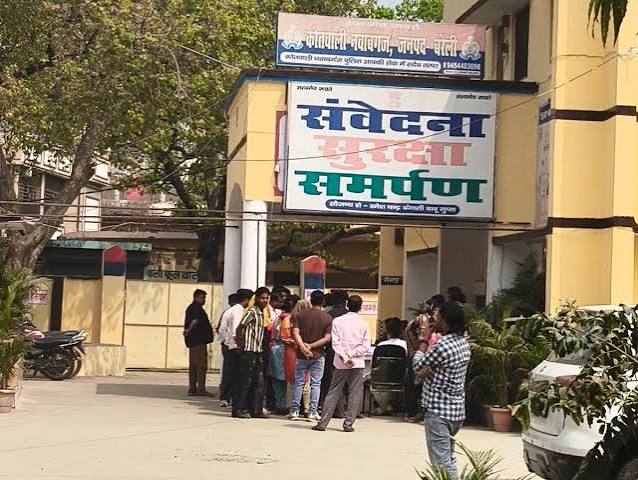
A case has come to light in Gulshan Nagar Basti of Nawabganj where a Dalit man was allegedly held hostage, beaten, and his Eco car snatched. The victim has alleged that an additional 50,000 rupees was demanded from him despite repaying a loan of 100,000 rupees. In a complaint filed with the police, a Dalit man named Shankar Lal has accused a man named Badan Singh of demanding additional money in the name of interest and assaulting him. According to Shankar Lal’s wife, Reena, about six months ago, Shankar Lal borrowed 100,000 rupees from Badan Singh on interest for his Eco car. It is alleged that he has repaid approximately 1.5 lakh rupees including interest. Despite this, Badan Singh is demanding an additional 50,000 rupees. Reena alleged that on August 21st, between 2 and 3 pm, Shankar Lal was repeatedly summoned to Bhagyashree’s house via phone. When Shankar Lal did not return home for a long time, Reena went to look for him. There, she learned that Shankar Lal had allegedly been held hostage and beaten. It is alleged that the miscreants also took possession of Shankar Lal’s Eco car and promised to return it only after paying 50,000 rupees. Reena has filed a complaint with the police, demanding action against the accused and the return of the car. The police are investigating the matter. Station in-charge Arun Kumar Srivastava stated that the complaint has been received and an investigation will be conducted. Further action will be taken based on the investigation. Riyaz Ahmed | Nawabganj, Bareilly Courtesy: Hindi News
The politics of religious ‘purification’

Kharge’s is the latest case in India’s troubling history of ritualistic ‘cleansing’ of places visited by Dalits. It defies the Constitution on untouchability and violates the right to equality. A couple of days after Congress president Mallikarjun Kharge addressed a public gathering at Ramlila Maidan in Haldwani, Uttarakhand, on August 8, members of a right-wing group, reportedly Shri Ram Sena, conducted a ritualistic purification ceremony at the site where Kharge had delivered his speech. The act was widely criticised, with many seeing it as a reminder of the persistence of caste prejudice and notions of ritual purity and pollution. The incident also prompted questions about whether such an act could fall within the scope of laws dealing with untouchability and atrocities against the Scheduled Castes. Whatever its precise legal character, the episode is troubling because it appears to revive a notion that the presence or touch of a person belonging to a historically marginalised caste can render a place impure and in need of purification. The incident, however, should not be viewed in isolation. There have been several instances in the past in which places or objects associated with Dalit leaders or visitors have reportedly been subjected to purification rituals. These include the purification of a statue inaugurated by Union Minister Jagjivan Ram in 1978, a temple purification following a visit by Bihar Chief Minister Jitan Ram Manjhi in 2014, and reported instances involving Munni Devi in Kanpur in 2016 and Manisha Anuragi, a sitting Dalit BJP MLA in Uttar Pradesh, in 2018. The Haldwani incident involving Mallikarjun Kharge, therefore, brings back a question that India has confronted repeatedly: how deeply have notions of ritual purity and pollution associated with caste survived despite the constitutional abolition of untouchability? The cases involving prominent public figures naturally receive attention because they are visible. But similar experiences may be faced by ordinary people in less visible ways. In all, there were as many as 55,865 atrocities registered against members of Scheduled Castes in 2024 alone. The idea of ritual purity and pollution has a long history in parts of the Hindu social order. Ancient dharmashastras and smritis contain several prescriptions concerning contact with those regarded as outside the caste order. The Vishnu Smriti was one of the earliest to refer to the need for purification after contact with a chandala or outcaste (asprushya). The Manusmriti prescribed bath after contact with a chandala, with the touching of food or earthen vessels requiring them to be thrown away and metal vessels scrubbed with ashes. The Apastamba Dharmasutra and Gautama Dharmasutra go beyond touch: if a chandala’s sight falls on another person, that person must look at the sun to purify. If spoken to, the person must converse with a Brahmin or recite a specific Vedic mantra to cleanse themselves. Thus the Kharge incident is not an isolated one, but an inherent outcome of Brahmanical religious, ethical and legal codes, in which high castes are considered victims. Kharge’s case may have been picked up deliberately because he chose egalitarian Buddhist ideology, not iniquitous Brahmanism. It is important to distinguish between the historical existence of such prescriptions and the beliefs and practices of contemporary Hindu society. Hindu traditions have themselves undergone considerable change, and millions of Hindus do not subscribe to notions of untouchability or caste-based exclusion. The Constitution, social reform movements and generations of struggles against discrimination have profoundly altered the social landscape. Yet the persistence of occasional purification rituals suggests that some older ideas have not entirely disappeared. The significance of the Haldwani incident lies precisely here. It raises the uncomfortable question of whether notions that were once embedded in a hierarchical social order continue to influence social behaviour even in a democratic and constitutional India. For B R Ambedkar, the struggle against caste was not merely a struggle for political representation. It was a struggle for equality and human dignity. His advocacy of Buddhism was part of his larger search for a social order based on equality, liberty and fraternity. The construction of a major Buddhist Vihara at Kalaburagi by Kharge can similarly be seen as reflecting his association with an egalitarian social philosophy. The history of India has witnessed a long contest between hierarchical and egalitarian ideas. Buddhism, the Bhakti traditions and later the movements led by social reformers such as Jyotirao Phule, E V Ramasamy Periyar and Ambedkar challenged entrenched forms of social inequality in different ways and in different historical circumstances. These movements did not always share the same philosophy, but they contributed to a continuing debate about social hierarchy, dignity and equality. Independent India ultimately gave this egalitarian principle its strongest institutional expression through the Constitution. Equality, liberty and fraternity became foundational values, while untouchability was expressly abolished under Article 17. The Constitution did not merely prohibit a particular social practice; it sought to fundamentally change the relationship between citizenship and caste. Ambedkar described his struggle as revolution by Buddhism against a counter-revolution by Brahmanism. The final blow to the counter-revolution was the adoption of the Constitution based on equality, liberty and fraternity, and democracy, secularism and socialism. However, the counter-revolutionaries had opposed the Constitution, too. The Shankaracharya of Puri and Hindu Mahasabha had proposed to base the Constitution on Brahmanism and varnashrama. After its adoption in 1950, the Hindu Mahasabha and the RSS had opposed it arguing it did not embody Hindu culture. The continuing appearance of purification rituals, therefore, deserves attention not simply as an isolated religious practice or a political provocation, but as a reminder of the distance that can sometimes remain between constitutional values and social behaviour. It is equally important not to generalise from individual incidents to an entire religious community or tradition. The challenge is to identify and oppose discriminatory practices wherever they occur while recognising the diversity and capacity for reform within Indian society. The Haldwani incident, like earlier episodes, brings an old question into the present. Can a democratic society that guarantees equality to every citizen continue to accommodate practices based
Village funds worth crores, yet drain constructed through donations: Villagers in Nizamabad’s Fariha Dalit settlement constructed the drain themselves, alleging discrimination.
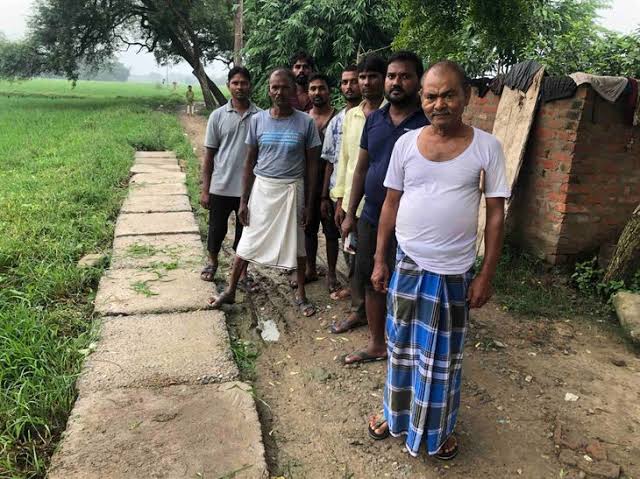
In the Fariha Gram Sabha Dalit settlement of the Rani Ki Sarai block in Azamgarh’s Nizamabad tehsil, villagers collected donations and repaired a drain that had been broken for five years. The villagers allege that despite having a village fund worth crores, they had to do the work themselves. Sunil Kumar, Ganesh Kumar, Sarvesh Kumar, Amresh Kumar, Jaswant Lal, Abhay Kumar, Manichandra, and Rustam, along with other villagers, reported that 90 percent of the settlement’s sewage and rainwater flowed through this drain to the Kunwar River. This drain had been severely damaged for approximately 100 meters for the past five years, causing sewage to overflow onto the road and flood the fields. According to the villagers, they contacted the Fariha village headman dozens of times to get the drain and 300 meters of road constructed. The headman asked them to submit a written complaint, but the drain remained unconstructed. Forced to do so, the residents of the settlement collected donations of one thousand rupees per household, raising approximately one and a half lakh rupees. With this money, a hundred meters of drain was constructed, and new slabs were cast and placed on the drain. However, due to a lack of funds, some slabs remain to be laid. The villagers alleged that after becoming a village head, a person becomes the head of the entire village council, not of any particular community. They said that for the past ten years, no village head has shared their joys and sorrows, let alone the construction of basic amenities like drains, roads, housing, or toilets. The villagers questioned the use of the crores of rupees of funds allocated to the village council by the government for development. They alleged that officials from the block level to the Vikas Bhawan did not even once visit to inspect the work or listen to people’s problems, raising suspicions that officials from the lowest to the highest levels are involved in the embezzlement of crores of rupees. He also reported that approximately 300 meters of the road is in a dilapidated condition, causing dozens of schoolchildren to stumble and fall on their way to school. Shah Alam | Fariha (Nizamabad), Azamgarh Courtesy: Hindi News
The road to the Dalit settlement in Palhanpur is in a dilapidated condition: No repairs for three five-year periods; villagers appeal to the administration.
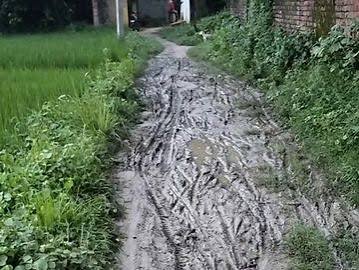
Villagers in Jhaliyahawa, a Dalit settlement in the Palhanpur Gram Sabha under the Bhadaiyan block of Sultanpur district, are upset by the poor condition of the road. This road is located near the Ramganj Rajbaha Canal, and its poor condition is causing significant inconvenience to local residents. Villagers allege that the road has not been paved with soil or repaired for the past three five-year periods. The condition of the road has worsened after the rains, leading to accumulation of mud and water at various places. The poor condition of the road has made it difficult for villagers to walk. Incidents of people slipping and falling in the mud have become common, causing daily problems. Children, the elderly, and women face particular difficulties in commuting during the rainy season. Rajendra, Dharamraj, Ramgulam, Mahendra, Suresh Kumar, and other villagers have demanded the Block Development Officer (BDO) and the administration immediately fill the road with soil to restore traffic. They have requested a permanent solution to the problem by repairing the drain or constructing a new one. In-charge ADO Panchayat Sangeeta Saroj stated over the phone that the matter will be investigated and necessary action will be taken. Villagers are distressed by the poor condition of the road in Jhaliyahawa, a Dalit settlement in the Palhanpur Gram Sabha under the Bhadaiyan block of the district. This road is located near the Ramganj Rajbaha Canal, and its poor condition is causing significant inconvenience to local residents. Villagers allege that neither soil has been filled on this road nor has the drain been repaired in the last three five-year periods. The condition of the road has worsened after the rains, leading to accumulation of mud and water at various places. The poor condition of the road has made it difficult for villagers to walk. Incidents of people slipping and falling in the mud have become common, causing daily problems. Children, the elderly, and women face particular difficulties commuting during the rainy season. Rajendra, Dharamraj, Ramgulam, Mahendra, Suresh Kumar, and other villagers have urged the Block Development Officer (BDO) and the administration to immediately fill the road with mud to ensure smooth traffic flow. They have requested a permanent solution to the problem by repairing the drains or constructing new ones. In this regard, Sangeeta Saroj, the ADO in charge of the Panchayat, stated over the phone that the matter will be investigated and necessary action will be taken. Surendra Kumar | Balampur (Lamhua), Sultanpur Courtesy: Hindi News
Gorakhpur’s Dalit settlement deprived of basic amenities: Roads and drains in Kharpothara hamlet of Pali block are in poor condition.
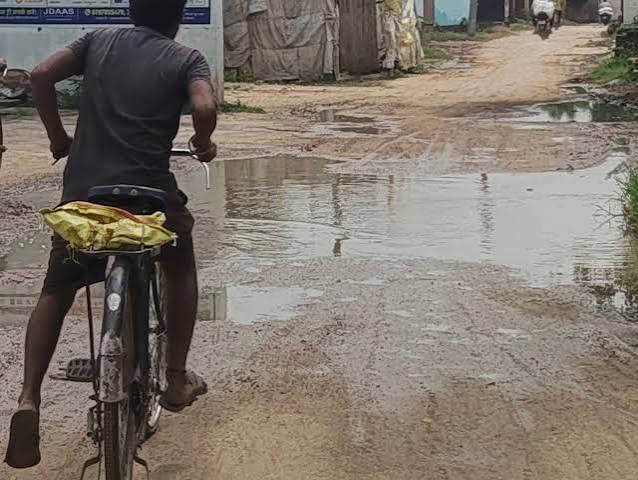
Kharpothara hamlet of Madar Gram Panchayat, located in Pali block of Gorakhpur, still lacks basic amenities. Nestled amidst the marshland, this hamlet comprises approximately 25 houses, mostly inhabited by Dalit families. An investigation by Dainik Bhaskar revealed a dire situation. The hamlet’s roads are in a dilapidated state, disrupting traffic during the rainy season. Due to the lack of regular cleaning of drains, problems of filth and waterlogging persist. There is no proper sanitation system. Local villagers Balchand, Santosh, Prince, and Aman reported that officials do not regularly visit to address their concerns, nor does the government or administration take any action. Expressing their views, the villagers stated that they, too, are citizens of the country and the Gram Panchayat, and therefore, they should also have access to basic amenities like roads, drains, and sanitation. They have demanded a permanent solution to the problems of the Kharpothara hamlet from the government. In this regard, Secretary Arvind Chaudhary stated that this department does not fall under his jurisdiction, but rather under Assistant Development Officer Dharmendra. Assistant Development Officer Dharmendra assured that sanitation workers would be sent to the site to clean the area and repair the drainage system. He also promised to take care of this in the future. Gorakh Singh | Palikhas (Sahjanwa), Gorakhpur Courtesy: Hindi News
Dissidents push for Hindu Pradesh Congress Committee chief to end Punjab crisis
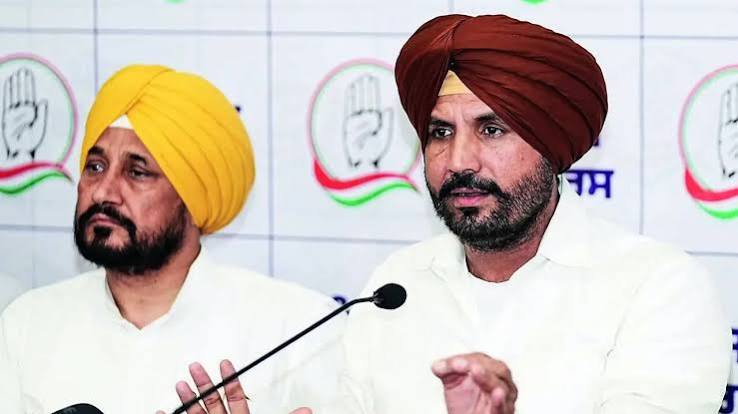
NEW DELHI: Congress is again mulling the idea of appointing a Hindu state president in Punjab amid a push from dissidents for a compromise to end the turmoil in the state unit. Well-placed sources said the deadlock in the dissidence-ridden organisation has cast a cloud over the upcoming election campaign, and the party brass is cut up about the unsuccessful fire-fighting efforts of key managers. A group of dissidents that includes senior netas like Charanjit Channi and Sukhjinder Randhawa has been seeking the replacement of state chief Amarinder Raja Warring ever since the AICC announced a clutch of poll-related panels while sticking with Warring at the helm two months ago. Now, sources said, the dissidents themselves have proposed that a Hindu Pradesh Congress Committee (PCC) chief be appointed. This group has also conveyed that they will be on board with such a replacement, even though each one of them has been fancying their chances till now, they added. With the state chief and the leader of opposition both belonging to the Jatt Sikh community, the idea of a Hindu PCC chief is meant to bring balance to the organisational set-up. This was the original idea before the AICC decided to retain Warring at the top. An insider said the party is looking at its options and may have to make some change in the leadership position — either the Punjab chief or AICC in-charge, or both. While it is too close to the elections for such an organisational overhaul, the sources said the crisis has to be defused. Sources also dismissed the notion that Rahul Gandhi will soon kickstart the state campaign in the form of a bus journey, arguing that the bus would bring all the squabbling netas together and, thereby, enforce peace. A party manager said Rahul will only start the bus journey after the organisational bickering is over. “The campaign will be about the state and state Congress. It needs an agenda so that the party can set a narrative for voters,” he said. “The state netas will have to come together and draw up a plan for winning the election together. Only then will Rahul get into it,” the party functionary said. Also, Rahul will be a part of the bus campaign for 2-3 days, and state netas will steer the rest of it for around 20 days. While Congress was hopeful of its chances in the AAP-governed state, persistent infighting in the local unit has raised concerns about its prospects. Inputs that forces like jailed MP Amritpal Singh’s “Waaris Punjab De” may be gaining ground have further alarmed some strategists. Courtesy : TOI Note: This news is originally published on https:/timesofindia.com/bha and is used purely for non-profit/non-commercial purposes, especially human rights
Caste count method in Census ‘misleading’: Congress letter to PM
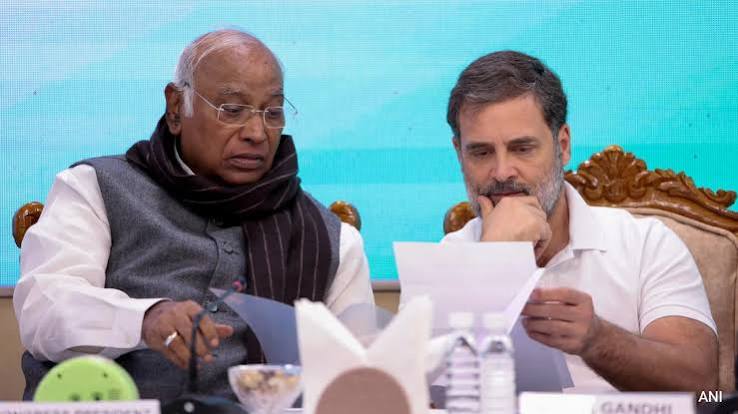
NEW DELHI: Terming the methodology for caste count adopted in Census 2027 “misleading” as it will not give a headcount of OBCs, leaders of opposition in Parliament, Mallikarjun Kharge and Rahul Gandhi, have written to PM Narendra Modi demanding the Census questionnaire on caste notified recently be abandoned and a new one be drafted. They underlined that the word “OBC” has not even been used in the Census. In the backdrop of the controversy triggered by the questionnaire, Kharge and Rahul told the PM “your govt” has adopted an “open-ended question” to collect information about caste, and enumerators will have to take for an answer whatever a person replies to the caste question. They argued that a caste is known by different names and sub-castes depending on the region, which would result in one caste being recorded by thousands of names. “This would result in lakhs of castes being registered in the country, and the entire data recorded in the caste census would become useless,” the letter said. “We don’t approve of the caste census being done through this methodology. Govt should cancel the present questionnaire and prepare a fresh one through consultations with political parties, experts, and the public so that a correct headcount of every caste and community is collected and the caste census is precise, relevant, and beneficial,” it said. It said a readymade solution to the problem is that a “drop-down menu” comprising a list of castes be added to the questionnaire. “This very methodology is used for counting SCs and STs (in Census)… This methodology was adopted in the surveys of Bihar and Telangana. We are enclosing the caste lists of the two surveys for understanding.” Further, the letter said such a list of castes for Census can easily be compiled on the basis of the existing Socially and Educationally Backward Classes list and data from the Anthropological Survey of India. Releasing the letter, AICC spokesperson Jairam Ramesh and OBC department chairperson Anil Jaihind said govt had, in an affidavit to SC in Sept 2021, submitted that a “drop-down menu” with a list of castes will have to be used if a caste census were to be done. Ramesh said census enumerators can carry the said list of OBCs and record precise answers. He accused govt of “sabotaging” the caste census. Courtesy : TOI Note: This news is originally published on https:/timesofindia.com/bha and is used purely for non-profit/non-commercial purposes, especially human rights
‘Questions don’t stop with batons’: Rahul Gandhi attacks Bihar govt over BPSC protests
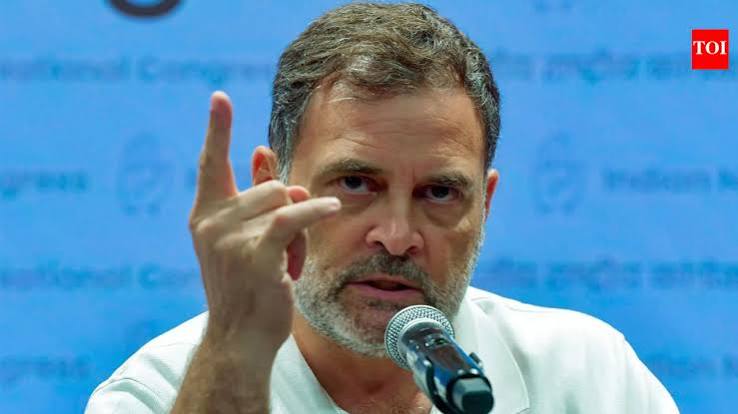
NEW DELHI: Lok Sabha leader of opposition Rahul Gandhi on Wednesday waded into Bihar’s escalating BPSC row, questioning the Samrat Choudhary-led government over allegations of exam irregularities and paper leaks. He referred to the police crackdown on protesting students, saying, “questions don’t stop with batons.” His statement came a day after a clash broke out between students and police in Bihar’s capital, with police using water cannons and barricades to stop the protesters from marching. Rahul described it as a “straightforward” question on behalf of Bihar’s students and posted on X: “Why the irregularities in recruitment exams? Why no action on allegations of paper leaks? And how long will this tampering with the future of the youth continue?” He then targeted the long-standing BJP-JD(U)-led government in Bihar, saying, “The controversy over BPSC exams is not of today. Students have been on the streets for a long time over the recruitment process, exam pattern, delays, and transparency.” — RahulGandhi (@RahulGandhi) The Lok Sabha leader of opposition also referred to the use of an AK-47 by a security personnel during an earlier student protest in Bihar, which coincided with student protests in Delhi and across the country over NEET fiasco. “But instead of answering, what is the government doing? It’s wielding batons and water cannons. It’s taking students into custody. In Siwan, there was even firing with an AK 47 on protesters,” the former Congress chief said. He added in his post: “This is not just a question of police action. This is a question of the mindset of that BJP government, which has no answers – and that’s why it’s turning the police into a weapon to evade accountability.” “The BJP government should understand this – questions don’t stop with batons. You can’t snatch away someone’s future by instilling fear,” the Rae Bareli added. Bihar students had marched towards Raj Bhavan and chief minister Samrat Choudhary’s residence to stage a “gherao”, but faced police barricading and some of them were detained in Patna. Courtesy : TOI Note: This news is originally published on https:/timesofindia.com/bha and is used purely for non-profit/non-commercial purposes, especially human rights
Three LPG cylinders, free bus travel for women, transgenders – what CM Vijay announced in TN assembly

NEW DELHI: Tamil Nadu chief minister C Joseph Vijay on Monday announced a set of welfare measures in the state Assembly, including three free cooking gas cylinders a year for eligible beneficiaries and an expansion of the fare-free bus travel scheme for women. Under the cooking gas scheme, the amount for the three cylinders will be credited directly to the bank accounts of eligible beneficiaries. Vijay announced the launch of the Vetri Payanam scheme, expanding the existing fare-free bus travel programme for women across the state. Under the scheme, women will be allowed to travel free of charge on Express, LSS and Deluxe government buses operating in metropolitan and urban areas. For inter-district travel, the benefit will cover ordinary-fare government buses in mofussil and hilly areas. The scheme will come into effect from October 2, marking the birth anniversary of Mahatma Gandhi. Vijay said there would be no income ceiling or restriction on the number of trips under the programme. Transgender persons will also be eligible for free travel. “No riders like income ceiling or number of trips for women to avail fare-free bus travel,” Vijay added. Vijay had earlier outlined several welfare measures in his election manifesto, including six free LPG cylinders a year for every family, up to 200 units of free electricity, a monthly assistance of Rs 2,500 for women below the age of 60, and family health coverage of up to Rs 25 lakh. Courtesy : TOI Note: This news is originally published on https:/timesofindia.com/bha and is used purely for non-profit/non-commercial purposes, especially human rights
The United Nations Committee expressed serious concern over the rights of Dalits and Adivasis in India, stating this on police brutality and hate crimes.

The United Nations Human Rights Committee has expressed concern over alleged violence against Dalits, Adivasis, and minority communities in India and has demanded an immediate and impartial investigation from the government. New Delhi: The United Nations Committee on the Elimination of Racial Discrimination (CERD) has expressed deep concern over alleged extrajudicial killings, torture, and police abuse against Dalits, Adivasis, and minority communities in India. The global body has appealed to the Indian government to conduct a thorough investigation into these cases and ensure legal action against those responsible. It has also called for immediate action to address cases of hate crimes, racial profiling, and forced deportation. History According to findings released by the Committee, there have been reports of widespread violations of the rights of marginalized ethnic and racial groups, particularly Scheduled Castes, Scheduled Tribes, Dalits, and non-citizens, by law enforcement agencies. These violations include serious incidents such as racial violence, excessive use of force, arbitrary and prolonged detention, torture, and sexual violence. This committee, comprised of 18 independent human rights experts, monitors compliance with the Convention on the Elimination of Racial Discrimination (Convention) in 182 member countries. This convention entered into force in 1969 and requires member countries to commit to eliminating racial discrimination, eliminating segregationist practices, and ensuring equality before the law. It is noteworthy that this is the first time India has participated in the review process before the committee since 2007. Solicitor General Tushar Mehta led the Indian delegation at this review meeting. The global committee also expressed concern over campaigns targeting Rohingya, Bengali-speaking Muslims, migrants, and refugees. According to the report, identity checks and racial profiling have led to an increase in cases of arbitrary arrests and ill-treatment without due process of law. The committee urged the prevention of forced deportations and mass expulsions of persons in need of international protection. Discrimination and Identity Relations Although the recommendations of this UN Committee are not legally binding, they are considered to have considerable diplomatic and moral significance internationally. On the other hand, the Permanent Mission of India clarified that during the review, the Indian delegation strongly presented the country’s rich diversity, pluralism, constitutional safeguards, and legal framework. The Indian side underlined that the country is fully committed to ensuring equality, dignity, and opportunity for all its citizens. Rajan Chaudhary Courtesy: Hindi News