
20-year-old Dalit girl’s charred body found in Karnataka’s Chitradurga, boyfriend held
On Tuesday evening, the mother identified her daughter’s charred body at the mortuary of Chitradurga District Hospital based on a tattoo on her hand. CHITRADURGA: A 20-year-old Dalit college student was allegedly murdered and burnt to death by her boyfriend in Chitradurga. The police have taken the accused, a 21-year-old unemployed school-dropout, into custody for questioning. Various Dalit organisations and ABVP, the student wing of the BJP, alleged the victim was raped and murdered. The police are, however, yet to confirm the charges of rape. Superintendent of Police Ranjit Kumar Bandaru said the body of a young woman was found in a charred state on Tuesday in a vacant plot on NH 48 in Gonur village under Chitradurga Rural Police Station limits. The police suspect the victim was killed and the body burnt using petrol by the accused. The victim was a second year BA student at Government Women’s College in Chitradurga. She stayed at the college hostel and had informed the hostel warden that she will be going to her village at Koverahatti in Hiriyur taluk on August 14. She told her family that she was going out with a friend Chethan. Later when she did not reach home and could not be reached on her mobile phone, the victim’s mother went to the hostel on Tuesday to check her whereabouts. The mother also lodged a complaint with the police. On Tuesday evening, the mother identified her daughter’s charred body at the mortuary of Chitradurga District Hospital based on a tattoo on her hand. ‘Dispute between victim, accused led to murder’ Sources in the police department said the victim and Chethan were in love. The police suspect that there were disagreements between the two and it might have led to the murder. On Wednesday, the body of the victim was handed over to the family after postmortem. The protesters demanded the arrest of the accused and blocked roads in various parts of Chitradurga city. Meanwhile, Planning and Statistics Minister D Sudhakar condemned the murder. The minister handed over a compensation cheque of Rs 5 lakh to the victim’s family, including Rs 2.50 lakh from the district administration and Rs 2.50 lakh by himself. Courtesy : TNIE Note: This news is originally published on https:/thenewindianexpress.com/bha and is used purely for non-profit/non-commercial purposes, especially human rights.
When Reel Meets Real: Inter-Caste Love and Honour Killing, a Replicated Case of Dhadak-2 in Bihar

Caste inequality and discrimination breed the arrogance of caste pride, and this very understanding never allows oppressor-oppressed relations to become equitable in practice. Thus, the questions arise: In what ways can love relationships, as a site of resistance to caste-based discrimination, be antithetical to the oppressor-oppressed dichotomy in society? How far does a girl become the face of family pride? Do depressed individuals in Indian society aspire for those moments of ek dhadak? If yes, how are they crushed? I think this movie helps us deeply explore such terrain. Dhadak-2 is a romantic drama film themed on inter-caste love amid social intricacies and is considered a remake of the Tamil film Pariyerum Perumal (2018) by Mari Selvaraj. This 146-minute feature film, released on 1st August 2025, was written and directed by debutant director Shazia Iqbal. Her experiment to set the film in an urban landscape, where caste practices are camouflaged, is remarkable. In this new age of social life, where things are overtly presented, such a realistic movie perhaps sensitizes us as citizens in building a discrimination-free society across all spectrums. In the lead roles, Siddhant Chaturvedi as Neelesh Ahirwar and Tripti Dimri as Vidhi Bhardwaj played their characters authentically. Neelesh belongs to a Scheduled Caste, whereas Vidhi has Brahmin lineage. Vidhi’s first encounter with Neelesh occurs at her sister’s marriage function, where Neelesh was a paid drummer (Baja Wala). Later, Neelesh managed to get a scholarship and enrolled in a law college, where Vidhi and her brother were also enrolled. During his admission, Zakir Hussain as Haider Ansari, the Principal of the college, warned him against indulging in politics, otherwise labeling him as a “quota child” would demean him further. In the following parts, Haider Ansari—a lower-caste Muslim (Pasmanda) who himself has been a victim of caste-based discrimination—gives Neelesh straightforward advice: “Indeed, I stop you from doing politics, but if you have to choose between death and fight, you must choose to fight,” i.e., jeena hai to marna seekho, kadam kadam par ladna seekho. Neelesh’s entry into college was seen as an opening door for power and liberation, a belief his mother instilled in him during her perilous life. On the first day of college, while he was being ragged, he was immediately rescued by Shekhar—an Ambedkarite student activist who tried hard to recruit him into his organization, but Neelesh was afraid to join. Due to their involvement in campus politics, some student activists had their fellowships revoked, and as a struggle to continue their fellowships, their organization staged a sit-in protest. In such hopelessness and under administrative assault, Shekhar ultimately lost his life. He was a brilliant student and a star of the Ambedkarite galaxy, who once taught Neelesh that if you don’t join the struggle together, it will be hard to find solidarity for yourself in the future. I assume here that Priyank Tiwari, in the role of Shekhar, symbolizes the life of Rohith Vemula of the Ambedkar Students’ Association at the University of Hyderabad, where he hanged himself over similar issues. The same day, Neelesh also encountered Vidhi and reminded her of their first meeting. They became good friends, spent time together, and Vidhi became his biggest strength. Thereafter, their story spans from household discourses to happenings at the Law College (National University of Law), where both protagonists unearth the endemic Bahujan discourse of socio-linguistic discrimination in teaching pedagogy, maligned reservation debates, and the re-emphasized agenda of casteism from the status-quoist ecosystem. It captures the nuanced imagery of our everyday practices in sustaining an inequitable society. Neelesh and Vidhi are deeply in love and struggle to remain compatible lovers throughout, but the hindrances from Vidhi’s family were so disastrous that Neelesh was nearly murdered by someone named Shankar. Saurabh Sachdeva as Shankar, a special character portraying a Brahmin assassin whose goal was to eliminate low-caste people, espoused: “Main criminal nahi hoon, samaaj ki safai kar raha hoon. Poonya ka kaam hai.” I think he was an ideational embodiment of caste cruelty, a freak child of Brahmanism that hates and kills untouchables wherever they come into contact with him. Therefore, Shankar’s death at the end of the movie resonates with the destruction of such hateful ideology. Vipin Sharma as Neelesh’s father is a cross-dressing dancer who supports his family’s livelihood, and his mother’s resolute character depicts the sudden realities of depressed-class households in varying ways. His mother’s conviction, that according to the rule of the jungle, you either die or make others die for survival, is so stimulating that it corresponds to ek dhadak in the life of the depressed class, once in a while. The Case of Tanu Priya Jha and Rahul Kumar Mandal In Bihar, at Darbhanga Medical College and Hospital (DMCH), Rahul Kumar Mandal, aged 25, was a 2nd-year B.Sc. nursing student, and Tanu Priya Jha was a 1st-year B.Sc. nursing student, staying in the same campus hostel. Both fell in love and later got married unconventionally through a court marriage. Rahul Mandal belonged to an extremely backward caste group from Supaul district in Bihar, and his father, a working-class man, took informal and formal loans to bear the cost of his only son’s medical education. On the other hand, Tanu Priya Jha was a Brahmin girl whose father, Prem Shankar Jha, runs a private clinic in Saharsa, a district in Bihar. Prem Shankar Jha and his family were not ready to accept their daughter’s inter-caste marriage (pratiloma) with the “lowly” Rahul Mandal. During a college event, just three months after their marriage, Prem Shankar Jha himself carried a gun and shot his son-in-law on the campus premises in front of hundreds of students. As Rahul was shot, he ran toward his wife, Tanu Priya Jha, and collapsed in her lap. She screamed loudly in shock upon seeing her accused father, who had just killed her husband. Nearby students thrashed Prem Shankar Jha until the police arrived, protected him, and sent him to the hospital. All of this happened in the name of
Dhadak 2’s Savarna Feminism: When ‘Love’ is a Privilege, Not a Feeling Is Dhadak 2 a Love Story or a Story of Savarna Entitlement?
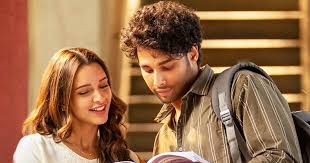
Dhadak 2 (a remake of the Tamil film Pariyerum Perumal directed by Mari Selvaraj) like Dhadak (a remake of the Marathi film Sairat directed by Nagraj Manjule) follows the trope of a Brahmin girl (Vidhi) meeting a Dalit boy (Neelesh). If it feels harsh to call it a trope, consider how in both Fandry and Masaan, it is a fair-skinned Brahmin girl and a dark-skinned Dalit boy. It’s important we acknowledge these tropes as they form rather than being isolated in a state of gratefulness for a seat at the table. When you search Dhadak 2 on Google, this is what comes up: “Nilesh and Vidhi fall in love with each other. However, tragedy strikes when the caste differences threaten to end their relationship.” Vidhi and Neelesh meet and become friends, but it is Vidhi who is in a position to “fall in love”. In the journey from friends to lovers, who has the privilege of this realization? This uncertain space of the in-between is not equal for all. Love does not suspend our identities. To realize that one is in love with a friend requires freedom of the mind and heart. Neelesh is not allowed this freedom. Dalits are not allowed this freedom. There is a monologue where he struggles to explain his existence to Vidhi, let alone the price that he would have to pay for them breaking caste rules. Caste informs every aspect of both these individuals’ lives but only one of them could ignore it. Both are law students but she comes from a lineage of lawyers while Neelesh is the first in his bloodline to become one. When asked by their professor, she did not hesitate to say her full name, Vidhi Bharadwaj. Yet, when Neelesh Ahirwar spoke to her about being harassed for his last name, she dismissed him saying, “that professor is like that with everyone.” There is no such thing as caste neutrality, only pride and shame. Tragedy has informed Neelesh’s life since the “accident of his birth” in Bhim Nagar. We see this in the opening of the film where a Dalit boy is being murdered and the scene cuts to it coming up casually in a conversation between Neelesh and his friends, as they all lived in the same area. We see a glimpse of his pain in a flashback where the police arrest him and his friends, and assault his mother for “stealing water”. In contrast, tragedy was introduced to Vidhi when she associated outside acceptability by speaking and spending time with a Dalit boy. The tragedy being, her not getting what she wanted, with no regard for the safety of the person she claims to love. Unlike Jo (from Pariyerum Perumal, the character Vidhi is based on) who is naïve, Vidhi is selectively critical. She sees the injustice of gender as she is the victim in this framing but fails to acknowledge her position as an oppressor in terms of caste. When Neelesh points out their differences, her response is to argue that their differences are not her fault. “Love heals all” is easy to say when you’re not the one who’s wounded. If Jo followed the “loosu ponnu” (dumb girl) stereotype of infantilizing women to be completely unaware of their surroundings, Vidhi is a Savarna feminist who does not acknowledge her complicity in caste oppression. She comes close to this when she offers to teach Neelesh English and Latin saying her privilege should be of some use. This was after Neelesh confided in her about an incident of caste violence he experienced. She could see caste when it was a story from his past, when the villains were strangers, but she could not see it in her family, in her brother, her father, herself. When asked about Neelesh’s last name by her family, she boldly, almost rebelliously said “Ahirwar” but later behaved cluelessly when he “disappeared” at the family function she invited him to. The idea that her family harmed him or were even capable of committing harm did not even occur to her. Caste differences did not threaten to end the relationship. It couldn’t be formed in the first place. Not only because of her family’s cruelty but also her own oblivion. What does it mean to be in a relationship, to love, if not to truly see the other person? bell hooks argues that the phrase “falling in love” suggests that love is something that just happens when it actually takes conscious effort. She speaks about how our behaviour shapes our feelings rather than it being the other way around. “To think of actions shaping feelings is one way we rid ourselves of conventionally accepted assumptions such as…that one simply falls in love without exercising will or choice” (hooks, 2000, p. 13). “When we are loving we openly and honestly express care, affection, responsibility, respect, commitment and trust” (hooks, 2000, p. 14). A core belief of hooks is that love cannot co-exist with abuse. Can we think of neglect as a form of abuse? If Vidhi has no idea of the pain her caste and her blood inflicts on someone she loves, can what she felt for Neelesh, even be called love? I wonder if the value we attach to the Dalit man is relationally conditional to the Savarna woman’s feelings about him. Is it because he is loved by an upper caste woman that the audience is supposed to care about him? If this typical Dalit boy meets Brahmin girl is flipped to Dalit girl meets Brahmin boy, would an audience care about a Dalit girl’s feelings the same way? Would they be moved by her tears? Much like how white women’s tears are weaponized, our caste counterpart of Savarna women’s tears holds true as well. After escaping a murder attempt from Vidhi’s family, Neelesh puts forth his “case” expressing how he has been relentlessly tortured by them but this was not respected by the plot; this did not bring about any resolution.
Dalit teen abducted, forced to prostrate before caste Hindus in Tamil Nadu’s Madurai
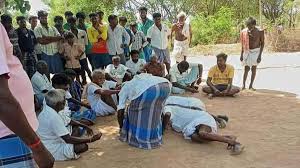
Madurai: A 17-year-old Dalit boy from Sankampatti village in Usilampatti, Madurai, was allegedly abducted and humiliated by a group of caste Hindus who forced him to prostrate before them. The incident occurred on January 16, but police registered a case only on January 18, sparking outrage from rights groups. According to the teenager’s complaint, members of the dominant caste abducted him when he returned home for the Pongal holidays. He alleged that the group hurled casteist slurs, beat him, and forced him to prostrate before each member present, including a six-year-old child. The boy’s relative, advocate Deviammal, further alleged that the attackers urinated on him before releasing him after learning that police had been alerted. The Usilampatti police have registered an FIR against six individuals, invoking provisions of the Bharatiya Nyaya Sanhita (BNS), Sections 296(b) and 351(2), along with Sections 3(1)(r) and 3(1)(s) of the SC/ST (Prevention of Atrocities) Act. However, the police denied the allegation that the accused urinated on the boy. “The case has been registered based on the teenager’s complaint. The claim about urination is not true. Further investigation is underway,” officials stated. The Neelam Cultural Centre condemned the delay in filing the FIR, accusing the police of shielding the accused. “The police registered the FIR only on January 18 even though the complaint was lodged on January 16. This shows their bias,” the group posted on X. The boy, who is undergoing treatment at the Usilampatti Government Hospital, remains traumatised. Relatives also accused the police of trying to weaken the case by misrepresenting his age as 19 instead of 17. facebook sharing buttontwitter sharing buttonwhatsapp sharing buttonlinkedin sharing buttonemail sharing buttonprint sharing button Courtesy : Vartha Bharati Note: This news is originally published on https:/varthabharati.com/bha and is used purely for non-profit/non-commercial purposes, especially human rights.
After ‘vote chori’, it’s ‘satta chori’, claims opposition, says bill aimed at keeping Naidu, Nitish in check
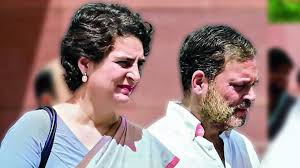
NEW DELHI: Even as it anchored the protest against the bill on unseating jailed ministers and CMs in the constitutional provisions, Congress claimed BJP brass was conjuring up the provision to keep a check on its two allies – CMs Chandrababu Naidu and Nitish Kumar – a political spin that struck a chord with the rest of the opposition as the issue flared up Wednesday. Rahul Gandhi said the bill takes the country back to “medieval times” when a king could just remove anybody at will, just for not liking somebody’s face. In the thick of opposition protest on “vote chori”, Modi govt’s move on a constitutional amendment to provide for automatic dismissal of any minister who has been jailed for 30 days, initially surprised anti-BJP camp. But INDIA bloc soon concluded it was a BJP bid to “distract” people from “vote chori” that has triggered a national campaign under a united rival camp. Congress MP K C Venugopal said, “When allies like Naidu and Nitish need to be threatened… the home minister brings this dangerous bill that strikes at the heart of the constitutional principles.” The spin is not only in step with opposition’s jibes post-2024 that Modi 3.0 is governing on crutches, but adds an intrigue to it. INDIA has been relishing the fact that TDP chose to write to EC on SIR in line with opposition’s concerns and in defiance of BJP. It also inserts a mischief ahead of Bihar polls where BJP is aligned with JD(U). But the generic attack line, that further cements the unity among regional parties, is that BJP is looking to destabilise opposition states. Congress MP Manickam Tagore sarcastically said, “Amid ‘vote chori’, this is law for ‘satta chori’.” RSP MP N K Premachandran said it is Article 356, by which the Centre can dismiss a state govt, by another name. “It is, in fact, an easier 356. Under the proposed law, you don’t need a governor’s report or evidence. Just file a case and arrest a CM for a month, and the govt is vulnerable.” Trinamool Congress MP Abhishek Banerjee said, “When EC could not be twisted to their tune, they unleashed ED, with an ulterior motive to jail opposition leaders, topple elected govts, and steal people’s mandate. This is a super emergency.” Courtesy : TOI Note: This news is originally published on https:/timesofindia.com/bha and is used purely for non-profit/non-commercial purposes, especially human rights.
Where is Dhankhar, asks Rahul, at VP nominee felicitation
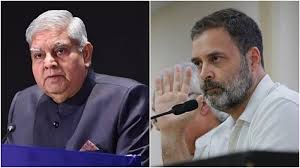
NEW DELHI: Urging fellow MPs to remember the reason behind the premature vice-presidential election, Congress MP Rahul Gandhi Wednesday asked, “where has the old VP gone”, echoing queries about Jagdeep Dhankhar’s whereabouts in the wake of his absence from public view since his shock resignation exactly a month ago. He even joked that search for Dhankhar has become like “those Agatha Christie books”. At a gathering of opposition MPs to felicitate their VP candidate B Sudershan Reddy, Rahul said there was a story behind why Dhankhar stepped down and there is a story behind “why he is in hiding”. He said, “Why is the (former) VP of India in a situation where he cannot say a word, one word, and has to hide… everybody knows it…. Suddenly, the person who used to burst forth in Rajya Sabha has gone silent, completely silent. So, these are the times we are living in”. Kharge framed the contest between Reddy and BJP nominee CP Radhakrishnan as “Constitution vs RSS”. He said, “It is an ideological battle for the soul of our nation. While the ruling party has chosen the ideology of RSS, we uphold the Constitution as our guiding light.” In an allusion to complaints the opposition had with Dhankhar as the Rajya Sabha chairman, Kharge said Reddy’s nomination is a promise of restoring fairness to the functioning of the Upper House. Underlining that he keeps abreast of the parliamentary proceedings, VP nominee Reddy said, “I just remembered one quote of Lohia, ‘Jab Sadak Khamosh Hain, Sadan Aawara Banti Hain’. (When streets are silent, the parliament becomes wayward)”. He added that Rahul does not allow the streets to stay silent. In an allusion to complaints the opposition had with Dhankhar as the RS chairman, Kharge said Reddy’s nomination is a promise of restoring fairness to the functioning of the upper house and ending the transgressions against the Constitution. He said the Parliament is witnessing a growing trend of stifling opposition voices and advancing the BJP’s ideology. Claiming that there is a war between those who are attacking the Constitution and those who are defending it, Rahul said, “I happened to look inside his (Reddy’s) pocket, and to my surprise, he had a copy of the Constitution of India. He carries it everywhere. He mentioned that he has been carrying the copy for 52 years.” In the thick of the row triggered by Modi govt’s bill on unseating ministers and chief ministers jailed for 30 days, Kharge said it will be used to destabilise the state govts, especially after a “blatant misuse of parliamentary majority over 11 years to arm the autonomous agencies with draconian powers to target opposition leaders”. Congress leader KC Venugopal said the opposition will hold a mock poll on September 8 to familiarise the MPs with the voting in the VP election. Courtesy : TOI Note: This news is originally published on https:/timesofindia.com/bha and is used purely for non-profit/non-commercial purposes, especially human rights.
Voter Rights Yatra’ will start without Rahul Gandhi, Tejashwi will take charge, now pamphlets will be distributed door to door
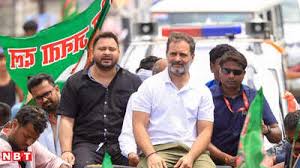
Voter Rights Yatra’ will start without Rahul Gandhi, Tejashwi will take charge, now pamphlets will be distributed door to door Bihar Voter Adhikar Yatra: Before the assembly elections in Bihar, India Alliance is taking out Vote Rights Yatra. The alliance is also putting its promises in front of the public along with the Voter Rights Yatra. The workers will go door to door and distribute the rights pamphlets. Rahul Gandhi will also join the Yatra. Akhilesh Yadav will participate in the Yatra on August 28. Today is the fifth day of the Vote Rights Yatra. Patna: Before the Bihar Assembly Elections 2025, Rahul Gandhi and Tejashwi Yadav have started the Voter Rights Yatra to woo the public. In this journey, the leaders of the alliance are directly communicating with the people and are taking the list of their promises to every house through pamphlets. Today is the fifth day of the Yatra, but Rahul Gandhi will not start the journey today. Let us know when Rahul Gandhi will join the Yatra again… When will Rahul Gandhi join the Voter Rights Yatra? Thursday is the fifth day of the Voter Rights Yatra. It will start from Sheikhpura and reach Munger, where there will be a halt at night. The yatra had a break on Wednesday. Rahul Gandhi will join the yatra from Thursday evening due to being busy with work related to the Vice Presidential election. Tejashwi Yadav and other opposition leaders will lead the yatra from the morning itself. Akhilesh Yadav will also join the yatra Congress General Secretary KC Venugopal informed on social media platform X that on August 28, Samajwadi Party President and former Uttar Pradesh Chief Minister Akhilesh Yadav will also join this yatra. He said that Akhilesh’s joining will further strengthen the public movement against vote theft. Mahagathbandhan workers distributing pamphlets full of promises During the yatra, alliance workers are distributing a pamphlet to the people. This pamphlet has pictures of the alliance’s prominent leaders Rahul Gandhi, Tejashwi Yadav, CPI-ML General Secretary Dipankar Bhattacharya, VIP chief Mukesh Sahni and CPI General Secretary D. Raja. This pamphlet mentions promises related to income, medicine, education and social justice. The alliance says that their election manifesto will be prepared on the basis of these promises. Direct communication with the public The alliance is explaining to the public what will be done if their government is formed. Their promise is that better employment (earnings), better health facilities (medicine), quality education (study) and social justice will be ensured to the people. Curated by: Sudhendra Pratap Singh About the author Sudhendra Pratap Singh, Principal Content Producer at Navbharat Times Online. Started journalism from Agra. Started the journey from local newspaper Agrabharat. From here the caravan grew and reached NBT.com via Kalpataru Express, Hindustan News Paper and News18. Currently, he is working on the politics of Bihar, Jharkhand, Rajasthan, Courtesy: Hindi News
BMC to develop housing colony for transgender people

Bhubaneswar: To empower the transgender community, the Bhubaneswar Municipal Corporation (BMC) has decided to develop a colony for such landless individuals living in slums. Earlier, the BMC distributed 44 land record certificates (LRC)s among the transgender people. The civic body will now provide financial assistance to construct houses under PM Awas Yojana for the identified transgender people, who were demanding patches of land with land rights for each to construct houses. “We will provide financial assistance of Rs 2.5 lakh as per the PMAY norms. Selected transgender beneficiaries will take up construction on the same land using their own resources. Since all the eligible individuals have been given LRCs at a particular place, it will be an exclusive colony,” said BMC deputy commissioner Ajay Mohanty. Land rights were distributed to the slum residents as per the Odisha Land Rights to Slum Dwellers Act, 2017, and the Odisha Municipal Corporation (Amendment) Act, 2022, officials said. A sub-committee scrutinised the survey reports, conducted by a private agency, thoroughly before finalising beneficiaries. “Once the work orders are issued and the transgender people start basic construction work, money will be disbursed in a phased manner,” Mohanty added. Courtesy : TOI Note: This news is originally published on https:/timesofindia.com/bha and is used purely for non-profit/non-commercial purposes, especially human rights.
For the first time in a village in Gujarat, a Dalit youth got his hair cut at a barber shop – a centuries-old tradition broken
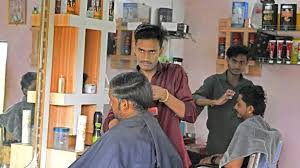
In Alwada village of Banaskantha, a Dalit youth got his hair cut at a barber shop for the first time, a historic step towards social equality. Banaskantha – A historic event took place on 7 August in Alwada village of Banaskantha district of Gujarat. Kiran (Kirti) Chauhan, a 24-year-old farm labourer of the village, got his hair cut at the village barber shop for the first time. This occasion became a symbol of freedom from the social shackles that had been going on for generations for the Dalit community, not just a haircut. Broken wall of generations About 250 Dalit families live in Alwada village with a population of about 6,500. But this discrimination was going on here for generations that the barbers of the village did not cut the hair of Dalits. Dalits were forced to go to other villages to visit barber shops and many times had to hide their caste. 58-year-old Chhogaji Chauhan says, “Our ancestors used to face this discrimination even before independence. And my children have also been facing the same for the last eight decades.” This experience was very emotional for Kirti Chauhan. He said, “For the first time in 24 years, I sat on the chair of the barber in my village. Earlier we always had to go out. That day I felt that I have been accepted in my own village and am free.” Initiative of social workers and administration In the continuous efforts of the Dalit community, they got the support of social worker Chetan Dabhi. He explained to the upper castes and barbers of the village that this practice is unconstitutional. When the matter did not work out with the explanation, the police and the district administration had to intervene. Mamlatdar Janak Mehta held a meeting with the village leaders and resolved the issue. At the same time, Gram Sarpanch Suresh Chaudhary expressed regret over the past discrimination and said that it is a matter of happiness for him to see this change happening during his tenure. Now all the five barber shops of the village welcome Dalit customers. Barbers and upper castes have also accepted the change Pintu, a 21-year-old barber who cut Kirti’s hair, said, “We used to do this due to tradition. But now that the elders have given permission, there is no restriction. Our business has also increased due to this.” People from the upper castes are also satisfied with this change. Prakash Patel from the Patidar community said, “If everyone can come to my grocery shop, then why not to the barber shop? It is good that this wrong practice has ended now.” A long journey still remains Although this change is commendable, the Dalit community believes that discrimination has not ended completely. Dalit farmer Ishwar Chauhan says, “Today we have got a place in the barber shop, but we are still made to sit separately in the community feast. Hopefully, one day this will also end.” For Alwada village, this haircut is not just an ordinary event, but a big step towards respect, acceptance and equality. As the villagers say, “This is not just a haircut, but a new beginning.” Rajan Chaudhary Courtesy: Hindi News
Such brutality with a Dalit youth in Muzaffarnagar: The mob beat him to death on suspicion of theft

Villagers in Budhana town brutally beat a 30-year-old Dalit youth on suspicion of theft, he died at home due to lack of treatment; police started investigation. Muzaffarnagar (Uttar Pradesh): A 30-year-old Dalit youth was beaten to death by villagers in Budhana town of the district on Sunday night on suspicion of theft. Police confirmed this on Monday. The deceased has been identified as Monu. The complaint filed by the family states that the villagers beat Monu badly on suspicion of theft. He somehow reached home but died late night. Quoted by the media, Superintendent of Police (Rural) Aditya Bansal said, “No one will be allowed to take the law into their own hands. Strict action will be taken against the culprits.” Police said that a video of the incident is going viral on social media, with the help of which the accused are being identified. Some people have also been detained and questioned. Monu’s body has been sent for postmortem and investigation into the case is underway. Rajan Chaudhary Courtesy : Hindi News