
Three-day transgender arts fest in Kozhikode from Aug 21

T’puram: Varnapakittu, a three-day annual transgender arts festival, will begin on Thursday in Kozhikode. The first day will feature a national conference with delegates from states that have implemented transgender policies. Another national conference involving subject experts will also take place on the day. The event will include panel discussions on various transgender and queer-related topics and will also feature a film festival centred on transgender themes. Social justice minister R Bindu announced the event schedule on Tuesday. Panel discussions will cover topics such as the health and welfare of transgender individuals, education and employment skills, social justice and human rights. Participants in the panel discussion will include Dr Sanjay Sharma from Indian Association for Transgender Health, SHSRC executive director Dr Jitesh, head of the plastic surgery department at Kottayam Medical College Dr Lakshmi, mental health expert Dr Indu P S, Kerala’s first transgender dentist and public health student Dr Anu Radhakrishnan, social worker and writer Vijayarajamallika, Tamil Nadu’s first transgender assistant professor Dr N Jency, Kerala’s first transgender research student Hrithish Hrithu, human rights activists Saddam Hajjamam and Koyal Ghosh, vice-president of the Tamil Nadu-based ‘SATHI’ Dr L Ramakrishnan, head of gender studies department at MG University Dr Arathi P M, head of social work department at Sree Sankaracharya University of Sanskrit Dr Reshma Bharadwaj, member of the state transgender justice board Arjun Geetha, human rights activist and lawyer Adv Padma Lakshmi and Kerala Knowledge Economy Mission’s diversity inclusion manager Prajith P K. Courtesy : TOI Note: This news is originally published on https:/timesofindia.com/bha and is used purely for non-profit/non-commercial purposes, especially human rights
Dalit woman raped in Jagdishpur: Pradhan’s brother accused; called on pretext of getting benefits of housing scheme
A case of rape of a 50-year-old Dalit woman has come to light on Thursday in Bhale Sultan Memorial Police Station area of Jagdishpur. The brother of the village head is accused of calling the woman to his nursery on the pretext of getting benefits of housing scheme. Finding her alone there, he raped the woman. Amethi, The victim told the police that the accused had been talking to her about getting benefits of housing scheme for several days. When the woman informed her husband about the incident, the husband talked to the accused about it. The accused not only abused her, but also threatened to kill her if she informed anyone about the incident. According to SHO Tanuj Pal, a case has been registered on the complaint of the victim. The woman has been sent for medical examination. The police team reached the spot and is investigating the matter. The search for the accused is on and soon he will be arrested and legal action will be taken. Courtesy : Hindi News
Tamil Nadu: Dalit youth kidnapped, forced to bow down to upper caste men
Police in Usilampatti, Madurai, have booked six caste Hindus for allegedly abducting and humiliating a Scheduled Caste teenager by forcing him to prostrate before them. Though the incident took place on January 16, the FIR was registered only two days later. The 17-year-old victim, a resident of Sankampatti village, was reportedly taken by members of the dominant caste when he returned home during the Pongal holidays. According to his complaint, he was beaten, subjected to casteist abuse, and forced to bow down before each member of the group — including a six-year-old child. “They released him only after learning that the police had been alerted,” said advocate Deviammal, a relative of the boy. She further alleged that the attackers urinated on the teenager before letting him go. The Neelam Cultural Centre criticised the police for delaying the case and accused them of protecting the accused. “The FIR was filed only on January 18 despite the complaint being lodged on January 16. This delay reflects police bias,” the group posted on X. The FIR has named six individuals and includes charges under sections 296(b) and 351(2) of the Bharatiya Nyaya Sanhita (BNS), along with sections 3(1)(r) and 3(1)(s) of the Scheduled Castes and Scheduled Tribes (Prevention of Atrocities) Act. While police acknowledged the registration of the case, they denied the allegation of urination. “The case has been filed on the basis of the complaint. The urination claim is not true. Investigation is ongoing,” the police statement read. The boy, currently receiving treatment at Usilampatti government hospital, is said to be deeply traumatised. Deviammal also disputed the police’s claim about his age, stating, “He is 17, not 19. The officials are trying to weaken the case.” Courtesy : Muslim Mirror Note: This news is originally published on https:/muslimmirror.com/bha and is used purely for non-profit/non-commercial purposes, especially human rights
Case of kidnapping of Dalit girl in Barabanki: Allegation of the brother of the girl recovered from Mumbai – the accused are pressuring to convert
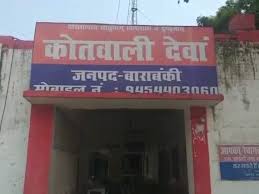
A case of kidnapping of a Dalit girl has come to light in June from Deva area of Barabanki. The girl’s brother has alleged that the accused are pressuring his sister to convert. They are threatening to kill her if she refuses to convert. A video of the girl’s brother has also surfaced. In the video, he is claiming that the accused have a connection with Changur. The brother has also given an application to the police station in-charge Deva on August 14. In the application, the girl’s brother told that a youth from the area along with his friends kidnapped his sister. The accused started pressuring her to convert. When the girl refused, she was sent to Mumbai. She was kept hostage there. The girl called her brother and informed him about being held hostage in Mumbai. After this, with the help of the police, the girl was recovered from Mumbai. Deva Kotwal Ajay Kumar Tripathi says that he has not received any complaint letter. He said that an old video of the girl has surfaced. In this video, she is saying that she went with the young man voluntarily. Police is investigating the matter. Sarfaraz Warsi Courtesy: Hindi News
The auspicious moment of the much-awaited Yogi cabinet expansion is coming soon, backward-dalit leaders including Puja Pal expelled from SP will get a chance!
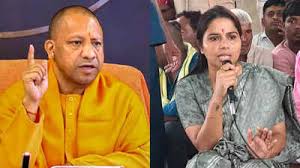
Pooja Pal News: The auspicious moment of Yogi cabinet expansion is about to come. If experts are to be believed, the cabinet expansion can happen in the coming Navratri, in which backward and dalit leaders including Puja Pal can be given a chance. Abhay Singh Rathore, Lucknow: After 2014, 2017, 2019, 2022 and 2024, now everyone’s eyes are on the UP assembly elections-2027. This election is very important for every political party, because the way to Delhi goes through UP. On the other hand, the ruling BJP is making every possible effort to win the 2027 assembly elections and score a hat-trick of victory, but the results of the crushing defeat that the BJP has suffered in UP in the last 2024 Lok Sabha elections have warned the BJP for the upcoming assembly elections. Samajwadi Party’s PDA (Backward, Dalit and Minority) is believed to have played an important role in this setback to BJP. At the same time, BJP has now taken a lesson from its old and bad results and has made a special strategy to blunt the edge of SP’s PDA. A sample of which will be seen in the Yogi cabinet expansion before the upcoming elections. Cabinet expansion can happen on the auspicious days of Navratri Actually, the first cabinet expansion of the second term of UP’s Yogi government is possible for a long time. There were discussions many times, but it remained limited to discussions only. But, now soon that auspicious moment is going to come, which is being awaited by MLA-MLC to the ruling party and most of all the opposition. If reliable sources are to be believed, the much-awaited cabinet expansion of the Yogi government can happen in the coming auspicious days. That is, there is a strong possibility of cabinet expansion in the days of the upcoming Navratri. This cabinet expansion is considered very important from the point of view of the upcoming assembly elections, because the caste and social equations that will be seen in this expansion will be the future strategy of BJP. That is, this cabinet expansion will leave the mark of the election strategy of the assembly elections. It is almost certain that Puja Pal, expelled from SP, will become a minister So far, the names of many leaders have been discussed among those who will be included in the Yogi cabinet expansion, which have remained limited to discussions only, but it is considered certain that the name of MLA Puja Pal, who was expelled from the Samajwadi Party, will be included in this cabinet. By making Puja Pal a minister, BJP will try to hit many targets with one arrow. The biggest strength of Puja Pal becoming a minister is said to be her coming from the extremely backward class. Also, the way she opened a front against mafia Atiq Ahmed in the recent assembly session and praised CM Yogi Adityanath, after that the Samajwadi Party has expelled her from the party. Due to this, BJP feels that the public will have sympathy with her. After BSP, SP, now she will soon start a new innings with BJP In her 20-year political journey, Puja Pal has been in BSP for 13 years and SP for about six and a half years. Now after being expelled from SP, Pooja Pal can soon start a new innings with BJP. Recently she also met CM Yogi. After which the discussion is intense. She will be included in the cabinet expansion only after joining BJP. Senior journalist Rajkumar Singh said that BJP can project Pooja Pal as a female firebrand leader. Also, by making Pooja Pal a minister, BJP will also try to hurt Akhilesh Yadav’s PDA. Similarly, other people from OBC can also be made ministers. Pooja Pal will become firebrand woman leader of BJP BJP has made a special strategy to deal with the PDA of Samajwadi Party. Now BJP’s maximum focus is on P i.e. backward and D i.e. Dalit except A (minority i.e. Muslim) of PDA in Akhilesh Yadav. BJP is now trying its best to bring the backward and Dalit class voters who had gone to SP in the Lok Sabha elections to its side. For this reason, the ruling BJP is now completely focused on backward and Dalit. Senior journalists say that UP BJP still lacks a female firebrand leader and the way Puja Pal has praised CM Yogi while making statements against her husband’s murderer Atiq Ahmed in the House, BJP seems to be overcoming the lack of a female firebrand leader. It is difficult for upper caste leaders to get a place in the cabinet By doing this, BJP will make inroads into anti-Muslim and Akhilesh’s Dalit vote on the pretext of Atiq. Senior journalists said that after being expelled from SP, Puja Pal has now become completely independent. Now she can go anywhere, so before being made a minister, Puja Pal will join BJP. If the senior journalist is to be believed, the chances of any Thakur-Pandit leader being included in this cabinet expansion are very low, because they (Thakur-Pandit) have adequate representation in the current government. In such a situation, if BJP includes any upper caste leader in the cabinet, then Akhilesh Yadav’s PDA will become more powerful. Taking advantage of this issue, Akhilesh Yadav can also attack BJP, so mostly leaders from backward and Dalit classes will become ministers in the cabinet. Bhupendra Chaudhary, Akash Saxena and many other names in discussion, Raja Bhaiya not in the list! Apart from Puja Pal, Akash Saxena, MLA from Rampur, can also be made a minister in this list. Also, MLA Thakur Ramveer Singh, who won the by-election from Kundarki seat of Moradabad, current UP BJP President Bhupendra Chaudhary and some other leaders can be included in the cabinet. There are 7 vacant ministerial positions in the Yogi government, out of which 5 new leaders can be made ministers. Ramveer Singh has sent a message by winning from Kundarki and Akash Saxena from
Behind Gender Balance In Karnataka’s Dalit Communities Lies A Story Of Exclusion
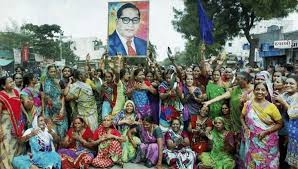
Beneath Karnataka’s recorded gender parity statistics among Scheduled Castes lies a fractured reality of caste hierarchies, poverty, and unequal opportunities for Dalit women. When the Justice H. N. Nagamohan Das Committee submitted its 1,766-page report on Karnataka’s Scheduled Castes earlier this month, one statistic jumped out of the dense pages of charts and tables. For the first time in decades, the state has recorded near gender parity in its Scheduled Caste population. Out of a total of 1.07 crore people surveyed, 53.6 lakh are men and 53.3 lakh are women, making the ratio 50.1 per cent male to 49.8 per cent female. The finding is significant in a country where skewed sex ratios have long symbolised discrimination and neglect. For policymakers in Karnataka, it marks what many are calling a “turning point” in caste and gender politics. ‘It is very rare in India’s caste demographics to see this kind of balance,’ a senior official in the Social Welfare said. ‘For us, this is not just a number; it has to become a foundation for gender-sensitive policy.’ The Committee too has framed this balance as a “positive development” that could shape the state’s future interventions in education, employment, and healthcare for Dalit women. Yet beneath the optimism lies a more complicated story. While parity is visible at the aggregate level, the micro realities of population distribution, poverty, and caste fragmentation raise the question of whether this statistical balance will actually translate into equality on the ground. The hidden divide: small sub-castes left behind The survey shows that 15 of the 101 Scheduled Caste sub-castes in Karnataka now have more women than men. Some of these groups are extremely small. The Lingader, for instance, have only 60 members statewide, but women form 62 per cent of their total population. The Mundala sub-caste, which is the largest among female-majority groups, has 31,726 members and a gender split of 52 per cent women to 48 per cent men. The district-level data also reveal striking variations. In Kodagu, Udupi, Dakshina Kannada, and Mandya, Scheduled Caste women constitute 52 per cent of the sub-caste populations, higher than the state average. ‘This kind of district-level variation is very important,’ said Dr Ramesh Gowda, professor of sociology. ‘It shows that in coastal and hilly districts, migration patterns and male mortality rates create a gendered demographic tilt. These women form the backbone of SC households, but their labour and struggles are often invisible.’ Karnataka’s Scheduled Castes have, for the first time, recorded near gender parity, with almost equal numbers of men and women. But beneath the promising statistic lies a fractured reality of caste hierarchies, poverty, and unequal opportunities for Dalit women. But parity in numbers does not automatically translate into parity in opportunity. The same report underlines that Karnataka’s Scheduled Caste population is far from homogenous. The internal composition is deeply unequal. Seventy-three of the 101 sub-castes have fewer than 10,000 members each. Another twelve fall in the 10,000 to 50,000 range. Only five groups fall between 50,000 and one lakh, while just eleven sub-castes exceed one lakh in population. The implications are clear: almost ninety per cent of Karnataka’s SC sub-castes are numerically small and scattered across the state. Their small numbers mean that even though they are constitutionally entitled to reservations, they do not have the organisational networks, political clout, or critical mass to convert quotas into tangible benefits. The report is frank about this imbalance. It observes that “despite having SC reservation, these groups do not have the numerical strength to compete with stronger communities.” In other words, the communities that are small in number end up being outcompeted by larger sub-castes within the SC umbrella, who are better networked and more visible in state institutions. The consequences of this imbalance are starkest in the area of poverty. The survey notes that many of the smaller sub-castes live in “maximum poverty”, with families struggling even to secure two proper meals a day. Beyond numbers: the politics of internal quotas For activists working in Dalit women’s rights, this gap between numbers and lived experience is painfully familiar. Shanta Devi, women activist in North Karnataka, said that the benefits of state schemes rarely trickle down to the smallest groups. ‘When the government announces scholarships or job quotas, it is usually the bigger sub-castes with hostels, coaching centres, and political leaders who benefit. Smaller communities, especially women among them, remain invisible,’ she said. The Das Committee itself cautions against reading parity as empowerment. While it notes the near-equal numbers of men and women, it also warns that “the smallest sub-castes face the greatest risk of being left out.” Many are not even properly documented in official records. Some sub-castes, like the Lingader or Adi Beda, have populations so tiny that they are easily subsumed within broader categories, erasing their distinct needs. For activists working in Dalit women’s rights, this gap between numbers and lived experience is painfully familiar. Shanta Devi, women activist in North Karnataka, said that the benefits of state schemes rarely trickle down to the smallest groups. ‘When the government announces scholarships or job quotas, it is usually the bigger sub-castes with hostels, coaching centres, and political leaders who benefit. Smaller communities, especially women among them, remain invisible,’ she said. The political backdrop to this survey is Karnataka’s long-running debate over internal reservation among Scheduled Castes. For decades, groups like the Madigas (classified as SC-Left) have argued that the benefits of the 17 per cent SC quota have been disproportionately cornered by the Holeyas or Chalavadis (SC-Right). After years of agitation, the state cabinet recently approved an internal division of the quota: 6 per cent for SC-Left, 6 per cent for SC-Right, and 5 per cent for all other SC groups. Officials described the Cabinet’s decision on internal reservation among SCs as an attempt to ensure ‘equity and social justice’ across all communities within the SC category.” Whether this formula addresses the concerns of the smallest sub-castes remains to be seen. Critics point out that
‘Results of last LS polls manipulated’: Rahul Gandhi in Bihar rally; doubles down on ‘vote chori’ charge against BJP, EC
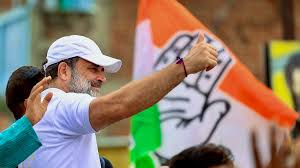
NEW DELHI: Rahul Gandhi on Thursday in Bihar said that he was confident the 2024 Lok Sabha polls were manipulated. “Confident that results of last Lok Sabha polls were manipulated,” said Rahul Gandhi at a rally in Munger. The opposition leader doubled down on his ‘vote chori’ accusation against the ruling party, saying, “BJP trying to steal people’s votes to benefit a section of industrialists,” he said in the rally. The Congress chief further said that the party will not allow BJP to get away with alleged ‘vote chori’. “We will not allow BJP to indulge in ‘vote chori’ in collusion with Election Commission,” he said. Gandhi said that ‘vote chori’ is an “attack on the Constitution of India.” Earlier in the day, the Congress leader urged citizens to safeguard their voting rights and protect the country’s democracy. Posting on his X account, Gandhi said: “Dear Voters of India, I want to ask you all a straightforward question – can a government formed by stealing votes ever have the intention of serving the public? No, right! They don’t even need your votes, so they don’t care about your problems either.” — RahulGandhi (@RahulGandhi) Gandhi went on to list the Centre’s alleged governance failures in his post. – “Record-breaking unemployment is ruining the future of the youth. The government keeps filling the coffers of capitalists!” -“Scandals like NEET, SSC, and paper leaks have destroyed the careers of millions of students. The government has simply turned a blind eye!” – “Inflation is skyrocketing, making life unbearable for the common man. Yet, the government keeps increasing taxes!” – “Train accidents and the collapse of basic infrastructure like roads and bridges have led to the untimely deaths of hundreds of innocent people. But the government hasn’t even held anyone accountable.” – “From Poonch to Manipur, incidents of terror and violence have occurred – hundreds have died. The government hasn’t even taken responsibility!” – “Demonetisation, COVID, and the farmers’ protests claimed millions of lives. The Prime Minister didn’t offer help, let alone show any empathy!” Courtesy : TOI Note: This news is originally published on https:/timesofindia.com/bha and is used purely for non-profit/non-commercial purposes, especially human rights.
Opposition will benefit from Rahul’s walking
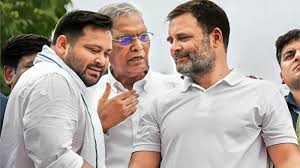
Rahul Gandhi has started ‘Vote Adhikar Yatra’ in Bihar, which is his fifth major padyatra. Its objective is to raise the issue of removal of names from the voter list and to unite the marginalized communities. Rahul Gandhi’s Bihar Voter Rights Yatra Subodh Ghildiyal: Rahul Gandhi has built his political identity and image around padyatras from the very beginning. The ‘Vote Rights Yatra’ which started from Bihar on Sunday is his fifth major padyatra. 508 days ago, he had done Bharat Jodo Yatra from Kanyakumari to Kashmir and Manipur to Mumbai, which was successful. Under his current campaign in Bihar, he will walk both on foot and by vehicle. He will cover a distance of 1300 km through 20 districts. Just need an opportunity. Even in his early days in politics, Rahul had done padyatra against land acquisition in Bhatta-Parsaul of West UP. To promote the issues of farmers, he did a ‘Kisan Yatra’ from Deoria to Delhi. In 2015, he visited Kedarnath. Its purpose was to show that the situation has become normal after the disaster of 2013. All these examples show that wherever there is a slight possibility, Rahul Gandhi takes to the streets. Shadow of SIR. But the Bihar Yatra is not like any previous campaign. It is happening at a time when the Supreme Court, accepting the demands of the opposition, has directed the Election Commission to make public the information of those whose names have been removed from the new draft roll. Assembly elections are to be held in Bihar by the end of this year and a few months before that, when the process of Special Intensive Revision i.e. SIR suddenly started, many doubts started arising. Fear of the opposition. The meeting with the Election Commission deepened the fear of the opposition that the workers, poor and marginalized people who have migrated outside the state may be excluded from the voter list. This class is considered anti-BJP. There were massive protests against SIR and the matter reached the Supreme Court. All this happened during the monsoon session of Parliament, which also gave a big platform to the opposition. This is how the possibility arose. On August 7, Rahul claimed that there was a large-scale manipulation in the voter list of Mahadevpura assembly constituency of Bengaluru Central Lok Sabha seat during the 2024 general elections. This claim shocked the country and strengthened the doubts that the Congress has been expressing on the results of some seats of Maharashtra Assembly elections and 2024 Lok Sabha elections. When the Supreme Court gave instructions to the Election Commission, it was believed that Rahul’s hard work has paid off. This also led to the possibility that could there be another yatra, which carries protest and election together? New identity. After the SIR controversy, RJD, CPI-ML and other allies welcomed the idea of the yatra. This 16-day yatra will pass through 100 to 125 assembly constituencies. There will be an attempt to woo the extremely backward classes, SC, ST, Muslims and poor sections. Rahul has created a new identity by combining caste census, removal of reservation cap, exposing atrocities and secularism. This is on the lines of Mukesh Sahni’s VIP Party and Dipankar Bhattacharya’s CPI-ML. Example of UP. The purpose of Rahul Gandhi’s Bihar visit is to attract the Bahujan Samaj and to make a dent in the vote bank of Nitish Kumar’s JDU and Chirag Paswan’s LJP. Akhilesh Yadav had made a similar strategy in UP last year, in which he was successful. In response to BJP’s extremely backward class, Samajwadi Party created its identity as PDA i.e. a party of backward, Dalit and tribal classes. Rahul Gandhi’s agenda of social justice worked in conjunction with Akhilesh and SP got a spectacular victory in the last Lok Sabha elections. SP’s victory. From 2004 till now, there is a lot of evidence that shows that in the states where Congress is marginalized, Rahul Gandhi’s presence benefits his allies or ideological rivals more. Rahul’s important role in the victory of the Mahagathbandhan in UP in 2024 is internally accepted. There is even talk that the campaign he launched against the corruption prevalent in UP in 2007 made BSP a villain and this became the basis for the victory of SP in 2012. The Rahul factor also worked during the Lok Sabha elections in Maharashtra last year. At the same time, despite Congress being a marginal party in Tamil Nadu, DMK gives importance to Rahul’s credibility. The journey will happen again. In Sasaram, Tejashwi Yadav was driving the jeep and Rahul was sitting on the seat next to him. This picture indicates that Tejashwi is in the lead role in his state. RJD has the organization, while Congress brings national leadership and ideology, whose face is Rahul. Bihar elections are still a few months away. In such a situation, this trip cannot be the last. It is expected that Rahul will hit the road again when the elections come closer. Edited by: Sanjeev Kumar Courtesy: Hindi News
Rahul accuses BJP of stealing votes, says Bihar will fight back
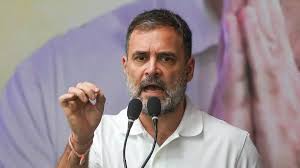
Patna: Congress leader Rahul Gandhi on Thursday accused the BJP of “stealing votes” with the support of the Election Commission and claimed the alleged practice was aimed at shaping the future of industrialists. He said Bihar would not allow it to happen again. “Do you know why the vote theft is being done across the country? They want to rob your future and shape the future of big industrialists,” Rahul told a gathering in Munger on the fifth day of his “Voter Adhikar Yatra”. Rahul returned to Bihar after a day’s break and joined the yatra in Lakhisarai. Earlier in the day, RJD leader and leader of opposition in the state assembly, Tejashwi Prasad Yadav, had resumed the march in Sheikhpura in his absence. Apprehending that even the last elections might have been manipulated, Rahul alleged, “BJP and the Election Commission are stealing votes in every state. Perhaps they even did it in the last election, but this time we have found out.” Standing atop an open jeep alongside INDIA bloc leaders, Rahul waved to crowds lining the roads. Groups of enthusiastic youths rushed forward to greet him and he shook hands with many, stopping frequently to interact with people. Earlier in the day, he wrote on social media that a govt formed by stealing votes had no interest in serving the public. “Since they don’t even need your votes, they don’t care about your problems either,” he said. Citing demonetisation, the Covid crisis and the farmers’ movement, he alleged that despite hundreds of lives being lost, PM Narendra Modi neither offered help nor expressed empathy. “Do you know why? Because this government wasn’t chosen by you; it was formed by stealing votes. Whether you live, die, or suffer – it makes no difference to them because they are confident they will return to power through theft.” Calling a clean voter list the foundation of free and fair elections, Rahul appealed to the masses not to let their rights slip away. He alleged record unemployment was destroying the future of youth while scams such as NEET, SSC and repeated paper leaks had crushed the dreams of lakhs of students. “But the govt has simply turned a blind eye,” he said. Rahul also attacked the NDA govt over incidents of violence and terror. “From Pahalgam to Manipur, hundreds of lives have been lost, but the govt has not taken responsibility,” he alleged. He added that train accidents and the collapse of roads and bridges had caused untimely deaths, yet accountability was missing. The yatra, launched from Sasaram on Aug 17, is scheduled to conclude with a rally in Patna on Sept 1. Courtesy : TOI Note: This news is originally published on https:/timesofindia.com/bha and is used purely for non-profit/non-commercial purposes, especially human rights.
NE’s 1st trans doctor wins legal battle to have new identity in academic certs

IMPHAL: Beoncy Laishram, who broke the glass ceiling by becoming the Northeast’s first transgender doctor, won another landmark battle Tuesday when Manipur high court acknowledged her right to have all academic certificates reissued to reflect her “female” name and gender. The court directed the authorities to issue the certificates Beoncy had applied for within a month of the order. Beoncy, born male and known as Boboi Laishram before undergoing gender reassignment surgery in Oct 2019, got her Aadhaar, voter ID and PAN updated by producing a transgender certificate issued by the district magistrate of Imphal West. She approached the high court in Feb 2024 after the Board of Secondary Education Manipur, Council of Higher Secondary Education Manipur, Manipur University and Manipur Medical Council refused to change her name and gender in their records. Beoncy’s counsel Jayna Kothari cited sections 5, 6 and 7 of the Transgender Persons (Protection of Rights) Act, 2019, while arguing for her right to have the requisite modifications made in her academic certificates. The law applies to all official documents, including one’s birth certificate. The court ruled that the relevant provisions outlined in sections 6 and 7 of the Act must be incorporated into all laws, rules and regulations governing establishments within Manipur, as defined under Section 2(b) of the legislation. For Beoncy, the judgment comes as “a relief” that she can now build on her career without having to worry about identity confusion. “I have been thinking of specialising in surgery or gynaecology someday. I was scared I would be made to stay in a boys’ hostel just because my academic records say I am a male,” she said. Courtesy : TOI Note: This news is originally published on https:/timesofindia.com/bha and is used purely for non-profit/non-commercial purposes, especially human rights.