
Dalits protest against Hubballi honour killing
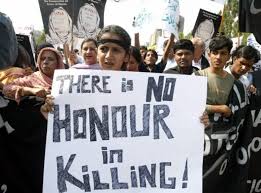
Members of Karnataka Rajya Chalavadi Mahasabha and other organisations took to the streets in Hubballi on Monday against the recent honour killing in Inam Veerapur village in Dharwad district in which a pregnant woman passed away. Protestors condemned the murder of the pregnant woman by her family members who were upset that she married a Dalit. They demanded death penalty for the accused. They walked from Ambedkar Circle to the Tahsildar’s office to express their protest. They said that attacks against Dalits and cases of families killing their women who marry Dalits are increasing and demanded steps to stop such acts. They also demanded compensation to the families of victims. It is unfortunate that in the land of Basavanna, Dalits are not able to live peacefully. Mahasabha president Parameshwar Kale and others were present. The Hindu Bureau Courtesy : The Hindu Note: This news is originally published on https:/thehindu.com/bha and is used purely for non-profit/non-commercial purposes, especially human rights
G Ram G ‘anti-dalit’, restore MGNREGA: Punjab assembly passes resolution
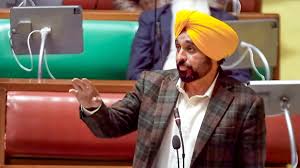
Chandigarh: Punjab vidhan sabha on Tuesday “unanimously” passed a resolution accusing the BJP-led Centre of taking away the livelihood of dalit labourers and poor families by “scrapping” MGNREGA and replacing it with the VB-G RAM G Act. Dubbing the new Act “anti-Dalit”, and a “deliberate and dangerous conspiracy” that has effectively taken away the right to survival of Dalit labourers across the country, the House demanded that it be immediately withdrawn, and MGNREGA restored to its original rights-based form. The resolution also took sharp aim at Shiromani Akali Dal, accusing the party of maintaining “silence” on the issue. “This silence is because they hope to re-establish their alliance with the BJP in 2027, even if the dalits have to pay the price for it. Keeping silent on the verdicts against dalits is also a crime,” it said. The resolution further alleged that the Centre moved beyond merely dismantling a “govt scheme” to effectively destroying the “right to survival” for the country’s dalit labourers. According to the resolution, the BJP’s decisions repeatedly prove a desire to marginalise them and reflect a sentiment that “BJP hates Dalits”. The resolution said, “Attacking MGNREGA is actually an attack on the dignity and existence of Dalits.” Through the resolution, the House noted that the “abolition” of the programme—which previously allowed labourers to stay in their villages, educate their children, and live with dignity—is a direct attack on the “dignity and existence” of the community. According to the text, the “scrapping” of the scheme “extinguished the kitchen stoves” of families. The resolution, moved by the rural development and panchayats minister Tarunpreet Singh Sond, said, “A govt that extinguishes the kitchen stoves of the dalit forfeits its moral right to seek votes from the community. This House clearly states that the policies of the BJP-led Centre are anti-Dalit.” It stated that the decision to “abolish MGNREGA” is not merely an administrative choice but a “declaration of thought from an anti-dalit perspective”. “MNREGA was the last means of survival for millions of dalits and poor dalit families in the country. It was the system that allowed dalit labourers to stay in their villages, earn their livelihood through hard work, send their children to school, and live with dignity,” the resolution said. “This House therefore recommends that the state govt demand from the BJP-led Centre govt to immediately withdraw the decision to scrap MNREGA, that MNREGA be fully restored to its original right-based form, and ensure guaranteed work and wages for Dalit labourers and poor Dalit families across the country,” it said. The resolution concluded by reaffirming that the Punjab vidhan sabha stands firmly with labourers and demands that the “abolition” of these rights be reversed to protect the “original right-based form” of the employment guarantee. ‘Extra burden on states’ Concerns were raised over the shift in financial responsibility from a fully centrally sponsored model to a 60:40 Centre-state sharing model under the new Act. It was pointed out that the change will impose an additional financial burden on states like Punjab that are already facing financial difficulties. Furthermore, if central budget limits are reached, the state must bear the entire responsibility for unemployment allowances and 100% of the costs for work provided beyond the federal allocation. A Congress MLAs alleged that there was an attempt to scrap the scheme, as the states will not be able to bear the exorbitant financial burden. The opposition party also offered support to the AAP govt to take its fight against the scheme to Delhi. Courtesy : TOI Note: This news is originally published on https:/timesofindia.com/bha and is used purely for non-profit/non-commercial purposes, especially human rights
The Constitution’s emancipatory promises on caste remain elusive
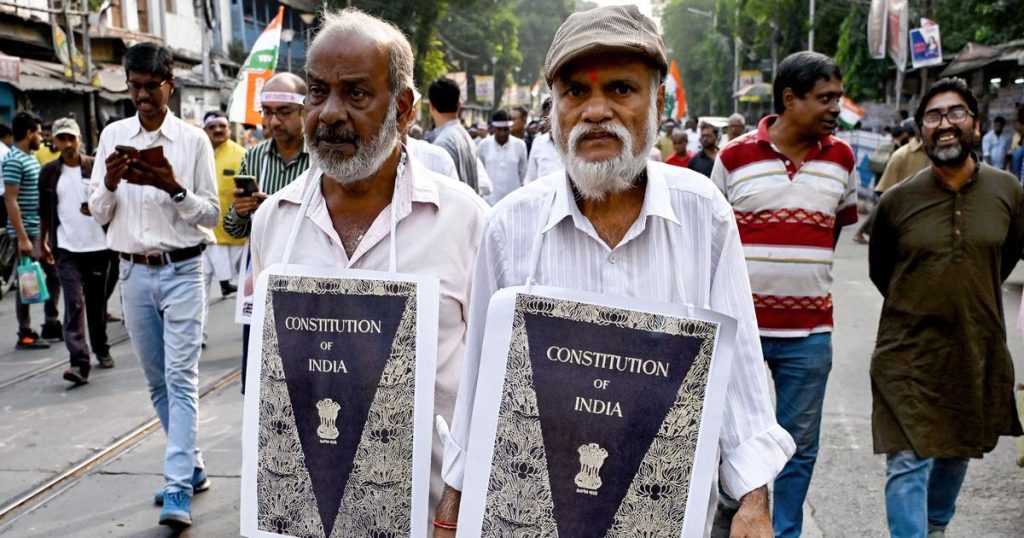
Constructively criticising the Constitution is imperative at a time when its survival is threatened by the Hindutva project. For a series of 11 short treatises by leading scholars on the ideas of free India’s Constitution, we thought it fitting to invite India’s highly regarded scholar Anand Teltumbde – also one who recently served time as a prisoner of conscience – to write the closing book in the series. In this chain of books (that I am editing with Neera Chandoke for Speaking Tiger), we have looked at how the Constitution was imagined, debated and written; its understanding of secularism, socialism and democracy; and its foundational pledges of justice, liberty, equality, fraternity, federalism and the scientific temper. We requested Teltumbde to reflect on what the Constitution has meant for India’s most dispossessed peoples, and how much it has contributed to helping access their rights to a life of dignity and hope. His conclusions are sobering, scathing and unsparing. Teltumbde sees an immense gap between the vision laid out in the Preamble and the realities of India’s present. “Liberty is under attack. Economic inequality is worse now than it was even under colonial rule. Fraternity has been shredded by rising communal hatred and growing caste consciousness under the revivalist Hindutva movement. Justice – social, economic, and political – remains elusive. The very foundation of our democracy feels dangerously fragile”. Teltumbde argues that we should not be constrained from constructively critiquing the Constitution because at this moment its very survival is gravely threatened by the Hindutva project of dismantling and rewriting the constitution to establish a Hindu Rashtra. With BR Ambedkar, he is convinced that a Hindu Rashtra would be the greatest calamity for India. Unlike the critique of the Constitution of the reactionary far-right, he affirms the emancipatory promise of the Preamble – liberty, equality, fraternity, and justice. Yet, he sees these as values the Constitution pledged but has failed to deliver. “Yes”, he says boldly, “the Constitution is flawed…but dismantling it without first building a genuinely democratic and pro-people alternative would be to destroy the last remaining legal and moral structure within which the struggle for justice can still be waged”. The gravest betrayals of the Constitution are arguably of Dalits His treatise focuses specifically on Dalits, who have for millennia been oppressed by structures of caste, and barred from education and dignified work. But they apply more generally to all oppressed and marginalised communities who constitute the Indian republic. Teltumbde observes that on the one hand, perhaps Dalits feel the greatest emotional connection among all Indians to the Constitution. This is because its writing was led by Dr Babasaheb Ambedkar who they venerate for leading the struggles for their liberation from the centuries-old bondages of caste. Yet, he believes that the Constitution has failed resoundingly in fulfilling its emancipatory promise for Dalits, arguably more than for any other community. It has contributed to the rise of a small Dalit middle-class. But this small class shares with the large mass of Dalits only “a history but not a present”. The overwhelming majority of Dalits continue to endure the caste stigma and oppression that has been their fate for millennia, living in “a vast, submerged reality of suffering and despair”. Dalits, he points out, form a quarter of India’s population, if we include Dalit Christians and Dalit Muslims. Their population, exceeding 320 million, would make them the third-largest “nation” in the world, larger than the combined population of 150 of the least populous countries on the planet. However, their wide dispersal across the country has meant that – like Muslims – they rarely form a numerical majority. Teltumbde rejects the premise of some Hindutva intellectuals that the British rule created caste. But, he avers that colonial rule fundamentally transformed caste. Before the British, caste was a dynamic, localised system. The British began counting and documenting caste. This, quoting Arjun Appadurai, didn’t just describe caste – it produced it as a rigid, bureaucratised, institutionalised hierarchy, solidifying boundaries that were previously contextual and fluid. This colonial approach, Teltumbde states, continues to reverberate in India’s social and political life. He also observes that paradoxically, colonial rule also opened some emancipatory pathways for Dalits outside the rigid caste structures of Hindu kingdoms. They found non-caste employment for the first time in the military and railways, and were able to access education and stable employment. Babasaheb himself was the son of a British military soldier. Teltumbde importantly reminds us that until Mohandas Gandhi, the Indian National Congress – dominated as it was by English-educated elites, landlords, and emerging capitalists – tended to steer clear of calling for reforms in caste, untouchability and the status of women. It later made space for moderate reforms such as widow remarriage, child marriage, and even the abolition of untouchability, but never the annihilation of caste. It was Gandhi who brought fighting untouchability into the core of the Congress agenda from 1916 onward. Particularly impactful was his movement for Dalit temple entry. The limitation of Gandhi’s approach was that while he and the Congress looked at untouchability as a moral question and a social sin to be atoned for by caste Hindus, they did not frame it as a systemic injustice that required political solutions. This conflicted with Ambedkar’s demands for separate electorates. Gandhi went on a fast unto death against separate electorates because he feared this would break Hindu unity and also encourage the Muslim League to make a similar demand. The compromise in the Poona Pact of 1932 was for reserved seats for Dalits within the general electorate rather than separate electorates. Ambedkar was dissatisfied with this because he was convinced that Dalits formed a separate community from caste Hindus like the Muslims, and therefore only separate electorates would protect their political and social interests. Gandhi followed this with a temple entry movement which incensed the conservative Hindu, but this still was not a movement for political empowerment of the Dalits. The Constitution abolished untouchability but not caste Teltumbde
Dalit Girl, 13, Allegedly Raped in UP’s Amethi; Accused Threatens to Kill Her

A 13-year-old Dalit girl was allegedly raped in Amethi’s Fursatganj area on December 30, police said on Wednesday. The minor was reportedly dragged to a tube-well in a field by a youth from the same village, who then assaulted her and threatened to kill her if she spoke about the incident. After returning home, the traumatized girl confided in her mother, who immediately filed a police complaint. An FIR has been registered under relevant sections of the POCSO Act and SC/ST (Prevention of Atrocities) Act. Station House Officer Nand Hausla Yadav confirmed the case, stating, “Multiple police teams have been formed, and the accused will be arrested soon.” Authorities are conducting raids in the area as part of their investigation. (The survivor’s identity is protected as per legal guidelines) Courtesy : TOP Note: This news is originally published on https:/theobsrverpost.com/bha and is used purely for non-profit/non-commercial purposes, especially human rights
Classrooms as catalysts for transgender inclusion

Introducing transgender awareness in schools and colleges can help nurture a more just and empathetic society By Dr I Madhavi, Head, Department of English & Other Languages, School of Humanities and Social Sciences, GITAM Deemed to be University. Bengaluru Campus. In recent years, India has made important legal strides in recognising the rights of transgender persons, yet much remains to be done on the ground, especially in education. The true test of social change lies not only in policy documents but in classrooms, where the minds of future citizens are shaped. Teaching children about gender diversity, especially transgender identity, is no longer optional; it is essential for building a just and inclusive society. While topics such as environmental conservation and digital literacy have found their way into school textbooks and discussions, gender identity, particularly transgender existence, is still largely absent from mainstream school curricula. This silence becomes the root of misunderstanding, stigma, and discrimination faced by transgender individuals throughout their lives. Children are not born with prejudice. What they learn at home, school, and through the media shapes their worldview. If schools do not create space for inclusive education that normalises diverse gender identities, students grow up with rigid and often biased notions of male and female roles. This deeply affects the way transgender persons are perceived and treated in society. Transgender persons in India face widespread social stigma, ranging from family rejection and school dropout to bullying, unemployment, and housing discrimination. This stigma is not only a result of ignorance but of a systemic failure to address gender diversity as part of the educational foundation. By introducing children to the idea that gender is not binary and that transgender people have always been part of Indian society, we can plant the seeds of empathy and respect. These conversations do not have to be heavy or complicated. They can begin by exploring stories, using inclusive language, engaging in theatre, and learning from real-life role models. When students learn that transgender persons are human beings with dreams, emotions, and talents, just like anyone else, it helps counter deeply rooted stereotypes. Teachers play a critical role in this transformation. As mentors, educators, and influencers of young minds, they can either reinforce existing biases or become powerful allies in shaping inclusive attitudes. To support transgender inclusion, teachers must first be sensitised themselves. State-led training programs, orientation modules, and inclusion handbooks can equip teachers with the right tools to create gender-inclusive classrooms. Simple gestures, such as using correct pronouns, acknowledging transgender achievers in lessons, or celebrating inclusive days, go a long way in sending a message of acceptance. Teachers can also ensure that transgender students feel safe and respected in school spaces, encouraging them to continue their education and pursue their aspirations without fear. Tamil Nadu has been one of the few states to take pioneering steps in this direction. The government model schools in Tamil Nadu have taken a step further, conducting awareness programs, theatre performances, and community-led sessions that highlight the lives and experiences of transgender individuals. These schools have shown that children, when taught early, are fully capable of understanding and accepting diversity. This model offers a powerful blueprint that other states, including Karnataka, can adopt and build upon. In Karnataka, while the government has made commendable efforts through its State Policy for Transgenders, 2017, and welfare boards, there is still a gap in school-level sensitisation. It is time for the Department of Education and the Karnataka State Curriculum Framework to take proactive steps in integrating transgender awareness into textbooks, teacher training, and student engagement activities. This is not just about inclusion it is about dignity, justice, and human rights. When children learn to respect all identities, they grow into adults who build a fairer, more empathetic society. Importantly, the conversation around gender inclusivity must not end at the school level. There is a crucial need to carry this awareness forward into higher secondary education and further into colleges and universities. Adolescents are at a stage where identity formation is intense, and it is during this time that structured, sensitive education about gender diversity can leave a lasting impact. Higher education institutions must not only include transgender studies in their syllabi but also create safe and affirming spaces for transgender and gender-nonconforming students. Moreover, research scholars can be encouraged to undertake projects related to queer identities, inclusion, and rights as part of their academic work. When inclusive pedagogy is embedded at every level, from classroom discussions to PhD research, it contributes to a knowledge ecosystem that validates and empowers transgender lives in an organic and sustained way. Courtesy : Edex Live Note: This news is originally published on https:/edexlive.com/bha and is used purely for non-profit/non-commercial purposes, especially human rights
Rahul Gandhi lives in a world of fantasy and acts like a bully, Shivraj Singh Chouhan lashed out at the opposition over the G RAM G protest

Shivraj Singh Chouhan on Rahul Gandhi: Union Agriculture Minister Shivraj Singh Chouhan has launched a major attack on Rahul Gandhi. He said that he lives in a world of fantasy. He also strongly criticized the opposition over the G RAM G protest. Bhopal: Union Agriculture Minister Shivraj Singh Chouhan spoke to the media in Bhopal. During this, he strongly attacked Congress leader Rahul Gandhi and the Punjab government. Shivraj Singh Chouhan was furious over the special session of the Punjab Assembly called against G RAM G. He said that this is against the basic spirit of the Constitution and the federal structure. He said that it is surprising that the agenda of bringing a resolution against a law passed by Parliament has been included in a one-day session of the Punjab Assembly. Also lashed out at Rahul Gandhi Meanwhile, Shivraj Singh Chouhan retaliated against Rahul Gandhi, saying that Rahul Gandhi lives in a world of fantasy and has nothing to do with the reality of the country. Saying that work can be done without the Council of Ministers and the Cabinet is merely spreading confusion; saying whatever comes to mind is not responsible politics. States have a constitutional responsibility to abide by laws passed by Parliament Shivraj Singh Chouhan said that if a law is made in Parliament, then passing a resolution against it in the Assembly is against the spirit of our federal structure. Would it be appropriate for the District Panchayat, Janpad Panchayat or Gram Panchayat to start passing resolutions against state laws…? He clearly stated that abiding by the laws passed by Parliament is the constitutional responsibility of the Center and all the states. What the Punjab government and some parties in the Assembly are doing is undemocratic, undignified and against the basic spirit of the Constitution. Shivraj Singh Chouhan said that this is the politics of blind opposition. Some people are opposing merely for the sake of opposition, which has nothing to do with democracy and constitutional norms. Listed corruption cases in Punjab Meanwhile, Shivraj Singh Chouhan launched a scathing attack on the state government over the corruption cases that have surfaced in Punjab, including in MNREGA and other schemes. He said that thousands of corruption cases have come to light in Punjab, but neither action has been taken against the culprits nor has the embezzled amount been recovered. Shivraj Singh Chouhan said that out of 13,304 Gram Panchayats in Punjab, social audits were conducted in only 5,915. The report revealed approximately 10,653 cases of financial embezzlement, but no action was taken against anyone. He said that money was siphoned off through inflated estimates for road and canal cleaning, and even after the central team’s investigation, the recommendations for recovery were not implemented. No action was taken against those who committed corruption and did not follow the guidelines. Irregular expenses were also incurred on activities that were not even allowed under MNREGA, such as bush clearing, soil filling, and embankment construction. Shivraj Singh said that laborers are complaining that they are not even receiving their wages. Temples Remembered Only During Elections Shivraj Singh Chouhan also attacked West Bengal Chief Minister Mamata Banerjee. He said that some people remember temples and religious faith only during elections. Shivraj Singh Chouhan said that temples and religious activities are a matter of faith, but when religious institutions are attacked, these same people remain silent. He alleged that religion is being used for electoral gains. The Union Minister said that as soon as elections approach, these people start applying tilak (religious mark on the forehead), and reciting Hanuman Chalisa and Durga Saptashati. He said that faith should be respected, not used as a political tool. Curated by: Muneshwar Kumar About the Author Muneshwar Kumar Muneshwar Kumar is a Principal Correspondent at Navbharat Times Online. He has 14 years of experience in journalism. He has a special interest in Madhya Pradesh politics, crime, current affairs, and offbeat news. He also has experience in ground reporting during several elections. He has been associated with Navbharat Times Online since 2020. Courtesy: Hindi News
DMK allies upset at Praveen Chakravarthy’s actions; Demand Rahul to initiate action
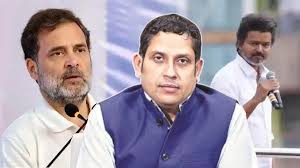
Chennai: Allies in Tamil Nadu have risen in support of DMK, dubbing Congress functionary Praveen Chakravarthy as an “irritant” in the DMK-Congress alliance. Attempts by Chakravarthy “to disrupt the alliance” with his actions and X post have prompted allies to insist that Congress leader Rahul Gandhi intervene and act against the AICC functionary and “put an end to such disruptive attempts”. Senior alliance leaders say Praveen Chakravarthy meeting TVK president Vijay, at least twice in recent months, and acting against the INDIA bloc did not go down well with allies, giving room for “ridicule and mockery” by opposition parties. The BJP has utilised the situation for its personal gains by targeting the DMK alliance with “spurious information” shared by Praveen, they allege. MDMK principal secretary Durai Vaiko said repeated incidents of Praveen speaking against the alliance disturbed harmony. “Praveen’s activities are against the interests of alliance partners and raise doubts about whether Congress is doing it on purpose. He is fuelling narratives from BJP. It is high time Rahul intervenes and stops him for the sake of the alliance,” Durai told ToI. VCK MP Ravikumar joined the chorus demanding action from Rahul Gandhi. He said such infighting weakens the morale of cadres of alliance parties. “The INDIA bloc is the strongest in TN, and our chief minister (M K Stalin) is the key reason for the alliance remaining strong. There is an image being built that DMK alliance is in trouble, and Rahul should not allow it,” Ravikumar said. Appreciating Rahul for his staunch opposition to BJP and RSS, Ravikumar said, “People like Praveen, instead of strengthening Rahul’s fight against the RSS, are weakening him.” Though CPM state secretary P Shanmugam accepted that the Praveen issue had become a concern in the alliance, he said it will not impact their performance. “But Congress should sort it out,” said Shanmugam. CPI state secretary M Veerapandian too took a similar stand. “Our alliance is ideology-based and will not be impacted by such minor issues. It is quite common in a multi-party alliance, and Congress will sort it out,” Veerapandian said. Courtesy : TOI Note: This news is originally published on https:/timesofindia.com/bha and is used purely for non-profit/non-commercial purposes, especially human rights
Casteism; Dalit Youth Subjected to Casteist Abuse, Defamed on Social Media; Demands FIR Under SC/ST Act

Himachal News: Surajmani, a Scheduled Caste resident of Balichowki in Mandi district, has sent a complaint to the Superintendent of Police. He is receiving casteist abuses and death threats due to a private video that went viral on social media. He has demanded that an FIR be registered under sections of the BNS, IT Act, and SC/ST Act. This case comes against the backdrop of increasing caste-based atrocities in Himachal Pradesh. The Viral Video Incident Surajmani stated that a video of a private conversation of his was uploaded on Facebook without his permission a few days ago. The video did not contain any objectionable comments about deities. Yet, some people are repeatedly sharing it. This has led to Surajmani receiving abuses with casteist slurs and threats. These threats are spreading through Facebook posts, photos, and videos. Surajmani is suffering from mental stress. It has become difficult for him to leave his house. People are spreading rumors. He has been defamed throughout Himachal Pradesh. In his letter to the Superintendent of Police, he demanded an investigation. He said that the accused can be identified through social media. Complaint of Unauthorized Call Recording Facebook user “Bunty Saraji Baldev Thakur” called Surajmani. He recorded the call without informing him. Later, he made it viral on social media. Surajmani termed this a violation of privacy. He cited the Supreme Court’s 2017 Puttaswamy judgment. This judgment considers unauthorized recording a crime. Surajmani said that this is a violation of his constitutional right under Article 21. His right to life and personal liberty has been snatched away. He demanded action against the accused under sections of the IT Act. Harassment Through False Complaints “Bunty Saraji Baldev Thakur” and “Tulesh Thakur” have filed false complaints against Surajmani. These complaints were filed at the Superintendent of Police office and Janjehli police station. Surajmani says that these are motivated by caste hatred. This is negatively impacting their livelihood and social standing. They cited Section 3(1)(v) of the SC/ST Act, which provides for punishment for giving false information. Surajmani appealed to the police to take action on these complaints. Applicable Legal Sections The complaint mentions Section 351 of the BNS, which covers criminal intimidation. Section 356 deals with defamation. Section 66 of the IT Act addresses unauthorized computer activity, and Section 67 applies to the transmission of offensive material. Section 3(1)(r) of the SC/ST Act punishes public insult, and Section 3(1)(u) penalizes promoting hatred. Section 72A of the IT Act provides for two years imprisonment for disclosing confidential information, and Section 43A ensures compensation for data misuse. BNS Section 223 is the basis for action against giving false information. Surajmani demanded an FIR under all these sections. Demand for Action Against the Accused Surajmani appealed for the arrest and interrogation of the accused. They requested directions to social media platforms to remove the content and also requested police protection. They offered to provide screenshots and video links. Rising Caste-Based Cases in Himachal Cases under the SC/ST Act are increasing in Himachal Pradesh. In 2024, 213 cases were registered in the state. Mandi district alone accounted for 42 cases, while Shimla had 27 and Kangra 22. Recently, a case of caste discrimination in Rohru made headlines. The death of a 12-year-old Dalit boy sparked a debate on untouchability. The rape and murder of a Dalit woman in Kangra led to protests. The CPI(M) demanded justice for Dalits. The High Court has taken a strict stance in several cases. In October 2025, a woman was denied anticipatory bail for allegedly beating an SC child for touching her. A discharge order was revoked in July 2025. The court stated that caste is determined by birth and does not change. These incidents show that caste-based atrocities are still a challenge in Himachal Pradesh. Surajmani’s case appears to be part of this trend. Poonam Sharma Courtesy: Hindi News
BJP accuses Cong of defaming Dalit community over Ankita murder case

Dehradun, The Bharatiya Janata Party today accused the state Congress of tarnishing the reputation of Devbhoomi and the entire Dalit community through unverified and indecent social media posts. The party expressed outrage that although the court has already sentenced the culprits, the Congress continues to invoke new names conspiratorially, thereby insulting the soul of the departed daughter. The BJP suggested that the Congress Pradesh President raising this issue from Delhi points towards a political conspiracy. Addressing a press conference at the party headquarters here, today, Rajpur Road MLA and former Cabinet Minister Khajan Das accused the Congress of indulging in negative and shameful politics. He stated that the Congress is using viral audio and video clips from social media, which lack any basis or decency, as political weapons for publicity. He asserted that under a deliberate conspiracy, a sin is being committed by insulting the entire Scheduled Caste community under the guise of these irresponsible statements. Das directly accused the Congress Pradesh President of holding a press conference in Delhi based on unconfirmed and obscene remarks, claiming this indicates the Congress’s intent to humiliate Devbhoomi and Dalit society, a move the BJP condemns in the strongest terms. Khajan Das asserted that as part of this planned conspiracy, the Congress is defaming a senior BJP leader who has dedicated his life to being a powerful voice for the underprivileged Scheduled Castes and their social upliftment. Though Das did not name the leader in question, but apparently he was referring to Dushyant Kumar Gautam who belongs to the SC community. Describing this as the height of shameful and unethical politics, he said the BJP strongly criticises and opposes such plots. Expressing shock, he noted that the oldest party in the country and the main opposition in the state is so frustrated by continuous electoral defeats that social media content created for cheap popularity and obscenity has become its main agenda. Das further alleged that their responsible senior leaders are deliberately trying to tarnish the image of the BJP and its leaders through evidence-less charges and baseless charges for immediate political gain. He claimed that targeting of a prominent BJP leader from the Dalit community is most unfortunate, asserting it is not just an attempt to demean one leader but an effort to cast aspersions on the character of the entire Dalit community that has progressed after long struggles. He also shared that legal action is currently under way regarding the so-called videos circulating on social media and expressed hope that the full truth would emerge soon. He described the continuous release of obscene and indecent social media posts concerning party leaders as deeply worrying, reflecting a social decline that requires serious contemplation by all. Furthermore, he suspected a massive conspiracy behind these developments aimed at creating social malice and spoiling the atmosphere of Uttarakhand. He remarked that it is tragic that the Congress is playing with the fire of social disharmony for political leverage, which will surely backfire on them. He assured that as a responsible political party, the BJP will not allow the Dalit community to be insulted or the state’s harmony to be disturbed at any cost. Regarding the tragic Ankita Bhandari murder case, he stated that the culprits have already been sentenced to life imprisonment, making the Congress’s baseless allegations shameful. He argued that the scenarios being presented by the Congress constitute a misdeed that insults the soul of the deceased girl. He noted that the opposition has previously made such disgusting attempts using various names and political deceptions. The truth, he asserted, is that the historic court decision resulted from the Dhami government’s transparent investigation, swift action, and strong advocacy. He reminded of the government’s quick decisions and clear policy, which led to the arrest and jailing of the accused within 24 hours of the incident and the formation of an SIT. He mentioned that while the SIT had requested the public to provide any evidence or information, those currently making allegations failed to present any proof to the SIT or the court. Instead, they continue to mislead the public by repeatedly chanting the “VIP” mantra for political reasons. He concluded that the government’s efforts and the court’s decision in this tragic event have restored public confidence and provided strength to the daughters of the state. BJP’s Pradesh Media In-charge Manveer Singh Chauhan, Co-in-charge Rajendra Negi, Pradesh Spokesman Mathura Dutt Joshi, and Kamlesh Raman were also present at the press conference. Garhwal Post Bureau Courtesy : Garhwal Post Note: This news is originally published on https:/garhwalpost.com/bha and is used purely for non-profit/non-commercial purposes, especially human rights
Thackeray brothers need Marathi vote consolidation, sizable Muslim and Dalit votes to win BMC polls
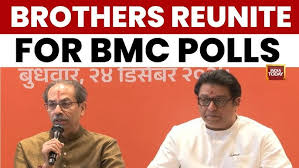
In the BMC polls scheduled on January 15 of next year, Congress has refused to be part of the Thackeray brother alliance, over differences in decent space and number of seats. MUMBAI: If Uddhav Thackeray and Raj Thackeray eye to win the Asia’s largest civic body (Brihanmumbai Municipal Corporation) polls, the leaders have to repeat Shiv Sena (UBT)’s 2024 Lok Sabha performance. It will help them to win as many as 113 seats out of 227 in the BMC polls. However, Shiv Sena (UBT) had won the three seats out of six Lok Sabha seats while it lost one seat, by 34 votes in Mumbai. Congress’s vote base — Muslim and Dalit — and Sharad Pawar’s supporters from the western Maharashtra region who stay in Mumbai, helped to secure several seats. MVA was successful in restricting the BJP and Deputy Chief Minister Eknath Shinde’s Shiv Sena to one seat each only in the financial capital. In the BMC polls scheduled on January 15 of next year, Congress has refused to be part of the Thackeray brother alliance, over differences in decent space and number of seats. Also, Raj Thackeray’s stand against North India is considered problematic for Congress’s North Indian voters. However, the silver lining for Uddhav Thackeray is, Raj Thackeray-led MNS has a seven per cent vote share in Mumbai, which will help them both to fill the gap caused by Shinde-led Shiv Sena and Congress, but that is not enough at all, as there is still a gap of six per cent. Thackerays has to go an extra mile by addressing as many rallies as possible, galvanising the ground network and utilising funds. Only then ther is a possiblity, that they will be able to swing the verdict in their favour. Despite Thackeray’s alliance, the BJP is unfazed and is comfortable on the ground as it has 27 per cent vote share in Mumbai, and even DCM Eknath Shinde will pull in at least five per cent vote share. Most likely, the BJP and Shiv Sena will march towards a historic win in this closely contested BMC election. Shinde led Shiv Sena has won the six state assembly seats in Mumbai, while BJP had won 15, and DCM Ajit Pawar led NCP has won one seat; therefore, arithmetically, BJP and Shiv Sena are unperturbed. The split in Maha Vikas Aghadi has boosted the confidence of the BJP and its Gujarati, Marwari and North Indian vote bank in Mumbai remains unaffected. However, the opposition are getting divided into multiple forces. Meanwhile, if Muslim and Dalit votes get divided among the Thackerays, Congress, NCP SP, Samajwadi Party, MIM, then it will be difficult to repeat the Lok Sabha’s template again in BMC polls. Sudhir Suryawanshi Courtesy : TNIE Note: This news is originally published on https:/thenewindianexpress.com/bha and is used purely for non-profit/non-commercial purposes, especially human rights