
Sahil Wakode death: Global Dalit groups demand accountability from IIT Bombay

The Ambedkar Association of North America (AANA) and a coalition of Dalit and Ambedkarite organisations from North America and Europe have condemned IIT Bombay’s handling of the death of Sahil Wakode, a second-year BTech student from the Scheduled Caste community who died on 18 September 2026, hours after he was removed from an examination. His family has alleged caste-based harassment, and an FIR under the SC/ST Act names an IIT Bombay faculty member. The organisations said IIT Bombay did not wait for the truth and, within a day, publicly stated that Sahil had been caught using ChatGPT in his examination. They argued that an institution whose faculty member was named in an FIR publicly presented its version of a dead student’s conduct before the facts were established, calling it extremely irresponsible and saying it fuelled hostility against Sahil and the SC/ST community. The coalition said the most important questions remain unanswered, including whether examination procedures were properly followed, what happened after Sahil was removed from the hall, what occurred in the Dean’s office, and why examination-hall CCTV was leaked and circulated while footage from the Dean’s office and surrounding areas remains undisclosed. It also criticised the response of the SC/ST Cell and Faculty Forum at IIT Bombay, saying the SC/ST Cell issued statements defending the institution while the investigation was still underway, and that three days after Sahil’s death the Faculty Forum organised a march supporting a faculty member named in the FIR. The organisations added that they had received highly concerning reports of discrimination against SC/ST students following the filing of Sahil’s parents’ complaint at the police station. Demanding action, the organisations said IIT Bombay must retract its premature public characterisation of Sahil’s conduct, apologise to his family, and ensure an independent investigation with SC/ST representation and external experts. They demanded that IIT Bombay and Mumbai Police secure all CCTV footage from the examination hall, surrounding corridors and the Dean’s office, provide it to investigators and Sahil’s family or counsel, and identify those responsible for the leak. They also said the Maharashtra government and Mumbai Police must establish a time-bound Special Investigation Team to fully investigate the allegations against the accused professor and ensure that evidence and witnesses are protected. Central and regulatory authorities must fill vacant SC/ST/OBC faculty positions in IITs and central institutions through a time-bound process and conduct a nationwide audit of SC/ST representation, reservation and PhD admissions, while the NCSC, Maharashtra SC/ST Commission, UGC and Ministry of Education must take suo motu cognizance and institute a nationwide audit of SC/ST students’ experiences, complaints and institutional grievance mechanisms, the statement said. Addressing SC/ST students of IIT Bombay, the organisations said they are not alone and are not on trial. They asked those needing support to contact aanausa@gmail.com and promised to stand with them and protect their identity. By A Representative Courtesy : Counterview Note: This news is originally published on https:/counterview.com/bha and is used purely for non-profit/non-commercial purposes, especially human rights
Karnataka: Most deleted voters tribals, minorities, Dalits and women, reveals SIR audit

The SIR Opposition Coalition demanded that Chief Election Commissioner Gyanesh Kumar resign, the SIR process be halted and deleted voters be restored to the rolls. BENGALURU: An SIR audit report released by the SIR Opposition Coalition in Bengaluru on Wednesday, alleged that nomadic and tribal communities, minorities, Dalits, extremely backward communities and women accounted for a disproportionately high number of voters deleted from the electoral rolls or served notices during the SIR process. Speaking at the report release programme at Shasakara Bhavan, Eddelu Karnataka office-bearer Noor Sridhar said field verification had shown that constituencies with a high concentration of minorities, Dalits and tribal communities had witnessed higher deletions. He alleged that several voters had been wrongly categorised as shifted, absent or deceased, and questioned the requirement of linking every voter to the 2002 electoral roll. Retired Supreme Court judge Gopal Gowda questioned the legal basis for the exercise, and alleged that the SIR process was being used to exclude sections of voters. Actor Prakash Raj, director B Suresh, Karnataka Sahitya Akademi chairman Prof LN Mukundaraj, former minister Kimmane Rathnakar and activists were among those present. The coalition demanded that Chief Election Commissioner Gyanesh Kumar resign, the SIR process be halted and deleted voters be restored to the rolls. It also sought a constitutional mechanism for appointing election commissioners and a scientific, voter-friendly method of electoral-roll revision. It urged the Union government to initiate removal proceedings against Gyanesh Kumar and sought an apology from Prime Minister Narendra Modi and Union Home Minister Amit Shah over the SIR exercise. It also demanded repolling in Bihar and West Bengal. The coalition urged the Karnataka government to convene a special session to discuss alleged irregularities in the SIR exercise, and pass a resolution rejecting the process and rolls generated through it. It sought a social audit to identify voters wrongly deleted and a campaign to restore them to the electoral rolls, and demanded that SIR rolls not be used for any election until all eligible voters are restored. Courtesy : TNIE Note: This news is originally published on https:/thenewindianexpress.com/bha and is used purely for non-profit/non-commercial purposes, especially human rights
Murder for not disclosing home address: Pappu was shot five times in quick succession, Jasso and Durga were sentenced by the court.

After 14 years, the court has sentenced two convicts to life imprisonment in the case of Pappu, a Dalit, who was shot five times in Agra for not disclosing his home address. The special SC-ST court has also imposed a fine of ₹1.70 lakh each on Jasso alias Dashrath and Durga. The court has delivered a significant verdict in the case of Pappu, a Dalit, who was shot five times in the head for not disclosing his home address. After 14 years, the special SC-ST court has sentenced two convicts to life imprisonment and a total fine of ₹3.40 lakh. The court of Special Judge SC-ST Act, Shiv Kumar, convicted Jasso alias Dashrath, a resident of village Abhuapura, Achhnera police station, and Durga, a resident of village Gudait, Palwal (Hodal) area, Haryana, and imposed a fine of ₹1.70 lakh each. The case of another accused involved in the crime was separated, while the minor accused, Rahul Kori, was sent to the Juvenile Justice Board. The prosecution presented a total of 11 witnesses, of which the testimony of the deceased’s brother, son, and doctor was crucial. The doctor told the court that five bullets had been removed from the deceased’s body. Meanwhile, Jasso, confessing to the crime before the then-COVID-19 Commissioner Vivek Tripathi, admitted that he, along with his accomplices, had fired bullets from pistols and revolvers when they were not identified. The court found both guilty based on the evidence. What happened? The incident occurred on December 7, 2012. Harichand, a resident of Dawli village under the Malpura police station, told the police that around 5 a.m., two young men arrived at his home on two bikes. They called out to his brother, Pappu, and asked for the address of Babulal Jat’s house. When he refused, they took Pappu to a drain on some pretext and shot him. Hearing the gunshots, Pappu’s son, Shashi, and nephew, Ajay, rushed to the scene and saw Jasso and Durga firing. Upon confrontation, the accused threatened them and fled. Published by: Dhirendra Singh Courtesy: Hindi News
UP: The BJP will have to fight to protect its own vote bank; Akhilesh Yadav’s new caste arithmetic will be a major test.
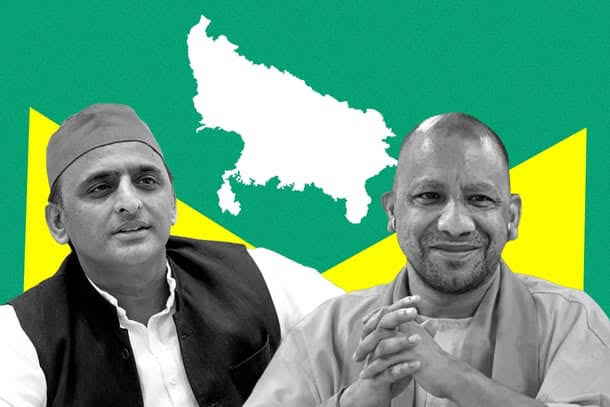
The BJP will have to fight to protect its own vote bank in the UP Assembly elections. Akhilesh Yadav’s new caste arithmetic will be a major test. The SP will target Brahmins, non-Jatav Dalits, and non-Yadav OBCs. This new strategy by the SP has increased the BJP’s concern. The SP’s strategy now aims to break the social alliance that has helped the BJP win election after election in Uttar Pradesh. After the success of the new caste arithmetic in the Lok Sabha elections, the SP’s strategy is to move beyond its image as a Muslim-Yadav party and give more priority to non-Yadav OBCs, non-Jatav Dalits, and Brahmin communities in ticket distribution. If this segment prioritizes caste over party, as in the Lok Sabha elections, the contest will be interesting. The BJP will face the challenge of maintaining its base vote bank and breaking through this SP’s maze. This new strategy by the SP has increased the BJP’s concern. According to a senior state leader and former state president, the party’s biggest challenge is to re-engage the non-Yadav OBCs and non-Jatav Dalits, a large portion of whom sided with the SP in the last Lok Sabha elections. This segment, which supported the BJP in the 2014, 2019, and the last two assembly elections, no longer displayed its previous commitment to the BJP in the last Lok Sabha elections. Since the SP’s ticket distribution formula for 2024 has been successful, it will not only favor the Kurmi, Nishad, Gurjar, Pal, Saini, Prajapati, and Pasi communities among Dalits to deal a blow to the BJP in the assembly elections, but will also woo Brahmins in eastern UP and Awadh. Therefore, to blunt this SP move, the BJP will have to make a major change in its strategy. What is the SP’s strategy? In the last election, the SP alliance distributed approximately 125 tickets among Muslim Yadavs. This made it easier for the BJP to woo the non-Yadav OBCs. This time, the SP plans to limit the number of tickets for Yadavs and Muslims to 80-85 seats. The plan is to field Dalit candidates in some general seats where the combination of Muslim, Yadav, and Dalit voters can create a formidable position. Furthermore, the plan is to provide bulk tickets to Brahmins among the upper castes, Kurmis and Nishads among the OBCs, and to give greater representation to Sainis, Gurjars, Rajbhars, Pals, and Prajapatis. In the Lok Sabha elections, the SP fielded only five candidates from the Yadav community and four from the Muslim community. Last Election Equation The SP alliance fielded approximately 128 Yadav-Muslim candidates, the same number of non-Yadav OBC candidates, 86 Dalits, and approximately 60 upper caste candidates. The NDA fielded approximately 135 non-Yadav OBC candidates, 15 from the Yadav community, approximately 140 from the upper castes, 85 from the Dalit community, and approximately 30 to 35 from the Vaishya community. Law and order will be a key issue for the BJP. A section within the BJP believes that as the elections approach, the contest will become Yogi versus Akhilesh. This will directly benefit the BJP. For example, in Bihar, the initial situation was against the NDA, but as the election approached, when the contest became Nitish versus Tejashwi, the NDA won a landslide victory on the issue of better law and order. In Uttar Pradesh too, there is a general public support for better law and order. Therefore, the BJP will have to find a counter to the SP’s new social equation with law and order and Hindutva. Himanshu Mishra, New Delhi Published by: Sharukh Khan Courtesy: Hindi News
Mamata seeks ‘extraordinary’ Opposition action over SIR, urges parties to set egos aside

The 20-party meeting finalised a joint action plan including rallies and ‘save democracy’ marches, while leaders backed legal action and wider mobilisation over the Election Commission. NEW DELHI: Calling for a broader Opposition mobilisation over the SIR row, TMC chief Mamata Banerjee urged INDIA bloc leaders on Wednesday to set aside their egos, saying extraordinary situations call for extraordinary action to fight the BJP and its machinations. At the meeting, as many as 20 INDIA bloc parties finalised a joint action plan, including rallies and ‘save democracy marches’. Congress president Mallikarjun Kharge said all parties at the meeting agreed that elections should be held through ballot papers instead of EVMs. Referring to her phone conversation with CPI(M) general secretary M A Baby last week, Banerjee stressed the need for parties to put aside their differences. “Mr Baby wrote to me, and I responded positively to him. I have been talking to other leaders also. Yesterday, I spoke to BJD’s Naveen Patnaik,” she is learnt to have told the meeting. Baby wrote to several non-NDA parties last week, seeking a coordinated response to the Election Commission row. His outreach included the BRS, AAP, DMK, BJD and TVK. Responding positively, Banerjee wrote back that the effort should be taken forward to mobilize all Opposition parties. The two subsequently spoke over the phone. Baby said they also recalled their days in Parliament, when Banerjee was in the Lok Sabha, and he was a Rajya Sabha member. At Wednesday’s meeting, Baby called for the entire Opposition to unite on the issue and involve civil society and public intellectuals committed to secular and democratic principles. Speaking towards the end of the meeting, Leader of Opposition Rahul Gandhi urged leaders to believe in themselves, saying panic had set in within the BJP and the “system” was beginning to crumble. “The BJP is in panic mode. Don’t be under any illusion that the BJP is invincible. PM Modi and Amit Shah are aware that the system is crumbling,” Gandhi is learnt to have told the meeting. Independent Rajya Sabha MP Kapil Sibal called for legal action alongside mass protests, sources said. He is learnt to have suggested that Opposition MPs should jointly move the Supreme Court to seek an early hearing of the pending petitions on SIR. The Aam Aadmi Party (AAP) and the Dravida Munnetra Kazhagam (DMK), which have distanced themselves from the INDIA bloc, skipped the meeting but are learnt to have agreed to sign a fresh Opposition notice seeking the removal of the Chief Election Commissioner. CPI(M) general secretary M A Baby met AAP national convenor Arvind Kejriwal on Sunday, while TMC’s Derek O’Brien met AAP Rajya Sabha MP Sanjay Singh on Tuesday morning as Opposition leaders sought wider support for the notice. DMK leader Kanimozhi had also met TMC chief Mamata Banerjee in Kolkata on September 17. Preetha Nair Courtesy : TNIE Note: This news is originally published on https:/thenewindianexpress.com/bha and is used purely for non-profit/non-commercial purposes, especially human rights
‘Were they pressured?’ Rahul Gandhi questions who ‘ordered’ Form 6 changes
NEW DELHI: Leader of Opposition in Lok Sabha and Congress leader Rahul Gandhi has questioned who authorised changes to the online Form 6 for voter registration and whether Tata Consultancy Services (TCS) was pressured to implement them. “The online Form 6 was changed illegally – as the EC’s own Commissioners have recorded. Who at the ECI ordered Tata Consultancy Services to make that change? Who at TCS signed off on it? And were they pressured into doing it?” Rahul said in a post on X. The Election Commission has withdrawn the additional Special Intensive Revision (SIR)-related declaration attached to Form 6 in states where the electoral roll revision exercise has been completed, PTI reported on Wednesday. The declaration has been removed from the ECINET app and portal, as well as the respective Chief Electoral Officer portals, meaning new applicants in these states will only have to submit the regular statutory Form 6 for voter enrolment. In states and Union territories where the SIR exercise is still underway, the additional declaration remains available on the ECINET portal. Under the declaration, new applicants are required to provide details linking themselves, their parents or grandparents to electoral rolls prepared during an earlier SIR. The move follows a September 26 meeting of the full Commission, comprising Chief Election Commissioner Gyanesh Kumar and Election Commissioners Sukhbir Singh Sandhu and Vivek Joshi. After the meeting, the poll panel said the declaration attached to Form 6 was meant “specifically for SIR” and that “for non-SIR period, the Forms applicable as per Rules (the Registration of Electors Rules 1960) will be used.” Courtesy : TOI Note: This news is originally published on https:/timesofindia.com/bha and is used purely for non-profit/non-commercial purposes, especially human rights
Caste in the Classroom
Caste has not disappeared at the gates of higher education. It enters the classroom, the hostel, the laboratory, the faculty room and, sometimes, even the vocabulary of merit. featuredImageAccording to data, complaints of caste-based discrimination in universities and colleges rose from 173 in 2019-20 to 378 in 2023-24, covering reports from 704 universities and 1,553 colleges. Photo: XAdvertisement There is something deeply unsettling about a society in which institutions meant to liberate individuals from the hierarchies of birth continue to reproduce those very hierarchies. Universities are expected to be spaces where reason challenges prejudice, where merit is cultivated rather than inherited, and where a young person’s possibilities are not determined by the circumstances of birth. Yet caste has not disappeared at the gates of higher education. It enters the classroom, the hostel, the laboratory, the faculty room and, sometimes, even the vocabulary of merit. The uncomfortable question is no longer whether caste exists in our universities. It is why, despite constitutional guarantees, reservations and the expansion of educational opportunities, caste continues to shape the experience of learning, belonging and dignity. Perhaps literature helps us understand this better than institutional language or administrative data. In Omprakash Valmiki’s Joothan, education is not a simple ladder of social mobility. The classroom itself becomes a site where caste announces its presence. The indignity of being made to perform menial work while others study reveals a fundamental contradiction: the institution expected to provide an escape from social hierarchy can reproduce the very order from which a student seeks liberation. Caste does not merely prevent entry into education; it can determine the terms on which education is experienced. Bama’s Karukku complicates the assumption that education or social mobility automatically dissolves caste. Caste can survive beneath the language of equality, inhabiting relationships and institutions even when nobody is prepared to acknowledge its presence. For a Dalit student, admission to a university may represent the accumulated aspirations of a family and generations denied access to knowledge. But admission is only the beginning. What happens when the stigma attached to a caste surname travels with the student? When a scholarship is quietly treated as evidence of lesser merit? When discrimination is dismissed as oversensitivity, or when a complaint becomes a question of the student’s ability to adjust? These are not merely questions of individual prejudice as they concern institutional culture. The language of merit becomes particularly important here. Merit is often presented as though it emerges in a social vacuum. But who has access to good schools, coaching, books, computers and the networks that make unfamiliar institutions easier to navigate? Who grows up with the confidence that failure is temporary because there is a social and economic cushion underneath? To acknowledge these inequalities is not to deny the importance of academic standards but it requires us to ask a more difficult question: can merit be understood without examining the unequal conditions in which it is produced, cultivated and demonstrated? A university that refuses to ask this question risks mistaking inherited advantage for individual achievement. Indian literature has been asking these questions for decades. Daya Pawar’s Baluta exposes the social arrangements through which caste regulates dignity and dependence. Sharan Kumar Limbale’s Akkarmashi explores the psychological burden of being made to feel that one’s very existence is somehow illegitimate. Premchand’s Sadgati written in a different historical moment, continue to confront us with questions that modern India would prefer to regard as settled. Who is entitled to dignity? Who is permitted to aspire? Who must repeatedly prove that they deserve a space that others inherit without question? Giriraj Kishor’s Parishisht brings these questions directly into the world of elite technical education. Set against the backdrop of a premier engineering institution at Kanpur, the novel exposes the persistence of caste beneath the vocabulary of modernity, scientific temper and meritocracy. Its Dalit students encounter not simply explicit prejudice but psychological violence, social isolation and institutional indifference. The disturbing question at the heart of Parishisht remains relevant: can an institution call itself modern and meritocratic when caste influences who feels entitled to belong, who is made to feel like an outsider, and whose suffering remains invisible? The contemporary evidence makes it difficult to dismiss these literary accounts as merely historical or fictional concerns. According to data reported by the University Grants Commission to a parliamentary committee, complaints of caste-based discrimination in universities and colleges rose from 173 in 2019–20 to 378 in 2023–24, covering reports from 704 universities and 1,553 colleges. These figures require careful interpretation. An increase in complaints could reflect more incidents, greater awareness, improved reporting, or some combination of these, though underreporting remains a concern. The real question is what happens after a student complains. A grievance mechanism that exists only on paper cannot protect anyone. Nor can the administrative disposal of a complaint be mistaken for justice. Deaths by suicide of Rohith Vemula at the University of Hyderabad in 2016 and, more recently by Sahil Wakode at IIT Bombay have renewed concerns about the relationship between caste, institutional exclusion and the vulnerability of students from marginalised communities. The circumstances of these deaths must be examined with care. In Sahil Wakode’s case, allegations of caste-based discrimination have been under investigation, while the institute has denied that such discrimination occurred. These distinctions matter, but they must not become an excuse to avoid the larger question: are our institutions adequately equipped to recognise and address the forms of humiliation, isolation and exclusion that students may experience? When a student is struggling, the institutional response cannot be limited to asking them to be patient, avoid confrontation and concentrate on their studies. The university must instead ask itself a more uncomfortable question: what conditions made a student feel that they did not belong here in the first place? This is where institutional accountability becomes indispensable. When discrimination is alleged, the response cannot depend upon the reputation of the institution, the social standing of the accused or administrative convenience. A prestigious university does not become less
PM Modi, Home Minister Shah have ‘destroyed’ Indian democracy: Rahul Gandhi
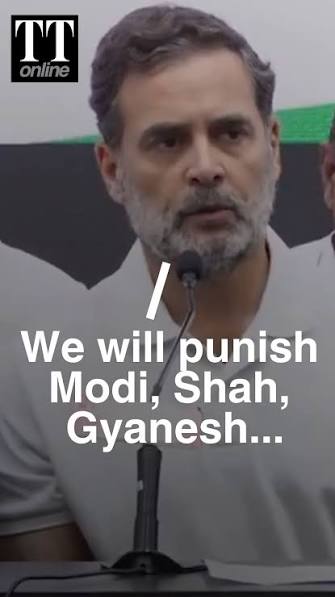
Says Opposition leaders ‘collective defenders’ of Constitution Congress leader Rahul Gandhi on Wednesday told INDIA bloc leaders that they are the ‘collective defenders’ of the Indian Constitution and asserted that it is their ‘personal commitment’ to ensure that those who have ‘destroyed’ Indian democracy are punished. The leader of opposition in the Lok Sabha made the remarks at a joint media briefing of INDIA bloc leaders after their three-and-a-half-hour meeting attended by him and the likes of Congress president Mallikarjun Kharge, former party chief Sonia Gandhi, TMC chief Mamata Banerjee, Jammu and Kashmir Chief Minister Omar Abdullah, RJD’s Tejashwi Yadav and NCP(SP) MP Supriya Sule. “INDIA bloc meeting saw a very good discussion and the main issue was ‘vote chori’. All parties are of the opinion that the democratic system of India has been attacked by Prime Minister Narendra Modi, Home Minister Amit Shad and Chief Election Commissioner Gyanesh Kumar,” Gandhi said. “We are not going to take it lying down. It is a personal commitment of all INDIA bloc leaders, we are going to ensure that people who have destroyed Indian democracy are punished. Doesn’t matter how senior they are, who they are, Indian democracy is bigger than every single person in this country,” he asserted. There was also a feeling that the opposition has been quite successful in putting across to the people of India that elections are ‘stolen’, that PM Modi and Home Minister Shah have ‘destroyed’ Indian democracy and there is a new sense of resistance, particularly among young people, that what is going on in India is wrong and needs to be stopped, Gandhi said. “It is an honour for us to work together and we are confident that, over the next few months, we will make serious changes in the country,” the former Congress chief said. Earlier, INDIA bloc finalised a joint action plan over the SIR row, including holding rallies and ‘save democracy’ marches, with Congress president Kharge asserting that all parties agreed that elections should be held through ballot papers instead of EVMs. Courtesy : The Tribune India Note: This news is originally published on https:/thetribuneindia.com/bha and is used purely for non-profit/non-commercial purposes, especially human rights
NYT exec gunned down by in-laws was transgender, faced child cruelty charges

According to court records, 40-year-old Jonathan McKinsey had been in fierce legal battles with his estranged wife and her parents. While she accused him of child cruelty and domestic violence, he countered with a tit-for-tat filing wherein he claimed that she and her parents were in fact abusive. new york times executive killed chinese in laws transgender sex change daughter medical tubes child cruelty restraining order united states Jonathan McKinsey headed the New York Times Games and was killed by Shouyong Zhang and Shili Chen at a parking lot in California. (Photo: Social media) The 40-year-old New York Times executive, Jonathan McKinsey, who was gunned down by his 77-year-old in-laws in California, had been involved in a bitter dispute with them and his estranged wife over his transgender identity and child cruelty charges, according to court documents. Shouyong Zhang and Shili Chen killed McKinsey at a parking lot in the middle of the day before a passing cop caught and arrested them. Police received multiple 911 calls from residents after several gunshots were heard and while first responders tried to save the tech executive, he was declared dead on the scene. Now, court records obtained by The Mercury News have revealed that his estranged wife and the accused’s daughter, Candice Jang, had filed for a restraining order against McKinsey in October 2025. She claimed that McKinsey struck their six-year-old son in the face during a fight over LEGO, leaving the child with a “handprint” shaped bruise. She also alleged that in 2018 he had been violent with her when he grabbed her wrist hard enough to leave bruises. At the time, deputies arrived at their home to check on the allegations and found the couple’s two-year-old child left unattended in a bedroom upstairs while he was away shopping. McKinsey was eventually charged with cruelty and corporal injury to a child, and was released on a USD 50,000 bail. Then, in December last year, McKinsey countered by filing a protection order against his wife, alleging that she was the one who had been abusive to him for 15 years. He claimed that in 2013, she thrashed him with a frying pan and, prior to that, in 2010, she attempted to pull medical tubes out of his body when he was undergoing a sex transition process. He also alleged that Jang’s father, who was not named in the filing, punched him in the chest while he was recovering from a double mastectomy. He alleged that his mother-in-law called him a “disgusting queer” and a “pervert” after they had a fallout over one of McKinsey’s children’s clothing choices. The New York Times tech executive also filed for a divorce the same month. He and Jang married in 2011. The estranged couple remained embroiled in a child custody battle, with a court hearing scheduled for Friday, October 2, Mercury News reported. Despite these revelations, it is not yet clear if arguments between McKinsey and his in-laws over gender identity and child cruelty charges were the motivations behind them killing the tech executive. Jonathan McKinsey was at the parking lot of the Dublin Sports Grounds in Dublin, California, when reportedly two masked people approached him before opening fire. The accused couple allegedly took turns shooting their son-in-law before a police officer who happened to be in the area arrested them. Courtesy : India Today Note: This news is originally published on https:/indiatoday.com/bha and is used purely for non-profit/non-commercial purposes, especially human rights
The 2017 Shabbirpur violence gave a new direction to Dalit politics in Western UP. Do people still trust the BSP, or are Dalits following a free path?
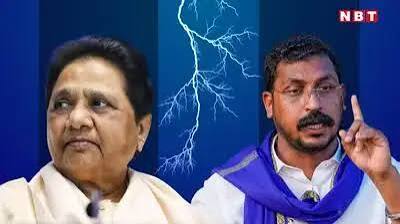
The 2017 violence in Shabbirpur, Saharanpur, gave a new direction to Dalit politics in Western UP. Does the public still trust Mayawati? Is a section of Dalit youth seeking an “independent” path? Saharanpur: The 2017 Shabbirpur (Saharanpur) violence gave a new direction to Dalit politics in Western UP. Mayawati resigned from the Rajya Sabha, accusing the government of suppressing Dalit voices. Chandrashekhar Azad emerged from this struggle. Nearly a decade later, when we moved from Shabbirpur to Saharanpur, Bijnor, and Meerut, the question had changed: Do we still trust Mayawati, but are we seeking an “independent” path? The answer on the ground was not monotonous, but a fragmented voice. Here is Mohammad Asghar’s ground report. The conductor asked, “Where are you going?” Yes, Shabbirpur. Give me a ticket. The conductor said, “The bus doesn’t go to Shabbirpur. It will drop you off 2-3 kilometers away. How will you get there? Call someone from the village.” I understood the meaning of the conductor’s reply when I got off the roadways bus. The sugarcane fields on both sides of the road to Shabbirpur village were so tall that no one was visible. The silence was frightening. The thought of how difficult it would be to protect myself if an animal or criminal came near me was overwhelming. As I walked a little further, I met a woman mowing grass. She said, “Son, if someone’s bike comes, stop it and get on it.” Shabbirpur Village, Because of Which Mayawati Resigned from the Rajya Sabha After traveling about 30 kilometers from Saharanpur, I somehow reached Shabbirpur. This is the same village because of which Mayawati had resigned from the Rajya Sabha because she was prevented from raising the voice of Dalits. And Chandrashekhar Azad, after founding the Bhim Army, formed the Azad Samaj Party (Kanshi Ram) in protest for this village. Two people were killed in the caste violence and subsequent incidents on May 5, 2017. Even today, lawsuits are ongoing between Dalits and Thakurs in this village. There’s a Ravidas temple, where police officers are on duty. The temple’s walls are narrow. Inside those narrow walls, an unfinished structure is visible, the site of the dispute over the installation of a statue of Baba Saheb Ambedkar. A few steps away from this temple is a small grocery store, where three or four young men were sitting. Shopkeeper Kapil Dev explains, “Our uncle’s son’s wedding was on May 4th. On the morning of the 5th, preparations were underway to serve the guests. Around 10-11 a.m., a mob of two to two and a half thousand people attacked the village. Ours was the first house to be set on fire. And then, one after another, about 56 houses were burned.” Not even a spoon was left in the house. When Mayawati visited Shabbirpur on May 23rd to meet the victims, she visited this very house. Discord in Mayawati’s family over party positions This all happened after the controversy surrounding the Maharana Pratap Jayanti procession. During the procession, there was a clash between the Dalit and Thakur communities over loud music and the route. One death occurred, later determined to be due to suffocation, but the violence escalated further. Talking about the village for which Mayawati resigned, Kapil Dev asked if there was any visible discord in Mayawati’s family over party positions. Kapil Dev replied, “We are blindfolded for Mayawati. We only see the elephant button.” For the older members of society, meaning those who are not part of the new generation, Mayawati remains the same, but the young people now have Chandrashekhar in their hearts. It’s true that if Chandrashekhar hadn’t raised his voice at that time, hadn’t protested from Saharanpur to Jantar Mantar, no leader would have come to listen to us. Just then, a middle-aged man coming to the shop to buy groceries says, “Chandrashekhar shouldn’t have formed a party. He has become an agent of the BJP, which is working to divide the Dalit community. He should have stayed with Mayawati.” Physiotherapist Santar Pal, sitting in the shop, says, “When Mayawati didn’t accept him into the party, he had to do something. When someone is thrown out of their home, they will build a home somewhere. Chandrashekhar did the same. Today, because of Chandrashekhar, the youth of our society are becoming aware.” Jitendra, also sitting in the shop, says, “There was a dispute over the statue of our Baba Saheb, and to this day, it hasn’t been installed. Everyone talks about us, but no one takes action. What would have happened if a statue of Baba Saheb had been installed? He is the architect of the Constitution, why do people of other castes have a problem with him?” Not much has changed. Kapil Dev says, “If Chandrashekhar Azad wants to come to the village, no matter how angry the people here are, he won’t stop him.” However, after becoming an MP, he hasn’t visited here even once. His political journey began by protesting for this village. “We want Rahul Gandhi to come to our village; he is an educated leader. We will do whatever we can.” Three or four young people sitting there agree with him. When the caste conflict erupted, Shivkumar, a Dalit, was the village head. We met his brother, Sudesh Kumar, near the water tank. Sudesh says that even after 2017, the ground situation hasn’t changed much. Some cases are still pending in court. While there may not be any visible tension, caste discrimination is still rampant here, which is why the installation of Baba Saheb’s statue has not been allowed to take place. There was tension surrounding the procession. Both Shivkumar and Sudesh Kumar are facing charges. Shivkumar, Sonu, and Chandrashekhar were booked under the NSA, which was later lifted. Sonu has since passed away. The dispute over the route of the Ambedkar Shobha Yatra continues in the village. Tensions arise every year regarding the procession. Sudesh said that if a community’s procession passes through the Dalit