
FIR registered against Rahul, Priyanka Gandhi over entry into Akashvani Bhawan during protest
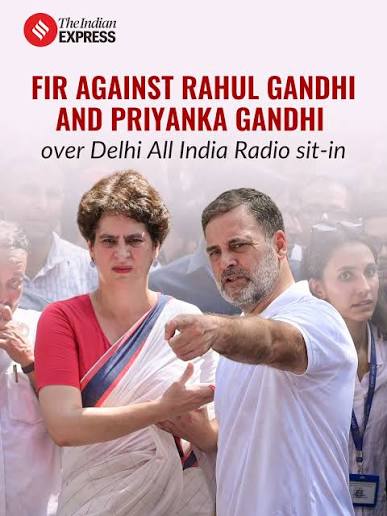
NEW DELHI: Delhi Police have received a complaint from Akashvani staffers against Congress leaders Rahul Gandhi and Priyanka Gandhi Vadra, as well as the MPs and others accompanying them, for allegedly forcing their way into the Akashvani office. Rahul and Priyanka were briefly detained on Tuesday night after an over eight-hour sit-in at the Akashvani Bhawan premises. The protest began after police stopped INDIA bloc MPs from marching towards the Election Commission’s office, around 300 metres away, over allegations of “vote chori”. Rahul had entered the All India Radio premises on Parliament Street around noon and joined the protest. Earlier, during the march from Parliament towards the EC headquarters, he climbed atop barricades as opposition MPs raised slogans of “Vote Chor, Gaddi Chhod”. Priyanka Gandhi Vadra, NCP-SP MP Supriya Sule and several other opposition leaders also took part in the march. Security personnel stopped the MPs near the NITI Aayog office amid heavy barricading around Parliament and the EC office. Police later forcibly removed Rahul and several other Congress leaders and MPs, including K C Venugopal, Charanjit Singh Channi, Pawan Khera, K Suresh, Amarinder Singh Raja Warring, Deepender Hooda, Praniti Shinde, Varsha Gaekwad and Imran Pratapgarhi, as the protesting MPs and leaders were cleared from the AIR premises. The detainees were taken to New Police Lines at Kingsway Camp. Police said around 250 people, including 50 MPs, were detained on Tuesday night following the prolonged sit-in. Gandhi and other Congress leaders were released around 10 pm, the party said. The opposition MPs were protesting over “vote chori” allegations and seeking the removal of CEC Gyanesh Kumar in the wake of media reports alleging differences within the Election Commission over the SIR of electoral rolls and other issues. Courtesy : TOI Note: This news is originally published on https:/timesofindia.com/bha and is used purely for non-profit/non-commercial purposes, especially human rights
After Delhi and Mumbai, Bengaluru to protest against SIR on Thursday – all you need to know
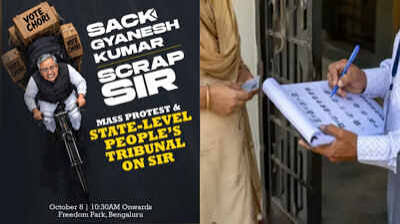
NEW DELHI: After massive protests in Delhi and Mumbai over the Special Intensive Revision (SIR) of electoral rolls, civil society groups in Karnataka are set to hold a “People’s Tribunal” in Bengaluru on October 8 to document concerns over voter deletions and alleged discrepancies in the electoral rolls. Unlike a conventional political rally, the People’s Tribunal is expected to provide a public platform for people affected by the SIR exercise to share their experiences at Freedom Park. The Bengaluru event will focus in particular on voters categorised under the Absent, Shifted, Dead, Duplicate and Others (ASDDO) categories. The tribunal comes amid growing concerns over the SIR process. The event has also drawn support from actor Prakash Raj. In a social media post, Raj said, “People’s Tribunal by Cockroaches..Dipke.Ashuthosh.. Sourav and all the youth organisations and the civil society.. The victims of SIR from across the state will be present.” People’s Tribunal by Cockroaches..Dipke.Ashuthosh.. Sourav and all the youth organisations and the civil society.. The victims of SIR from across the state will be present . requesting all the citizens to participate in this fight to save our Democracy.. come join us tomorrow 8 th October at Freedom Park .. Bengaluru #ScrapSIR #ResignGyaneshKumar #justasking — Prakash Raj (@prakashraaj) October 7, 2026 He urged citizens to participate in what he described as a fight to “save our Democracy”. CJP spokesperson Ashutosh Ranka reacted to Raj’s post with “See you Bengaluru!”, signalling his participation in the gathering. The tribunal follows protests in Delhi and Mumbai, where opposition parties, and student groups raised concerns over the SIR exercise and demanded resignation of CEC Gyanesh Kumar. Thousands gathered for the CJP-led protest at Mumbai’s Shivaji Park, while demonstrations in Delhi were met with heavy police restrictions and detentions. Courtesy : TOI Note: This news is originally published on https:/timesofindia.com/bha and is used purely for non-profit/non-commercial purposes, especially human rights
Nestlé India launches transgender culinary internship

Nestlé India has launched a new culinary internship called Kaabil, giving transgender people the chance to learn professional cooking skills and explore careers in the food and hospitality industry. The 15-day programme is designed to help participants build confidence in the kitchen while picking up practical skills that employers are looking for. Training covers everything from kitchen basics and regional dishes to international cuisine, recipe development, live cooking, and workplace readiness. Participants will also receive career guidance to help them take the next step into the industry. Kaabil is led by Nestlé Professional with support from the company’s LGBTQ+ employee resource group, BEACON. The programme is being delivered in partnership with the Sahodari Foundation and the Tweet Foundation, with training taking place in Delhi, Mumbai, and Bengaluru. As part of the internship, participants will also be mentored by Nestlé chefs and get a closer look at the hospitality industry through the Indian School of Hospitality. By focusing on hands-on training and real career opportunities, Kaabil aims to open more doors for transgender people looking to build a future in one of India’s fastest-growing industries. Korina Estrada A writer and an advocate of self-love and body positivity. She loves baking cookies, practicing her calligraphy, and creating short stories of local folklore. Courtesy : Transgenderfeed Note: This news is originally published on https:/transgenderfeed.com/bha and is used purely for non-profit/non-commercial purposes, especially human rights
Dalit Literature Hits Lucknow Book Fair: Readers Appreciate Parliamentary Democracy, ‘Nagvanshi Bharat’ Sees Good Demand
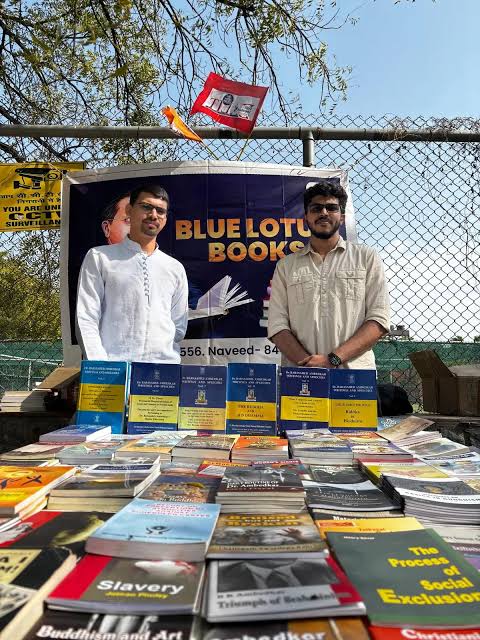
On the fifth day of the 23rd National Book Fair at Balrampur Garden, Lucknow, books on Dalit discourse were a major draw. Along with Dalit literature, books on Ambedkar, the Constitution, and Buddhist literature also sold well. At Samyak Prakashan’s stall, R.L. Chandrapuri’s ‘Brahmin Raj and the Backward Class Movement in India’, Rajkumar Historian’s ‘Nagvanshi Bharat’, and Dr. Rajendra Prasad Singh and Dr. Shashikala’s ‘Excavating Kabir with New Tools’ are being appreciated. Both volumes of ‘Yadav (Jatav) Jivana’ by Sunderlal Sagar, published in 1929, are also available in a new edition. Discussion on History and Sanatan Traditions Ashok Gopal’s translated book, Babasaheb Dr. Ambedkar: Life and Thoughts, is in the news at Setu Prakashan. Readers are liking ‘Ambedkar and Parliamentary Democracy’, edited by Ratanlal, at Rajpal’s stall. At the Constitution Promotion stall, Dr. Devendra Pratap Yadav’s “Zahreela Bahumat” and the exhibits on “Bahujan” edited by Ramkumar Gautam are also attracting attention. In Buddhist literature, Dr. Jagannath Upadhyay’s “Buddhism’s Contribution to India” is prominent. At Prabhat Prakashan’s stall, author Mahendra Kumar Agarwal was seen providing information about the history and eternal traditions of Sambhal through his book “Mera Sambhal Mahaan.” Literary figures honored in his memory The Uttar Pradesh Sahitya Sabha’s Pranam Parivar Samman ceremony was held on the main stage. Conceived by Sarvesh Asthana, literary figures were honored in his memory. This was followed by a poetry festival conducted by Mukul Mahan. In the morning, the Navsarjan ceremony released “Sadchitta Anand” and “K Se Kavi.” Literary figures, including Padmashree Vidyavindu Singh, shared their views in a dialogue on Awadhi literature. Courtesy: Hindi News
Bengaluru: Dalit body seeks sites for revenue land losers in Karanth Layout
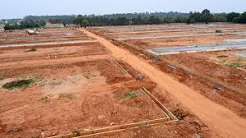
The organisation said the land losers had been waiting for nearly nine years and alleged that the BDA had failed to adequate coordinate with them. Bengaluru: The Dalit Sangharsha Samithi has urged the Bangalore Development Authority (BDA) to reserve and allot alternative sites in Dr K Shivaram Karanth Layout to revenue site owners who lost their properties for the project. In a letter to the BDA, the organisation said allotment of sites to farmers and members of the public in the Karanth Layout began on August 31, but revenue site owners were yet to be considered. The organisation said the land losers had been waiting for nearly nine years and alleged that the BDA had failed to adequately coordinate with them. It also questioned the apparent sidelining of the Justice V G Bopaiah Committee, appointed by the Supreme Court to safeguard the interests of revenue site owners. The Samithi demanded that revenue site owners be treated on par with farmers and allotted alternative sites Courtesy : DH Note: This news is originally published on https:/deccanherald.com/bha and is used purely for non-profit/non-commercial purposes, especially human rights
Rajya Sabha list: A message to the upper castes, as well as the backward and Dalit communities, an attempt to address not just one but both elections.
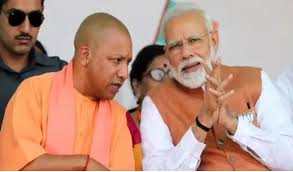
BJP Rajya Sabha list in UP: The BJP on Monday released a list of eight Rajya Sabha candidates in Uttar Pradesh. In this list, the BJP has relied on cadre rather than any outside leaders. With the announcement of eight candidates for the ten Rajya Sabha seats, the Bharatiya Janata Party has not only addressed the Upper House’s arithmetic, but also sought to send a political message for the 2027 Assembly elections and the 2029 Lok Sabha elections. By prioritizing long-time and loyal workers in the list, the party has assured the core cadre that long-term commitment and loyalty will be respected within the organization. It has also attempted to contain the resentment among the upper castes and to keep the backward and Dalit communities firmly connected. The party did not give a second chance to any of the current eight Rajya Sabha members. Influential figures from Western Uttar Pradesh, such as Union Minister BL Verma and former Chief Minister Kalyan Singh’s son Rajveer Singh, were also excluded from the list. On the contrary, by sending Cabinet Minister Dharampal to the Rajya Sabha, the party has signaled the creation of a new axis of backward leadership in Western Uttar Pradesh. Meanwhile, the selection of Shruti, the daughter of a prominent Kurmi leader from Rohilkhand and Jharkhand Governor Santosh Gangwar, has raised a new question about the BJP’s balance between nepotism and organizational loyalty. This list is also significant because the BJP is in a crucial phase of preparing for the 2027 assembly elections. At this time, selecting candidates for the Rajya Sabha is not merely a means of sending them to Delhi, but also a means of sending messages to different social groups, regions, and organizational factions. For some time now, there have been discussions about the political distance and dominance between BL Verma and Rajveer Singh regarding the leadership of the Lodhi community in Western Uttar Pradesh. BL Verma was once close to Kalyan Singh, while Rajveer Singh is considered a natural successor to his father’s political legacy. The exclusion of both from the Rajya Sabha list cannot be a normal occurrence. In contrast, the decision to send Livestock Minister Dharampal, a multiple-time MLA from Amla, to the Rajya Sabha is being seen as a strategy to promote a new leadership face among the Lodhi voters of western Uttar Pradesh. A Message to the New Through Old Faces Most of the eight names are those whose political identity has been built within the BJP organization. Among these, Priyanka Singh Rawat and Shruti Katiyar can be considered relatively new faces. Meanwhile, through names like Gopikrishna Pandey, Radhakant Ojha, Dharampal Singh, Prakash Pal, Vidyasagar Sonkar, and Rampratap Singh, the party has signaled to its old cadre that the path to the Upper House is open to those who have worked for the organization for a long time. Social alignment is also part of this strategy. By including three upper caste, three backward caste, and two Dalit candidates, the BJP has not only targeted its traditional upper caste base but also sent a message of representation to OBC and Dalit voters. Shruti’s selection, being the daughter of Santosh Gangwar, the Governor of Jharkhand and a multiple-time MP from Bareilly, again brings to the fore the question of nepotism within the BJP. The BJP has long leveled this accusation against opposition parties. In such a situation, the decision to send Shruti, who comes from a political family, to the Rajya Sabha despite her organizational background raises questions about the party’s standards. However, it is also being seen as an attempt to appease the Kurmi community in western Uttar Pradesh. While the regional balance in the Rajya Sabha list may not appear completely equal, the social and organizational message is more clear. While the BJP has sought to mitigate potential resentment among the upper castes, it has also attempted to reassure the backward castes and Dalits that their representation is secure. The biggest message is that the party may prioritize leadership preferences and electoral expediency over factional pressure or political legacy within the organization. Sudhir Kumar Singh, Lucknow Published by: Rohit Mishra Courtesy: Hindi News
Even in Many Churches, India’s Caste System Lasts Into the Grave
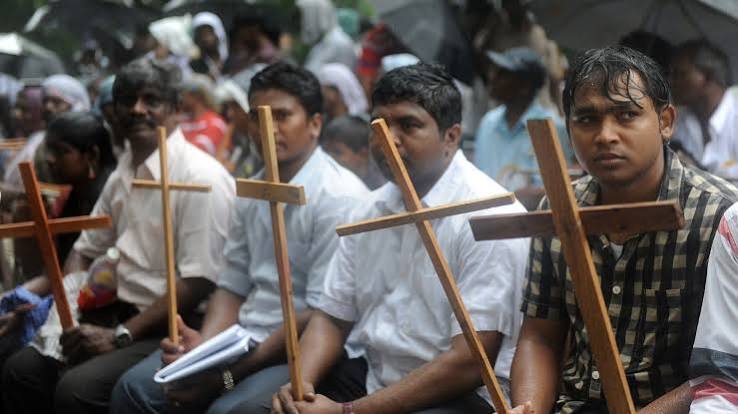
A Dalit burial dispute highlights persistent discrimination dividing Indian believers in pews and pulpit. When A. Raju died July 17 in the southern Indian state of Tamil Nadu, a three-day standoff over his rights as a Dalit held up his burial. As the family of the 89-year-old Catholic grieved, higher-caste Christian groups objected to having him laid to rest in their village’s common Catholic cemetery. With police keeping watch as tensions rose over the dispute, local authorities and church leaders negotiated with the groups for permission to bury Raju there. Bishop Jeevanandam Amalanathan said the protestors—which included fellow Catholics—were “vociferous” in their opposition. Authorities finally forced opponents to step aside and allow Raju’s burial at the half-acre cemetery. But the dispute has sparked sharp reactions from across Catholic, Protestant, and evangelical groups, shedding light once again on the reality of caste divisions among Indian Christians. “If we do not shed caste affiliations even after accepting Christ, we should be ashamed of being called Christians,” Vincet Raj, a Pentecostal Christian from Tamil Nadu, told Christianity Today. Dalits are at the bottom of the caste pyramid in India and historically have been denied the right to own land, pushed into sanitation and menial work, and forced to live outside villages. India counts roughly 201 million Dalits but includes only Hindus, Sikhs, and Buddhists in that number—excluding Christians and Muslims in its tally. Long spurned by dominant castes, marginalized Dalits have embraced Christianity over the past century, drawn by its message of love and equality. Missionary efforts providing education, health care, and livelihood—as well as dignity and hope—have also drawn converts among the Dalits. Even as people from various castes have embraced the gospel, Dalit Christians continue to face discrimination among fellow believers. Pastors, church leaders, and Dalit activists told Christianity Today that although Dalits today account for at least 70 percent of India’s 28 million Christians, they are shut out of leadership and decision-making roles across Catholic, mainline Protestant, and evangelical churches. In recent years, Catholics have tried to rectify the issue. Earlier this year, the Catholic Bishops’ Conference of India—which includes eastern Catholics such as those of the Syro-Malabar rite—elected Archbishop Anthony Poola of Hyderabad, the first Dalit cardinal, as its president. But Dalit representation in the church hierarchy remains thin: Of India’s 200 Catholic bishops, 11 are Dalits, even though an estimated 60 percent of the nation’s Catholics are Dalits. Meanwhile, mainline Protestant and evangelical institutions lack the organizational structure to make similar changes. “Caste permeates through both mainline and independent Protestant churches too, yet it is implicit and hush-hush,” said Richard Devadoss, president of the National Dalit Christian Watch. “Nobody talks about it; that doesn’t mean caste is absent here.” Leaders associated with various mainline Protestant churches revealed, on the condition of anonymity out of fear of reprisal from church committees, that care is taken during the selection processes to ensure that a Dalit bishop or a priest is not posted to head a diocese or church where non-Dalits dominate the pews. “In cases [where] that doesn’t work, either you [as a Dalit] are co-opted by the dominant caste congregants or face discrimination in subtler ways,” said a Dalit pastor from a prominent established church in Tamil Nadu where non-Dalits are in the majority. He serves the church alongside a non-Dalit pastor. Although both pastors are required to participate in church growth meetings, outreach activities, budget planning, and organizing Christmas and other activities, he said the church committee doesn’t allow him to attend any of them. “It deeply pains me, but I have no option but to silently finish my tenure here,” he lamented. In some extreme cases, Dalit groups also discriminate against each other based on subcaste loyalties. One church with nearly 500 worshipers in Andhra Pradesh State holds separate Sunday services for two Dalit subgroups, said Paul David, a Dalit Christian activist. The Malas, historically considered at the top of the Dalit socioeconomic ladder in the region, worship first—and then the Madigas gather for their own service. “This is not a one-off case,” David said. “Many churches reflect hierarchy rather than Jesus’ core teaching of love and equality.” In major urban centers, where independent, storefront charismatic churches with large numbers of new converts have exploded, the influence of caste is less acknowledged. “That’s because caste gets camouflaged as class,” David said. Higher-caste church members typically benefit from more education and financial resources than lower castes. “Class—which goes by another name as resourcefulness and community feeling—is a byproduct of caste.” Unlike in established mainline churches, high-profile pastors and their family members—who are from dominant castes—make all the decisions within the church. Sagar, a Dalit who asked to use only his first name due to fear of upsetting his church, told CT that for four years, he has volunteered as an usher at a charismatic church in Hyderabad that draws thousands across three services every Sunday. He said people who have joined the church since he first arrived have moved into key roles supporting the celebrity pastor. Sagar continues to serve, but he has since concluded that other considerations beyond commitment to the church—such as caste—determine his role there. Outside church, Dalit Christians are caught in a legal limbo. Dalit converts to Christianity cannot claim Scheduled Caste (SC) status under Indian law, which grants access to education and employment opportunities through affirmative action. The SC status is restricted to Hindu, Sikh, and Buddhist Dalits. For decades, Dalit Christians have campaigned to have that status extended to them as well, but to no avail. “There is enough evidence to suggest that Dalit Christians experience the same marginalization” as Dalits from other faiths, said Emanual Nahar, professor and former chair of the Punjab State Commission for Minorities. “It is a long-pending issue, and the government must make SC status religion-neutral.” From leadership roles in churches to securing places in graveyards, Dalit Christians are still reminded of their marginalized status. Advocates for the Dalit expressed hope that the Raju case would
‘Misleading’: EC fact-checks Rahul Gandhi’s claim that Gyanesh Kumar changed Form 6 ‘illegally’
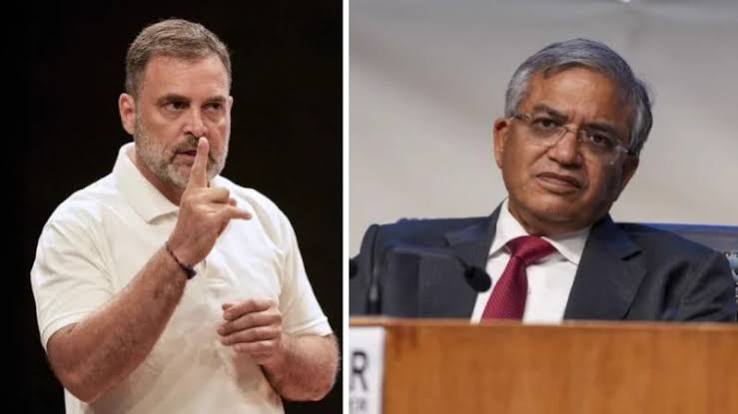
Election Commission of India says Rahul Gandhi’s statement was misleading The Election Commission of India (ECI) on Monday fact-checked Leader of Opposition (LoP) Rahul Gandhi over his statement alleging that Chief Election Commissioner (CEC) Gyanesh Kumar changed Form 6 “illegally and unilaterally”. Sharing a screenshot of the Election Commission’s September 26 statement on X, Gandhi highlighted a paragraph which stated, “The declaration attached to Form 6 for SIR has been upheld by the Supreme Court. For the non-SIR period, the forms applicable as per Rules (the Registration of Electors Rules, 1960) will be used.” ‘Any modified Form 6 not approved by us’: Supreme Court refutes EC claim over new declaration in SIR states Comment: CEC is not the Election Commission: The Chief Justice has made it clear that the Supreme Court did not give its approval to the modified Form 6 “It is now established beyond doubt that Gyanesh Kumar changed Form 6 illegally and unilaterally. This is just one more proof of him abusing his position to help the BJP. He and everyone else involved in this criminal assault on our democracy will be held accountable,” he said in a post on X. In response, the Election Commission, while terming his statement “misleading”, said, “The order for SIR in Bihar issued on June 24, 2025, was issued with the unanimous approval of the Commission. This order has been upheld by the Hon’ble Supreme Court of India in its judgment dated May 27, 2026.” It further added, “In its Press Note No. 120 dated September 26, 2026, in Point 1(iii), the ECI has stated that, ‘The declaration attached to Form 6 for SIR has been upheld by the Hon’ble Supreme Court.’” Animesh Singh Courtesy : The Tribune Note: This news is originally published on https:/thetribune.com/bha and is used purely for non-profit/non-commercial purposes, especially human rights
Cong reaches out to smaller parties ahead of seat-sharing talks with SP
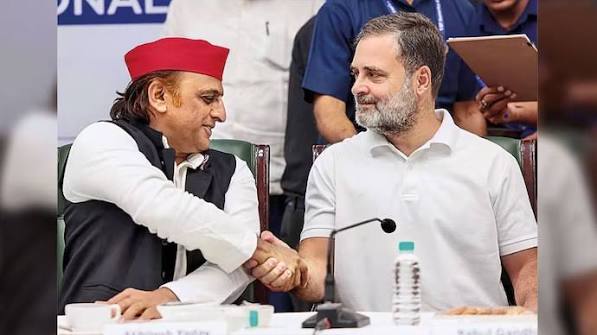
Lucknow: Congress is in talks with at least four smaller regional outfits from Uttar Pradesh even before it goes for seat-sharing negotiations with Samajwadi Party, its INDIA bloc partner in UP. Though the party functionaries claim that it is conscious of ‘gathbandhan dharma’ and wants to move ahead with SP as an alliance partner, the grand old party’s outreach to smaller political outfits is being seen as a move to strengthen its bargaining power while discussing alliance modalities with SP. Congress party’s UP in charge Rajendra Pal Gautam has pitched for ‘equal partner’ status and reiterated on Sunday that the party was preparing for 200 seats. Among smaller outfits in touch with Congress are Apni Janta Party chief Swami Prasad Maurya, who met Rahul on Saturday, followed by Sanjay Chauhan of Janwadi Party (Socialist) and Pankaj Niranjan of Apna Dal (Kamerawadi), on Sunday. Political analysts said the outreach could serve a dual purpose for Congress — expanding its social and organisational footprint ahead of the 2027 assembly elections while also giving it additional leverage when it sits across the table with SP. “Congress is trying to strengthen its position before the seat-sharing exercise begins. If it can bring smaller parties with a specific social base into its fold, it can enter negotiations with the SP with a wider alliance proposition,” a political analyst said. Another analyst said the move should not be seen as Congress preparing to move away from SP. “The Congress knows the importance of the alliance, but at the same time it would not want to enter seat-sharing talks from a position of weakness. Outreach to smaller parties gives it some room to negotiate,” he said. The timing of the outreach is also significant as Congress has been signalling an ambition to expand its footprint in UP. Gautam’s pitch for an ‘equal partner’ status and the party’s preparation for around 200 seats indicate that Congress is looking to negotiate from a position of greater strength. On Monday., Gautam told reporters in New Delhi: “We have asked for equal status in the coalition which means 200 seats and we must do it soon.” The smaller parties being approached also bring distinct OBC and local support bases, which could add to the broader INDIA bloc’s social arithmetic. Courtesy : TOI Note: This news is originally published on https:/timesofindia.com/bha and is used purely for non-profit/non-commercial purposes, especially human rights
Concerns raised over ‘lack of diversity’ in state planning board
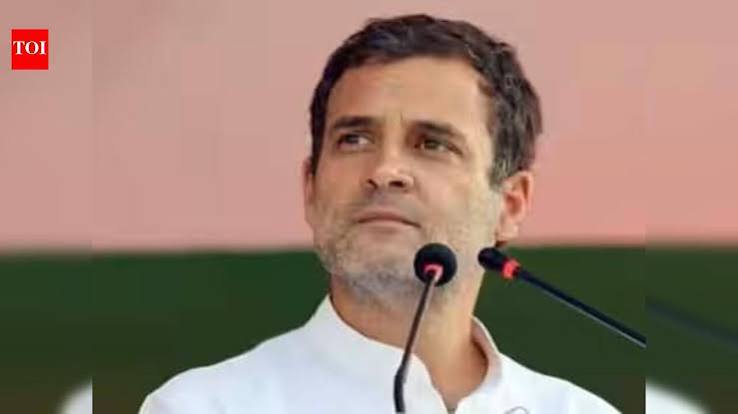
Thiruvananthapuram: A group of representatives from backward classes, minority, Dalit, OBC and other socially under-represented communities has urged leader of the opposition in Lok Sabha Rahul Gandhi to intervene in the recent reconstitution of the state planning board, alleging inadequate social and professional representation. In a representation submitted to Gandhi, the signatories sought corrective measures to ensure that the composition of the planning board reflects Keralam’s social diversity, professional expertise and constitutional principles of inclusion and equal opportunity. The letter said the state has a large pool of accomplished academics, professionals, administrators, scientists and social experts from various communities, including backward classes, Muslims, Dalits and historically under-represented Hindu and Christian OBC communities. However, it alleged that adequate representation from these sections was not reflected in the newly constituted board. The group also raised concern over the absence of women among the political appointees, despite the availability of eminent women scholars, economists, administrators and planning experts in the state. The signatories said the planning board played a crucial role in long-term development planning, evidence-based policy formulation, research and evaluation of govt programmes. They argued that appointments to the institution should therefore take into account professional competence, expertise, relevant experience, integrity and broad social representation. The representation questioned whether adequate weightage was given to professional qualifications and demonstrated expertise in the recent appointments. It sought greater public scrutiny of the credentials of some individuals appointed as experts. The signatories urged Gandhi to examine the concerns objectively and seek steps to ensure wider representation of Keralam’s diverse social and professional communities. The representation was signed by 13 persons, including former directors of backward classes development department V R Joshi and V S Mohammed Ibrahim, former minority welfare department director A B Moideenkutty and representatives of various social organisations. Courtesy : TOI Note: This news is originally published on https:/timesofindia.com/bha and is used purely for non-profit/non-commercial purposes, especially human rights