
Census 2027 to collect data on transgender heads of Households bookmark_border text_fields
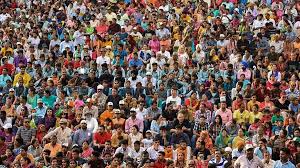
The Census will be conducted in two phases, with the houselisting stage recording the sex of the head of each household as male, female or transgender, the government told the Rajya Sabha. New Delhi: The upcoming Census 2027 will collect data on the sex of the head of households under three categories — male, female and transgender — the Rajya Sabha was informed on Wednesday. Minister of State for Home Affairs Nityanand Rai, in a written reply, said the Census will be conducted in two phases. The questions for the first phase, which covers the Houselisting and Housing Census, have already been notified During this phase, information related to housing conditions, household particulars including the name and sex of the head of the household, amenities available and assets possessed by the household will be collected. Rai said the sex of the head of the household will be recorded under three categories — male, female and transgender. He added that the questions for the second phase, known as Population Enumeration, where information about each individual will be collected, will be notified later. Rai said enumerators will carry out house-to-house visits across all enumeration areas to collect Census data and ensure that no one is excluded on any ground. He explained that the provision for self-enumeration will be offered as an additional facility for respondents to submit their information. However, enumerators will verify the self-enumerated data before final submission. The minister said the self-enumeration portal will include frequently asked questions, tool tips and validation checks to ensure the accuracy of the data provided by respondents. He further stated that several measures have been put in place to ensure data security while collecting information on mobile devices, during data transmission and at the server level. According to Rai, adequate training is being provided to all field officials involved in the Census, including enumerators and supervisors. Validation rules have been built into the mobile application to ensure data consistency and accuracy, while supervisors will monitor and verify the data collected by enumerators. The Union Cabinet has approved Rs 11,718 crore for conducting the Census of India 2027, which will also include caste enumeration for the first time. The exercise will be the 16th Census conducted since Independence and will be a fully digital process, offering citizens the option of self-enumeration. The decadal Census, originally scheduled for 2021, was postponed due to the COVID-19 pandemic. Courtesy : Madhyamam Note: This news is originally published on https:/madhyamam.com/bha and is used purely for non-profit/non-commercial purposes, especially human rights
India Moves To Broaden Legal Definition Of Transgender Persons. What Does It Mean?
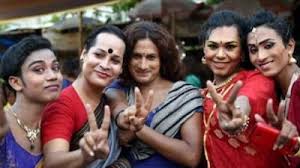
The amendment is also expected to spell out clearer criteria for identifying transgender persons, which the government says will help prevent misuse of the law’s provisions. The Union Cabinet on Tuesday approved a proposal to amend the Transgender Persons (Protection of Rights) Act, 2019, in a bid aimed at expanding the definition of transgender individuals in the country. As per reports, the proposed changes are intended to make the law more inclusive so that a broader range of individuals can access the rights, protections and welfare measures provided under the legislation. The amendment is also expected to spell out clearer criteria for identifying transgender persons, which the government says will help prevent misuse of the law’s provisions. Community leaders have consistently raised concerns regarding the implementation of the law, prompting ongoing discussions around its effectiveness. The Supreme Court has also voiced concerns regarding delays in implementing the law provisions. While the Cabinet has approved the proposal, detailed provisions of the amendment have not yet been made public. The Transgender Persons (Protection of Rights) Act, 2019, which came into force on January 10, 2020, provides legal recognition to transgender individuals, prohibits discrimination and mandates welfare measures for the community. The rules for implementing the law were notified in September 2020. Under the current law, a transgender person is defined as someone whose gender identity does not match the gender assigned at birth. Section 2 of the Act provides crucial definitions regarding who qualifies as a transgender person. The definition includes trans men and trans women, persons with intersex variations, gender queer individuals, hijra and others. The law applies regardless of whether a person has undergone sex reassignment surgery or hormone therapy. It also requires transgender persons to go through a district magistrate and district screening committee to get certified as a trans person. According to the 2011 census there are more than 4.80 lakh transgenders in the country. As per the reports, the proposed amendment aims to bring greater clarity to the definition and ensure that genuine beneficiaries receive the protections and benefits provided under the law. Curated By : Shobhit Gupta Courtesy : News18 Note: This news is originally published on https:/news18.com/bha and is used purely for non-profit/non-commercial purposes, especially human rights
Rahul Gandhi behind speaker’s decision on turncoat MLAs, alleges BRS working president KT Rama Rao
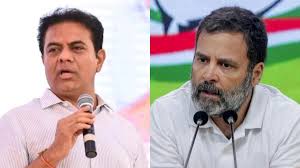
Hyderabad: Condemning assembly speaker G Prasad Kumar’s decision to dismiss disqualification petitions against defected MLAs, BRS working president KT Rama Rao has called it undemocratic and shocking. He alleged that the decision was taken under tremendous pressure from Congress leader Rahul Gandhi and accused the party leadership of orchestrating the entire episode. Speaking to the media at Telangana Bhavan after the speaker’s verdict on Wednesday, KTR said the speaker had virtually no independence in the matter. He said the decision represented a direct assault on democracy and the Constitution, and that the principal architect behind this unethical move was Rahul Gandhi. KTR also questioned how an MLA who won on a BRS B-Form could contest as a Congress candidate in the Lok Sabha elections without resigning from the assembly, yet still escape disqualification. “An MLA who won on one party’s B-Form contests as an MP candidate on another party’s B-Form without resigning. Despite such clear evidence, the speaker refused to disqualify him. This is nothing short of political manipulation,” he said. “All the evidence is already in the public domain. The Election Commission records clearly show which B-Form the MLA used to contest the assembly election and on which B-Form he contested for Parliament. What further inquiry is needed?” he asked. KTR questioned the moral authority of Rahul Gandhi and Congress to speak about defections. “Rahul Gandhi and Congress have absolutely no moral right to lecture anyone about political defections,” he said. “The main perpetrator and the criminal mind behind this decision is Rahul Gandhi. He is the real culprit. Without his permission and approval, the speaker would never have dared to take such a shocking decision,” KTR stated. Criticising what he described as hypocrisy in Rahul Gandhi’s political stance, KTR said that the Congress leader claimed to be the defender of the Constitution while simultaneously encouraging defections. “On one hand Rahul Gandhi carries the Constitution in his hand and claims to be its protector. On the other hand, his party is enabling defections and protecting defectors,” he added. KTR further criticised Rahul Gandhi for speaking about automatic disqualification in cases of defection during his speeches in Telangana and for promoting the ‘Nyay Patra’, while allowing the Congress govt to protect defectors. Courtesy : TOI Note: This news is originally published on https:/timesofindia.com/bha and is used purely for non-profit/non-commercial purposes, especially human rights
Nashik court disposes of defamation case against Rahul Gandhi

Nashik: The court of additional chief judicial magistrate Rupali Narwadiya has disposed of the defamation case filed against leader of opposition in Lok Sabha Rahul Gandhi. The case was initiated by Devendra Bhutada, president of the Nashik-based Nirbhaya Foundation, who alleged that Gandhi made defamatory remarks about Hindutva ideologue and freedom fighter VD Savarkar during ‘Bharat Jodo Yatra’ rallies held in Hingoli and Akole on June 15 and 16, 2022. Bhutada approached the court shortly after learning of the comments. Following the complaint, a case was registered under sections 499 (defamation) and 504 (intentional insult) of IPC, and the court issued summons to Gandhi in Sept 2024. Last July, the additional chief judicial magistrate granted Gandhi bail, allowing him to attend hearings virtually, during which he pleaded not guilty. Defence lawyer Gajendra Sanap said the court had ordered an inquiry under Section 202 of the CrPC, and after police submitted their investigation report, the complainant sought to withdraw the case. Mohan Pingale, representing Bhutada, said the withdrawal application was filed because Bhutada’s daughter had recently moved abroad, making it difficult for him to attend frequent hearings. He said the four-year-old case had led to summons and warrants against Gandhi, requiring him to secure bail and participate in virtual proceedings. Pingale said the Supreme Court mandated priority handling of cases involving MPs and MLAs. “In view of the circumstances, we applied to withdraw the case, and the court accepted the request, thereby disposing of the matter,” he said. Courtesy : TOI Note: This news is originally published on https:/timesofindia.com/bha and is used purely for non-profit/non-commercial purposes, especially human rights
Dalit Family in Sidhauli Forced to Flee Home: Allegations of Assault and Threats Against Local Bullies; Appeal Made to SP
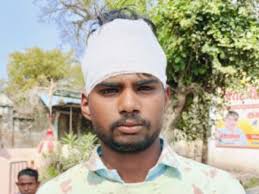
In Karaunda village, located within the Nigohi police station area of Shahjahanpur, a Dalit family has alleged that local bullies (known as *dabangs*) forcibly entered their home, physically assaulted them, hurled caste-based slurs, and damaged their property. The victimized family states that they are receiving continuous threats, compelling them to abandon their village. They have appealed to the Superintendent of Police (SP) for justice and protection. Ramlal, a resident of Karaunda, stated in a written application submitted to the Superintendent of Police that on the evening of March 3, around 7:30 PM, several local bullies forcibly barged into his home. It is alleged that the accused subjected him to caste-based verbal abuse and assaulted him using sticks and clubs. During this attack, Ramlal sustained severe head injuries and was left bleeding profusely. In addition to breaking down the front door, the accused also damaged a motorcycle parked in the courtyard and a storage chest kept inside the house. Immediately following the incident, the victim alerted the police via the ‘Dial 112’ emergency service. Upon arriving at the scene, the police arranged for Ramlal’s medical examination. He initially received treatment at the Primary Health Centre in Nigohi, followed by further treatment at the District Hospital. A case has also been registered against some of the accused individuals in connection with this matter. Ramlal alleges that since the incident occurred, the accused have been continuously pressuring him to reach a compromise. He is being threatened that if he does not agree to a settlement, he will not be allowed to continue living in the village. Terrified of the accused, Ramlal and his family are living in constant fear and are contemplating leaving the village. On Tuesday, Ramlal appealed to the Superintendent of Police, requesting that he and his family be provided with police protection. He also pleaded for arrangements to be made—under police supervision—to retrieve his household belongings from his home, so that he and his family may relocate to a safe location. In this regard, Shahjahanpur Superintendent of Police Rajesh Trivedi has assured that an investigation will be conducted and appropriate action taken. Viresh Kumar | Mishripur (Sidhauli), Courtesy : Hindi News
Dalit Woman Beaten with an Iron Rod in Maharajganj; VIDEO: Youth Attacks Over Old Feud, Victim Referred to Medical College
On Tuesday evening, in the Senani Nagar ward of the Siswa Municipality in Maharajganj, an aggressive youth severely injured a Dalit woman by beating her with an iron rod, stemming from an old personal feud. The incident was captured on CCTV footage, a video of which has now surfaced. According to reports, Punita (30)—wife of Jitendra Gautam, a resident of the Senani Nagar ward—was walking along Block Road around 4:00 PM for some work. According to eyewitnesses, an unruly youth from the same ward intercepted her on the way and began beating her with an iron rod. After the assault, the accused fled the scene, leaving the woman half-dead. Upon receiving information about the incident, police from the Kothibhar station arrived at the scene and admitted the injured woman to the Siswa Primary Health Centre (PHC). After receiving primary treatment there, and given her critical condition, she was referred to the District Hospital. Later, as her condition deteriorated further, she was transferred to a Medical College. The entire incident was captured by a nearby CCTV camera, and the resulting video is currently going viral on social media. The victim’s husband, Jitendra Gautam, currently resides in Bengaluru. Speaking over the phone, he stated that the accused youth—known for his aggressive behavior—had previously assaulted him twice over a land dispute. It is for this very reason that he has been living in Bengaluru to ensure his personal safety. According to police sources, the accused youth has been taken into custody. Regarding the matter, Dharmendra Singh stated that the police have received information about the incident. Once a formal written complaint is received from the victim’s side, a case will be registered against the accused, and further legal action will be initiated. Brijesh Kumar Gupta | Maharajganj | Courtesy : Hindi News
Killed for Saying ‘Happy Holi’: Dalit Youth Stabbed to Death in Lucknow, Family Demands ‘Death for Death’ Justice
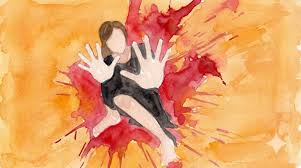
Dalit Man Stabbed to Death in Lucknow After Wishing ‘Happy Holi’Dalit Man Stabbed to Death in Lucknow After Wishing ‘Happy Holi’Opinion column access What began as a seemingly ordinary festival greeting turned deadly in a village on the outskirts of Lucknow earlier this week, when a young Dalit man was allegedly stabbed to death following an altercation with members of an upper-caste Brahmin family. The victim, identified as Suraj Gautam, 22, was attacked in Begariya village under the Dubagga police station area on March 4 after he wished neighbours “Happy Holi,” according to police and local media reports. Witnesses and family members allege that the greeting triggered an argument with members of a Brahmin household, which escalated into violence. During the confrontation, a woman from the family allegedly pulled out a knife and stabbed Gautam multiple times. He was rushed to a hospital with severe injuries but later succumbed to the wounds.City & Local Guides According to reports, the dispute erupted when Gautam greeted a neighbour during Holi celebrations. Some witnesses claim the greeting angered the upper-caste family, leading to a heated exchange. During the altercation, Gautam sustained several stab wounds. Police say he was taken to a trauma centre but doctors declared him dead shortly afterwards. The exact sequence of events remains under investigation. Police Response Following a complaint filed by the victim’s family, police registered a murder case under sections of the Bharatiya Nyaya Sanhita (BNS) along with provisions of the Scheduled Castes and Scheduled Tribes (Prevention of Atrocities) Act. Authorities said three accused persons have been arrested, and the knife allegedly used in the attack has been recovered. Police officials have not publicly confirmed the motive behind the killing, stating that the investigation is ongoing. Gautam’s mother has demanded the strictest punishment for those responsible, reportedly telling reporters that the family wants “death for death” justice for her son. Several posts circulating online claim the dispute began simply because a Dalit youth greeted members of an upper-caste family during the Holi festival. However, some of these claims remain difficult to independently verify. A broader pattern of caste violence The killing has renewed conversations about caste-based violence in India, particularly in rural areas where social hierarchies continue to influence everyday interactions.Indian sports coverage Over the decades, several incidents of violence against Dalits—ranging from individual killings to mass atrocities— keep getting national attention. While legal frameworks such as the SC/ST (Prevention of Atrocities) Act exist to protect marginalised communities, implementation often remains inconsistent. Police officials say the investigation is ongoing and that further arrests may follow if additional suspects are identified. For Gautam’s family, however, the tragedy has already left an irreversible loss. Courtesy : TOP Note: This news is originally published on https:/theobserverpost.com/bha and is used purely for non-profit/non-commercial purposes, especially human rights
HC urges end to highway protest over dalit youth’s death
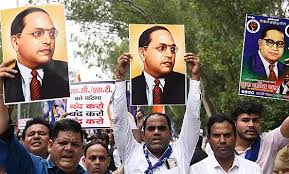
Madurai: The Madras high court on Tuesday asked the family of a dalit youth who died after sustaining injuries in police custody in Sivaganga district to appeal to protesters to disperse from the Manamadurai highway. The youth, Akash, 26, died on Sunday at Govt Rajaji Hospital in Madurai, triggering allegations of police torture and custodial violence. He had been apprehended by Manamadurai police near the Melapasalai flyover in connection with a machete attack on two people. Police claimed that Akash suffered severe leg fractures after he jumped from a flyover while attempting to evade arrest. Following his death, family members and local residents staged a roadblock protest on the Madurai–Rameswaram highway near the old bus stand in Manamadurai. The protest entered its third day on Tuesday, with temporary tents set up at the site. The protesters demanded action against the police personnel allegedly responsible for the youth’s death. Traffic towards Rameswaram was diverted via Sivaganga and Kamudhi due to the blockade. When the matter was mentioned before the Madras high court on Tuesday, the state submitted that the continuing blockade of the national highway was affecting the general public. Justice L Victoria Gowri orally instructed the family members of the deceased to request, through the media, that protesters disperse from the spot. On Monday, during the hearing of a petition filed by the youth’s father, A Rajeshkannan, the state had informed the court about the highway blockade and its impact on the public. Counsel for the petitioner had then submitted that he would convey a request through the family to the protesters to disperse. Courtesy : TOI Note: This news is originally published on https:/timesofindia.com/bha and is used purely for non-profit/non-commercial purposes, especially human rights
14 years on, life term for 4 who gang-raped newly-wed Dalit

AGRA: An SC/ST court in Aligarh sentenced four members of the Bablu Mewati gang to life in jail on Tuesday for robbery and brutal gang rape of a 23-year-old newly-wed Dalit woman in 2012. The crime took place after the accused men broke into the woman’s home while she was asleep, stealing jewellery and cash before gang-raping her. Driven by fear of social stigma, the traumatised family initially informed the cops about the theft alone, based on which an FIR was filed. However, on Jan 30, 2013, after a team of special operations group surrounded the robbers and Iqrar and Shamim, were nabbed. In custody, the men confessed not only to the 2012 robbery, but also to rape. When police called the woman’s family to identify the culprits, they recognised all of them. According to the prosecution, during trial, accused Nazim died in a police encounter in Gujarat, while another accused — a minor at that time — faces proceedings before the Juvenile Justice Board. Special public prosecutor Chaman Prakash Sharma said, “Based on evidence and testimony collected over a decade, the SC/ST court of additional district and sessions judge, Tosh Kumar Sharma, found all of them guilty of robbery and gang rape. The court also imposed a total fine of Rs 1.6 lakh on the four convicts, Iqrar, Shamim, Nakeem and Gulfam, with half the amount to be paid as compensation to the survivor.” Courtesy : TOI Note: This news is originally published on https:/timesofindia.com/bha and is used purely for non-profit/non-commercial purposes, especially human rights
‘Dalit Christians must be listed as SC community’: Human rights activist Vincent Kathir
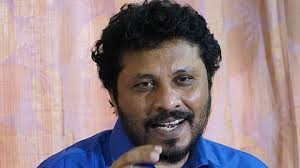
Kathir was referring to the March 2 Nanguneri sickle attack incident in which John Mark, a Dalit Christian and Trinath Kata, worker from Odisha died MADURAI: Human rights activist and CEO of the NGO Evidence Vincent Kathir on Tuesday said Dalit Christians should be recognized as Scheduled Caste so that victims of caste violence can receive compensation from government as per provisions of the SC/ST (Prevention of Atrocities) Act. Referring to the March 2 Nanguneri sickle attack incident in which John Mark, a Dalit Christian and Trinath Kata, worker from Odisha died, Kathir said John’s family is not eligible to receive compensation because Dalit Christians are listed under the Backward Class (BC). “The Tamil Nadu government should ensure that Dalit Christians are included under the Scheduled Caste (SC) category, making them eligible for compensation and the benefits they deserve,” he said. Alleging failure of police intelligence, Kathir said “Local police stated there was no personal enmity behind the brutal attack, but our field investigation revealed longstanding tensions between two communities, in the region. On the tragic night, one group went on a rampage in Perumalpattu village. Shockingly, the two victims were not connected to either of these communities and had no involvement with the caste tension prevailing between the two sides. Such attacks should be categorized as community-based clashes, which are often more devastating than personal disputes. The attack appears to have been motivated solely by caste affiliation, and highlights a troubling pattern of caste-based violence.” Further, he said there has been a notable increase in caste-related violence in districts like Theni, Madurai, Thoothukudi, Sivaganga, Thanjavur, Tirunelveli, and Pudukottai in recent years. Courtesy : TNIE Note: This news is originally published on https:/thenewindianexpress.com/bha and is used purely for non-profit/non-commercial purposes, especially human rights