
The Impact of the Partition of India on Dalits: An Ambedkarite Perspective in South Asia
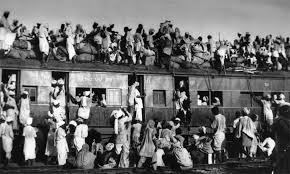
The Partition of the Indian subcontinent in 1947 is widely regarded as one of the most traumatic events in modern history. The division of British India into the independent states of India and Pakistan triggered massive communal violence, widespread displacement, and one of the largest migrations in human history. Historical narratives of Partition generally focus on the conflict between Hindus and Muslims and the political rivalry between leaders such as Jawaharlal Nehru and Muhammad Ali Jinnah. While these perspectives illuminate important political developments, they often overlook the experiences of marginalized communities, particularly Dalits. From an Ambedkarite historiographical standpoint, the Partition of India cannot be fully understood without examining how caste structures shaped both the violence and the aftermath of the event. The ideas of B. R. Ambedkar provide a critical framework for analyzing these issues. Ambedkar repeatedly argued that Indian society was fundamentally divided by caste hierarchies and that political independence without social transformation would not produce genuine equality. The experiences of Dalits during Partition illustrate the continuing power of caste in shaping social and political realities. Dalits were affected by violence, displacement, and economic loss, but their suffering remained largely invisible in mainstream narratives. In many cases, they faced not only communal violence but also discrimination within their own religious communities. Consequently, the impact of Partition on Dalits reveals the intersection of religion, caste, and power in South Asian history. This essay examines the impact of Partition on Dalits from an Ambedkarite perspective, highlighting the ways in which caste shaped displacement, political representation, and post-independence social structures. Dalits as the Invisible Victims of Partition One of the most striking features of Partition historiography is the relative absence of Dalit experiences. Historical accounts usually describe violence in terms of religious communities—Hindus, Muslims, and Sikhs—without recognizing the internal stratification within these groups. Dalits, who occupied the lowest positions in the caste hierarchy, were frequently marginalized in both historical narratives and relief efforts. Many Dalits were victims of violence during Partition, but their suffering often went unrecorded because they lacked political representation and social visibility. Unlike dominant castes, Dalit communities rarely had access to leadership networks or institutional support that could document their experiences. From an Ambedkarite perspective, this invisibility reflects a broader problem within Indian society: the tendency to treat caste inequality as secondary to other political issues. Partition therefore reinforced an existing pattern in which Dalit voices were excluded from national narratives. Displacement and Refugee Experiences Partition triggered the displacement of approximately fifteen million people across the newly created borders of India and Pakistan. Among these refugees were large numbers of Dalits, particularly in regions such as Punjab and Bengal. In eastern India, the Namasudra community—a major Dalit group in Bengal—was severely affected. Many Namasudra peasants initially remained in East Pakistan after 1947, hoping to continue their lives without migrating. However, continuing insecurity and communal tensions forced many of them to migrate to India in subsequent years. When Dalit refugees arrived in India, they often faced harsh conditions in refugee camps. Unlike many upper-caste refugees who were able to secure land or employment through social networks, Dalits frequently lacked the resources needed to rebuild their lives. As a result, many Dalit refugees were relocated to remote areas such as the Dandakaranya region, where they were expected to cultivate previously undeveloped land. These resettlement policies reflected the persistence of caste-based inequalities even within state rehabilitation programs. Double Marginalization: Religion and Caste Dalits experienced a form of double marginalization during Partition. On one hand, they were affected by communal violence directed at their religious communities. On the other hand, they continued to face caste discrimination from members of their own religious groups. In refugee camps across northern India, upper-caste refugees often maintained social distance from Dalits. Dalits were sometimes assigned menial tasks such as sanitation work and were excluded from community decision-making processes. Relief distribution and rehabilitation opportunities were also influenced by caste hierarchies. This situation demonstrates that the violence of Partition did not erase caste distinctions. Instead, caste continued to shape social relations even in the context of humanitarian crisis. Forced Conversions and Vulnerability During the chaotic violence of Partition, Dalits were particularly vulnerable to coercion and forced conversion. In several regions, competing religious groups sought to increase their numbers by converting marginalized communities. Dalits sometimes faced pressure to adopt a different religious identity in order to secure protection or access resources. Because they lacked strong political representation and social power, they were often unable to resist such pressures. These experiences highlight the precarious position of Dalits during Partition. While dominant castes could mobilize resources and networks to protect their communities, Dalits were often left to navigate the crisis with minimal support. The Political Dilemma of Dalit Leadership The political challenges faced by Dalits during Partition are illustrated by the career of Jogendra Nath Mandal, a prominent Dalit leader from Bengal. Mandal believed that an alliance between Muslims and Dalits could counterbalance the dominance of upper-caste Hindus in Indian politics. On this basis, he supported the creation of Pakistan and became the country’s first law and labour minister. However, Mandal’s expectations were soon disappointed. Reports of violence and discrimination against Dalits in Pakistan led him to resign from his position and return to India in 1950. His experience revealed the difficulty of finding a political arrangement that would genuinely protect marginalized communities. Mandal’s story illustrates the complex choices faced by Dalit leaders during the final years of colonial rule. They had to navigate between competing nationalisms while seeking to safeguard the interests of their communities. The Disruption of Dalit Political Movements Before independence, Dalit political movements had begun to develop significant momentum. Organizations representing the Depressed Classes advocated political rights, social reform, and greater representation in government. However, the upheaval of Partition disrupted many of these movements. In regions such as Bengal and Punjab, the displacement of populations weakened the social networks that sustained Dalit political activism. As a result, many Dalits who had previously engaged in organized political activity
Dalit girl death: Witnesses fear attack, seek protection
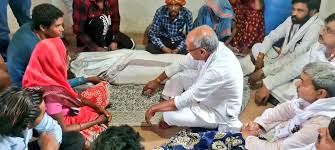
Bhopal: Day after the Supreme Court rejected the plea of MP govt and ordered a CBI investigation into the controversial death of Dalit girl, Anjana, 20, in Barodia Naunagir village of Madhya Pradesh’s Sagar district, fresh concerns emerged over the safety of witnesses. A key petitioner and brother of the deceased Dalit girl, sought police protection claiming that his elderly parents reportedly left their home for an undisclosed location. A bench of Justice M M Sundresh and Justice N K Singh on Wednesday rejected the investigation theory of the MP Police and ordered a CBI probe in the case. Vishnu Ahirwar, nephew of murdered witness Rajendra Ahirwar and a co-petitioner in the SC case, wrote to the director general of police (DGP), MP, seeking security for himself and his mother, citing threats and intimidation linked to the case. He told TOI that he requires ‘immediate security arrangements’. “Rajendra’s parents have not been seen since yesterday. I am scared too. My applications for security to DGP and other officers remain unattended” Vishnu said. The case relates to a sexual assault case filed by the survivor and her kin dating to 2019 against some influential people in the region. When the complainants refused to bow to pressure, her brother Nitin alias Lalu was assaulted on June 24, 2023 leading to his death. Rajendra Ahirwar, uncle of Nitin was a witness to the killing. Anjana and her family meanwhile moved the police including SP, IG and director general of police demanding a fair probe into the deaths and feared for their lives. The witness Rajendra Ahirwar died in a suspicious condition after an assault a year later in June 2024 while he was returning to Sagar. A day later while Anjana was accompanying the body of Rajendra she died under mysterious circumstances after falling off the hearse. Her brother Vishnu and family have since been demanding a fair probe into the deaths, alleging that influential people were behind the murders. In the application, Vishnu told the DGP that he fears for the lives of himself, his mother and other family members, alleging that they could be attacked or killed like his brother Nitin alias Lalu, his relative Rajendra Ahirwar and his sister Anjana. He requested that security be provided to him and his family and that legal action be initiated against those allegedly threatening witnesses. Courtesy : TOI Note: This news is originally published on https:/timesofindia.com/bha and is used purely for non-profit/non-commercial purposes, especially human rights
Karnataka Shocker: Dalit Youth Beaten to Death in Savalagi for Allegedly Pelting a Stone
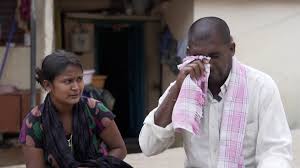
Savalagi: A shocking incident has come to light from Savalagi village in Bagalkote district’s Jamkhandi taluk. On Wednesday night, a Dalit youth was brutally beaten to death, all because he was accused of throwing a small stone during a school function. The victim has been identified as 19-year-old Sudeep Basappa Pange. Police have filed a murder case against Raju Bhimappa Mali, Vijay Ramachandra Savalagi, and Mallikarjuna Ningappa Mali. All three accused have been arrested. What Exactly Happened? The Government Kannada Girls’ School was holding its annual day celebrations, and children were performing on stage. While the villagers were watching the programme, someone from a group of youths sitting on the roof of the panchayat building threw a small pebble at the crowd below. This angered the accused. Instead of finding out who actually threw the stone, they cornered Sudeep. They started a fight with him, saying, “You threw the stone!” They then hurled casteist slurs at him, used abusive language, and beat him up mercilessly. Sudeep was seriously injured in the attack. He was immediately rushed to a hospital in Jamkhandi, but sadly, he passed away during treatment. A complaint has been registered at the Savalagi police station. Courtesy : Asianet News Note: This news is originally published on https:/asianetnews.com/bha and is used purely for non-profit/non-commercial purposes, especially human rights
Rahul Gandhi’s ‘Dalit Gambit’ in Lucknow Today! Congress Unveils Major Strategy with 15,000 Workers at Indira Gandhi Pratishthan on Kanshi Ram’s Birth Anniversary
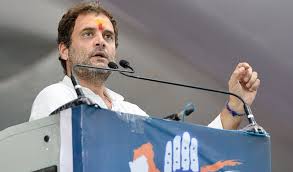
Lucknow, Amrit Vichar: With the rumblings of the upcoming assembly elections growing louder, the Congress party has initiated a concerted effort to woo the Dalit community. As part of this initiative, senior Congress leader and Leader of the Opposition in the Lok Sabha, Rahul Gandhi, will address an event organized on Friday to mark the birth anniversary of BSP founder Kanshi Ram, in a bid to bring the Dalit vote bank into the Congress fold. While the BSP asserts that it holds the primary claim to Dalit votes, leaders from the Samajwadi Party and the Bharatiya Janata Party are also actively engaged—each employing their own distinct strategies—to win over the Dalit electorate. Joining this fray, the Congress party has now also entered the arena. The birth anniversary of BSP founder Kanshi Ram falls on March 15; however, in a strategic move to gain the upper hand, the Congress has announced that it will celebrate his birth anniversary on Friday, March 13. The party is observing this occasion as ‘Social Transformation Day’ (Samajik Parivartan Diwas). The event is scheduled to take place at the Indira Gandhi Pratishthan, located in the state capital, Lucknow. Congress spokesperson Anshu Awasthi stated that Rahul Gandhi is expected to arrive in Lucknow by air at 2:00 PM on Friday. Approximately 15,000 party workers from across the state are expected to attend the event. Prominent leaders—including State In-charge and National General Secretary Avinash Pandey, State President Ajay Rai, National Chairman of the Congress Scheduled Caste Department Dr. Rajendra Pal Gautam, and Chairman of the Backward Classes Department Dr. Anil Jaihind—are slated to address the gathering. Courtesy: Hindi News
Blood Donation Ban On Gays, Transgender Persons & Sex Workers Retained After Review : Centre Tells Supreme Court
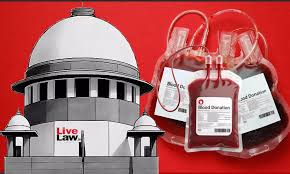
The Union Government informed the Supreme Court on Thursday that it has decided to retain the ban on blood donations by transgender persons, gay men, sex workers, after the experts revisited the earlier decision following a prodding by the Court. Additional Solicitor General of India Aishwarya Bhati informed the Court that the experts have reiterated that the ban was essential in the larger public interest. A bench comprising Chief Justice of India Surya Kant, Justice Joymalya Bagchi and Justice Vipula Pancholi was hearing a bunch of writ petitions which challenge the “Guidelines on Blood Donor Selection and Blood Donor Referral, 2017″issued by the National Blood Transfusion Council and the National Aids Control Organisation under the aegis of the Central Health Ministry. Clauses 12 and 51 of the said guidelines consider transgender persons, gay men and female sex workers as belonging to high-risk HIV/AIDS category and prohibit them from donating blood. Last year, the Court had asked the Centre to reconsider the ban. ASG Bhati stated today, “The experts have reconsidered, and there is a reconsidered opinion that, if this ban is diluted, it will be injurious to the recipients.” Senior Advocate Jayna Kothari, for the petitioners, argued that the reasoning of the committee has not been placed on record. She submitted that the decision was targeting a person merely on the grounds of sexuality and gender identity. CJI however expressed disinclination to interfere with the Centre’s decision. “Tell us one good reason that we should issue a direction. After all, there are millions and millions of poor people, who take free blood facilities. They cannot afford private hospitals. It is the poor strata of the people who are sustaining on this blood. Why this poor people should be…even if there is a one percent chance of any infection, why they should be affected?” Kothari replied that the one per cent chance of infection should not be for anybody. “The core issue is, once blood is donated by anybody, the blood donated has to be tested and then only used. In fact, after every blood donation is done, HIV testing is done. NAT testing is done,” Kothari said. Pointing out that donation and receiving of blood is voluntary, CJI said, “Whosoever wants your blood, and you are willing to donate, they will accept it.” Kothari replied, “Today, if a heterosexual married person wants to donate blood, that person is not asked a question when was your last unprotected sex. The risky behaviour is the unprotected sexual act. Not my identity. There can be a heterosexual person who may have had a risky act. Would that person’s blood not be risky?” Another counsel submitted that if NAT test is made mandatory, the risks can be addressed. CJI, terming it a “luxury litigation”, ultimately agreed to list the matter for hearing. There are 3 petitions pending before the Court, all filed by members of the LGBTQ+ community viz. Sharif D Rangnekar (author and former journalist), Thangjam Santa Singh (activist) and Harish Iyer (activist). In one of the cases (Thangjam Santa Singh), the Centre filed an affidavit in 2023 stating that there is substantial evidence to demonstrate that ‘transgender persons, men having sex with men and female sex workers are at risk for HIV, Hepatitis B or C infections’. It further claims that the determination of the population group that is to be precluded from being blood donors is prescribed by the NBTC (a body comprising medical and scientific experts) and is based on scientific evidence. The affidavit also avers that the issues raised fall within the ambit of the executive and are required to be considered from a public health perspective rather than an individual rights perspective. On the other hand, as per the petitioners, the 2017 guidelines infringe on the fundamental rights to equality, dignity, and life of members of the LGBTQ+ community as well as female sex workers. It is asserted that exclusion of the above class of persons, solely on the basis of their gender identities/ sexual orientation, is not only unreasonable but also unscientific. The petitioners aver that many countries, including the United States, United Kingdom and Canada have changed their rules to allow gay men to donate blood. The ban is based on outdated and biased views from the 1980s, following which medical technology has greatly improved, especially in blood screening, the petitioners state. In one of the petitions (Sharif D Rangnekar), a prayer has also been made for new guidelines that would allow gay men to donate blood, with some reasonable restrictions. It suggests public campaigns to inform society about risky behaviors and the updated guidelines. The petitioner also seeks changes in the syllabus of medical students in order to sensitize that gay men can donate blood. Courtesy : Live Law Note: This news is originally published on https:/livelaw.com/bha and is used purely for non-profit/non-commercial purposes, especially human rights
Basic principles of law appears to have not been followed in Baramati plane crash probe: Rahul Gandhi
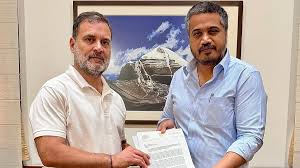
Pune: The leader of opposition in Lok Sabha, Rahul Gandhi, on Thursday alleged that basic principles of law had not been followed in the investigation into the Baramati plane crash that claimed the life of former Maharashtra deputy chief minister Ajit Pawar and said no FIR had been registered despite the seriousness of the case. Rahul shared a photo of him with NCP (SP) MLA Rohit Pawar on his ‘X’ handle after their meeting in Delhi and demanded a transparent investigation into the crash. “The incident warrants a fair, transparent and impartial investigation,” Rahul posted on X. Rohit, Ajit Pawar’s nephew, appealed to Rahul during their meeting in the national capital to raise the issue of his uncle’s death in the plane crash in the ongoing session of Parliament. The NCP (SP) MLA thanked Rahul for his support while interacting with reporters later, and criticised the central and Maharashtragovts for not registering an FIR in connection with the Jan 28 plane crash in which Ajit Pawar was killed with four others. “It has been nearly one-and-a-half months since the plane crash, but still no FIR has been registered. The proposal of the state govt to the CBI should have been accepted and the central agency should have started the investigation of the case. The issue should have been discussed in the ongoing Parliament session. It is quite shocking that ‘some people’ are busy only in protecting VSR Venture and its owner,” Rohit said. Apart from Rahul, Rohit met some members of the INDIA bloc, including Congress president Mallikarjun Kharge, DMK MP Kanimozhi and former Delhi chief minister Arvind Kejriwal, in the past few days in Delhi. He urged all of them to raise the issue of the Baramati plane crash in Parliament. Courtesy : TOI Note: This news is originally published on https:/timesofindia.com/bha and is used purely for non-profit/non-commercial purposes, especially human rights
Rahul Gandhi’s speech sparks row in Lok Sabha
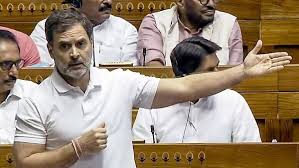
NEW DELHI: The Lok Sabha on Thursday witnessed a ruckus after Rahul Gandhi was interrupted during his speech on the energy crisis when he took a jibe at oil and gas minister Hardeep Puri for his name allegedly appearing in the files of an American sex-offender. He also attacked the govt over the US waiver to India to buy crude from Russia. “It has been a very puzzling fact why a nation the size of India would allow any other nation… the President of another nation to give us permission to buy Russian oil… I have figured the puzzle out. And the puzzle is about compromise,” he said and referred to Puri’s alleged link. This led to interruptions in the House, forcing Speaker Om Birla to intervene, saying the member cannot raise this issue, even as Gandhi insisted that he was speaking on energy and economic security. Later, opposition members entered the well of the House and Puri had to read out his statement amid sloganeering. Courtesy : TOI Note: This news is originally published on https:/timesofindia.com/bha and is used purely for non-profit/non-commercial purposes, especially human rights
Dalit Man Claims He Was Assaulted In Custody By Cops, Dies Later At Hospital
A document detailing the alleged torture of a 26-year-old Dalit man in police custody in Tamil Nadu’s Sivaganga district has come under sharp focus after it was presented before the Madurai Bench of the Madras High Court. Akash, a 26-year-old Dalit, who claimed he was brutally assaulted in police custody in SivagangaChennai: A document detailing the alleged torture of a 26-year-old Dalit man in police custody in Tamil Nadu’s Sivaganga district has come under sharp focus after it was presented before the Madurai Bench of the Madras High Court. The document – a remand order recorded by a judicial magistrate based on the victim’s statement – has now effectively become a dying declaration, as the man later died while undergoing treatment at a hospital in Madurai. The victim, identified as Aakash, had described in detail the alleged torture he faced in police custody. According to the statement recorded by the magistrate, Aakash alleged that he was blindfolded and brutally assaulted by police personnel after being taken into custody. He claimed that officers placed stones below and above his right leg, covered it with a wet gunny bag and repeatedly beat it with an iron rod. The assault, he said, broke his leg and caused severe bleeding. Aakash further alleged that police threatened him and instructed him to tell doctors at the Manamadurai Government Hospital that he had sustained the injuries after falling from the Melapasalai bridge. In his statement, he also told the magistrate that around 10 cops in plain clothes first picked him up along with his co-accused, Guna, on the evening of March 6. Later that evening, four uniformed policemen took them away, he said, adding that he was placed in a separate vehicle and blindfolded. Human rights defender Henri Tiphagne, Executive Director of People’s Watch, told NDTV that the document is a crucial piece of evidence. “This is the first document that establishes police torture in Sivaganga,” Mr Tiphagne said, adding that although the case has been transferred to the CB-CID, no police personnel have been arrested or suspended so far. Aakash, a graduate, had been arrested after a clash with two men a day earlier and was charged for attempt to murder. He had sustained injuries and was initially admitted to the Sivaganga Government Hospital before being shifted to the Government Rajaji Hospital in Madurai, where he died the following morning. Police officials had earlier said the 26-year-old developed breathing complications while undergoing treatment. His family, however, has consistently alleged custodial torture. Tiphagne earlier told NDTV that Aakash had informed his parents in the hospital that police had placed his leg between stones and beaten him. The state had denied allegations of torture and argued he fell from a bridge. A senior police officer told NDTV that a magisterial inquiry has been ordered and that the law will take its course. On the allegations of torture, the officer said the investigation is underway and declined further comment. The incident comes less than a year after the custodial death of Ajith Kumar in the same district following alleged police torture that was reportedly caught on camera. The case is currently being probed by the CBI, with five police personnel arrested and ten officers named in the case. Meanwhile, the Madurai Bench of the Madras High Court has also directed the registration of a case under the SC/ST (Prevention of Atrocities) Act in connection with Aakash’s death. Reported by: J Sam Daniel Stalin Courtesy : NDTV Note: This news is originally published on https:/ndtv.com/bha and is used purely for non-profit/non-commercial purposes, especially human rights
Probe MP Dalit woman’s death, SC instructs CBI
NEW DELHI: Supreme Court on Wednesday directed CBI to conduct a preliminary inquiry into the circumstances surrounding the death of a 20-year-old Dalit woman in MP’s Sagar district in 2024. It rejected the plea of the state that the case was politically motivated, and said the truth must come out. A bench of Justices M M Sundresh and N Kotiswar Singh said its conscience did not allow it to accept state govt’s plea, and ordered an inquiry by the central agency. The court left it to CBI to take a call on registering an FIR. SC had last year issued notice on a petition by the woman’s mother, who was seeking a CBI or SIT probe into the dea-ths of three family members. “We direct CBI to conduct a preliminary inquiry on the ci-rcumstances surrounding the death of the girl,” SC said. Courtesy : TOI Note: This news is originally published on https:/timesofindia.com/bha and is used purely for non-profit/non-commercial purposes, especially human rights
Dalit family forced to flee village after caste attack in India
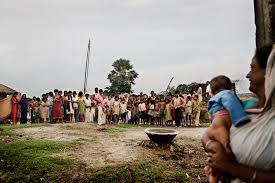
Dalit family in northern India says violence, threats and caste abuse forced them to consider fleeing village despite police case NEW DELHI, India (MNTV) — A Dalit family in northern India says it has been forced to consider leaving its village after an alleged caste-based attack and continuing threats from local residents, highlighting persistent violence faced by marginalized communities in rural areas. The incident took place in Karaunda village in Uttar Pradesh’s Shahjahanpur district, where members of a Dalit household say a group of men entered their home and assaulted them while hurling caste slurs. According to local reports, the attackers allegedly beat the head of the family, Ramlal, with sticks and vandalized property inside the house. Dalits — historically known as “untouchables” in India’s traditional caste hierarchy — remain among the country’s most marginalized communities despite constitutional protections and laws aimed at preventing caste-based discrimination. Ramlal told police that the attack occurred on the evening of March 3 when several men from the village allegedly forced their way into the family’s home. He sustained serious head injuries during the assault and was later taken to a government hospital for treatment. The attackers also allegedly broke the door of the house, damaged a motorcycle parked in the courtyard and destroyed belongings inside the residence, according to the complaint submitted to authorities. Police responded to the incident after an emergency call and registered a case against some of the suspects. However, the family says the situation has remained tense since the assault. According to Ramlal’s complaint to district authorities, the accused individuals have continued pressuring the family to withdraw the police case and reach a compromise. The family says they were warned they would not be allowed to remain in the village if they pursued legal action. Facing what they describe as ongoing intimidation and fear of further violence, Ramlal’s family says they are now preparing to leave the village for their safety. He has asked district police officials to provide protection and assistance so the family can safely collect their belongings before relocating to another place. Local police authorities say the case is under investigation and have assured that appropriate legal action will be taken. Human rights advocates say such incidents reflect a broader pattern of caste-based intimidation in parts of rural India, where Dalit families often face pressure and threats when they attempt to pursue justice through official channels. Courtesy : Muslim Network TV Note: This news is originally published on https:/muslimnetworktv.com/bha and is used purely for non-profit/non-commercial purposes, especially human rights