
Iyothee Thass and the intellectual roots of Dalit assertion in Tamil Nadu
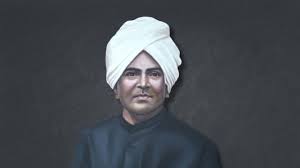
At a time when they were denied access to education, public spaces and social dignity, Thass emphasised the need for oppressed people to organise independently and articulate their own political demands. Synopsis: Rather than merely demanding reform within the Hindu social framework, Iyothee Thass questioned the very foundations of caste hierarchy and sought to create an alternative historical imagination for oppressed communities. In doing so, he shifted the discourse from social accommodation to historical reclamation and self-respect. He argued that the oppressed castes were not “untouchables” by origin, nor were they naturally part of Hindu society; they were the original Tamils and Buddhists whose dignity, culture and social status had been systematically destroyed under Brahminical domination. One of the earliest anti-caste intellectuals and pioneers of Dalit assertion in Tamil Nadu, C Iyothee Thass was born in 1845 in Royapettah in present-day Chennai. 20 May 2026 marked his 181st birth anniversary. Long before anti-caste politics became part of mainstream public discourse, Thass was questioning Brahminical domination, reclaiming the histories of oppressed communities and building intellectual spaces for social equality and dignity. Thass emerged from a community subjected to untouchability and systematic exclusion under caste society. Yet he transformed the experience of humiliation into a powerful political and intellectual movement. Through organisations, journalism, Buddhism and historical reinterpretation, he laid the foundation for an autonomous Dalit consciousness in Tamil Nadu. Today, when Dalit assertion in Tamil Nadu is visible through literature, cinema, music, student movements and political organisations such as Viduthalai Chiruthaigal Katchi (VCK), the relevance of Thass continues to grow. His life remains central to understanding the history of anti-caste movements in South India. Reclaiming history through the idea of Adi-Dravida One of Thass’s most important interventions was his articulation of the identity of the oppressed castes as Adi-Dravidas, the original inhabitants of Tamil society. This distinction is politically and intellectually significant. Unlike later Dravidian politics, which broadly mobilised a non-Brahmin identity, Thass centred the lived realities of untouchability and caste degradation experienced by Dalit communities. His politics emerged directly from the experiences of those placed outside the social order. At a historical moment when dominant nationalist politics largely ignored untouchability and caste violence, Thass was already foregrounding caste as a structural system of oppression rather than merely a social evil. His interventions demonstrated an early understanding that political freedom without social equality would only reproduce existing hierarchies. Rather than merely demanding reform within the Hindu social framework, he questioned the very foundations of caste hierarchy and sought to create an alternative historical imagination for oppressed communities. In doing so, he shifted the discourse from social accommodation to historical reclamation and self-respect. He argued that the oppressed castes were not “untouchables” by origin, nor were they naturally part of Hindu society; they were the original Tamils and Buddhists whose dignity, culture and social status had been systematically destroyed under Brahminical domination. According to him, caste oppression was not a natural or divine arrangement but a historical process through which communities were dispossessed of their identity and humanity. By using terms such as “Adi-Dravida”, “Original Tamils” and “Casteless Tamils”, he attempted to reconstruct a new historical consciousness for marginalised communities. These terms were not merely symbolic labels, but powerful political categories intended to restore pride, memory and collective identity among oppressed people who had long been denied history and dignity. For Thass, reclaiming identity was itself an act of resistance. It was a means of rejecting the degrading identities imposed through caste society and asserting an autonomous past rooted in equality and dignity. His reinterpretation of history enabled marginalised communities to view themselves not as degraded sections of Hindu society, but as people with an independent cultural and intellectual heritage. Through this intellectual intervention, Thass transformed questions of identity into questions of power, history and social justice. His ideas continue to remain significant in contemporary anti-caste thought because they challenge dominant narratives of Indian history and foreground the experiences, memories and struggles of Dalit communities in the making of modern political consciousness. Organisations and early Dalit political mobilisation Thass understood very early that the liberation of oppressed communities could not be achieved merely through moral appeals or isolated reform efforts; it required collective organisation, intellectual awakening and political consciousness among the marginalised themselves. At a time when caste hierarchy was deeply entrenched in society and oppressed communities were denied access to education, public spaces and social dignity, Thass emphasised the need for oppressed people to organise independently and articulate their own political demands. In 1876, he established the Advaidananda Sabha in the Nilgiris, one of his earliest organised initiatives aimed at creating social and intellectual awareness among oppressed communities. The Sabha sought to challenge caste-based exclusion and encouraged critical engagement with questions of religion, social inequality and self-respect. Through such initiatives, Thass attempted to cultivate a sense of collective identity among communities that had long been fragmented and oppressed under the caste order. His organisational efforts became more politically articulated with the establishment of the Dravida Mahajana Sabha in 1891, one of the earliest political organisations representing oppressed castes in South India. The Sabha marked a significant moment in the history of Dalit political assertion because it sought to transform the grievances of marginalised communities into concrete political demands. It called for access to education, representation in government employment, social equality, protection from caste discrimination and the restoration of dignity and civil rights for communities subjected to untouchability. The conference organised by the Sabha in Ooty emerged as an important milestone in early Dalit political mobilisation in South India. It provided a public platform through which oppressed communities could collectively articulate their experiences of exclusion and demand institutional reforms. At a historical moment when dominant nationalist politics largely ignored untouchability and caste violence, Thass was already foregrounding caste as a structural system of oppression rather than merely a social evil. His interventions demonstrated an early understanding that political freedom without social equality would only reproduce existing hierarchies. Thass’s politics differed fundamentally from
PHOTO ESSAY: A symbolic marriage ritual and beauty pageant brings India’s trans community together
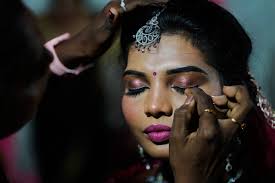
KOOVAGAM, India (AP) — Under stage lights, hundreds of transgender women adjusted their sarees, tucked flowers into their hair, and waited to be called onstage. One by one, they waved to cheering crowds and struck poses at one of India’s largest gatherings for the transgender community. Held each year in Koovagam village in southern India’s Tamil Nadu, the annual Koovagam festival brings faith and beauty together. By day, transgender women gather at a temple to honor a Hindu deity through rituals rooted in mythology and grief. By night, they celebrate glamour, identity, and joy as they take part in a vibrant beauty pageant. The festival centers on the Hindu legend of Aravan, a warrior from the Hindu epic Mahabharata who agreed to sacrifice himself before battle but wished to marry first. According to the story, the Hindu god Krishna transformed into a female form to wed Aravan. Many transgender women in India see the tale as a rare sacred recognition of gender fluidity, and each year reenact the marriage during the festival. The celebration, which drew hundreds of transgender women last month, has become both a sacred pilgrimage and a powerful expression of identity in a country where many transgender people still face discrimination, violence and exclusion. It also unfolded under a cloud of anxiety for the transgender community. Many attendees arrived amid growing concern over a controversial national bill that activists warn could erode hard-won rights for India’s transgender community by requiring medical-board approval for legal gender recognition. For many participants, the festival was deeply spiritual. Shanshi, who goes by just one name, has been attending the festival for five years and described Aravan as “God for all transgender people.” “When we gather here, it is for one reason — to worship Lord Aravan by getting married to him,” she said, after a Hindu priest tied a sacred thread around her neck, symbolically marrying her to the deity. Others spoke of violence and hardship beyond the festival grounds. Nazariya Kutty, 28, said she was forced out of her family home as a teenager and later survived domestic abuse and sexual assault in a marriage she hoped would bring stability. She rebuilt her life through delivery jobs before reopening her travel business. Now back at Koovagam with friends, she said the rituals give her strength. “I am waiting to be the bride of Lord Aravan,” Kutty said. “I have faith he will restore whatever I have lost.” Amid the festival’s spiritual fervor, the atmosphere remained celebratory. The village of Koovagam also transformed into a vibrant beauty pageant, where glamour and community took center stage. Backstage at this year’s beauty pageant, contestants in shimmering sarees shared mirrors and makeup brushes before stepping onto the stage as music echoed through the village. For 24-year-old Surya Kutty, winning the Miss Koovagam crown marked a personal turning point after years of returning to the festival with close friends. “This win has given me the confidence to participate in national and international events,” she said. Beyond the pageantry and rituals, many attendees described the gathering as a rare space of belonging for a community that continues to face barriers to jobs, housing and healthcare across India. Surya said the festival creates a rare sense of belonging. “Here we meet other transgender people and feel loved and cared by everyone,” she said. “These are special days meant exclusively for us.” By MAHESH KUMAR and SHEIKH SAALIQ Courtesy : AP News Note: This news is originally published on https:/apnews.com/bha and is used purely for non-profit/non-commercial purposes, especially human rights
Kerala CM VD Satheesan again uses full name in MLA oath amid row over ‘Menon’ surname

At his oath-taking ceremony on Monday, Satheesan had used his complete name, triggering criticism from sections of social media and some Congress leaders. Kerala Chief Minister V D Satheesan on Thursday took oath as an MLA of the 16th State Legislative Assembly, once again reading out his full name, Vadasseri Damodara Menon Satheesan, days after drawing criticism for using the caste surname ‘Menon’ during his swearing-in as chief minister. At his oath-taking ceremony on Monday, Satheesan had used his complete name, triggering criticism from sections of social media and some Congress leaders. Defending his decision at a press conference on Wednesday, Satheesan said he had merely mentioned his father’s name and saw nothing wrong in doing so on such an occasion. “Why is it wrong if I mention my father’s name. Shouldn’t I remember him,” Satheesan had asked while speaking to reporters after a Cabinet meeting here. He had also said that he wanted to mention his mother’s name too, but there was no scope for that. The controversy surfaced after social media users compared his recent oath as chief minister with the one he took as a legislator in 2021, when he had identified himself simply as “V D Satheesan”. On Thursday, while taking oath again as an MLA, Satheesan repeated his full name Courtesy : TNIE Note: This news is originally published on https:/thenewindianexpress.com/bha and is used purely for non-profit/non-commercial purposes, especially human rights
Rahul Gandhi makes Constitution jibe at top BJP leadership, party seeks apology
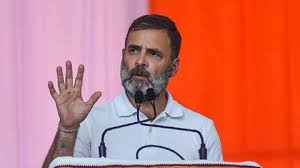
The Congress MP also called upon the people to describe PM Narendra Modi, Union Home Minister Amit Shah and the RSS as “traitors”. LUCKNOW/NEW DELHI: Firing a fresh salvo at the BJP and the RSS over the alleged threat to the ‘Constitution of India’ from them, Congress MP and Leader of Opposition in the Lok Sabha, Rahul Gandhi, questioned the silence of the people when the “Constitution is torn” while exhorting them to protect it as their duty. The Congress MP also called upon the people to describe PM Narendra Modi, Union Home Minister Amit Shah and the RSS as “traitors”. Attacking the BJP and its parent organisation, the RSS, in Rae Bareli, Gandhi on Wednesday said that the Constitution carried the voice and blood of the people. While addressing a ‘Bahujan Swabhiman Sabha’ in his parliamentary constituency on the second day of his two-day visit to Raebareli and Amethi, Gandhi said, “You all are clapping… but when RSS functionaries tear and throw away this Constitution right in front of you, you remain silent.” Since the 2024 Lok Sabha elections, Gandhi has been reiterating that the Constitution of India is under attack by the BJP and RSS. It has been one of the main elements of his speeches against rival BJP, which, he says, have destroyed the values of the document. Meanwhile, BJP president Nitin Nabin launched a sharp counterattack on Rahul Gandhi over his “traitor” remarks allegedly directed at the PM and Amit Shah, calling them “unfortunate” and reflective of Gandhi’s “anarchic mindset and character”. Nabin said Gandhi had insulted 140 crore Indians by targetting the PM and demanded a public apology. “The tradition of Indian politics has always been one of dialogue, decorum and mutual respect, but this state of his goes against that very propriety,” he said. Escalating the attack, Nabin accused the Congress of compromising national interests for political gains. “Those whose ancestors kept this country’s land and conscience mortgaged for years have lost the moral right to lecture on patriotism and democracy today,” he said. He further alleged that Congress never worked to boost soldiers’ morale and instead prioritised politics during critical moments. UP CM Yogi Adityanath described Congress as the “mother of divisive and appeasement politics” and demanded an apology for his “objectionable, unparliamentary and frustration-driven statement”. Namita Bajpai, Rajesh Kumar Thakur Courtesy : TNIE Note: This news is originally published on https:/thenewindianexpress.com/bha and is used purely for non-profit/non-commercial purposes, especially human rights
UP Congress serves notices to two Dalit leaders over outreach to Mayawati
The UP Congress leadership, reportedly upset over the unauthorised visit, issued show-cause notices to both leaders while describing the visit as a personal attempt to enquire about Mayawati’s health. LUCKNOW: Amid growing political buzz in Uttar Pradesh, two senior Dalit leaders of the Indian National Congress were served show-cause notices after they allegedly led a delegation of party leaders to the Lucknow residence of Mayawati on Tuesday evening. According to sources, the delegation, which included Barabanki MP Tanuj Punia and Congress Scheduled Caste Department national chairman Rajendra Pal Gautam, was denied an audience with the BSP chief and returned without meeting her. The UP Congress leadership, reportedly upset over the unauthorised visit, issued show-cause notices to both leaders while describing the visit as a personal attempt to enquire about Mayawati’s health. The development came at a time when Congress leader and Leader of Opposition in Lok Sabha Rahul Gandhi was in Rae Bareli for two Dalit outreach programmes, including a “Bahujan Swabhiman Sabha” and the inauguration of a statue of freedom fighter Veera Pasi. Congress general secretary and UP in-charge Avinash Pande and UP Congress chief Ajay Rai clarified that the delegation had no authorisation from the party, prompting the issuance of notices seeking explanations from the leaders. Denying any political motive behind the visit, Tanuj Punia, son of senior Congress leader P. L. Punia, said the issue of Mayawati’s health had come up during a meeting of the party’s SC cell. He said he and Rajendra Pal Gautam decided to visit her residence as it was located close to the Congress office. Punia said the delegation failed to meet Mayawati because they had not informed BSP leaders in advance. Political observers, however, see the episode as a reflection of unease within sections of the Congress over its alliance with the Samajwadi Party ahead of the 2027 Uttar Pradesh Assembly elections. Despite assurances from SP chief Akhilesh Yadav about continuing the alliance, some Congress leaders are reportedly concerned about the number of seats the SP may allocate to the party. Differences between the two allies have also surfaced repeatedly on various issues. According to political analysts, a section within the Congress has started exploring alternative alignments, including a possible understanding with the Bahujan Samaj Party, to strengthen its position against the BJP on issues related to the Constitution, Dalits and minorities. The same section also believes that an alliance with the BSP could help consolidate Dalit votes in favour of the opposition across the country. In the 2024 Lok Sabha elections, the Congress-SP alliance had made gains in Uttar Pradesh by campaigning around the issue of protecting the Constitution and Dalit rights against the BJP. Mayawati, however, has repeatedly ruled out alliances with other parties, maintaining that the BSP gained little from its 2019 alliance with the Samajwadi Party. She has argued that while the BSP’s Dalit vote transferred to its ally, the reverse did not happen in adequate measure. Namita Bajpai Courtesy : TNIE Note: This news is originally published on https:/thenewindianexpress.com/bha and is used purely for non-profit/non-commercial purposes, especially human rights
21 TVK MLAs, two Congress legislators take oath in Vijay’s historic TN cabinet expansion

With the latest expansion, the strength of the Vijay-led Cabinet has risen to 33, while the total sanctioned strength of the Council of Ministers stands at 35. Nearly two weeks after assuming office, Chief Minister C Joseph Vijay on Thursday expanded the Cabinet of the ruling Tamilaga Vettri Kazhagam (TVK), inducting 23 new ministers, including two legislators from the Congress, marking the party’s return to the Tamil Nadu ministry after nearly six decades. The swearing-in ceremony took place at Lok Bhavan at 10 am, where Governor Rajendra Vishwanath Arlekar administered the oath of office and secrecy to the newly inducted ministers. With the latest expansion, the strength of the Vijay-led Cabinet has risen to 33, while the total sanctioned strength of the Council of Ministers stands at 35. Among those inducted into the Cabinet are Srinath (Thoothukudi), Kamali S. (Avinashi), C. Vijayalakshmi (Kumarapalayam), R.V. Ranjithkumar (Kancheepuram), Vinoth (Kumbakonam), Rajeev (Thiruvadanai), B. Rajkumar (Cuddalore), V. Gandhiraj (Arakkonam), Mathan Raja P. (Ottapidaram), Jegadeshwari K. (Rajapalayam), and M. Vijay Balaji (Erode East). The new ministers also include Logesh Tamilselvan D. (Rasipuram), Vijay Tamilan Parthiban A. (Salem South), Ramesh (Srirangam), Kumar R. (Velachery), Thennarasu K. (Sriperumbudur), V. Sampath Kumar (Coimbatore North), Mohamed Farvas J. (Aranthangi), D. Sarathkumar (Tambaram), N. Marie Wilson (Dr. Radhakrishnan Nagar), and Vignesh K. (Kinathukadavu). In a significant political development, Congress MLAs S.Rajesh Kumar (Killiyoor) and P. Viswanathan (Melur) were also sworn in as ministers, making it the first Congress participation in a Tamil Nadu Cabinet in nearly 60 years. Meanwhile, the Indian Union Muslim League has agreed to join the government but is yet to finalise its nominee for a ministerial berth. The Viduthalai Chiruthaigal Katchi is still deliberating on whether to become part of the ruling dispensation. Courtesy : TNIE Note: This news is originally published on https:/thenewindianexpress.com/bha and is used purely for non-profit/non-commercial purposes, especially human rights
Gujarat: Dalit families in Sabarkantha are considering mass migration due to alleged social discrimination.

Despite filing numerous complaints and applications under the Atrocity Act, villagers claim that no concrete action has been taken, forcing many affected families to threaten mass migration. A serious case of alleged social discrimination and harassment against members of the Scheduled Caste community has emerged from Rupal village in Talod taluka of Sabarkantha district, Gujarat. According to Gujarat Samachar, despite filing numerous complaints and applications under the Atrocity Act, villagers claim that no concrete action has been taken, forcing many affected families to threaten mass migration. According to community members, some anti-social elements in the village are allegedly depriving them of their basic constitutional rights and subjecting them to persistent social, economic, religious, and administrative discrimination. Community leaders claimed that at least six complaints and several written applications under the Atrocity Act have already been submitted to authorities regarding this matter. Villagers reported that attempts were made to resolve the dispute through mutual agreement, but the situation escalated due to alleged non-implementation of assurances, leading to renewed tension in the village. On Sunday, members of the affected community submitted a memorandum to the Resident Additional Collector at the district office in Himmatnagar, demanding immediate intervention and protection. They alleged that despite repeated appeals to the administration, they received neither justice nor protection. Meanwhile, many families are now facing a form of “social boycott” within the village. Community representatives further alleged that people are being mentally and physically tortured, leaving them with no option but to leave their ancestral village. In the memorandum, they warned that if a concrete solution is not found within the next seven days, families from the Scheduled Caste community may be forced to migrate en masse from Rupal village. This incident has once again raised serious questions about caste-based discrimination and the implementation of legal safeguards at the grassroots level. These allegations have also sparked debate over whether authorities have taken adequate action despite repeated complaints filed under stringent social justice laws. At present, there has been no official response from district officials to these allegations or calls for intervention. Courtesy: Hindi News
Dalit woman gang rape case: Accused held after encounter
Prayagraj: Three days after a Dalit woman was gang-raped, police arrested one of the accused after an exchange of fire in Pratapgarh on Tuesday. Two other accused are still at large. Cops seized a country-made pistol of 0.315 bore, along with four used and one live cartridge from the criminal identified as Sohail (22), a resident of Dilippur. Sohail, along with his two accomplices, is accused of gang-raping a Dalit woman three days back. Police said a joint team of Antoo police was conducting routine checks near Lohangpur village forest area when the cops noticed a suspicious man. The cops signalled him to stop, but he tried to escape. When the police team surrounded him, he opened fire. In retaliation, he was injured. Courtesy : TOI Note: This news is originally published on https:/timesofindia.com/bha and is used purely for non-profit/non-commercial purposes, especially human rights
Parthasarathy accuses YSRCP of Injustice to Dalits
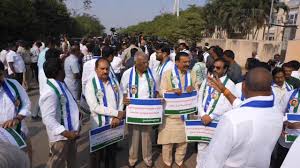
Nuzvid (Eluru district): Information and public relations and housing minister Kolusu Parthasarathy said the coalition government is giving special priority to the welfare, protection and development of Scheduled Castes and Scheduled Tribes in Andhra Pradesh. Participating in a Dalit Reform Meeting held at Dr B R Ambedkar Centre in Nuzvid on Tuesday, the minister paid floral tributes to the statue of B R Ambedkar and remembered Dalits who allegedly suffered injustice during the previous YSRCP government. As part of the programme, the minister and participants held placards and lit candles in memory of Dalit victims who, according to him, were subjected to injustice during the earlier regime. Addressing the gathering, Parthasarathy described the previous five-year YSRCP rule as a “dark phase” for Dalits. He alleged that many Dalits were subjected to severe hardships and humiliation during that period. He referred to the case of Dalit doctor Dr Sudhakar, stating that despite rendering medical services for several decades and earning a good reputation, he was mentally harassed and driven to a tragic end during the previous government. He also mentioned the death of Dalit youth Veedhi Subrahmanyam, alleging that he was brutally assaulted and killed. The Minister claimed that the postmortem report showed multiple injury marks on the victim’s body and criticised the handling of the incident by leaders of the previous regime. Parthasarathy said the NDA coalition government, under the leadership of Chief Minister N Chandrababu Naidu, Deputy Chief Minister Pawan Kalyan and IT minister Nara Lokesh, with the support of Prime Minister Narendra Modi, is committed to ensuring inclusive development and social justice in the state. He alleged that during the previous YSRCP government, SC communities were denied proper welfare benefits and political importance. According to him, funds and welfare measures meant for Scheduled Castes were diverted, and several sections of society faced oppression and neglect. The Minister stated that the present NDA government is working with commitment towards the empowerment and comprehensive welfare of SC communities. He also said that every poor person in the constituency would be protected and supported “like the apple of his eye.” Criticising the opposition, Parthasarathy said the YSRCP, which was reduced to only 11 Assembly seats, had failed to learn lessons from the people’s verdict and continued to make baseless allegations against the coalition government. Public representatives, coalition leaders, youth representatives, SC organisation leaders, local residents and members of SC communities participated in the programme. Courtesy : THI Note: This news is originally published on https:/thehansindia.com/bha and is used purely for non-profit/non-commercial purposes, especially human rights
Provide records on recovered Panchami land: NCSC to TN
Over the years, many private individuals and organisations encroached upon them across TN. MADURAI: The National Commission for Scheduled Castes (NCSC) issued a notice to the Principal Secretary to the Government and the Commissioner of the Revenue and Disaster Management Department seeking records of land that was reclassified as ‘Government land Tharisu’ (barren land) during the past 10 years. The notice was issued following a complaint alleging that revenue authorities, after recovering Panchami and Adi Dravidar land from encroachers, had reclassified it as government barren land instead of restoring their original Adi Dravidar land status. Speaking to TNIE, Dalit Liberation Movement (DLM) president S Karuppaiah said that thousands of acres had historically been assigned to Scheduled Caste communities under Panchami land and Adi Dravidar land categories. “These plots are specifically reserved for the SCs and cannot be sold or reclassified. Over the years, many private individuals and organisations encroached upon them across TN. Due to continuous protests and efforts by Dalit and human rights organisations, several such encroachments were cleared. However, after recovery, the revenue department reclassified many of these land parcels as ‘TN Tharisu’ instead of restoring them as ‘Adi Dravidar land (Tharisu),” he alleged. Karuppaiah further claimed the reclassification deprived Dalits of land originally earmarked for them. Pointing to the seriousness of the issue, he said the District Revenue Officer of Kallakurichi district had issued a circular in 2024 directing revenue officials to correctly reclassify recovered Panchami and Adi Dravidar land as Adi Dravidar land (Tharisu). “However, many revenue staff and inspectors across Tamil Nadu remain unaware of the issue. We also suspect that casteist forces may be influencing such reclassifications. Similar misleading land classifications have allegedly taken place in districts including Dharmapuri, Madurai, Tiruvannamalai, Salem, Theni, and Dindigul over several decades,” he added. Speaking to TNIE, Dr S Ravivarman, Director of the NCSC, confirmed that the commission had taken cognisance of the complaint. “A notice was issued to the state government considering the gravity and criminal nature of the allegations. We have sought records regarding encroachments and subsequent recovery actions district-wise. Based on the documents received, the commission will conduct individual hearings for each case,” he said. Courtesy : TNIE Note: This news is originally published on https:/thenewindianexpress.com/bha and is used purely for non-profit/non-commercial purposes, especially human rights