
Punjab Congress eyes Dalit-OBC consolidation ahead of 2027 polls, Channi emerges as frontrunner for party chiefPublished Date: 14-06-2026 | 7:01 pmAayush Goel
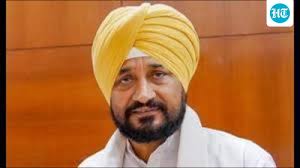
Chandigarh: With the 2027 Punjab Assembly elections now firmly on the horizon, the Congress is scrambling to resolve a leadership crisis that has simmered for months — and is increasingly pointing toward former chief minister Charanjit Singh Channi as its best bet to lead the state unit and anchor the party’s Dalit and OBC outreach. Punjab’s demographic arithmetic makes the calculus compelling. Dalits constitute approximately 32 per cent of the state’s population — the highest SC share of any state in India — while OBCs account for an estimated 15–20 per cent. Together, the two groups represent nearly half the state’s electorate, spread across communities including Mazhabi Sikhs, Ravidassias, Balmikis, Sainis, Kamboj, Ramgarhia and Gujjars. Yet despite their numbers, neither group has historically exercised political influence proportionate to their share of the vote. The Congress high command convened a meeting of top party leaders last week to finalise the shape of an organisational overhaul in Punjab. The party has also appointed senior leaders Ajay Maken, Meenakshi Natarajan and Bhajan Lal Jatav as observers for Punjab, a move seen within the organisation as part of the ongoing exercise to assess the state unit and recommend structural changes ahead of the 2027 elections. According to party sources, internal popularity surveys conducted as part of the Congress leadership’s review of the Punjab unit have shown Channi in a stronger position than incumbent PPCC chief Amrinder Singh Raja Warring — a finding that has sharpened the pressure on the high command to act. When contacted, Channi refused to confirm or deny his candidature for the post. Sources in Delhi Congress, however, said he remained the party’s most viable option given his mass appeal, Dalit identity, and ability to cut across regions. His strongest appeal lies among sections of the Dalit electorate, particularly in Doaba, with some resonance in Malwa. As Punjab’s first Dalit chief minister, his identity adds a powerful political dimension that no other contender in the race can replicate. A section of leaders has been flagging that ahead of the 2027 polls, the optics of two Jat leaders — Warring and CLP leader Partap Singh Bajwa — occupying both top positions would need to be reworked by adjusting Dalit, OBC and Hindu faces. Channi himself raised the point publicly, questioning why all key positions — PPCC chief, Leader of Opposition, and women’s wing president — were held by upper-caste leaders, despite Dalits alone constituting over 32 per cent of the population and OBCs adding a further 15–20 per cent. Others in contention for the PPCC post include Partap Singh Bajwa, former minister Pargat Singh, Fatehgarh Sahib MP Dr Amar Singh, and former MP Vijay Inder Singla. Warring’s position has weakened considerably. The pressure has intensified after the recent municipal elections, where the Congress failed to convert anti-incumbency sentiment into a statewide challenge. Out of 1,977 wards, AAP won 954, while Congress finished a distant second with 393. Independents secured 251 wards, followed by SAD with 192, BJP with 172 and BSP with seven. The results reinforced AAP’s organisational advantage at the grassroots level despite Congress leaders’ claims of growing public discontent with the Mann government. Concerns have mounted over the party’s organisational performance, particularly after setbacks in Gidderbaha — considered his traditional stronghold — where AAP swept 17 of 19 wards in municipal council elections. At the May 29 meeting in New Delhi — attended by Rahul Gandhi, Congress president Mallikarjun Kharge, Punjab in-charge Bhupesh Baghel, and senior state leaders — most state party leaders pressed for Warring’s replacement, though Baghel publicly denied any immediate proposal to do so. The party’s Punjab unit has long been dominated by Jat Sikhs, who account for roughly 25–30 per cent of the population but have held the chief ministerial post for all but a brief interlude since 1966. While Congress has made conscious efforts since 2021 to broaden its social coalition through Dalit, OBC and Hindu outreach, structural realities — land ownership, rural seats, and community mobilisation — continue to give Jat Sikhs the upper hand internally. The dilemma for the high command is acute. Replacing Warring with Channi could consolidate the Dalit-OBC bloc — collectively the state’s single largest voting constituency — that Congress desperately needs to dent AAP’s 2022 mandate of 92 seats. But any move risks deepening Jat Sikh alienation within a party already down to 15 of 117 assembly seats. The Congress top brass has so far not signalled enthusiasm for projecting Channi as a chief ministerial face, with Bhupesh Baghel recently stating the party would not declare a CM candidate ahead of the 2027 polls. That position, insiders say, is unlikely to hold. Aayush Goel Courtesy : The Financial World Note: This news is originally published on https:/thefinancialexpress.com/bha and is used purely for non-profit/non-commercial purposes, especially human rights
The khadi he wore, the Gandhi he kept: A Dalit memoir that refuses easy answers

Recently, I received a message from someone I had known since my Gandhinagar days, when I represented the Times of India from 1997 to 2012. He wanted to send me the English translation of a memoir he had written: “Homes Without Windows“. Thin, short, and darker in complexion than me, he would occasionally come down to my office in Akhbar Bhawan. His name is Chandu Maheria. Seen through a middle-class lens, Maheria had an unimpressive personality. But that didn’t concern me. I knew little about his background, except what he had told me — that he worked in the state education department, and if I am not mistaken, in its midday meal section. Whenever I met someone new, I would try to find out whether there was a story in them. Education interested me: that was my selfish reason for talking to him. Once, speaking on the phone, I asked Maheria to stop by my office on his way home to Gandhinagar, as he said he had a story. I was momentarily hesitant: he would have to arrange a drop to my office and back, since he did not drive a scooter. So I decided to meet him instead in the canteen of the Old Sachivalaya, where he had his office. Meeting him there directly, I felt, was also a better idea than going to his office, which might have exposed his closeness to a journalist. Much later, after my retirement, I discovered that he was regarded quite a buff — a respected one at that — in Dalit circles: an intellectual and a committed writer, one who could speak extensively on Dalit issues. I saw him speak at meetings at Dalit Shakti Kendra, an empowerment-cum-technical school for teenagers founded by the well-known human rights leader Martin Macwan, located off Ahmedabad. I found him very sharp. Until I received the book, all I knew about it was that it had been praised by the eminent historian of modern India, Ramachandra Guha, who called it a “truly remarkable and compellingly readable memoir” — a comment that had appeared on Facebook. With the book in hand, I began to randomly glance through it. But contrary to the anti-Gandhi views prevalent among most Dalit intellectuals across India, this is what I found him stating: “Gandhi might have been anything — call him whatever names — but one thing he was certainly not was anti-Dalit. Oh no, never. Alas!” This made me take a deeper look at the book and see what Maheria, a Dalit and a firm follower of Dr B.R. Ambedkar, thinks about Gandhi. Though a very reluctant reader, I read through its approximately 230 pages in a couple of sittings. Largely a personal account, the memoir describes how Maheria spent his early life in extreme poverty, growing up in a working-class chawl of Ahmedabad as the son of a mill worker — until he shifted to Gandhinagar on securing a government job. They lived in what he describes as “the squalid, tumble-down, cheek-by-jowl dwellings in the backstreets of the city, dubbed as the heart of the state.” Maheria describes how Dalits from different parts of Gujarat had settled in the chawls: “Our chawl was inhabited by the Rohits, people of the tanner caste, who had migrated from Charotar, a large swathe of fertile land covering districts like Kheda and Anand in central Gujarat”, and “the Vankars, people of the weaver caste, from Mehsana, a district in north Gujarat.” Belonging to different Dalit sub-castes, all of them would daily queue up for the dirty common toilet. He underlines, “A strange thing to say, but it was in these queues that I learnt my first lessons in social inequality.” According to him, “All these people were extremely beleaguered, a harried lot that had come here to escape poverty, untouchability, oppression and exploitation, and yet they saw hierarchy and hatred as natural ways of being, such that even the slightest breach in the set order resulted in exchanges of expletives and blows.” Pointing out that “all this cheek was for toilets that were no better than hellholes”, he states, “Though not untouchability in its conventional sense, these practices were rooted in direct discrimination, in an ordained difference between the high and the low, that had seeped right up to the bottom of the caste order.” Offering an example of intra-Dalit casteism, he gives the example of Neno Ma’raj, a man of the priestly Garoda caste, considered the highest among the Dalits. “A mill worker of no consequence, Ma’raj would, in a blatant exhibition of his caste pride, lay his string cot out on the footpath every evening and lounge there like a maharaja, a veritable badshah holding his royal court.” He explains, “In his exhaustive, eye-opening study of the forms of untouchability practised by non-Dalits and Dalits (among themselves) in Gujarat, my friend Martin Macwan has pegged the numbers at ninety-eight and ninety-nine, respectively.” Explaining caste discrimination and related issues through personal anecdotes, Maheria reveals why he believes a section of Dalit intellectuals’ anti-Gandhi stance has gone overboard. None of them, he feels, will admit that no other leader fought untouchability like Gandhiji. Indeed, the book’s chapter “That Fellow, Gandhido” particularly excited me. Maheria starts by stating that he likes wearing khadi as it suits his “short body and slim build”, and explains why his mother didn’t like it. The fabric was anathema to her. She would take a dig at him, saying, “You look like a ditto Gandhiyo in this pair.” An unlettered woman who had picked up the Gandhi-Ambedkar debate through household conversations, her “pet peeve was, ‘None but that fellow, Gandhiyo is responsible for erecting these caste enclosures’.” Yet Maheria graphically describes how, growing up in the working-class chawls, much of his early education happened in the suburb’s Municipal School No. 3-4, whose principal was a man called Balawantbhai Parmar. “A Dalit by birth, he was a thorough Gandhian. Clad in khadi kurta and khadi dhoti, with a topping of
Land dispute at Malayidamthuruth resolved, 7 Dalit families to get 5 cents each
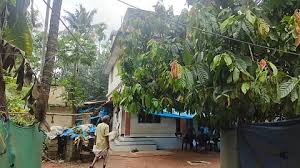
The resolution was arrived at a high-level meeting on Saturday attended by residents living on the disputed land, landowners, and government officials. The two-storey house is surrounded by dense greenery, including coconut and other trees, with a dirt courtyard in front. A man walks toward the house while a few people sit under a blue tarpaulin canopy near the entrance. Temporary structures and household materials are visible beside the house. One of the seven houses in Malayidamthuruth where families currently reside. The Paryathukavu-Malayidamthuruth land dispute has been resolved amicably, with residents agreeing to the proposal to allot five cents of land to each of the families within the same property. The state government also promised to build homes within a year. The resolution was arrived at a high-level meeting attended by residents living on the disputed land, landowners, and government officials, Kerala Minister for Higher Education Roji M John said on Saturday, June 14. The meeting was held at the District Collector’s chamber in Ernakulam. The decision ended a decades-old land dispute involving a private individual and seven Dalit families who have lived on the land for generations. The dispute centres on 2.65 acres of land occupied by seven families belonging to the Pulaya caste, classified as Scheduled Castes (SC) in the state. In the 1980s, a private individual, the late Sankaran Nair, staked a claim to the same parcel of land, resulting in a years-long legal battle. The legal battle favoured Sankaran Nair, and on May 25, the Kerala High Court gave the state government two weeks’ time to carry out the eviction. The two-storey house is surrounded by dense greenery, including coconut and other trees, with a dirt courtyard in front. A man walks toward the house while a few people sit under a blue tarpaulin canopy near the entrance. Temporary structures and household materials are visible beside the house. ‘We’ve lived here for 100 years’: The Dalit families resisting eviction at Malayidamthuruth Following the meeting, the minister stated that houses would be constructed for the seven families within one year. The houses will have an area of 1000-square feet each. Residents would also be allowed to cut or relocate the trees currently standing on the land they occupy. Residents may continue living in their existing houses until the new homes are completed. Speaking to TNM, Abhin, a resident, said they agreed to the conditions because they didn’t have any other option. “We requested the land on which the seven houses currently stand; however, they were unwilling to agree to that. This was the only option they gave to us,” he said. Under the new decision, the seven Dalit families will receive 35 cents of land instead of the 2.62 acres they currently occupy. Although the seven houses are located on the roadside with direct access to the main road, the new plan does not guarantee them the same land. “They will not provide any land with road frontage. Instead, they will allocate us five cents of land in a different area and, through sponsorship, provide a 1,000-square-feet house along with access to that property,” Abhin added. An agreement was also reached to withdraw cases registered against them over protests against eviction. The Advocate General will inform the High Court about the dispute resolution on June 16. Muvattupuzha Revenue Divisional Officer (RDO) and the Deputy Superintendent of Police (DYSP) have been assigned responsibilities to ensure that agreements reached are implemented smoothly until the construction of houses are complete. Courtesy : TNM Note: This news is originally published on https:/thenewsminute.com/bha and is used purely for non-profit/non-commercial purposes, especially human rights
Dalit Christians to participate in ‘Chalo Eluru’ on June 28
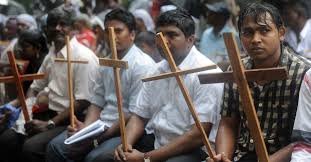
South India Baptist Association-founder president of Vizianagaram district R.S. John on Sunday urged Dalit Christians to participate in the ‘Dalit Christians Sankharava Sabha’ scheduled to be held in Eluru on June 28. The initiative aims to press for the protection of the rights of converted Christians in the State and across the country. Speaking to media here, Mr. John said that the Constitution guarantees the right to practice one’s chosen religion, and it should not be linked to the issue of reservation benefits given for Scheduled Castes. Mr. John added that over 5,000 Dalit Christians are expected to participate in the Eluru conclave to demand the government protect the interests of SC people who have embraced Christianity. He thanked the Jai Bhim party founder Jada Sravan Kumar for holding preparatory meetings across North Andhra region in order to make the Eluru Convlave as a success. He hoped that the government would come out with clear guidelines to protect the interests of Dalit Christians following the meeting. K Srinivasa Rao Courtesy : The Hindu Note: This news is originally published on https:/thehindu.com/bha and is used purely for non-profit/non-commercial purposes, especially human rights
‘Assaulted with belt, iron rod’: Dalit man beaten to death in UP’s Lalitpur after refusing to massage feet; 3 arrested
NEW DELHI: A 33-year-old Dalit man was allegedly beaten to death by three men in Uttar Pradesh’s Lalitpur district after he refused to massage their feet while they were drinking alcohol together, police said on Sunday. The accused allegedly dumped the victim’s body on a road in an attempt to make the death appear to be a road accident, as per news agency PTI. According to Lalitpur additional superintendent of police (ASP) Kalu Singh, Kotwali police received information on Sunday morning about a man lying unconscious on a road behind Varni Jain College near Gurunanak Dharamshala. The victim was identified as Rajkumar alias Chhannu (33), who belonged to a Scheduled Caste community. “The man was identified as Rajkumar alias Chhannu (33), who belonged to a Scheduled Caste community. He was taken to a hospital where doctors declared him brought dead,” Singh said, as quoted by PTI. Assault allegedly took place during liquor party During the investigation, police found that Rajkumar had attended a liquor party at the residence of Samyak Rajnayak alias Rahi Jain (38) in the Civil Lines area on Saturday night. Gajendra Narwaria alias Gajendra Singh Rajput (37) and Gaurav Raikwar (25) were also present. Police said the three accused, allegedly under the influence of alcohol, asked Rajkumar to massage their feet. “When he refused, the three men assaulted him with a belt and an iron rod, resulting in his death on the spot. To make the incident appear as a road accident, they later threw his body on the road,” the ASP said. Murder case registered Police have arrested all three accused and registered a case of murder along with relevant provisions of the Scheduled Castes and Scheduled Tribes (Prevention of Atrocities) Act based on a complaint lodged by the victim’s mother. The accused allegedly confessed to the crime during questioning. The victim’s body has been sent for post-mortem examination, while further legal proceedings are underway, police said. Courtesy : TOI Note: This news is originally published on https:/timesofindia.com/bha and is used purely for non-profit/non-commercial purposes, especially human rights
‘Will PM Modi convey to Trump India’s condemnation of killing of Indian sailors in US attack?’: Congress

Trump will meet Prime Minister Modi on the sidelines of the G-7 meeting in France on Wednesday, American media reported quoting US officials. In a scathing attack on the Modi government, the Congress on Sunday said India must put off the upcoming visit of US Trade Representative Jamieson Greer and asserted that any self respecting nation will do more than mere phone calls and press statements to defend its sovereignty against “bullies”. With Prime Minister Narendra Modi set to meet US President Donald Trump this week, the opposition party also asked whether he will raise India’s strongest condemnation over the killing of three Indian sailors in a US attack on a ship off the Oman Coast, and the “threatening and really unacceptable” language used by US Secretary of State Marco Rubio in his conversation with External Affairs Minister S Jaishankar on June 12. Congress general secretary in-charge communications Jairam Ramesh noted that Prime Minister Modi is set to meet his self-declared good friend President Trump shortly. “The question that is uppermost on the minds of all Indian citizens is whether PM Modi will raise (i) India’s strongest condemnation to the killing of three Indian sailors in a US attack on a ship off the Oman Coast; and (ii) the threatening and really unacceptable language used by US Secretary of State Marco Rubio in his conversation with External Affairs Minister S Jaishankar on June 12th, 2026,” Ramesh said on X. The US Trade Representative Greer is also set to visit India shortly to clinch the Indo-US Trade Deal, he noted. “We must remember that the ‘framework for an Interim Agreement regarding reciprocal and mutually beneficial trade’ was announced by President Trump — on what he said was at the specific request of PM Modi — on the night of February 3, 2026, while PM Modi was under pressure from Rahul Gandhi’s expose in Parliament of his cowardice relating to China. “The ‘deal’ which was more like a steal saw the Modi Government unilaterally make enormous concessions that threaten our farmers and industries,” Ramesh alleged. Countries like Malaysia have declared their trade agreements with the US ‘null and void’ after the US Supreme Court ruling which struck down the Trump-tariffs that formed the backdrop to these agreement, the Congress leader pointed out. The Modi government has not only failed to renounce this trade deal which endangers the futures of crores of India’s farmers but has instead sat mute and helpless while Secretary of State Marco Rubio has proclaimed that the Modi Government has committed to purchasing USD 500 billion in US goods over the next five years, effectively doubling our annual US imports, Ramesh said. “In light of the Rubio-Jaishankar interaction, the US Supreme Court’s overturning of President Trump’s tariff system, and the patent unfairness of the trade deal, the least India must do is to put off the visit of the US Trade Representative,” he said. “Any self respecting nation will do more than mere phone calls and press statements to defend its sovereignty against bullies,” Ramesh said. Trump will meet Prime Minister Modi on the sidelines of the G-7 meeting in France on Wednesday, American media reported quoting US officials. This will be the first meeting between the two leaders since February last year in Washington and comes against the backdrop of concerns over the death of Indian mariners on commercial ships targeted by the US navy in the Strait of Hormuz. The meeting between Trump and Modi will also be the first face-to-face interaction since the India-US relationship hit a rough patch after Operation Sindoor and Washington’s decision to impose heavy tariffs on New Delhi. The two leaders have had a couple of phone calls and also agreed on a framework for an interim bilateral trade deal in February, which is being negotiated. Ramesh’s remarks come a day after the US said it conveyed to India that any violation of its blockade in the Strait of Hormuz and illicit transport of Iranian oil will not be tolerated. Rubio conveyed this to Jaishankar, who spoke with him on Friday to lodge a strong protest against the death of Indian nationals in US attacks on ships off the coast of Oman. According to State Department spokesman Tommy Pigott, Secretary of State Rubio stressed that all commercial vessels should immediately comply with orders from US forces as they seek to uphold peace and security in the Strait. Rubio underscored that violations of the US blockade and the illicit transport of Iranian oil will not be tolerated, Pigott said in Washington. The US has imposed a naval blockade in the Strait of Hormuz since April 13, preventing transit of ships to and from the ports of the Islamic Republic as part of its efforts to restrict Tehran from profiting from oil trade. Three vessels with Indian crew came under attack off the Oman coast this week. One of them resulted in the death of three Indian seafarers on Wednesday. Jaishankar then called Rubio to protest their death in a US military strike on a merchant vessel in the Gulf of Oman. “Such lethal actions against commercial shipping are not justified,” Jaishankar had said in a post on X after he spoke with Rubio. Earlier on Friday, India summoned US Charge d’Affaires Jason Meeks in New Delhi and told him that the American military’s lethal strikes on commercial vessels with Indian crew members off the coast of Oman are unacceptable. Hours later, Trump accused Iran of carrying out drone attacks against Indian ships leaving the Strait of Hormuz, saying it was totally unacceptable. Courtesy : TNIE Note: This news is originally published on https:/thenewindianexpress.com/bha and is used purely for non-profit/non-commercial purposes, especially human rights
Rahul Gandhi to kick off Congress campaign on youth issues from Rajasthan’s Kota
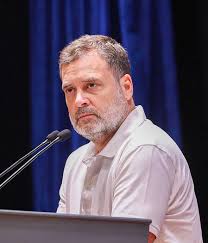
Rahul Gandhi will engage in a direct dialogue with students and aspirants preparing for competitive exams on paper leaks and major youth-related issues. JAIPUR: The Congress party will launch a nationwide movement on June 17 from Kota, renowned as the country’s “coaching capital”, to focus on issues such as paper leaks, examination irregularities, unemployment and other key issues affecting the youth. The Leader of the Opposition in the lok Sabha, Rahul Gandhi, will engage in a direct dialogue with students and aspirants preparing for competitive exams on paper leaks and major youth related issues. This effort is being viewed as not just a political event but as the launch of a new youth-centric narrative for the Congress to mobilize students across the country. The choice of Kota in Rajasthan is significant as it not only attracts thousands of students from across the country but also as it is represented in the Lok Sabha by Speaker Om Birla. The Congress is keen to corner the BJP in what is being seen as a major bastion for the saffron party and the RSS. Kota District Congress President Rakhi Gautam and Kota Rural Congress President Bhanu Pratap Singh stated that the decision was made to launch this nationwide campaign from Kota as it is the country’s “coaching hub”. Through this initiative, students across the nation will be connected, and their issues will be raised at the national level. Preparations for Rahul Gandhi’s proposed visit to Kota next week are already underway. Continuous contact is being maintained with students and coaching institutes regarding the student conference. Additionally, information about Rahul Gandhi’s interactive session is being disseminated to students via social media. At the Kota event, Rahul Gandhi will interact directly with students and the youth, listening to their concerns and suggestions. Discussions will cover various topics related to education and employment, including the repeated paper leak scandals, the NEET exam controversy, and key issues concerning the CBSE. The entire Congress team in Kota is actively engaged in preparing for the event. However, a final decision regarding the venue has not yet been reached. Congress leaders say that details of potential venues in Kota have been submitted to AICC officials and the venue will be announced once a final approval is received. Notably, this marks Rahul Gandhi’s second visit to Rajasthan within a fortnight. He had previously visited Pushkar in Ajmer district on June 1 to attend the concluding ceremony of the national training camp for Congress district presidents. It was during the Pushkar conference that he was invited to visit Kota. Kota is considered the country’s largest coaching hub, attracting thousands of students from all corners of the country every year for medical and engineering entrance exam preparations. Consequently, the Congress sees Kota as a most suitable platform to raise issues like paper leaks and transparency in the examination system. Rahul Gandhi had previously met with coaching students during a brief break from his ‘Bharat Jodo Yatra’ in December 2022. The Congress party also acknowledges that the NEET paper leak case has links to Rajasthan. Against this backdrop, Rahul Gandhi is set to hold a direct dialogue with students at the upcoming conference in Kota. At the Pushkar event recently, Rahul had praised the working style of state Congress chief Govind Singh Dotasra and Leader of the Opposition in the Vidhan Sabha Tikaram Jully. He remarked that the united manner in which the Congress organization is functioning in Rajasthan serves as a model for other states. Political analysts believe that Rajasthan was chosen for this national campaign because the party is considered organizationally strong there, and the participation of both party workers and the general public can be ensured for large-scale events. Kota is the parliamentary constituency of Lok Sabha Speaker Om Birla and is considered a stronghold of the BJP and the RSS. But Shanti Dhariwal, a senior Cabinet minister in the previous Congress government and a close confidante of former CM Ashok Gehlot, is the most influential Congress leader in Kota. Dhariwal is considered as a key figure in raising a formidable challenge for the BJP in Kota. Following the event in Kota, the first phase of the campaign will include programs in Allahabad on July 10, Patna on July 11, and Delhi on July 14. The Congress says this campaign will not be limited solely to the NEET paper leak issue. Instead, it will evolve into a nationwide movement addressing broader concerns such as the future of the youth, employment, transparency in recruitment exams, and much-needed reforms in the education system. Rajesh Asnani Courtesy : TNIE Note: This news is originally published on https:/thenewindianexpress.com/bha and is used purely for non-profit/non-commercial purposes, especially human rights
Kerala govt says Nipah, Shigella situation under control; Vijayan questions outbreak management

Kerala health minister K Muraleedharan on Sunday sought to reassure the public over concerns surrounding Nipah virus and Shigella infections, stating that both situations are being closely monitored and remain under control. Addressing reporters, the minister said one patient suspected of having Nipah virus remains on ventilator support, but extensive testing has so far not indicated a wider outbreak. On Shigella infections, the minister said 135 cases have been reported in the state so far. Three deaths linked to the infection — involving two children and a 59-year-old woman — have also been recorded. However, he stressed that the situation is under constant monitoring and that all necessary medical protocols are being followed. Opposition raises concerns The government’s handling of disease control efforts came under criticism from Opposition leader Pinarayi Vijayan, who compared the current response with the approach adopted during previous Nipah outbreaks under the Left Democratic Front (LDF) government. Vijayan said that during earlier outbreaks, the then health minister remained stationed in affected areas and personally coordinated containment activities. “”Replacing the person at the helm of the department at such a stage is not something that would normally be expected. But the Health Minister says that the transfer was made because of non-cooperation with the system. A system relating to transfers within the department has been functioning transparently,” Vijayan stated. DHS transfer sparks political debate Vijayan further questioned the government’s decision to transfer the Director of Health Services (DHS) during an ongoing public health challenge. “My understanding is that the DHS was transferred because he did not support the UDF government’s attempt to dismantle that system”, said Vijayan. He argued that replacing a senior official at a critical stage of outbreak management was unusual and could affect continuity in response efforts. Courtesy : TOI Note: This news is originally published on https:/timesofindia.com/bha and is used purely for non-profit/non-commercial purposes, especially human rights
Battle of real ‘TMC’ begins as rebel MPs merge with Nationalist Citizens Party

NEW DELHI/KOLKATA: The internal crisis in the Trinamool Congress appeared to intensify on Sunday after a group of dissident MPs claimed they had broken away from the party and announced their merger with the Nationalist Citizens Party. The rebel MPs met Lok Sabha Speaker Om Birla and sought recognition as a separate group in Parliament. Speaking to reporters after the meeting, rebel MP Kakoli Ghosh Dastidar claimed that two-thirds of the TMC’s Lok Sabha members had backed the move. “Two-thirds MPs of TMC have given a letter to the Speaker for a separate seating arrangement. We will merge with the Nationalist Citizens Party and support the NDA,” she said. Senior TMC leader and Lok Sabha MP Sudip Bandyopadhyay said the dissident group had already merged with the Nationalist Citizens Party, describing it as a regional party. The Nationalist Citizens Party is a lesser-known registered, unrecognised party from Tripura. The ‘real party disputes’ The move has triggered a fresh political battle over who represents the “real TMC”. Asked about the claim by the Mamata Banerjee-led faction, Bandyopadhyay said the matter would ultimately be decided by courts. “Court will decide later who is the real TMC. We met the Speaker and gave him our request,” he said. He added that the faction would also stake claim to the party’s electoral symbol of two flowers. Meanwhile, TMC leaders Kirti Azad and Sagarika Ghosh met Speaker Birla and submitted a letter from TMC Lok Sabha leader Abhishek Banerjee, urging him not to recognise any separate faction. The letter, dated June 10 and earlier sent through email, argued that the Constitution does not allow the creation of a separate group within an existing political party. It also said the anti-defection law does not permit such a split. Meanwhile, Rajya Sabha MP Kapil Sibal criticised the rebel MPs and called for their disqualification, arguing that they cannot merge with another party. Sibal said in a post on X, “TMC rebels: Will merge with Nationalist Citizens Party (NCP). Indian democracy has become the ‘theatre of the absurd’. A joke!” “The rebels of the TMC legislative party cannot merge with a political party; that can happen only if the TMC wished to do so!” he added. “Disqualify them!” he said. The earlier cases Shiv Sena split (2022-23): After the split between the Uddhav Thackeray and Eknath Shinde factions, the Election Commission recognised the Shinde faction as the Shiv Sena and allowed it to retain the party’s “bow and arrow” symbol. Nationalist Congress Party split (2023-24): After Ajit Pawar’s rebellion, the Election Commission recognised the Ajit Pawar faction as the real NCP and allotted it the party’s “clock” symbol. AIADMK dispute (2017): After the split between the factions led by Edappadi K Palaniswami and O Panneerselvam, the Election Commission decided that the Palaniswami faction was entitled to the AIADMK name and the “two leaves” symbol. Samajwadi Party dispute (2017): During the fight between Akhilesh Yadav and Mulayam Singh Yadav factions, the Election Commission recognised Akhilesh Yadav’s faction as the Samajwadi Party and allowed it to retain the “cycle” symbol. How are ‘real party’ disputes decided? The Election Commission decides disputes over a party’s name and election symbol by examining the claims of rival factions. In earlier cases, the poll panel has looked at factors including the support enjoyed by each faction among elected representatives and the party organisation before deciding which group can use the original party name and symbol. The EC’s decisions can later be challenged in courts. Courtesy : TOI Note: This news is originally published on https:/timesofindia.com/bha and is used purely for non-profit/non-commercial purposes, especially human rights
Kerala offers free KSRTC rides to women and transgender people
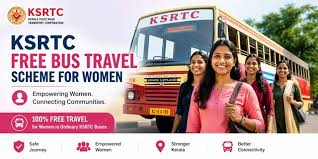
From June 15, women and transgender people in Kerala can hop on select KSRTC busses without paying a fare. This move, part of the Priyadarshini scheme and a big UDF election promise, is all about making public transport easier and more affordable for women and transgender people on select KSRTC busses. Seven KSRTC types covered and stickered The free rides cover seven types of busses, including Ordinary, City Ordinary, Limited Stop Ordinary, Fair-Stage Ordinary, Town-to-Town, Point-to-Point, and Gramavandi services. Launching in Thiruvananthapuram with Chief Minister V D Satheesan leading the way, eligible busses will have special stickers so you can spot them easily. The state government will cover any extra costs to keep the service running smoothly. Courtesy : NewsBytes Note: This news is originally published on https:/newsbytes.com/bha and is used purely for non-profit/non-commercial purposes, especially human rights