
Ladki Hai Ek, Naam Rajni Hai: Dalit, Daughter Of Pushcart Puller And Labourer Set To Join Bihar Police
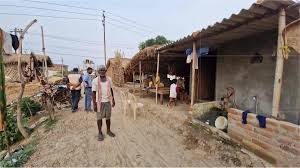
Rajni Kumari will be the first woman from Paswan Tola of Bhajaur village to join the police force. Jamui: For Rajni Kumari, life has been a journey of perseverance amid extreme poverty, deprivation, debt and manual labour. Finally, her courage has paid off, and she is now a constable in Bihar Police. Behind her success is the story of the immense sacrifice of her parents. Daughter of a father who is a pushcart puller and a mother who works as a labourer, Rajni has emerged as the pride of the Paswan community. As soon as the news of her selection reached Bhajaur village, located around 3 km from Jamui district headquarters, a festive atmosphere spread among the Paswan community. There are around 10 families living in the small hamlet of Paswan Tola, whose primary source of livelihood is manual labour. Till now, no girl of this hamlet had ever made it to the Bihar Police. Rajni grew up in a small, two-room mud house near a pond, with a roof of straw and sacks. “It’s a matter of great joy that my granddaughter’s future is secured. She worked hard and became successful. I have five sons, all of whom work as labourers. None of their families have been able to educate their children. Nor have their children achieved anything yet. However, one of my granddaughters has succeeded in clearing the Bihar Police exam, bringing glory to the entire family,” said her grandmother Shyampari Devi. The family’s financial situation was so bad that making ends meet was often a challenge. But they always had big dreams. Despite the struggles, Rajni never wavered from her goals and her resolve grew stronger. Her father, Dashrath Paswan explained, “It wasn’t possible to run the family and pay for the children’s education solely through labour wages. I took a loan and bought a handcart so that my daughter could study.” Leaving home at four in the morning, accepting whatever work came his way and working late into the night became his daily routine. He never considered any task to be small but kept working with the sole goal of educating his daughter. “We were determined to educate our daughter, no matter what difficulties we faced. Today, our hard work has paid off. Rajni is the first daughter of the entire Paswan community here to become a Bihar Police official,” Dashrath said. Rajni’s mother Sunita Devi had tears in her eyes as she recalled the family’s struggles. “At times, the situation became so difficult that it was difficult to imagine what the future held. But the family never gave up. Uncles, aunts and other relatives also helped when needed,” she said. She said that the extended family were always there to support financially and morally whenever needed. This family unity became the foundation of Rajni’s success. Rajni recalled that her parents never sent their children to work but worked to educate them. “My parents told us that they would educate us even if they had to work hard day and night,” she said. She received her primary education in Buxar and then did her matriculation and intermediate from Jamui High School. She is currently a third-year undergraduate student. Along with the studies, she prepared for the Bihar Police recruitment exam. Her goal was to get a government job. Her elder brother broke the news of her selection. “I’ll never forget that moment. The whole family was filled with joy. It felt as if my parents’ long-cherished dream had come true,” Rajni narrated. Courtesy : ETV Bharat Note: This news is originally published on https:/etvbharat.com/bha and is used purely for non-profit/non-commercial purposes, especially human rights
Madhya Pradesh: What Does It Mean To Live In Localities With Caste Indicative Names?
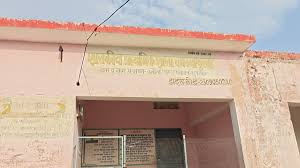
Chhatarpur: The scourge of casteism continues to be rampant in certain parts of Bundelkhand, despite the Constitution guaranteeing equality to every citizen of the country. Chhatarpur district still has hamlets and neighbourhoods with caste indicative names. Members of the Dalit community living in these areas have not been able to integrate into the mainstream of the society and have reportedly endured social discrimination and mental anguish for generations. They feel humiliated and ashamed when their village is referred to by its caste indicative name, Chamaruwa Purva is one such hamlet in Bagota village that continues to retain its caste indicative name. Residents claim families of prospective brides turn away upon hearing the area’s name, and even the rickshaw and auto drivers refuse to drop passengers here. There are many such areas and settlements in Chhatarpur whose caste-based names are mentioned in government records. Some of them are Kacchiyana Purva, Dhimran Purva, Ghusyana Mohalla and Koryana Mohalla. The residents claim that these caste-based names have caused Dalits to bear social stigma for generations. They say future generations will continue to suffer, until the names of such places are changed. Chamruwa Purva is inhabited solely by Dalits who were reportedly resettled 2 km away from the main village before Independence. The Dalits living in this hamlet are troubled by its name. One of the public representatives (Janpad Sadasya) Dalpat Ahirwar, who lives in Chamaruwa Purva, explained, “We still face social stigma. Whenever our children go for employment or to an educational institution, people look down upon us after hearing the name of our hamlet.” He added that the residents of the hamlet are unable to find a house on rent elsewhere or a job once they mention their address. “When we go to enroll our children in school, we’re asked about the area we live in. We feel embarrassed to reveal the name. We face difficulties because the area’s name is caste-indicative.” He claimed that several applications have been submitted to the local administration to change the name of the hamlet, but there has been no positive response. Meanwhile, Advocate Devendra Anuragi of Chhatarpur disclosed, “Not only is Chamaruwa Purva caste indicative, but even the Koryana Government School in Toriya Mohalla is referred to by the same name in government records. Dalits have been suffering the consequences of this for centuries. Upon hearing the name, people associate their identity with caste.” Another resident of Chamaruwa Purva, Bhubani Bai Ahirwar, disclosed, “When we return from shopping in the city, rickshaw pullers and auto drivers refuse to drop us home. Hearing the hamlet’s name, no one comes this way. Even the family of a prospective bride doesn’t come to the area to arrange a match.” Chief Executive Officer (CEO) of Chhatarpur District Panchayat, Namah Shivay Arajaria, said that to change the caste indicative names of hamlets or areas, the Gram Panchayat has to pass a resolution and get it forwarded by the Gram Sabha. “If the file comes to me from the Panchayat, we can propose a name change,” he said. A resident of Chamaruwa Purva, Sunil Kumar, candidly admitted, “The name of the hamlet is like an abuse. When one goes to get a child admitted to a school and the address is asked, it feels insulting.” Meanwhile, Anuragi pointed out that while the country and society have changed with time, Chhatarpur continues to have neighbourhoods, hamlets, and schools that are known by caste indicative names that remind the people of the old social order. “Now, these need to be changed for social harmony,” he underlined. Courtesy : ETV Bharat Note: This news is originally published on https:/etvbharat.com/bha and is used purely for non-profit/non-commercial purposes, especially human rights
Balrampur: Dalit shopkeeper stabbed for demanding payment for food at a dhaba; both accused arrested

Police arrested Raju Singh and Sanjay Singh, who stabbed Dalit dhaba owner Rahul Sonkar, and sent them to jail. Balrampur: In the city Kotwali area of Balrampur district, Uttar Pradesh, a Dalit shopkeeper’s request for payment for food served at his own dhaba proved costly. Over a small sum, the shopkeeper was brutally attacked with knives by the goons, leaving him seriously injured. Following the incident, the bloodied shopkeeper was taken to a nearby hospital for treatment, from where he was referred to Bahraich District Hospital. Both named accused arrested: Following the incident, police arrested the two main accused in the deadly attack. Police also recovered the knife used in the attack at the location of the arrested accused. City Police Circle Officer Jyotishree stated on Thursday that the victim, Rahul Sonkar, runs a small dhaba. There, on Wednesday evening, he was fatally attacked. Raju and Sanjay were being left without paying: According to CO Nagar, Raju Singh and Sanjay Singh went to Rahul Sonkar’s shop on Wednesday to eat. After eating, the two accused tried to leave the counter without paying. The shopkeeper stopped them. When Rahul asked for money, Sanjay Singh and Raju Singh became enraged and began abusing him publicly, using casteist slurs. The dispute escalated to the point where they pulled out knives and attacked Rahul with intent to kill, seriously injuring him. Referred to Bahraich due to critical condition: The injured shopkeeper was initially taken to the local District Memorial Hospital for treatment. Doctors there deemed his condition critical and referred him to Bahraich for treatment. The police have registered a case in this matter. The named accused are Raju Singh, son of Ram Jag Singh, a resident of Nanpur Majgawa in the Maharajganj police station area, and Sanjay Singh, son of Gopal Singh, a resident of Risalpur Koyalara in the Kotwali Dehat area. Police have completed the legal process and sent both accused to jail. Courtesy: Hindi News
Two Dalit Youths Beaten to Death by Mob on Theft Suspicion at Rajgir Temple Fair in Bihar
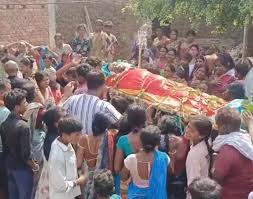
Two Dalit youths were allegedly beaten to death after being accused of theft at the famous Jhunkia Baba Temple during the ongoing Malmas fair in Rajgir. The victims, identified as Pintu Paswan (24) and Shravan Paswan (18), were residents of Ganjpar village in Nalanda district. Both had reportedly gone to the temple fair on Sunday night. Theft Suspicion Led to Mob Attack According to reports, the incident took place around 3:30 am on Monday when four youths allegedly entered the Pangat area of the temple premises. Temple authorities claimed the youths were trying to steal. All India Mahamandaleshwar Mahant Antaryami Sharan said there had been several theft incidents in recent days, which had created anger among devotees. “In the last few days, many theft incidents were reported in the temple. Devotees were already upset, and because of the Malmas fair, thousands had gathered there,” he said. When devotees noticed suspicious movement, they chased the youths. While two of them managed to escape, Pintu and Shravan reportedly fell while running and were caught by the crowd. Soon after, the mob allegedly attacked them brutally with sticks. Temple Security Handed Victims to Police The temple security team later rescued the injured youths from the mob and handed them over to the Rajgir Police. The victims were first taken to a local hospital and later referred to Patna Medical College and Hospital (PMCH) for better treatment. However, both died during treatment due to serious injuries. Police Call It Double Murder Nalanda Superintendent of Police Bharat Soni said the case is being investigated from all angles. “We are investigating the case from every aspect. This is a case of double murder. Postmortem has been completed, and the report is awaited. Several teams have been formed to arrest all the accused. Some suspects are under interrogation,” he said. Police have formed a Special Investigation Team (SIT) under the leadership of the Rajgir DSP. Heavy police force has also been deployed in the area to maintain law and order. Family Demands Justice Pintu’s mother, Saroj Devi, said her son was a daily wage labourer and the only earning member of the family after his father’s death. “I don’t know why my son went near the temple. He and his friend were beaten so badly that they died. We want the killers arrested immediately,” she said. She added that Pintu was the eldest among five brothers and three sisters and his death has left the family devastated. Courtesy : TOP Note: This news is originally published on https:/theobserverpost.com/bha and is used purely for non-profit/non-commercial purposes, especially human rights
How Bengaluru’s Neeli Paradé creates space for Dalit stories that go beyond trauma
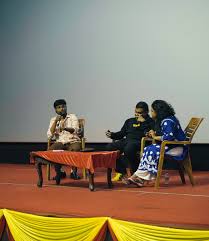
The third season of Neeli Paradé featured four short films by Dalit filmmakers. The post-screening discussion explored the films’ themes, creative processes, and social contexts. On June 14, the Dr Ambareesh Auditorium in Chamrajpet hosted season 3 of Neeli Paradé, a screening of four short films by Ambedkarite filmmakers. Presented by Neelavarana, a Bengaluru-based Ambedkarite production house and artists’ collective, the event celebrates Dalit and Bahujan lives and experiences while creating space for dialogue between filmmakers and audiences through post-screening discussions. Neeli Paradé was first organised in 2022, and has since evolved from a small show into a recurring platform for Dalit and Bahujan filmmakers and conversations around their cinema. Among the short films screened, the spotlight rested on Moda Moda by MK Abhilash and Out of Syllabus by Mahishaa, who is also the founder of Neelavarana. Moda Moda follows a couple who decide to name their would-be child Moda (clouds). Out of Syllabus centres on the blooming companionship between two girls, Sneha and Kritika, and their shared backgrounds as they walk home from school. Following the screenings, both filmmakers participated in a discussion moderated by Vijeta Kumar, an assistant professor at Bengaluru’s St Joseph’s University. The discussion explored the films’ themes, creative processes, and social contexts. The focus remained on community and shared values, while the stories told made the setting intimate and personal. “I think films are a great way to get people to think about things that they might not otherwise be comfortable talking about,” remarks Taanika Shankar, a schoolteacher who had attended Neeli Paradé for the first time. “I moved to Bengaluru a couple of years ago, and I too come from a Dalit background. I wanted to find a community where there are Dalit filmmakers and films about issues that impact Dalits. That’s when I came across the channel Neelavarna Media,” recalls Abhiraj Dethe, a director and writer whose recent works include projects with Flying Dosa Films. Abhiraj has attended earlier sessions and even remembers having previously watched one of the films screened on June 14. The post-screening discussion reflected on how the films moved beyond conventional portrayals of Dalit lives. “Since the time we started making films, I have seen that stories dealing with Dalit issues often portray us either as victims or as fighters,” commented an audience member. “Here, I see that the characters are also smiling, and the filmmaker is also smiling.” The event also featured stalls run by community-owned small businesses selling crochet products, artwork, and homemade chocolates. The initiative was aimed at supporting independent artists and entrepreneurs. Looking ahead, Mahishaa aspires to make Neeli Paradé an annual festival and to expand its reach to other cities like Mysuru and Mangalore through special invitations. Neelavarana is also open to where the future might lead, including the possibility of venturing into longer formats, which may be difficult, Mahishaa notes. “The next major step is to move towards feature films. That is a challenge. That’s something we have to figure out how to do, but we do want to eventually go into feature films and bigger screenings and events,” he told TNM. Written by:Swetha Anil Kumar, Deva Manohar Manoj (Students interning with TNM) Courtesy TNM Note: This news is originally published on https:/thenewsminute.com/bha and is used purely for non-profit/non-commercial purposes, especially human rights
‘Why should a Dalit worry about RSS’: BJP MP to Priyank Kharge; gets sharp ‘fear none’ reply
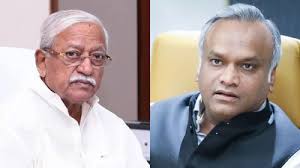
NEW DELHI: A remark by BJP MP Ramesh Jigajinagi questioning why a Dalit minister should be concerned about the RSS triggered a sharp response from Karnataka home minister Priyank Kharge on Thursday, with the Congress leader saying he “fears none” because he follows BR Ambedkar’s ideology. The controversy started from Priyank Kharge’s letter earlier this week to RSS chief Mohan Bhagwat, seeking clarity on the organisation’s legal status and asking it to disclose details of its funding, income, expenditure and assets in the interest of transparency and constitutional accountability. Addressing a press conference in Vijayapura on Wednesday, Jigajinagi criticised the move, saying Priyank Kharge was overstepping his role as Home Minister. “Is it his job to ask such questions about RSS? People will only tell him (what RSS is). Whoever came in the way of RSS did not survive. He is unnecessarily picking up an issue with the RSS. We feel bad about it,” the BJP MP said, according to news agency PTI. “My question is – why does this Dalit man need to be concerned about the RSS?” he asked.Jigajinagi also said Priyank Kharge became a minister because his father, Congress president Mallikarjun Kharge, had “toiled hard” for the party and advised him to focus on governance instead of targeting the RSS. Responding to the BJP leader, Kharge said Jigajinagi’s remarks could be interpreted in several ways. “Is it a word of caution, advising Dalits not to associate with the RSS, which believes in the fundamentals of a hierarchical social order?” he asked. He also questioned whether the BJP MP was suggesting that, as a Dalit, he had no right to question “an organisation formed to safeguard the interests of those with a sense of social superiority.” Priyank Kharge further asked whether Jigajinagi’s remark that “no one who has taken on the RSS has survived” was made out of fear or intended to intimidate him. “What are the reasons behind this threat? What does he mean by saying ‘no one has survived’? Is the RSS a terrorist organisation? Does it eliminate those who question it?” the minister asked. Asserting that he draws strength from Ambedkar’s ideals, Priyank Kharge said, “I am a follower of Babasaheb’s ideology. The courage to question and my intellectual conviction come from him. Those who believe in Babasaheb do not fear.” “I fear only a lack of morality, not threats, because Ambedkar’s blood runs in our veins,” he added. Courtesy : TOI Note: This news is originally published on https:/timesofindia.com/bha and is used purely for non-profit/non-commercial purposes, especially human rights
Parliament passes Transgender Persons Amendment Bill, 2026 with Rajya Sabha approving it today

Parliament has passed the Transgender Persons (Protection of Rights) Amendment Bill, 2026, with the Rajya Sabha approving it today. The bill was passed by the Lok Sabha yesterday by a voice vote amid an Opposition-led walkout. The bill seeks to redefine the category of transgender, removes the provision of self-perceived gender identity and excludes several socio-cultural identities as well as transmasculine individuals from its ambit. It also further defines transgender persons within a biological framework, based on intersex variations and differences in sexual development. Replying to the discussion on the Bill in the Rajya Sabha, Social Justice and Empowerment Minister Dr Virendra Kumar said the government is compassionate towards the well-being of the transgender community. He said the Bill has provisions to empower the transgenders and give them dignity. The Minister said that the NDA government has taken several initiatives to bring transgender people to the mainstream and stop discrimination against them. Starting the discussion in the Upper House, Congress MP Renuka Chowdhury said this bill dilutes the privacy of an individual provided under the Constitution. Opposing the Bill, Ms Chowdhury said self-identification cannot be taken away through bureaucratic certification. Criticizing the government, she said that the proposed bill undermines the fundamental rights and dignity of transgender persons. Calling such a move wrong and illegal, she argued that forcing transgender persons to provide their identity through official certificates is against the spirit of equality and dignity guaranteed by the constitution. She also questioned the government’s approach for not properly consulting with the transgender community before bringing the Bill. She also referred to the Supreme Court’s landmark NALSA judgement of 2014, which recognized the right of transgender persons to self-identify their gender. Ms Chowdhury said the proposed Bill violates the principles laid down in that judgement and fails to respect an already established legal framework. DMK MP Tiruchi Shiva also opposed the Bill, saying that even if the Bill is passed in Parliament with a majority, it will be struck down by the Supreme Court. He further added that the Bill violates Articles 14, 15, 19 and 21 of the Constitution and it deprives the community of the right to freedom, dignity and self-determination. Supporting the Bill, BJP MP Medha Vishram Kulkarni said, ” This Bill ensures justice, dignity, protection from criminalisation and legal safeguards for transgender persons. She also thanked Prime Minister Narendra Modi for bringing this bill with certain amendments in order to ensure that the benefits reach the deserving people in a proper manner. She said there is a need for a law that brings justice to real transgender individuals and punishes fake ones. Mrs Kulkarni said the benefits should be extended to those who are transgender by birth. She said that the amendment to extend punishment will bring down the rate of crime and forced identities. TMC’s Saket Gokhale said that 31% of Transgender people in India have attempted suicide because of the discrimination that they are facing. He alleged that now the government is going to start discriminating against them as though social discrimination were not enough. He called it unacceptable. Mr Gokhale expressed concern that gender is going to be decided by the Chief Medical Officer and a District Magistrate, and the bill does not prescribe any qualifications for the Chief Medical Officer. Sanjay Singh of AAP said the Bill is a big let-down for the transgender community. He accused the government of not doing anything for the community. RJD’s Manoj Kr Jha said that prejudices against transgender people should stop, and they should be able to live with dignity. He added that self-determination of gender should not be taken away. CPI(M)’s John Brittas said it is a black-letter day and the Bill is taking India a century back. He pleaded with the government to either withdraw the Bill or refer it to a Select Committee. Jaya Bachchan of the Samajwadi Party also questioned the government over the legislation. She sought to know what the urgency was in bringing the Bill, without examining it with the depth and care that it deserved. Courtesy : Newsonair Note: This news is originally published on https:/newsonair.com/bha and is used purely for non-profit/non-commercial purposes, especially human rights
Father arrested for bid to kill girl over ‘transgender traits’

AURAIYA/KANPUR: Auraiya police on Wednesday arrested a man for attempting to kill his 14-year-old daughter after targeting her over her transgender characteristics. The accused allegedly beat the minor with a stick, threw her into the Patna canal and fled, police said. The girl, a resident of Kotwali Shivli area of Kanpur Dehat, survived because the canal’s water level was low, enabling her to drift towards the bank, where she was rescued by locals. She was taken to a nearby CHC, from where she was shifted to a hospital given her critical condition. According to police, the victim’s father took her on a scooter, claiming he would drop her at her aunt’s house in Bidhuna. On the way, between the villages of Baderahar and Bunchpur, he allegedly stopped the scooter, began abusing her with slurs related to her gender identity and assaulted her repeatedly. She told police he then dumped her into the canal and escaped. Bystanders who noticed the injured child and heard her cries informed the police. Inspector Lalitesh Narayan Tripathi, station house officer of Bela police station, and Santosh Kumar, in charge of the Purwa Sujan outpost, reached the spot and transported her to the CHC. “Since the girl had serious injuries, including trauma to her right eye and multiple injuries across her body, she was referred to a higher medical centre for advanced care,” said Dr Jitendra Kumar, posted at the CHC. Police said they conducted a raid soon after receiving the complaint and detained the father. During questioning, the accused allegedly admitted to beating the girl and throwing her into the canal, claiming he was angered by what he described as her transgender behaviour and alleging she was influencing her younger sister. Courtesy : TOI Note: This news is originally published on https:/timesofindia.com/bha and is used purely for non-profit/non-commercial purposes, especially human rights
Cartography of India’s future
Jorge Luis Borges wrote a famous fable on a 1:1 map that covered the entire land. In a way, our leaders are also offering us maps to cover the India of our imagination. One is about roads to a shiny future, the other about hazards to avoid In his one-paragraph fable ‘On Exactitude in Science’, Jorge Luis Borges imagines an empire whose cartographers become so obsessed with accuracy that they produce a map as large as the empire itself. It matches the territory point for point. The result is a masterpiece that nobody can use. Borges’s point is simple: every map leaves something out. When a map claims to represent everything, it stops helping us understand where we are. In India, we now live with two such maps. One is drawn by the cartographer of dreams, Narendra Modi. The other is sketched by Rahul Gandhi, who sees in the same dreams the makings of a nightmare. These maps are laid over the same territory, and yet they do not line up. The result is a peculiar double vision: we inhabit two countries at once and are at home in neither. Modi’s map is bright with ambition, infrastructure and civilisational purpose. He claims to have lifted India from an era of drift into an era of execution. Roads, bridges, expressways, factories, digital payments and welfare schemes all form part of a narrative in which “stability and development at an unprecedented speed and scale” have replaced the instability and “mis-governance” of earlier regimes. What makes Modi’s map attractive is not merely its optimism but its legibility. Roads lead somewhere. Airports appear where there were none. The citizen can point to a bridge, a welfare transfer, or a railway station and say: there, that is the future. The map offers destinations. It tells Indians not merely where they are, but where they are headed. Rahul Gandhi’s map is dominated by institutional decay and ecological loss. He sees a democracy in which “the BJP controls the institutions of the State… the legal system… the bureaucracy… the intelligence agencies” and even the Election Commission. The distance between election and selection, he argues, is shrinking. Level playing fields are history. Yet the difficulty for Rahul Gandhi is not that his map is necessarily false. It is that a map made entirely of hazards is difficult to follow. A traveller may wish to know where the swamps and cliffs are, but he also wants to know where the road leads. Gandhi identifies dangers that many independent observers would acknowledge, but he struggles to show citizens what lies beyond the warning signs. You could say the problem is also one of persuasion. Rahul Gandhi, for all his courage, may never be Prime Minister; he is like the salesman who turns up at your door and tells you the vacuum cleaner he is offering probably will not work. A moment later, Modi appears with the same machine and sells you two by showing you an image of your soon-to-be spotless house. The first model requires effort—you, the citizen, must roll up your sleeves and resist, organise and demand accountability. The second offers something closer to the ideal: buy the product and trust the company. ‘Bharat’ was recently represented at an innovation jamboree in Nice, where the leaders of India and France jointly inaugurated ‘Bharat Innovates 2026’, a showcase for Indian startups and venture capital. As a reasonable citizen of this cartographic wonderland, one might be forgiven for asking: what exactly have we innovated that is not packaging and scale? Yet, the spectacle works. Modi is an effective peddler of this dream. Rahul Gandhi’s latest map, outlined in his speech to the INDIA bloc partners on June 8, is harder to inhabit. He spoke of “unity and resistance” and compared today’s unequal playing field to the colonial period. He may be substantially right. There is mounting evidence, from Great Nicobar to the managed dismantlement of opposition parties, that the system is skewed. Yet his own allies—Mamata Banerjee, Akhilesh Yadav and others—do not fully buy the argument that every defeat is the product of rigging. To admit that would be to accept the need for something like a sustained civil disobedience movement. Nobody is ready for it. This is a country whose political culture is built on inertia. We are a civilisation more comfortable with meditation than mediation. Passive resistance—Mahatma Gandhi’s great insight—suited us because it allowed for the grace of restraint without constant confrontation. As new entrants like the Cockroach Janta Party discover, even mobilising the much-hyped Gen Z is hard. The poor, who might once have been the natural constituency for street politics, have seen their anger blunted by welfare. People remain poor, but they are not destitute in quite the same way. Welfare is both a genuine gain and an effective tranquilliser. Ironically, Rahul Gandhi has also been a strong advocate of this model, from NYAY (Nyuntam Aay Yojana or minimum income scheme) to a more generous safety net, which means his own politics co-opts the very constituency that might otherwise be tempted by insurrection. The clientele for his cartography has been neutralised by the policies he supports. In Borges’s story, the perfect map ends up in shreds, an object of pity in the desert. Our two Indian maps are nowhere near perfect, but they compete to cover every inch of the India of our imagination. Perhaps the country awaits the arrival of another cartographer, another map. C P Surendran Author whose latest volume of poetry is Window with a Train Attached (Views are personal) Courtesy : TNIE Note: This news is originally published on https:/thenewindianexpress.com/bha and is used purely for non-profit/non-commercial purposes, especially human rights
Amit Shah hell bent on making NDA ‘National Defectors Alliance,’ will not get two-thirds majority in LS: Congress

Congress general secretary Jairam Ramesh asserted that the Union Home Minister will not succeed in in his attempts to get a two-thirds majority in the Lok Sabha. Amid the ever-growing crisis within the opposition ranks, Congress leader Jairam Ramesh on Thursday slammed BJP leader and Union Home Minister Amit Shah for trying to break opposition parties, while asserting that he will not succeed in his attempts to get a two-thirds majority in the Lok Sabha. Ramesh said Shah suffered a “humiliation” in the Lok Sabha on April 17 this year when he failed in getting the Constitution amendment bill related to delimitation passed, and is now resorting to “dirtiest of tricks” in order to avenge that. He accused Shah of launching an “assault on the Constitution and democracy.” “Amit Shah is clearly hell-bent on making the NDA, the National Democratic Alliance, the NDA — National Defectors Alliance. He was humiliated on the 17th of April 2026 in the Lok Sabha. He expected the Constitution amendment bill that provides for delimitation to pass,” Ramesh told PTI. “He (Shah) had assured the Prime Minister (Narendra Modi). But because of opposition unity and solidarity, the bill didn’t pass. They got only 298 and they needed 362, if you go by 543 present and voting. So they felt hugely short of the two-thirds majority. And that was a humiliation. It was a setback for him,” Ramesh said, adding the home minister did not expect that. The Congress leader accused the home minister of orchestrating defections as a response to that “humiliation” of April 17. Shah has started on this massive programme to destabilise opposition parties, he alleged. “He’s (Shah is), you know, trying to break all opposition parties. But I can assure you that he’s not going to succeed in getting a two-thirds majority in the Lok Sabha. He’s trying similar tactics in the Rajya Sabha. But ultimately, it’s two-thirds majority in the Lok Sabha that matters,” Ramesh said. The Congress leader claimed that all sorts of incentives are being offered to opposition MPs to defect to the ruling alliance. “You know, in the mutual fund industry, you offer different products and different schemes catering to the needs of individual investors. So, he’s obviously offering a lot of incentives to individual MPs based on their needs and assessments. But, you know, this is an assault on the Constitution. It’s an assault on democracy,” Ramesh said. “It is an absolute disgrace that the man who occupies the place that was once occupied by Sardar Vallabhbhai Patel is indulging in all these dirtiest of tricks in order to avenge the humiliation that he underwent,” the Congress general secretary said. Asked about Uttar Pradesh minister Om Prakash Rajbhar’s remarks that a major split in the Samajwadi Party (SP) is on the cards, Ramesh dismissed the comments as “psychological games” that are part of Shah’s strategy. “He (Shah) is the master of sowing confusion. He is a weapon of mass distortion and disinformation –WMD, in the real sense of the term. So he is trying to create a lot of uncertainty and sow the seeds of dissensions but he is not going to succeed. He can do whatever he wants, he is trying to save his job,” Ramesh alleged. He claimed the Modi government had to suffer “humiliation” for the first time in 12 years on April 17. “So, there is a lot of bluff and bluster and the home minister is a master in this bluff and bluster. He is trying to create an impression that opposition parties are withering away, but opposition parties are united, there is solidarity, there is ideological and this ‘National Defectors Alliance’ will not get a majority whenever the Constitution amendment bill is brought into the Lok Sabha,” he asserted. Ramesh stressed that the Congress has ideological clarity and is well aware that it is fighting an ideological battle against the BJP and not merely a political struggle. “The home minister who does everything with the approval of the prime minister is hell-bent on destroying the Constitution and the foundational principles of our democracy,” the Congress general secretary in-charge communications said. “You saw what happened on April 17, he came a cropper, he was humiliated and he is now taking revenge, trying to compensate and send a message to the PM that ‘I am going to deliver a two-thirds majority for you’,” he said. Ramesh pointed out that Shah comes from the land of Gandhi who taught people that the ends are as important as the means. However, it is the “dirtiest of tricks” Shah is playing,” Ramesh said. He asserted that the Congress is not just sitting back and is talking to its allies opposition parties. “Our top leadership, the Leader of Opposition in the Lok Sabha (Rahul Gandhi) or the Leader of Opposition in the Rajya Sabha (Mallikarjun Kharge), people like me, are in touch with all the colleagues in the opposition parties. We are united and we are going to resist this nefarious, diabolical attempts of the home minister to get a two-thirds majority by hook or crook,” Ramesh said. The Congress’ attack came with Shiv Sena (UBT) facing an imminent split. Six of Shiv Sena (UBT)’s nine Lok Sabha MPs skipped its parliamentary party meeting here on Thursday, signalling that a formal crossover to the ruling Shiv Sena led by Eknath Shinde may be only a matter of time. Also, 20 rebel TMC MPs have met Lok Sabha Speaker Om Birla and announced their merger with the NCPI, a Tripura-based registered unrecognised political party. On Wednesday, Ramesh accused Shah of launching an “onslaught” on the opposition and “wrecking” Indian democracy to compensate for his “humiliation” in the Lok Sabha on April 17. Courtesy : TNIE Note: This news is originally published on https:/thenewindianexpress.com/bha and is used purely for non-profit/non-commercial purposes, especially human rights