
Rahul Gandhi attends Congress training camp in Chhattisgarh
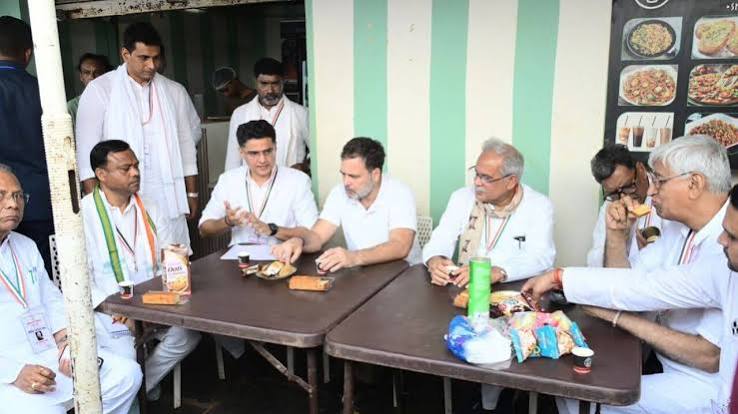
Leader of Opposition in the Lok Sabha Rahul Gandhi arrived in Abhanpur on a day-long visit to attend a 10-day Congress training camp on Sunday. During his four-hour visit, Gandhi held a 40-minute meeting with senior party leaders before interacting directly with district and city unit presidents. On his way back to the airport, Gandhi stopped at a roadside tea stall where he was seen sharing biscuits with Pradesh Congress Committee (PCC) chief Deepak Baij. Senior leaders including Sachin Pilot, Bhupesh Baghel, T S Singh Deo, and Charan Das Mahant accompanied him. While the ongoing training camp in Abhanpur was scheduled as a closed-door event, a large number of Congress workers gathered at the venue from across the state. The heavy rush led to brief chaos at the entrance. In the ensuing push and shove, Leader of Opposition in the Chhattisgarh Legislative Assembly Charan Das Mahant was left stranded outside the main gate for a period. Videos of the incident have since surfaced on social media. Gandhi departed for the airport following the conclusion of the interaction sessions. Courtesy : TOI Note: This news is originally published on https:/timesofindia.com/bha and is used purely for non-profit/non-commercial purposes, especially human rights
Rahul meets 5 key Punjab netas ahead of call on party rejig
NEW DELHI: As Congress rethinks its organisational leadership in poll-bound Punjab, Rahul Gandhi Sunday met five key state functionaries ahead of a decision on a reshuffle. Leader of the opposition Partap Singh Bajwa, state chief Amarinder Raja Warring, ex-CM Charanjit Singh Channi, Sukhjinder Randhawa and Vijay Inder Singla met Rahul at 10, Janpath. Sources said Rahul asked them to fight the polls collectively, a day after the party brass discussed a report of the Ajay Maken panel set up to look into the Punjab unit. Meenakshi Natarajan and Bhajan Lal Jatav were other members of the panel. The five state functionaries are said to have given their views on the nature of the team with which Congress should go to the polls. Rahul called the leaders individually and sought their opinions. Bajwa told reporters, “I put forward my viewpoint on what is best for the party, and I said whatever decision you (Rahul) take, we’ll stand by it. We’re committed soldiers of Congress.” Courtesy : TOI Note: This news is originally published on https:/timesofindia.com/bha and is used purely for non-profit/non-commercial purposes, especially human rights
Human Rights Commission Takes Strict Action on Liquor Shops in Dalit Settlements: Demands Report from Agra DM-Commissioner within Four Weeks
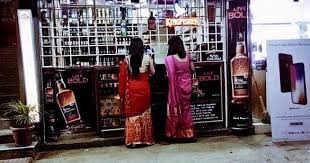
Agra: The National Human Rights Commission has taken a very serious view of liquor shops operating in Dalit, slum, and densely populated residential areas, issuing a notice to the Agra administration. Taking cognizance of a complaint filed by human rights activist and advocate Naresh Paras, the Commission has directed the District Magistrate and the concerned administrative officials to submit a detailed Action Taken Report (ATR) within four weeks. Issues of Security and Social Justice In the complaint, advocate Naresh Paras argues that the presence of liquor shops in these areas has made life difficult for women, students, and ordinary citizens. Incidents such as gatherings of antisocial elements outside the shops, molestation, abuse, and assault have become a daily occurrence, violating the fundamental rights of citizens. He also cited the recent tragic road accident in Nagla Budhi, New Agra, where five people lost their lives due to the negligence of a drunk driver. Proposed Solution: ‘Wine Zones’ and Strict Policies The complainant not only demanded the removal of liquor vends, but also suggested the development of ‘wine zones’ (controlled areas) as a concrete solution. He proposed that all liquor vends be relocated from residential and sensitive areas to the outskirts of the city or industrial areas. These zones should have CCTV surveillance and adequate police security. Liquor sales hours should be limited to 10 a.m. to 10 p.m. Emphasis on Constitutional Provisions In his complaint, Naresh Paras cited Article 21 (Protection of Life) and Article 46 (Protection of the Interests of Scheduled Castes and Scheduled Tribes) of the Constitution, demanding accountability of the administration. They have also appealed for an investigation against the excise officials who allowed the liquor shops to open in populated areas. Suggestions for the Future The proposals presented to the Human Rights Commission include important demands such as ensuring a minimum distance of 200 meters between liquor shops and schools, religious places, and residential complexes, making public hearings mandatory, and making a Social Impact Assessment a prerequisite for contract approval. This issue has now become not just about local law and order, but about social justice and the protection of women’s dignity. This directive from the Commission poses a major challenge to the administration, as it will now have to explain its stance on the operation of liquor shops in these sensitive areas. Courtesy: Hindi News
Deadly attack on Dalit youth in Balrampur: Casteist slurs hurled, FIR filed against 4

A case of assault, casteist slurs, and death threats against Dalit youth has come to light in Balrampur village, under the Narsena police station jurisdiction. The victims have filed a complaint against four named accused at the Narsena police station, demanding strict action. According to the complaint, Ankit Kumar, son of Dharamveer, Dharmendra, son of late Sukhdev Singh, and Bobby Kumar, son of Vijendra Singh, residents of Balrampur village, told the police that they were attacked by Shiva, son of Kiranpal Singh, Shailesh, and Mainpal, along with others from the same village. The attackers allegedly assaulted them with sticks and sharp weapons (shovels). The victims reported that when they protested, the accused abused them, used casteist slurs, and threatened to kill them. The victims allege that the accused have a domineering nature, creating an atmosphere of terror within their families. Following the incident, the victim’s family reached the Narsena police station and filed a written complaint naming the accused, demanding legal action by filing a case against them. Station House Officer Ram Kishore Gautam stated that the complaint has been received and the matter is being investigated. Further legal action will be taken based on the investigation. Dushyant Kumar Rana | Unchagaon (Syana), Bulandshahr Courtesy: Hindi News
Police solve mystery behind Dalit youngster’s murder in Adilabad

Adilabad police arrested six persons for the murder of 23-year-old Nathari Sathish in Neradigonda. Investigators said the crime was linked to a personal dispute involving a girl. The case was solved within 48 hours using technology and CCTV footage Adilabad: Police swiftly solved the mystery behind the sensational murder of a Dalit youth by arresting six persons in Neradigonda on Sunday. Police seized five mobile phones, two motorcycles and empty beer bottles from the accused. Briefing newsmen, Utnoor ASP Ruthwik Sai Kotte said that Shaik Sumer and Gangadhari Sai Krishna, both from Neradigonda mandal, and Bojja Vishnuvardhan, Shaik Akram and Syed Noman, belonging to Boath town, were apprehended on charges of killing Nathari Sathish (23) on June 17. During interrogation, Sumer confessed to killing Sathish as he was obstructing his efforts to pursue a relationship with a girl. He allegedly strangled Sathish to death after forcing him to consume excessive liquor at an irrigation tank with the help of the other accused. He revealed that they later dumped the body in the tank. The accused further disclosed that they shifted Sathish’s two-wheeler to Adilabad town and threw his mobile phone from a train. Police initially registered a missing case after Sathish’s parents lodged a complaint when he went missing on June 17. They traced the body in the tank and altered the case to murder on June 19. Two special teams were formed to crack the mystery. Ruthwik said the investigators managed to unravel the mystery within 48 hours with the help of technology and CCTV camera footage. He stated that a case had been registered against the accused under the SC/ST (Prevention of Atrocities) Act. Courtesy : Telangana Today Note: This news is originally published on https:/telanganatoday.com/bha and is used purely for non-profit/non-commercial purposes, especially human rights
A 16-year-old Dalit girl was gang-raped in Kishangarhbas.
Khairthal-Tijara. A case of gang rape of a 16-year-old Dalit girl has come to light in a village in the Kishangarhbas police station area of Khairthal-Tijara district in Rajasthan. The victim’s grandmother, while filing the case on Sunday, stated that after the death of their son, the family had gone to the Ganges River to immerse his ashes. At around 12 a.m. on June 20th, two men from the same village forcibly abducted her granddaughter, who was sleeping at home. They took the girl to a nearby field, where two other men were present. The four men raped her. Police have registered a case and launched a search for the accused. Courtesy: Hindi News
As India Gets Hotter, Clothing Adds a Layer to Caste Inequality

Wearing breathable textiles like cotton is becoming a form of heat adaptation, but for many Dalit families, they remain out of reach. Inside the narrow lanes of Shahbad Dairy, a suburb outside north-west Delhi, is a concrete maze of houses packed tightly together. Trees are scarce. A breeze is hardly able to pass through these cramped and unventilated alleys, and by afternoon, the heat is oppressive and inescapable. Poonam and her sister-in-law Ritika, who live next door to each other, ask their kids not to play outdoors under the hot sun. But though the temperature outside is 40°C, it feels a lot hotter indoors. The tin and concrete roofs of their houses trap heat. With no windows, there is barely any ventilation. Had they been men, Poonam and Ritika could have changed into shorter or looser clothing. Instead, tradition dictates that they cover their bodies in multiple layers. “This material makes you sweat more. It does not absorb sweat,” says Poonam, gesturing towards her salwar kameez and dupatta made of synthetic textiles. This forms a three-piece ensemble consisting of a long tunic, ankle-length trousers and a scarf – the dupatta – draped around the shoulders, neck and sometimes over the head. As heatwaves become more frequent and intense, experts Dialogue Earth spoke to say wearing natural fabrics like cotton and linen is emerging as a form of heat adaptation. But for many like Poonam and Ritika, they are a luxury, costing double their synthetic counterparts. Their family belongs to the Dalit community, a historically oppressed group of castes. Despite finishing high school, their father-in-law Paale Ram was pushed into sanitation work because of his caste, cleaning sewers like his father and grandfather before him. His sons do the same work, their family’s economic circumstances reflecting generations of exclusion from better paid and more secure livelihoods. (The Dalit families Dialogue Earth spoke to do not use last names to avoid further caste-based discrimination.) The family’s earnings barely cover household expenses, leaving little money for clothing. In Delhi, many of the workers most exposed to extreme heat, including sanitation and informal labourers, continue to come from historically marginalised caste communities. A 2024 analysis by The Hindu notes that nearly 70% of sewer and septic tank workers in India belong to oppressed castes. For workers spending long hours performing physically demanding labour in hot conditions, clothing matters. But “when income is limited, food and shelter become bigger priorities,” says Afrose Farid, a professor in the Department of Textile Design at Kerala’s National Institute of Fashion Technology. The cost of comfort Natural fabrics such as cotton and linen are widely preferred for hot weather because of their superior moisture absorption and breathability, Farid tells Dialogue Earth. Synthetic materials like polyester and nylon can feel uncomfortable in extreme heat, particularly for those spending long hours outdoors or in poorly ventilated homes. But the cost of polyester and cotton in India differ significantly. Dalit families struggle to reconcile that steep difference. Paale Ram earns around INR 35,000 (USD 371) a month, while Poonam’s husband, a bus conductor who also cleans sewers, earns up to INR 40,000 (USD 424). Their combined income, for a family of seven, barely covers household expenses and their three children’s education. “A cotton salwar suit [consisting of a salwar kameez and dupatta] will cost you more than INR 1,000 (USD 10), whereas blended fabric or synthetic fibres will only cost you INR 300,” says Riya, who is also from a Dalit household in Shahbad Dairy. Her husband works on the city’s sewer lines and earns INR 15,000 a month. They have five kids, and buying them clothes made of breathable fabric has been an added expense the family never anticipated. “Unequal access to comfortable clothing is not just poverty but a caste issue,” says Bezwada Wilson, the national convenor of the Safai Karmachari Andolan, an Indian organisation campaigning to eradicate manual scavenging, which means cleaning human waste from sewers by hand. Historically, clothing has been a tool of caste discrimination, Farid notes. “Earlier, caste-based discrimination focused on giving them less clothes to wear to humiliate them. But today, they are unable to access proper clothing because of their economic conditions,” she says. “In India, class is always… going to be affected by caste. You cannot take caste away from class,” anti-caste activist and designer Jay Sagathia tells Dialogue Earth. Double discrimination Marginalised communities face “double discrimination” – economic deprivation layered with caste-based exclusion that determines where services, infrastructure and dignity are available, notes Wilson, who is also from the Dalit community. Many Dalit families working in caste-linked occupations rely on second-hand clothing or local markets that cater to low-income customers, he says. Local markets often reflect assumptions about what poor communities can afford. “Near our houses, we won’t get cotton at all because they know that we are not using this,” Wilson adds. Despite India being one of the largest producers of cotton globally, with an industry employing up to 50 million people, the fabric remains out of reach for many low-income families. Sagathia says during visits to craft-producing communities in Gujarat, he met artisans from marginalised communities making intricate garments that were sold at prices they themselves could not afford. “The people who are making it are not able to wear it,” he says. Synthetic clothing could also become more ubiquitous in India through government schemes to boost the textile industry. In 2021, the government began offering companies incentives totalling over INR 10,000 crore (USD 1.1 billion) to expand production of manmade fabrics such as polyester, acrylic and viscose. Government officials told industry publication Apparel Resources earlier this month that the scheme could be extended by several years to accommodate more applicants. Unequal impacts of heat For five to six hours a day, 60-year-old Paale Ram wears a uniform made of synthetic materials to carry out his sanitation work, which involves shovelling waste from open drains near hot paved surfaces. Though it’s a simple vest worn over clothes, it traps
Unity among BCs, Dalits, minorities need of the hour: Markfed Director
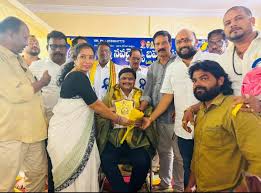
Nava Chaitanya Bahujana Sangham organisation members felicitating Markfed Director Anepu Ramakrishna Naidu in Srikakulam on Sunday. Nava Chaitanya Bahujana Sangham organisation members felicitating Markfed Director Anepu Ramakrishna Naidu in Srikakulam on Sunday. | Photo Credit: Special arrangement Andhra Pradesh Markfed Director and Turpu Kapu Samkshema Sangham’s State honorary president Anepu Ramakrishna Naidu said unity among the Backward Classes, Scheduled Castes, Scheduled Tribes and Minorities was need of the hour, asserting that these communities were not getting legitimate political opportunities as they face troubles from influential persons. The State Nava Chaitanya Bahujana Sangham invited Mr. Naidu as a chief guest to a meeting, in which the issues of Backward Classes, Scheduled Castes, Scheduled Tribes, were discussed. The Markfed Director was also felicitated at the event. He said administration had to be done in accordance to the Indian Constitution which ensured several welfare measures and opportunities for neglected sections of the society. Mr. Naidu said political power needed to be shared with BCs, SCs and STs. Courtesy : The Hindu Note: This news is originally published on https:/thehindu.com/bha and is used purely for non-profit/non-commercial purposes, especially human rights
Transgender Bill: Hashtag resistance turns humour into protest
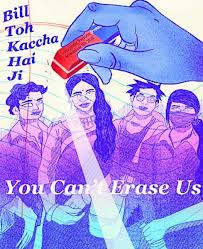
India’s trans community has used humour to critique the Transgender Persons (Protection of Rights) Amendment Bill. It has parodied famous songs and employed clever hashtags that have gained popularity on social media. The Indian Parliament succeeded in passing the Transgender Persons (Protection of Rights) Amendment Bill earlier this year, despite loud and unanimous protests from the very community that it claims to protect. This is the height of irony: a weapon masquerading as armour. India’s trans community have, however, refused to crawl back into the closet. They have been out on the streets, and in the digital public square, asserting their collective strength. Their resistance is both ferocious and tender, fuelled by joy and humour. The hashtag #BillTohKachchaHaiJi (and its differently spelt versions) which set social media on fire, is a riff on the song ‘Dil Toh Bachcha Hai Ji’ that noted lyricist and poet Gulzar wrote for Vishal Bhardwaj’s film Ishqiya (2010). Cleverly substituting ‘dil’ with ‘bill’ and ‘bachcha’ with ‘kachcha’, this hashtag calls out the half-baked quality of the legislation because it lacks inputs from the community it was meant to benefit. ‘Badtameez Bill’, the song that trans artist Anshumaan Sathe sang at the protest held at Mumbai’s Azad Maidan, is a parody of ‘Badtameez Dil’ written by Amitabh Bhattacharya for Ayan Mukerji’s film ‘Yeh Jawaani Hai Deewani’ (2013). By calling the bill ‘badtameez’, translated both as ‘ill-mannered’ and ‘uncultured’, it throws a moral challenge to a legal mandate. It questions the attempt to police gender identity and expression by demanding that trans people present themselves before a medical board and a district magistrate for certification. The hashtag and the parody draw on shared cultural knowledge to ridicule the powerful, who are far removed from the daily struggles faced by a community that lives on the margins of society. When protestors use language in such creative and subversive ways, they plug into a longer tradition of court jesters, stand-up comics, graffiti artists, and graphic novelists. The humour becomes a safe container to deliver their message effectively, and bypass political censorship. Garvit Garg and Shikha Rai from the School of Journalism and New Media Studies at the Indira Gandhi National Open University looked at 18 political parody songs to examine how they work through ‘frame-shifting’. In their study titled, ‘More than a laugh: examining the role of parody songs on Indian political discourse’, they show how these songs establish a cognitive frame through familiarity, then disrupt it by tweaking the lyrics to make listeners construct new meaning. Take the song, ‘Dil Toh Bachcha Hai Ji,’ for instance. Gulzar’s lyrics, set to music by Vishal Bhardwaj and sung by Rahat Fateh Ali Khan, are about a man whose heart remains childish and unruly even though his body has been growing older. #BillTohKachchaHaiJi, on the other hand, hints at various shades of meaning implied by the word ‘kachcha’. The legislation is raw, weak and unsustainable. It might have been received differently had it been shaped by the lived experiences of people from the trans community. ‘Badtameez Dil’, written by Amitabh Bhattacharya, is about a stubborn heart that refuses to be reined in by logic. It has been repurposed to offer legal critique. The original, set to music by Pritam, and sung by Benny Dayal, shifts from its playful register to an accusatory tone in its parody avatar. A law that does not care for What could be more strategic than using a song that is heard at weddings, on public transport, and in nightclubs? Emotional connect When protests ride on songs already buzzing inside people’s heads and dancing on their lips, they are able to strike an emotional connection that goes deeper than any press conference or white paper. This is what Garg and Rai call ‘affective leverage’: beloved melodies break through cognitive defences, so political commentary feels less like a sermon and more like an inside joke. The ones having the last laugh though are trans people themselves. They have been around forever, and will continue to exist far into the future, unlike law makers who occupy rickety seats that might seem like thrones but are actually cages that bind them with the fear of losing power. Chintan Girish Modi (The author is a journalist, educator and a literary critic. Courtesy : DH Note: This news is originally published on https:/deccanherald.com/bha and is used purely for non-profit/non-commercial purposes, especially human rights
Congress thoroughbred Hariprasad will lead party in Karnataka
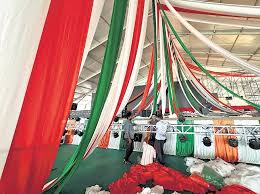
He was a Congress Working Committee permanent invitee and Haryana state in-charge before being elevated to the post. BENGALURU: The state is all set to witness 71-year-old Congress thoroughbred Bengaluru Kempaiah Hariprasad taking charge as new president of the Karnataka Pradesh Congress Committee (KPCC) at Palace Grounds on Sunday. He was a Congress Working Committee permanent invitee and Haryana state in-charge before being elevated to the post. A four-time Rajya Sabha member and two-time MLC, he is a staunch loyalist of the Nehru-Gandhi family, who has worked closely with Congress Parliamentary Party chief Sonia Gandhi. Kodandarama Nagara — close to Malleswaram, where Hariprasad was born and brought up, wore a festive look with residents, especially women, welcoming him with traditional aarti during his padayatra on Saturday. CM DK Shivakumar, who was KPCC president, will hand over the party flag officially to Hariprasad at 11 am. Hariprasad was among the five party candidates elected in the recent MLC polls, helping the party achieve the majority mark of 39 in a 75-member House. That victory has apparently energised the party’s rank and file. They will now pin their hopes on the Hariprasad-Shivakumar combination to work their magic to get the party reelected in the 2028 Assembly polls. Soon after Siddaramaiah passed the CM baton to Shivakumar, the party high command picked Hariprasad, who hails from the Ediga community, in a backward classes outreach. The Sunday rally, where Siddaramaiah too will be felicitated, will be attended by over one lakh people, said former Bengaluru Rural MP DK Suresh, Shivakumar’s younger brother. AICC president Mallikarjun Kharge, AICC General Secretary (Organisation) KC Venugopal and state in-charge Randeep Singh Surjewala are expected to attend. KPCC working president and Rajya Sabha member GC Chandrashekhar requested party workers not to hold up traffic in view of the NEET retest. Around 350 dignitaries will be on the main stage, while 200 others on the other one. Party workers will be ferried in 1,200 buses. Resolution to make Rahul PM The congregation will pass a resolution to make leader of opposition in the Lok Sabha Rahul Gandhi the prime minister in 2029 and also to bring the party to power in the state in 2028. “This is not just a power transfer programme. It is a party organisation ceremony, a ceremony for the future. This will be a platform to take a big decision. The next two years are election years,” said GC Chandrashekar. Devaraj B Hirehalli Courtesy : TNIE Note: This news is originally published on https:/thenewindianexpress.com/bha and is used purely for non-profit/non-commercial purposes, especially human rights