
How Karnataka can set a model for rest of India by protecting transgender rights

Karnataka has not enacted any state-specific rules under the 2019 Act. The 2026 amendment, however, gives the DKS government the perfect opportunity to do so. The Transgender Persons (Protection of Rights) Act, 2026, notified in March, marked a significant regression from the rights framework built through the Transgender Persons (Protection of Rights) Act, 2019, and affirmed by the Supreme Court in NALSA v Union of India. It narrowed the definition of ‘transgender person’ to four socio-cultural groups, intersexed persons, and persons ‘compelled’ to present as transgender. It omits the right to self-perceived gender identity, and makes a medical recommendation mandatory for transgender identity cards. Finally, it inserts a new set of criminal offences based on harmful stereotypes about the transgender community by criminalising causing hurt by mutilation, emasculation, castration, amputation, or any surgical, chemical, or hormonal procedure with the intent to compel such person to ‘present a transgender identity’. Against the backdrop, what can the Karnataka state government do? The 2019 Act empowers state governments to make rules to operationalise the Act. Such rules must remain within the bounds of the parent Act. However, they do carry wide latitude to prescribe procedures, fill any silences, and protect rights on the ground. Currently, Karnataka has not enacted any state-specific rules under the 2019 Act. The 2026 amendment gives the Karnataka government the perfect opportunity to do so. First, the 2026 amendment restricts the definition of the term ‘transgender’ to four socio-cultural groups: hijras, jogta, aravanis and kinners. While jogta is a socio-cultural group in Northern Karnataka, it does not represent all transgender groups in the state. Further, these four terms do not have fixed or stable meanings. As the 2019 Act is a welfare law, it must be interpreted broadly, and, thus, it can be argued that the definition seeks to capture transgender groups by their indigenous names. Consequently, the Karnataka government can, through a government order, clarify which socio-cultural groups prevalent in the state fall within the scope of the definition. For this, it must consult diverse transgender groups. Further, it can also issue a Karnataka State Transgender Card, a la Tamil Nadu, and link all welfare benefits to it. Second, the 2026 amendment makes it mandatory for the district magistrate to account for the recommendations of a medical authority before issuing a certificate of identity to a transgender person. The Karnataka government cannot override this, but it can limit the role of the medical authority by mandating that the authority will not carry out a physical examination. Instead, self-declaration, and a Third, while the 2026 amendment omits the right to self-perceived gender identity, it is still a fundamental right. Karnataka must continue to recognise and uphold it. Fourth, unlike the 2019 Act, medical institutions where transgender persons undergo gender affirming procedures are now mandated to share such information with the district magistrate. This raises concerns about privacy, since personal data is being shared without the person’s consent. Karnataka must put in place rules for the manner in which this data will be processed, aligned with the Supreme Court’s judgment, which recognised the fundamental right to privacy. Only data which is necessary for verification of an applicant’s identity and change of gender marker must be processed, and such data must be stored in a secure manner. The data must be stored in a secure manner. The data must be shared only with authorities who play a role in issuing the identity card. Finally, the issuing authority must destroy the data once its purpose has been served. Fifth, the 2026 amendment has a chilling effect on the provision of legitimate gender affirming healthcare, as healthcare professionals fear prosecution. This, despite the refusal and discontinuation of healthcare to transgender persons, constitutes discrimination. The Karnataka government must issue a clarification that the provision of legitimate gender-affirming is not an offence and must be continued. Finally, the newly-inserted offences enable natal families to file criminal complaints against those extending support to transgender persons, claiming they are carrying out conversions. Karnataka must issue guidelines to the police to ensure that they carry out a preliminary inquiry when such a complaint is filed. If such an inquiry reveals that the individual is an adult and has voluntarily sought assistance or gender affirming care, such a statement must be recorded, no FIR must be registered, and the matter must be closed. Namrata Mukherjee Palomi Chaturvedi Disclaimer: The views expressed above are the author’s own. They do not necessarily reflect the views of DH. Namrata Mukherjee is Specialist, Governance & Rights, Vidhi, and Palomi Chaturvedi is Research Fellow, Vidhi Centre for Legal Policy Courtesy : DH Note: This news is originally published on https:/deccanherald.com/bha and is used purely for non-profit/non-commercial purposes, especially human rights
Andhra Pradesh: Suspended Inspector, embroiled in murder case, now faces charges of abetting Dalit youth’s suicide; YSRCP demands CBI investigation

Chief Inspector Nagaraju, embroiled in a custodial death case, is now accused of abetting Dalit youth Kranti Kumar’s suicide; YSRCP demands CBI investigation in the matter. The troubles of suspended Circle Inspector Nagaraju, embroiled in the alleged custodial murder of Gade Sai Krishna in Andhra Pradesh, have worsened. He now faces serious charges of abetting the suicide of a Dalit man. Following this new development, the YSR Congress Party (YSRCP) has strongly demanded a Central Bureau of Investigation (CBI) investigation into the entire matter. A video of Perugogu Kranti Kumar, a resident of Vijayawada, recently went viral on social media. In the video, he accuses Circle Inspector Nagaraju of harassment and threatens to take his own life. On Saturday, June 20th, two days after the video surfaced, YSRCP leaders met with the deceased’s family and demanded a CBI investigation into his death. Kranti Kumar was the son of Perugogu Venkateswara Rao, president of the Andhra Madiga Reservation Porata Samithi (MRPS). On May 21st, 42-year-old Kranti had recorded a video expressing his intention to commit suicide. He clearly stated that he could no longer tolerate the alleged harassment by Circle Inspector Nagaraju of the Krishna Lanka police station. This harrowing video began spreading rapidly on June 18th, after Inspector Nagaraju was suspended in connection with the disappearance of another man named Gade Sai Krishna. In the viral video, Kranti Kumar can be clearly seen consuming purple-colored grains (poison). Just before consuming the poison, Kranti says in the video that CI Nagaraju is solely responsible for his death. He emotionally stated that his only fault was being born into the Madiga community. Kranthi alleged that he has been targeted and severely beaten for the past three months, and that he no longer wants to live. Another murder and missing person case has been filed against suspended CI Nagaraju based on a complaint by Gade Sai Krishna’s mother, Gade Vijaya Lakshmi. Sai Krishna had been missing for over a month before the complaint was filed. Police now suspect he has been murdered. The case has been registered under sections 127(4) and 127(6) (wrongful confinement), 103(1) (murder), and 238 (destruction of evidence) of the Indian Penal Code (IPC). Vijaya Lakshmi has made serious allegations that her son was tortured and beaten to death in police custody. She has demanded that the state government conduct a judicial inquiry into the entire incident and take strict action against all those responsible. On June 17, Andhra Pradesh Chief Minister N. Chandrababu Naidu took a strong stance, citing the seriousness of the matter. He ordered a high-level investigation by a senior Indian Police Service (IPS) officer. Following this order, Circle Inspector Nagaraju was suspended with immediate effect. Rajan Chaudhary Courtesy: Hindi News
Dalit woman’s house bulldozed: Administration accused of taking action without notice, woman demands investigation
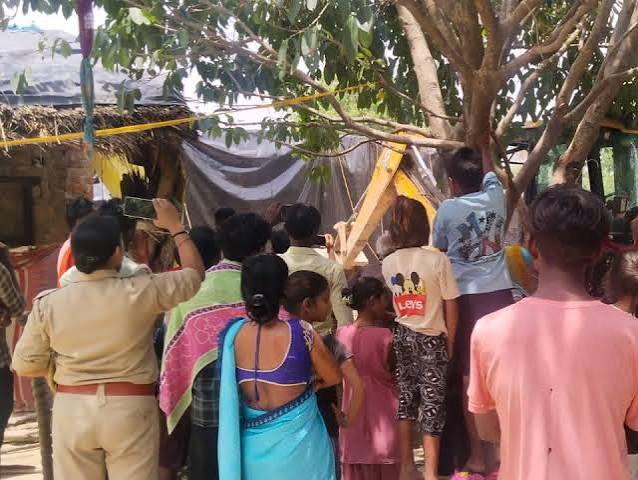
Mala Devi, a Dalit woman in Chhidi village of Prayagraj’s Bara tehsil area, has leveled serious allegations against the tehsil administration. She alleges that the administration bulldozed her house without notice. Mala Devi, calling this action illegal and unconstitutional, has demanded an impartial investigation and action against the culprits. According to Mala Devi, her family had been living in a makeshift house built on Arazi number 1014 for generations. This land is registered as barren land. She claims that her family had been living in this house for years. The woman alleges that after a complaint from the village head, the tehsil administration arrived at the scene with police force, bulldozers, and some local residents. Her house was subsequently demolished. Mala Devi stated that the administration did not provide her with any prior notice nor did they provide her with an opportunity to present her side of the story. They allege that their house was demolished without following any legal procedures, leaving their entire family homeless. Mala Devi filed her complaint at the Sampoorna Samadhan Diwas held on June 20th, pleading for justice. She says no effective action was taken on this complaint, and a bulldozer was used to demolish her house shortly thereafter. The victim and her family have demanded an impartial investigation of the entire matter from the district administration and the government. They have also stated that if rules were violated in the action, legal action should be taken against the responsible officials and those involved. The family has also demanded adequate compensation and rehabilitation. At present, the administrative authorities have not officially released their statement on this matter. Only after receiving their response will it become clear under what circumstances this action was taken. Shivam Verma | Bara Courtesy: Hindi News
Dalit farmer denied land despite measurement: Opponent builds wall at disputed site, seeks DM’s help

A Dalit farmer in Mainpuri has appealed to the District Magistrate for justice over the lack of demarcation and permanent fencing of his land. The farmer alleges that due to the negligence of the Revenue Department and the dominance of the opponent, a permanent fencing has not been completed on his land despite the measurement. The opponent has also illegally constructed a wall on the disputed land, deepening the dispute over ownership. This case is from village Adupur in the Mainpuri tehsil area. Village resident Ganesh, son of Lalaram, stated in his complaint letter to the District Magistrate that he had applied to the Sub-District Magistrate, Mainpuri, for demarcation of his land on September 30, 2025. According to the complaint, the revenue team arrived at the site and measured the land and also erected a temporary fencing. Ganesh says that the measurement was correct and he hopes that a permanent fencing will be completed soon. Ganesh alleges that on May 18, 2026, when revenue officials arrived at the site to construct a permanent boundary wall, they colluded with the opponent, Jaiveer Singh. According to the farmer, the revenue officials left the process incomplete and returned without properly measuring the land. Ganesh also alleged that the officials threatened him and threatened him with threats from the opposing party if he exerted more pressure. Ganesha then filed a second complaint with the Sub-Divisional Magistrate. Based on the complaint, the Sub-Divisional Magistrate, along with a revenue team, arrived at the site under the Mission Samadhan Yojana and inspected the land. Ganesh alleges that it became clear on the spot that the opponent, Jaiveer Singh, had illegally erected a wall on the disputed site. However, the process of removing the wall and constructing a permanent boundary wall has not yet been completed. Abhishek Jain | Mainpuri Courtesy: Hindi News
Bulandshahr: Dalit Youth Allegedly Beaten, Caste Slurs Used in Balrampur Village
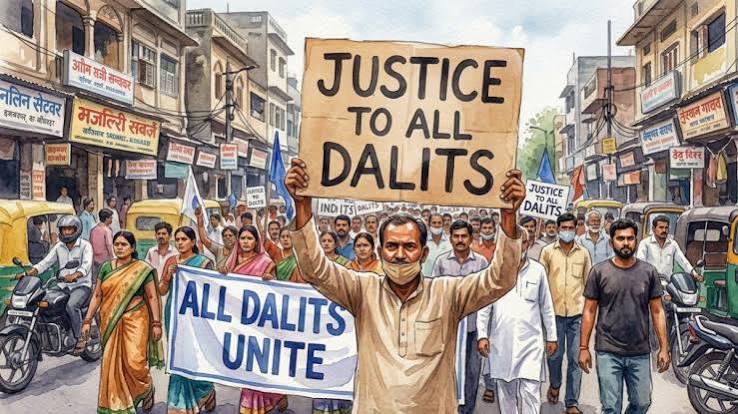
A case of alleged assault on Dalit youths has been reported from Balrampur village under Narasena police station in Bulandshahr district of Uttar Pradesh. The victims have accused several villagers of attacking them, using caste-based slurs, and issuing death threats. According to a written complaint submitted to the police, the victims have demanded strict action against the accused. Victims Name Four Accused in Complaint In their police complaint, Ankita Kumar (son of Dharmveer), Dharmendra (son of the late Sukhdev Singh), and Bobby Kumar (son of Vijendra Singh) alleged that they were attacked by Shivam (son of Kiranpal Singh), Shailesh, Mainpal, and others from the same village. The complainants said the accused assaulted them with sticks and sharp weapons, including a spade (phawda), causing serious fear and injuries. Caste Slurs and Death Threat Alleged The victims further alleged that when they tried to resist the attack, the accused abused them, used caste-based derogatory language, and threatened to kill them. They also claimed that the accused are “dominant and influential” in the village, which has created an atmosphere of fear among their families after the incident. Police Begin Investigation Following the incident, the victims approached Narasena police station and submitted a written complaint naming the accused. They have demanded that an FIR be registered and strict legal action be taken. Station House Officer Ram Kishore Gautam confirmed receipt of the complaint and said the matter is under investigation. “The complaint has been received and the case is being examined. Further legal action will be taken based on the findings of the investigation,” the SHO said. Courtesy : TOP Note: This news is originally published on https:/theobserverpost.com/bha and is used purely for non-profit/non-commercial purposes, especially human rights
Dalit woman’s land illegally occupied, construction demolished: Casteist slurs and death threats for protesting in Shahabad
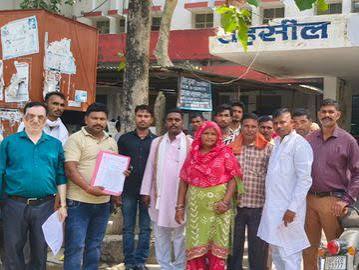
A Dalit woman in Shahpur Dev village, Shahabad tehsil of Rampur, has alleged illegal occupation and demolition of a construction on her purchased land. The woman says that some villagers occupied her land and, when she protested, used casteist slurs and threatened to kill her. The victim has filed a complaint with the authorities and demanded strict action against the accused. Demand for action against the accused Complainant Kranti, a resident of Shahpur Dev, stated that she purchased 0.0162 hectares of land in plot number 408 from Sonia of the village on May 11, 2026. After the sale deed, the seller handed over possession of the land to her. Kranti constructed the foundation and boundary wall on her purchased land. After this, she went to Chandigarh (Punjab) to work as a laborer. Some time later, she received information that some villagers had broken the foundation and boundary of her land and taken possession of it. The accused behaved rudely When Kranti returned home and questioned these people, they claimed the land as theirs and admitted to the occupation. It is alleged that when she protested, the accused behaved rudely with her, used casteist slurs, and threatened to kill her. Family terrified after the incident The victim stated that her family has been terrified since this incident. They have demanded the administration free the land from illegal occupation and take strict legal action against the accused. In this regard, Sub-District Magistrate Ashutosh Kumar stated that upon receiving the complaint, the matter will be investigated and necessary action will be taken. Vishal Kumar Joshi | Shahbad, Rampur Courtesy: Hindi News
Outfit seeks arrest of prime accused in dalit murder case

Madurai: The Dalit Unity Federation staged a picketing at the Madurai district collectorate on Monday, demanding the immediate arrest of the prime accused in the murder of a 34-year-old dalit man from Avaniyapuram. The federation members submitted a petition to Madurai collector Nishant Krishna, seeking the arrest of one of the main accused in the case. Balaji was hacked to death on Friday following a dispute that reportedly broke out during a temple festival held earlier last week at Avaniyapuram near Madurai. Police said the incident was linked to a quarrel during the Veerakaliyamman Temple festival on June 12, when Sanjay Ramasamy allegedly misbehaved with girls. When Balaji questioned him, an argument broke out, leading to hostility between the two groups. On Friday around 2.30pm, Sanjay, along with five others, allegedly chased and attacked Balaji and his friend Raja Hussain with swords. While Raja Hussain escaped with minor injuries, Balaji suffered multiple head injuries and died on the spot. Raja Hussain is undergoing treatment at Government Rajaji Hospital. Earlier on Saturday, Balaji’s family staged a sit-in protest at the collectorate, demanding the arrest of the accused. The protest was withdrawn after police assured them of action. Courtesy : TOI Note: This news is originally published on https:/timesofindia.com/bha and is used purely for non-profit/non-commercial purposes, especially human rights
Kerala HC dismisses PIL against free KSRTC bus travel for women, transgender persons

The Kerala High Court on Monday dismissed a Public Interest Litigation (PIL) challenging the state government’s newly-launched “Priyadarshini Scheme, which provides free travel to all women and transgender persons in ordinary KSRTC buses. A Division Bench comprising Chief Justice Soumen Sen and Justice Syam Kumar VM dismissed the PIL petition that sought to quash the Government Order (GO) which introduced the scheme. “There is nothing before us that Exhibit P1 G.O is contrary to the statutory norms or is perverse or illegal. Hence the litigation fails and it is dismissed,” the Court pronounced. The court rejected the argument that a few affluent beneficiaries could invalidate a welfare scheme targeted at broader socio-economic empowerment. The PIL petitioner, Muhammed Firdouz, challenged the scheme on the ground that it was arbitrary, discriminatory, and violative of Articles 14 and 15 of the Constitution of India. He claimed that there was no income criterion, residential qualification, or specifically identified disadvantage that was sought to be remedied by the scheme which would cost the public exchequer approximately Rs.2 crores per day or around Rs.800 crore per annum. “The Impugned GO itself acknowledges the financial impact by creating a ‘dedicated cash-transfer mechanism’ and directing the KSRTC CMD to develop non-fare revenue sources, which is an admission that the scheme imposes a significant, ongoing burden on a public institution already receiving Rs. 1,500 Crore per year in State support, now burdened with an additional Rs. 800 Crore without any demonstrated operational, social, or constitutional necessity,” the petition stated. The state government submitted that similar travel schemes are available in different parts of the country and contended that gender-based affirmative action has been affirmed by the Supreme Court. Courtesy : The Statesman Note: This news is originally published on https:/thestatesman.com/bha and is used purely for non-profit/non-commercial purposes, especially human rights
AIMPLB to launch nationwide movement against social, political marginalisation of Muslims
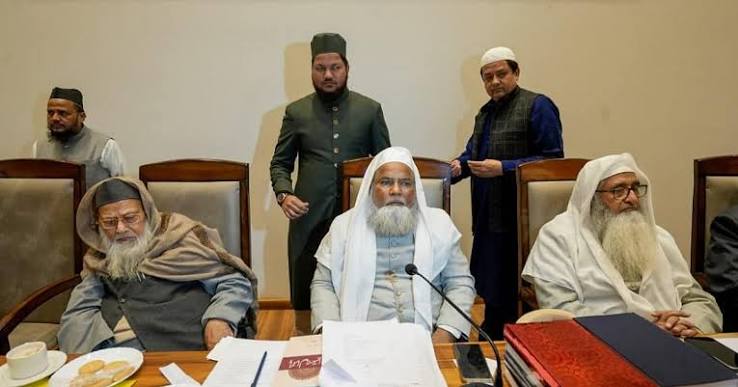
The Executive Committee expressed grave concern over the “rapidly deteriorating situation in BJP-administered states, the country and the Muslim community.” The All India Muslim Personal Law Board on Monday said it would soon come out with a comprehensive document on the “deteriorating condition” of Muslims in the country and launch a nationwide movement against the social and political marginalisation of the community. The Board made the announcement a day after a meeting of its executive committee. Briefing reporters on the decisions and deliberations at the meeting, AIMPLB spokesperson SQR Ilyas said the Board reviewed in detail the current situation facing the country and the Muslim community, and took a number of important decisions. “These decisions relate in particular to the growing incidents of mob violence or lynching against Muslims in BJP-ruled states; demolition drives targeting Muslim homes and localities, against mosques and madrasas; bulldozer terrorism; attempts to make Vande Mataram compulsory in government functions and schools; implementation of uniform government-aided madrasas; developments concerning the Madhya Pradesh High Court Civil Code in various states; and the recent judgment regarding the Kamal Maula Mosque,” he said. The Executive Committee expressed grave concern over the “rapidly deteriorating situation in BJP-administered states, the country and the Muslim community”, he said. The committee stated that Muslims’ lives, property, honour and dignity, mosques, madrasas, graveyards, personal law, fundamental rights, and even their faith and beliefs are under continuous attack. “We are unhappy with all parties, including the Congress. None of them raises issues of Muslims strongly,” Ilyas said, when asked about Rahul Gandhi’s reported remarks that if the issue pertains to Muslims, the community be specifically mentioned and not a generalised reference to minorities be made. The Executive Committee decided that a comprehensive document would be prepared and published on the “deteriorating condition of the Muslim community, communal tensions and violations of fundamental rights, so as to awaken the conscience of the people,” he said. “With regard to the Kamal Maula Mosque case, the Executive Committee expressed deep concern over the Madhya Pradesh High Court’s judgment, stating that there were historical evidence, revenue records, and colonial-era official documents. The judgment is contrary to centuries-old Muslim tradition of worship at the site. Furthermore, it is also inconsistent with the spirit of the Places of Worship Act, 1991,” Ilyas said. The Executive Committee welcomed the Kamal Maula Mosque Committee’s challenge of the judgment in the Supreme Court, and resolved that the AIMPLB would extend every possible assistance to the Mosque Committee in their legal struggle, he said. The Executive Committee declared that attempts to make Vande Mataram compulsory are contrary to Article 25 of the Constitution of India, Ilyas said. The Board welcomed the Calcutta High Court’s interim order staying the government directive requiring the singing of Vande Mataram in madrasas, he said. The Executive Committee also expressed serious concern over the ongoing legislative efforts in BJP-ruled states in the name of the Uniform Civil Code (UCC), Ilyas said. The meeting noted that after Uttarakhand and Gujarat, preparations are now underway to implement the UCC in Assam, Madhya Pradesh and Maharashtra as well. The Board clarified that the Uniform Civil Code is not a mandatory constitutional command that courts are bound to enforce; rather, it is a non-binding guiding principle included among the Directive Principles of State Policy. The Executive Committee further resolved that, against the social and political marginalisation of Muslims, violation of constitutional norms, the promotion of hatred and hostility, the damage to communal harmony, attacks on life, property, honour and dignity of Muslims and the demolition of mosques and madrasas, the Board will launch a nationwide movement in partnership with justice-loving, democracy-loving, and peace-loving sections of society, Ilyas said. For this purpose, an Action Committee is being constituted, he said, adding that the movement may begin by July end. The Executive Committee meeting on Sunday was presided over by AIMPLB president Maulana Khalid Saifullah Rahmani, and the proceedings were conducted by general secretary Maulana Fazlur Rahim Muiaddidi. Executive Committee members from across the country attended the meeting. Courtesy : TNIE Note: This news is originally published on https:/thenewindianexpress.com/bha and is used purely for non-profit/non-commercial purposes, especially human rights
Jairam Ramesh seeks Centre’s clarity on private control, funding of Great Nicobar port
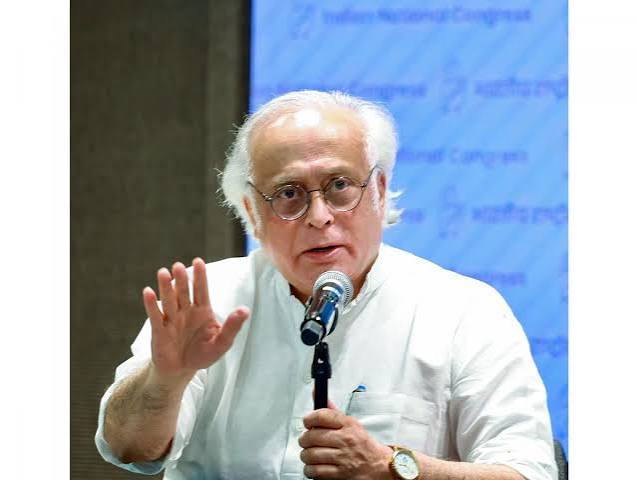
Congress leader questions ownership pattern, VGF support and risks flagged by PPPAC for the Galathea Bay transhipment project. Congress leader Jairam Ramesh has sought clarifications from Union Ports, Shipping and Waterways Minister Sarbananda Sonowal over the proposed International Container Transhipment Port (ICTP) at Galathea Bay in Great Nicobar Island, raising questions over private participation, funding and environmental concerns. In a letter to Sonowal, Ramesh asked the ministry to share the timeline for inviting private participation for the project and the process for selecting the private co-owner and operator of the proposed port. He also sought clarity on the ownership structure of the project’s special purpose vehicle (SPV), pointing out that recommendations of the Public Private Partnership Appraisal Committee (PPPAC) specify that a minimum of 55 per cent shareholding should be held by an Indian-owned and controlled entity. “I seek clarity on three specific points. Since the minimum private shareholding is to be 55%, does it mean that 100% private shareholding will be allowed, or is there a minimum shareholding by public entities as well?” Ramesh said in his letter. The Congress leader also questioned whether private ownership of ports would be diversified or whether a situation similar to the airport sector would be allowed. “Is private ownership of ports to be diversified, or will the airports-like situation be permitted, where only one private company has acquired the six airports sold off so far,” he asked. Ramesh further sought details on funding after the PPPAC rejected the ministry’s request for a Viability Gap Funding (VGF) grant. “Since the PPPAC has turned down the Ministry’s request for a Viability Gap Funding (VGF) grant, will the Ministry provide VGF/capital grant support from its own allocated budget?” he asked. The letter comes amid Ramesh’s repeated objections to the Great Nicobar Island (GNI) project, which includes the transhipment port, a civilian-cum-naval airport, a township and a power plant. Calling himself among those concerned about the project’s ecological impact, Ramesh said the government was pushing ahead with the port despite acknowledging major risks. “You are aware that the PPPAC of the Ministry of Finance had met on March 17, 2026 and March 19, 2026 to consider the proposal of the Ministry of Ports, Shipping and Waterways for the development of an international container transshipment port at Galathea Bay, Great Nicobar Island,” Ramesh said. He cited the PPPAC’s record of discussions issued on April 2, which identified two major risks associated with the project — developing a large-scale greenfield port and attracting transhipment traffic away from established ports. “I take it that these competing well-established ports are Colombo, Singapore and Port Klang — It is extraordinary that even while recognizing these huge risks — quite apart from the certainty of ecological devastation that will be caused by its construction — the transshipment port is being pushed through,” Ramesh said. Ramesh has previously written to Environment Minister Bhupender Yadav, Tribal Affairs Minister Jual Oram and Defence Minister Rajnath Singh, raising concerns over environmental clearances, tribal rights and defence-related aspects of the project. On Friday, he wrote to Yadav alleging that environmental impact assessments for different components of the project were “demonstrably inadequate” and questioned the transparency of the approval process. The Congress has repeatedly criticised the project, claiming the Galathea Bay port would cause large-scale ecological damage, including destruction of coral colonies. Ramesh has also raised concerns over the impact on tribal rights and has urged the government to ensure implementation of the Forest Rights Act, 2006. Congress leader Rahul Gandhi has also attacked the project, alleging that the government’s stated reasons of defence and port development were not the real motivation behind it. Gandhi had earlier claimed the project was aimed at benefiting a private businessman by enabling the development of hotels and casinos on ecologically sensitive land. He also released a video after his visit to the Andaman and Nicobar Islands and urged people to oppose the project through a public campaign. Courtesy : TNIE Note: This news is originally published on https:/thenewindianexpress.com/bha and is used purely for non-profit/non-commercial purposes, especially human rights