
Dalit cop found hanging at police station in UP’s Bahraich; no reason ascertained yet
Bahraich (UP), A 28-year-old Dalit constable was found hanging in the staff room of the Huzurpur Police Station on Monday evening, police said. Circle Officer (Kaiserganj) DK Srivastava identified the deceased as Jyoti Paswan, who was posted at the station. Srivastava said that the deceased was originally a resident of Maharajganj district, though her family had recently shifted to Kanpur. Her family had left Kanpur for Bahraich. According to the police, no suicide note was recovered from the scene. “The matter is being investigated thoroughly and seriously. The body has been sent for a post-mortem examination. Further action will be taken based on the information obtained from the investigation and the post-mortem report,” he said. PTI COR NAV VN VN This report is auto-generated from PTI news service. ThePrint holds no responsibility for its content. Courtesy : The Print Note: This news is originally published on https:/theprint.com/bha and is used purely for non-profit/non-commercial purposes, especially human rights
KTR accuses Telangana Congress govt of seizing assigned Dalit and tribal lands
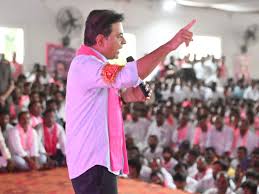
Bharat Rashtra Samithi (BRS) working president KT Rama Rao (KTR) has accused the Congress-led Telangana government of seizing lands assigned to Dalits, tribal communities, and poor people, despite earlier promises to issue ownership titles (pattas). Speaking at a BRS Constituency general body meeting in Parigi on Friday, KTR alleged that the government, in the name of developing industrial parks, is unlawfully acquiring lands, including in Parigi under the leadership of the local Congress MLA. He recalled warning two years ago that the Congress should not be trusted, stating his belief that trusting it would lead to Telangana being deceived. During elections, Congress leader Revanth Reddy made numerous promises including Rythu Bandhu assistance, pensions, crop bonuses, and financial support for tenant farmers and agricultural labourers, KTR said. He stated that none of these promises have been fulfilled, and accused Congress of deceiving all sections of society with what he described as “420 promises” made through various declarations, including commitments under SC and ST declarations. KTR also highlighted alleged atrocities related to the proposed project in Lagacherla, accusing Revanth Reddy of filing police cases, assaulting, harassing, and jailing tribal youth because they refused to surrender their lands. He further claimed that one individual suffering a heart attack was denied proper medical care and was instead taken in handcuffs. Asserting that the BRS will not accept forcible acquisition of assigned lands from poor people in Parigi, KTR said the party stands firmly with those affected. He urged the government to grant legal ownership first, provide fair compensation, and acquire land only with farmers’ consent. The BRS party intends to support affected individuals against what it describes as illegal land acquisitions by Revanth Reddy and the local MLA, and is prepared to pursue legal action if necessary. KTR criticised the lift irrigation project introduced by Revanth Reddy worth Rs 4,400 crore, claiming it was designed to generate commissions and mislead the public, as opposed to former Chief Minister K Chandrashekar Rao’s (KCR) plan to bring water to Parigi through a gravity-based irrigation system. On women’s welfare, KTR said that Revanth Reddy promised to make one crore women millionaires and claimed that had the promised Rs 2,500 per month been given, women would have become financially stronger. He challenged Revanth Reddy to deposit Rs 1.5 lakh into every eligible woman’s bank account, vowing to permanently retire from politics if this was done, and urged him to accept the challenge if he had the courage. Politics KTR called on party workers to unite with the goal of replacing the Congress government and restoring KCR to power, emphasising this as necessary to return Telangana to a path of development. He stated that under the previous BRS government, drinking water was provided to every village, tribal hamlet, and household in Parigi. He also referred to past atrocities committed against women and tribal communities, particularly in Lagacherla within Revanth Reddy’s constituency, saying: “Being deceived once is the fault of the person who deceives, but being deceived repeatedly by Congress should not happen. People must unite and fight together.” KTR explained the party’s SIR initiative and membership registration campaign to party cadres. He warned that if false cases were filed against BRS workers or if they faced harassment, responsible police officers would be held accountable. He added that legal action would be pursued against officials who misuse their authority even after retirement. He assured party workers that he would take personal responsibility for protecting their future and ensuring they receive respect and positions within the party. Courtesy : The News Mill Note: This news is originally published on https:/thenewsmill.com/bha and is used purely for non-profit/non-commercial purposes, especially human rights
‘Rape’ of Dalit woman: Kerala HC denies bail to Palakkad councillor
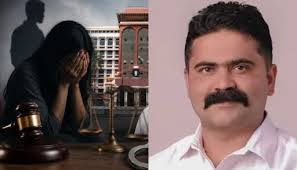
The Congress councillor was expelled from Palakkad District Congress Committee after the political controversies over the allegations against him The High Court had earlier denied an anticipatory bail plea, which had claimed that the allegations lacked merit and that there were errors in the investigation. The High Court had earlier denied an anticipatory bail plea, which had claimed that the allegations lacked merit and that there were errors in the investigation. | Photo Credit: RK Nithin The Kerala High Court on Monday (June 29, 2026) dismissed the bail plea of Prasobh Valsan, a councillor of Palakkad Corporation, in the alleged rape of a Dalit woman. The High Court had earlier denied an anticipatory bail plea, which had claimed that the allegations lacked merit and that there were errors in the investigation. However, the court had noted that the prosecution had made out a prima facie case for his arrest and denied the plea. Following this, Mr. Valsan had surrendered to the police at the Palakkad Town Station. Congress expels Palakkad councillor over sexual assault complaint Mr. Valsan was expelled from the Palakkad District Congress Committee after the political controversies over the allegations against him. The Dalit woman had alleged that Mr. Valsan had entered her house under the pretext of offering her a job and then raped her. The Hindu Bureau Courtesy : The Hindu Note: This news is originally published on https:/thehindu.com/bha and is used purely for non-profit/non-commercial purposes, especially human rights
Owaisi’s show of strength in Bijnor, attempts to balance the Muslim-Dalit equation; will SP’s tension increase?
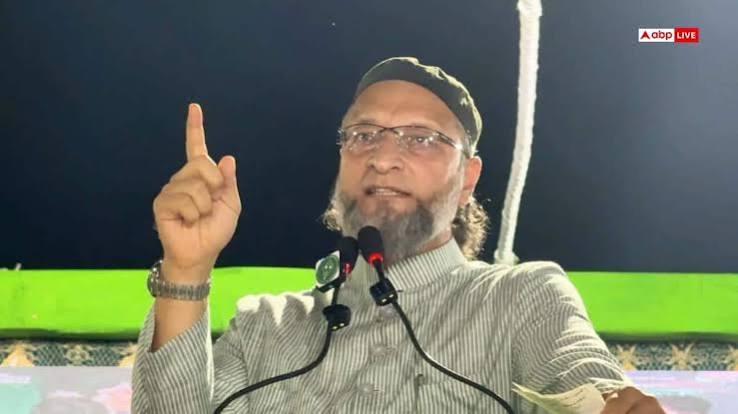
UP Politics: All India Majlis-e-Ittehadul Muslimeen (AIMIM) chief Asaduddin Owaisi will address a public meeting today in Najibabad, Bijnor, as part of the “Paigam-e-Ittehad” program. All India Majlis-e-Ittehadul Muslimeen (AIMIM) chief Asaduddin Owaisi, who is seeking political ground in Uttar Pradesh, will address a public meeting today in Najibabad, Bijnor, as part of the “Paigam-e-Ittehad” program. He will not only seek to establish his own political standing in Muslim-majority constituencies in western Uttar Pradesh, but his political activism has also raised concerns for the opposition Samajwadi Party (SP). Regarding the program, party spokesperson Shadab Chauhan stated that the current government and the main opposition party have perpetrated atrocities and discrimination against Muslims, victims, and marginalized groups. Together, they have made them political pariahs. Asaduddin Owaisi will hold a public meeting on these issues, along with other issues, primarily the problems of sugarcane farmers in this belt. Furthermore, Shadab Chauhan stated that Asaduddin Owaisi has appealed to all parties to unite to defeat the Bharatiya Janata Party and is ready to join forces with them. Why did he choose the Najibabad seat? The Najibabad seat in Bijnor district is a Muslim-majority constituency, and the Dalit-Muslim equation here could be the key to anyone’s victory. Consequently, Asaduddin Owaisi chose this location for his public meeting. Furthermore, the plight of farmers and laborers here is also concerning, and he appears to be trying to capitalize on this. Haji Tasleem is a Samajwadi Party MLA from the Najibabad seat, so Asaduddin Owaisi’s presence is a source of tension for the Samajwadi Party. To ensure this public meeting was a success, party workers have been conducting a public relations campaign for the past several days. Asaduddin Owaisi is active in Uttar Pradesh Party mobilization for the UP assembly elections has intensified. Asaduddin Owaisi previously attended a program in Bahraich. Although he did not achieve much success in previous assembly elections, the surprising performance of Owaisi’s party in the recent Bihar assembly elections has raised eyebrows among opposition parties. Written By: ABP UP Desk Courtesy : Hindi News
Fact check: The truth behind the viral Clavicular kissing trans woman clip

A viral clip of Kick streamer Clavicular has been spreading on social media with claims that he kissed a trans woman right after asking if she was transgender. Many people believed the caption without watching the full video. However, a closer look at the footage tells a different story. The video shows two separate moments involving two different women. Clavicular has also reacted to the viral clip, saying people were using misleading edits to make money from the situation. Viral clip of Clavicular kissing a trans woman leaves out an important detail The claim started after a short video was shared with a caption saying Clavicular asked a woman if she was trans and then kissed her moments later. The post quickly spread across social media, and many users accepted the story as true. But when the full 46-second clip is watched carefully, the events do not happen the way the caption describes. At one point, Clavicular asks one woman if she is transgender. Later in the video, he is seen kissing another woman. These are two different people shown in two different moments. The viral caption combines both scenes into one story, making it appear as if they happened with the same woman. The video itself does not support that claim. As a result, the widely shared statement that Clavicular kissed the same woman he had just asked about being trans is not backed by the footage that is available. Clavicular responds after the misleading clip goes viral After the clip gained attention online, Clavicular responded on X. He wrote, “Clippers betraying me with bait for money. Brutal backstab JFL.” His post suggests that he believes content creators or clip channels edited or presented the video in a misleading way to gain more views and engagement. However, he did not directly explain the interactions shown in the video. The clip has continued to spark discussion because Clavicular is known for making bold content that often goes viral. Because of his online reputation, many viewers believed the caption without checking the full video first. Based on the footage that has been shared, the facts are simple. Clavicular does ask one woman if she is trans. He also kisses a woman later in the clip. But the available video does not show that both moments involve the same person. This explains why the viral claim is misleading. This post links two events that occur separately into one incident. Without further information being provided, all one can glean from this video is that the kissing scene and the question are not from the same time and involve different women. Courtesy : TOI Note: This news is originally published on https:/timesofindia.com/bha and is used purely for non-profit/non-commercial purposes, especially human rights
Transgender Rights Act 2026: ESG Risks and Corporate Compliance Challenges

India’s Transgender Persons (Protection of Rights) Amendment Act, 2026, has introduced new regulatory oversight for gender recognition. This shift may impact corporate Diversity, Equity, and Inclusion (DEI) policies, potentially affecting ESG ratings for Indian companies that rely on international capital and global talent standards. What Happened The government has enacted the Transgender Persons (Protection of Rights) Amendment Act, 2026. This legislation introduces stricter bureaucratic oversight regarding gender recognition, moving away from the previous self-identification framework. For investors and corporate India, this represents a notable shift in the legal landscape regarding social inclusivity and workplace rights. While this is primarily a policy matter, the financial implications are significant, particularly for publicly listed companies that have integrated Diversity, Equity, and Inclusion (DEI) initiatives into their operational and ESG (Environmental, Social, and Governance) frameworks. The ESG And Capital Flow Angle Global institutional investors—including Foreign Portfolio Investors (FPIs)—increasingly use ESG metrics to screen their investments. The ‘Social’ component of these scores often evaluates a company’s commitment to inclusive workplace practices, human rights, and non-discriminatory policies. When national legislation creates a mismatch with established global DEI standards, it can create friction for multinational corporations and large Indian exporters who adhere to global reporting standards. Investors often monitor these shifts to assess whether they might lead to downgrades in ESG risk ratings or impact a company’s reputation among international clients and stakeholders who demand strict adherence to inclusive policies. Corporate India’s Compliance Dilemma Many large-cap Indian firms, particularly in the IT, banking, and professional services sectors, have codified DEI policies that support self-identification and inclusive benefits. The 2026 Amendment Act creates a new regulatory layer that may conflict with these internal corporate policies. For companies, this creates a compliance risk. Management teams may now face the challenge of reconciling internal DEI mandates with new legal requirements. Investors will likely look for updates on how firms plan to navigate this regulatory change without compromising the inclusive culture that has become central to attracting and retaining high-value global talent. Talent Risk and Operational Continuity In a competitive hiring environment, talent retention is a critical driver of operational performance. Companies that have built strong brands around being an ’employer of choice’ often leverage their inclusive work environments to attract top-tier professionals. If the new legal framework forces companies to pivot away from established diversity practices, there is a risk of talent attrition or a potential decline in the company’s employer value proposition (EVP). Human capital efficiency is a primary driver of financial performance for many service-oriented businesses; thus, any disruption to workplace policies that directly affects employee engagement can be a material business concern. What Investors Should Track Next Investors may monitor upcoming annual reports and ESG disclosures to see how companies address these regulatory changes. Key monitorables include: any modifications to internal HR and diversity policies, official statements from management regarding compliance and inclusivity, and potential updates from credit rating agencies or ESG data providers that analyze India’s social governance metrics. Further, any guidance from industry bodies on reconciling internal DEI policies with the new Act will be crucial for understanding the operational impact. Author Vihaan Mehta Courtesy : Whalesbook Note: This news is originally published on https:/whateabook.com/bha and is used purely for non-profit/non-commercial purposes, especially human rights
Ram temple donations case: All eight accused sent to 14-day judicial custody
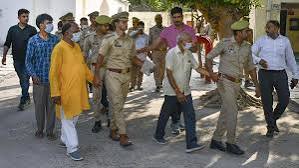
The accused were produced before Special Judge, Anti-Corruption Court, Rajat Verma, through video conferencing from the district jail, after the expiry of their three-day judicial custody. LUCKNOW: All eight accused arrested in connection with the alleged embezzlement of donation funds at Ram temple were, on Monday, remanded to 14-day judicial custody by a local court, case officials said. The accused were produced before Special Judge, Anti-Corruption Court, Rajat Verma, through video conferencing from the district jail, after the expiry of their three-day judicial custody, Special Prosecution Officer Umesh Dubey said. Dubey said that the district police did not apply for the custody of the accused. The eight accused — Ram Shankar Yadav alias Tinnu, Anukalp Mishra, Avinash Shukla, Karunesh Pandey, Manish Yadav, Lavkush Mishra, Ram Shankar Mishra and Subhash Srivastava—earlier been remanded to three days’ judicial custody till Monday by a special remand magistrate. The case has been posted for next hearing on July 13. Namita Bajpai Courtesy : TNIE Note: This news is originally published on https:/thenewindianexpress.com/bha and is used purely for non-profit/non-commercial purposes, especially human rights
Dalit vote at centre of UP parties’ organisational overhaul ahead of 2027 polls

Congress, BJP, SP and BSP are reshaping their leadership structures as the battle for Scheduled Caste voters intensifies ahead of the Assembly election. As Uttar Pradesh heads towards the 2027 Assembly elections, political parties have begun fighting the first battle long before campaigning begins—through organisational restructuring. While the Congress has appointed Dalit leader R.P. Gautam as its Uttar Pradesh in-charge, the BJP has carried out a sweeping overhaul of its state unit by replacing all six regional presidents and appointing a new caste-balanced leadership team. The Samajwadi Party continues expanding its PDA network, while the Bahujan Samaj Party (BSP) has reshuffled its organisational hierarchy under Mayawati. Together, the moves underscore how every major party is recalibrating its leadership to reflect Uttar Pradesh’s intricate caste and regional equations in a state where Dalit votes could prove decisive in determining power. Why Is the 2027 UP Election More Than an Electoral Contest—A Battle for Dalit Votes? The renewed emphasis on Dalit representation follows the political message delivered by the 2024 Lok Sabha elections. The BJP’s tally in Uttar Pradesh fell from 62 seats in 2019 to 33, while the Samajwadi Party emerged as the largest party in the state with 37 seats and the Congress won six, giving the INDIA bloc a significant boost. More importantly, the BJP’s dominance in Scheduled Caste-reserved constituencies weakened as it won only eight of the state’s 17 reserved Lok Sabha seats, down from 14 in 2019. Equally significant was the BSP’s electoral setback, with Mayawati’s party once again failing to open its account in Uttar Pradesh, repeating its 2014 performance. Once the undisputed political voice of Dalits, the BSP has seen its support fragment over the past decade, with sections of Jatav voters remaining with the party while many non-Jatav Dalits shifted towards the BJP and, more recently, the SP-led INDIA alliance. The BSP’s electoral decline has intensified competition for Dalit votes, encouraging every major party to aggressively target both Jatav and non-Jatav Scheduled Castes ahead of the 2027 Assembly elections. With Scheduled Castes constituting nearly 21 per cent of Uttar Pradesh’s population and influencing electoral outcomes in well over 150 Assembly constituencies, organisational appointments have become almost as politically significant as candidate selection. Every major party is now attempting to balance caste identity, regional representation and social influence within its organisational structure. Congress Bets on a Dalit Face The latest move has come from the Congress, which appointed senior Dalit leader R.P. Gautam as its Uttar Pradesh in-charge, replacing Avinash Pande. Gautam, regarded as an experienced organisational hand, is expected to spearhead the party’s preparations for the 2027 Assembly elections while strengthening its outreach among Scheduled Castes. The appointment is widely seen as an acknowledgement that Dalit politics in Uttar Pradesh has entered a new phase following the BSP’s decline. By placing a Dalit leader in charge of its largest electoral battleground, the Congress hopes to complement its alliance strategy with the Samajwadi Party while simultaneously rebuilding its independent organisational base. BJP’s Organisational Reset If the Congress has sought to send a political message by appointing R.P. Gautam, the BJP has responded with one of its most extensive organisational overhauls in recent years. Following its disappointing performance in the 2024 Lok Sabha elections, the BJP replaced all six regional presidents of its Uttar Pradesh unit while appointing 19 vice-presidents, eight general secretaries and several new office-bearers, carefully balancing caste representation and regional aspirations. The six regional chiefs themselves reflect the BJP’s social engineering strategy. Nawab Singh Nagar (Gujjar) has been appointed for western Uttar Pradesh, Puran Lal Lodhi (Lodhi OBC) for Braj, Ram Kishore Sahu (Sahu OBC) for Kanpur-Bundelkhand, Avadhesh Dwivedi (Brahmin) for Awadh, Ashok Chaurasia (OBC) for Kashi and Vinod Rai (Bhumihar) for Gorakhpur. The revamped organisation accommodates leaders representing Dalit, OBC, upper-caste and regional communities, reflecting the BJP’s effort to broaden its social coalition after the 2024 setback. The organisational restructuring complements the BJP’s representation in government through ministers such as Baby Rani Maurya, Asim Arun, Dinesh Khatik and Gulab Devi, while continuing targeted outreach among non-Jatav Dalit communities including Pasi, Valmiki, Kori and Khatik through welfare schemes, social outreach programmes and grassroots mobilisation. SP Strengthens PDA Coalition The Samajwadi Party, meanwhile, continues to reorganise its structure around Akhilesh Yadav’s PDA (Pichhda, Dalit, Alpsankhyak) formula. The party has consciously increased the representation of Dalits and Extremely Backward Classes in district organisations, frontal units and candidate selection while expanding beyond its traditional Muslim-Yadav support base. The strategy paid dividends in the 2024 Lok Sabha elections, when the SP won seven of Uttar Pradesh’s 17 Scheduled Caste-reserved parliamentary constituencies. Since then, the party has consistently appointed office-bearers from backward and Dalit communities while making caste census, reservation and social justice central themes of its campaign for 2027. BSP Seeks to Reclaim Dalit Base Although the BSP suffered another major setback by failing to win a Lok Sabha seat in Uttar Pradesh in 2024, political observers believe writing off the party would be premature. The BSP still retains a committed cadre, strong booth-level organisation in several districts and an emotional connect among a sizeable section of its traditional Jatav support base. Recognising the need for organisational revival, BSP chief Mayawati has repeatedly reshuffled state office-bearers, zonal coordinators and district presidents while restoring her nephew Akash Anand as the party’s national coordinator. The BSP continues to strengthen its booth-level network by appointing coordinators from different Scheduled Caste sub-groups and OBC communities across western, central and eastern Uttar Pradesh. Unlike the BJP’s welfare-centric politics or the SP’s PDA narrative, the BSP continues to rely on Ambedkarite ideology and the legacy of Kanshi Ram and Mayawati. The party hopes to retain its loyal Jatav vote while reconnecting with non-Jatav Dalits who shifted towards rival parties over the last decade. The emergence of Nagina MP Chandrashekhar Azad as an independent Dalit voice has further diversified Dalit politics in Uttar Pradesh, particularly among younger voters, adding another layer to the competition for the community’s support. Even if the BSP does
Congress claims SBI had sought removal of officials posted at Ram Temple’s donation counting centre three months ago

Congress leader Pawan Khera said the donation theft, for which eight people have been arrested so far by the Uttar Pradesh police, was only a glimpse, and more such cases were yet to come. The Congress on Monday targeted Prime Minister Narendra Modi and Uttar Pradesh Chief Minister Yogi Adityanath over the alleged irregularities in the handling of donations and offerings made by devotees at the Ram Temple in Ayodhya. Speaking to reporters in Raipur, Pawan Khera, Chairman (Media and Publicity Department), AICC, claimed that the State Bank of India had recommended the removal of officials posted at the temple’s donation counting centre three months ago, and sought to know who were protecting them. He said the alleged donation theft at the Ram Temple, for which eight people have been arrested so far by the Uttar Pradesh police, was only a glimpse, and more such cases were yet to come. “Ayodhya ki loot jhanki hai, Kashi-Mathura abhi baaki hai (the alleged loot in Ayodhya was only a glimpse, Kashi and Mathura were yet to come),” he said. Khera said the UP CM should be asked whether bulldozer action will be taken against the RSS or the Prime Minister’s Office (PMO) over the embezzlement of funds at the temple. “The RSS and PMO were directly looking after the Ram Mandir administration. Ask Adityanath, if there has been wrongdoing there, will bulldozers be sent to RSS chief Mohan Bhagwat’s residence or to PMO? Just ask him this question and he will have no answer,” he said. Khera claimed the State Bank of India (SBI) three months ago recommended the removal of officials posted at the donation counting centre at the shrine. “SBI had recommended three months ago that those posted at the counting centre be removed. Who has been protecting them? Nagpur or Delhi?” the Congress leader asked. In reply to a question, he said the United States was “insulting India every day” while Prime Minister Narendra Modi was maintaining silence. “Modi ji should give us a list of those he is afraid of and those he is not,” he quipped. On the reported move by the new BJP government in West Bengal to bring a bill on Uniform Civil Code (UCC), Khera alleged such issues were being raised to divert people’s attention from the Ram Mandir donation theft case. “The purpose (of UCC bill) is only to change the headlines and divert attention from what is happening in the name of Lord Ram in Ayodhya,” he claimed. Khera was in Raipur to address the last day of a ten-day training camp of the Chhattisgarh Congress organised for district unit presidents in the Abhanpur area. Courtesy : TNIE Note: This news is originally published on https:/thenewindianexpress.com/bha and is used purely for non-profit/non-commercial purposes, especially human rights
BJP backs Nitin Nabin’s ‘foreign mindset’ jibe at Congress, intensifies attack on Rahul Gandhi

Party spokesperson Shehzad Poonawalla alleges Congress works at the behest of foreign powers to undermine India, labels it the “Italian National Congress” and “Islamabad National Congress” The BJP on Monday threw its weight behind party president Nitin Nabin’s remarks targeting the Congress, accusing the opposition of having a “foreign mindset” and alleging that it works at the behest of foreign powers to weaken and divide India. The controversy stems from Nabin’s speech at a public meeting in Hyderabad on Sunday, where he claimed that the Congress leadership’s mindset was “Italian rather than Indian” and asserted that a government guided by such thinking would never get an opportunity to govern the country. Echoing those remarks, BJP national spokesperson Shehzad Poonawalla alleged that the Congress no longer deserved to be called the “Indian National Congress”, but should instead be described as the “Italian National Congress” or the “Islamabad National Congress”. “Nitin Nabin ji is absolutely right. The Congress family’s bodies are here, but their mindset is abroad. With that foreign mindset, they constantly divide and undermine India at the behest of foreign powers,” Poonawalla said in a video statement. Stepping up his attack on Congress leader Rahul Gandhi, Poonawalla alleged that Gandhi routinely criticises India’s economy, democracy and sovereignty during his visits abroad. “Isn’t it true that Rahul Gandhi is abroad even now, perhaps planning some conspiracy against India? He goes to foreign soil and abuses India’s economy, democracy and sovereignty. He goes abroad and says Operation Sindoor did not happen. He attacks our armed forces and says they were beaten. Even the Supreme Court chastised him, saying no Indian speaks like this,” he alleged. Poonawalla further accused Gandhi of attempting to divide the country on caste lines and undermining India’s institutions. “He says he wants to fight the Indian state and divides India on caste lines. It is very clear that the agenda is to take George Soros’ money and contract to divide and attack India and its institutions. He attacked the AI Summit, attacked India’s self-reliant vaccines, defence preparedness and armed forces. In opposing the BJP, he is attacking India and the Indian state itself,” he claimed. Reiterating the BJP’s criticism, Poonawalla alleged that the Congress was functioning against the country’s interests. “That is why it is not the Indian National Congress; it is the anti-India Italian National Congress or the Islamabad National Congress,” he said. Courtesy : TNIE Note: This news is originally published on https:/thenewindianexpress.com/bha and is used purely for non-profit/non-commercial purposes, especially human rights