
“Horse riding is our right”: Dalit groom attacked, baraat stopped by caste Hindu men in Gujarat

Horse riding during weddings is a common practice across India, yet Dalit grooms repeatedly face opposition from uppercaste people. A Dalit groom’s traditional wedding procession was allegedly stopped midway in Madi village of Gujarat’s Mehsana district after upper-caste men objected to him riding a horse during the ceremony. The incident occurred around 10 am on May 10 near the village dairy and has once again highlighted the continuing resistance to Dalit assertions of cultural equality despite constitutional and legal safeguards. Complainant Bhavik Rawat stated that his younger brother, groom Mayank Rawat, faced abuse from Yuvrajsinh Chauhan and Nikulsinh Chauhan of the Darbar community. The accused allegedly hurled casteist slurs, manhandled the groom and claimed horse mounted processions as an exclusive Darbar right. The accused threatened the family against proceeding, which led to panic among relatives and guests, halting the baraat before it reached Ahmedabad for the ceremony. Ladol police in Vijapur taluka swiftly registered an FIR against the duo under Bharatiya Nyaya Sanhita (BNS) sections and the SC/ST (Prevention of Atrocities) Act. Local activist Kaushik Parmar highlighted this as evidence of persistent discrimination, even amid constitutional protections. Horse riding during weddings is a common practice across India, yet Dalit grooms repeatedly face opposition from uppercaste people. Such violence often erupts over symbolic assertions of dignity, such as a Dalit groom riding a horse, playing music, or passing through dominant-caste localities, practices that challenge entrenched social hierarchies. In April 2026, a 23-year-old physically disabled Dalit groom, Golu Ahirwar, was allegedly dragged off a horse and assaulted during a pre-wedding procession in Madhya Pradesh’s Damoh district after caste-Hindu men objected to him riding through the village. His family members were also allegedly assaulted and robbed when they intervened. In February 2026, armed men from the Thakur community allegedly attacked a Dalit wedding procession in Sunana village of Uttar Pradesh’s Aligarh district using firearms, swords, and sticks, while hurling caste slurs and vandalising the DJ system. In another February 2026 incident in Chandrumana village, Patan district of Gujarat, Dalit groom Vishal Chavda was allegedly attacked with swords and casteist abuse for riding a horse during his wedding procession. In April 2025, a 22-year-old Dalit groom in Agra district, Uttar Pradesh, was allegedly dragged off his mare, beaten, and robbed over objections to loud music near upper-caste houses. Around the same period in Bulandshahr, upper-caste men reportedly stopped a Dalit baraat for playing DJ music, assaulted guests, and forced the procession to turn back. Similar incidents involving violence or intimidation against Dalit wedding processions have also been reported from districts such as Meerut, Etah, Amroha, and Tikamgarh. These recurring attacks continue to highlight the deep-rooted nature of caste discrimination in social and cultural spaces despite constitutional guarantees of equality and the abolition of untouchability. Other incidents in Mehsana district show that caste tensions are recurring. In 2019, a Dalit youth was allegedly assaulted and forced to shave his moustache by dominant caste men, an act seen as humiliation and assertion of social hierarchy. During the 2016 period of Dalit protests in Gujarat, the district also witnessed tensions and demonstrations, reflecting deeper caste divisions. Courtesy : Maktoob Media Note: This news is originally published on https:/maktoobmedia.com/bha and is used purely for non-profit/non-commercial purposes, especially human rights
Gujarat: Dalit groom attacked for riding horse in wedding procession
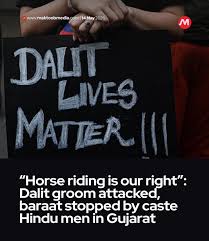
The accused allegedly abused the groom using casteist slurs and claimed the it is not his right to mount a horse for processions. Ahmedabad: A group of upper-caste men allegedly attacked and abused a Dalit groom using casteist slurs over him riding a horse during his wedding procession in Madi village of Gujarat’s Mehsana district. The incident, which occurred on May 10 near the village dairy, marks another instance of resistance to Dalit inclusion and equality in society. Although riding a horse during a wedding procession is customary in most Indian weddings, Dalit grooms are repeatedly targeted for taking part in the tradition. Complaint filed The groom, Mayank Rawat’s brother, Bhavik Rawat, lodged a complaint alleging that Tuvrajsinh Chauhan and Nikulsinh Chauhan of the Darbar community attacked them. The accused allegedly mauled and abused the groom using casteist slurs, and reportedly told him that mounting a horse for processions is the right of a Darbar alone. Panic ensued when the accused threatened the family from continuing the baraat, effectively halting the relatives from proceeding to Ahmedabad for the wedding ceremony. A first information report (FIR) was registered by the Ladol police against the accused Tuvrajsinh and Nikulsinh under relevant sections of the Bharatiya Nyaya Sanhita (BNS) and the Scheduled Caste and Scheduled Tribe Act. According to local activist Kaushik, the attack proves that Dalits continue to face discrimination despite constitutional protections. On April 29, a Dalit bride’s wedding procession in Rajasthan’s Udaipur was targeted as the attackers forced her off the horse while hurling abuses at her family. Days before the previous incident, a physically handicapped Dalit groom in Madhya Pradesh’s capital was similarly dragged off a horse and assaulted during his baraat. Courtesy : TSD Note: This news is originally published on https:/thesiasatdaily.com/bha and is used purely for non-profit/non-commercial purposes, especially human rights
Deadly attack on tribal church leaders in Manipur: 3 killed, CM orders strict action

Three tribal church leaders were tragically killed in an ambush by militants in Manipur’s Kangpokpi district. Following the incident, tensions rose in the area, with organizations announcing a three-day shutdown, and the Chief Minister ordered strict action against the culprits. New Delhi: On the morning of Wednesday, May 13, 2026, suspected armed militants ambushed a group of tribal church leaders in Manipur’s Kangpokpi district. Three leaders were tragically killed and four others seriously injured in this horrific incident while they were returning from a Baptist convention in Churachandpur. Members of the Thadou Baptist Association of India (TBAI) and the United Baptist Council (UBC) were traveling in two separate vehicles. The attack occurred suddenly at around 10 a.m. on the hilly “Tiger Road” between Kotlen and Kotzim villages. This road connects the Kuki-dominated Churachandpur and Kangpokpi districts. Since ethnic violence broke out between the Meitei and Kuki-Zo communities on May 3, 2023, Kukis have been using this rugged route to avoid the shorter route through the Meitei-dominated Imphal Valley. An eyewitness who narrowly escaped the attack told security personnel that the attackers arrived on foot. They opened fire for about three to four minutes from a hilltop before fleeing. According to an official familiar with the matter, it is suspected that 8 to 10 armed men opened indiscriminate fire on both vehicles with automatic rifles like AK-47s. Those killed in this cowardly attack include TBAI President Reverend Vumthang Sitlhou, Finance Secretary Reverend Kaigoulun Lhouwum, and Pastor Paogoulen Sitlhou. The TBAI president recently led a delegation of Kuki Christian leaders to Nagaland to broker peace between the Kuki and Tangkhul Nagas in Manipur’s troubled Kamjong and Ukhrul districts. According to a statement issued by the Indian Army, joint teams of security forces immediately evacuated the injured to the nearest hospital and launched a massive search operation in the area. Three of the injured have been admitted to a private hospital in Imphal for treatment. Another person who managed to escape was later rescued safely from the hills. Several Thadou, Kuki, and Zomi organizations have called for a three-day “complete shutdown” in Kangpokpi, Churachandpur, and other districts to protest the incident. Manipur Chief Minister Yumnam Khemchand Singh strongly condemned the incident. He, along with Deputy Chief Minister Losi Dikho, Home Minister Govindas Konthoujam, and other MLAs, visited the hospital to inquire about the condition of the injured. The Chief Minister assured that the government would bear the full cost of their treatment. He sternly stated that such attacks, which undermine collective efforts to restore peace in the state, would not be tolerated and that the culprits, including their masters, would be punished. Immediately following the incident, the Senapati district unit of the United Naga Council claimed that residents of Leilon Vaiphei village had taken hostage approximately 20 Nagas from Konsakhul village. Meanwhile, the president of a Kuki village in the same Naga-dominated district appealed to the police to immediately release 23 Kuki laborers held hostage by locals. Chief Ministers of neighboring states have also expressed deep outrage over the massacre. Nagaland Chief Minister Neiphiu Rio, Meghalaya Chief Minister Conrad K. Sangma, and Mizoram Chief Minister Lalduhoma condemned the incident and urged the Manipur government to take immediate and strict action against those responsible. The Naga Legislature Forum of Manipur, comprising nine MLAs, issued a joint statement appealing for peace and demanding the release of all detained Kuki and Naga citizens. The Indigenous Tribal Leaders Forum (ITLF), Kuki Zo Council, Thadou Inpi Manipur, and the United Christian Forum of Northeast India (UCFNEI) also expressed deep condolences. UCFNEI spokesperson Alan Brooks said the killing of these peaceful leaders, who dedicated their lives to the spiritual upliftment of society, was an inhumane act. The attack has sparked a blame game in the state. Several extremist and fundamentalist groups, including the NSCN (I-M), ZUF, ZUF (Kamsan), Arambai Tenggol, and the Kuki National Army, are suspected of carrying out the attack. However, all these groups have categorically denied any involvement in the attack. Meanwhile, the Kuki Organization for Human Rights Trust (KOHURU) has directly alleged that the attack was a planned terrorist act carried out in collusion with the NSCN (I-M) and the ZUF. The trust states that the slain leaders were playing a key role in organizing peace talks and that this initiative was met with gunfire. Since February 2026, several violent clashes have occurred between Kuki and Tangkhul Nagas in Ukhrul and Kamjong, Manipur, resulting in numerous deaths and burning of homes. A Naga organization has expressed suspicion that some Kuki extremist groups may have carried out this attack to sabotage the Chief Minister’s peace initiative. The slain leaders were scheduled to have a special meeting with the Chief Minister on May 15th, prior to his visit to Churachandpur. Amidst these theories, security forces also believe that this could be a case of mistaken identity. A security official said it appears the attackers were unaware that church leaders were traveling in the vehicles. An intensive investigation is currently underway to identify the real killers. Rajan Chaudhary Courtesy: Hindi News
Family members carried the body 15 km on bicycles to the police station seeking justice; tribal family protests in Odisha!
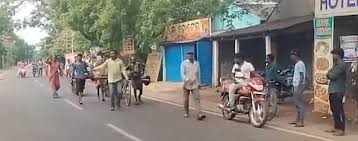
The family, demanding justice, said they were forced to carry the body to the police station so that their voices would be heard. On May 11th, a long-standing land dispute between two neighboring families in Haripur village, under the Khaira police station area of Balasore district, escalated into a violent dispute. A fight broke out during construction work, leading to members of one family attacking the other with shovels, spades, hammers, and sharp weapons. 39-year-old Kamala Sethi died on the spot, while her sister-in-law, Shakuntala Sethi, was seriously injured and admitted to SCB Medical College Hospital in Cuttack. The family alleges that the dispute has been ongoing for the past five years and they have complained to the police and the village head several times, but no action has been taken. Alleging delays in the arrest of the main accused despite the murder, the family brought the body home on Monday night and then carried it on bicycles, traveling approximately 12-15 kilometers to the Khaira police station on Tuesday. They staged a sit-in protest outside the police station, blocking the road, demanding the immediate arrest of the accused, compensation, and a resolution to the land dispute. Traffic was disrupted during the protest, and villagers also showed their support. The family alleges that three days have passed since the incident, yet the police have still not arrested the main accused. Angry family members carried Kamala Sethi’s body on bicycles and marched 15 kilometers to the Khaira police station. Senior officials, including Balasore Superintendent of Police Pratyush Diwakar, arrived at the scene. Police registered a case. One accused has been arrested, while two others are absconding and a search is underway. The police offered the family an ambulance, but the family continued their protest. The Superintendent of Police assured them that the remaining accused would be arrested soon, that an investigation was underway, and that action would be taken if any negligence was found on the part of the police. This incident has sparked widespread debate about police inaction, the resolution of pending disputes, and the law and order situation in rural areas. People expressed outrage after the video went viral on social media. The Tribal Army posted a clip of the incident, writing, “A tribal family in Balasore, Odisha, had to carry the body of a woman on bicycles for 15 kilometers to the police station to protest police inaction in a murder case allegedly related to a land dispute. This incident in Balasore district raises serious questions about law and order and police accountability. Will we now have to take a dead body out on the streets to get justice?” The family, demanding justice, said they were forced to carry the body to the police station to ensure their voices were heard. The administration has also assured a legal resolution to the land dispute. This case raises questions about police reforms and the rural justice system in the state. Geetha Sunil Pillai Courtesy: Hindi News
New York: Support Bill to end caste discrimination, campaign intensifies

Last week, May 6, the move to get caste equity bills pushed in New York state, received a push with a group of 50+ inter-faith coalitions, led by Dalit leaders and advocates met with several legislators May 6, last Wednesday, the campaign to get caste equity bills pushed through as legislation in New York state received a boost with a group of 50+ inter-faith coalitions, led by Dalit leaders and advocates meeting several legislators. Meetings took place that day in Albany, the state capitol of New York to meet with legislators to support A6290/S6531 — the caste equity bills in New York! As a group of 50+ interfaith coalitions, led by Dalit leaders and advocates met with several legislators, many of whom instantly agreed to support this bill, understanding why caste equity is so important in New York State. One key meeting was with Senator James Sanders who helped introduce this bill last year, and who spoke with immense power about the need to recognise the solidarity between Black folks and Dalit communities. “Anyone who is against this [bill] doesn’t know your own history”, he said! Ms. Swati Sawant who has been working on this bill for over three years gifted him a statue of Babasaheb and explained the connection between Black and Dalit shared histories. Iconic writer and campaigner, Yashica Dutt, whose 2024 published Coming Out as a Dalit, is a powerful individual account that throws a spotlight on systemic injustice in India and its growing impact on US society, took a leading part in this campaigning effort. Writing about this on her Facebook-meta page, Yashica said that she documented that day in detail “for a video to be produced later.” She also spoke about her book Coming Out as Dalit and talked about how it points to the existence of caste, right here in the United States. The campaign has asked all those who live in New York to support A6290/S6531! Besides, at the click of a button, any person can send their letter to their New York State lawmaker in less than a minute — SabrangIndia had previously reported, how in July 2025, the US District Court for the Eastern District of California in its ruling on July 18, in response to an allegation by the Hindu American Foundation (HAF) that had claimed that the California civil rights department’s enforcement of anti-caste policies violated the “constitutional rights of all Hindu Americans,” dismissed HAF’s contention. HAF had attempted arguments to the effect that the California civil rights department’s enforcement of anti-caste policies violated the “constitutional rights of all Hindu Americans.” This claim had been dismissed by a US District Court. Academics and civil rights activists had then too welcomed a landmark judgment by a US federal court upholding the California civil rights department’s constitutional authority to defence caste-oppressed individuals through state action. Courtesy : Sabrang India Note: This news is originally published on https:/sabrangindia.com/bha and is used purely for non-profit/non-commercial purposes, especially human rights
‘I felt like I was breathing my last’: Dalit brothers attacked for ‘drinking water’ at a wedding in Uttarakhand
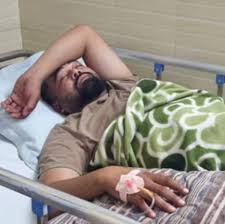
“They asked Rakesh why he was there and slapped him. When Rakesh told my brother that the family members had beaten him…” Two Dalit brothers were allegedly attacked and subjected to casteist slurs during a wedding ceremony in Haldwani, Uttarakhand, following a dispute over drinking water from a water pot. According to the Indian Express report, one of the brothers has filed a complaint, but an FIR has not yet been registered. Police say the matter is being investigated. According to the complaint filed by Umesh Tamta, his brother Shubham and relatives Rakesh Arya and Ajay Arya had gone to operate the DJ system at a wedding in Deval Malla village on Sunday night. When Rakesh Arya went to drink water from a water pot, he was allegedly attacked by the groom’s family. Tamta told the Indian Express, “They asked Rakesh why he was there and slapped him. When Rakesh told my brother that his family members had beaten him, Shubham went to the house to talk to them. He slapped a young man present there, after which the young man called his uncle and friends and started attacking Shubham. Caste-related abuses were also hurled at him.” Shubham was reportedly kicked and punched on his face and body and is currently hospitalized. When Tamta learned of the incident, he rushed to the spot, where he was allegedly attacked with a sharp weapon on his head. Tamta alleged, “I asked them why they were beating my brother. They said Shubham had hit his brother and then attacked my head with a rod. While my head was bleeding, another man tried to strangle me. I pleaded with them to stop, and I felt like I was breathing my last. Then someone intervened and stopped them. We were also subjected to casteist abuse.” The family claims that Tamta suffered a serious head injury, while his brother suffered a spinal fracture. Both have been admitted to a private hospital in the city. The complaint seeks action under sections of the attempt to murder and the Scheduled Castes/Scheduled Tribes (Prevention of Atrocities) Act. Following the incident, local residents and Tamta’s family protested outside the police station, demanding the arrest of the accused. Police said the matter is being investigated and a counter-complaint has been received from the other party, alleging that their mother was injured in the incident. Officials from the Kathgodam police station said four people have been detained under Section 172 of the BNSS. Police said, “We are investigating the incident and statements from both parties have been recorded. We are trying to determine what led to the incident and whether the violence was caste-based.” Courtesy: Hindi News
Sikar News: ‘Entered the house and mistreated’, 10-15 people assaulted a Dalit woman
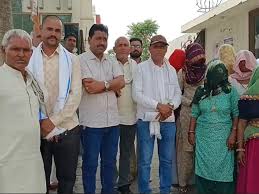
A case of assault and mistreatment of a Dalit family has come to light in Chatur Ki Dhani, Nangal, Gram Panchayat Dunga, Neemkathana area of Sikar district. The victim’s family and villagers demanded the immediate arrest of the accused from Prem Singh Bajor, Chairman of the Sainik Welfare Advisory Committee. Sikar News: Demand for action against the accused in the case of assault on a Dalit family in Chatur Ki Dhani, Nangal, Gram Panchayat Dunga, Neemkathana, Sikar district, Rajasthan. The victim’s family and villagers met with Prem Singh Bajor, Chairman of the Sainik Welfare Advisory Committee, and informed him about the entire incident. They also submitted a memorandum demanding the immediate arrest and strict punishment of the accused. Caste-based slurs were hurled at them. The victim, Santosh Devi, stated that she was working outside her house when about 10 to 15 people came and abused her and then assaulted her. They allege that the mine owner unnecessarily harasses them, hurling caste-based slurs at them, and assaulting them. Villagers reported that there is a mine in Dhani, where the mine owner brings in anti-social elements to assault and abuse Dalit women. They face unnecessary harassment on a daily basis. Assault on Women Today, they met with Prem Singh Bajor, Chairman of the Sainik Welfare Advisory Committee, regarding the incident of the mine owner summoning miscreants to assault women two days ago. The villagers stated that heavy blasting occurs on this lease, just 10 meters from the inhabited area, which has caused cracks in their houses and stones are thrown into their homes every day, posing a threat of loss of life and property. Furthermore, miscreants also engage in daily acts of bullying and abuse and assault in these lease areas. They even enter homes and misbehave and assault women. Incidents of assault against women were also reported on the 10th. A case was registered at the Patan police station. Edited by Sneha Aggarwal, Reported by Ashok Singh Shekhawat Courtesy: Hindi News
Kushinagar News: Life imprisonment for man accused of raping a mentally challenged Dalit girl
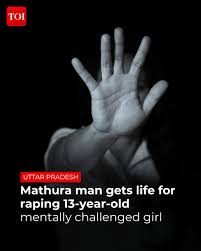
Padrauna. The court of Special Judge SC-ST Act, Ifraq Ahmed, sentenced a man convicted of raping and assaulting a mentally challenged Dalit girl to life imprisonment. He also imposed a fine of ₹56,500. Failure to pay the fine will result in an additional one year of imprisonment. Half of the fine will be given to the victim as compensation. The verdict states that a case of rape and assault of a mentally challenged Dalit girl was registered at the Kasya police station in 2019 based on a complaint from the victim’s uncle. On January 30, 2019, the girl had gone to the garden to graze goats. Ramnath Patel, son of Bhuteli Patel, resident of Nadah police station, Kasya, raped her and assaulted her when she resisted. The victim came to know about the incident upon returning home. The investigating officer filed a charge sheet against the accused, Ramnath Patel, in the court under sections of rape, the SC-ST Act, and assault. The plaintiff died during the trial. The victim’s parents had already passed away. A total of seven witnesses, including the plaintiff’s wife, were examined. The court found Ramnath Patel guilty of rape, violations of the SC/ST Act, and assault. He was sentenced on Wednesday. The accused was arrested after the case was registered and was later released on bail. After the verdict on Wednesday, the court sent him back to jail. Courtesy: Hindi News
UP: Clashes between Thakur and Dalit groups over land in Saharanpur, several injured
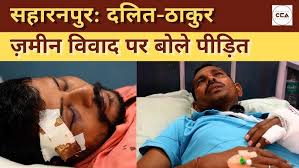
Police and paramilitary forces have been deployed in Deoband village. Both sides have accused each other of stone pelting and firing during the dispute. Half a dozen people were injured in a clash between members of the Thakur and Dalit communities over a land dispute in Lalwala village of Deoband in Saharanpur district on Saturday. The Uttar Pradesh administration has deployed police to prevent further incidents of violence. According to The Telegraph, Dalit villager Naresh Kumar told reporters that he had given two bighas of land to Ravindra Kumar Rana for contract farming a few years ago, but Rana refused to return the land after the deadline. Naresh further said, “Rana also manipulated the documents and got his name registered as the owner of the land in the revenue department records. Recently, I met with senior administrative officials in the district during a public hearing and requested their help in getting my land back. The officials called Rana, but they were unable to convince him to return the land to me.” Naresh said he contacted members of the Bhim Sena, who decided to help him. “They met me today (Saturday) and we went to get our land back. The Thakurs first threw stones at us and then started firing. As soon as the news spread, Dalit villagers gathered at the scene and pelted stones at the Thakurs.” He also alleged that the local administration and police were siding with members of the Thakur community because of their political connections. Circle Officer Abhitesh Bhati said, “The situation is peaceful after the violence. The injured have been admitted to the local community health center. We have deployed police and paramilitary forces to restore peace in the village.” Rana said he had purchased 32 bighas of land from Naresh’s father. Courtesy: Hindi News
TM Exclusive: The Wall of Caste—A study exposing healthcare discrimination against Dalits in South Asia reveals why a caste census is necessary in India!
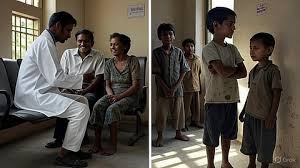
This study reveals that caste discrimination is a public health crisis. Despite Nepal’s ban on caste discrimination since 1962 and India’s affirmative action policies, implementation remains lacking. New Delhi—Amid preparations for India’s upcoming caste census, a study is worth discussing that exposes the deep-seated discrimination prevalent in South Asia’s healthcare sector. The study, conducted by researchers Raksha Thapa, Edwin van Teijlingen, Pramod Raj Regmi, and Vanessa Heaslip, was published in the Asia Pacific Journal of Public Health on May 24, 2021. It delved deeply into healthcare discrimination faced by Dalit communities, historically known as “untouchables,” in India and Nepal. This study, which analyzed nine research papers, demonstrated that socioeconomic inequalities and caste discrimination deprive Dalits of health services, affecting their health and quality of life. This study further strengthens the relevance of a caste census in India, which could be a crucial step towards understanding and addressing these inequalities. The Burden of Caste Dalits are neglected in health services. The caste system, a 3,000-year-old social structure, continues to perpetuate inequalities in social, economic, and health sectors in South Asia. While efforts have been made to eliminate it through legislation in India and Nepal, this study reveals that Dalit communities continue to face discrimination in health services. This study, which analyzed nine research papers conducted in India (seven studies) and Nepal (two studies) between 2000 and 2019, identified four main themes: Social stigma, 2. Poverty, 3. Cultural beliefs, 4. Access to health services. These themes highlight how Dalits, especially women, face social and economic barriers that severely impact their health. Key Findings of the Study Socioeconomic Inequalities and Health The study found that low socioeconomic status and low land ownership are directly linked to poor health outcomes for Dalits. Dalits have less access to education and good jobs, leading to lower household incomes. Due to low income and social discrimination, Dalits lack equal opportunities in the labor market, often limiting them to low-level jobs. Dalit Women Face Double Discrimination Dalit women face double discrimination not only due to their lower caste but also due to the lower status of women in Hindu society. These women face problems such as domestic violence, chronic illnesses, and lack of access to treatment beyond the local level. For example, Dalit women utilize antenatal care (ANC) services less than upper-caste women, which adversely impacts maternal and child health. Although access to ANC services is somewhat better among wealthier Dalit families, the combination of lower caste and poverty consistently leads to poorer health outcomes. Cultural and Social Barriers Cultural beliefs further exacerbate health inequalities. In many communities, Dalits are considered incapable of understanding health information, leading health workers to withhold crucial information. In some places, diseases are associated with ghosts and spirits, leading Dalits to rely on traditional remedies rather than modern medicine. This limits their access to and understanding of health services. Discrimination in Healthcare All nine studies confirmed that caste influences access to health services. In Uttar Pradesh, only 19% of Dalits suffering from chronic diseases receive treatment, as high costs, long travel times, and untrained health workers hinder them. In Nepal, weak health infrastructure and a lack of skilled staff disproportionately affect Dalits. Furthermore, Dalit health workers, such as auxiliary nurse midwives, face humiliation from colleagues and patients, which undermines their ability to provide care. Poverty and Social Stigma The Dilemma of Dalits The study found that poverty is a major barrier to accessing healthcare for Dalits. Most Dalits live below the poverty line and rely on low-paying jobs, such as manual labor or basket weaving. They are unaware of free healthcare services or government programs, and when they seek treatment, they are often charged exorbitant fees by unlicensed practitioners. Borrowing money to cover medical expenses is common, trapping them in debt. Social stigma also affects Dalit health. They are not allowed to enter upper-caste homes, sit with them, or share food and water. This discrimination is evident not only in social life but also in healthcare, where health workers avoid touching Dalit patients. Mental health problems among Dalits are often attributed to ghosts, leading them to resort to treatments like exorcism rather than modern medicine. Dalit Women Are the Biggest Victims of Discrimination The most vulnerable Dalit women are the biggest victims of this discrimination. Due to their low caste and gender, they are at greater risk of problems like malnutrition, anemia, and maternal mortality. The study found that approximately 70% of Dalit women are illiterate, making them unable to understand and access health systems. Economic dependence on men, limited mobility, and domestic violence further reduce their access to health services. For example, Dalit women often cannot go to the hospital alone, and their health-related decisions are made by men in the family. Policy Gaps and the Need for Change: This study shows that caste discrimination is not just a social issue, but a public health crisis. Despite the ban on caste discrimination in Nepal since 1962 and affirmative action policies in India, lack of implementation and cultural attitudes perpetuate inequalities. The authors argue that building hospitals alone is not enough to improve health services; socio-cultural factors, such as stigma and gender inequality, must be addressed. Programs like Self-Help Groups (SGHs) and ANC have provided some help, but they are insufficient without broader social change. Caste discrimination is often overlooked in global policy discussions, such as the Sustainable Development Goals (SDGs). SDG goals, such as poverty eradication, good health, quality education, gender equality, and reduced inequality, cannot be achieved unless caste discrimination is addressed. The authors call for programs to decentralize health systems, improve local access, and change social attitudes. Geetha Sunil Pillai Courtesy: Hindi News