
Telangana Ministers bat for SC Status for Dalit Christians

Adluri Laxman Kumar said the recommendations and concerns expressed during consultation would be compiled into a report and submitted to the Chief Minister for further action Telangana Scheduled Castes Development and Tribal Welfare Welfare Minister Adluri Laxman Kumar speaking at Dalit Christian Reservations Consultation Meeting in Hyderabad on Wednesday. Minorities Welfare Minister Md. Azharuddin is also seen. Telangana Scheduled Castes Development and Tribal Welfare Welfare Minister Adluri Laxman Kumar speaking at Dalit Christian Reservations Consultation Meeting in Hyderabad on Wednesday. Minorities Welfare Minister Md. Azharuddin is also seen. | Photo Credit: Special Correspondent Telangana Scheduled Castes Development and Tribal Welfare Welfare Minister Adluri Laxman Kumar on Wednesday (July 8, 2026) asserted that granting Scheduled Caste (SC) status to Dalit Christians is a constitutional right and a matter of social justice rather than a concession. Participating in the Dalit Christian Reservations Consultation meeting held in Hyderabad, along with Minorities Welfare Minister Md. Azharuddin, he said conversion changes a person’s religion but does not erase caste-based discrimination, poverty or social exclusion. The Minister lamented that Dalit Christians continue to face discrimination in villages, educational institutions, workplaces and even marriage alliances. Questioning the denial of constitutional safeguards on religious grounds, he asked, “If discrimination remains unchanged, why should rights change?” He argued that the issue should be viewed through the lens of equality and justice guaranteed by the Constitution. Only Hindus, Buddhists, Sikhs can claim Scheduled Caste status: Supreme Court Mr. Kumar assured that the State government, under the leadership of Chief Minister A. Revanth Reddy, remains committed to safeguarding the rights of marginalized communities, minorities and Dalit Christians. He said the recommendations and concerns expressed during the consultation would be compiled into a report and submitted to the Chief Minister for further action. Mr. Azharuddin, calling for unity, said the struggle should not remain confined to meetings and resolutions, but must develop into a sustained democratic people’s movement. Bishops, pastors, Christian organisations, Dalit associations, intellectuals and youth must work in concert to strengthen the demand, he said. The Minister added that he would make every effort to ensure that the issue receives due attention at the State level and is taken forward effectively in appropriate national and parliamentary forums. Earlier, Osmania University Arts College Principal C. Kasim highlighted the impact of the 1950 Presidential Order on the rights of Dalit Christians and called for a united struggle. Telangana State Christian Finance Corporation Chairman Deepak John, former MLC Rajeshwar Rao and several religious and community leaders attended the meeting. The Hindu Bureau Courtesy : The Hindu Note: This news is originally published on https:/thehindu.com/bha and is used purely for non-profit/non-commercial purposes, especially human rights
Watch: Dalits protest over woman’s murder, police use force; SSP thrashes man inside police vehicle
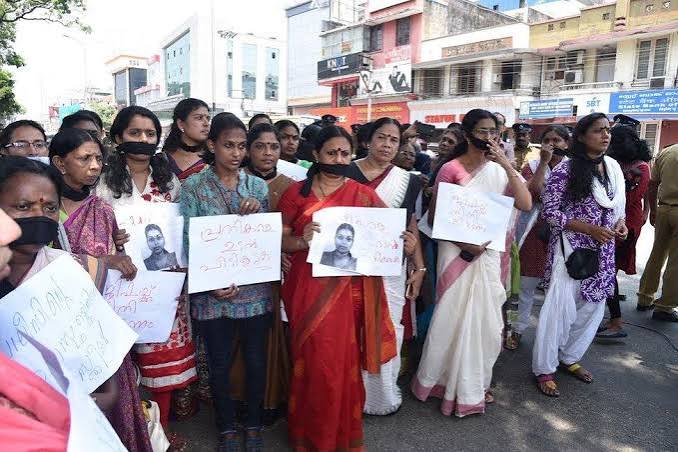
MEERUT: Tension gripped the city on Wednesday as around a hundred members of the Dalit community clashed with police at the Commissionary Park while demanding justice for Lalita Gautam, a 20-year-old college student who was murdered nearly two months ago. Lalita, a BA final-year student, went missing on May 15 after leaving her home to take an exam. Her body was found the following day in a sugarcane field in Rohta area. Suspecting an investigation cover-up, protesters took to the streets, demanding that DM V K Singh and SSP Avinash Pandey personally meet them at the collectorate gate to accept their charter of demands. The demonstration took a volatile turn when SSP Pandey arrived with heavy police force to clear the protest venue, but the protesters rejected the administration’s offer of an alternative demonstration site. Police resorted to the use of batons to disperse the crowd. Five of the protesters were arrested. The situation turned volatile after a video emerged purportedly showing SSP Pandey thrashing one of the detained agitators, Ravi Gautam, inside a police vehicle. Moments after he was allegedly slapped inside a police prisoner van by Meerut SSP Avinash Pandey, Ravi Gautam allegedly attempted to end his life by trying to hang himself inside the vehicle. Someone can be heard shouting, “Kaptan saab, wo fanda baandh raha hai” (Sir, he is making a noose). Defending the police action, SSP Pandey said the primary suspect in the murder—who was in a relationship with the victim—had already been booked, arrested and jailed, though he was released on bail later. “Following his release, external elements allegedly attempted to instigate the victim’s family by offering inducements such as money and firearms licence,” SSP Pandey said. “Ravi Gautam is a Noida resident with a prior criminal record” and he was instigating the local community from the outside. Cases would be registered against anyone attempting to give the tragedy a political or communal colour,” said Pandey. Protesters refuted the police narrative. Sushil Gautam, representing the demonstrators, accused the authorities of high-handedness against a peaceful gathering. Meanwhile, the eldevelopment took a political turn when SP Chief Akhilesh Yadav tweeted criticising the State BJP government. “The police are breaking records of injustice under the BJP government. The attack and lathi-charge by the administration on the victim’s family and others who raised their voice seeking justice for Lalita Gautam, a daughter of the Dalit community in Meerut, is highly condemnable. When the state leadership itself publicly sets an example of being insensitive towards the mother of a deceased girl, it is futile to expect any better from the police.” Heavy police deployment remains in the area as local organisations demand accountability for both the murder investigation and the subsequent police action. Courtesy : TOI Note: This news is originally published on https:/timesofindia.com/bha and is used purely for non-profit/non-commercial purposes, especially human rights
TN: Family abducts woman on highway for marrying Dalit man

M Chithiravalli belonged to the Most Backward Class (MBC) and Ajith Kumar belonged to the Scheduled Caste community. Chennai: A woman in Tamil Nadu’s Tiruchirappalli was reportedly abducted by her family on Saturday, July 4, for marrying a Dalit man, with her kin assaulting her, hurling casteist slurs and giving death threats. According to The Hindu, the woman was identified as 27-year-old M Chithiravalli. She was allegedly abducted on the Tiruchi-Dindigul national highway near Maravanur under Manapparai Police Station limits. A police team rescued her and subsequently arrested four people, including her elder brother, involved in the crime. A resident of Mudukupatti, Chithiravalli married Ajith Kumar, 27, at a temple near Tiruchi in June. She belonged to the Most Backward Class (MBC) and Kumar belonged to the Scheduled Caste community. Since her family strongly opposed the union due to the caste differences, both sides approached the Manapparai All Women Police Station. Chithiravalli was sent with Kumar and his parents following the enquiry. Relations between Kumar and Murugesan, the husband of Chithirivalli’s sister, worsened soon after. Relations between families sour, leading to abduction Murugesan, on July 1, filed a complaint claiming Kumar threatened him, following which the two were directed to appear at the police station for questioning. According to the report, Kumar, his mother and Chithiravalli arrived for the inquiry on Saturday and submitted a petition. Murugesan failed to appear. The issue escalated when Kumar was returning with the two women from the police station in an autorickshaw. At around 1:40 pm, Murugesan, along with other accused, intercepted them in two cars on the National Highway and abducted Chithiravalli. The police said the group attacked Kumar, abused him with casteist slurs and threatened to kill him, while forcibly taking Chithiravalli away. Woman rescued from grandmother’s house Police officials acted swiftly, tracing Chithiravalli to her grandmother’s house in Yagapuram. She was reportedly confined by her family and was rescued that same night. Police arrested four accused – including Murugesan, his brother P Prakash, M Malaisamy, Chithiravalli’s elder brother and N Amanullah, alias Mala. They have been remanded to judicial custody, while the cars used for abduction were seized. Authorities have since registered a case based on Kumar’s complaint under various sections of the Bharatiya Nyaya Sanhita (BNS) and the Scheduled Caste and Scheduled Tribes (Prevention of Atrocities) Act. Chithiravalli’s family had allegedly been pressuring her to leave Kumar and had threatened her with serious consequences if she didn’t. Courtesy : TSD Note: This news is originally published on https:/thesiasatdaily.com/bha and is used purely for non-profit/non-commercial purposes, especially human rights
Bhadohi: Dalit Labourer Beaten, Caste-Abused for Drinking Water Outside UP Clinic; 2 Arrested
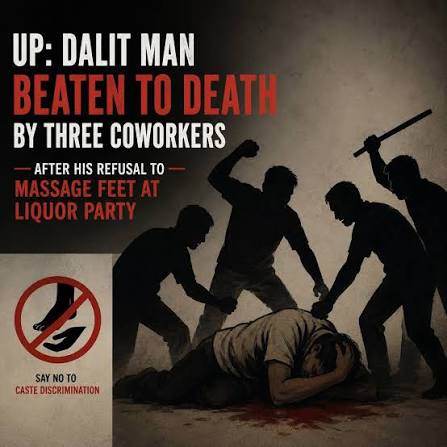
A Dalit labourer was allegedly beaten, caste-abused and threatened with death after drinking water from a vessel outside a private clinic in Uttar Pradesh’s Bhadohi district. Police said the accused claimed the container had been ‘polluted’ because it was used by a Dalit. Two people have been arrested after the victim, who was hospitalised for 12 days, lodged a complaint. A Dalit labourer was allegedly beaten, caste-abused and threatened with death after drinking water from a vessel kept outside a private clinic in Uttar Pradesh’s Bhadohi district. According to police, the accused claimed the container had been “polluted” because it had been used by a Dalit. Two people have been arrested in connection with the incident. The alleged assault took place on June 23 when Bhola Gautam, a painter by profession, stopped at a private clinic while returning home from work to seek medicine for a headache. Police registered an FIR after Gautam lodged a complaint on July 5 following his discharge from hospital. UP Shocker: Dalit Man Beaten to Death in Lalitpur After Refusing to Massage Acquaintance’s Feet, 3 Arrested. Dalit Man Assault Over Drinking Water According to the FIR, Gautam asked for water to take his medicine and was directed to a vessel placed outside the clinic. As he drank the water, a nearby shopkeeper, identified as Subhash Bind, allegedly began verbally abusing him and questioned how a person from a “lower caste” could use the vessel. Police said Bind then allegedly attacked Gautam with a stick, causing injuries. The complaint further alleges that the accused declared the vessel had been “polluted” because a Dalit had drunk from it, assaulted Gautam and threatened to kill him. Firozabad Shocker: Dalit BSc Student Dies by Suicide After Caste-Based Assault in Uttar Pradesh. Victim Hospitalised for 12 Days According to Additional Superintendent of Police Shubham Agrawal, Gautam was rescued by his co-worker Om Prakash Vishwakarma and other bystanders. He suffered injuries to his head, abdomen, back and legs. Gautam was initially admitted to the district hospital before being referred to a hospital in Varanasi, where he underwent treatment for 12 days. After being discharged, he approached the police and filed a complaint. Based on Gautam’s statement, police registered an FIR late on Monday. Officials said two accused, including Subhash Bind, have been arrested. Further investigation into the case is underway. By Meera Courtesy : LatestLY Note: This news is originally published on https:/latestly.com/bha and is used purely for non-profit/non-commercial purposes, especially human rights
Madhya Pradesh: No bridge, no ambulance! Woman gives birth on a cot in the middle of a raging river, video goes viral

In Chhindwara, Madhya Pradesh, an ambulance was unable to reach due to a lack of roads and bridges. After this, villagers safely delivered a baby on a cot in the middle of a raging river. A video of the system’s negligence went viral. Madhya Pradesh: A shocking and system-shattering incident has come to light in Chhindwara district. A pregnant woman was forced to give birth on a cot in the middle of a raging river due to the lack of an ambulance. Heavy rains cut off this area from the main road, and the villagers’ long-standing demand for a bridge has remained unheeded. City and Local Guide This horrific incident occurred in the Lohari Mohalla of Hathoda Hiri village in the Amarwara block. During the monsoon, the river, which overflows with rainwater, completely cuts off approximately 20 families living there. A video of the incident surfaced on Sunday, showing villagers carrying a pregnant woman on a cot across a swollen river. The video exposed the daily hardships faced by residents of the area. According to family members, Shankar Vishwakarma’s 35-year-old wife, Savita Vishwakarma, suddenly experienced severe labor pains on Wednesday evening. Alarmed relatives immediately called the 108 ambulance service. However, due to the river’s overflowing waters and the lack of a proper road, the ambulance was unable to reach their neighborhood. With no other way to help, the family and villagers were forced to place the woman on a cot and set out on foot to cross the river. While wading through the rapidly flowing water, Savita’s pain intensified, and she gave birth to the baby on the cot. The villagers managed to reach the other side of the river with the mother and child, where they waited for an ambulance. But when no help arrived despite waiting for a long time, they gave up and resorted to a motorcycle. They were taken on the same motorcycle to Amarwada Civil Hospital, where doctors gave the reassuring news that both mother and newborn were completely healthy. Geographical Context The woman’s brother-in-law, Gopal Vishwakarma, expressed his anguish, explaining that their village is completely cut off every year during the monsoon. He said that his sister-in-law was in severe pain, and despite calling an ambulance, it could not reach them due to the river, forcing her to resort to a cot and deliver on the way. Gopal leveled serious allegations against the administration, saying that the villagers have repeatedly appealed for a concrete bridge and road, but no one has listened. The same situation arises every year during the rainy season, and even schoolchildren have to risk their lives crossing the river daily. The villagers have filed written complaints with the District Panchayat, SDM, and public representatives, but no concrete action has been taken to date. Regarding this entire incident, health officials at Amarwada Civil Hospital say they have no clear understanding of why the ambulance failed to arrive on time. A health official explained that the 108 ambulance service is operated directly from the Bhopal control room, but the good news is that both mother and child have reached the hospital and are safe. This incident has once again exposed the ground reality of health services in remote areas of Madhya Pradesh. Even though the scope of emergency ambulance services has expanded in the state, poor roads and lack of infrastructure still pose a major obstacle to timely medical assistance in many villages. Following this incident, angry villagers have once again intensified their demand for a bridge and an all-weather paved road. Rajan Chaudhary Courtesy: Hindi News
The compulsion of labor: Why are the lives of tribal girls being ruined in Tamil Nadu, 1,500 kilometers away from a small village in Odisha?

The Tamil Nadu gas leak incident: A heartbreaking story of poverty, desperate migration, and the tragic deaths of 12 daughters from a small tribal village in Odisha. New Delhi: The tragic deaths at a seafood processing unit in Tiruvallur, Tamil Nadu, have exposed the pain of a highly vulnerable tribal community in Odisha’s Keonjhar district. This tragedy reflects the desperate migration that has devastated these villages of their youth, especially women. 56-year-old Bisuni Juang is illiterate. But sitting outside his mud hut, he carefully examines a pile of government documents. He tries to understand how his 16-year-old daughter, Jamini, died in Tamil Nadu, nearly 1,500 kilometers away. Since the gas leak at a factory in Tiruvallur district on June 21st, 15 people have lost their lives. Of these, 12 deceased were from Odisha’s Keonjhar district, all women. Two of the deceased, including Bisuni’s daughter, Jamini, were residents of Rangamatia village. Geographical Context Of the 68 people hospitalized, 65 are women. The five who are in critical condition and battling for life on ventilators all hail from Rangamatia. Rangamatia is a small tribal village with a population of just over 200. At least 10 women and 8 men from this village were working in the same seafood unit. This gas leak has made this small village the victim of one of the biggest incidents ever. Maps Bisuni says that some block officials came to his house and handed over Jamini’s body, simply stating that she died due to ‘gas’. The distraught father says he doesn’t know what this means; his daughter was only 16 years old and still had a full life ahead of her. Jamini, who studied until Grade 5, was the third of Bisuni’s four daughters. Her two elder sisters, aged 21 and 19, are married, while the youngest is just 14. Jamini left for Tamil Nadu about seven months ago, becoming the first member of the family to leave Keonjhar. Usually, they only visit their married daughters’ homes in nearby villages. The family has had no contact with Jamini since her departure. Until last year, the village didn’t even have mobile network; now, it has BSNL service, but Bisuni doesn’t have the money to buy a phone. The Juang community is part of a Particularly Vulnerable Tribal Group (PVTG), and Bisuni has long struggled with extreme poverty. Her only assets include two goats and a mud house divided into two parts. Due to the lack of their own cultivable land, the tribal people of the village clear parts of the forest to grow crops and depend entirely on forest produce. Tourist Attractions According to the 2011 census, Rangamatia had 38 households and a total population of 158. Located in hilly terrain and poorly maintained roads, this village lacks drinking water or electricity. A small spring in the nearby forest is the only source of water for quenching thirst. The village has only one Anganwadi (Anganwadi) and a primary-level school. Girls like Jamini typically don’t study beyond grade 5. The nearest high school is 10 kilometers away, and reaching it is nearly impossible due to lack of money and transportation. While government records state a motorable road 1 km away, it is located on the other side of a hill. The nearest hospital is located 40 km away in the town of Harichandanpur. Unable to even reach nearby markets for employment, young people like Jamini are forced to migrate to support their families. Bisuni doesn’t even know the wages her daughter was promised there. Girls and women who go out to work are mostly unmarried. It’s usually the men of the household who go out to work after marriage. The Odisha government initially announced a compensation of ₹4 lakh for the families of the deceased, which was later increased to ₹10 lakh. However, Bisuni claims that they have so far received only ₹3,000 from the Panchayat for the funeral. Native Gumani Juang, the second victim of Rangamatia, was 15 years old according to her Aadhaar card, but her parents claim she is 19. She had gone to Tamil Nadu in November last year with a group of laborers, including her 20-year-old elder brother, Parsu. Parsu was employed at a unit in Andhra Pradesh. Gumani’s 53-year-old father, Bira Juang, was against sending her so far. But Gumani was not ready for marriage and, lured by the promise of a better life and money, insisted on going. Bira says that he last spoke to his daughter on the phone just a few hours before the gas leak. She happily told him that she had saved some money and would return home soon. Upon receiving news of the gas leak and Gumani’s critical condition, the family hired a car and set out. They had just reached Bhubaneswar when Parsu called to inform them that it was difficult to reach Gumani’s place of work. Disappointed, they returned, and later their worst fears were proven true. Bira, who owns a two-room house built under the Rural Housing Scheme and a few goats, no longer wants to let his son Parsu go out to work. He says he cannot afford to lose his last remaining child. Natural Disasters Bira Juang also makes serious allegations against an organized network that lures tribal youth like his daughter. He names Shrikant Juang from his own village, who posed as a supervisor of a unit in Tamil Nadu and convinced them to go there. Keonjhar District Labor Officer Akash Bisoi has informed that the accused, Shrikant, is currently absconding and strict legal action will be taken against him. The Keonjhar District Labor Office does not have official figures on the number of tribal laborers migrating from these interior areas, but hundreds are unofficially acknowledged to be working outside. Following the deaths in Tamil Nadu, the Odisha Labor Department ensured the return of 58 migrant laborers, most of whom were from Keonjhar district. Keonjhar District Collector Vishal Singh said the administration is conducting a thorough investigation to determine whether
Why did tribal women in Udaipur wait for 4 hours for internet access? Brinda Karat writes to Union Minister Shivraj Singh Chouhan about the shutdown of MNREGA!
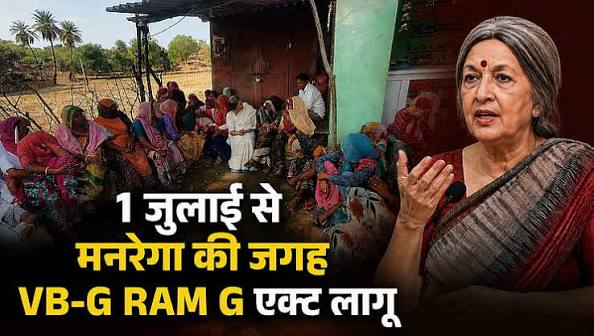
The ‘Vikasit Bharat – Rozgar and Ajeevika Mission (Rural) Act, 2025,’ or VB-GRAMG Act, will come into effect on July 1. New Delhi/Udaipur—Senior Communist Party of India (Marxist) leader and former Rajya Sabha member Brinda Karat has written a letter to Union Rural Development Minister Shivraj Singh Chouhan, raising serious objections to the rules of the Vikasit Bharat – Rozgar and Ajeevika Mission (Rural) Act (VB-GRAMG Act). This letter, written a day before the new law comes into effect, cites genuine problems faced by rural laborers and demands the immediate withdrawal of the rules and the reinstatement of MNREGA. Karat begins her letter by referring to Barapala, a tribal village in Rajasthan’s Udaipur district, where she had interacted with laborers at a MNREGA worksite the previous day. He reported that during the summer season, many female workers waited for about four hours from 6:30 am to 10 am for the online attendance site to open, but could not work that day due to a lack of internet connection. This situation was reported to be common. Indigenous He reported that after the end of MNREGA in December last year, these workers received only 18 days of work from January to June, despite assurances to Parliament that work would continue until the new law was implemented. In particular, at least 12 elderly women complained that the biometric facial recognition technology was unable to recognize their eyes, resulting in them being excluded from work. Karat said that the end of MNREGA has been devastating for the poor in the village. During the summer season, many female workers waited for about four hours from 6:30 am to 10 am for the online attendance site to open, but could not work that day due to a lack of internet connection. This situation is common in the tribal areas of Rajasthan. In light of these very real problems, Karat told the Union Minister that his ministry published eight rules of the VB-Gramji Act on May 22nd without consulting rural and MNREGA workers’ organizations and unions. Had they been consulted, the real problems could have been addressed, but the new rules are more flawed than the law itself and completely ignore the voices of workers. Internet and Telecom In the letter, Karat first raises the constitutional question of whether these rules violate Article 258 of the Constitution, which deals with the “conferring or imposing of duties” on states. According to him, the VB-Gramji Act not only imposes financial burdens on state governments but also imposes responsibilities without their consent. While Article 258(3) requires the central government to reimburse states for additional expenditure, the new rules deprive states of any role in decision-making, a direct attack on the federal structure. Kerala provided an average of 66 days of work a year, which is much higher than the national average, but will receive fewer funds due to its low population. Similarly, Tamil Nadu, which has the highest number of active MNREGA workers despite having a high GSDP, will also receive fewer funds. Karat also criticized the allocation criteria (Rule 396E). He said that the law already relies on fund allocation rather than demand-based work, but the rules determine allocation based on the recommendations of the 16th Finance Commission, which assigns a 42.5 percent weighting to per capita Gross State Domestic Product (GSDP) and 17.5 percent to population. He said these criteria have nothing to do with rural laborers seeking work. Politics Citing an example, he pointed out that Kerala provided an average of 66 days of work a year, which is much higher than the national average, but will receive fewer funds due to its low population. Similarly, Tamil Nadu, which has the highest number of active MNREGA workers despite having a high GSDP, will also receive fewer funds. Karat called this discriminatory and demanded an immediate reconsideration. Furthermore, Karat viewed the “additional expenditure” (Rule 403E) clause as an insult to state governments. He stated that state governments wish to spend their own funds on work expansion and innovation, but the rules bind them to central financial oversight. He sharply questioned whether the right to work would be held hostage to the efficiency or inefficiency of state governments as dictated by the central government. Regarding wage payment and worker identification (Rules 397E and 402E), Karat stated that the rules are completely silent on crucial issues such as the actual determination of wage rates, the timeframe for wage increases, or linking them to price indexes. He stated that the excessive emphasis on online registration and attendance is far removed from rural reality. Even with good internet access, registration can take 1-3 hours. Will this time be included in wages? He questioned why workers should be punished for the dishonesty of officials. Karat said that this approach to the use of technology is based on elitist thinking, while the experience of millions of MNREGA workers shows that this thinking is wrong. He warned that arbitrary and high productivity standards can make it impossible for workers to even earn minimum wages. Therefore, the rules should include a provision for time-use surveys. This is especially important for women workers, as most of the workers in these workplaces are women. Executive Branch Karat also described the formation of the National Level Steering Committee (NLSC) (Rule 397E) as a bureaucratic trap. He said that this committee has minimal representation from states (only five members) and no place for workers or other stakeholders. While more than 50 percent of workers are women, 18 percent are Scheduled Tribes, and 17 percent are Scheduled Castes, their ministries have been excluded from this committee. States are bearing 40 percent of the cost, but with only five members, they have been treated unfairly, as if the center is saying, “Share the cost, but the decisions will be ours.” The Central Council has no binding power, and no independent authority has been created for social audits, which are essential for transparency and corruption control. Finally, Karat said that these
Dalits’ share of budget spent on other schemes: Maharashtra government under fire for allocating ₹2.8 crore to the Warkari Mahamandal!
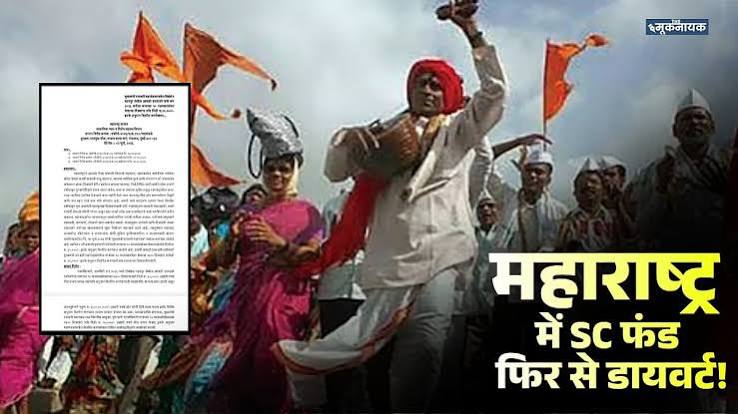
VBA strongly objects: Dalits’ budget worth crores diverted to other schemes, scholarships and welfare schemes still pending Mumbai – The Vanchit Bahujan Aghadi (VBA) has strongly protested the Maharashtra government’s decision to approve financial assistance of ₹2.80 crore from the Social Justice and Special Assistance Department’s budget for the Ashadhi Ekadashi festival through the Chief Minister’s Warkari Mahamandal. The party alleges that the budget earmarked for the welfare of the Scheduled Caste community is being continuously diverted to other schemes, adversely affecting the rights and development of the Dalit community. Through a Government Order issued on July 2nd, the Maharashtra Government has granted administrative and financial approval of a total of ₹2.8 crore (280 lakh rupees) to the Chief Minister’s Warkari Mahamandal to provide assistance of ₹20,000 per Dindi to 1,400 Dindis accompanying 10 palanquins of Maan during the Ashadhi Ekadashi Wari in Pandharpur. According to the Government Order, this amount will be provided from the “Chief Minister’s Warkari Mahamandal’s Assistance Grant (2235D963)” under the Budget Head 2235 – Social Security and Welfare of the Social Justice and Special Assistance Department. The order also states that this amount will be distributed through the Chief Minister’s Warkari Mahamandal, with the Divisional Commissioner, Pune, designated as the Controlling Officer and the Tehsildar (General Administration), Office of the Divisional Commissioner, Pune, as the Drawing and Disbursing Officer. Discrimination and Identity Relationships Criticizing the order, Vanchit Bahujan Aghadi’s State General Secretary, Rajendra Patode, alleged that the Social Justice Department’s budget, especially funds earmarked for the Scheduled Castes, is being continuously used for schemes that are not directly related to the social, educational, and economic empowerment of the Dalit community. He stated that previously, similar funds were used for the Kisan Samman Yojana, the Chief Minister’s Majhi Ladki Bahin Yojana, and the Chief Minister’s Tirtha Darshan Yojana, and now, in the same vein, Rs. 2.80 crore has been allocated to the Chief Minister’s Warkari Mahamandal. Patode stated that if the government wishes to implement these schemes, separate provisions should be made for them from the general budget. He alleged that shifting the budget earmarked for the Scheduled Caste community to other items violates constitutional rights. According to him, numerous schemes related to scholarships, education, economic development, and social justice for Dalit students are still pending, while crores of rupees are being spent for other purposes. Diverting the budget allocated for the Scheduled Caste community to other items violates the rights granted by the Constitution. Previously, funds from the Social Justice Department were similarly used for the Kisan Samman Yojana, the Chief Minister’s Majhi Ladki Bahin Yojana, and the Chief Minister’s Tirtha Darshan Yojana. – Rajendra Patode, State General Secretary, Vanchit Bahujan Aghadi The Vanchit Bahujan Aghadi also stated that due to the lack of a separate and effective legal framework for the Scheduled Caste Sub-Plan, governments are arbitrarily using this budget. The party alleges that this is why the actual benefits of the funds allocated for the Scheduled Caste community are not reaching the targeted groups. Patode described this as a “financial emergency”-like attack on the rights of the Dalit community and called for a widespread public movement on this issue. However, the Maharashtra government’s administrative decision states that the purpose of this assistance is to provide ₹20,000 per Dindi to the 1,400 Dindis accompanying the 10 palanquins of Maan participating in the Ashadhi Ekadashi Wari in Pandharpur. The preamble states that the Warkari tradition is an important cultural heritage linked to Maharashtra’s social harmony, saint tradition, and public awareness, and given the growing numbers, this assistance is considered necessary for management and facilities. According to the government, the Chief Minister’s Warkari Mahamandal was established to carry out welfare programs for the Warkari community and kirtankars, and as in the past two years, it has been decided to provide grants to the Dindis this year as well. Currently, this decision has sparked political debate over the use of the Social Justice Department’s budget. The Vanchit Bahujan Aghadi (VBA) has demanded that the budget allocated for the Scheduled Caste community be used only for schemes related to the social, educational, and economic development of that community, and that legal safeguards be ensured to prevent the diversion of such funds to other schemes. Geetha Sunil Pillai Courtesy: Hindi News
Manjhi lashed out at Chirag, saying, “You took seats by lying; you gave us a rattle.” He advised his son, “Santosh… you should also speak up, what is visible sells.”

“Santosh, you should also speak up… nothing is achieved by keeping your mouth shut. What is visible sells. It is important to remain active in politics and put your point across to the public.” Union Minister Jitan Ram Manjhi made these remarks while addressing an event. Without naming Chirag Paswan, the national president of NDA ally LJP (R). Manjhi said, “You took all the seats you wanted by lying. What did you get? You were given a rattle. Some women who wear bangles remain silent, while others keep jingling. You too should jingle your bangles.” He also said, “There is very little discussion on Dalit issues in Parliament. Today, only MP Chandrashekhar Azad ‘Ravan’ strongly raises Dalit issues. I have also guided him in this direction in parliamentary politics.” Manjhi took a dig at Chirag Paswan – “Do you want to become a martyr by cutting your nails?” During the event, Jitan Ram Manjhi took a dig at Chirag Paswan without naming him. He said, “What kind of people are there who do anything for political gain? One man says, ‘No one can abolish the Constitution and reservation as long as I am here.’ Do you want to become a martyr by cutting your nails? I say that as long as Prime Minister Narendra Modi is here and Samrat Chaudhary is here, no one can harm the Constitution and reservation. Another man says, ‘Nothing can happen as long as we are here… Hey, who are you?” He alleged that in the name of Dalits and reservation, some people took more seats and even won elections, while his party did not get its due. For some, Samrat is a thorn in their eyes. Addressing the event, Jitan Ram Manjhi praised Samrat Chaudhary. He said, “There are many people in politics who consider Samrat Chaudhary a thorn in their eyes.” Manjhi also made several statements regarding Dalit issues, reservation, NDA politics, and the current political situation in Bihar. He said that for the real development of Dalits, a separate electoral system and equal education system are needed. Manjhi said, “Today the world has reached the moon, but the Dalit community is still stuck there. Until a separate electoral system and equal education system are implemented for Dalits, their real development is not possible.” Advice given to son Santosh Manjhi Referring to his son and HAM Party national president Santosh Kumar Suman, Jitan Ram Manjhi said that he should pay more attention to issue-based politics. He said that it is important to carry forward Prime Minister Narendra Modi’s politics and his development model. If the party works seriously in this direction, it can reach the top. Courtesy: Hindi News
Land mafia encroaches on Dalit land in Rae Bareli: Victims reach District Magistrate’s office seeking justice

In Tanghan village, under the Jagatpur police station area of Rae Bareli, land owned by Dalits is alleged to have been encroached by land mafia. After repeated complaints were not heard, the victims reached the District Magistrate’s office and pleaded for justice. Led by Deshraj Pasi, District President of the Pasi community, hundreds of victims marched from Vikas Bhawan to the District Magistrate’s office at 2:30 pm on Monday. The protesters held placards and shouted slogans against the government. The victims allege that land mafias have colluded with the Revenue Department to manipulate government records. They say that under the protection of the police force, powerful people are encroaching on Dalit land by constructing boundary walls. Will lay siege to Unchahar Tehsil One victim, Phoolan Devi, stated that she has submitted a complaint to the District Magistrate three times regarding this matter. However, each time she has received only assurances. The victims say they are constantly making rounds of the administration and local public representatives, but their grievances are not being heard. District President Deshraj Pasi has issued a stern warning in this regard. He said that if appropriate action is not taken soon and their land is not returned, they will surround the Unchahar tehsil. Pasi further said that if they do not get justice there, they will go to the state capital, Lucknow, and raise their voice at the Chief Minister’s office. Ashish Kumar Srivastava | Rae Bareli Courtesy: Hindi News