
Woman who went to worship at temple accused of assault: Case filed under various sections including SC/ST Act

A Dalit woman who went to worship at a temple in Harchandpur village, under the Subeha police station area of Barabanki district, has accused some villagers of assaulting her and using casteist slurs. The woman’s son was also allegedly assaulted. Based on the victim’s complaint, police have registered a case under various sections including the SC/ST Act and have begun an investigation. Harchandpur resident Sant Dulari Rawat, wife of Raj Bahadur Rawat, stated in her complaint to the police that the incident occurred on July 19, 2026, at around 9 a.m. She had gone to worship at a temple near her home. It is alleged that Raghav Ram Mishra, Rajit Ram Mishra, Avadharam Mishra, Sahaj Ram Mishra (sons of Ram Shankar Mishra), and Mansha Devi Mishra, daughter of Ram Shankar Mishra, arrived at the scene and attempted to remove Sant Dulari’s worship materials kept near the temple. According to the victim, when she protested, the accused abused her, used casteist slurs, and began assaulting her. Hearing the commotion, her son, Diwakar, rushed to her rescue, but the accused assaulted him as well. Both the woman and her son are reported to have sustained injuries in the incident. The woman also stated that during the assault, her mangalsutra, weighing approximately two tolas, fell somewhere and was not found despite extensive searching. Based on the victim’s complaint, the police have registered a case under the SC/ST Act and other relevant sections. Inspector-in-Charge Bechu Singh stated that a case has been registered and the matter is being investigated. Further legal action will be taken based on the facts that emerge from the investigation. Idrish | Haidergarh Courtesy: Hindi News
Kerala Crime Branch Arrests Absconding Dental College Professor From Karnataka In Student’s Death Case

Police said the accused avoided using mobile phones and frequently changed locations across different states before he was finally tracked down in Kodagu. Kannur: The Kerala Crime Branch has arrested the absconding prime accused in the death case of first-year BDS student R L Nithinraj of Anjarakandy Dental College in Kannur district in Kerala. Dr M K Ram, a faculty member of the college, was taken into custody from a hideout in Kodagu, Karnataka, after being on the run for several months. The accused was apprehended late on Sunday and brought to Kannur on Monday, where he is being interrogated by the Crime Branch. Dr Ram’s anticipatory bail plea was rejected by the Supreme Court on July 13. Earlier, the Kerala High Court had also dismissed his bail application on June 19. Following the high court order, the Crime Branch had attempted to arrest him in Andhra Pradesh, but he allegedly managed to evade the police before approaching the apex court. After the Supreme Court refused him anticipatory bail, a special team led by Crime Branch Inspector Sreejith Koderi intensified the search. Investigators said the accused avoided using mobile phones and frequently changed locations across different states before he was finally tracked down in Kodagu. Reacting to the arrest, Nithinraj’s father Y Rajan, a daily wager, said the family welcomed the development but maintained that complete justice would be achieved only after all those allegedly responsible were brought to book. “We will get justice only when every accused in the case is arrested and punished,” Rajan told reporters. Nithinraj, a resident of Aryanad in Thiruvananthapuram district, died by suicide after jumping from the medical college building on April 10. His family alleged that the Dalit student had been subjected to sustained harassment by faculty members over his caste and skin colour. Fellow students also alleged that he faced repeated body shaming and mental harassment. Based on the complaint, police registered a case against Dr Ram and others under charges including abetment of suicide and provisions of the Scheduled Castes and Scheduled Tribes (Prevention of Atrocities) Act. Following protests by students, the college management dismissed Dr Ram from service. The investigation is now being conducted by a special Crime Branch team under the supervision of State Crime Branch SP K V Venugopal. While Crime Branch DySP Sudheer Kallan is probing the circumstances leading to Nithinraj’s death, DySP Jeevan George is investigating another angle involving alleged harassment by online loan recovery agents. According to investigators, Nithinraj had borrowed money through a loan app to meet educational expenses and fund his mother’s medical treatment. When he defaulted on repayments, recovery agents allegedly threatened him and contacted his teachers and others, causing severe mental distress. The case was initially investigated by the local police before being transferred to a special investigation team headed by the City Police Commissioner. Following objections raised by the family over the probe, the investigation was later handed over to the Crime Branch. Officials said the custodial interrogation of Dr Ram is expected to provide further clarity on the circumstances that led to the student’s death. Courtesy : ETV Bharat Note: This news is originally published on https:/etvbharat.com/bha and is used purely for non-profit/non-commercial purposes, especially human rights
Dalit Christian teacher buried after 3-day standoff over cemetery rights

Trichy: The body of an 89-year-old retired Dalit Christian teacher was laid to rest in a common cemetery near Thuraiyur on Sunday, three days after his death, after officials brokered a settlement between rival groups locked in a dispute over burial rights. A Raju, a retired government schoolteacher from Kottapalayam village, died of age-related ailments on July 17. His family sought to bury him in the common cemetery attached to St Mary Magdalene Church, but members of other Christian communities objected, claiming that dalit Christians should use a separate cemetery affiliated with St Sebastian’s Church. The dispute is rooted in a long-standing row over burial rights. In 2014, Raju and four others moved the Thuraiyur civil court seeking equal access to the common cemetery for Scheduled Caste Christians. In 2024, the court ruled that the St Mary Magdalene Church cemetery is open to all Christians, irrespective of caste. Despite the court order, opposition from non-dalit Christian groups delayed the burial, forcing Raju’s family to keep his body at home for three days. The standoff heightened tensions in the village, prompting police deployment. Sub-collector Sushree Suvangi Khuntia, additional superintendent of police R Dhanarasu and DSP N Muthumar held marathon talks with representatives of both sides. After nearly nine hours of negotiations at the Musiri sub-collector‘s office, an agreement was reached late on Sunday, following which Raju’s body was buried in the common cemetery around 1am on Monday. Courtesy : TOI Note: This news is originally published on https:/timesofindia.com/bha and is used purely for non-profit/non-commercial purposes, especially human rights
Dalit man laid to rest after 3-day standoff over cemetery rights in TN
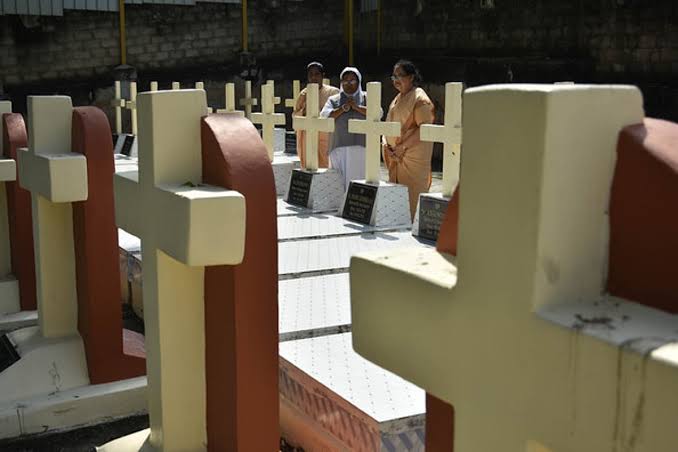
Dispute arose after A Raju, a retired government school teacher and Dalit Christian, died of age-related illness on July 17. His family sought to bury him in the common cemetery, citing the civil court decree. TIRUCHY: A Dalit Christian, whose body remained at his residence for three days allegedly over a dispute on burial rights at a common cemetery in Kottapalayam near Thuraiyur, was laid to rest in the early hours of Monday after district officials brokered a peace agreement between representatives of Dalit Christian and non-Dalit Christian communities. The burial was carried out with police protection following the peace meeting chaired by Musiri Sub-Collector Sushree Suvangi Khuntia. According to officials, Dalit Christians are allowed to use the village’s 0.55-acre common cemetery in line with a 2024 decree of the Thuraiyur District Munsif Court. The minutes of the Sunday meeting said both communities should continue to abide by the court’s order. Officials also decided the funeral mass should be conducted at St Sebastian’s Church, while the burial would take place under the supervision of the parish priest. Dispute arose after A Raju, a retired government school teacher and Dalit Christian, died of age-related illness on July 17. His family sought to bury him in the common cemetery, citing the civil court decree. However, non-Dalit Christians opposed the move, contending that Dalit Christians already had a separate burial ground, leaving the body at the family’s residence for three days. Revenue and police officials held talks with both communities for nearly five hours on Sunday, but failed to break the deadlock. Fresh negotiations on Monday resulted in an agreement, paving the way for the burial. J Doss Prakash, a resident of Kottapalayam, said Dalit Christians had fought for several decades to secure equal burial rights in the common cemetery, which is over 100 years old. He alleged that Dalit Christians were denied access because of caste-based discrimination and said Monday’s burial was carried out by enforcing the civil court’s order. “Several members of the non-Dalit Christian community also stood with us and extended their support during the peace talks. It is only a few groups that continue to raise objections and create divisions within the village,” he said. Pearson Lenekar SR Courtesy : TNIE Note: This news is originally published on https:/thenewindianexpress.com/bha and is used purely for non-profit/non-commercial purposes, especially human rights
How did the opposition’s plan fail? A single move by Asim Arun quelled the Meerut Dalit student Lalita Gautam murder case.

The BJP quelled the Meerut Dalit student murder case as quickly as the opposition had raised it. Minister Asim Arun was behind this thorough planning. The opposition was constantly cornering the government The victim’s family met with CM Yogi Asim Arun kept an eye on the entire case Shadab Rizvi, Meerut: The atmosphere created by the opposition against the government and police regarding the murder of Lalita, a Dalit student in Meerut, Uttar Pradesh, has cooled just as quickly. Lalita’s family’s anger has suddenly subsided. This was made possible by the strategy of Asim Arun, a former bureaucrat and minister to the UP CM. Asim Arun’s sympathy maneuver, arranging a meeting with the CM and securing help, defeated all the opposition politicians who had appeared aggressive on the issue. A Look at the Opposition’s Strategy The family of Lalita Gautam, the student, wanted strict action against the murderer. The family was upset with the delay in arresting the accused. The police’s handling of the situation had angered the district police as well as the government. Dalit leaders from opposition parties and organizations called a Mahapanchayat to address Lalita’s family’s anguish. Everyone expressed their displeasure with the government and police. The situation escalated to a confrontation. Police and protesters clashed. FIRs were filed, and arrests were made. The issue became a topic of discussion across the country. BSP chief Mayawati, Congress President Mallikarjun Kharge, opposition leader Rahul Gandhi, AAP leader Sanjay Singh, SP chief Akhilesh Yadav, Azad Samaj Party President Chandrashekhar, and numerous other leaders attacked the government and police. Leaders from several parties, including Chandrashekhar Azad and Congress state in-charge Rajendra Pal Gautam, attempted to visit the village and meet the victim’s family. SP President Akhilesh Yadav met the victim’s family in Delhi and provided assistance of two lakh rupees. This move and assistance from the opposition unnerved the ruling BJP. Aseem made his move and made things easier. Aseem Arun, Minister of Independent Charge in the UP government, is also the Minister in charge of Meerut. He is pursuing politics after resigning from the post of ADG in the police department. His father, Shriram Arun, was the former DGP of Uttar Pradesh. At the time when Meerut was in turmoil over the Lalita incident, with people demanding the summoning of the minister in charge, Minister Aseem Arun was constantly having three BJP leaders send every media report on the incident to Lucknow. He is working on a strategy to ensure that the anti-Dalit atmosphere does not harm the BJP. According to a BJP leader close to Aseem Arun, the minister had asked everyone not to issue statements, to remain calm, and to monitor every activity. By demanding a report from the Meerut police on the very first day, he sent a message to the public that he was active. To appease the family, he issued a statement alleging a lapse on the part of the Meerut police. He also sent a message to the family through Dalit leaders associated with the party in Meerut that the government would soon help them and provide justice. He did not fall for anyone’s deception. The script for meeting and helping the CM was written like this: According to a state BJP official, Aseen Arun spoke with the CM and arranged a meeting with the victim’s family in Lucknow. However, due to the CM’s frequent visits to West UP districts like Bijnor, Shamli, Ghaziabad, Bulandshahr, Amroha, and Sambhal, the family’s trip to Lucknow was postponed. It was decided to arrange a meeting in a district closer to Meerut. Before the Bijnor-Shamli visit, Minister-in-Charge Aseem Arun arrived in Meerut. He spoke with officials about the Lalita case, met with BJP Dalit leaders, assured the victim’s family of justice, and convinced them to meet the CM. Initially, a meeting in Shamli was discussed, but after Shamli, the CM had to travel to Bijnor. Due to his busy schedule, it was decided that the CM would stay in Ghaziabad and arrange the meeting there before heading to Bulandshahr for a public meeting. This is exactly what happened. In Ghaziabad, the victim’s family met with the CM along with Aseen Arun. The CM approved Aseem’s plan. On Aseem Arun’s recommendation for financial assistance, the CM ordered a grant of five lakh rupees, which was disbursed within a few hours. The student’s uncle and father were promised a house under the Prime Minister’s Housing Scheme, and two private sector jobs for the family. The CM also allayed their grievances with the police by promising strict punishment for the culprits. After arranging a meeting with the CM and providing financial assistance, the victim’s family was given a statement in the media, conveying that they no longer have any complaints and are satisfied. Political analysts believe that this move by Yogi’s former bureaucrat minister has thwarted the campaign launched by opposition parties and organizations against the government. Edited by: Vivek Mishra About the Author Vivek Kumar Mishra is a Senior Digital Content Producer at Navbharat Times Online (NBT.Com). He monitors the political developments in Uttar Pradesh. He provides UP political analysis and tracks events in Uttar Pradesh. Courtesy: Hindi News
CPI(M) accuses governments of neglecting dalits, warns of protests for house site pattas

Communist Party of India (Marxist) State secretariat member Ch. Babu Rao on Sunday (July 19, 2026) accused the Union and State governments of neglecting the welfare of Dalits, tribals, and economically weaker sections. He said that the party would intensify its agitation for the allotment of house site pattas and implementation of welfare schemes. Mr. Babu Rao visited Devineni Gandhipuram in Payakapuram under Vijayawada’s 61st Division, where he and other CPI(M) leaders interacted with residents and reviewed civic and welfare issues. According to a press release by the CPI(M), the residents alleged that successive governments had failed to issue house site pattas despite repeated assurances. They also claimed that the allotment of TIDCO houses and house sites for the poor had remained confined to announcements. The residents further alleged that the scheme providing up to 200 units of free electricity to Dalit and tribal households was not being implemented effectively and complained of delays in extending welfare schemes, loans, and other benefits meant for Scheduled Castes and Scheduled Tribes. Later, addressing the gathering, Mr. Babu Rao alleged that while the government was allocating vast tracts of land to corporate entities, it had failed to confer ownership rights on poor families who had been living in the colonies for decades. He accused public representatives and officials of delaying the issuance of pattas on one pretext or another. He also criticised the Vijayawada Municipal Corporation for focusing on the beautification of major roads while neglecting civic infrastructure and basic amenities in peripheral localities inhabited by the poor. Government and municipal lands were allegedly being encroached upon even as landless families continued to await house sites, he alleged. CPI(M) central city secretary Bhupathi Ramana Rao, committee member Ch. Srinivas and local leaders Melika Srinivas, Venkateswara Rao and Suribabu were among those present. G V R Subba Rao G.V.R. Subba Rao Courtesy : The Hindu Note: This news is originally published on https:/thehindu.com/bha and is used purely for non-profit/non-commercial purposes, especially human rights
YSRCP extends Rs 10 lakh aid to Dalit youth’s family
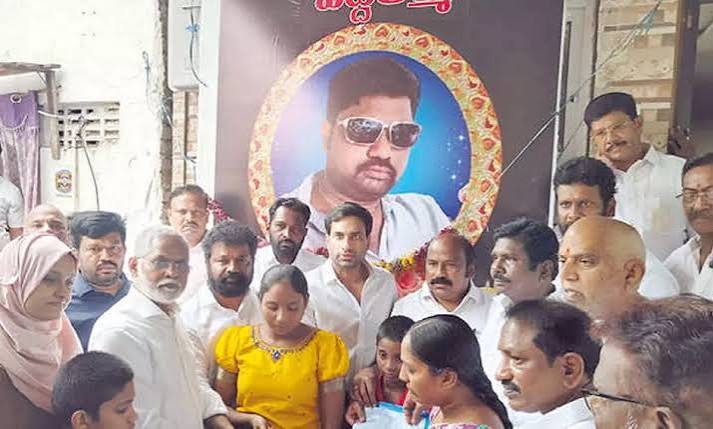
Vijayawada: The YSRCP on Sunday extended financial and humanitarian assistance to the family of Dalit youth Kranthi Kumar, who allegedly died by suicide following police harassment in Krishnalanka. Acting on the directions of YSRCP president YS Jagan Mohan Reddy, senior party leaders handed over Rs 10 lakh in financial assistance to the bereaved family. The assistance was handed over by YSRCP NTR district president Devineni Avinash, former MLAs Malladi Vishnu, Monditoka Jagan Mohana Rao and TJR Sudhakar Babu, former MP Nandigam Suresh, and SC Cell State working president Kommuri Kanaka Rao. The party also announced that it would bear the educational expenses of Kranthi Kumar’s three children. Of the total assistance, Rs 5 lakh was deposited in the name of his daughter, while Rs 2.5 lakh each was deposited in the names of his two sons. YSRCP further assured free medical treatment for Kranti Kumar’s son, who is reportedly suffering from a spinal tumour and has been shifted to a hospital in Hyderabad. Addressing the media, YSRCP leaders alleged that the coalition government had failed to ensure justice for the victim’s family and attempted to suppress the case initially. They claimed that the case was booked under the SC/ST (Prevention of Atrocities) Act only after the intervention of YS Jagan Mohan Reddy. The leaders further alleged that the government had failed to provide statutory benefits, including compensation, employment to the victim’s wife and other welfare assistance. They demanded the immediate arrest of Circle Inspector Nagaraju, who has been named in the case, and asserted that the party would continue to support the family and pursue justice until those responsible are brought to book. Courtesy : THI Note: This news is originally published on https:/thehansindia.com/bha and is used purely for non-profit/non-commercial purposes, especially human rights
Tamil Nadu prepares to establish a separate police station for SC/ST cases, identifying areas affected by untouchability | TM Special

On the instructions of the National Commission for Scheduled Castes, the state government has sought a report from the DGP. Chennai – The Tamil Nadu government has taken a significant administrative step in matters related to the Scheduled Castes and Scheduled Tribes (Prevention of Atrocities) Act and has initiated the process of identifying and establishing special SC/ST police stations in areas where incidents of untouchability-related atrocities are high. This action was initiated following a directive from the National Commission for Scheduled Castes. Currently, five states in the country have a total of 145 special police stations for the speedy and effective investigation of cases under the Scheduled Castes and Scheduled Tribes (Prevention of Atrocities) Act. Madhya Pradesh leads with 51 special police stations. The case relates to a petition filed by S. Venkatesan, a resident of Sunnambedu in Chengalpattu district and associated with the Neelam Cultural Centre. In his complaint to the National Commission for Scheduled Castes on June 13, 2025, Venkatesan demanded that the state government officially designate areas where such incidents are most frequent as “Areas Prone to Untouchability Atrocities.” He also demanded the immediate establishment of dedicated SC/ST police stations in these areas. Speaking to The Mooknayak, Venkatesan stated that the situation of caste-based atrocities in Tamil Nadu is complex and concerning at all three levels: social, legal, and political. Although the state is known for its progressive politics and Dravidian movements, caste discrimination and violence remain a serious challenge at the grassroots level. Taking cognizance of this complaint, the National Commission for Scheduled Castes issued a letter dated June 23, numbered APCR/OL/TN/2025/304819, directing the Tamil Nadu government to take necessary action. Following this, the Tamil Nadu Home Department issued letter number 12738/Police.15/2026-1 on July 7, 2026. This letter was issued by Deputy Secretary (Home Department), M. Srinan, and addressed to the Director General of Police, Chennai, and the Inspector General of Police, Social Justice and Human Rights Wing. The letter attached a copy of the complaint received from the National Commission for Scheduled Castes, urging the concerned officials to take necessary action in the matter. The Home Department directed that a detailed report of the action taken on the complaint be sent directly to the National Commission for Scheduled Castes, Chennai, and a copy be provided to the complainant, S. Venkatesan, and the state government. The letter also categorized the matter as “urgent,” directing that action be taken with special priority and that the Commission be promptly provided with an appropriate response. It is noteworthy that the main request of Venkatesan’s petition was that areas where incidents of untouchability and caste-based atrocities are frequently reported should be designated as a separate category and that special SC/ST police stations should be established there to ensure effective investigation and prompt action in cases related to the Scheduled Castes and Scheduled Tribes (Prevention of Atrocities) Act. What do NCRB data say? According to data presented in Parliament by the Ministry of Home Affairs and NCRB, Tamil Nadu has seen a steady increase in cases registered under the SC/ST (Prevention of Atrocities) Act. From approximately 1,274 cases registered in 2020, this number increased to over 1,700 to 1,800 by 2022-2023. Compared to the national level, the conviction rate for caste-based crimes in Tamil Nadu has been quite low (approximately 8% to 13%), while the pendency of cases remains over 80%. Major Forms of Caste Crimes Honor Killings: Violence against inter-caste marriages or love relationships (especially between non-Dalit women and Dalit men) is a major issue in Tamil Nadu. Such incidents are frequently reported in districts such as Tirunelveli, Madurai, Thanjavur, and Krishnagiri. Social Exclusion and Untouchability: Social barriers such as the “two-cup system” (separate cups for Dalits and non-Dalits at tea shops), restrictions on access to cremation grounds, temple entry bans, and the prohibition of Dalit sarpanches from performing administrative functions still persist in many rural areas of the state. Inhumane Harassment: Polluting water tanks (such as the Vengaivayal case), contaminating public drinking water sources, and social boycott of settlements have emerged as inhumane methods of demonstrating caste dominance. Caste Tension at the School/Educational Level: Reports of students wearing different-colored caste bands and violent clashes within schools in the southern districts of the state (such as Tirunelveli and Thoothukudi) have also become a matter of concern. The Social Justice and Human Rights (SJ&HR) wing under the Tamil Nadu Police Department is active, identifying and monitoring vulnerable areas prone to caste tensions. Highlighted Caste Crime Cases in Recent Years Prominent cases of atrocities and honor killings against the Scheduled Caste (SC/ST) community in Tamil Nadu in recent years include the Kavin Selvaganesh case in Tirunelveli (July 2025), where a 27-year-old Dalit software engineer was murdered in broad daylight for his love affair with an upper-caste woman. The Praveen murder case in Pallikaranai, Chennai (February 2024), in which a 26-year-old Dalit man was murdered by his inter-caste wife’s brother and associates. The Aishwarya murder case in Thanjavur (January 2024), where a 19-year-old woman was honor-killed by her own family for marrying a Dalit man, Naveen. The Uthangarai case in Krishnagiri (2023), in which a father (Dandapani) brutally murdered his own son, Sabash, for marrying an inter-caste Dalit woman, Anusuya. The Vengaivayal case (2023) in Pudukkottai, where the inhumane and serious caste crime of harassing an entire community by mixing human excreta into a water tank that supplied drinking water to a Dalit settlement, was exposed. Special Police Stations Exist Only in These States According to the latest data from the Union Ministry of Home Affairs and the Ministry of Social Justice and Empowerment, a total of 145 Special Police Stations have been established in five states across the country for the speedy and effective investigation of cases under the Scheduled Castes and Scheduled Tribes (Prevention of Atrocities) Act. Madhya Pradesh leads the network of these special police stations with 51, followed by Bihar with 40, Chhattisgarh with 27, Jharkhand with 24, and Kerala with three. Geetha Sunil Pillai Courtesy: Hindi News
Chirag Paswan’s LJP(R) To Contest Punjab Assembly Elections In 2027; Eyes Dalit Votes

Patna: Union Minister of Food Processing Industries and Lok Janshakti Party (Ram Vilas) president Chirag Paswan has announced that his party will contest the Punjab Assembly elections expected to be held early next year. Wearing a kesariya (saffron) colour Sikh turban, the Union Minister made this announcement on Sunday evening after paying obeisance at the Golden Temple in Amritsar. “Our party will enter the Punjab Assembly polls with full preparations to register its strong presence. We have launched the election preparation at the pious land of Punjab after taking blessings at the Golden Temple. We have taken a vow to serve the people of the state and strengthen our organisation,” Chirag, accompanied by his mother Reena Paswan, said. The Union Minister asserted that the LJP(R) would expedite the expansion of its network across the northern state, increase the activity of its workers and intensify its mass public contact programme. He added that all preparations for the polls would be completed at a swift pace. “We will go to the people with the issues of public service, development, and social justice. The LJP(R) will carve out a strong identity with the help of the people of Punjab and the hardwork of the party workers,” he added. The LJP(R) is a part of the National Democratic Alliance (NDA) governments at the Centre and in Bihar. It has a strong support base among the Scheduled Castes (SC) in the eastern state. Its founder, former Union minister Ram Vilas Paswan, was an eminent Dalit leader and the party has excelled as a progressive organisation under the leadership of his son Chirag Paswan. Chirag also visited the Jallianwala Bagh to pay floral tributes to the martyrs’ memorial there, Dera Sachkhand Ballan, which is a Ravidasia or Ramdasia Dera, Bhagwan Valmiki memorial and Babasaheb Bhimrao Ambedkar at Jalandhar. While travelling from Amritsar to Jalandhar, the LJP(R) chief stopped his convoy after noticing an injured young woman lying on the roadside near Dera Sachkhand Ballan. He immediately instructed his team to shift the injured woman to a hospital in his vehicle and ensured that she received prompt medical attention. The LJP(R) president’s visits indicate that he is seeking to woo the SC voters in Punjab. The state has around 32 percent Dalit population, the highest proportion among all the states in the country. Punjab has 39 Dalit castes, among which the Mazhabi Sikhs, Ravidasias or Ramdasias, Ad-Dharmis, and Valmikis account for about 84 percent. A majority of the SC population in the state is predominantly rural. Its highest concentration is in the Doaba region – the land between the Beas and Sutlej rivers. Incidentally, Chirag has strong personal links also with Punjab. His mother Reena (maiden name Reena Sharma) hails from Amritsar. Then an airhostess, Reena married Ram Vilas in 1982 as his second wife. Chirag Paswan is also known to have several relatives and friends in Punjab. His personal security detail includes several bodyguards from there. By Dev Raj Courtesy : ETV Bharat Note: This news is originally published on https:/etvbharat.com/bha and is used purely for non-profit/non-commercial purposes, especially human rights
A Dalit man died after being beaten by goons at a cowshed in Amethi. A case has been filed based on a family complaint.
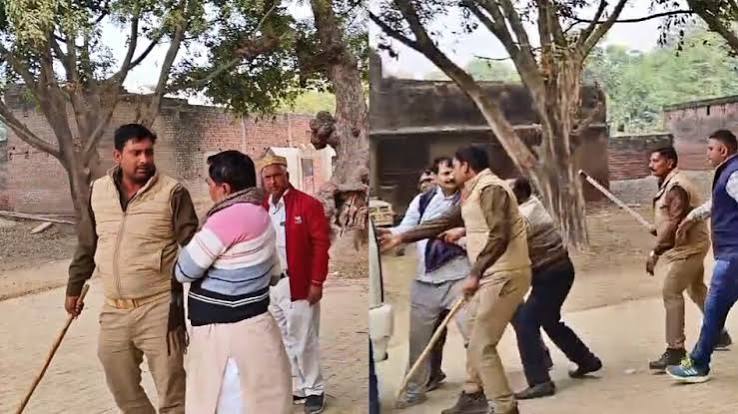
The family alleges the death was due to injuries sustained during the assault; police are investigating. Amethi: A Dalit man was found injured in a cowshed in the Dandupur village council on Sunday. Villagers rushed him unconscious to the local CHC, where doctors declared him dead. The family alleges the death was due to injuries sustained during the assault. Police have filed a case and begun an investigation based on the family’s complaint. Sahab told police that his father, Ram Dulare (a resident of Barnapur, Inhauna), a leather contractor, left home for the area at 6 a.m. on Sunday. He went to the cowshed in the Dandupur village council at 4 p.m. for some work. He then got into an argument with Rajesh, a worker at the cowshed. Dalit dies after being beaten by goons! In the ensuing altercation, Rajesh and his associates attacked him with sticks, causing serious injuries. Nearby residents took him to Singhpur CHC, where doctors declared him dead upon initial examination. The hospital informed the police about the incident. Upon receiving the information, the police arrived at the scene. They informed the family, prepared an inquest report of the body, and began further investigation. The police’s preliminary investigation revealed no significant injury marks on the deceased. Tiloi Circle Officer Dinesh Mishra stated that the inquest report has been prepared and the body has been sent for postmortem examination. No injury marks were found on the body. Based on the complaint filed by the victim’s family, a case has been registered and an investigation has begun. Courtesy: Hindi News