
Rape of Dalit girl in Nasirabad… Accused still absconding: Lok Janshakti Party and villagers protest, Samajwadi Party threatens agitation.
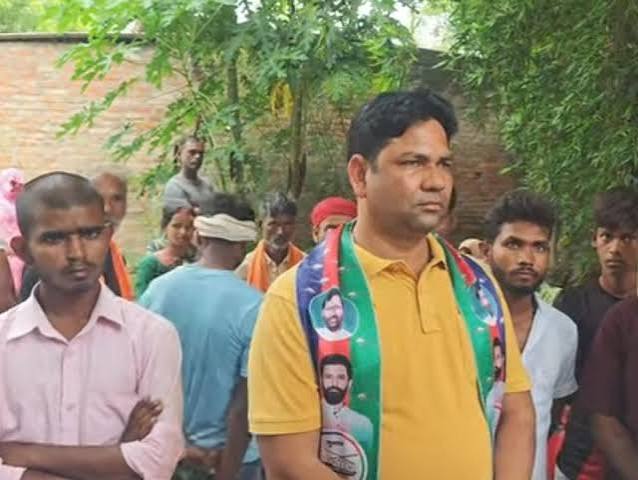
Lok Janshakti Party (LJP) workers and villagers protested on Thursday against the non-arrest of the absconding accused in the rape case of a Dalit girl in the Nasirabad police station area of Rae Bareli. Meanwhile, a delegation of the Samajwadi Party (SP) also met with the victim’s family and demanded immediate action. The incident dates back to last Tuesday, when a case was registered under sections of the rape and SC/ST Act for the rape of a Dalit girl. Police have arrested Prem Sagar Tiwari, but the other four accused are still reported to be absconding. Lok Janshakti Party, Amethi District President, Dharmraj Paswan, visited the victim’s family. The family alleged that the arrest of the remaining accused was being delayed and they were receiving constant threats. Following this, party workers and villagers protested in the village and demanded the immediate arrest of all the absconding accused. Assurances given to protesters Upon receiving information about the protest, Paraiya Namaksar outpost in-charge Atul Kumar Tripathi arrived at the scene with police force. During this, there was a minor altercation between the protesters and the police regarding the arrest of the accused. The police assured the protesters that continuous efforts were being made to arrest the absconding accused and that action would be taken soon. Following this, the protest ended. Demand for fair and strict action Meanwhile, a delegation from the Samajwadi Party also met with the victim’s family. SP leader Chaudhary Suresh Nirmal warned that if the absconding accused were not arrested within 24 hours, the party would launch a major agitation regarding the matter. He demanded fair and strict action from the police administration. LJP’s Chhavilal Pasi, Rakesh, Pushpendra, Ramesh and several other villagers were present on the occasion. Ashar Fapur (Salon), Rae Bareli Courtesy: Hindi News
32% Dalit Vote In Play: Why Every Party In Punjab Is Racing To Own Guru Ravidas Jayanti

Since the Jayanti is on February 20, it will fall right in the middle of the election campaign, making it a major event for all the parties Ahead of the Punjab Assembly elections, Guru Ravidas Jayanti has become more than just a religious occasion. With the Ravidasia community wielding considerable electoral influence, particularly in the Doaba region, every major party is using the celebrations to reinforce its outreach to Dalit voters. Guru Ravidas was a revered 14th-15th-century Bhakti movement saint, poet, and social reformer. He has a massive following among Scheduled Castes in Punjab. Punjab has the highest Dalit population in the country at around 32%, according to the 2011 Census. The community plays a decisive role in the electoral outcome of several assembly constituencies, making it a key political constituency for all major parties. Since the Jayanti is on February 20, it will fall right in the middle of the election campaign, making it a major event for all political stakeholders in the state. The Centre’s launch of a special train for Guru Ravidas Jayanti is also likely to add a political dimension to the festivities. The BJP is projecting the launch of the special train as part of the Narendra Modi government’s efforts to facilitate pilgrimage and honour the legacy of Guru Ravidas. The party is showcasing the initiative alongside its outreach to Ravidasia deras and religious institutions, seeking to strengthen its connect with SC voters. The BJP is also using the occasion to expand its social base beyond its traditional urban support. The BJP has already kickstarted seven-month-long celebrations from UP to Punjab under the banner of ‘Samrasta Sankalp Abhiyan’, coinciding with the 650th birth anniversary of Guru Ravidas. The ruling AAP government is highlighting the measures it has taken to mark Guru Ravidas Jayanti, including declaring it a public holiday, organising state-supported celebrations and facilitating devotees travelling to places associated with Guru Ravidas. The party is expected to present these initiatives as part of its broader commitment to respecting all faiths, while combining them with welfare and governance measures targeted at disadvantaged communities. The celebrations are likely to be used to reinforce AAP’s outreach to Dalit voters, who form a key pillar of its electoral support in Punjab. The Congress is expected to leverage its traditional support base among the Ravidasia community, particularly in the Doaba belt, by increasing the visibility of its senior Dalit leaders during the celebrations. The party is likely to argue that while symbolic gestures have their place, the place in Sikhism, with his hymns enshrined in the Guru Granth Sahib, while projecting itself as a party rooted in Punjab’s religious and social ethos. The Akali Dal is also likely to step up its engagement with Ravidasia organisations as it seeks to rebuild its support base before the 2027 polls. Reported by: Gurpreet Singh Chhina Edited by: Mohd Asim Courtesy : NDTV Note: This news is originally published on https:/ndtv.com/bha and is used purely for non-profit/non-commercial purposes, especially human rights
Shravasti News: LJP to hold Dalit Chaupal on August 1
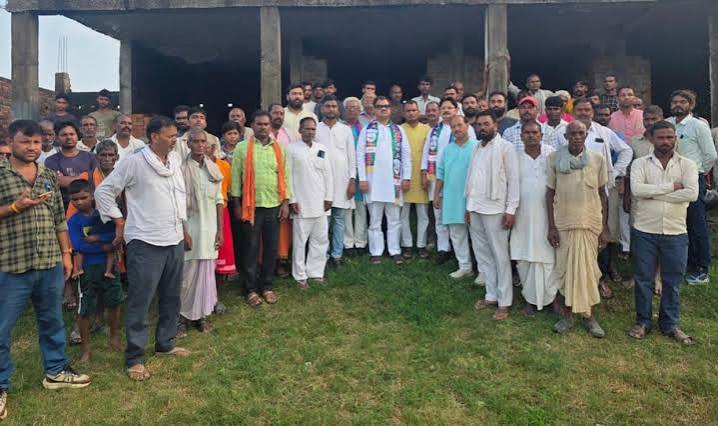
Shravasti. The Lok Janshakti Party (Ram Vilas) will organize a Dalit Chaupal program on August 1 in Sangampurwa village of Jamunaha tehsil. The chief guest at the program will be MP and Uttar Pradesh in-charge Arun Bharti. A divisional review meeting was held on Wednesday regarding the preparations for the program, chaired by District President Rahul Paswan. Program coordinator and State Vice President Manoj Pathak stated that the Chaupal is being organized to strengthen the party’s hold among Dalits. Officials from all districts of the division attended the meeting, and the program outline was prepared. Devipatan divisional president Jatashankar Valmiki, Ashwani Srivastava, Balrampur district president Gaurav Singh, and Bahraich district president Yunus Parvez, among others, were present. Courtesy: Hindi News
BJP flags off 6-month campaign to consolidate Dalit’s support
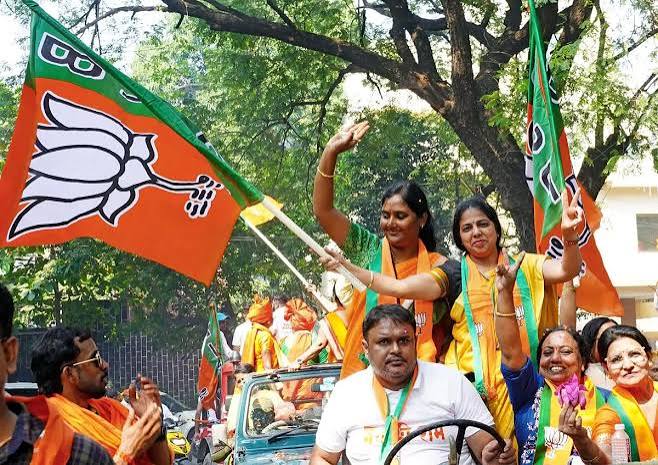
Lucknow: In a move aimed at strengthening its presence among Dalits ahead of key electoral battles in Uttar Pradesh and Punjab, the BJP on Tuesday launched its ambitious ‘Samrasta Yatra’ from Varanasi. UP Chief Minister Yogi Adityanath and state BJP president Pankaj Chaudhary flagged off 131 urns carrying soil from Dalit icon Sant Ravidas’s birthplace at Seer Govardhanpur in Varanasi, is being seen as an attempt to strengthen the party’s influence among Dalit communities in UP while making significant political inroads in Punjab. The yatra, which began on Guru Purnima, will continue for six months until February 20, 2027, making it one of the BJP’s longest social outreach campaigns. Although BJP national president Nitin Nabin was scheduled to attend the launch, his visit was cancelled at the last moment. Of the 131 urns, 75 will be distributed across villages and hamlets in UP, while the remaining will be sent to other states, with Punjab receiving special attention. Political observers believe the campaign’s impact could be more pronounced in Punjab than in UP. Sant Ravidas enjoys deep reverence among Jatavs, one of the largest Dalit communities, and Dalits constitute nearly 34% of Punjab’s population. In UP, Dalits account for around 21% of the population and hold significant electoral influence through 84 Assembly constituencies reserved for scheduled castes. However, the BJP faces challenges in attracting Jatav voters in UP. Despite its efforts and also by the SP-Congress alliance and Chandrashekhar Azad’s Azad Samaj Party to consolidate their support, a large section of Jatavs continues to remain aligned with the Bahujan Samaj Party (BSP). Analysts say this leaves limited room for the BJP to make rapid gains among the community in the state. Punjab presents a different political landscape. Though BSP founder Kanshi Ram hailed from Punjab and began his political journey there, the party has struggled to establish itself as a major electoral force in the state. The vacuum has allowed national and regional parties to compete for Dalit support, making the BJP’s Sant Ravidas outreach politically significant. Within UP, party insiders say the campaign reflects a broader strategy to strengthen ties with Dalit communities. BJP leaders are reportedly working on literature and outreach programmes centred on Dalit icons as part of preparations for the 2027 Assembly elections. The urgency stems from the BJP’s performance in the 2024 Lok Sabha elections, when sections of its traditionally supportive non-Jatav Dalit base, including Valmikis, Sonkers and Pasis, drifted away from the party. The SP-Congress alliance made significant gains, with the Samajwadi Party winning 37 seats and the Congress six, while the BJP’s tally dropped sharply from 62 to 33 seats in the state. Political observers attribute part of this shift to the Congress-SP alliance, while SP leaders argue that sustained grassroots engagement and the emergence of Dalit leaders within the party helped reduce long-standing mistrust among Dalit voters toward the SP. SP insiders say the party plans to further expand Dalit representation in the 2027 Assembly polls and may field Dalit candidates even from general seats where electoral conditions favour such a move. The political importance of Sant Ravidas’s birthplace has steadily grown over the years. Prime Minister Narendra Modi attended Ravidas Jayanti celebrations in 2016 and 2019 and visited the temple again in 2023. Congress leaders Rahul Gandhi and Priyanka Gandhi, AAP chief Arvind Kejriwal and former Punjab chief minister Charanjit Singh Channi have also paid visits in recent years. The site’s political symbolism dates back to 1997, when then chief minister Mayawati attempted to develop a grand park at Sant Ravidas’s birthplace. The proposal, however, faced local resistance and could not be completed. Nearly three decades later, the temple and Sant Ravidas’s legacy remain at the centre of competing political efforts to win over Dalit voters. Courtesy : TOI Note: This news is originally published on https:/timesofindia.com/bha and is used purely for non-profit/non-commercial purposes, especially human rights
Tehri Dalit Teen Death Case: Fugitive Accused Arrested in POCSO Case

The people of Pratap Nagar had repeatedly appealed to the district administration to arrest the accused. Tehri: The death of a Dalit teen in the Lambgaon area is once again in the news. Based on the complaint filed by the minor victim’s mother, a case was registered at the Lambgaon police station under sections of the BNS and POCSO Acts. Following this, the Dalit teen’s friend was arrested today. During the investigation, based on the victim’s statements under sections 180 and 183 of the BNSS and other evidence, the absconding accused was arrested. The accused was produced in court today. The people of Pratap Nagar had repeatedly appealed to the district administration to arrest the accused. Following this, the police conducted raids at various locations to arrest the accused, and finally, the accused has been arrested. The Dalit teen was friends (or in a love affair) with a girl. On the night of June 7-8, after receiving a call from the girl, he and his friend went to meet her on a bike. The girl’s family members intercepted him there. They then took the Dalit teenager and his friend hostage. They reportedly assaulted them, resulting in serious injuries. The Dalit teenager died. After the Dalit teenager’s death, the case became a high-profile one. There was a huge uproar. Following this, Chandrashekhar Azad, MP from the Nagina parliamentary constituency in Uttar Pradesh, visited the Dalit teenager’s home. He met with the Dalit teenager’s family and assured them of his support. He also demanded a CBI investigation into the matter. Following this, several other revelations emerged regarding the case. The other party also demanded the arrest of the Dalit teenager’s friend, who was arrested today. Courtesy: Hindi News
Occupation of 72 Dalit Patta Lands: Women Beaten for Protesting, Appeal to DM

In Niloha village, Falavada, Sardhana tehsil, Meerut, 72 Dalit leased lands have been encroached upon by powerful people. When the women tenants arrived with their land documents, they were assaulted and threatened with dire consequences. The victims met with District Magistrate Dr. VK Singh and requested an investigation and action in the matter. Villagers of Niloha village, Sardhana tehsil, stated that these leased lands were allotted to Dalits during the BSP government. According to government records, the land measures approximately 750 bighas, and all the villagers have valid lease documents. However, despite the land being in their names on the documents, the village’s powerful people have occupied it. According to the villagers, when they go to cultivate their land, the powerful people destroy their crops with tractors. This has caused them losses worth lakhs of rupees and has created a financial crisis. The villagers have accused Satte Pradhan, Mukesh Pradhan, Ompal, Ajay Kumar, Devi Lal, Rajveer, and Vinod, among others, of encroaching the land. The victims stated that they had filed complaints in this regard at the relevant tehsil and police station. However, their complaints were dismissed as land disputes, and no action was taken. On Wednesday afternoon, a large number of villagers reached the District Magistrate’s office. They explained their problems to the administrative officer and alleged that the bullies do not spare even women and beat them with sticks. Administrative officials have investigated the matter and assured impartial action. Shubham | Meerut Courtesy: Hindi News
Alleged rape of Dalit girl in Nasirabad: Main accused arrested, case filed under serious sections including SC/ST Act

A case of rape of an 18-year-old Dalit girl has come to light in a village in the Nasirabad police station area of Rae Bareli. Based on the complaint filed by the victim, the police have registered a case under rape, SC/ST Act, and other serious sections. Police have arrested the main accused and are investigating the matter. According to the complaint filed by the victim’s aunt, on July 28th, at around 4 pm, village resident Prem Sagar Tiwari, son of Dayashankar Tiwari, allegedly lured the girl into his tubewell room. It is alleged that she was forcibly raped there. After the incident, the accused used casteist slurs and threatened to kill her if she mentioned the incident to anyone or complained to the police. The accused also claimed that his family had influential and political connections. The complaint also alleges that when some villagers arrived at the scene, those present allegedly abused the victims, made casteist remarks, and threatened to kill them. As the crowd of villagers grew, the accused fled the scene. Salon Circle Officer Yaduvendra Bahadur Pal stated that after the complaint came to light, a case was registered under serious sections including rape and the SC/ST Act. The main accused has been arrested and is being interrogated. The victim has been sent for a medical examination. He added that an impartial investigation is also being conducted into the role of the other accused named in the case. Strict legal action will be taken based on the facts that emerge from the investigation. According to the police, the investigation is being carried forward based on all evidence and the medical report. Rajiv Sinha | Chhatoh, Raebareli Courtesy: Hindi News
Silenced by caste, forged by resistance: Meet Urmila Pawar, the voice that forced India to confront its deepest shames

There is a kind of writing that does not simply tell a story. It breaks something open. It reaches into the parts of society that have been deliberately kept in shadow and holds a lamp up to them steadily, fearlessly, and without flinching. Urmila Pawar has been doing exactly that for over four decades. At the AutHer Awards 2026, the seventh edition of the prestigious joint initiative by JK Paper and The Times of India, Urmila Pawar received the Lifetime Achievement Award, a recognition that feels less like a culmination and more like a long-overdue acknowledgment of a voice that has always been essential, even when the world was not yet ready to hear it. She is 80 years old. And she has not stopped writing, fighting, or speaking. A childhood woven from poverty, caste, and quiet resistance Urmila Pawar was born in 1945 in Adgaon village of Ratnagiri district, Maharashtra, into the Mahar community, one of the communities that faced the most severe caste discrimination in Indian society. Her father’s insistence on educating his children led to Pawar eventually leaving the Konkan region for Mumbai to study. In a community where education for girls was not a given, this decision was quietly radical. She went on to earn a master’s degree in Marathi literature from the University of Mumbai, a woman from a Dalit family, in a system that had been designed to keep her out. When she was 12 years old, her family converted to Buddhism, inspired by Dr. B.R. Ambedkar. That conversion was not just religious. It was political. It was a declaration that they would no longer accept the identity that caste had forced upon them. And for Urmila Pawar, Buddhist philosophy would go on to shape every word she ever wrote. In 2003, Urmila Pawar published Aaydan in Marathi. The word “bamboo basketry” means things woven from bamboo, a direct reference to the work her mother did to survive. The English translation, titled The Weave of My Life: A Dalit Woman’s Memoirs, was published in 2009, translated by Maya Pandit. The autobiography covers many themes, including injustice, exploitation, hunger, poverty, and humiliation. But what makes it extraordinary is not the suffering it documents. It is the dignity and the clarity with which it is told. This memoir is not just a story but an account of a woman who believed that she had the power to create changes. The Weave of My Life questions the established norms and beliefs related to caste, class, and patriarchy. It explicitly challenges the deliberate neglect of histories related to caste oppression, struggles, and resistance. In this frank and intimate memoir, Pawar not only shares her tireless effort to surmount hideous personal tragedy but also conveys the excitement of an awakening consciousness during a time of profound political and social change. The book created a sensation. It was read, discussed, debated, and taught in universities. It was recognised as one of the most significant works of Dalit literature ever written by a woman. A life lived at the intersection of writing and activism Urmila Pawar’s contribution goes far beyond a single autobiography. She is the author of two acclaimed short story collections, Sahava Bot and Chauthi Bhint, and, with Meenakshi Moon, co-authored a book on the role of women in the Dalit movement. She is also a former actor of radical Marathi theatre and a playwright. For years she worked in the department of labour welfare for the government of Maharashtra. She was not writing from the comfortable distance of an academic or a literary professional. She was writing from within the lives she was documenting as a government officer, as a Dalit woman, and as someone who had lived the reality she put on the page. She is a prominent figure in the Dalit and feminist movements. Her writing is self-reflective and makes the reader ponder over these intimately felt oppressions. She also received the Matoshree Bhimabai Ambedkar Award in 2004 and was offered the Laxmibai Tilak Award, which she declined, a gesture that itself spoke to her unwillingness to accept recognition on terms she did not fully endorse. The Lifetime Achievement Award for Urmila Pawar is not simply recognition for a body of work. It is recognition for a body of resistance. She delicately navigated her readers through her long journey from the harsh landscape of the Konkan region to Mumbai, first as a Mahar and later as a woman as she challenged the conventions of both caste and gender to emerge as an activist and a strong literary voice. In a country where Dalit women’s stories have been systematically excluded from the literary mainstream, Urmila Pawar insisted on being heard. She wrote in Marathi, in the language of her community, about the lives that polite society preferred not to acknowledge. And she was right to insist. Because in order to begin to comprehend Dalit feminist writings, closely reading Pawar’s work is paramount to setting up a historical context for the Dalit feminist movement in Maharashtra. At 80, Urmila Pawar is not a relic of the past. She is a reminder that the most important stories are often the ones the world has worked hardest to suppress and that the writers who tell them anyway are the ones who matter most. Suggest a better headline for this and make it more engaging and impactful and deep and emotional. Courtesy : TOI Note: This news is originally published on https:/timesofindia.com/bha and is used purely for non-profit/non-commercial purposes, especially human rights
Dalit girl missing for a week: Missing case filed in Machhlishahr, police searching

A minor Dalit girl has been missing from Machhlishahr for the past week. Police have filed a missing person case and launched a search for her. The girl left home on July 19th and has not returned since. The girl’s father, who lives in a neighborhood in the city, stated that his 15-year-old daughter left home at around 10 a.m. on July 19th, saying she was going to the bus station. However, she did not return home until late evening. The girl’s family contacted her friends and relatives the next day to gather information, but found no trace of her. When no information was found despite repeated searches, the father filed a missing person report at the police station on Monday evening. In-charge Inspector Vineet Roy stated that a missing person report has been filed based on the father’s complaint. Police teams are actively searching for the girl. Abhishek Narayan Singh | Machhlishahr Jaunpur Courtesy: Hindi News
Two Bhopal police constables arrested for allegedly abducting and rap!ng minor Dalit girl

Two Madhya Pradesh Police constables have been arrested for the alleged abduction and rape of a minor Dalit girl in Bhopal. The incident reportedly occurred on July 22, and the survivor filed a complaint at Jahangirabad Police Station the following day, leading to the registration of an FIR and the prompt arrests of both accused. Bhopal Additional Commissioner of Police (Law and Order) Shailendra Singh Chauhan identified the accused as constables Santosh Sen and Jitendra Singh. According to police, the men, who are serving police personnel, called the minor girl and took her away in a car. An officer familiar with the case said the pair allegedly lured her by claiming they were taking her to a birthday celebration. They then drove her to a secluded location where Santosh Sen is accused of raping her. Afterward, the men left the girl at a city square. A medical examination of the survivor has been conducted. She is currently at home and her condition is stable. The case has been registered under the Protection of Children from Sexual Offences (POCSO) Act, the Scheduled Castes and the Scheduled Tribes (Prevention of Atrocities) Act, and relevant provisions of the Bharatiya Nyaya Sanhita, including Section 137(2). Further investigation is underway. Courtesy : MM Note: This news is originally published on https:/muslimmirror.com/bha and is used purely for non-profit/non-commercial purposes, especially human rights