
Meerut Dalit family under ‘house arrest’: Family alleges police pressure in kidnapping case
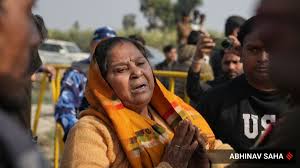
Paras Som and Sunil Som, both belonging to the Rajput community, had allegedly hacked to death 50-year-old Sunita Devi and kidnapped her 20-year-old daughter on January 8 The family members of the Dalit girl who was kidnapped after the murder of her mother at Kapsad village in Meerut district early this month have claimed that they were under house arrest and the police were pressuring them not to pursue the case against the accused. Paras Som and Sunil Som, both belonging to the Rajput community, had allegedly hacked to death 50-year-old Sunita Devi and kidnapped her 20-year-old daughter on January 8. The police arrested Sunil from Meerut and Paras from Haridwar and recovered the girl. Sunita’s husband Satyendra Kumar told reporters near his house on Saturday that the police had put them under house arrest. “We are not allowed even to meet our lawyers. Our family members who had come here to see us were not allowed to enter the house. We suspect that they are also recording our phone calls.” He claimed some cops warned them against pursuing the case against Paras. Piyush Srivastava Courtesy : The Telegraph Note: This news is originally published on https:/thetelegraph.com/bha and is used purely for non-profit/non-commercial purposes, especially human rights
Non-dalits attack, damage dalit youth’s house in Dharmapuri
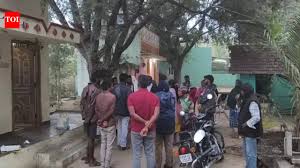
Dharmapuri: The communal disharmony between the residents of two neighbouring villages in Thalanatham panchayat in Kadathur union flared up on Friday night with a gang of Vanniyars from Guruparalli village attacking a house of Arundhathiyars in Nadur village, damaging the property and then locking up the inmates inside the house. According to the Kadathur police, Nadur village is home to more than 50 families belonging to Arundhathiyar community. “On Friday, Jaisimman, 25, and Santosh, 23, of Nadur village, headed to Guruparalli village to have food on a two-wheeler. Their vehicle broke down in Ayyampatti area, which is dominated by the people belonging to Vanniyar community. A few Vanniyar youths, who were passing by the area, asked them to leave the place immediately,” a police officer said. Youths belonging to the two communities subsequently entered into a verbal spat, which ended in physical assault. “More Vanniyar youths gathered in the area and attacked Jaisimman and Santhosh and used casteist slurs against the duo.” The two youths returned to their houses at 10pm after retrieving the two-wheeler and went to sleep without informing their parents about the fight, the officer said. “Later at night, more than 10 people belonging to the Vanniyar community gathered at the house of Jayasimhan, shouted obscene words and attacked the house with sticks and iron rods, breaking the windows and doors. They locked the main door from outside, and threatened to kill the family if they came out of the house,” the officer said. By the time neighbours arrived at the house, the gang fled the scene with Jayasimhan’s two-wheeler, the officer said. When alerted, the Kadathur police rescued the people trapped inside the house by breaking open the door. On Saturday, police arrested five residents of Ayyampatti area – Santosh, 25, Sakthi, 24, Chandaru, 25, Dhileepan, 24, and Surya, 25 – in connection with the incident. They were booked under the Scheduled Castes and the Scheduled Tribes (Prevention of Atrocities) Act and lodged in the Salem Central Jail under judicial custody. The Kadathur police also have registered a case against Jaisimman, Santosh and a few others for teasing women and harassing Vanniyar youths. Courtesy : TOI Note: This news is originally published on https:/timesofindia.com/bha and is used purely for non-profit/non-commercial purposes, especially human rights
PM Modi isn’t renaming Adampur Airport after Sant Ravidas without reason; it’s a major move in Dalit politics, here’s how.
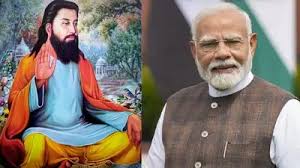
Prime Minister Narendra Modi is arriving in Punjab on Sunday on the occasion of the 649th birth anniversary of Sant Guru Ravidas. PM Modi will arrive at Adampur Airport at approximately 3:45 PM, where he will unveil the airport’s new name, ‘Shri Guru Ravidas Ji Airport, Adampur’. He will also inaugurate the terminal building at Halwara Airport in Ludhiana, Punjab. Adampur Airport’s name is changing Chandigarh: Prime Minister Narendra Modi is arriving in Punjab on Sunday. He will rename the Adampur airport after Sant Ravidas, who is revered especially among Dalits. He will also visit Dera Sachkhand Ballan, the headquarters of the Ravidassia community. This visit is part of his continued efforts to reach out to his followers, who are present in large numbers not only in Punjab but also in several other states. PM Modi’s decision to rename this airport as Shri Guru Ravidas Ji Airport comes on the occasion of the saint’s 649th birth anniversary, a demand that had been pending for a long time. By associating himself with this occasion and scheduling a visit to the Dera, PM Modi will send a strong message to the Dalit community. Focus on Sant Ravidas from Varanasi to Sagar The PM is emphasizing that he wants to nurture the community that is important for the BJP not only in terms of politics but also in terms of a broader cultural agenda. He has launched projects over the past few years for the development of the birthplace of the Bhakti movement poet-saint Ravidas. Born in Varanasi, he has also launched projects for building a memorial for him in Sagar, Madhya Pradesh, and has paid tributes at Ravidas temples. Meeting with Niranjan Das During his visit, Modi will participate in a public event and interact with the Dera’s spiritual head, Niranjan Das. Niranjan Das was also awarded the Padma Shri on the eve of this Republic Day. Punjab has the highest number of Dalits This Dera is located in Jalandhar, which is part of the Doaba region, where the Scheduled Caste population is higher than in the rest of the state. Dalits constitute approximately 32% of the population in Punjab, which is higher than in any other state, while in the Doaba region, this figure is around 42%. BJP’s focus on Punjab through Dalits Dalits in Punjab are divided into several sub-groups, with the Ravidasia community, which comprises 10-12% of the population, being a major sub-group, and Ravidas is a revered figure among the Scheduled Castes. Reaching out to members of marginalized castes has been a crucial part of the BJP’s Hindu unity agenda. This has helped the party’s growth. The Punjab Assembly elections are scheduled for early next year. Following the rapid rise of the Aam Aadmi Party (AAP) and the rift in relations between the BJP and the Akali Dal, four parties, including the Congress, are in the political race in the state. Curated by: Shashi Pandey Mishra About the Author Shashi Pandey Mishra is a Senior Journalist at Navbharat Times Online. She writes on politics, crime, health, and human interest stories. She also enjoys writing on issues related to women and children. She also writes ground reports and interesting stories. She has 18 years of experience in journalism. Courtesy: Hindi News
Dalit Man Attacked in Sultanpur: Three Men Beat Him in Front of His Children, Complaint Filed with SP
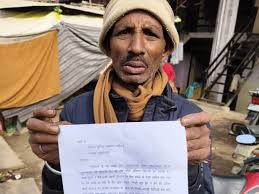
A Dalit man was attacked in Upadhyapur village under the Jaisinghpur police station area of Sultanpur district. In the incident, which took place around 7 am on Saturday, the victim, Ram Sundar, was beaten by three men from the village at his doorstep in front of his children. The victim has filed a complaint with the Superintendent of Police (SP) and demanded action. In his complaint, Ram Sundar stated that on the day of the incident, he was warming himself by a bonfire at his doorstep with his children. Three men from the village then arrived at his door. He alleges that they verbally abused him without any provocation. The attackers then grabbed Ram Sundar by the collar, threw him to the ground, and beat him with kicks and punches. Ram Sundar’s cries for help attracted nearby villagers. Following the intervention of the villagers, the attackers left, threatening to kill Ram Sundar. His daughter-in-law and neighbors intervened, saving his life. The victim also stated that this is not the first time these men have attacked him. The attackers had previously assaulted Ram Sundar twice. The lack of action by the police despite his previous complaints had emboldened the attackers. Ram Sundar had tried to file a complaint at the police station earlier, but he was turned away. Following the current incident, Ram Sundar has submitted a written complaint to the Superintendent of Police of Sultanpur. He has requested that his report be registered, that a medical examination of his injuries be conducted, and that strict action be taken against the attackers. No concrete action has been taken in the case so far. The Sultanpur Superintendent of Police has assured the victim that the matter will be investigated seriously and appropriate action will be taken. Surauli (Jaisinghpur), Sultanpur Courtesy: Hindi News
Dalit leader killed in Kurnool, stirs statewide protests
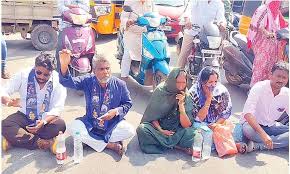
Kurnool: A wave of anger and tension swept through Kurnool district following the brutal killing of a Dalit leader Ramesh, Andhra Pradesh State working president of Madiga Reservation Porata Samiti (MRPS). The incident took place on Friday evening, near Bonthiralla Road in Bondumadugula village of Pattikonda constituency, when Ramesh was allegedly attacked while on his routine evening walk. The assailants reportedly rammed a tractor into him from behind and assaulted him with iron rods, leaving him critically injured. Local residents who noticed the incident alerted his family members, who immediately shifted him to the Kurnool Government General Hospital for advanced medical care. Despite intensive treatment, Ramesh succumbed to his injuries on Saturday morning. News of his death spread rapidly, triggering protests and condemnations not only across Kurnool district but also at the state level, with Dalit organisations terming the attack a premeditated and barbaric act. In protest against the killing, SC and ST Dalit leaders staged a late-night demonstration at the Kurnool District Collectorate around 9.00 pm on Friday. Leaders belonging to various Dalit organisations and political parties demanded the immediate arrest and remand of all those involved in the crime and called for stringent punishment to the accused. They alleged serious lapses in maintaining law and order and warned that failure to deliver justice would lead to intensified agitation. In protest against the killing, Dalit organisations staged a dharna in front of the Kurnool Collectorate on Saturday. The protesters demanded the immediate arrest of the accused and stringent punishment for those responsible for the crime. They also urged the state government to ensure justice for the victim’s family and to take concrete steps to prevent such violent incidents in the future. The police have registered a case and launched an investigation, while security has been tightened in sensitive areas to prevent further unrest. The incident has once again raised concerns over the safety of Dalit leaders in Andhra Pradesh and has put the district administration under severe pressure to act swiftly. Courtesy : THI Note: This news is originally published on https:/thehansindia.com/bha and is used purely for non-profit/non-commercial purposes, especially human rights
Denied access to funeral ground, Dalits light pyre on Bihar road
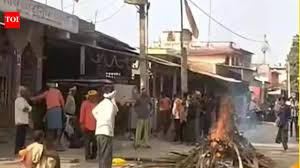
PATNA: Dalit villagers in Bihar’s Vaishali lit the pyre of a 91-year-old woman in the middle of a public road after allegedly being prevented from accessing the local cremation ground, sparking tensions and an inquiry. According to villagers and police, the funeral procession of Jhapsi Devi, a resident of Sondho-Vashudeo village in Goraul area, was on its way to the cremation ground on Thursday when some “influential” villagers allegedly stopped them. Enraged, the villagers carried the body to the middle of the road and cremated it there in full public view amid chants of Vedic rituals. Jhapsi died late Wednesday. The woman’s son, Sanjeet Manjhi, said the family was left with no option. “Jab ham logon ko nahin jane diya, toh gaon ke log bole ki yahi (road) par phoonk do (When we were not allowed to go the cremation site, villagers said we should hold the cremation here on the road itself,” Sanjeet said. Mewalal Manjhi, 67, another villager who was part of the procession, voiced deep despair. “We are poor, with no house and no land. Now, we are not even being allowed to cremate the bodies of our dead,” Mewalal asked. Courtesy : TOI Note: This news is originally published on https:/timesofindia.com/bha and is used purely for non-profit/non-commercial purposes, especially human rights
Coimbatore: Cow dung smeared in office after Dalit manager’s transfer, bus driver suspended
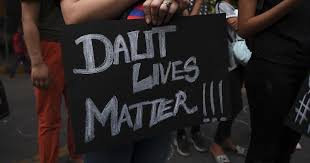
Coimbatore: A deeply shameful incident of caste discrimination has come to light from Coimbatore district of Tamil Nadu. Here, a bus driver from the Mettupalayam branch-1 had the floor of his branch manager’s office cleaned with cow dung after the manager’s transfer. The reason behind this despicable act is said to be the manager’s Scheduled Caste (SC) background. According to a report by the New Indian Express, after the incident came to light, senior officials of the Tamil Nadu State Transport Corporation (TNSTC) took swift action and suspended the accused driver, S. Sashiraj. Sashiraj is also the secretary of the transport corporation’s ‘LPF’ union. What is the whole matter? The incident took place on January 23. The then branch manager of the Mettupalayam branch, D. Prakashkumar, who belongs to the Scheduled Caste, was recently transferred to Ukkadam. It is alleged that immediately after his departure, Sashiraj had the office floor smeared with cow dung through a cleaner. According to eyewitnesses, the driver made derogatory remarks, saying that “the dirt (referring to the manager) has been cleaned from the branch.” Surprisingly, all this happened in front of Prakashkumar, who is deeply shocked and has not returned to work since then. Serious allegations of bullying and discrimination Sources in the transport corporation have made several serious revelations about Sashiraj’s working methods. While holding the post of Traffic Controller, Sashiraj allegedly assigned long and difficult routes to Scheduled Caste employees, while allocating shorter and more comfortable routes to people from his own community. It is alleged that he extorted money from employees for granting leave and preferred duties. Due to his political influence, he also disregarded the orders of the branch managers. In the last one and a half years, six branch managers have been transferred because of his actions. Reason for the conflict The current manager, D. Prakashkumar, had refused to comply with Shashi Raj’s arbitrary demands and had also issued him a memo for engaging in caste-based discrimination. Angered by this, Shashi Raj allegedly exerted pressure on higher officials, resulting in Prakashkumar’s transfer without any valid reason. The accused’s defense On the other hand, the suspended driver, Shashi Raj, has completely denied all these allegations. He claims that the accusations against him are politically motivated and false. Shashi Raj argued that he was merely maintaining the cleanliness of the office and that the room was cleaned that day as part of routine maintenance because it was dirty. TNSTC’s Coimbatore regional officials have confirmed that an internal inquiry into the matter has been initiated. The driver will remain suspended until the inquiry report is submitted. This incident has once again brought the deeply entrenched casteist mentality within government departments to the forefront of public debate. Rajan Chaudhary Courtesy: Hindi News
30 yrs on, man accused of attemptto rape of Dalit girl gets 5 yrs in jail
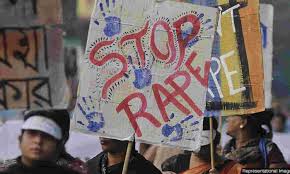
Agra: A special SC/ST court in Firozabad has sentenced a convict, now 60, to five years’ imprisonment and imposed a fine of Rs 14,000 in a case dating back over three decades, involving the attempt to rape of an 11-year-old Dalit girl. “The incident took place on May 6, 1995. The case remained pending in court. Now, under ‘Operation Conviction’, police traced the girl (now 41, married and settled in another district) and produced her before the court for testimony. Also, retired police personnel who were witnesses in that case were identified and located,” Narendra Solanki, additional district govt counsel, told TOI. The ADGC added: “After examining all witnesses and evidence, the court of additional district judge, Navneet Kumar Giri, on Wednesday finally held the accused man guilty and sentenced him to five years’ jail. The court also stated that half the fine amount should be given to the victim.” After the court’s verdict, the convict was taken into custody and sent back to jail. Meanwhile, police in Firozabad, in its statement, stated, “The victim was only 11 years old at the time of the incident. Through tireless efforts, she was located. There were a total of four police officers who were witnesses in this case, all of whom retired (on pension) over time. Their testimonies provided a logical and strong basis for the case.” In 1995, after receiving a complaint by the girl’s father, an FIR was registered under IPC section and the SC/ST Act. The accused was arrested and sent to jail. He later got bail. Police then submitted a chargesheet in court. In the complaint, the father had stated, “The accused forcibly took away our daughter while she was asleep. He grabbed her and attempted to rape her. When she screamed out aloud, he thrashed her, repeatedly. Villagers came out and identified the man, before he managed to flee.” Notably, ‘Operation Conviction’ was initiated by UP Police to deliver swift and time-bound justice in serious criminal cases, particularly against hardened criminals. Courtesy : TOI Note: This news is originally published on https:/timesofindia.com/bha and is used purely for non-profit/non-commercial purposes, especially human rights
Refusal to see caste discrimination, not ‘false complaints’, is the real crisis on campus
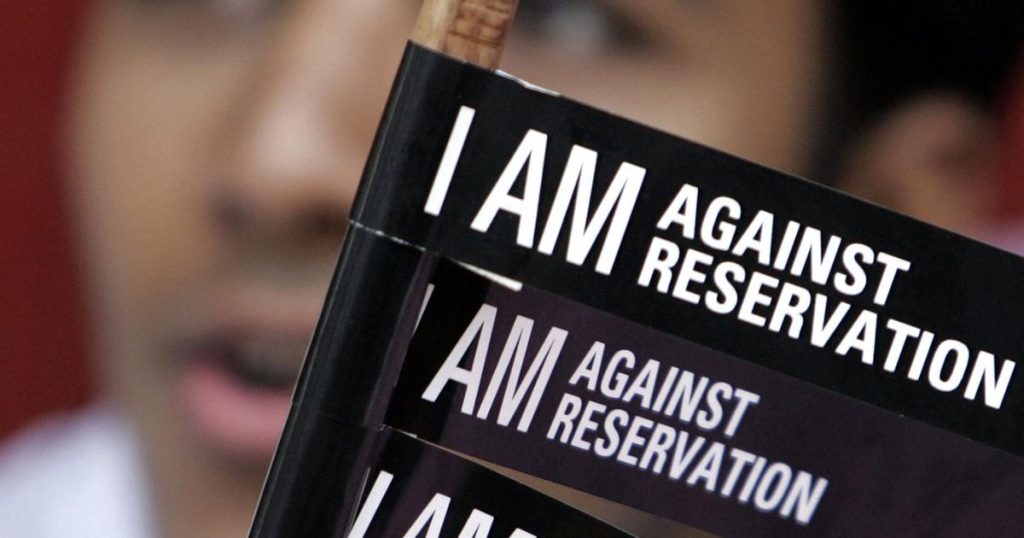
Little will change until institutes recognise the experiences of Dalit, Adivasi and OBC students. An Indian student during a protest rally against the government’s recommendation for 50% reservation for backward classes in education and government jobs, in this photograph from Bengaluru in May 2006. The University Grants Commission’s updated rules to address caste discrimination in higher education institutes have sparked outrage among Savarna commentators and students. They claim that they will become victims of false complaints and that the provisions will be weaponised against them. But this reflects a continuing refusal to listen to experiences of caste discrimination on campuses, something I have witnessed closely since 2022 when I became the first elected student representative of the Equal Opportunity Cell at the Indian Institute of Technology, Delhi. As part of student committees and through my research on caste injustice, I have seen how the claim that Dalit, Adivasi and OBC students misuse guidelines against general category students is invoked when a caste discrimination complaint is filed. This negative framing favours the student or professor accused of casteism and rarely accounts for the humiliation or insensitive behaviour faced by the student making the complaint. Over the past few days, Savarna students have framed themselves as potential victims of the UGC rules, issued on January 13, recentering the issue of casteist discrimination around their anxieties. On January 29, the Supreme Court stayed the new rules after hearing a public interest litigation which claimed that the guidelines were vague and could be misused. Akhil Kang, a queer Dalit scholar who has extensively written about “upper-caste victimhood”, argues that claims of upper-caste victimhood are not about actual harm. Instead, they are about preserving moral innocence in the face of caste accountability. Illustrating Kang’s observation, upper-caste students are floating hypothetical situations in which they could be victimised by the UGC guidelines. For example, one Instagram post claims that a general category female student is now afraid of being accused of caste discrimination if she rejects the advances of a male student from the Scheduled Caste/Scheduled Tribe category. Such claims displace attention from the everyday experiences of discrimination of Dalit and Adivasi students, who remain unacknowledged in classrooms and are rendered invisible on campuses where merit is routinely read through caste. Caste on campus As part of a meeting called by the National Task Force set up by the Supreme Court on January 12, I highlighted three crucial observations based on my experience of observing casteism on campus. The meeting was attended by anti-caste intellectuals, academics, activists and student representatives from universities in Delhi. First, caste is seemingly invisible and so it is difficult to prove that it exists. But the discriminatory effects of caste are primarily experienced by Dalit, Adivasi and OBC students. For example, a professor may make a student wait outside their office hours every day just to address one concern or speak to them. The student could wait for days on end, often feeling humiliated. But this will not be recognised as “casteism”. This same professor could ask about the student’s rank in the entrance exam – using the phrase “hawa kya hai?”, or what’s the AIR, or all India rank. Ambedkarite student collectives across the IITs have stressed that asking a student’s rank should be counted as caste discrimination. Rank indicates whether a student was admitted in the general or Dalit, Adivasi and OBC students. The student might then be labelled incompetent and underperforming, and the professor could suggest that they be expelled from IIT Delhi for not being meritorious. The student could find their admission and place at the institute being attacked and so end up writing to the administration and Equal Opportunity Cell, or SC/ST cell, seeking legal recourse. The Equal Opportunity Cell registers the student’s complaint, and thereafter, a committee is set up to inquire into caste discrimination. This illustrates how faculty and resource persons in an institution refuse to listen to a student who feels neglected or socially excluded. Congress workers protest against the death by suicide of doctoral scholar Rohith Vemula, in this photograph from January 2016. Credit: AFP. Second, caste reveals itself through networks and support systems. A general category student might instantly feel a sense of belonging in the classroom while a Dalit, Adivasi or OBC student may continuously invest energy in proving or defending their merit. As a student representative, I have observed that the network of Savarna scholars does not easily offer support to Dalit, Adivasi and OBC students and often has preconceived notions about who is meritorious or deserving. Savarna students travel easily through these networks, receiving guidance on scholarships abroad, building academic connections, seeking funding and finding opportunities to get published. But Dalit students have to hustle merely to get signatures on recommendation letters. Even if students have got admission on merit, they are always made to feel inadequate. “No matter how I perform, I feel invisible in the classroom,” a Dalit BTech student told me off the record on campus. “The Savarna professor never acknowledges my greeting.” Such an environment attacks the confidence of Dalit, Adivasi and OBC students. The demoralisation shows itself in lesser grades, poor progress reports and lonely or isolated students in campus spaces. It is a challenge to define this experience of being made to feel invisible, but what can be defined are broader actions – the implicit or explicit bias on the campus. Many Dalit and Adivasi scholars report feeling depressed, which I believe is a result of an uncaring institutional structure that does not provide motivation, appreciation nor respond to their efforts properly. In 2022, I emailed the IIT-Delhi mental health team asking why caste-based trauma was missing from the counselling options of gender, LGBTQ+, violence, relationship problems and campus problems. It was aimed at making the institute recognise the reality of the trauma of caste. IIT-Delhi positively implemented this, by adding “caste-based trauma” as an option on its YourDost website, which provides counselling to enrolled students. The third observation was the
Tamil Nadu, Karnataka lead list of Dalit, tribal & OBC judges in lower courts

SCs, STs and OBCs make up 45.7% of district court judges in the country; south India leads New Delhi: The district and subordinate courts in the country have 14.15% Dalits, 5.12% tribals and 26.64% OBCs as judges, with statistics showing that diversity among them is higher in south India with Tamil Nadu and Karnataka leading the spot compared to the rest of the count It showed that the lower judiciary is more representative compared to the High Courts where appointments since 2018 showed only 3.89% of 847 judges were Dalits, 2% tribals and 12.27% OBCs. These statistics were provided by Law Minister Arjun Meghwal in a written reply to senior RJD MP Manoj K Jha. States like Uttar Pradesh, Bihar, Maharashtra and Madhya Pradesh have impressive representation in lower courts while the statistics placed in Parliament showed “zero” SC, ST and OBC judges in lower courts in West Bengal and Andaman Nicobar Islands. According to the statistics, 45.76% or 9,534 – Civil Judge (Junior Division), Civil Judge (Senior Division) and District Judge – of 20,833 judges in district and subordinate courts are from SC, ST and OBC communities as on January 21. Of this, 14.15% (2,949) are SCs, 5.12% (1,068) STs and 26.64% (5,517) are OBCs. Among the big States, Tamil Nadu has 97.65% (1,205 of 1,234) from these categories – SC 20.66% (255), ST 1.21% (15) and OBCs 75.76% (935). SCs, STs and OBCs accounted for 88.82% (996) of 1129 district and subordinate court judges in Karnataka. Dalit judges numbered 226 (20.01%) and 47 (4.16%) were tribals while OBCs accounted for 733 (64.92%). Other south Indian States – Andhra Pradesh, Telangana and Kerala – also fared well in representation in lower judiciary. The OBC judges in Kerala accounted for 50.60% while Dalits accounted for 7.45% and 0.69% tribals while Andhra’s count were 38.98%, 18.88% and 5.59% and Telangana 44.71%, 15.28% and 8.98%, respectively. Overall, Uttar Pradesh has 53.56% or 1,414 of 2,640 judges belonging to the three communities – Dalits accounted for 20.22% (534), 1.43% tribals (38) and 31.89% (842) OBCs. Bihar has 253 or 20.01% Dalit judges in district and subordinate courts while the figures for tribals was 0.84% (14) and 28.76% (479) OBCs. Overall, 44.8% or 746 of 1,665 judges in Bihar districts belonged to SCs, STs and OBCs. While only those persons who are recommended by the Supreme Court Collegium are appointed as Judges of the Supreme Court and High Courts, the state governments in consultation with the respective High Courts frame the rules and regulations regarding appointment and recruitment of judicial officers in the respective State Judicial Service. Judges in districts and representation – State | Scheduled Caste% | Scheduled Tribe% | OBC% Tamil Nadu / 20.66 / 1.21 / 75.76 Karnataka / 20.01 /4.16 / 64.92 Kerala / 7.45 / 0.69 / 50.60 Andhra Pradesh / 18.88 / 5.59 / 38.98 Telangana / 15.28 / 8.98 / 44.71 Uttar Pradesh / 20.22 / 1.43 / 31.89 Bihar / 15.19 / 0.84 / 28.76 Maharashtra / 11.70 / 0.36 / 25.77 Madhya Pradesh / 16.04 / 14.15 / 18.79 Overall / 14.15 / 5.12 / 26.64 Shemin Joy DHNS Courtesy : DH Note: This news is originally published on https:/deccanherald.com/bha and is used purely for non-profit/non-commercial purposes, especially human rights