
BRS Delegation in Delhi: A Push for SC Status for Dalit Christians
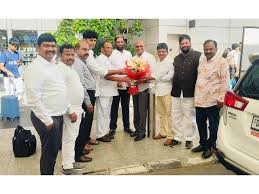
A delegation from the Bharat Rashtra Samithi (BRS) is in Delhi to meet the Justice K. Balakrishnan Commission to advocate for Scheduled Caste status for Dalit Christians. The move, supported by prior resolutions from the Andhra Pradesh Legislative Assembly, aims to ensure parity and social justice. The BRS delegation visited New Delhi to advocate for Scheduled Caste status for Dalit Christians. They aim to gain support from the Justice K. Balakrishnan Commission on this matter. Key members of the delegation include Rajya Sabha Deputy Floor Leader Vaddiraju Ravichandra and former minister Koppula Eshwar. This initiative follows a plea from the YSR Congress Party emphasizing equality and the struggles of Dalit Christians. The Bharat Rashtra Samithi (BRS) delegation arrived in New Delhi on Tuesday with the agenda of advocating for Scheduled Caste (SC) status for Dalit Christians. This initiative seeks to gain the backing of the Justice K. Balakrishnan Commission, which holds jurisdiction in these matters. Prominent figures in the delegation include Rajya Sabha Deputy Floor Leader Vaddiraju Ravichandra and former minister Koppula Eshwar. Their visit follows a recent meeting by the YSR Congress Party (YSRCP) with the Commission’s chairperson, where they submitted a detailed plea seeking SC inclusion for Christian Dalits. In a compelling letter, YSRCP MP Maddila Gurumoorthy emphasized the constitutional principles of equality and non-discrimination, urging Justice Balakrishnan to recognize the similarity of social and economic struggles faced by Dalit Christians, akin to other SC groups. The appeal highlights ongoing resolutions, such as the support from former Andhra Pradesh Chief Minister YS Jagan Mohan Reddy. Courtesy : Devdiscourse Note: This news is originally published on https:/devdiscourse.com/bha and is used purely for non-profit/non-commercial purposes, especially human rights
Two Dalit youths stripped, tied, & dragged over theft suspicion in Muktsar; SC panel seeks report from SSP By June 9
Bathinda: Two Dalit youths were allegedly stripped, tied, and dragged through agricultural fields in scorching heat over suspicion of theft in Punjab’s Muktsar district on Saturday. The incident comes just two days after a viral video surfaced from Haryana’s Hansi district showing a Dalit youth hanging upside down in a well over the alleged theft of a water pump. Punjab State Scheduled Castes Commission has taken suo motu notice of the incident in Jhord village, seeking a report from the Muktsar SSP, to be submitted through the SP (headquarters) by June 9. Sources said a group of villagers stormed the homes of the two local youths after learning about the theft of a mobile phone from a migrant labourer. The two were taken to the paddy fields, where they were initially tied to a tree, partially undressed, and bound by their hands before being dragged, showed a video that later went viral and sparked outrage. Ashok Mahindra, a representative of a local pro-Dalit organisation, said, “The villagers acted in a Taliban style. Even if these youths committed a crime, there is a legal system to deal with them. We will request the Punjab social security minister, who represents the Malout constituency, to take serious note of this incident.” Malout DSP JS Dhaliwal identified the two youths as Gurpinder Singh (27) and Sandeep Singh (28), both residents of Jhord. Police said Gurpinder already faces a case under the Narcotic Drugs and Psychotropic Substances (NDPS) Act. DSP Dhaliwal said the police are not overlooking the assault. “While we are investigating the alleged mobile snatching and the background of the youths, strict action is simultaneously being taken against those who indulged in this inhumane act.” Villagers claimed the two men confessed to the theft during the ordeal. Former Punjab SC Commission member Karanbir Singh Indora also strongly condemned the incident. “The villagers acted in a highly objectionable manner. No one has the right to take the law into their own hands.” Locals admitted to the assault but said they acted out of rage, claiming the two were involved in drug abuse and targeted a migrant labourer. Courtesy : TOI Note: This news is originally published on https:/timesofindia.com/bha and is used purely for non-profit/non-commercial purposes, especially human rights
Scheduled Caste, minority wings of Congress plan joint stir against atrocities

MPs, MLAs, and community representatives from across the country would participate in the July 20 rally, Rajendra Pal Gautam, head of the SC department, and Rajya Sabha member Imran Pratapgarhi, who heads the minority department, said at a press conference following a joint convention of the two departments. The Scheduled Castes (SC) and minority departments of the Congress on Saturday (June 6, 2026) announced a joint nationwide campaign against alleged atrocities on Dalits, minorities, and other marginalised communities, The campaign will culminate in a major protest at Jantar Mantar on July 20, coinciding with the Monsoon Session of Parliament. MPs, MLAs, and community representatives from across the country would participate in the July 20 rally, Rajendra Pal Gautam, head of the SC department, and Rajya Sabha member Imran Pratapgarhi, who heads the minority department, said at a press conference following a joint convention of the two departments. Mr. Gautam alleged that Dalits, Adivasis, minorities, and backward communities continued to face systemic discrimination, claiming that institutions like police and bureaucracy often functioned with prejudice against them. He pointed to disparities in scholarship eligibility norms, noting that the annual income ceiling for SC, ST, OBC, and minority students was ₹2.5 lakh, compared with ₹8 lakh for beneficiaries in the Economically Weaker Sections category. He also criticised inadequate budgetary support for finance and development corporations meant for the SCs and the STs. Mr. Pratapgarhi accused the Centre of being indifferent to atrocities against marginalised communities. He said the two departments would coordinate activities down to the district and block levels and stand with victims wherever incidents of oppression were reported. A joint advisory council meeting will be held in Lucknow later this month, he added. The Hindu Bureau Courtesy : The Hindu Note: This news is originally published on https:/thehindu.com/bha and is used purely for non-profit/non-commercial purposes, especially human rights
Rajya Sabha Elections: Hemant surprises by giving ticket to a Dalit outside the Soren family, Baijnath becomes candidate
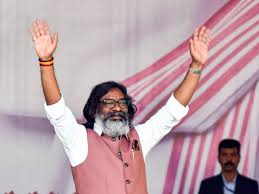
Political twist: Congress’s Pranav Jha, BJP’s Gaurav Vallabh, JMM’s Baijnath Ram, and independents Nathwani and Sai Reddy have filed nomination papers, but the BJP remains silent. The Rajya Sabha elections for two seats in Jharkhand have heated up the political atmosphere in the state. The Jharkhand Mukti Morcha (JMM) surprised everyone by not fielding anyone from the Soren family for the seat vacated by Guruji. The JMM, which had staked claim to both seats until Friday, announced former minister and central vice-president Baijnath Ram as its candidate on Saturday. However, the party has not yet given a concrete answer to the question of fielding a candidate for the second seat. Meanwhile, BJP’s chief whip in the Assembly, Naveen Jaiswal, claimed on Friday night that the party’s candidate would be announced on Saturday morning. Gaurav Vallabh has also purchased his nomination as a BJP candidate, but the party did not officially announce his name until late Saturday evening. Congress candidate Pranav Jha and JMM candidate Baijnath Ram have also purchased their nomination papers. JMM General Secretary Supriyo Bhattacharya said that Baijnath Ram will file his nomination papers on Monday, and Chief Minister Hemant Soren will be present. Parimal Nathwani met the Chief Minister, will contest as an independent Parimal Nathwani arrived in Ranchi at 8 pm on Saturday. He went directly from the airport to Chief Minister Hemant Soren’s residence on Kanke Road, where the two leaders met for about half an hour. After the meeting, Nathwani stated that it was merely a courtesy call and no discussion took place regarding the Rajya Sabha elections. He clarified that he will contest this election from Jharkhand as an independent. His nomination papers have been purchased and he will file his nomination papers on Monday. The ‘Behind the Scenes’ Game in the Rajya Sabha Elections Who will be the proposer? The ‘Mystery’ of 10 MLAs and the Entry of 2 Heavyweights The entry of heavyweight independents like Parimal Nathwani and Vijay Sai Reddy into the Rajya Sabha fray has made the election extremely interesting. According to the rules, a minimum of 10 MLAs are required for nominations. Inside Story: It is nearly impossible to gather 10 MLAs in the Jharkhand Assembly without the tacit consent or internal sabotage of a major party. Consequently, the biggest question in political circles is: who are the hidden MLAs willing to propose these heavyweights? Will this be a simmering discontent within the ruling and opposition parties, or will it be a new horse-trading game? BJP’s ‘Dark Horse’ Plan: Silence Behind the Chess Gaurav Vallabh has purchased his nomination papers, but the BJP has yet to reveal its cards. This delay in the official announcement is not without reason. Inside Story: The BJP’s silence isn’t a compulsion, but rather a part of Plan B. If the party doesn’t officially field its own candidate, it likely means it has decided to support a strong independent candidate behind the scenes. Instead of losing a direct contest, the independent candidate is intended to dent the Grand Alliance’s vote bank and appease disgruntled MLAs. Bhupesh and Ajay met the CM and said, “All is well.” Congress observers for the Rajya Sabha elections, Bhupesh Baghel and Ajay Sharma, met with Chief Minister Hemant Soren on Saturday afternoon. After a nearly two-hour meeting, both observers stated that everything was fine. The alliance would win both seats in the Rajya Sabha elections. Bhupesh Baghel said that they had a good and frank conversation with the Chief Minister, there were no misunderstandings, and the alliance was strong. Why did the JMM choose Baijnath Ram? Baijnath Ram’s name was included in the list of ministers in the Champai Soren government, and this list had even reached the Raj Bhavan. However, he was stopped just before the swearing-in ceremony, leading to accusations of the party neglecting Dalits. Later, he was promised a suitable position, and that is why he was nominated for the Rajya Sabha seat. Furthermore, the JMM has played the Dalit card after the Congress fielded a Brahmin candidate. Candidate Profiles: At a Glance Parimal Nathwani: Industrialist and current Rajya Sabha MP from Andhra Pradesh. He served as an independent Rajya Sabha MP from Jharkhand for two consecutive terms from 2008 to 2020. He lives in Dwarkesanandi, Ahmedabad, Gujarat. Pranav Jha: National Secretary of the Congress Party and media strategist for the party. He is also close to Congress President Mallikarjun Kharge. He is originally from Anadipur village in Bhagalpur district and studied in Bokaro. He currently lives in South Avenue, Delhi. Gaurav Vallabh: A prominent BJP leader, economist, and academic. He is currently a member of the Prime Minister’s Economic Advisory Council. He has served as a professor of economics at XLRI, Jamshedpur, and SISS, Ranchi. He is from Jodhpur, Rajasthan. Baijnath Ram: A senior leader of the JMM and has served as a minister in the Jharkhand government. He is known as an experienced and dedicated JMM worker. He is seen as a prominent face of the party’s SC community. He originally hails from Dhobi Mohalla in Latehar. Sai Vijay Reddy: Chartered accountant and politician from Andhra Pradesh. He has served as the National General Secretary of the YSR Congress Party and a Rajya Sabha MP from Andhra Pradesh. He is considered a close associate of YSRCP chief Jaganmohan Reddy and the party’s “Chanakya.” He hails from ISKCON City, Nellore, Andhra Pradesh. Courtesy: Hindi News
Dalit experience in Punjab, felt and seen
The works of poets such as Kabir, Ravidas and Namdev have resonated for centuries, but it is only recently that Dalit literature has come to occupy centre stage. With the rise of subaltern studies, literature has developed many a niche segment, where hitherto invisible or suppressed groups have asserted their literary presence. Dalit writing, particularly under the influence of Marathi pioneers like Babasaheb Ambedkar and Namdeo Dhasal, started showing its prowess some 60 years ago, and has now become an irrepressible voice in almost all states of the country. Punjab has a very large presence of Dalits and an equally large body of Punjabi Dalit literature, yet not much has been translated so far to give it readership beyond Punjabi. The anthology ‘Gangrene’ offers for the first time a set of 12 stories in English to fill that gap. Translated by Akshaya Kumar and Navdeep Singh, the book comes with an elaborate introduction that gives an insight into the development of Punjabi Dalit writings as well as the dynamics of Dalit narratives of exploitation, discrimination and oppression. The translators claim that in contrast to progressive writers’ narratives of the poor and the underprivileged, these stories by Dalits themselves explore more authentically their lived experience. Veracity apart, the stories in the collection stand out for the diversity of experience, both in terms of physical and mental trauma, as perceived by Dalits and as enacted by their oppressors. If there are stories like ‘Cry of the Sky’, ‘My Story’, and ‘Everybody’s Story’, in which crimes like rape and violence against Dalits are portrayed, then there are also stories like ‘Doomsday’, ‘Cancer’ and ‘Cactus’, where the dominant caste characters have been shown to harbour deep-seated hatred, but not without giving us a peep into their mental and emotional conflict. The stories are equally divided between rural and urban settings. If the vehra (Dalit colony in a village) is the site of open disdain and exploitation by Jats and other village heads, then the city is an equally inhospitable place where Dalits, even after education and economic progress, cannot live without hiding their identity. A cobbler’s son will remain a cobbler’s son and a Dalit rising up to become a landlord will find trust and strength only in his own community, as in the story ‘Gaurjan’. Religion, the much-touted causa prima of the caste divide, figures in three stories – ‘Gangrene’, ‘Doomsday’ and ‘Roots’. Though Hindu Brahmins’ attitude towards Dalits is well known, in these stories, even Dalits who converted to religions like Sikhism and Buddhism find no respite. One muted theme that runs through almost all the stories is that for a Dalit, there is no escape from being a Dalit. Even if they try to override it with professional progress, pecuniary leap or physical prowess, the Dalit identity does not leave them. It will continue to lead them to misery and humiliation. I particularly liked two stories: ‘Bathloo’ and ‘Aatu Khoji’. Both are proud and professionally skilful workers, yet one ends up dead because of his sense of internalised lowliness, and the other in an effort to save Dalit honour. The book is a ready compendium to understand the psyche of both Punjabi Dalits and their oppressors. At times, it also portrays the Dalit reaction where violence and highhandedness of the dominant caste are met with equal aggression. But the stories largely remain clueless about how the conflict can be reduced or resolved. The book is translated well despite the usual intrusion of local terms here and there. It is going to prove to be a good resource material for comparing the Punjabi Dalit experience with other regional writings, particularly in Marathi and South Indian languages. Courtesy : Dailyhunt Note: This news is originally published on https:/dailyhunt.com/bha and is used purely for non-profit/non-commercial purposes, especially human rights
Dalits are losing land in Karnataka despite PTCL Act protections
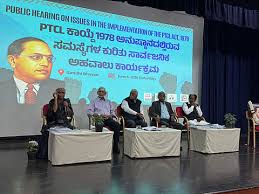
A public hearing organised by civil society groups in Bengaluru heard several testimonies of Dalits who lost their land and were unable to reclaim it due to adverse court rulings and bureaucratic hurdles. Karnataka appears to be on the cusp of another historic land struggle. Perhaps not as militant or as visible as the street marches organised by the Dalit Sangharsha Samiti in the 1970s, but no less significant in terms of its vision or potential for transformation. A small number of Dalits from seven districts in Karnataka told the jury of a public hearing in Bengaluru about how their families lost land to people from dominant castes and due to court rulings. Their stories were representative of 50 others whose testimonies will be presented to the government along with the observations of the jury. The public hearing on the implementation of the Karnataka Scheduled Castes and Scheduled Tribes (Prohibition of Transfer of Certain Lands) Act, 1978, was held on Saturday, June 6. The hearing was the result of over six months of work put in by the PTCL Kaayde Bhoomi Vanchitara Horata Samiti, the All India Lawyers Association for Justice (AILAJ), Manthan Law, Alternative Law Forum (ALF), and independent progressive researchers. Called the PTCL Act for short, the law itself was the result of a land agitation led by the Dalit Sangharasha Samiti in the 1970s. Under the law, land owned by people of the Scheduled Castes and Tribes cannot be transferred to non SC or non ST people. The public hearing was organised after compiling the testimonies of about 50 people from seven districts—Bengaluru Urban and Rural, Kolar, Tumakuru, Chitradurga, Bengaluru South, and Davanagere. The jury panel comprised retired Supreme Court judge Justice V Gopal Gowda, former IAS officers SM Jamdar and D Thangaraj, and activist Jyothi Raj, and legal expert on PTCL cases HL Venkatesh. About 15 Dalit people spoke of how they lost their land. One common obstacle that emerged was the 2017 Supreme Court ruling in the Nekkanti Rama Lakshmi case. The SC dismissed the case stating that there had been a delay of 20 years in filing the application to reclaim the land, even though the law itself did not specify that claims had to be filed within a certain period. Rangamma, of Chinakavajra village in Madhugiri taluk in Tumakuru district, told the jury about how her husband’s grandfather Rangaiah was cheated out of a portion of his land. Chinakavajra village has 300 Vokkaliga families, 20 Dalit families, and three Naika families. She said that Rangaiah was granted two acres of darkhast land in 1954. For several years the family cultivated ragi and other crops and sometimes even had enough left over to either sell or simply give away to someone in need. Once when Rangaiah needed money to treat his wife, he approached a Vokkaliga man for Rs 200. He got the money, but did not realise that a sale deed for one acre had been executed without his knowledge. In 1961, the Vokkaliga man and his goons began harassing Rangaiah’s family, claiming that the land was theirs. Finally, in 2016 they came and assaulted the family with weapons and drove them off. Rangamma later told TNM that the attackers stripped them, beat them, and rubbed chilli powder in their eyes. Her family filed an atrocity complaint and the other side responded with an allegation of assault. “We’ve been shattered by this. Now we have to buy food, and look for work as agricultural labourers. But work isn’t always available and there are a lot of people who need work,” Rangamma told TNM. “We’ve been very pained by all this, they created a lot of trouble for us,” she added. Her case is currently in the Karnataka High Court. Manjunath, founder of the PTCL Horata Samiti, told TNM that he started the Samiti after he lost his own family land in Magadi taluk in 2018 after a long legal battle. “The High Court simply dismissed mine and 45 other applications for delay, citing the Nekkanti case. That was when I learned what real law is, even though the Act itself is good.” Once he began looking for others like him, he realised the scale of the impact. In 2022, he led a seven-month agitation in Freedom Park, which eventually led to the state government amending the PTCL Act in 2023 to explicitly say that there would be no time period limitation to invoke the Act. When the constitutionality of the amendment was challenged in the Karnataka High Court, several members of the organisers of the public hearing also fought to defend the amendment. Hearings concluded 10 months ago and the verdict is now awaited. Manjunath estimates that there are hundreds of cases in each district. In Bengaluru Urban alone, he says there are about 4,000 such claims, of which 3,000 were dismissed citing Nekkanti. “Now, without bothering about whether the claim is genuine, the courts simply ask when the application was filed and what the delay was, and dismiss it. That ruling has completely destroyed the PTCL Act,” he said. Justice V Gopala Gowda said that in Nekkanti, the Supreme Court had violated its own ruling in the Manchegowda and others vs State of Karnataka case in 1984. The Manchegowda case had challenged the constitutionality of the PTCL Act. The SC upheld the Act. Justice Gowda said that economic freedom was essential to the meaningful enjoyment of the constitutional promise of the right to life. Access to land was fundamental to securing such freedom, he said according to a press release. Former IAS officer Thangaraj said that significant challenges remain in the implementation of the law. Despite favourable orders from Assistant Commissioners and Deputy Commissioners, beneficiaries often struggle to secure physical possession of their land due to a lack of cooperation from revenue and police officials, he said. Retired IAS officer SM Jamdar stated that the PTCL Act holds a mirror to the social inequalities that exist around us. There is a
Dalits not a factor in Nitish’s social justice? Even LJP’s Ram Vilas failed to light the ‘lamp of selfishness’
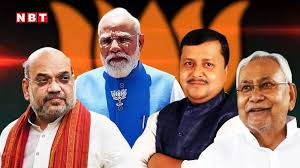
Bihar Politics: In Bihar politics, the electoral journey of all political parties remains incomplete without mentioning Dalits. Everyone desires this vote bank. But in this MLC election, the NDA did not nominate a Dalit candidate for the Upper House. Not a single Dalit in the NDA’s MLC candidate list Patna: All the fabrications that could be woven regarding the MLC elections in Bihar politics have already been woven. Speaking of the current MLC elections, Dalits are not a factor in the NDA’s social justice. The significant thing is that even the party that makes its political living by building on Dalit politics failed to send a Dalit leader to the Legislative Council, nor could it secure the rights of the 18 percent vote bank. Not a single Dalit in the NDA has been given an MLC ticket. NDA strategists have jointly announced the candidates for the nine full-time MLC seats and one by-election (vacated by Nitish Kumar) in 2026. Considering this announcement, the Janata Dal (United) has announced one candidate from the backward caste and three from the most backward caste. This list does not include any Dalit leaders. Nishant Kumar from the Kurmi caste, Dr. Bharti Mehta, Shivani Prajapati, and Lalan Mandal from the most backward castes have been nominated. BJP also distances itself from Dalits in the MLC elections. Meanwhile, the Bharatiya Janata Party also showed indifference towards Dalits. BJP strategists have announced two candidates from the upper caste and two from the most backward castes. These include Pawan Singh from the Rajput caste, Sanjay Mayukh from the Kayastha caste, Anil Kumar Thakur from the barber caste, and Sheela Pandit from the potter caste. The party that practices Dalit politics lagged behind. Chirag Paswan, the national president of the Lok Janshakti Party, a party that practices Dalit politics, also did not light the Dalit lamp this time, demonstrating mutual coordination. Chirag Paswan declared Ashraf Ansari, a Muslim, as his candidate. Learn the names and castes of the 11 MLCs announced for 2026. Arvind Sharma from Bhumihar Pawan Singh from Rajput Nishant Kumar from Kurmi Sanjay Mayukh from Kayastha Ashraf Ansari from Muslim Bharti Mehta from Extremely Backward Class Lalan Mandal from Extremely Backward Class Anil Kumar Thakur from Extremely Backward Class Sheela Pandit from Extremely Backward Class Learn how long has JDU rejected Dalits? In March 2021, members were nominated to fill 12 vacant seats in the Bihar Legislative Council (MLC) from the Governor’s quota. These nominations were made by then Governor Fagu Chauhan on March 17, 2021, on the recommendation of the state cabinet. JDU then sent a Dalit leader, Ashok Chaudhary, to the Upper House. At that time, JDU and BJP fielded candidates for six seats each. JDU sent Upendra Kushwaha, Ashok Chaudhary, Sanjay Kumar Singh (aka Sanjay Gandhi), Lalan Kumar Saraf, Ram Vachan Rai, Sanjay Singh, and the BJP sent Janak Ram, Devesh Kumar, Rajendra Prasad Gupta, Pramod Kumar, Ghanshyam Thakur, and Nivedita Singh to the Legislative Council. Written by: Ramakant Chandan Edited by: Rishikesh Narayan Singh About the Author Ramakant Chandan began his journalism career in 1988 as a freelancer with Navbharat Times and Dainik Hindustan. He formally joined Rashtriya Sahara in 1996, starting with Haatsekhar, Noida. He became a special correspondent in 2012. In 2020, he became the local editor of Rashtriya Sahara Patna and in 2022, he became the consulting editor of Rashtriya Sahara. Courtesy: Hindi News
Khaira demands murder case against police over death of Dalit youth
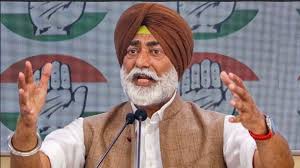
Senior Congress leader and Bholath MLA Sukhpal Singh Khaira strongly condemned the death of 22-year-old Dalit youth Lovepreet Singh, alias Labha, of Bangiwal village in Mehatpur, and demanded the immediate registration of a murder case against all police personnel involved in the firing incident. Khaira also urged the Chief Justice of the Punjab and Haryana High Court to take suo motu cognisance of the matter and order an independent judicial probe into the circumstances surrounding the youth’s death. Lovepreet Singh, who was wanted in connection with a case registered in January 2026, succumbed to injuries sustained after he was allegedly shot by police personnel during a raid at his residence on Friday evening. While the police have maintained that officers opened fire in self-defence following hostility from villagers, the victim’s family and local residents have disputed the official version. They alleged that Lovepreet was assaulted by the police before being shot and further claimed that he was denied timely medical treatment. Villagers have also questioned why no FIR had been registered against any police personnel, despite criminal cases being filed against members of Lovepreet’s family. In a statement, Khaira said the incident raised serious concerns about the conduct of the Punjab Police and reflected what he described as a culture of impunity under the AAP government. “The killing of a young Dalit man at the hands of the police cannot be brushed aside through a departmental inquiry alone. When a citizen dies in police firing, the law demands the highest standards of transparency and accountability. The police cannot be allowed to investigate themselves and then grant themselves a clean chit,” he said. The Congress MLA said the emergence of videos from the scene and the widespread protests by villagers further strengthened the case for an independent investigation under judicial supervision. He noted that several organisations, along with local residents, had already demanded action against the police personnel involved in the shooting. Khaira called for the immediate registration of an FIR for culpable homicide or murder against the officials responsible for the firing, suspension of all personnel involved pending investigation, and the preservation of all video footage, records and other evidence related to the incident. He also demanded adequate compensation and rehabilitation support for the bereaved family and reiterated his appeal for the Punjab and Haryana High Court to intervene and ensure a fair, impartial and independent investigation. Article_Author Aparna Banerji Courtesy : The Tribune Note: This news is originally published on https:/thetribune.com/bha and is used purely for non-profit/non-commercial purposes, especially human rights
Dalit youth dies by suicide in collectorate
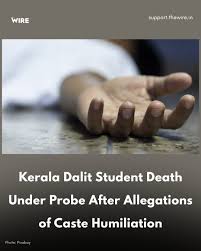
Kendrapada: A 26-year-old dalit man allegedly died by suicide inside the Kendrapada collectorate on Friday purportedly after facing sustained harassment by officials over permission to sell his land to members of another caste. The deceased has been identified as Srichandan Mallick of Raitundi village under Nikirei police station. He hanged himself from the iron railings of the office of the collector at 1 pm on Friday with a towel when there were few people as office was closed due to the morning shift. The family members and Dalit activists alleged that he ended his life after facing severe mental harassment by the officials. The deceased had been running from pillar to post since the last six months to get permission from the revenue office to sell his land to other caste persons as it is mandatory under Section 22 of the Orissa Land Reforms (OLR) Act, 1960. A SC person cannot sell or transfer land to an upper caste or general category person without the written prior permission of a revenue officer. Dalit activist and former chairperson of zilla parishad, Gita Sethi alleged that Srichandan Mallick, a dalit, was forced to end his life, driven by frustration over the long delay by the revenue officer to grant him permission to transfer his property. After knowing about the incident, police rushed to the spot and seized the body and sent it to the district headquarters hospital at Kendrapada for autopsy. No suicide note was recovered. An investigation is underway to find out what prompted him to kill himself, said IIC of Kendrapada police station Suvendu Sahoo. The district administration has launched an investigation. “We will take action if any official is found guilty of wrongdoing and harassing the dalit youth,” said collector (Kendrapada) Raghuram R. Iyer. Courtesy : TOI Note: This news is originally published on https:/timesofindia.com/bha and is used purely for non-profit/non-commercial purposes, especially human rights
A Lived Sociology of Caste
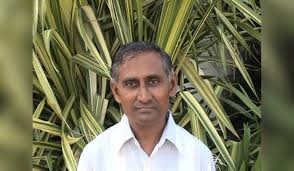
Chandu Maheria’s ‘Homes Without Windows’ is a vivid, empathetic and often devastating portrait of Dalit working-class life in urban Gujarat. Reading Homes without Windows, I frequently experienced flashes of deja vu. Although unlike Chandu Maheria, I grew up in a village setting in Maharashtra, the experiences of Dalits are essentially not very dissimilar. In addition, I was well acquainted with places and most people that figure in the book. It evoked memories of my own encounters with caste and communal violence in Gujarat. One episode returned vividly to mind: during the anti-reservation riots of 1981, while I was a student at IIM Ahmedabad, I found myself trapped by a mob in Bapunagar. The IIM campus was an elitist island that remained insulated even when the city around it burned. Yet the social activist in me often ventured into working-class neighbourhoods to understand events first hand. I had befriended several Dalit activists across Ahmedabad and regularly attended their meetings. One afternoon, in the thick of the riots, riding my Vijay scooter towards the Buddha Vihar in Bapunagar, I was stopped by half a dozen men armed with sticks and wearing the ferocious expressions of a riotous mob. When I told them where I was headed, they began manhandling me and seized my scooter. For a few moments, I genuinely thought I might become the next day’s newspaper headline. Suddenly, however, a group of 15 to 20 Dalit youths, blue scarves tied around their foreheads, emerged from a nearby basti. The attackers quickly dispersed, and I was saved. More importantly, I witnessed first-hand the transformation in Dalit consciousness that the reservation riots had produced. That awakening was extraordinary. Gujarat’s Dalits, despite belonging to the old Bombay Presidency, had remained only marginally touched by Ambedkar’s movement, except in a few urban pockets. Even the Dalit Panther movement, which travelled from Maharashtra and survived here longer than in its birthplace, remained largely confined to Ambedkarite circles. The anti-reservation riots changed that. The assertion, anger and self-respect they generated became visible in the massive Ambedkar Jayanti celebrations of 1982 and in the growing embrace of Ambedkarite politics across Gujarat. It is against this background that Maheria’s memoir assumes particular significance. Over the past decades, Dalit autobiographical writing has emerged as one of the richest literary traditions in India. Inspired in part by the Marathi Dalit literary movement, writers from many linguistic regions have narrated experiences of caste oppression with remarkable power. Omprakash Valmiki’s Joothan is perhaps the best-known example in Hindi, but many others, such as Bama’s Karukku in Tamil, G. Kalyan Rao’s Antarani Vasantam in Telugu and Balbir Madhopuri’s Chhangiya Rukh in Punjabi, have contributed substantially to this body of literature across the country. Maheria’s Homes Without Windows deserves a respectable place within that tradition. The book vividly portrays life in the Rajpur, Ahmedabad slums where the author grew up. The very first chapter, ‘The Mayor’s Bungalow’, takes its ironic title from a modern public toilet built in the settlement. After painting, in a tragi-comic manner, the inhuman conditions in which the residents of Rajpur and the surrounding slums lived, Maheria introduces this toilet as a symbol of “development”. Yet the facility remained largely unusable for the poor because it operated on a user-fee basis that none in the slum could afford. For the residents, it stood less as a public amenity than as a monument to a model of development that was ostensibly meant for them but effectively excluded them. In that sense, the toilet becomes a metaphor for the neoliberal development that has shaped India since the mid-1980s, catering primarily to the aspirations of the emerging middle classes. Roads, flyovers, malls, multiplexes, corporate hospitals and elite schools may inspire pride and reinforce the official narrative of a rapidly advancing India, even an emerging superpower. Yet they are largely useless to the vast majority who remain excluded from their benefits. Public resources, generated by the taxes of ordinary people, are increasingly deployed to create islands of comfort, consumption and spectacle that those very people rarely access. The obsession with flyovers illustrates this logic. They are built to enable car owners to travel faster and more comfortably. More cars generate demands for more flyovers, which in turn encourage greater automobile dependence, creating a self-perpetuating cycle. Meanwhile, those who rely on walking, cycling or overcrowded public transport – the majority who subsidise this infrastructure through their labour and taxes – remain largely invisible in planning priorities. Indeed, one of the great strengths of Dalit memoirs such as this is that they reveal social realities often missed by mainstream sociology. They provide an insider’s view of everyday life, exposing structures of exclusion, humiliation, adaptation and survival that rarely find a place in academic theories or policy discourse. Through lived experience, they generate sociological insights that formal research frequently overlooks. One of the most interesting chapters in the book is ‘That Fellow, Gandhido’, where Maheria explores the deep hostility many Dalits feel towards Gandhi. For many Dalits, Gandhi’s opposition to separate electorates for the Depressed Classes and the resulting Poona Pact of 1932 symbolise a historic betrayal. The sentiment has become so strong that September 24, the date on which the Pact was signed, is increasingly observed as a Black Day in Dalit circles. This antagonism extends even to language. Many contemporary Dalits object to the use of honorifics such as “Gandhiji”. Maheria uses this debate to reflect on the politics of naming in India, where forms of address often carry ideological and social meanings. Yet, rather than reproduce the conventional anti-Gandhi narrative, Maheria offers a more nuanced assessment. He acknowledges Gandhi’s opposition to separate electorates but also reminds readers that Gandhi played a significant role in bringing the question of untouchability to the centre of India’s public life. He points to Gandhi’s decision to admit an untouchable family into the Kochrab Ashram despite considerable opposition, and to his attempt to forge a new social identity for untouchables through the term Harijan. Whether one agrees with