
Bharat Summit: Global leaders back gender justice, condemn Pahalgam terror attack
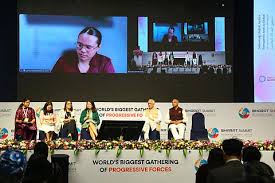
At the Bharat Summit organised by the Congress party in Hyderabad, global policymakers and activists discussed social justice and inclusive growth — and joined a candlelight rally to condemn the Pahalgam attack. The two-day ‘Bharat Summit’ organised by the Congress party in Hyderabad on Friday, April 26 was attended by delegates from around 100 countries including international political leaders, policymakers, and others working toward social justice and inclusive governance in technology and other sectors. At the event, the delegates also condemned the Pahalgam terror attack and expressed solidarity with India. The convention opened with a panel discussion on ‘Gender Justice and a Feminist Future’ where Sweden’s former Minister for Foreign Affairs Ann Linde spoke about challenges in Europe, such as structural disincentives for working women. She called for tax reforms to promote gender equality and emphasised the need for universal access to childcare. “If families cannot combine work and parenting, gender equality will remain out of reach,” she said. Senior Congress leader Salman Khurshid also advocated for tax incentives to increase women’s participation in the workforce. Undram Chinbat, a Member of Parliament from Mongolia, highlighted her country’s emphasis on STEM education for girls and climate-resilient training for rural women affected by desertification. She underscored the need for gender justice in climate policy frameworks. Rabia Abdallah, a senior leader from Tanzania’s Chama Cha Mapinduzi (CCM) party, and other speakers stressed the importance of women’s leadership in political structures to ensure sustained justice. The session also featured Monica Fein, a Socialist Party politician from Argentina, and Maria Alejandra Panay, Minister for Women Affairs from the Republic of Panama. It was moderated by Maharashtra Congress MP Praniti Sushilkumar Shinde. Other key sessions at the summit included discussions on countering disinformation, youth politics, and international relations. At a panel titled ‘Facts vs Fiction: Countering Disinformation’, Miapetra Kumpula-Natri, a former Member of the European Union Parliament, spoke on the EU’s policies for digital literacy, media regulation, and public education. “What is illegal offline must be illegal online,” she said, urging audiences to scrutinise how information is sourced and spread. After the sessions, the delegates joined Telangana Chief Minister A Revanth Reddy in a candlelight rally to condemn the terror attack in Jammu and Kashmir’s Pahalgam. A statement issued on behalf of the delegates read: “We express our solidarity with the people of India and unequivocally condemn the terror attack in the strongest possible terms. Such acts of brutality against peaceful citizens have no place in society and are a direct assault on the constitutional values of unity, peace, and harmony.” Courtesy: The News Minute Note: This news is originally published on https://www.thenewsminute.com and is for use by the non-military/non-commercial community, especially those in the human rights sector.
Rising against injustice as one: Inside India’s largest men’s rights movement pushing for gender-neutral laws
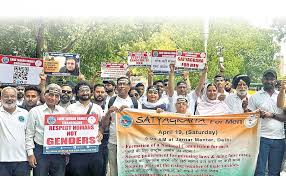
Falsely accused of seeking dowry from his wife 15 years ago, 42-year-old Rohit Dogra is now advocating ‘equality before law’ as he flags misuse and pushes for reforms in gender laws, Harpreet Bajwa writes CHANDIGARH: The death of 34-year-old techie Atul Subhash by suicide a few months back caused a massive outrage in India, as a detailed suicide note and video left behind by him accused his estranged wife, her mother and brother of sustained harassment and torture. It also sparked a conversation about the misuse of dowry law in the country and renewed calls for the reforms in gender-based laws. But not many know that the case of Subhash was not an isolated incident. Meet 42-year-old Rohit Dogra, who heads the Chandigarh Chapter of the Save Indian Family Movement (SIFM), the largest men’s rights organisation in India. Founded in 2005, it has been pushing for reforms in the dowry legislation, flagging the misuse of gender-based laws. Supported by 40 non-government organisations (NGOs), the SIFM has also called for the setting up of a national commission for men and a relook at the alimony regulations and child custody policies. Ask Dogra why he chose to be associated with the organisation, and pat comes his reply: “Back in 2010, my then in-laws filed a dowry complaint against me. A case was subsequently registered against my mother and me under Sections 498-A and 406 of the IPC.” He then fought a long legal battle to finally be acquitted in 2018. But Dogra went a step further. After being cleared of the charge, he got a case against his then wife and in-laws in Pathankot in 2020 for forgery and conspiracy. The couple finally got divorced in 2022. Dogra, who has been associated with the organisation for the past 15 years, recalls, “It was in 2010 that I called up the SIFM helpline number and got in touch with members of the local chapter. They offered me not just legal advice but also moral support.” Now, he is helping other men in distress. “In 2016, we registered another NGO, Save Indian Family-Chandigarh, under the umbrella of the SIFM, and I took over the reins of the Chandigarh Chapter as its president,” he adds. Dogra, who holds a postgraduate degree in MBA, works with a private company. But he still devotes about two to three hours every day to helping men ensnared in such fake cases or facing harassment. Other than receiving calls on the SIFM local helpline number, he also organises a weekly support meeting every Sunday. Discussing how the movement to save men, he shares, “We have some 2,500 to 3,000 members across the country. Out of them, approximately 400–500 are from Punjab, 200–300 from the Chandigarh tri-city and another 150–200 from Haryana. Over 40-odd NGOs across the country are associated with us.” Delving into the services the SIFM offers, Dogra tells us: “We offer the biggest free helpline number for men in India (08882-498-498). It is a first of its kind. We receive 4,000 to 5,000 calls every month from across the country about domestic violence against men, the misuse of dowry or rape laws, workplace harassment and depression. We are a self-supported and -funded group, and we organise free weekly meetings in 40 places on Saturdays and Sundays.” Harking back to how the movement began, Dogra mentions that the SIFM was launched in 2005 in view of how men were being targeted through gender-based laws. “Then, in 2014, we started a free helpline,” he adds. Just a few days ago, on April 19, the SIFM organised a gathering, Satyagraha for Men, at the Jantar Mantar in Delhi to push for gender-neutral laws, stricter penalties for misuse of gender laws and the establishment of a national commission for men. The purpose of this commission, according to the SIFM, should be to address the mental health issues men face, tackle the growing incidence of prostate cancer, launch a separate helpline for men, coordinate with the government to make laws gender-neutral and offer support to men in general. Besides, Dogra feels, the body can work with the authorities to introduce schemes for men in rural areas and help amend or abrogate Article 15(3) of the Constitution. Opening up about the recent Jantar Mantar gathering, Dogra says, “The protest drew men and women from across India.” Renowned men’s rights activists, legal experts and social workers from across the country addressed the gathering and raised concerns long ignored by successive governments. Wasif Ali, another member of the SIFM, says, “This satyagraha was not just a protest; it was about demanding constitutional equality.” Dogra ruefully points out, “India has commissions for women, children, animals, forests and everything else, but there is no national-level statutory body for men.” He concludes, “A national commission for men is not just a demand. It is the need of the hour.” Courtesy: New Indian Express Note: This news is originally published on https://www.newindianexpress.com/ and is for use by the non-military/non-commercial community, especially those in the human rights sector.
Mayawati lashed out on the issue of disrespect of Ambedkar statue and attack on Dalits, said- Government should deal with it strictly – BSP SUPREMO MAYAWATI
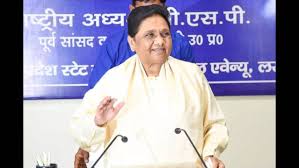
BSP supremo raised questions over disrespect of statues of Dalit great men Lucknow: Mayawati has expressed concern over the incidents of breaking the statues of Dalits and their great men and the continuous misbehavior with them in Uttar Pradesh in recent times. The BSP supremo has demanded strict action against the criminals doing this and making laws to stop such incidents. Bahujan Samaj Party chief and former Chief Minister of Uttar Pradesh Mayawati has expressed concern by tweeting on her social media platform X. She has demanded strict action from the governments in power regarding the increasing incidents with Dalits across the country and the attempts to spoil the atmosphere. Mayawati targeted the government by posting two posts on X Bahujan Samaj Party President Mayawati wrote on the social media platform X that the incidents of atrocities on Dalits in various districts of UP, attacks on their marriage processions and disrespect of the statues of their messiah Dr. Baba Saheb Bhimrao Ambedkar and Lord Gautam Buddha are very worrying. The government should take strict action against the culprits and also take effective steps to control crime. At a time when the country is facing serious internal security challenges due to terrorist incidents on the borders, the state government should understand the social and criminal elements and strictly stop incidents of casteist and communal hatred, incitement, tension and violence. Courtesy: ETV Bharat Note: This news is originally published on https://www.etvbharat.com/ and is for use by the non-military/non-commercial community, especially those in the human rights sector.
Nine Houses Gutted in Fire in Dalit Locality in Pratapgarh

Officials say cause of fire still unknown; local administration assures relief and damage assessment A fire razed nine homes and killed livestock in Pratapgarh’s Antu area, prompting swift action from authorities. Nine houses were gutted in a fire that broke out on Friday evening in a Dalit locality here, officials said.”The cause of the fire is still unknown. However, with the help of the fire brigade and villagers, we were able to bring the flames under control after considerable effort,” Anant Pal Singh, Station House Officer (SHO) of Antu police station said. “Nine houses belonging to Rakesh Saroj, Ravindra Saroj, Sanjay Saroj, Govind Saroj, Motilal Saroj, Pradeep Saroj, Dharmdev Saroj, Radheshyam Saroj and Ram Samujh were completely gutted in the fire,” he said. According to officials, in addition to household items, several goats also perished in the fire. Upon receiving information about the incident, the Sub-Divisional Magistrate (SDM) of Sadar, Nancy Singh, visited the site along with Naib Tehsildar Dinesh Chandra Tiwari and revenue officer Anil. “I have instructed the revenue officer to conduct a thorough assessment of the damages and directed the local ration dealer to immediately provide food and essential supplies to the affected families,” SDM Nancy Singh said. “The administration is committed to extending all possible support to the victims of this unfortunate incident,” she added. Courtesy: Deccan Chronicle Note: This news is originally published on https://www.deccanchronicle.com/ and is for use by the non-military/non-commercial community, especially those in the human rights sector. Add Your Heading Text Here
Ostracized and Deprived: 70 Dalit Families in Haryana Village Pay Heavy Price for Not Supporting Upper Caste Candidate in 2024 Assembly Elections
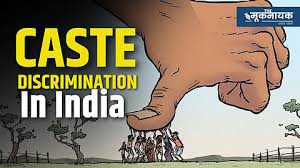
For four months, the 70 Valmiki families have lived in inhumane conditions. Children, the elderly, and women bear the brunt of this boycott. With livelihoods snatched away, many families face economic ruin. The eviction notices have compounded their woes. Ostracized and Deprived: 70 Dalit Families in Haryana Village Pay Heavy Price for Not Supporting Upper Caste Candidate in 2024 Assembly Elections Hisar- In Madanhedi village of Haryana’s Hisar district, under Hansi tehsil, the barber refuses to cut hair, the milkman won’t deliver milk, the water supplier denies water, the grocer withholds essentials, and the flour mill owner refuses to grind wheat. This is not a fictional tale but the grim reality for 70 Dalit families of the Valmiki community, who have been enduring a brutal social boycott for the past four months in this Jat-dominated village. With around 1,500 Jat households dwarfing the 70-80 Valmiki homes, the “crime” of these families was exercising their democratic right during the September 2024 Haryana Assembly elections by voting for a candidate of their choice, rather than the one backed by the Jat community. Stripped of access to basic necessities like milk, groceries, water, and even employment, these families are forced to travel 6-7 kilometers to nearby towns like Hansi, Maham, or Saman to meet their daily needs. This is a story of caste-based discrimination, the tyranny of khap panchayats, and the relentless pressure tactics aimed at forcing these families to abandon their legal fight. Dalit rights activist and lawyer Rajat Kalsan told The Mooknayak, “The conflict stems from the Haryana Assembly elections in September 2024, when Jessi Pethwal was contesting from Narnaund. Background of the issue The roots of this conflict trace back to the Haryana Assembly elections in September 2024. Madanhedi falls under the Narnaund constituency, where Jaswinder, alias Jessi Pethwal, was a candidate. Having married a Jat girl from the village, Jessi was considered the “son-in-law” of Madanhedi, and the Jat community pressured everyone to vote for him. However, Ravindra, son of Rishiraj, a young man from the Valmiki community, defied this dictate, declaring he would vote for a candidate of his choice. Infuriated by his refusal, Mohan son of Omprakash, Ajit alias Ajay son of Ajmer, Sajjan, Rambhagat alias Kuku son of Omprakash, and Ajmer’s wife Santosh attacked Ravindra with sticks, clubs, and an axe. Ravindra filed a case at Bass police station, registered as FIR No. 275/24, under sections 115(2), 238(C), 3(5) of the Indian Penal Code and Section 3 of the Scheduled Castes and Scheduled Tribes (Prevention of Atrocities) Act. The case is currently under trial in the court of Shri G.D. Mittal in Hisar, with witness testimonies scheduled for the next hearing. The filing of the FIR sparked outrage among the Jat community. About 20 days later, in January 2025, a khap panchayat was convened at the village’s new chaupal. Attended by Sarpanch representative Pradeep Poonia, Mohan son of Omprakash, Sajjan son of Chhaju, Sajjan son of Uday, Mandeep Mor son of Deshraj, Narendra alias Bulli son of Dhupa, Ankit son of Anand, and other Jat community members, the panchayat issued a decree. Mohan, Pradeep Poonia, and Sandeep Mor announced that if the Valmiki community did not withdraw Ravindra’s case, they would face a social boycott. The entire Jat community united to enforce this, cutting off the 70 Valmiki families’ access to basic services. Local shopkeepers stopped selling groceries. Sunil, who runs a grocery store at the bus stand, refused to sell to Ravindra, Naveen son of Chanda, and Sagar son of Kuldeep, among others. Sunil’s wife cited the boycott as the reason, an exchange recorded and submitted to the police as evidence. Ajmer, a milkman from neighboring Singhwa village who supplied milk to the Valmiki locality, stopped deliveries at the behest of the named accused. Jitendra, the village’s water camper supplier, also ceased providing water to the Dalit families. Haribishan, who operates a flour mill, refused to grind wheat for Ajay son of Madanlal and other Valmiki community members. The village barber and doctor shut their services to these families. As a result, the families must travel to distant towns like Hansi, Maham, or Saman for daily necessities, with water—a basic need—requiring a 6-7 kilometer trip to Saman village. After four months of living in fear and under pressure, the Valmiki community found the courage to speak out.On April 23, 2025, FIR No. 73 was lodged at Bass police station under Section 3(1)(zc) of the Scheduled Castes and Scheduled Tribes (Prevention of Atrocities) Act, 1989, which criminalizes social boycotts. The boycott’s impact extends beyond basic services to livelihoods. Balwan Poonia refused painting work to Narendra, Abhimanyu, and Pawan. Surendra and Bhup Singh, sons of Hoshiar Singh, sacked Mahipal son of Jagdish from masonry work. For these families, the boycott has become not just a social ostracism but an economic crisis. To intensify pressure, the named accused allegedly coerced some Valmiki community members into signing or thumb-printing blank papers under threats. Narendra alias Bulli used these to draft a fake compromise document to force the withdrawal of the FIR. Yet, the Dalit families stood firm, refusing to back down, which only tightened the boycott’s grip. As the case approached the evidence stage in court, the Jat community and panchayat escalated their tactics. The Valmiki families were served notices for “encroaching” on panchayat land, ordering them to vacate their homes. Rajat Kalsan notes that these families have lived in these homes for over 100 years. Jat and other community members also reside on panchayat land with electricity, water, and paved roads, yet only the Dalit families were targeted with eviction notices to coerce them into withdrawing the case. After four months of living in fear and under pressure, the Valmiki community found the courage to speak out. On April 11, 2025, Hawa Singh son of Shishuram, Jaipal son of Jaikumar, Jagbir son of Tekram, Dharmbir son of Shobharam, Seva son of Hargyan, Ravindra son of Rishiraj, Atma son of Umed, Jagdish son of Tekram, and Madan son
UP: Dalit woman crushed to death in Bulandshahr, five injured after SUV attack by upper-caste Hindu men
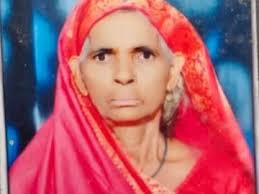
A 62-year-old Dalit woman, Sheela Devi, was crushed to death and five others seriously injured after a group of upper-caste Hindu men allegedly ran them over multiple times with an SUV in a targeted attack late Monday night in Uttar Pradesh’s Bulandshahr. The attack followed a confrontation over rash driving and was preceded by casteist slurs, according to eyewitnesses and police reports. The incident took place in Sunehra village of Bulandshahr district, where Sheela Devi was sitting outside her home when a Mahindra Thar SUV approached at high speed. A local man, Bhupendra, reportedly shouted at the driver, “Brother, drive slowly,” prompting the occupants — identified as Tapesh Singh and his son Priyanshu Singh — to exit the vehicle and hurl caste-based abuses at the residents. According to the complaint filed with the police, the father-son duo left the scene only to return about 10 minutes later with four more men — all armed. Without warning, the group allegedly drove the SUV directly into the people gathered outside their homes, then reversed and ran over them again multiple times. “The vehicle was driven forward and backward several times with the intention of killing them,” stated the complainant. Sheela Devi died on the spot. Five others, including both men and women from the same Dalit neighborhood, were rushed to the district hospital in Bulandshahr with serious injuries. The brutal nature of the assault — captured in disturbing videos circulating widely on social media — has sparked outrage across the region. The videos show the SUV mowing down people as bystanders scream, followed by the assailants fleeing the scene. Bulandshahr City Superintendent of Police Shanker Prasad confirmed, “We have registered an FIR against six men — Tapesh Kumar, his son Priyanshu, and their associates Varun Kumar, Atul Singh, Krishna Singh, and Manav Kumar — under BNS sections 103 (murder), 109 (attempt to murder), 351 (criminal intimidation), 191 (rioting), and relevant sections of the SC/ST Act. A dedicated team has been constituted to apprehend the accused, who are currently absconding.” Courtesy : Maktoob Media Note: This news was originally published on https://maktoobmedia.com/30 and has been used purely for non-profit/non-commercial purposes, especially human rights.
Once again a Dalit became the target: For Rs 6000, the goons tied him to a tree and beat him, blood came out of ears, nose and mouth, he died a painful death
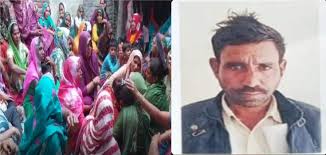
Rampur (Ravi Shankar): In Kundeshwari of Kotwali Tanda area of Rampur in UP, a Dalit laborer was tied to a tree and beaten so badly that he died during treatment over a transaction of Rs 6000. The incident took place on 16 April and the laborer died on 23 April during treatment. On the information of the brother of the victim laborer, the police had registered an FIR of assault due to money transaction. Which has been converted into sections after the death of the laborer. At the same time, the police have arrested two people in this case. Gave a painful death for Rs 6000 Kundeshwari village resident laborer Prempal had borrowed only Rs 6000 from someone, due to the dispute of this, some goons reached Prempal’s house and forcibly made him sit on a motorcycle and took him with them. They took him to the jungle and beat him brutally. Then they threw him in the jungle and left. On receiving the information, the family members admitted him to the hospital for treatment. Where due to his critical condition, he was referred to the higher center Delhi Safdarjung. Where he died on Wednesday. ‘He died the same way he killed our father’ The deceased laborer’s daughter Tanu told that our father has died. He had gone to work. When the gun was fired first, our father got scared and came back home. So he came to call him. My father did not die of fear, he came to call him on the 16th and my father was not going. Later my father said that you go, I am coming on my motorcycle. Then they made him park the motorcycle and forcibly made him sit with them and took him away. The deceased’s daughter further told that two people had taken father away, two people were present at the spot itself. Those people had killed father by hanging him on a tree. Papa was thrown in the bushes on the road. My father was bleeding from his ears, nose and mouth. We want justice and he should be hanged as soon as possible. He should die the way he killed our father. Police statement Regarding this case, Additional Superintendent of Police Atul Kumar Srivastava said that on 16.4.2025, a person named Jagdish informed that his brother Prempal was taken by Imran and his nephew on a motorcycle to drive a tractor. On the way, Prempal was beaten up for Rs 6000. He suffered serious injuries. On the basis of the information, a case was immediately registered at Tanda police station and the victim was sent to the hospital for treatment. From where he was referred to Safdarjung Delhi for further treatment. Prempal died during treatment. Courtesy: Hindi News
Uttar Pradesh: Four arrested for running over Dalit woman for objecting to rash driving

Bulandshahr: The Uttar Pradesh police have arrested four men for allegedly running their SUV over a group of Dalits, who objected to their rash driving in Bulandshahr. A woman, Sheela Devi, was killed and four others were injured in the incident, which took place this week, The Indian Express reported on Friday. According to the FIR, the Dalit family was resting outside their home when a group of men from the Thakur community drove past them. “There was no electricity that night and we had laid out charpai right outside the house. It’s not as if they were in the middle of the road,” Bhupendra Kumar, Sheela Devi’s son, was quoted as saying by TIE. Kumar recalled that he, his mother and three relatives were sitting outside their home when a car allegedly rushed past them very close. He said that he had asked the driver to drive slower. “The car barely missed our feet and a few of our animals that were on the road,” he added. The car stopped and two men who were in the vehicle allegedly made casteist remarks at Kumar and then left from the spot. According to the FIR, six armed men returned in an SUV and ran over the people gathered in the area. “They drove at full-speed; the car stopped after running over my mother and then it reversed in high-speed over her again,” alleged Bhupendra. While Sheela Devi died on the spot, Bhupendra and his relatives were relatively unharmed and were treated in the district hospital, added the report. Police have arrested Priyanshu Thakur, Atul Thakur, Manav Thakur, Krishna Thakur, and the car’s driver. Three suspects — Tapesh Thakur, Varun Singh and Ashu — remain absconding. Courtesy : Vartha Bharati Note: This news was originally published on https://varthabharati.com/30 and has been used purely for non-profit/non-commercial purposes, especially human rights.
Dalit History Month: Culture as power and other stories to read this weekend

Two powerful essays discussing cultural capital and the modern legacy of caste that shape the lives of Bahujan youth, and other stories to read All through April, Dalit History Month, the team at Lounge has been talking about ways to mark the contributions and resilience of the historically marginalized Scheduled Castes and Scheduled Tribes. In urban settings or in certain circles, caste isn’t always demonstrated, but there are subtle ways in which it plays out to the disadvantage of Bahujans—who lands an internship because their mother went to school with the CEO, finding a crew in the office because you all watch that one show, or swapping football stats with the boss. This trivia for small talk or access to networks is a result of generations of privilege, and we asked two writers to weigh in on these more subtle forms of exclusion—or rather, about the extra work Bahujan youth have to put in to create opportunities for themselves. Ethnographer Balram Vishwakarma sent us a very personal piece on Bahujan youth having to understand pop culture and make it their power to enter a room. A few years ago, a friend showed me Balram’s Instagram page, little stories of everyday life that capture the lived experience of people from the working class. He starts with the question ‘How much do you earn?,’ and his subject could be a vegetable vendor, a Mumbai taxi driver, a weaver, a streetside mechanic or a dhobi. He brings that same voice to his lively and thought-provoking piece about learning cultural shorthand to navigate elite spaces, which can also be read as a comment on the need for humanities education that expands horizons, imaginations and empathy. It is complemented by Raju Kendre’s essay, which says that the modern legacy of caste remains unequal access—to jobs, education, healthcare, culture, and therefore to wellbeing and wealth. The two essays are illustrated by the talented Siddhesh Gautam, whose art for solidarity during Dalit History Month worked perfectly with this idea of elusive cultural capital. Courtesy : Shalini Umachandra, Mint Note: This news was originally published on https://mint.com/30 and has been used purely for non-profit/non-commercial purposes, especially human rights.
When the Dalit groom sat on the mare, people pelted stones and beat him, there was a lot of uproar even when the baraatis wore slippers.

MP News: In the rural areas of Tikamgarh district of Bundelkhand, neither the thinking nor the perspective of the people has changed, due to which a Dalit groom had to become its victim and was humiliated in front of hundreds of relatives by pelting stones and beating him. Madhya Pradesh News: A strange case has come to light in Tikamgarh district of Madhya Pradesh. Here some people were so upset with the Dalit groom sitting on the mare and the baraatis passing through a locality wearing slippers that they pelted stones at the baraati. 4 people have been injured in this incident. A report has also been lodged in the police station. The entire case is of Badagaon Dhasan police station area. First abused and then pelted stones This incident is of village Mokhra under Badagaon Dhasan police station of the district. It was Jitendra Ahirwar’s wedding and before the wedding procession, there was a ritual of taking Vinayaki (Rach) around the village. For this, he rode a mare. The ritual was being performed sitting on the mare with the band playing. As soon as the Rach came out of a locality, Bhan Kunwar Raja Parmar first stopped the groom and abused him and then stopped the groom and said how dare you sit on a mare in front of us. You people of low caste have become so arrogant and with the help of Surya Pal and Drigpal sitting at home, stones were pelted at the groom. Narrating his ordeal, the groom said, “Today was my wedding and the wedding procession had to go to Sagar. Before that, a procession was being taken out in the village. When we were passing through a locality on a mare, people pelted stones at us. Four people were injured in this. These bullies said, get down from the mare and go on foot, how dare you pass through our door on a mare. They also said that you should not pass through our door wearing slippers. On the complaint of this incident, the police have registered a case under various sections.” Along with the groom, his relatives were also insulted by pelting stones at them. These bullies disturbed the happiness of Jitendra’s marriage and he was insulted publicly. Regarding which, the groom and his relatives have complained about this incident in the Baragaon police station. This incident in Tikamgarh district has brought the rights of equality to the dock. Courtesy : Written by: Suryaprakash Goswami, Edited by: Ambu Sharma, NDTV Note: This news was originally published on https://ndtv.com/30 and has been used purely for non-profit/non-commercial purposes, especially human rights.