
Anger grows in Bihar after rape-murder of minor Dalit girl
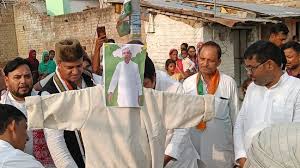
On Saturday, the victim was referred to the Patna Medical College Hospital (PMCH) in a critical condition, but the administration refused to admit her. The Opposition parties in Bihar on Monday came down heavily on the Nitish Kumar government over the brutal rape and murder of a minor Dalit girl in Muzaffarpur district on May 26. They accused the chief minister of criminal negligence. The 9-year-old Dalit girl from Kudhni area of Muzaffarpur district was brutally raped on May 26. The accused also tried to slit her throat. She was admitted to the Sri Krishna Medical College, Muzaffarpur. On Saturday, the victim was referred to the Patna Medical College Hospital (PMCH) in a critical condition, but the administration refused to admit her. She was left struggling in an ambulance for more than four hours. Bihar Congress leaders managed to get her admitted to the maternity ward of PMCH after a five-hour struggle. But she succumbed to injuries on Sunday. Leader of Opposition in Lok Sabha, Rahul Gandhi said, “The brutality with a minor Dalit girl in Muzaffarpur and the subsequent negligence in treatment is extremely shameful. If she had received timely treatment, her life could have been saved. But the double engine government showed extreme negligence in saving her life, let alone providing security.” He added, “We will not sit quietly until the victim’s family gets justice. Strict action should be taken against the culprits and negligent officers.” Congress workers also staged a protest against the state government and burnt the effigy of Chief Minister Nitish Kumar and Health Minister Mangal Pandey in Patna late on Sunday. Bihar Pradesh Youth Congress organized a march in Patna on Monday to highlight the government’s apathy towards Dalits and backwards. Reacting to the horrifying incident, Leader of Opposition in Bihar Assembly, Tejashwi Prasad Yadav said the double engine government has failed in the state. “The CM never discusses these issues. I do not know whether he is even aware of this incident or not. The CM and both the deputy CMs are busy with political programmes,” he said. CPI (ML) State Secretary K Kunal expressed deep anger over the barbaric sexual violence against the Dalit girl and her death due to gross negligence in treatment. He said, “This incident is a symbol of the deteriorating law and order situation in Bihar. It also raises serious questions on the poor health system of the state.” AICC Bihar in-charge Krishna Allavaru said the death of Kudhni rape victim has shown the gruesome face of the state government. He said under the Nitish-BJP government, Dalits and backward classes will neither get security and treatment nor justice. “Has it become a crime to be born a Dalit, extremely backward or backward in Bihar?” he asked. Courtesy : The Statesman Note: This news is originally published on https://thestatesman.com/ and is for use by the non-military/non-commercial community, especially those in the human rights sector.
Jagan To Visit Family Of Dalit Youth ‘Thrashed’ By Tenali Police, TDP MLA Alleges ‘Heinous Mindset’
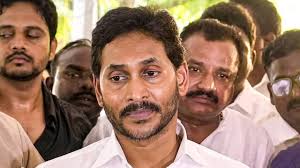
YSRCP leader Jagan Mohan Reddy will visit Tenali on June 3 to meet the family of a Dalit Youth. The incident, involving the public beating of three men by police, sparked outrage after a video surfaced. Amaravati, (PTI) YSRCP chief YS Jagan Mohan Reddy will visit Tenali in Guntur district on June 3 and will meet one of the families of the three men who were publicly thrashed on the road by the police recently. Half a dozen policemen in Tenali made three men–John Victor, Karimullah and Rakesh–sit on the road and beat them with batons, a YSRCP release said on Monday. A video of the incident went viral, bringing widespread condemnation against Tenali police for assaulting the minorities. In the video, a policeman is seen kicking one of the victims, while another policeman stamps on a victim’s thighs. The incident occurred on April 25 and came to light after a video surfaced on May 26. Two of the victims are from the Dalit community, while one belonged to a minority community. The three men were accused of attacking a police constable after being confronted over marijuana possession. “Reddy will visit Tenali on June 3, to meet the family of one of the three young victims from Dalit and minority communities who were brutally assaulted by police personnel,” the release said. Expressing deep anguish over this atrocity involving police, the opposition leader described the incident as an inhuman act that has shaken the conscience of the state. Recently, YSRCP Tirupati MP Maddila Gurumoorthy met the chairperson of the National Human Rights Commission (NHRC), V Ramasubramanian, and the Chairperson of the National Commission for Scheduled Castes (NCSC), Kishor Makwana, in New Delhi to submit formal complaints over the Tenali police atrocity. “He (Gurumoorthy) urged immediate action against the police personnel involved in the brutal assault on Dalit and minority youths in Tenali, Guntur district, which occurred in broad daylight on a public road,” the release said. In his complaint, the Tirupati MP alleged systemic misuse of the police system by the TDP-led NDA government to target YSRCP leaders and marginalised communities, particularly Dalits, BCs and tribals. Meanwhile, Tenali Sub-Divisional Police Officer B Janardhan told PTI that an enquiry officer has been appointed by Guntur District Superintendent of Police S Satish to look into the atrocity case. Reacting to Reddy’s planned visit to Tenali, TDP leader and Madakasira MLA MS Raju ridiculed that a person (Jagan) who had worked as the CM is going to comfort “marijuana gangs, rowdy sheeters and anti-social elements”. “This reflects the criminal nature and heinous mindset of Jagan,” said Raju addressing a press conference. (This report has been published as part of the auto-generated syndicate wire feed. Apart from the headline, no editing has been done in the copy by ABP Live.) Courtesy : ABP News Live Note: This news is originally published on https://abpnewslive.com/ and is for use by the non-military/non-commercial community, especially those in the human rights sector.
Congress raps Nitish government over rape and murder of nine-year-old Dalit girl in Bihar’s Muzaffarpur
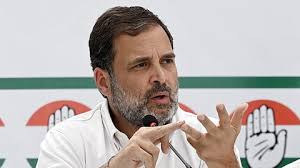
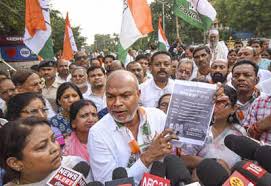
On Monday, Congress workers took out a protest march from the party headquarters with posters and banners, demanding justice for the girl who died on Sunday morning. PATNA: The Opposition Congress has vowed to continue its agitation over the rape and murder of a nine-year-old Dalit girl in Bihar’s Muzaffarpur until justice is delivered to her family. On Monday, Congress workers took out a protest march from the party headquarters at Sadaquat Ashram with posters and banners, demanding justice for ‘Bihar’s Dalit girl’ who died on Sunday morning. However, they were stopped by police from marching towards CM Nitish Kumar’s residence. A minor scuffle ensued between police and protesters. Some leaders were also taken into custody and detained for a while. However, the protesters reiterated their resolve to fight for justice for the victim’s family. They got support from Congress MP Rahul Gandhi who wrote on X, “The brutality against a minor Dalit girl in Muzaffarpur and subsequent negligence in her treatment is extremely shameful. If she had received timely treatment, her life could have been saved. But the ‘double-engine’ government was negligent not only in providing security but in saving her life.” Demanding justice for the victim, Rahul further wrote, “We will not sit quietly until the victim’s family gets justice. Strict action should be taken against the culprit and negligent officers.” He called the death of the rape victim a case of systematic apathy and medical negligence. The Congress women’s cell is also busy chalking out a strategy to corner the NDA government over women’s safety. Women cell leaders attacked Bihar CM Nitish Kumar for his failure to ensure safety and security to women, who they said were being subjected to sexual assault at frequent intervals across the state. Meanwhile, a group of people torched the house of the accused and demanded stern action against him for his heinous act. They described the accused identified as Rohit Sahni, a resident of the same village the victim belonged to, as a ‘a psycho rapist’ who had committed such an offence for the second time. Vidyasagar, superintendent of police (SP), Muzaffarpur (Rural), said the chargesheet against the accused would be submitted in the court within 15 days and the case listed for speedy trial. SSP Sushil Kumar said that the victim was known to the accused. “He was immediately arrested and produced in the court, which remanded him in judicial custody,” he added. The incident occurred on May 26. The accused lured her by providing her chocolates, took her to a nearby maize field and sexually assaulted her. He also attempted to kill her on the spot by stabbing her with a knife around her chest and neck 20 times, causing multiple injuries. The rape victim was rushed to Sri Krishna Medical College and Hospital in Muzaffarpur from where she was referred to Patna Medical College and Hospital (PMCH) on Saturday. In the PMCH premises, she had to wait for more than four hours in an ambulance before finally getting a bed. The victim’s family alleged that the girl was admitted to PMCH after the intervention of some Congress leaders who reached the hospital and talked to senior officials. The deceased’s uncle alleged that they were made to wait for two hours with the minor, but the hospital administration didn’t admit her. Her uncle said that if the girl had been admitted to PMCH on time, her life could have been saved. According to police, there were slash wounds on the girl’s throat and chest. The accused tried to kill her by slitting her throat. “Her vocal cords were damaged, and she was unable to speak,” an investigating officer Aditi Kumari said. Courtesy : Ramashankar, TNIE Note: This news is originally published on https://thenewindianexpress.com/ and is for use by the non-military/non-commercial community, especially those in the human rights sector.
Muzaffarpur horror: NCW steps in; Opposition steps up attack after minor girl’s rape-murder – 10 points
NEW DELHI: The death of a 9-year-old Dalit girl after a brutal rape in Bihar’s Muzaffarpur has triggered outrage across the country. As allegations of medical negligence and administrative failure emerge, here are 10 things to know about the case that has prompted interventions from the NHRC, NCW, and national leaders: Brutal assault on a 9-year-old girl in Muzaffarpur On May 26, the minor girl was allegedly lured with chocolate near her aunt’s house and taken to a maize field where she was raped and physically assaulted. She sustained serious neck and internal injuries. Referred to Patna after initial treatment She was first admitted to Sri Krishna Medical College and Hospital (SKMCH) in Muzaffarpur. Due to her critical condition, she was referred to Patna Medical College and Hospital (PMCH) on May 30.3. Left in an ambulance for hours at PMCH According to her uncle, the child was kept waiting for 2-3 hours inside an ambulance outside PMCH before being admitted. Despite her condition, proper care was allegedly delayed, and the family claims she was only admitted after they raised a ruckus. Allegations of negligence and overmedication The family alleged that doctors gave the child sedatives through the night, and she died the next morning. They also claimed they had to spend Rs 25,000 at the government hospital. NHRC issues notices, calls it a violation of human rights The National Human Rights Commission (NHRC) took suo motu cognisance and issued notices to the chief secretary and DGP of Bihar, calling the incident a serious human rights violation. A detailed report has been sought within two weeks. NCW demands immediate action, cites ‘systemic failures’ National Commission for Women (NCW) Chairperson Vijaya Rahatkar also took suo motu cognisance, demanding a probe into the role of the hospital authorities and police, and calling the delay in treatment “gross negligence.” RJD’s Tejashwi Yadav slams government for inaction RJD leader Tejashwi Yadav accused the Nitish Kumar-led NDA government of prioritising elections over justice. He said the CM and Deputy CMs haven’t even acknowledged the case, calling the law and order situation in Bihar “criminal disorder.” Rahul Gandhi blames ‘double-engine’ government Leader of Opposition Rahul Gandhi posted on X that the girl’s life could’ve been saved with timely medical care. He blamed the NDA’s negligence and vowed to fight until the family receives justice. Government promises Rs 4 lakh ex gratia, fast-track trial Bihar minister Kedar Gupta announced a Rs 4 lakh compensation, promised a chargesheet within 10 days, and said the government would seek a death sentence for the accused within two months. Accused is a repeat offender According to media reports cited by the NHRC, the same accused had previously raped another 12-year-old girl and tried to kill her. The delay in action raises questions about policing and prevention mechanisms. Courtesy : TOI Note: This news is originally published on https://timesofindia.com/ and is for use by the non-military/non-commercial community, especially those in the human rights sector.
SC panel issues notice to Telangana govt after IAS officer asks Dalit Gurukul students to clean their toilets
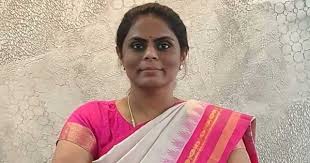
Varshini sparked controversy after instructing principals to assign cleaning tasks—such as tidying hostel rooms and toilets, to students at social welfare schools. The National Commission for Scheduled Castes (NCSC) on Sunday issued notices to the Telangana chief secretary and the state’s director general of police, seeking an action-taken report within 15 days over alleged derogatory remarks made by IAS officer Dr V S Alagu Varshini against Scheduled Caste students in Gurukul schools. Varshini, Secretary of the Telangana Social Welfare Residential Educational Institutions Society (TGSWREIS), sparked controversy after an audio clip went viral last week. In the recording, she is heard instructing principals to assign cleaning tasks—such as tidying hostel rooms and toilets, to students at social welfare schools. The directive triggered sharp criticism from several quarters, with opposition leaders accusing the officer of caste-based discrimination and insensitivity. Former TGSWREIS secretary and Bharat Rashtra Samithi (BRS) leader Dr R S Praveen Kumar condemned the remarks and questioned whether similar duties were expected of the chief minister’s own children. He demanded Varshini’s immediate removal, accusing her of targeting Dalit students. “These orders are outrageous and reflect a regressive mindset. She is even threatening parents who raise concerns,” Praveen Kumar posted on X. BRS MLC Kalvakuntla Kavitha also criticised the state government, sharing the audio clip on social media. She claimed that during the previous BRS regime, each welfare school was granted Rs 40,000 per month to hire cleaning staff—funding that has allegedly been discontinued by the Congress-led government from May this year. Kavitha alleged that assistant caretaker posts in 240 schools had also been scrapped, pushing students into roles such as wardens and kitchen helpers. “Now the officer is forcing children to clean toilets. This violates child rights and undermines the very purpose of Gurukul institutions, which were created to protect marginalised students from caste and class biases, ” she wrote. Defending her remarks, Varshini said her intent was to instil self-reliance among students from extremely poor backgrounds. “Why can’t they clean their own toilets? This is part of growing up,” she said in the audio. “I cannot provide luxury. Once they leave school, they must be able to manage on their own.” In another audio shared with the media, Varshini appealed for her words not to be taken out of context or politicised. She rejected allegations of a staff shortage and argued that students helping with daily chores is a part of holistic development. The NCSC has taken cognisance of the issue amid rising public outcry and political backlash, as the debate deepens over the balance between discipline and dignity in residential welfare schools. Courtesy : TNIE Note: This news is originally published on https://thenewindianexpress.com/ and is for use by the non-military/non-commercial community, especially those in the human rights sector.
Deputy commissioner assures thorough probe into Dalit youth’s death
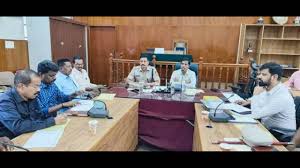
Mandya: Deputy commissioner Kumara on Monday said a thorough investigation would be conducted regarding the death of Dalit youth Jayakumar from Katteraghatta village in KR Pet Taluk on May 17, and strict action will be taken against those found guilty. Speaking at the district-level awareness and oversight committee meeting held at the DC’s office, regarding the implementation of the Scheduled Castes and Scheduled Tribes (Prevention of Atrocities) Amendment Act, 2015, and the 2016 rules, he said the act to prevent atrocities against Scheduled Castes and Scheduled Tribes is in force and that people are being made aware of it. Evidence collected from the incident was sent to the Forensic Science Laboratory. An inquiry is also underway into why a complaint was not registered against the suspect a day before the incident. “No one is above the law, and appropriate legal action will be taken once the report is received,” he said. The district administration visited the location and planned to provide benefits to the deceased’s wife and children within the scope of the law. A compensation of Rs 8.3 lakh was sanctioned, of which Rs 4.2 lakh was given via cheque. The remaining amount will be disbursed after the charge sheet is filed. Additionally, Rs 5,000 per month will be provided as a pension. The family owns 1 acre and 20 guntas in the deceased’s name, and steps will be taken to update the land records and repair their house. Under the Ganga Kalyana scheme, a borewell will be drilled. The deceased is survived by two children. If their mother wishes, arrangements will be made to provide them free education under the special case category in either a nearby residential school or a reputed institution, he said. Superintendent of police Mallikarjun Baladandi said the charge sheet must be filed within 60 days of the FIR. Based on the evidence obtained during the investigation, the charge sheet will be filed, and legal action will be initiated against the guilty. Courtesy : TOI Note: This news is originally published on https://timesofindia.com/ and is for use by the non-military/non-commercial community, especially those in the human rights sector.
Family matters in Bihar’s Dalit politics—Manjhis to Paswans, how kin are rising up the ladder
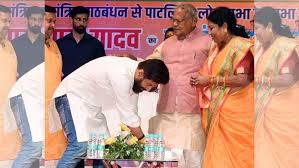
Months before polls, Nitish govt appointed Chirag Paswan’s brother-in-law Mrinal Paswan as chairperson of Scheduled Caste Commission, and Jitan Ram Manjhi’s son-in-law as chairperson. New Delhi: The Nitish Kumar government’s decision to appoint the relatives of Union ministers Chirag Paswan and Jitan Ram Manjhi to top posts in the Bihar Scheduled Caste Commission months before elections has fuelled debate around “dynastic politics” in parties led by Dalit leaders in the state. Chirag Paswan’s brother-in-law Mrinal Paswan has been appointed chairperson of the commission, while Jitan Ram Manjhi’s son-in-law Devendra Manjhi has been made its vice chairperson. Opposition RJD criticised the appointments, saying these were made with an eye on the assembly elections due later this year. Former chief minister Jitan Ram Manjhi’s family now has seven members in politics, competing with the Lalu Prasad Yadav family’s dominance in the state. Manjhi, who comes from the Mahadalit musahar community, contested the Lok Sabha polls from the Gaya seat in 1991, 2014, 2019 and 2024. He won only the 2024 polls. He is currently the oldest minister in the Modi cabinet, holding charge of the Micro, Small and Medium Enterprises Ministry. The Manjhi family Manjhi’s son Santosh Kumar Suman is the national president of their party Hindustani Awam Morcha (HAM). He is a minister in the Nitish cabinet, holding the Minor Water Resources portfolio. He was a minister in Nitish Kumar’s 2020 cabinet too when he held the Minor Irrigation and SC/ST Welfare portfolios. Suman’s wife Deepa Manjhi won the byelection from Imamganj assembly constituency in November 2024 as Jitan Ram Manjhi vacated the seat after his election to Lok Sabha. Deepa Manjhi’s mother Jyoti Devi is also an MLA from the party. She represents the Barachatti assembly constituency. Devendra Manjhi, who has been made the vice-chairperson of the SC Commission, has been HAM general secretary and unsuccessfully contested the assembly election in 2020 from Makhdumpur. Jitan Ram Manjhi has two sons and five daughters. His younger son Pravin Suman is also in politics. Manjhi’s elder daughter Sunaina has contested a deputy mayoral election in 2022. Devendra Manjhi first came in news in 2014 when Jitan Ram Manjhi, as the chief minister of Bihar, appointed him as his personal assistant, and another relative, Satendra Kumar, a clerk. The BJP, then in the opposition, criticised Manjhi, citing a general administration department’s order of 23 May 2000 that no minister can appoint a relative as PA. Manji defended the appointment, saying Devendra has been his PA since 2006. But as the controversy erupted, Devendra resigned. When ThePrint spoke to him after his appointment at the SC Commission, Devendra Manjhi said, “When a doctor’s son becomes a doctor, nobody asks questions.” He said he is an engineer and has been working among people for the last 25 years, despite being the son-in-law of an MP and former chief minister. “Today, after spending so much time among people, I have been appointed as vice-chairperson to work among Dalits. What is wrong with it?” He said the HAM fought the 2015 elections in alliance with the RJD and the JD(U), and the party was given 21 seats to contest. “But I did not get the ticket then and contested as an Independent. Nobody asked why Manjhi’s son-in-law did not get a ticket. My appointment is not dynastic politics.” Courtesy : Shanker Arnimesh, The Print Note: This news is originally published on https://theprint.com/ and is for use by the non-military/non-commercial community, especially those in the human rights sector.
Denied entry into govt schools, Dalits in 1910 Kerala threatened to cut off grain supply
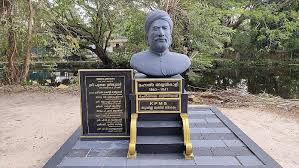
‘Identity, Conflict, and Counter-Narratives’, edited by Yagati Chinna Rao and Raj Sekhar Basu, explores the diverse facets of Dalit history and cultural experiences. At the beginning of the twentieth century, 927 out of every 1,000 Ezhavas in Travancore were illiterate; despite the removal of legal hindrances, Ezhava students were excluded from schools. Even if they were educated, employment opportunities were hard to come by, as they were not recruited into government service.A powerful political awakening had been spurred in Travancore by the 1891 G. P. Pillai-led agitation against the autocratic administration of the state and the denial to native communities of their due share in government jobs. The agitation, which adopted ‘Travancore for Travancoreans’ as its slogan, finally led to the drawing up of the Travancore Memorial (Malayali Memorial), a petition to the Maharaja signed by Nairs, Ezhavas, and Christians. However, the primary interest underlying the petition was that of the Nair community, and its major grievance was that the native upper castes were not being given adequate representation in the bureaucracy; the discrimination suffered by Ezhavas was only superficially touched on. The reply from the sirkar pointed out that ‘Ezhavas were a [contented] lot and if the government was to adopt a deliberate policy to give them a share in education and administration it would be unproductive and would create tension and strain communal harmony. Realising that the Malayali Memorial was a failure from their point of view, the Ezhava community, under the leadership of Dr Palpu, submitted in 1895 a lengthy petition, composed in English, to Sankara Subaiyer, the Dewan of Travancore, enlisting the disabilities suffered by them. Another memorandum was submitted to the Maharaja in 1896. Both of these, known as the Ezhava Memorials, demanded entry into government schools and government employment. In response, the Dewan assured the Ezhavas that they would be granted special schools, but this assurance proved insubstantial; only two primary schools were opened for them. Dr Palpu’s disappointment with the Dewan’s response gave birth to the Ezhava Mahajana Sabha in 1896, but the organisation was unable to gather any significant momentum. It was only with the formation of SNDP in 1903 under the spiritual leadership of Sri Narayana Guru that the Ezhava struggles and demands received a meaningful boost. The first objective of SNDP was to remove the obstacles in the way of Ezhava admission to government and government-aided schools. Later, the Yogam shifted its focus to establishing its own schools and colleges. Narayan Guru’s motto was ‘Strengthen through organisation, liberate by education,’ and this inspired the Ezhava community; under his guidance, SNDP attracted Ezhavas not only in Travancore but also in Cochin and Malabar. This does not mean that other communities were not seeking similar possibilities. They, too, organised themselves and began attempting to climb the social ladder, but their role was marginal in this game of power. English education, control over land, and access to government offices were the three variables that affected the status and power of every community at the time. By the 1930s, education had become a majorly contested political issue; while the lower castes that demanded education were often seeking escape from various forms of elite oppression, upper-caste interest in modern schooling was clearly linked to new opportunities for employment in the rapidly modernising states, the expanding bureaucracy and welfare network, and the economic opportunities emerging in the wake of Kerala’s economic integration with the world-system. The access enjoyed by different communities across the social spectrum to education, land, and employment was neither even nor characterised by the same calculations of advantage, but education was perceived by everyone as the door to economic upward mobility and the emerging political field. Inevitably, the powerful communities—those with economic clout and/or caste clout—triumphed. Apart from Protestant missionaries, Syrian Christians also invested a lot in education. By the end of the nineteenth century, we see the Syrian Orthodox Church registering a society to manage and coordinate its educational activities. From the 1880s, Indian Catholics started establishing schools, and they quickly made outstanding progress in this field: between 1882 and 1887, the number of schools under Catholic management increased from around 10 to over 1,000. A famous Syrian Christian leader of this time period, Father Immanuel Nidhiry, is reported to have said in a speech that an English school would be ‘a more prized asset than the golden crosses of churches’, which could be stolen. Clearly, the church accorded great importance to the matter of investing in education. It is important to note in this regard that Syrian Christians also received assistance in their efforts from the government in the form of liberal grants-in-aid. The experience of the less powerful communities, however, appears to have been different. The coastal Arayas also initiated efforts at modernisation between the late nineteenth and early twentieth centuries but did not succeed significantly. Despite its early efforts, the Araya reform movement failed to establish an adequate and sustainable network of secular community institutions to promote education and other skills needed for modern political and economic life. A large number of institutions sprang up, but they were short-lived, mainly due to financial constraints. Meanwhile, Southern Travancore was seized by a different kind of politics. Under the leadership of Ayyankali (1863–1941), Dalits started laying claim to public spaces, including schools. In 1898, Ayyankali, who later became the first Dalit nominated member in Sri Mulam Praja Sabha, broke caste rules by riding his villuvandi (ox cart) from Venganoor to Aralamudu market in Balaramapuram, heralding in a sense a more forceful era of Dalit assertion. In 1907, Ayyankali established the Sadhujana Paripalana Sangham, a movement that targeted the retrograde practice of keeping the Pulaya away from public roads and marketplaces. Several other Dalit organisations sprang up around the same time: Prathyaksha Raksha Sabha (under Poykayil Yohannan, later known as Kumara Guru Devan), Thiruvathamkoor Paraya Maha Sabha, Sidhanar Service Society, Sambavar Mahasabha, Cheramar Sangathana, and Sathya Vilasini Sangham. In 1904, the Pulayas under the leadership of Ayyankali set up a school
Ambedkarnagar: Minor Dalit girl kidnapped and then raped, case filed against 2 youths
A case of kidnapping and rape of a 15-year-old Dalit girl has come to light in Ambedkarnagar. On the complaint of the victim’s uncle, a case has been filed against Vikas Rajbhar and Dhoni under serious sections. Anurag Chaudhary, Ambedkarnagar: A case of kidnapping and rape of a minor Dalit girl has come to light in Ambedkarnagar, Uttar Pradesh. On the complaint of the victim’s uncle, the police have filed a case against two youths under several serious sections. A minor Dalit girl of Jalalpur police station area, whose age is said to be 15 years, had gone to her aunt’s house for a wedding. The victim’s aunt lives in Katka police station area. Two youths of the same village, Vikas Rajbhar and Dhoni, reached there after making a plan. On the midnight of May 30, when she went out for the bathroom, these two kidnapped her. After kidnapping the girl, both of them took her to a village. It is alleged that Vikas Rajbhar raped her there in the presence of Dhoni. Vikas also threatened the minor Dalit girl. Investigation underway The victim’s uncle has filed a case against accused Vikas and Dhoni under serious sections in the police station. In this regard, CO Jalalpur is investigating the entire matter. Jalalpur police station in-charge Santosh Kumar Singh said that a case has been registered on the complaint of the victim’s uncle. The matter is being investigated. About the author Vishal Chaubey I have studied journalism from Lucknow Public College of Professional Studies, Lucknow. I am working in Navbharat Times Digital. I am working on political and many other news related to UP and Uttarakhand. Earlier, I got a chance to report in Madhya Pradesh Assembly Election and UP Municipal Corporation Election. Courtesy: Hindi News
‘How can Dalits hold wedding here?’: UP family attacked with rods
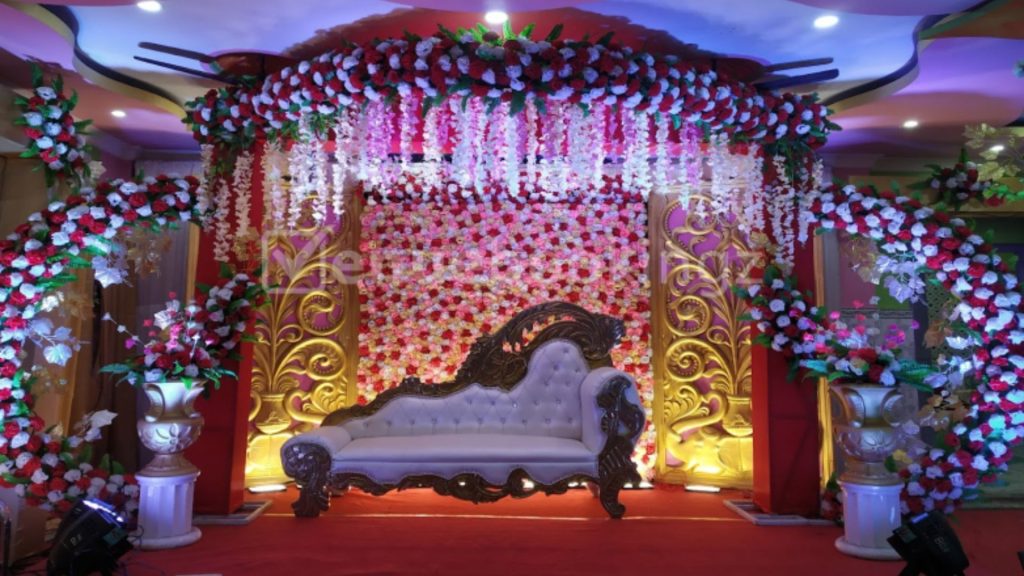
No arrests have been made so far. Ballia: A group of men allegedly attacked a Dalit family with sticks and rods for holding a wedding ceremony in a hall in Rasra, Uttar Pradesh, police said on Sunday, June 1. Two persons were seriously injured in the incident that occurred on Friday. “Being from a Dalit community, how can you hold a wedding in a hall?” the attackers allegedly said, as per the FIR lodged in the matter. An FIR was lodged based on a complaint by one of the victim’s brother, Raghvendra Gautam. He stated that a group of around 20 armed with sticks and rods stormed the Swayamvar Marriage Hall around 10:30 pm and attacked those who were holding a wedding there. The group was led by Aman Sahni, Deepak Sahni, Rahul, and Akhilesh, he said. There were 15-20 other unidentified people from the Mallah Toli locality, the complainant said. According to the FIR, the accused allegedly hurled caste-based slurs and objected to the wedding being held at a marriage hall before launching an “assault”. Lakdikapul Gated CommunitySt JosephsGermanten Hospital Gautam’s relatives, Ajay Kumar and Manan Kant, sustained serious injuries in the attack. Based on the complaint, a case has been registered under relevant sections of the BNS along with provisions of the Scheduled Castes and Scheduled Tribes (Prevention of Atrocities) Act. Rasra Police Station in-charge Vipin Singh said an investigation is underway. No arrests have been made so far. Posted by Veena Nair Courtesy : TSD Note: This news is originally published on https://thesiasatdaily.com/ and is for use by the non-military/non-commercial community, especially those in the human rights sector.