
Ujla Andhera — This Heartbreaking Novel Exposes the Brutal Reality of Dalit Life in India
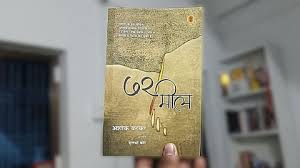
A gripping tale of caste, courage, and survival — Kailash Wankhede’s Ujla Andhera reveals the everyday struggles of Dalit communities in modern India through the eyes of a young boy. “Ujla Andhera” (The Bright Darkness), authored by renowned Hindi writer Kailash Wankhede, is a poignant and deeply moving novel that brings to light the lived realities of Dalit settlements in modern India. Published by Rajkamal Prakashan, this novel powerfully captures the essence of daily struggles, aspirations, and systemic neglect faced by marginalized communities, all through the innocent yet insightful lens of a young Dalit boy named Milind. Kailash Wankhede, recipient of the prestigious Hans Katha Samman and Madhukar Singh Smriti Samman, uses his signature realism to transport the reader into the heart of a Dalit locality that lies geographically close but socially distant from the urban elite. His narrative breaks down complex caste hierarchies, political indifference, and deeply ingrained social prejudices in a simple, accessible, and emotionally resonant manner. A Child’s View of a Fractured Society At the center of the story is young Milind, who presents a first-hand account of life in his Dalit neighborhood. His father, a principled Ambedkarite, repairs punctured tires for a living. Despite extreme poverty, he remains committed to constitutional values and celebrates Ambedkar Jayanti with pride and dignity — distributing sweets to children even when there’s not enough food at home. Through Milind’s eyes, we see a detailed and touching portrayal of his family: a hardworking mother, a supportive elder brother, and a loving grandmother. The mother, in particular, emerges as a symbol of invisible labor and silent suffering. Wankhede, via Milind’s narration, observes: “Evening is mother’s best friend. When it arrives, she stops speaking and becomes a machine. Her hands begin to move faster, picking up the mess of the house. Is it only a mother’s duty to keep the house in order?” Rain, Rage, and Repression The novel doesn’t just document daily life — it critiques it. The monsoon season becomes a metaphor for the state’s indifference, as homes in the Dalit colony leak, stink, and flood. Women drink less water to avoid defecating in the open due to the lack of toilets. The narrative raises a sharp but subtle question: Why do Dalit women die younger? The central tension of the novel builds around a disturbing incident during a Dalit wedding. When the groom, a relative of Milind, mounts a horse — a symbol of pride and honor — the upper-caste neighbors attack the wedding procession. “Dalits don’t have the right to ride horses,” they say, as they beat up the entire baraat (wedding party). The family is forced to seek police protection, but even the police, steeped in caste bias, refuse to help. “The authorities believed that over time, enthusiasm dies down… the crowd will lose interest, and the demand will fade. Life, caught between daily survival and social humiliation, forgets its dreams.” This episode becomes the crux of the novel’s critique — of the continued caste-based humiliation that exists even after 75 years of independence. Language, Power, and Erasure In a powerful meta-commentary, Wankhede criticizes how language itself becomes a tool of exclusion: “The dictionary is a conspiracy against life… It excluded the language of our homes, our lanes, and our lives. Language was used not just to communicate, but to suppress.” The book argues that dominant castes shaped language, religion, and literature to project themselves as superior and to erase the existence of marginalized voices. Dalits were excluded not just from land and temples, but from the very vocabulary that defines human dignity. This deeply philosophical commentary draws a chilling parallel — tools that once built life are now used to destroy it. Words have become weapons. Education, Humiliation, and the Police State The novel also explores how lack of education and healthcare continues to haunt Dalit colonies. When a teacher calls Milind’s community “dirty people,” he is left confused and hurt, questioning his family about why others think that way. The narrative also highlights how young Dalit boys are falsely accused of thefts in nearby areas and are sent to jail without evidence. This pattern of criminalizing the oppressed is shown not as an exception but as a rule — part of a systemic cycle of caste-based injustice. Death, Loss, and Unanswered Questions Tragedy strikes when Milind’s elder brother dies due to poor medical access. His father, too, is left on the brink of death. Yet, despite the personal losses and social attacks, Milind’s observations remain tender, intelligent, and quietly radical. Even as the novel concludes, the reader is left with an aching sense of incompleteness — not due to a lack of closure, but because the questions it raises remain unanswered in real life as well. Why is justice still denied? Why is equality still aspirational? Final Thoughts “Ujla Andhera” is not just a novel; it is a necessary document of our times. It serves as both a mirror and a warning — reflecting the ongoing marginalization of Dalits while challenging readers to confront uncomfortable truths. With poetic language, powerful metaphors, and a child’s perspective full of clarity, Kailash Wankhede has created a masterpiece that deserves to be widely read, debated, and remembered. Courtesy : Rajan Chaudhary, The Mooknayak Note: This news is originally published on https://themooknayak.com/ and is for use by the non-military/non-commercial community, especially those in the human rights sector.
State Cong chief accuses Chirag, Manjhi of failing dalit community
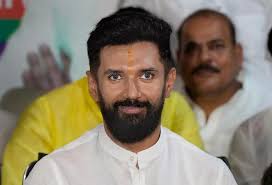
Patna: State Congress president Rajesh Kumar on Tuesday launched sharp attacks on two dalit leaders—Union ministers Chirag Paswan and Jitan Ram Manjhi—for maintaining silence over the death of a minor girl who succumbed to a brutal assault after rape. Addressing a press conference, the state Congress chief said both Chirag and Manjhi claim to be the leaders of the dalit community, but they remained mysteriously silent over such a horrendous crime. “You want the votes of the dalits to stay in power but have not uttered a word of sympathy for the dalit girl, let alone helping her,” Kumar told the reporters in Patna on Tuesday, adding they need to answer this to the people of the state. He said although they happen to be a part of the double-engine govt in Bihar, they failed to do anything for the girl who ultimately died due to “callousness”. “You couldn’t even get her a hospital bed or an oxygen cylinder as that innocent girl died. The question is why are you hesitating to speak out against injustice? Are you keeping silent under the influence and pressure of the RSS agenda? When will you demand justice for the dalit girl?” asked the Congress chief. Later, a team of Congressmen, led by the state president, visited the victim’s house in Muzaffarpur and extended all support to the family. “The Congress party stands with you in this hour of crisis. We will provide every possible assistance in the fight for justice for the girl,” the state president told the victim’s family. Courtesy : TOI Note: This news is originally published on https://timesofindia.com/ and is for use by the non-military/non-commercial community, especially those in the human rights sector.
Jagan Mohan Reddy Slams ‘Red Book Constitution’ After Tenali Police Brutality On Dalit Youths
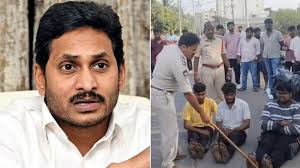
YSRCP chief Jagan Mohan Reddy visited Tenali victims’ families, condemning police brutality against Dalit and minority youths as a sign of Andhra Pradesh’s ‘Red Book Constitution’ under TDP rule. The April 2025 incident sparked protests and demands for a probe. YSR Congress Party (YSRCP) chief Y.S. Jagan Mohan Reddy on Tuesday visited the families of three young men in Tenali who were allegedly subjected to police torture and public assault. He described the incident as indicative of a broader institutional decline under the current administration, referring to it as evidence of the “Red Book Constitution” — a term he uses to critique the state’s governance. The alleged incident occurred on April 25, involving Chebrolu John Victor, Karimullah, and Doma Rakesh. According to reports, the three men were detained, forced to sit on the roadside, and beaten with batons in public view. Reddy claimed they were also threatened with electric shocks while in custody. “In the state of Andhra Pradesh, every institution has taken a back seat,” Reddy said. “Thanks to the N. Chandrababu government and the Red Book Constitution, the police have become complicit in these activities.” While the YSR Congress Party condemned the incident and called for an impartial investigation, Andhra Pradesh Home Minister Vangalapudi Anitha defended the police’s actions. She stated that the police were acting against individuals involved in criminal activities. “Police acted against rowdy sheeters and the ganja batch. It is not right to attribute caste and religion to this,” she said in a public statement. The victims belong to Dalit and minority communities, raising concerns among rights groups who have called for an independent probe into the incident. The episode has further intensified the political standoff between the TDP government and the opposition YSRCP over law enforcement and civil liberties in the state. Stay informed on all the latest news, real-time breaking news updates, and follow all the important headlines in india news and world News on Zee News. Courtesy : Zee News Note: This news is originally published on https://zeenews.com/ and is for use by the non-military/non-commercial community, especially those in the human rights sector.
Phagwara: Dalit organisations convene meeting to condemn sacrilege of Ambedkar statue
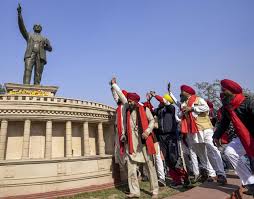
Leaders of several Scheduled Caste (SC) organisations gathered in Phagwara on Tuesday to strongly condemn the act of sacrilege involving the defacement of Dr BR Ambedkar’s statue at village Nangal in Phillaur tehsil of Jalandhar district. The meeting, held at… Leaders of several Scheduled Caste (SC) organisations gathered in Phagwara on Tuesday to strongly condemn the act of sacrilege involving the defacement of Dr BR Ambedkar’s statue at village Nangal in Phillaur tehsil of Jalandhar district. The meeting, held at the Phagwara Rest House, was organised by prominent Dalit outfits, including the Guru Ravidas Tiger Force, Ambedkar Sena Moolnivasi and Yuva Vikas Morcha The meeting was convened in response to the incident that took place on the intervening night of June 1 and 2, where unidentified miscreants allegedly vandalised a statue of Dr Ambedkar — a revered figure among the SC community and principal architect of the Indian Constitution. The gathering saw participation from notable SC leaders including Yash Barna (Chairman, Guru Ravidas Tiger Force), Dharmender Both (president, Ambedkar Sena Moolnivasi), Anu Suhota and Ashvini Suhota (president and vice-president, Yuva Vikas Morcha), along with other activists and representatives from Ambedkarite and Moolnivasi organisations. Addressing the attendees, advocate Randeep Kumar Kailey, a member of Ambedkar Sena, unequivocally condemned the incident and expressed concern over the failure of the local administration and police to safeguard symbols of Dalit pride. He urged community leaders to unite on a common platform to counter the alleged provocations by Gurpatwant Singh Pannu, a separatist and pro-Khalistan advocate. Kailey also noted the financial challenges in pursuing legal redress, stating that “justice through the judiciary remains out of reach for many in the SC community due to high legal costs”. Yash Barna, representing the Guru Ravidas Tiger Force, referred to Article 25 of the Constitution, asserting that Dr Ambedkar envisioned equal respect for all religions and rejected the conflation of Sikh identity with that of ‘Keshdhari Hindus’—a claim he said was being promoted by Khalistani elements. Barna accused Pannu of using local youth to incite communal tension and facilitate their escape abroad by supporting asylum claims. The silence of elected SC representatives drew sharp criticism from Manveer Bodh of the Ambedkar Sena Moolnivasi, who questioned the absence of statements from local SC MPs and MLAs, particularly targeting former Punjab Chief Minister Charanjit Singh Channi. Similarly, Money Ambedkari raised concerns over the future of Dalits, warning of the danger of suppressing SC voices. He added that no separatist group or leader had condemned the act, further deepening the community’s sense of alienation. Ajay Moolnivasi, president of the National Moolnivasi Sangh, echoed the call for unity, urging all Dalit organisations to consolidate their efforts to prevent future acts of sacrilege. He also held the Central Government accountable for not acting against Gurpatwant Singh Pannu, demanding his deportation from the United States. Moolnivasi further alleged that the Rashtriya Swayamsevak Sangh (RSS) was indirectly behind such incidents in Punjab and West Bengal—states where it traditionally has weaker influence—claiming that Pannu might be acting as an “agent of RSS” to create instability. At the conclusion of the meeting, it was resolved that all SC leaders and supporters in Phagwara would assemble on Wednesday morning at 10 am at Ambedkar Park, Hargobind Nagar. They plan to submit a memorandum to the local Sub-Divisional Magistrate (SDM) demanding swift justice and immediate steps to safeguard Ambedkar statues across the region. Among the measures proposed is the installation of sensor-based alert systems on statues to notify local police in real-time in case of tampering. Courtesy : The Tribune Note: This news is originally published on https://thetribune.com/ and is for use by the non-military/non-commercial community, especially those in the human rights sector.
Why A Mega Dalit Outreach Is Part Of BJP’s Plan For Poll-Bound Bihar From June 20
Caste arithmetic and an unfavourable result in the elections last year have prompted the party to take steps to win the poll battle The BJP has decided to go all out to woo Dalits of poll-bound Bihar, even before seat-sharing talks have begun among the NDA constituents for the upcoming election. Starting June 20, the party will target the Ravidas community by organising the Sant Shiromani Ravidas Sammelan-cum-honour ceremony in Bihar. Sant Ravidas, a 15th-century Bhakti saint, is a significant figure in the Dalit community and is widely recognised as a Dalit icon. Last year, Prime Minister Narendra Modi commemorated Ravidas’ 647th birth anniversary in his Lok Sabha constituency Varanasi. Now, with Bihar election around the corner, BJP has decided to hold such conclaves in different districts and created a schedule for that. News18 has learnt that BJP has fixed conclave dates for Begusarai on June 20, Samastipur on June 22, Madhubani on June 25, Bagaha and Bhagalpur on June 29, Saharsa on June 30, Muzaffarpur and Siwan on July 6, Darbhanga on July 7, Gaya on July 13, Banka on July 16, Arwal on July 18, Khagaria and Sitamarhi on July 20 and Gopalganj on July 31, which will be the season finale. There will also be a special conclave through which Dalit outreach efforts will be made in Bihar’s capital Patna though the date for it is not yet finalised. The party wants the Patna conclave to be a show-stopper with big names in attendance, and hence, the date will depend on their availability, say BJP sources. But why the focus on Dalits? Sources in the know suggest there are two reasons behind it. One is pure caste arithmetic. Though the Ravidas community constitutes just 5 per cent of Bihar’s voters, if the total Dalit pie in Bihar is taken into consideration, the number jumps to 19 per cent. While BJP is confident about upper castes and OBC support of a few, JDU too brings OBC strengths. Even NDA’s smaller allies like Rashtriya Lok Morcha leader Upendra Kushwaha can influence OBC votes. Only former Bihar CM Jitin Ram Majhi’s Hindustan Awam Morcha-Secular(HAM-S) and LJP (RV) Chirag Paswan have limited sway over those known as the backwards. The second reason stems from an unfavourable experience in last year’s Lok Sabha election when the BJP-led NDA lost nine Lok Sabha seats in Bihar. In 2019 Lok Sabha polls, NDA won 39 seats while in 2024, it managed to win 30. In neighbouring Uttar Pradesh, the situation was even more grim. The BJP-led NDA lost a whopping 28 seats. Later, BJP went on record to accept that Congress managed to twist BJP’s ‘400 paar’ campaign slogan as fear mongering among Dalit voters, suggesting their reservation rights are on the line. This worked against the BJP in the two Hindi heartland states. Since June 4 last year, when the results were declared, BJP has taken corrective measures to win the narrative war. However, the party feels that with no big alliance partner that has a solid grip among the Dalit community, the outreach is the best way forward. Sources in the BJP say the plan to carpet-bomb the Ravidas Sammelans was conceived in mid-May when Leader of Opposition Rahul Gandhi alleged that the Bihar Police stopped him on his way to Ambedkar hostel in Darbhanga, adding that “they could not stop me because your power (minority community) is watching over me”. Back then, Bihar BJP president Dilip Jaiswal had hit out at Gandhi, saying: “He should use his mind. If he had to use a government building or hostel, he should have sent an official itinerary. He is the Leader of Opposition and a state president of a party has to teach this?” However, it is learnt that this visit may have worked as a catalyst for the state BJP to pre-emptively launch a mega Dalit outreach, having learnt its lessons last year. Authorimg Anindya Banerjee Anindya Banerjee, Associate Editor brings over fifteen years of journalistic courage to the forefront. With a keen focus on politics and policy, Anindya has garnered a wealth of experience, with deep throat in …Read More Get Latest Updates on Movies, Breaking News On India, World, Live Cricket Scores, And Stock Market Updates. Also Download the News18 App to stay updated! Sources said LJP (Ram Vilas) leader Chirag Paswan is serious about the Bihar assembly polls and is likely to contest from a general seat rather than a traditionally reserved seat The BJP may have made it clear that Nitish Kumar will be chief minister if they win the Bihar assembly election – regardless of the numbers – but Chirag Paswan’s desire to leave Delhi and return to state politics is being seen in many quarters as a challenge to the JD(U) leader. Union minister Chirag Paswan, the leader of NDA ally Lok Janshakti Party (Ram Vilas), has been “positioning” himself to ask for a better share of seats, 45 to be precise, reliable sources told News18. “Chirag Paswan is aware of the sanctity of an endorsement (of Nitish Kumar) by someone like that of Amit Shah (in the Gopalganj rally). He is not in that race (to become CM), let me be very clear about that. But does he want his party to have a fair deal this election and grow bigger? Yes,” said a source on condition of anonymity. Chirag on Monday expressed his intention to contest the assembly election. “I don’t see myself in central politics for too long. My reason for entering politics was Bihar and the people of Bihar. I want to take forward my vision of ‘Bihar First, Bihari First’,” he said. “Sometimes, when national leaders contest state elections, it does help the party grow. If my participation helps the alliance and strengthens the NDA’s position in Bihar, I will contest,” he added. According to sources, Chirag is serious about the election and his party MP Arun Bharti, who is also his brother-in-law, told the media that rather than contesting
Tragic Murder of Dalit Youth Sparks Investigation
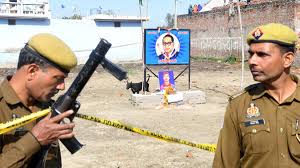
A 22-year-old Dalit youth named Sagar Kori was found murdered with his throat slit in a village. His body was discovered inside a cattle shed near his home after he went missing Tuesday night. Police have sent the body for postmortem and are investigating the crime. A shocking murder has unfolded in a local village where a 22-year-old Dalit youth, Sagar Kori, was found dead with his throat slit, police report. Kori, a resident of Pure Ram Chauhan ka Purwa, was discovered inside a cattle shed near his home after disappearing Tuesday night. His body surfaced early Wednesday. The local police, led by Sangrampur Station House Officer Brijesh Singh, have dispatched the body for postmortem and are actively probing the motive and potential suspects in this alarming case. (With inputs from agencies.) Courtesy : Devdiscourse Note: This news is originally published on https://devdiscourse.com/ and is for use by the non-military/non-commercial community, especially those in the human rights sector.
Telangana IAS Officer to Principals: Make Students Clean Toilets — “They’re Not From Posh Families Where Food Appears at a Snap!”

The remarks have been widely criticized for their insensitivity and perceived reinforcement of caste-based stereotypes, particularly as they target students from Scheduled Castes (SC) attending TGSWREIS institutions, which were established to provide quality education and uplift marginalized communities. Hyderabad – A major controversy has engulfed Telangana’s social welfare education system following the viral spread of an audio clip on May 28, 2025, purportedly featuring Dr. V.S. Alugu Varshini, a 2012-batch IAS officer and Secretary of the Telangana Social Welfare Residential Educational Institutions Society (TGSWREIS). In the clip, Dr. Varshini is allegedly heard instructing school principals to assign students cleaning duties, including washing toilets and maintaining hostel rooms, as part of their daily routine. The remarks, which have drawn widespread condemnation, have ignited a fierce debate about caste discrimination, child rights, and the role of the Gurukul system in uplifting marginalized communities. The Controversial Audio Clip The audio, which surfaced on social media platforms, reportedly captures Dr. Varshini speaking at a recent review meeting with school principals. She is heard defending the assignment of cleaning tasks—such as sweeping floors, cleaning blackboards, washing toilets, and even cooking meals—as part of the state government’s “holistic education” model. “If any parent objects, tell them it is my order,” she allegedly said, criticizing principals for hesitating to implement these tasks due to fear of parental backlash. Dr. Varshini is said to have justified the directive by arguing that students, primarily from underprivileged and marginalized communities, do not come from “posh families where food appears at the snap of a finger.” She emphasized that such tasks teach essential life skills, claiming students would spend no more than 20 hours over six months on these activities, which she described as “not hard labour.” In the clip, Dr. Varshini reportedly cited her own experience as a student performing similar duties, referring to it as Shram Daan (voluntary service), and encouraged principals to share images of students performing such tasks in their groups as an example. She also addressed a specific instance where a student was asked to make rotis, questioning, “What’s wrong with that?” and suggesting it was a valuable learning experience. Furthermore, she allegedly warned that parents who threaten school staff over these tasks could face consequences, including show-cause notices and the potential expulsion of their children. The remarks have been widely criticized for their insensitivity and perceived reinforcement of caste-based stereotypes, particularly as they target students from Scheduled Castes (SC) attending TGSWREIS institutions, which were established to provide quality education and uplift marginalized communities. The viral audio clip sparked an immediate and intense reaction on social media, particularly on X, where users condemned Dr. Varshini’s remarks as exploitative and reflective of a “Manuvadi mindset” within the bureaucracy. The opposition Bharat Rashtra Samithi (BRS) swiftly condemned Dr. Varshini’s remarks, with MLC K. Kavitha labeling them “anti-poor” and exploitative. Kavitha highlighted that under the previous BRS government, each welfare school received ₹40,000 monthly to hire four temporary workers for cleaning tasks, a funding allocation she claimed was withdrawn by the Congress government since August 2024. She also noted that assistant caretakers were removed from 240 schools, forcing students to take on kitchen and cleaning duties. Kavitha demanded Dr. Varshini’s immediate removal from her post and strict action to address the issue. Dr. R.S. Praveen Kumar, a former IPS officer and ex-Secretary of TGSWREIS, who is credited with transforming social welfare schools into centers of excellence, also strongly criticized the remarks. Praveen Kumar, in a sharp post on x addressed to CM Revanth Reddy, questioned whether such directives were given without the minister’s approval, pointing out the hypocrisy of imposing such measures only on underprivileged students while elite corporate schools remain unaffected. He demanded that Reddy, along with his ministers and officials, lead by example by cleaning their own toilets daily and sharing proof with the public. Additionally, he urged sanitation workers to boycott the CM’s residence in protest. The letter, dedicated to SC/ST communities, accuses the Congress government of eroding the dignity of marginalized groups while they remain subjugated. “Jai Bhim. Jai Telangana,” he concluded, calling for an end to this discriminatory practice. Courtesy : Geetha Sunil Pillai, The Mooknayak Note: This news is originally published on https://themooknayak.com/ and is for use by the non-military/non-commercial community, especially those in the human rights sector.
Chittorgarh Cops Under Scrutiny After Failing to Apply POCSO & SC/ST Act in Dalit Minor’s Abduction Case
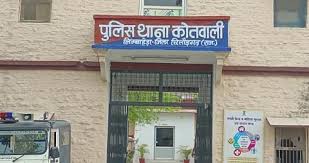
Following media exposure of the case, the SC/ST Act provisions were hurriedly added on May 29. Chittorgarh- In a shocking display of negligence, the Nimbahera Kotwali Police in Chittorgarh, Rajasthan, have come under scrutiny for their handling of a kidnapping case involving a 15-year-old Dalit minor girl. Despite the gravity of the crime, the police failed to invoke the Scheduled Castes and Scheduled Tribes (Prevention of Atrocities) Act (SC/ST Act) and the Protection of Children from Sexual Offences Act (POCSO Act), registering the case solely under Section 137(2) of the Bharatiya Nyaya Sanhita (BNS), 2023. Following media exposure of the case, the SC/ST Act provisions were hurriedly added on May 29. However, in this entire matter, while the investigation and action should have been handled by an officer at the Deputy Superintendent of Police (DySP) rank as per departmental rules, Nimbahera DySP Badrilal Rao was not even informed about the case. Child rights experts state that in cases involving minors, after recovery, the victim must be presented before the Child Welfare Committee to ensure a thorough investigation and appropriate action. On May 24, a Dalit woman residing in Bapu Basti filed a complaint at the Kotwali police station, stating that on May 23 around 3 PM, an accused from Bada Kasai Mohalla, Nimbhaheda, unlawfully entered her home and forcibly took away her 15-year-old minor daughter on a motorcycle. According to the woman, she was away for work in the neighborhood at the time, leaving her daughter and younger son alone at home. The son reported that the accused had forcefully abducted his sister. When the family went to the accused’s house to inquire about their daughter, the accused’s family responded by saying, “The girl will return, our son has taken her with him,” and threatened them against filing a police complaint. They also warned that if a complaint was lodged, something severe could happen to the minor. The Mooknayak spoke to the family, who revealed that the minor had previously known the accused but was no longer in contact. She had been living at her maternal grandparents’ home, while the accused’s residence was just eight to ten lanes away. The family suspects that multiple individuals may have been involved in the abduction. Despite several days passing since the complaint was filed, the Nimbhaheda Kotwali police have neither recovered the minor girl nor arrested the accused. Shockingly, in a serious case involving the abduction of a Dalit minor, the police failed to immediately invoke relevant sections of the SC/ST Act and the POCSO Act, indicating an attempt to downplay the gravity of the incident. Sources suggest that while the accused and the victim were previously acquainted, this does not diminish the severity of the crime. As per regulations, cases related to atrocities against Dalits must be investigated by an officer of Deputy Superintendent of Police (DySP) rank. However, Kotwali Station House Officer (SHO) Ram Sumer Meena assigned the case to a sub-inspector-level officer and deliberately avoided adding SC/ST Act provisions to prevent the matter from reaching higher authorities. This reflects the police’s arbitrary and negligent approach. The minor’s mother expressed her anguish, saying, “My daughter’s entire life is at stake. The accused has full support from his family, and we fear he may commit a serious crime against her.” The victim’s family has pleaded for immediate action and the safe return of their daughter. While the Rajasthan government has repeatedly affirmed its commitment to delivering justice for Dalits and marginalized communities, the local police’s conduct in this case raises questions about these claims. The SHO’s handling of the matter not only casts doubt on police functioning but also exposes a biased and irresponsible attitude in sensitive cases Courtesy : Geetha Sunil Pillai, The Mooknayak Note: This news is originally published on https://themooknayak.com/ and is for use by the non-military/non-commercial community, especially those in the human rights sector.
Casteist Abuse and Threats: Haryana Schoolboy Harassed, Police Delay FIR Despite Complaint
The delay in justice has left Jansu’s family in severe distress. Jansu has stopped attending school, fearing further harassment—a tragic blow to his education and mental well-being. Jind, Haryana- A shocking case of caste-based harassment has emerged from Christ Raja Convent School in Jind, where an 8th-grade Dalit student, Jansu Chauhan, faced prolonged abuse, threats, and intimidation from his classmate’s family—with alleged complicity from a school teacher. The incident, rooted in caste hatred, exposes the systemic failures of law enforcement and educational institutions in protecting marginalized students. The ordeal began with a minor argument between Jansu and his classmate Jivansh over a phone call. However, it escalated horrifically when Jivansh’s father, Vikas Sharma, and uncle, Deepak Sharma, called Jansu and subjected him to casteist slurs (“Chude, Chamaar, Bhangi”), death threats, and derogatory abuse. They allegedly threatened to strip his parents—a clear attempt to humiliate the family for their Valmiki (Dalit) identity. Jansu’s mother, a homemaker, revealed that this was not an isolated incident. In her police complaint filed on May 17, she stated that Vikas and Deepak had been harassing her son for three years, often waiting outside the school to intimidate him and record videos. She also accused a teacher, Hariom Koshish, of supporting the accused. Despite the severity of the complaint, Patiala Chowki Police Station in Jind failed to register an FIR immediately. It took eight days of relentless follow-up before Case No. 179 was finally filed on May 25, under Sections 296, 351(2), 3(5) BNS and Sections 3(1)(r) & 3(1)(s) of SC/ST (Prevention of Atrocities) Act, 1989 Shockingly, only Deepak Sharma was named in the FIR, while Vikas Sharma and teacher Hariom Koshish were excluded—despite being named in the complaint. The delay in justice has left Jansu’s family in severe distress. Jansu has stopped attending school, fearing further harassment—a tragic blow to his education and mental well-being. His mother’s struggle highlights how caste privilege manipulates police and legal systems, denying Dalit families timely justice. Currently, Deepak Sharma is in 14-day judicial remand, but activists demand action against all accused, including Vikas and the teacher. – Reported by Dr. Krishan Kumar, an expert on caste issues in Haryana. Courtesy : The Mooknayak Note: This news is originally published on https://themooknayak.com/ and is for use by the non-military/non-commercial community, especially those in the human rights sector.
25 Years Ago, This Student Changed His University — But No One Gave Him Credit
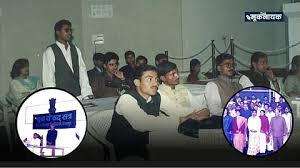
In the year 2000, Deen Dayal Upadhyay (DDU) Gorakhpur University held its annual Youth Parliament competition. Among the participants was Vikram Harijan, then a final-year BA student and a Dalit, who was selected to play the role of the Leader of the Ruling Party. The topic assigned to him was the Women’s Reservation Bill. .Today, Dr. Vikram Harijan is an Assistant Professor in the Department of Medieval and Modern History at Allahabad University. But back then, during the heated Youth Parliament session, Vikram raised a sharp, forward-thinking point: while the university debated women’s rights and representation, its own application forms and ID cards carried only the father’s name, leaving no space for the mother’s name. This issue sparked attention, and soon after, the university administration implemented changes to include mothers’ names on all forms and identity cards — a significant reform for the time. However, years later, as national debates around women’s issues resurfaced, Vikram claims the credit for this change was quietly shifted. According to him, then-Vice Chancellor Prof. Radhe Mohan Mishra began publicly taking sole credit for the reform, erasing the role played by Vikram and his original intervention. Vikram has shared with The Mooknayak several newspaper clippings from that time where his name was omitted, despite being the catalyst for the reform. In the Hindustan newspaper, many years later, the discussion on the women’s reservation bill that day was mentioned. But Vikram Harijan’s name was missing.Photo courtesy – by special arrangement Recalling the event from 25 years ago, Vikram says, “During my speech, I held up the university’s ID card and showed it to everyone. I said, ‘Today we’re discussing the Women’s Reservation Bill, but right here in our university, we don’t even have the option to include a mother’s name on official documents.’” The point resonated deeply among those present. Vikram remembers that after the session, Vice Chancellor Mishra acknowledged the issue, saying, “Women’s caste changes after marriage — there’s nothing I can do about that. But from today, the mother’s name will be included on all university forms and ID cards.” In the years that followed, however, Vikram noticed his name fading from the media coverage. Instead, the Vice Chancellor was credited as the sole reformer. Today, Vikram still expresses disappointment over this erasure, calling it “discrimination.” Reflecting on his student days, Dr. Vikram says, “I was naturally inclined towards debates, speeches, and writing competitions. I learned about the Youth Parliament and wanted to participate, but it wasn’t easy for me. After several attempts, and with the help of Prof. Ankur Gupta and Prof. Harsh Sinha, I finally made it in. I was chosen to lead the discussion on the Women’s Reservation Bill.” He vividly remembers quoting the legendary poet Sahir Ludhianvi during his speech: “Mardon ne banai jo rasmen, usko haq ka farman kaha, aurat ke jinda jalne ko, kurbani aur balidan kaha.” He spoke passionately about women’s rights and highlighted the university’s own shortcomings. “The next day, on February 11, all the newspapers covered the issue,” Vikram recalls. Fast forward to the present, Vikram says he felt overlooked again when Prime Minister Modi’s government passed the Women’s Reservation Bill in Parliament. “On that occasion, Hindustan newspaper ran a feature story. They quoted Ankur Sir and Harsh Sinha Sir, but there was no mention of the point I had raised in the Youth Parliament. The article simply quoted the Vice Chancellor saying that mothers’ names would now be included in university records. Photos of several people were published, but I was mentioned only in passing — just that I’m now an Assistant Professor at Allahabad University.” Courtesy : Rajan Chaudhary, The Mooknayak Note: This news is originally published on https://themooknayak.com/ and is for use by the non-military/non-commercial community, especially those in the human rights sector.