
Jharkhand High Court Raps BIT Mesra Over Dalit Student’s Death, Grants ₹20 Lakh To Kin, Issues Guidelines To Prevent Ragging In Colleges
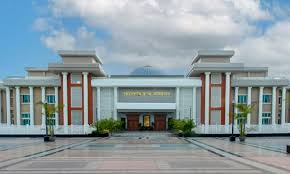
The Jharkhand High Court has awarded Rs.20 Lakh as compensation to be paid by BIT Mesra, Polytechnic College, to the parents of a 3rd semester student, who was allegedly subjected to casteist slurs in the name of Harijan/Dalit and multiple violent assaults leading to his death. Terming the incident as a “brutal assault”, Justice Sanjay Prasad came down heavily on the College over their negligent attitude and poor administration, including their failure to maintain required discipline which resulted in the tragic death of the student The court also pulled up the college for not building a proper boundary wall, failing to keep operational CCTV cameras, giving false information to parents of the deceased that he had consumed excessive alcohol in order to conceal the incident, and their abject failure to provide proper medical treatment to the deceased in the College Dispensary. It said, “Article 21 is the Right to Live is a fundamental right guaranteed under the Constitution of India and this right to live cannot be taken away by the negligence and administrative failure of the concerned College Authorities or State Authorities concerned and there should not be any gap or casual approach.” The Court also issued preventive guidelines to be adopted by Government and Private College Authorities in order to prevent ragging and assaulting of students: Tie up with good government and private hospitals with ambulance facilitates; Establish dispensaries in all schools and colleges with one male and female doctor, equipped with necessary kits and medicines; All engineering and technical institutions to have at least two male and female doctors with proper first aid kits; Maintenance of necessary security personnel with functional CCTV cameras inside and outside the classrooms and at the main doors of hostels; Establishment of a grievance cell to monitor students and to maintain coordination between needy students and college administration; Creation of website or portal for redressal of grievances of students and parents; and, Preparation of Standard Operation Procedure to maintain security system for movement of students. It further said: “… this Court directs the Principal Secretary, Higher Technical Education, Govt. of Jharkhand and Director General of Police, Govt. of Jharkhand to prepare a comprehensive SOP for the entire Engineering and Medical Colleges and all the Technical Institutes imparting Graduate Degree and Post-Graduate Degree and Diploma to the students to prepare SOP by keeping medical dispensaries/medical hospital in the College premises near the hostel so that they may be able to get the timely treatment in case of emergency or need of an hour or for any other medical exigency or requirement”. The court further directed the authorities to prepare SOP for the entire Technical Institutes, Medical, Engineering and Technical Institutes, MBA Colleges imparting education, with hostel facilities having over 1000 boys. The court directed the authorities to impress upon the Deemed Universities like BIT MESRA and others to have tie-up with the local administration and the reputed Government Hospitals as well as private Hospitals in the State or the concerned Districts where such Colleges are situated and running. Background It is alleged that the deceased student was “brutally assaulted” inside the college premises and later outside by a mob of 10–15 individuals with belts, shoes, and kicks in November 2024. It was alleged that he later became unconscious and the college authorities informed his family that he was unwell due to excessive wine consumption and allowed them to take him home. However, his condition worsened the following day and he subsequently passed away while receiving treatment. Based on witness statements and confessional records, four accused— who were current and former students of the college, were booked under BNS Section 103 (murder) r/w 3(5) (common intention) . They were also booked under provisions of the Scheduled Caste and Scheduled Tribe (Prevention of Atrocities) Act for intentionally abusing and insulting a member of Scheduled Caste in public. The accused moved the High Court in separate appeals challenging the trail court’s orders rejecting their bail pleas. At the outset, the Court noted that the College Administration had misled the parents of the deceased in order to conceal the assault committed by the appellants and had also refrained from naming any doctor for treating the deceased at the medical dispensary. It said the College authorities have remained negligent and they have shown no control over the administration in the College and even the boundary wall of the College is not so satisfactorily constructed in the College, as not only the students of the College but also the staff and security personnels of the College are able to scale the boundary wall of the College campus. At some place, it shows that they have left the place insecure for the movement of the students and anti- social elements at risk.” “Had the University Authorities had taken prompt action and pay medical attention towards the treatment of deceased Raja Paswan, his life could have been saved. But, as a result of their sheer negligence and neutral approach, they let off their hands by sending the student with their parents instead of taking them to the good Government Hospital with the mature faculty and security personnels of the College. Hence, the College administration shall remain cautious in future,” the Court added. The court was told that the college had taken several steps in the aftermath of the incident, the Court however said that it was not “fully sufficient” noting that the SOP by the college did not establish hospital/clinic having at least two male, two female doctors when over 1000 students are residing at the hostels of BIT MESRA campus. It further remarked”This Court further finds that there are several instances of commission of suicide by the students in premium institutions like IITs, NITs, AIIMS and various Engineering and Technical Colleges and despite the guideline issued by the UGC and the Hon’ble Supreme Court, the College Administration have not been able to curb the menace of harassment and ragging meted out to the students by the fellow senior students
Independence Deferred: Caste And The Struggle For True Freedom In India

Seven decades after 1947, constitutional guarantees of equality remain unmet for Dalits. Outlook’s August 2023 issue urges reflection and action against persistent caste oppression. On August 15, 1947, India won independence from British rule. Freedom from colonial control was followed by the framing of a new Constitution, which came into force on January 26, 1950. Drafted under the chairmanship of Dr. B.R. Ambedkar, a Dalit leader, jurist, and social reformer who had himself faced lifelong caste discrimination, the Constitution guaranteed liberty, equality, and fraternity to all citizens. The Indian Constitution abolished untouchability through Article 17 and prohibited caste-based exclusion, aiming to dismantle structures that had oppressed Dalits and other marginalised communities for centuries. Ambedkar warned in his final speech to the Constituent Assembly on November 25, 1949, “We are entering a life of contradictions. In politics we will have equality, and in social and economic life we will have inequality. How long shall we continue to live this life of contradictions?” He stressed that political democracy would not survive without social democracy, a condition still not met nearly 80 years on. Across rural and urban India, caste remains a marker of privilege and deprivation. Dalit communities continue to face barriers to land ownership, access to education, and dignified employment. Cases of caste-based violence, including murders over inter-caste marriages or access to common resources, are recorded annually in National Crime Records Bureau data. The persistence of manual scavenging, banned under law, and the segregation of Dalit settlements in many states underline the gap between constitutional ideals and lived reality. Independence Day celebrations often speak of unity and progress, but for millions, the freedom promised in 1947 and codified in 1950 is incomplete. India may be sovereign, but it is not yet free from the deep-rooted social hierarchies that deny full equality. The struggle for true independence, one that dismantles caste oppression, remains ongoing. The issue included Baluta: A Cry From The Heart. The first Dalit autobiography to be published, Baluta created a stir when it appeared in Marathi in 1978. Set in Mumbai and rural Maharashtra of the 1940s and 50s, its author, the poet, Daya Pawar depicts the stark reality of caste violence and untouchability in this classic. It also celebrates the resilience, dignity and courage of the Dalit community and their fight for equality in an unequal society. In How About A Museum Of Untouchability To Display Caste Oppression?, Y.S. Alone writes that the practice of untouchability and how heinous crimes that are committed in the name of caste such as brute killings, rapes, and public beatings are still in practice. He asks: How about a space that depicts all of this? Snigdhendu Bhattacharya’s Ambedkar And Gandhi: Conflicting Ideas On Dalit Liberation recalls how Ambedkar saw no hope for Dalit liberation without “political separation from the Hindus.” Gandhi, while agreeing that the honour of Hinduism could not be saved “without eradicating untouchability root and branch,” considered the idea of Dalit political separation from Hinduism “suicidal” for the national movement. Outlook in collaboration with The Banyan hope to spark conversations in drawing rooms across India that reflect on mental health experiences in all their diversity. – The ‘Infinite Elephant’ is by Usha, who lives with a mental illness. She found her freedom in love. The elephant, she says, represents hope and freedom. In It’s Not Impossible To Smash The Caste System, Bhattacharya speaks to Anand Teltumbde, a scholar and civil rights activist known for his extensive work on B.R. Ambedkar’s life and work as well as the eradication of caste. Teltumbde was arrested in connection with the Elgar Parishad case in 2020 and released on bail in November 2022 after spending 31 months in jail. The 72-year-old spoke to Bhattacharya about the caste system and the possibility of dismantling it. Independence gave India political freedom, but for many, life is still shaped by caste, exclusion, and discrimination. As Outlook’s August 2023 issue shows: the fight for dignity, equality, and real freedom is far from over, and it is a struggle that each of us must keep alive. Courtesy : Outlook India Note: This news is originally published on https:/outlookindia.com/bha and is used purely for non-profit/non-commercial purposes, especially human rights.
Dalit youth dies by suicide, alleges cop assault, caste abuse in Bengaluru
Relatives said Nagesh was not financially sound enough to retrieve his vehicle and feared further police harassment. CHIKKAMAGALURU : A Dalit youth from Samse village in Kalasa taluk died by suicide after alleging police assault and caste abuse by Kudremukh police personnel. The deceased, Nagesh of Bastigadde, hanged himself on Wednesday. In a complaint filed earlier at Kudremukh police station, Nagesh had accused constable Siddesh of thrashing him and hurling casteist slurs on July 15. According to the complaint, Nagesh was returning in his autorickshaw around 10.30 pm when he saw Siddesh and two locals standing on the road with their vehicle parked across it. Using his mobile phone torch to navigate, Nagesh approached them, prompting Siddesh to suspect he was filming them drinking alcohol. The constable allegedly assaulted and abused him. Instead of acting on his complaint, police registered a counter-case against Nagesh, accusing him of obstructing a public servant on duty. His autorickshaw and pesticide sprayer were seized, though he later secured bail. Relatives said Nagesh was not financially sound enough to retrieve his vehicle and feared further police harassment. In his death note, Nagesh accused Siddesh of torture and named PSI Adarsh for failing to act on his complaint. Following his death, his relatives staged a protest demanding the dismissal of Siddesh and Adarsh and compensation of Rs 50 lakh for the bereaved family. (If you are having suicidal thoughts, or are worried about a friend or need emotional support, someone is always there to listen. Call Sneha Foundation – 04424640050, Tele Manas – 14416 (available 24×7) or iCall, the Tata Institute of Social Sciences’ helpline – 02225521111, which is available Monday to Saturday from 8 am to 10 pm.) Courtesy : TNIE Note: This news is originally published on https:/thenewindianexpress.com/bha and is used purely for non-profit/non-commercial purposes, especially human rights.
Wayanad voters refute Anurag Singh Thakur’s fraud claims
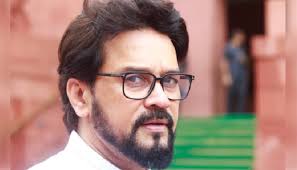
Kozhikode: Several voters in Wayanad rejected BJP leader Anurag Thakur’s allegations of voter list fraud in the constituency. On Wednesday, Thakur held a news conference in Delhi and claimed that 4,246 voters of different religions were registered at the same house in Wayanad, which is represented by Priyanka Gandhi and was earlier represented by Rahul Gandhi. Among those named, two voters from Chaunderi in Kalpetta assembly segment said Thakur’s claims were completely false. He had cited them as examples of people from different religions living in the same house. Thakur had cited the case of Valliyamma (72) daughter of Somasundaram and Mariyam, daughter of Abdul Karim, as examples of voters of multiple religions registered in house number ‘o/ Chaunderi’ under booth 41 of Kalpetta. Both families added that Valliyamma and Mariyam, both elderly people, were living in separate houses. “Chaunderi is the name of our village. We were born and raised here. Many in the village use the place name as their house name. That doesn’t mean we live in one house,” said retired revenue department official K Vadivelu, who is the son-in-law of Valliyamma. Valliyamma’s daughter said that her mother had voted in all elections. “Mariyam is my mother’s childhood friend. She belongs to a different community and lives in another house at Keeripettakunnu. I don’t know how this allegation cropped up,” she said. Mariyam, whose house is located 1km away, rejected Thakur’s allegation. “Valliyamma is living in her house and I have my own,” she said. Also two other voters in Thiruvambady assembly constituency – Shahina and Madhavan V T – who were cited by BJP as examples of voters of multiple religions registered in the house named Vallikattummal in booth 24 rejected the allegation. “There are several families in ward-18 with the house name Vallikattummal. There are around 150 families with the same house name and they belong to all religions. For instance in our ward there is Vilasini, Mary, Shabeer and Gopalan and their house name is Vallikattummal,” said Shahina. Madhavan, who lives 3km away from Shahina’s home, rejected BJP’s allegation. Thakur had alleged that there were 20,438 duplicate voters in Wayanad. To substantiate his allegation, he mentioned Maimoona from Ernad assembly constituency, claiming she was registered as a voter in booths 135, 115, and 152. However, the three women named Maimoona are different individuals living in separate panchayats. Maimoona of booth 115 said that her father’s name was Vellipadan Muhammed and her husband was Mangalan Alavi. ” I voted in the booth at Thamburankunnungal all these years and have not voted anywhere else,” she said. The other two Maimoonas also refuted Thakur’s charges. Kalpetta MLA T Siddique rejected Thakur’s allegations and accused Election Commission (EC) of providing BJP with access to a digital electoral roll. Siddique asked whether EC, which served a notice to Rahul Gandhi over a news conference, would take action against Thakur for making false accusations. Siddique said Thakur has committed a criminal offence Courtesy : TOI Note: This news is originally published on https:/timesofindia.com/bha and is used purely for non-profit/non-commercial purposes, especially human rights.
Internal quota: Congress’ Dalit leaders resolve to amicably settle issue
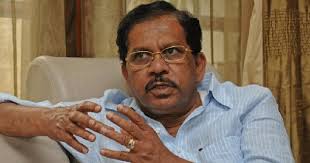
After the session proceedings On Wednesday, the leaders met at Home Minister Parameshwara’s residence to iron out differences that have arisen after the Das Commission decided to divide the 17% reservation for SCs amongst five sub-categories. Bengaluru: Ahead of the special Cabinet meeting on Saturday (August 16) to decide on the Nagamohan Das Commission report on internal reservation for Scheduled Castes (SCs), Dalit ministers and MLAs of the ruling Congress on Wednesday decided to amicably resolve the issue After the session proceedings on Wednesday, the leaders met at Home Minister Parameshwara’s residence to iron out differences that have arisen after the Das Commission decided to divide the 17 per cent reservation for SCs amongst five sub-categories. Since the SC (Left) / Madiga community has been allotted 6 per cent, the SC (Right)/ Holeya (5 per cent) and the Bhovi, Banjara, Korma and Korcha/ ‘touchable’ communities (4.5 per cent) are said to be unsatisfied with the proposals. According to sources, everyone has agreed that no community has to suffer. Social Welfare Minister Dr HC Mahadevappa, Food and Civil Supplies Minister KH Muniyappa, Backward Classes Welfare Minister Shivaraj Tangadagi attended the meeting. IT/BT Minister Priyank Kharge and RB Thimmapur were not present but are said to have conveyed that they will stand by the majority’s decision. Sujay B M Courtesy : DH Note: This news is originally published on https:/deccanherald.com/bha and is used purely for non-profit/non-commercial purposes, especially human rights.
Adoor Gopalakrishnan’s Casteist Speech At Kerala Film Policy Conclave Interrupted; Faces Backlash From Dalit Filmmakers
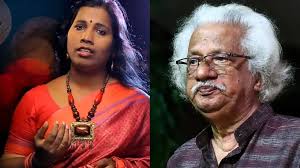
Renowned Dalit singer Pushpavathi Poypadathu slammed Adoor Gopalakrishnan’s controversial remarks during his speech. The two-day Kerala Film Policy Conclave hosted by the Kerala state government on August 2-3 to brainstorm regulatory policies for the state’s film industry ended in a fiasco when veteran filmmaker Adoor Gopalakrishnan criticised the government incentive programmes for filmmakers from Scheduled Castes and Scheduled Tribes (SC/ST) and women filmmakers. Gopalakrishnan’s remarks drew instant censure from Malayalam musician and composer Pushpavathi Poypadathu. The incident has drawn Kerala film industry personnel into a protracted division along caste and gender lines. Dalit human rights activist Dinu Veyil filed a complaint against the filmmaker for promoting ill will against SC/ST communities under Section 3(1)(u) of the SC/ST (Prevention of Atrocities) Act. Gopalakrishnan’s remarks have displayed the full force of patriarchal and Savarna attitudes that contaminate the Kerala film industry. Dalit filmmakers need “intensive training with experts”. Addressing nearly 500 film delegates from around the country and the world at the Legislative Assembly complex in Thiruvananthapuram, Gopalakrishnan, in his concluding remarks at the conclave on August 3rd, insisted that the state’s current incentive programme is badly in need of reform, with many issues plaguing it, including corruption in the use of funds. At the 13-minute mark of his speech, for nearly three minutes, Gopalakrishnan expounded on the shortcomings of both the Kerala State Film Development Corporation (KSFDC) incentive for SC/ST filmmakers and Dalit filmmakers themselves: ‘In my lifetime I have not made a film for two crores. At the same time, the government gives 1.5 crores to scheduled castes and scheduled tribes to make films. I told the esteemed minister that this will lead the way to corruption. The esteemed finance minister knows this. But no changes have been made. Also, when they are selected, I have an important recommendation to make. For these people from the scheduled castes . . . they should be given at least three months of intensive training on how to make films. Someone approaches (the state) with interest in filmmaking. Sending them away by telling them, “Go make a film,” is no way to encourage them. So, they should be given three months of training under experts. They should be taught everything, including how to budget for a film. . . These are public funds. This is tax revenue taken from the public. There are numerous very important issues in our lives that need to be funded. . . Yes, you must provide training to them. Reduce the amount from 1.5 crores for one person to fifty lakhs each for three people.’ Regarding KSFDC initiatives for women filmmakers, Gopalakrishnan reiterated his recommendations: ‘The funding for women is the same. Don’t give money just because somebody is a woman. A woman should also be given training. It is very important that we have women film directors. We have one or two, and they are good. But if we want new directors like them to come forward, they must understand the difficulties of making films.’ “Women filmmakers must understand the difficulties of making films.” KSFDC, founded in 1975, started funding initiatives for women filmmakers forty-four years later in 2019-2020, followed by funding directors from the Dalit communities in 2020-21. Under the scheme, KSFDC awards 1.5 crores each to two filmmakers from each category. The applicants go through several rounds of evaluation, workshops, and interviews conducted by a panel of expert judges appointed by KSFDC. Gopalakrishnan expounded on the shortcomings of the incentive for SC/ST filmmakers: For these people from the scheduled castes . . . they should be given at least three months of intensive training on how to make films. Someone approaches (the state) with interest in filmmaking. Sending them away by telling them, “Go make a film,” is no way to encourage them. So, they should be given three months of training under experts. They should be taught everything, including how to budget for a film‘ So far, ten films produced by KSFDC have been released and/or are slated to be released under this scheme, which include Nishiddho (Forbidden, Dir. Tara Ramanujan, 2022), Divorce (Dir. Mini I. G., 2023), and B 32 Muthal 44 Vare (From B 32 to B 44, Dir. Shruthi Sharanyam, 2023), and comprise directors from Dalit communities. Nishiddho won the Kerala State Film Award for Best Feature Film in 2022 with an international premiere at the Frankfurt Independent Film Festival, while B 32 Muthal 44 Vare won the Best Director Award in the Women/Transgender category in 2023, and Victoria won the FIPRESCI award for Best Malayalam Film by a debut director in 2024. While Gopalakrishnan’s comments garnered some applause, audience response displayed several conclave attendees looking puzzled at these casteist and sexist remarks. At the outset of the public backlash against the filmmaker, the activist body Women in Cinema Collective (WCC) strongly condemned the filmmaker for his remarks: At the Kerala Film Policy Conclave and in the days that followed, Adoor Gopalakrishnan once again exposed his upper-caste, caste, and gender-biased perspective to the public through his comments on the filmmaking experiences of new female and Dalit directors in Malayalam cinema. During his speech, Adoor has undoubtedly confirmed his patriarchal and anti-Dalit stance by making derogatory statements about renowned singer Pushpavathi, who is also the vice-chairperson of the Sangeetha Nataka Akademi, who reacted against it. WCC strongly condemns Adoor’s approach and stance.’ “Who is she? Who has empowered her?” In the aftermath of the incident, in an interview given to a prominent Malayalam news channel, Adoor Gopalakrishnan defended his remarks. He insisted that he was ‘speaking for’ the Dalit community and not against it. It appears that Gopalakrishnan has appropriated the right to ‘speak for’ the Dalit community to himself. He has no tolerance for voices from inside the Dalit community, as evidenced by his hostile and unprofessional tirade against Pushpavathi Poypadathu for ‘interrupting’ him during his speech. Referring to Pushpavathi Poypadathu at various times as ‘girl’, ‘that woman’, and ‘some woman off the street’, Gopalakrishnan barked at the interviewer: Pushpavathi
The plight of drains in Khamaria Dalit Basti: Dirty water accumulated on the roads, danger of diseases, repair not done even after complaint
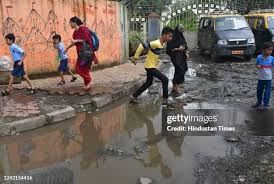
Residents are troubled by broken and clogged drains in village panchayat Khamaria Dalit Basti of Basti Saughat. Dirty water is accumulating on the roads. This is affecting the movement of people. Local residents Shyam Sundar, Dhoop Chand, Shailendra Bahadur, Suchit Kumar and Harilal said that this problem is very old. They have complained several times for the repair of drains. But no action has been taken by the administration. Dirty water coming out of broken drains is entering the nearby houses. This is spoiling the cleanliness of the entire area. Pedestrians are facing problems. The risk of diseases has also increased due to the accumulation of dirty water. Local people have demanded immediate action from the administration. They say that if the drains are not repaired soon, the situation may worsen. Arun Kumar Courtesy: Hindi News
Tamil Nadu Dalit techie murder: Another arrest in dishonour killing case
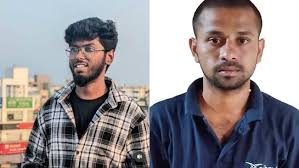
Chennai, Aug 14: In a fresh development in the alleged dishonour killing of 23-year-old Dalit techie Kavin Selvaganesh, the Crime Branch-CID on Wednesday arrested another suspect for aiding the prime accused. The arrested man, identified as Jeyapaul, is the cousin of the key accused, Surjith. According to investigators, Jeyapaul allegedly sheltered Surjith after the brutal murder. Surjith is accused of hacking Kavin to death on July 23 in Tirunelveli, reportedly in opposition to his sister’s inter-caste relationship with the victim. Earlier, Surjith’s father, Saravanan — a serving Sub-Inspector — was arrested in connection with the killing. Both father and son face murder charges under the SC/ST (Prevention of Atrocities) Act. Surjith’s mother, also a police Sub-Inspector, has been suspended, while the victim’s family continues to demand her arrest. Kavin, a software engineer from Thoothukudi, had been caring for his ailing grandfather at a Siddha centre where his girlfriend, a Siddha doctor from a dominant caste, worked. Investigators allege that Kavin was lured away and later murdered. CCTV footage is said to show Surjith taking Kavin on his motorcycle shortly before the attack. The murder, now under CBCID probe, has sparked outrage across Tamil Nadu over caste-based violence and alleged police complicity. Kavin’s family initially refused to collect his body, pressing for the arrest of all those involved. With Jeyapaul’s arrest, police believe they have closed in on a crucial link in the chain of events. Meanwhile, an unverified video of Kavin’s girlfriend has surfaced online, in which she professes her love for him and claims her parents had no role in the crime. Courtesy : Daijiworld Note: This news is originally published on https:/daijiworld.com/bha and is used purely for non-profit/non-commercial purposes, especially human rights.
Dalit youth beaten up again in Gujarat for keeping beard and moustache, police searching for accused

Gujarat Dalit Man Assault News: Once again a case of Dalit youth being beaten up for keeping beard and moustache has come to light in Gujarat. It is alleged that some upper caste people beat up a 27-year-old Dalit in Junagadh district. The police have started investigating the entire matter after receiving the complaint. Dalit youth beaten up in Junagadh for keeping beard and moustache. Ahmedabad/Rajkot: In the month of June, Dalits of Odisha were forced to crawl on the ground. Then those pictures had shamed the whole country. Now in Gujarat, just before Independence Day, an incident of Dalit youth being attacked for keeping beard and moustache has come to light. It is alleged that in a village in Junagadh district, a 27-year-old man was allegedly beaten up by five upper caste people for keeping moustache and beard and was abused with casteist slurs. The incident took place in Vajali village of Visavadar taluka on August 11 and came to light after the victim Sagar Makwana lodged a complaint at the Visavadar police station on Tuesday. When and how did this whole incident happen? According to the information, the victim Sagar Makwana’s father-in-law was seriously injured in the incident. At the Junagadh Civil Hospital, Makwana lodged a named complaint against Shailesh Jebalia, Lalo Bhupat Kathi Darbar and three unidentified persons. According to the complaint received by the police, Makwana, who lives in Manganath Pipli village, was towing his motorcycle after it broke down. While he was towing the bike, Jebalia and Bhupat confronted him and expressed their anger over him having a moustache and beard. The FIR states that they started abusing him on caste lines and warned him not to impersonate upper caste people. When the quarrel escalated and the trio started beating him, Makwana somehow fled to the house of his father-in-law Jeevan Karsan, which was nearby. Police on the lookout for the accused According to the complaint lodged with the police, Karsan suggested that they talk to Jebalia as he lives in the same village and settle the matter. When they reached near Jebalia, Bhupat reached there in a car with three others. The five abused the two men with casteist slurs and then assaulted them. The assailants fled from the spot as locals gathered at the spot. The villagers rushed the two injured to the hospital, where Karsan is said to be in a critical condition. According to Assistant Superintendent of Police (Visavadar) Rohit Kumar, the accused live in the same village where the complainant’s father-in-law lives. A team has been formed to nab them and they will be arrested soon. The victim Makwana is an agricultural labourer. Curated by: Achalendra Katiyar About the author Achalendra Kumar Katiyar is working with Navbharat Times Online. He started his career with DLA newspaper in 2008. He has worked with I Next, Aaj Samaj and Dainik Hindustan in a journey of 17 years. He keeps an eye on every development in Gujarat, Maharashtra and other western states. He has a good understanding of politics. Courtesy : Hindi News
Nails pulled out, third degree given… After being released from jail, three Dalit youths accuse Dewas police, were arrested for breaking the idol
Dewas News: Three Dalit youths were arrested in Dewas for breaking the idol. They have been released on bail. After this, the family has alleged that the police has given third degree. Former minister Arun Yadav has demanded the suspension of the policemen from the DGP. Dewas: Investigation has started into the allegations of assault on three Dalit youths in police custody in Dewas district of Madhya Pradesh. Ravi Ajmeri, Ritesh Ajmeri and Ritesh Sinam have been arrested on August 6. They were accused of breaking religious idols in the industrial area of Dewas. The idols of Lord Ganesha and Goddess were vandalized. The police registered a case and scanned more than 50 CCTV footage. After this, the accused were identified and arrested. Sent to jail after being produced in court At the same time, the accused were produced in court after the arrest and sent to jail. After getting bail, the family members of the accused are making serious allegations against the police. Former Union Minister Arun Yadav is sharing the video and alleging that three innocent Dalit children Ritesh, Ravi and Ritesh were brutally beaten up in Bavadia police station of Dewas. Third degree torture was done. Even the nails were pulled out. Arun Yadav has said that when there is no evidence then why such inhuman torture? Demand to suspend policemen Along with this, Arun Yadav has demanded that DGP Sir, immediately suspend the guilty policemen, set up a high-level inquiry and give justice to the Dalit children. At the same time, the family has alleged that three youths were severely beaten and tortured in police custody, which also includes the allegation of pulling out nails. Dewas SP Puneet Gehlot, while talking to an English newspaper, said that an independent investigation has been ordered. Gehlot said that the allegation is that the police have tortured them. While they were produced in the court after the medical test. After bail, they are claiming assault. The SP said that the arrest was made on the basis of solid evidence. At the same time, the police department has started investigating these allegations. The SP said that an impartial investigation will be conducted. Edited by: Muneshwar Kumar About the author Muneshwar Kumar is the Principal Correspondent at Navbharat Times Online. Has 14 years of experience in journalism. Has special interest in politics, crime, current affairs and off-beat news of Madhya Pradesh. Also has experience of ground reporting in many elections. I have been associated with Navbharat Times Online since 2020. Courtesy: Hindi News