
Telangana BJP chief N Ramchander Rao house-arrested ahead of Nalgonda visit

HYDERABAD: A political row erupted in Telangana on Tuesday after BJP state president N Ramchander Rao was placed under house arrest, with the party alleging that he was stopped from travelling to Nalgonda following an attack on the residence of district BJP president Nagam Varshit Reddy. Rao was scheduled to meet Reddy and his family after the latter’s residence was reportedly vandalised and his family members, including his mother, were allegedly assaulted by Congress workers on Monday evening, the state BJP said. In a post on X, Telangana BJP accused the Congress government of failing to take strict action against those responsible for the alleged attack and instead preventing Rao from visiting the affected family. The party said Rao had planned to travel to Nalgonda to meet Reddy and express solidarity with his family. It alleged that placing the state BJP chief under house arrest was an attempt to stop him from visiting the district. The development comes days after Rao hit out at Lok Sabha Leader of Opposition Rahul Gandhi over his remarks on a ‘Shuddhikaran’ (purification) ritual following Congress president Mallikarjun Kharge’s visit to Uttarakhand. Speaking to ANI on Sunday, Rao accused Gandhi of indulging in “cheap politics” and misinterpreting the ritual, claiming that members of the Dalit community had also taken part in it. Rao alleged that Gandhi was attempting to divide people on regional and caste lines and accused him of trying to create a divide between North and South India. “He wants to twist the facts and mislead the people,” Rao said, while alleging that Gandhi was also seeking to create divisions on caste lines in Uttar Pradesh. Rao also targeted Kharge, alleging that the Congress had opposed BR Ambedkar and defeated him in elections, besides claiming that the party did not confer the Bharat Ratna on him. Courtesy : TOI Note: This news is originally published on https:/timesofindia.com/bha and is used purely for non-profit/non-commercial purposes, especially human rights
Vaiko backs Rahul as PM candidate; Tagore, Praveen Chakravarthy meet Vijay
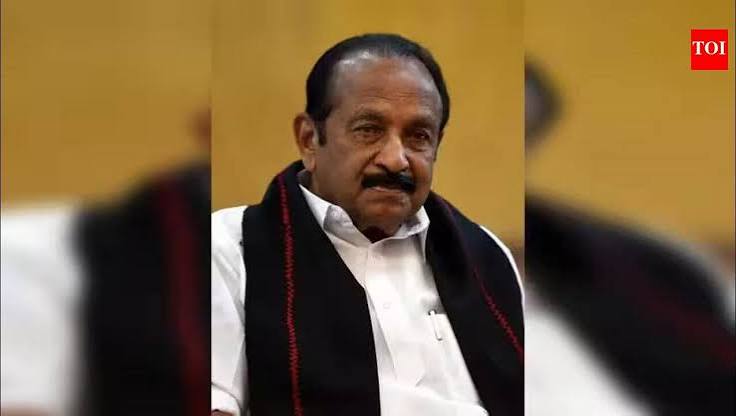
Chennai: A day after Tamil Nadu tourism minister R Rajesh Kumar warned that Congress would pull its two ministers out of the state cabinet if TVK failed to accept Rahul Gandhi as the prime ministerial candidate for the 2029 Lok Sabha election, the ruling party chose not to respond publicly. Meanwhile, TNCC president Manickam Tagore and Congress MP Praveen Chakravarthy separately met chief minister C Joseph Vijay on Monday. TVK’s silence and the visit of Congress leaders signalled an effort by both sides to defuse the situation. Manickam Tagore said in an X post that not all surveys reflect public sentiment, a reference to the survey by a media house that said Vijay was third most popular PM candidate in the country next to PM Narendra Modi and Rahul Gandhi. “Sometimes, numbers shown as voice of people are weapons intended to split people,’’ he said. Narrating a short story titled ‘a fox’s fake survey,’ Tagore said there are attempts to drive wedge between two friends through ‘fabricated numbers.’ Speaking at a public meeting in Kanyakumari on Sunday, Rajesh Kumar said Rahul Gandhi would be Congress’s prime ministerial candidate in 2029. He said the two Congress ministers in Tamil Nadu cabinet would quit if TVK refused to accept Rahul as PM candidate. The statement was a result of TVK ministers projecting Vijay as prospective PM candidate. On Monday, MDMK general secretary Vaiko joined the debate, backing Rahul Gandhi as the prime ministerial candidate and urging Vijay to restrain TVK ministers. “Congress party leads INDIA bloc at the national level. Therefore, Rahul Gandhi is the only viable PM candidate from the alliance. There is simply no alternative,’’ he told reporters in Tirunelveli. Vaiko said Vijay would not have such aspirations and that it was the TVK ministers who were making remarks projecting Vijay as the PM candidate. “Ministers should not speak haphazardly about these matters. CM must direct the ministers to avoid such statements in the future,” said Vaiko. Meanwhile, Congress MLA Tharahai Cuthbert was allotted front row among leaders of opposition parties triggering speculation it was a fallout of Rajesh Kumar’s speech. However, Tagore clarified in a statement that it was a routine administrative exercise after her election as the party’s legislative leader. Speaker J C D Prabhakar also clarified that Cuthbert was allotted the seat because of her designation as floor leader. Courtesy : TOI Note: This news is originally published on https:/timesofindia.com/bha and is used purely for non-profit/non-commercial purposes, especially human rights
‘Chhatron ki Goonj’ reaches Indore as Rahul eyes BJP’s vulnerabilities with “best city” as example
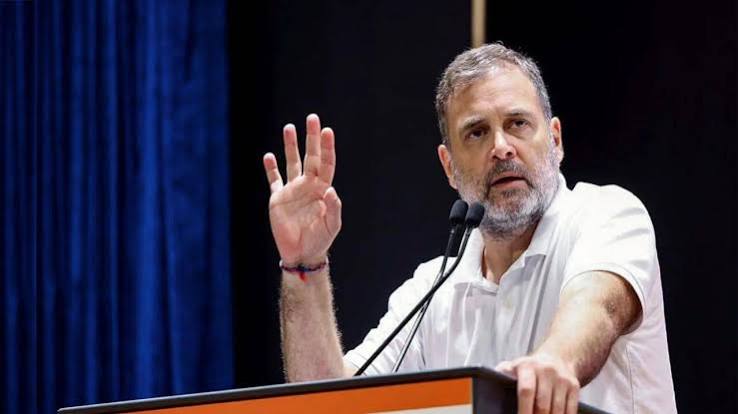
NEW DELHI: Amid continuing reverberations from Rahul Gandhi’s girl-students rally in Pune, the Congress youth outreach “Chhatron ki Goonj” is set to move to another BJP stronghold, the education hub of Madhya Pradesh. Sources said the next episode of “chhatron ki goonj” will be held in Indore on Sep 12. In what is a carefully crafted strategy to challenge the ruling party with the “angry demographic” that led the Jantar Mantar protest, Congress has picked the venue owing to the fact that there has been a history of paper leaks in the state including the infamous examination scandal “Vyapam scam”. Besides, the opposition has won two by-elections “against the might of the state”, the latest being Datia assembly last month. Sources said the party considered a few cities, including in the Congress-ruled states in the south, but then decided on Indore in a bid to continue pressuring the BJP. While the city is a students’ hub and also has a fair share of urban and middle-class population, it has been in the negative spotlight for repeated infrastructural crises – the most sensational being 24 deaths from consuming sewage contaminated water in February 2026. A smart city road, said to be constructed at the cost of Rs 40 crore, collapsed recently, hogging the headlines. Also, there have been allegations of corruption targeting the CM. The “chhatron ki goonj” started in Kota in Rajasthan (June) and then moved to Dehradun (July) and then Prayagraj (August), focusing on examination and employment issues. But in Pune last month, Rahul changed tack when he made it an exclusive event for girls, and his interactive speech around gender justice and “manusmriti” received favourable feedback besides triggering the opponent BJP. The “CKG” strategists are chuffed by the reaction and said the programme will move across the nation with the objective of becoming a “brand” that the youth will associate with. After Indore, the party may choose a city in any of the Congress-ruled states in the south to cover a key region with a strong youth population. Recently, the Congress Working Committee decided that “CKG” will be held in 800 cities and towns – which means one in every district. Sources said Rahul may personally attend around 20 of them, while the rest will become a vehicle for the party to woo the youth. Courtesy : TOI Note: This news is originally published on https:/timesofindia.com/bha and is used purely for non-profit/non-commercial purposes, especially human rights
Anaya Bangar finds support from transgender cricketer who knows the battle

Danielle McGahey has backed Anaya Bangar after Cricket Australia cleared a pathway for her to pursue elite women’s cricket from March 2027. Speaking to India Today, McGahey urged people to base the transgender participation debate, on evidence while treating Bangar with dignity and respect. For Danielle McGahey, Anaya Bangar’s fight to keep her cricketing dream alive carries a familiar weight. Nearly three years after becoming the first transgender cricketer to play in an official international match, McGahey saw her own international career brought to an end by an ICC rule change. Now, as Cricket Australia clears a pathway for Bangar to pursue elite women’s cricket from March 2027, McGahey has chosen to stand firmly behind her. “I want to express my full support for Anaya. I’m incredibly proud of her for continuing to pursue the sport she loves while facing an enormous amount of public scrutiny,” McGahey told India Today in an exclusive interview. McGahey represented Canada before the ICC ruling ended her international career. Her experience has given her a personal connection to the scrutiny surrounding Bangar, who can play Premier Cricket in Australia in the interim before becoming eligible for elite cricket, subject to the relevant requirements. A NEW CHAPTER AWAITS IN AUSTRALIA Anaya Bnagr will be eligible to play elite cricket in Australia from March 2027. Courtesy: Anaya Bangar Instagram For Bangar, Cricket Australia’s decision offers something that has been missing for a long time: a pathway back to competitive cricket. Her potential journey could take her from Premier Cricket to elite domestic cricket and, eventually, the Women’s Big Bash League. But eligibility does not guarantee selection or a contract. Her case also highlights the different approaches taken by cricket’s governing bodies. Cricket Australia uses a testosterone-based eligibility framework for domestic competitions, while the ICC has stricter regulations for international cricket. Under the ICC’s current policy, transgender women who have experienced male puberty are not eligible to play international women’s cricket, regardless of surgery or gender reassignment treatment. The policy was approved in November 2023 following a nine-month consultation process. MCGAHEY CHALLENGES THE ASSUMPTIONS Danielle McGahey retired from international cricket in 2023. Courtesy: Danielle McGahey Instagram McGahey believes the discussion around transgender participation should be grounded in research rather than assumptions about transgender athletes. “My position remains very clear: trans women are women, and trans women belong in women’s sport. After years of gender-affirming hormone therapy, the physiological picture is very different from what is often portrayed in public debate. “Research has shown substantial reductions in strength, muscle mass and other performance-related measures following hormone therapy, with a number of measures moving toward or becoming comparable with cisgender female ranges over time. These conversations deserve to be based on evidence rather than assumptions about transgender bodies.” Her comments come as Bangar’s eligibility continues to generate debate among players and supporters of the women’s game. South Africa international Marizanne Kapp has publicly criticised Cricket Australia’s decision, calling it “absolutely ridiculous”. The contrasting positions reflect the wider challenge facing sporting bodies as they navigate questions of inclusion, competitive fairness and eligibility. A CAREER THAT FELL APART ABRUPTLY Danielle McGahey played 6 T20Is for Canada. Courtesy: Instagram For McGahey, the debate is not an abstract one. She has lived through its consequences. The Australian-born cricketer moved to Canada and made history in September 2023 when she became the first transgender player to feature in an official international cricket match, making her T20I debut against Brazil. She went on to play six T20Is for Canada, scoring 118 runs at an average of 19.66, with a highest score of 48. At the time, McGahey had been deemed eligible under the ICC’s existing transgender participation criteria. But on November 21, 2023, the governing body approved new regulations barring transgender women who had experienced male puberty from international women’s cricket. McGahey’s international career was consequently over. “With a very heavy heart, I must say that my international cricketing career is over,” she said at the time. The decision brought a sudden end to the international journey of a player who had made history only months earlier. A PLEA FOR DIGNITY Danielle McGahey said Anaya Bangar doesn’t deserve to be ridiculed. Courtesy: Anaya Instagram That experience has shaped McGahey’s response to the scrutiny surrounding Bangar. “What has been particularly disappointing for me is seeing Anaya subjected to much of the same ridicule, hostility and dehumanising commentary that I experienced three years ago. It is incredibly disheartening to see how little some parts of the public conversation appear to have moved forward, particularly when our medical and scientific understanding of transgender people continues to develop.” McGahey said disagreement over sporting regulations should never become an excuse for personal attacks. “But beyond the sporting and scientific debate, I think it is important to remember that Anaya is a human being who is simply trying to live her life and pursue her career in cricket. Personal attacks, ridicule and dehumanising commentary are completely inappropriate. “Whatever someone’s opinion on sporting regulations may be, there is no justification for attacking someone personally, and those words can have very real consequences for the person on the receiving end of them. “I hope that as this discussion continues, people can remember the human being at the centre of it and treat Anaya with the dignity and respect she deserves.” For Bangar, the immediate focus is on the cricket field — on returning, rebuilding and earning her place through performance. For McGahey, however, Bangar’s journey is also a reminder of a battle she knows all too well: what it means to keep pursuing the sport you love when your eligibility, identity and future are being debated far beyond the boundary. Sabyasachi Chowdhury Courtesy : India Today Note: This news is originally published on https:/indiatoday.com/bha and is used purely for non-profit/non-commercial purposes, especially human rights
The Dalit enigma: Why Mayawati is going solo in Punjab
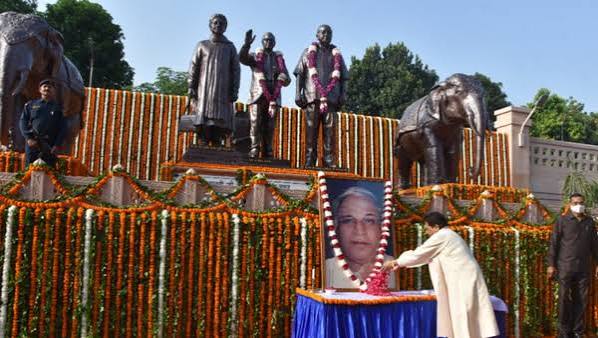
Bahujan Samaj Party (BSP) chief Mayawati has decided to go solo in the upcoming 2027 Punjab assembly election. This move has put the spotlight on a striking contradiction in the state’s politics: Punjab has India’s highest proportion of Scheduled Castes, but no political party has been able to turn that numerical strength into a durable Dalit vote bloc. On August 25, Mayawati announced that the BSP would contest the polls “alone without any alliance or compromise with anyone”, arguing that electoral tie-ups risked weakening the party’s vote share and demoralising its cadre. The decision carries particular significance in Punjab, where BSP founder Kanshi Ram began his political journey and where Scheduled Castes account for 31.94% of the population, according to the 2011 Census. Yet nearly one-third of Punjab’s population has never translated into nearly one-third of the vote for the BSP – or any other Dalit-centric political formation. Instead, the Dalit electorate has remained divided across caste, religious, regional and economic lines, allowing the Congress, AAP, SAD and BJP to each build pockets of support within it. That makes Mayawati’s 2027 gamble less about the size of Punjab’s Dalit population and more about a difficult political question: Can she turn the state’s 32% Dalit population into a coherent electoral bloc? Punjab’s number paradox The numbers explain why every major political party wants a share of the Dalit vote. Punjab had about 88.6 lakh Scheduled Castes in the 2011 Census, accounting for 31.94% of its population – the highest SC proportion among Indian states. The community is particularly concentrated in the Doaba region, which includes Jalandhar, Hoshiarpur and Nawanshahr. Eight of Doaba’s 23 assembly constituencies are reserved for SC candidates, while both Lok Sabha constituencies in the region, Jalandhar and Hoshiarpur, are reserved. Across Punjab, 34 of the 117 assembly seats are reserved for Scheduled Caste candidates. But the political influence of Dalit voters extends far beyond these constituencies. A 2021 analysis by Lokniti-CSDS professor Sanjay Kumar found that Dalits accounted for more than 30% of voters in 54 assembly constituencies and between 20% and 30% in another 45. In other words, Dalit voters can influence far more than the 34 seats formally reserved for them. But there is a crucial caveat: ‘Dalit’ is not a single political identity in Punjab. The community comprises several sub-caste and religious groups, including Ravidassias/Ad-Dharmis, Mazhabi Sikhs, Ramdasias and others. Their geographical distribution, religious affiliations, economic circumstances and political histories differ. That fragmentation has repeatedly prevented the kind of consolidated Dalit politics that emerged around the BSP in Uttar Pradesh. Punjab’s agrarian structure adds another layer. Land and economic power remain disproportionately concentrated among dominant agrarian communities, particularly Jat Sikhs. As a result, Dalit politics in the state often revolves around land rights, employment, reservation, social dignity and access to common resources, rather than caste identity alone. From Kanshi Ram’s Punjab to BSP’s high-water mark The irony is that Punjab was once among the BSP’s strongest political laboratories. Kanshi Ram, born in Punjab, built his early political movement around the mobilisation of Scheduled Castes and other marginalised communities before founding the BSP in 1984. The party’s breakthrough in Punjab came in the 1992 election. It won nine of the state’s 117 seats with 16.32% of the vote, emerging as the principal opposition party in the House. Six of those nine seats came from Doaba, underlining the region’s importance to the party’s political project. But the breakthrough proved difficult to sustain. In 1997, the BSP’s tally fell to one seat, although it still secured 7.48% of the vote. Its vote share then declined steadily — to 5.69% in 2002, 4.13% in 2007 and 4.29% in 2012. By 2017, it had fallen to 1.52%. In 2022, the BSP won just one seat with 1.77% of the vote, contesting as part of its alliance with the Shiromani Akali Dal. The steep decline in three decades captures the central problem Mayawati now faces. How 2022 exposed the paradox If the BSP’s decline showed the difficulty of sustaining Dalit-centric politics, the 2022 assembly election demonstrated how effectively mainstream parties can cut across caste identities. The AAP won 92 of Punjab’s 117 seats with 42.01% of the statewide vote, while Congress was reduced to 18 seats. The AAP’s performance was particularly striking in SC-reserved constituencies. It won 29 of the 34 reserved seats, while Congress won four and the SAD-BSP alliance one. The result also undercut the assumption that Congress’s elevation of Charanjit Singh Channi as Punjab’s first Dalit CM would automatically consolidate the Dalit vote behind the party. Channi became CM in September 2021, just months before the election. His elevation was widely viewed as an attempt to appeal to the state’s huge Dalit electorate. But in March 2022, Congress suffered a dramatic defeat. SAD and its alliance route The SAD has historically had its own Dalit support base, particularly among Sikh Dalits. Its alliance with Mayawati ahead of the 2022 election was an attempt to combine the Akali network among sections of the Sikh electorate with the BSP’s Dalit support base. The combination, however, failed to produce the revival the two parties had hoped for. The alliance won four seats – three for the SAD and one for the BSP – with a combined vote share of around 20%. BJP’s gamble: From alliance politics to going solo The BJP faces perhaps the most difficult social-coalition challenge of all. Its long-standing electoral arrangement with the SAD ended after the Akali Dal walked out of the NDA at the Centre over the farm laws. The BJP is now trying to establish itself as an independent force in a state where it historically relied heavily on the Akali alliance to provide it with a rural and Sikh social base. That means the party needs to build coalitions beyond the constituencies it traditionally relied on, while also trying to repair its relationship with farmers. Dalit voters are an obvious part of that expansion strategy. But Punjab is not Uttar Pradesh or Bihar.
Chirag Paswan Jitan Ram Manjhi: They don’t care about the entire Dalit community, Chirag and Manjhi are pursuing their own political interests.

Chirag Paswan Jitan Ram Manjhi: Bihar politics is currently witnessing a heated debate about reservation. Leaders are claiming their rights and constitutional privileges, but no one has seriously considered the welfare of the entire Dalit community. Everyone is busy pursuing their own political interests. Patna: These days, the buzzword “reservation, reservation” is echoing in Bihar’s political circles. Some are saying, “No one can abolish reservation.” Others say, “Reservation is our constitutional right.” But the sad truth is that no political party has considered the entire Dalit community’s thinking. Neither have the Dalit leaders who harp on Dalit politics and reservations suggested a formula for uplifting those at the bottom of the socio-economic ladder. One possibility was raised by Dr. Santosh Suman, National President of Hindustani Awam Morcha Secular, but he too has backed away from the campaign. When he said that the creamy layer should not be deprived of reservation, he did not mention it. What does LJP (R) National President Chirag Paswan want and what does Hindustani Awam Morcha Secular National President Dr. Santosh Suman want? Let’s expose these two leaders. What is Chhote Manjhi’s recent statement? Hindustan Awam Morcha Secular National President Dr. Santosh Suman Manjhi made it clear that he never talked about implementing a ‘creamy layer’ in SC-ST reservations or excluding anyone from reservations. I had said that his real issue was implementing a ‘quota within quota’ (sub-categorization) for the most disadvantaged and backward castes within the Scheduled Castes. He never said that the creamy layer should be deprived of reservations. Yes, I did say it, and I say it with full confidence, that there should be a sub-quota within the reservation quota. ‘Creamy layer’ and ‘sub-quota’ are two completely different concepts. Now, regarding resignations, Union Minister Jitan Ram Manjhi and I, Santosh Kumar Suman, will resign. However, we, the secular party, are a small party, while the LJP(R) is a large party. Chirag Paswan should resign his ministerial post first, and we too are ready to resign. I had said that his real issue is implementing a “quota within quota” (sub-categorization) for the most disadvantaged and backward castes within the Scheduled Castes. He has never talked about implementing a “creamy layer” within SC-ST reservations or excluding anyone from reservations. Why is Chirag Paswan in opposition? Actually, Lok Janshakti Party (Ram Vilas) National President Chirag Paswan is not concerned with Dalit politics; he is concerned with the Paswan caste. He knows that as soon as he advocates for a creamy layer or a quota within a quota, the Paswan community will become angry. And this Paswan community is the main political base of his politics. It’s a different matter that this statement exposes his Dalit politics and Dalit thinking, revealing that his overall Dalit thinking is not concerned with the development of all Dalits. Why is Chirag Paswan shying away from population share? The truth is that Paswan’s total population is just over five percent. However, he is the number one beneficiary of reservation. Regarding government jobs, the situation is such that while his population is between 5 and 6 percent, his share in government jobs, i.e., Dusadhs, is 32.7%. In such a situation, if the government adopts a quota within quota or a policy that the share depends on the population, Chirag Paswan’s political position will be in jeopardy. Accordingly, Paswan’s share in jobs will be reduced to five percent, resulting in a direct loss of 27 to 28 percent of his reputation. What is the principle of Manjhi’s politics? If we talk about central minister Jitan Ram Manjhi and his son, Dr. Santosh Suman Manjhi, a minister in the Bihar government, they play politics of approximately three percent. However, their percentage in government jobs is 0.26 percent, which is quite low. In such a situation, even if there is a quota within a quota, people of their caste will benefit. Even if we accept the existence of a creamy layer, the politics of Union Minister Jitan Ram Manjhi and Bihar Government Minister Dr. Santosh Suman will still be successful. In such a situation, the claim of 3 percent politics will increase, and so will its purpose. Written by: Ramakant Chandan • Edited by: Sunil Pandey About the Author Ramakant Chandan began his journalism career in 1988 as a freelancer with Navbharat Times and Dainik Hindustan. He formally joined Rashtriya Sahara in 1996, starting with Haatsapaksh, Noida. He became a special correspondent in 2012. In 2020, he became the local editor of Rashtriya Sahara Patna, and in 2022, he became the consulting editor of Rashtriya Sahara. Courtesy: Hindi News
Tamil Nadu Dalit Student Dies By Suicide After Alleged School Humiliation

A 16-year-old Dalit student in Class 11 has died by suicide in Usilampatti near Madurai, Tamil Nadu, following alleged caste-based discrimination and humiliation at a government school. The victim’s family alleged that the school’s headmistress, Vimala Devi, scolded and humiliated the student after she objected to her mother being forced to stand with folded hands in submission. The family claims the resulting severe mental trauma and distress led to the student taking the extreme step. A case has been registered against Headmistress Vimala Devi as the family demands legal action and her arrest, while police continue their investigation into the matter. Courtesy : India Today Note: This news is originally published on https:/indiatoday.com/bha and is used purely for non-profit/non-commercial purposes, especially human rights
Lawyers urged to ensure justice for Dalit families

SC Morcha State president Panatala Suresh said the Legal Cell had been constituted to identify the social and legal problems faced by Dalits and extend support to them Vijayawada: BJP State Organisation general secretary Nookala Madhukar urged lawyers of the SC Morcha Legal Cell to work towards ensuring justice for every Dalit family facing discrimination and social inequality. Addressing the State-level meeting of the BJP SC Morcha Legal Cell at the party’s State headquarters in Vijayawada on Sunday, Madhukar said lawyers should identify Dalits who were caught in false or illegal cases and provide them with necessary legal assistance. He said Dr BR Ambedkar had faced numerous humiliations and hardships but overcame them and gave the country a Constitution that continues to guide society. He called for creating awareness among Dalits about their constitutional rights and encouraging them to exercise and safeguard those rights. Madhukar stressed the need to bridge the gap between words and actions in the fight against caste discrimination and called for taking Ambedkar’s ideals forward in society. SC Morcha State president Panatala Suresh said the Legal Cell had been constituted to identify the social and legal problems faced by Dalits and extend support to them. He said Dr Ashok had been appointed as the State-level convener and urged district-level conveners to strengthen legal assistance mechanisms. Andhra Pradesh Bar Council member and party office in-charge Uppalapati Srinivasa Raju, State spokesperson Shaik Baji, SC Morcha State general secretary Rakesh, vice-president Vulluri Gangadhar, zonal in-charge Mekala Laxman, district president Sarvasuddhi Raju, party Legal Cell member Ch Umamaheswara Reddy and others attended the meeting. Courtesy : THI Note: This news is originally published on https:/thehansindia.com/bha and is used purely for non-profit/non-commercial purposes, especially human rights
Implement legal rights of Dalits, says VCK chief Thol Thirumavalavan

Responding to criticism over VCK general secretary Vanniarasu’s Assembly remarks that Dalit rights had been affected during the DMK regime, he said his remarks should not be distorted. TIRUCHY: VCK leader Thol Thirumavalavan on Saturday urged the state to implement all statutory rights of Dalits during the five-year tenure of the TVK-led government. “More statutory rights of Dalits remain to be implemented, and the government must take the necessary legal measures for their welfare,” he told reporters at Tiruchy airport. Thirumavalavan, who arrived in Tiruchy from Chennai to attend weddings in Perambalur said several welfare measures were being held up because officials feared that full implementation of the SC/ST Act could lead to law and order problems. “Even when the rulers are willing to act, officials sometimes create obstacles,” he said. Responding to criticism over VCK general secretary Vanniarasu’s Assembly remarks that Dalit rights had been affected during the DMK regime, he said his remarks should not be distorted. He said it was true that Dalit candidates had been fielded and elected from general constituencies, but questioned whether they were given tickets based on merit or out of sympathy. Courtesy : TNIE Note: This news is originally published on https:/thenewindianexpress.com/bha and is used purely for non-profit/non-commercial purposes, especially human rights
TRB to recruit 6k asst professors: Minister; Rahul will be next PM, says he
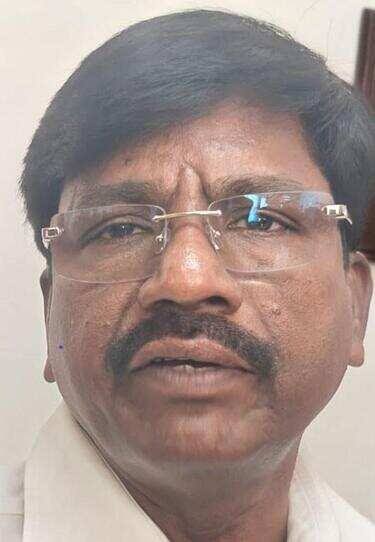
Trichy: State’s Teachers Recruitment Board (TRB) will conduct examinations to fill around 6,000 assistant professor posts in govt colleges in three phases, said higher education minister P Viswanathan on Sunday. Talking to reporters at Trichy airport, the Congress minister also said in reply to questions that Rahul Gandhi will become the country’s next Prime Minister. Viswanathan said that in each phase, 2,000 candidates will be recruited as assistant professors. Under the Career Advancement Scheme (CAS), the long-pending demands of nearly 8,000–9,000 assistant professors have been addressed. About ₹19 crore is being spent every month, translating to nearly ₹250 crore annually, on salary revisions and other service benefits, he said. Asked as to how many prime ministerial candidates were there in the TVK-led alliance, Viswanathan said, “Rahul Gandhi is the sole prime ministerial candidate of Indian National Congress.” He further said people had grown resentful of BJP over the past 15 years and Rahul Gandhi would become the country’s next Prime Minister. On the omission of the names of B R Ambedkar, K Kamaraj and Periyar from a policy note of the backward classes welfare department, Viswanathan said there was no need to blow the issue out of proportion. “TVK has already announced Ambedkar, Kamaraj and Periyar as ideological leaders.” Courtesy : TOI Note: This news is originally published on https:/timesofindia.com/bha and is used purely for non-profit/non-commercial purposes, especially human rights