
Cong fields 30 candidates under 30 for Jaipur civic polls

Jaipur: Congress is banking on younger faces in the Jaipur municipal polls, with 30 candidates below the age of 30 and 110 below 50 years. This takes the average age of its nominees to around 37, according to Jaipur in charge Rohit Bohra. The youngest candidate is Suman Bhati, aged 22, contesting from Ward 72. Bhati, from Jhalana slums, runs a laundry business. She said her own experience had shaped her priorities. “I‘m from an underprivileged area and have seen what situations women face in slums. If elected, I want to work on skill training, drug de-addiction camps and better policing. I also want CCTV cameras in my locality and regular patrolling by women police personnel,” she said. Breaking caste barriers is another issue on her agenda. For 23-year-old graduate Harshit Jain from Ward 46, transparency and accountability would be priorities. He wants a technology-based grievance-redressal system through which complaints can be categorised and routed to the departments concerned for resolution. Jain said he admires Priyanka Gandhi Vadra and followed Rahul Gandhi’s ‘Chhatron Ki Goonj’ initiative. Both young candidates acknowledged their limited experience but said they are willing to learn. Jaipur in charge Rohit Bohra said the party had deliberately increased its focus on younger candidates. “Around 20% of our candidates are from Gen Z. Among all 309 urban local bodies going to polls, Jaipur has the highest number of Gen Z candidates,” he said. The party’s Jaipur district president Sunit Sharma could not be contacted for comment. Courtesy : TOI Note: This news is originally published on https:/timesofindia.com/bha and is used purely for non-profit/non-commercial purposes, especially human rights
Kharge event row: Cong protests FIR against Rahul, alleges vendetta

Varanasi: Scores of Congress leaders and functionaries took out a protest march on Tuesday demanding immediate cancellation of the FIR lodged against party MP Rahul Gandhi in Haldwani district of Uttarakhand, alleging political vendetta by the BJP govt. Led by party district chief Rajeshwar Patel and city unit president Raghvendra Chaubey, the protest march began from Bageshwari Devi temple near Jaitpura police station and headed towards the Gandhi statue at Town Hall, Maidagin. Police stopped the march at Ausanganj crossing and accepted a memorandum addressed to the governor. Chaubey accused the BJP govt of double standards, alleging that no action had been taken even 20 days after the alleged insult of Congress president Mallikarjun Kharge and the reported “purification” of a rally venue. Congress said its struggle would continue until the FIR is withdrawn and issues of justice are addressed. Congress functionaries said Rahul speaks for Dalits, backward classes, tribals, the poor and other deprived sections and is being targeted for raising issues of social justice, democracy and constitutional rights. A case was registered against Rahul at Kotwali police station on Sunday night. The FIR — lodged under BNS sections 196 and 299, along with section 3(1)(q) of the SC/ST (Prevention of Atrocities) Act, 1989 — followed a complaint by Amit Kumar, a resident of Jawahar Nagar Colony in Haldwani and member of Shriram Sena Dharmarth Seva Samiti. Kumar, who belongs to the SC community, alleged that Gandhi gave a caste angle to routine cleaning work carried out at Ramlila Maidan on Aug 11, characterising the clean-up as an act of untouchability and a criminal offence during a news conference in Delhi. Courtesy : TOI Note: This news is originally published on https:/timesofindia.com/bha and is used purely for non-profit/non-commercial purposes, especially human rights
Parliament passes Transgender Persons Amendment Bill, 2026 with Rajya Sabha approving it today

Parliament has passed the Transgender Persons (Protection of Rights) Amendment Bill, 2026, with the Rajya Sabha approving it today. The bill was passed by the Lok Sabha yesterday by a voice vote amid an Opposition-led walkout. The bill seeks to redefine the category of transgender, removes the provision of self-perceived gender identity and excludes several socio-cultural identities as well as transmasculine individuals from its ambit. It also further defines transgender persons within a biological framework, based on intersex variations and differences in sexual development. Replying to the discussion on the Bill in the Rajya Sabha, Social Justice and Empowerment Minister Dr Virendra Kumar said the government is compassionate towards the well-being of the transgender community. He said the Bill has provisions to empower the transgenders and give them dignity. The Minister said that the NDA government has taken several initiatives to bring transgender people to the mainstream and stop discrimination against them. Starting the discussion in the Upper House, Congress MP Renuka Chowdhury said this bill dilutes the privacy of an individual provided under the Constitution. Opposing the Bill, Ms Chowdhury said self-identification cannot be taken away through bureaucratic certification. Criticizing the government, she said that the proposed bill undermines the fundamental rights and dignity of transgender persons. Calling such a move wrong and illegal, she argued that forcing transgender persons to provide their identity through official certificates is against the spirit of equality and dignity guaranteed by the constitution. She also questioned the government’s approach for not properly consulting with the transgender community before bringing the Bill. She also referred to the Supreme Court’s landmark NALSA judgement of 2014, which recognized the right of transgender persons to self-identify their gender. Ms Chowdhury said the proposed Bill violates the principles laid down in that judgement and fails to respect an already established legal framework. DMK MP Tiruchi Shiva also opposed the Bill, saying that even if the Bill is passed in Parliament with a majority, it will be struck down by the Supreme Court. He further added that the Bill violates Articles 14, 15, 19 and 21 of the Constitution and it deprives the community of the right to freedom, dignity and self-determination. Supporting the Bill, BJP MP Medha Vishram Kulkarni said, ” This Bill ensures justice, dignity, protection from criminalisation and legal safeguards for transgender persons. She also thanked Prime Minister Narendra Modi for bringing this bill with certain amendments in order to ensure that the benefits reach the deserving people in a proper manner. She said there is a need for a law that brings justice to real transgender individuals and punishes fake ones. Mrs Kulkarni said the benefits should be extended to those who are transgender by birth. She said that the amendment to extend punishment will bring down the rate of crime and forced identities. TMC’s Saket Gokhale said that 31% of Transgender people in India have attempted suicide because of the discrimination that they are facing. He alleged that now the government is going to start discriminating against them as though social discrimination were not enough. He called it unacceptable. Mr Gokhale expressed concern that gender is going to be decided by the Chief Medical Officer and a District Magistrate, and the bill does not prescribe any qualifications for the Chief Medical Officer. Sanjay Singh of AAP said the Bill is a big let-down for the transgender community. He accused the government of not doing anything for the community. RJD’s Manoj Kr Jha said that prejudices against transgender people should stop, and they should be able to live with dignity. He added that self-determination of gender should not be taken away. CPI(M)’s John Brittas said it is a black-letter day and the Bill is taking India a century back. He pleaded with the government to either withdraw the Bill or refer it to a Select Committee. Jaya Bachchan of the Samajwadi Party also questioned the government over the legislation. She sought to know what the urgency was in bringing the Bill, without examining it with the depth and care that it deserved. Courtesy : NOA Note: This news is originally published on https:/newsonair.com/bha and is used purely for non-profit/non-commercial purposes, especially human rights
Kerala minister’s intervention sought over alleged denial of PhD to dalit researcher

Thiruvananthapuram: A group of students and research scholars from the University of Kerala’s (KU) department of Sanskrit studies has submitted a petition to higher education minister Roji M John, seeking urgent intervention in the case of dalit researcher Vipin Vijayan, who was allegedly denied a PhD despite completing all prescribed academic stages. According to the petition, Vijayan completed the research admission process, progress assessments, synopsis presentation, periodic reviews and thesis submission. His thesis was also evaluated by external examiners. However, objections that could delay the award of the degree were raised only during the final open defence. The petitioners said claims that Vijayan lacked adequate knowledge of Sanskrit were raised at a late stage, despite several earlier opportunities to assess his academic standards and language proficiency. They alleged that the failure to raise such objections during the initial stages raised questions about the neutrality and transparency of the process. They also pointed out that the same teacher who had guided Vijayan’s MPhil research and certified its successful completion had allegedly claimed that he lacked proficiency in Sanskrit. The petitioners said the contradiction warranted a detailed inquiry. The petition stated that the delay had affected Vijayan’s mental well-being and career prospects, leaving him unable to apply for other jobs. Citing Article 46 of the Constitution, the petitioners urged govt to examine whether caste-based prejudice or personal bias had influenced the proceedings. They clarified that they were not seeking any special concession, but a fair process free from discrimination. They sought an independent inquiry into the entire PhD process and urged govt to direct the university to award the degree if no procedural impediment was found. If corrections were required, these should be communicated in writing and Vijayan should be given a reasonable opportunity to address them, they said. They also called for urgent intervention in accordance with UGC norms. Courtesy : TOI Note: This news is originally published on https:/timesofindia.com/bha and is used purely for non-profit/non-commercial purposes, especially human rights
Dalit woman alleges caste-related abuse and death threats for demanding her son’s wages
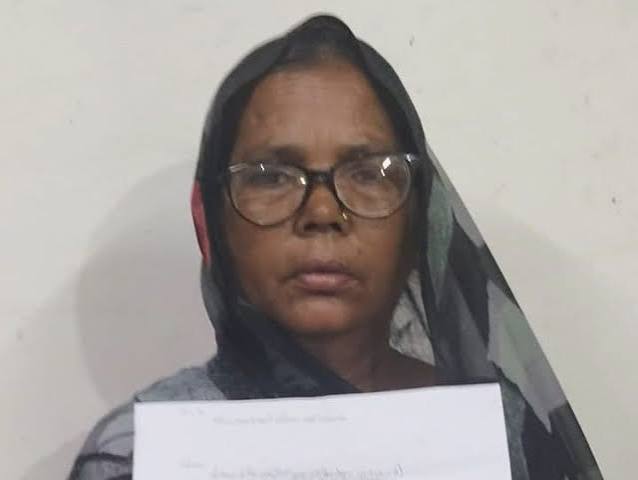
A Dalit woman in the village of Poore Khirodhar, under the Patti police station area, has alleged that she received caste-related abuse and death threats for demanding her son’s wages. The woman has filed a complaint with the Patti police. According to the complainant, Murti Devi, her son, Shivam, alias Chikki, worked as a daily wage laborer for a man in the village. When Shivam went to demand his wages, he was refused payment. It is alleged that during this time, Shivam was subjected to caste-related abuse, abuse, and threats of assault and death. Murti Devi has demanded that the police take cognizance of the matter, register a case against the accused, and take necessary legal action. She has also requested that the police ensure the safety of her and her son’s lives and property. In this regard, Station House Officer (SI) Vijay Yadav stated that he has received the application. The matter is being investigated, and further action will be taken based on the investigation. Amar Jeet Sharma | Patti, Pratapgarh Courtesy: Hindi News
Valmiki youth files FIR against Rahul Gandhi over Kharge remark:BJP eyes Dalit vote base; how the community became politically important
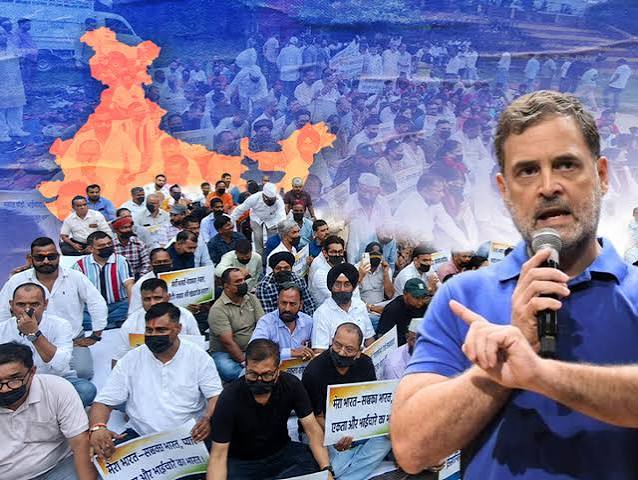
An FIR has been registered against Rahul Gandhi. It was filed on the complaint of Amit Kumar, a Scheduled Caste youth. Congress is opposing the FIR and has accused the BJP of targeting Gandhi. The fight has now moved beyond Haldwani. In Haryana too, Congress has accused the BJP of using Dalit politics to strengthen its support among Dalit communities. Why does caste still shape Indian politics nearly 80 years after Independence? And is the BJP trying to win the Dalit vote once seen as a Congress stronghold? Let’s explore … What is the Rahul Gandhi controversy about? The controversy began after Congress president Mallikarjun Kharge addressed a rally in Haldwani, Uttarakhand. The rally was held at Ramlila Maidan on 8 August. Two days later, a group performed a shuddhikaran havan, or purification ritual, at the same ground. Congress said the ritual targeted Kharge’s Dalit identity. The organisers denied this. They said the ritual was only to clean the venue. Kharge raised the issue in the Rajya Sabha on 13 August. He said he had spoken about public problems at the rally. He also said he had never asked for help by identifying himself as SC or Dalit. But he said being subjected to untouchability was humiliating. BJP president JP Nadda distanced the party from the incident. He said the BJP did not support such activities. The issue became bigger on 29 August Rahul Gandhi called the purification ritual an example of untouchability. He demanded an FIR under the SC/ST Act. Then came another twist. On 30 August, Uttarakhand Police registered an FIR against Rahul Gandhi. A Valmiki community office bearer Amit Kumar filed the complaint. He alleged that Gandhi had wrongly portrayed members of the Scheduled Caste community who took part in the ritual as caste discriminators. The FIR invokes the SC/ST Act and Sections 196 and 299 of the Bharatiya Nyaya Sanhita. Congress says the incident is a double insult: Kharge was disrespected first, and then Rahul Gandhi was booked for raising the issue. Kamal Nath said the BJP first insulted Dalits by carrying out the ritual and then filed an FIR against Gandhi when he spoke about it. A dispute over a ritual has now become a bigger political fight over caste, dignity and who gets to speak for Dalits. BJP has also been accused of strengthening its Dalit vote bank in Haryana, what is the reality? Haryana is witnessing a new phase of Dalit politics. Since 2014, the BJP has worked to expand its support among non-Jat voters and smaller Dalit communities, especially Balmikis. This strategy has continued under Chief Minister Nayab Singh Saini. This politics brings together three identities: Ambedkarite pride represented by “Jai Bhim”, Balmiki community pride, and a broader Hindu identity symbolised by Lord Ram. Political scientist Sanjay Kumar say the BJP is trying to bring smaller Dalit groups into a wider Hindu political coalition. A recent example was the protests following the killing of 25-year-old Biru Balmiki in Karnal. Demonstrators raised slogans such as “Jai Bhim, Jai Balmiki, Jai Shri Ram”. Reservation has become another battleground. After the Supreme Court’s August 2024 ruling on SC sub-classification, Haryana divided its 20% SC quota into two categories. The move could benefit smaller communities but may weaken larger groups such as Jatavs. The debate is also important in Uttar Pradesh, where parties are trying to win over different Dalit communities. The contest is no longer just over a single “Dalit vote bank”, but over representation and reservation.is no longer just over a single “Dalit vote bank”, but over representation and reservation. Are political parties focusing more on Dalit vote-bank politics again? No. Dalit politics has never gone away. It has been part of Indian politics since before Independence. Every generation has produced new leaders, new movements and new demands. B R Ambedkar himself warned in 1932 that social reform had done little to change the lives of Dalits. As he put it: “Mahatmas have come and gone, but untouchables have remained as untouchables.” After Ambedkar came leaders such as Jagjivan Ram. Later came Kanshi Ram, who founded the Bahujan Samaj Party (BSP) in 1984. His protégé Mayawati turned the BSP into one of India’s most successful Dalit-led political movements. The party reached its peak in 2007, when it won 206 of Uttar Pradesh’s 403 Assembly seats and formed the government on its own. Today, however, the BSP is much weaker. In the 2022 Uttar Pradesh Assembly election, it won only one seat and secured 12.88% of the vote. In the 2024 Lok Sabha election, it failed to win a single seat. Its decline has created space for other parties and new Dalit leaders, including figures such as Chandrashekhar Azad, who won the Nagina Lok Sabha seat in 2024. Political scientist Badri Narayan has studied this shift closely. In his book The Making of the Dalit Public in North India, he argues that Dalit political consciousness grew through grassroots movements, local struggles and everyday experiences, not just through elections. In another book, Republic of Hindutva, he explains how the Sangh Parivar expanded its reach among some Dalit communities through welfare outreach and by incorporating Dalit and OBC icons into a broader Hindu narrative. So political parties are not suddenly discovering Dalit politics. What has changed is the political space around Dalit voters. The party that once dominated much of that space has weakened, and more players are now competing to represent different sections of the Dalit community. The Making of a Dalit Public in North India looks at Dalit political consciousness, participation and mobilisation in northern India, based on extensive village-level fieldwork in eastern Uttar Pradesh. The Making of a Dalit Public in North India looks at Dalit political consciousness, participation and mobilisation in northern India, based on extensive village-level fieldwork in eastern Uttar Pradesh. How have Dalit voting patterns changed across elections? Sanjay Kumar and Vibha Attri analysed Hindu Dalit voting patterns in Lok Sabha elections from 1996 to 2024, using Lokniti-CSDS election studies.
Gujarat Police Firing Case: Father of Dalit Teen Killed in 2012 Dies by Suicide After 14-Year Fight for Justice

A 53-year-old father who had spent nearly 14 years seeking justice for his teenage son, who was killed in the 2012 Thangadh police firing in Gujarat’s Surendranagar district, has died by suicide. Amarshibhai Sumra reportedly jumped in front of the Hapa-Mumbai train near Thangadh and Lakhmanchi during the night. His 16-year-old son, Pankaj Sumra, was among three Dalit youths killed in police firing in Thangadh 14 years ago. Son Was Killed in 2012 Police Firing The incident took place in September 2012 following a clash between members of the Dalit and Bharwad communities during the Tarnetar fair in Thangadh. Police opened fire following the confrontation, killing three Dalit youths — Mehul Rathod, Pankaj Sumra and Prakash Parmar. The police action triggered widespread criticism and questions over whether the firing was justified. Following the incident, the Gujarat government constituted a Special Investigation Team (SIT) to investigate the circumstances surrounding the deaths. The SIT visited Thangadh and inspected the fairground and railway gate. It also reportedly took measurements to determine the location of the firing and recorded the sites on video. Family Says Justice Remained Elusive Despite 14 years having passed, the families of the three youths continue to demand justice. They have alleged that the investigation report has never been made public. Amarshibhai had continued to pursue the matter since his son’s death, seeking accountability for the police firing. Family members said he was particularly distressed on Raksha Bandhan after seeing his daughters grieving over their brother. He later took the extreme step near a memorial dedicated to the three youths. His death has once again brought attention to the long-pending Thangadh firing case and the demand for the SIT report to be made public. Railway Police Begin Investigation Railway police reached the spot after receiving information about Amarshibhai’s death and began an investigation. His death has also raised fresh questions over the status of the 2012 police firing investigation, including why the SIT report has remained undisclosed for so long and when the families of the deceased youths will receive justice. Courtesy : TOP Note: This news is originally published on https:/theobserverpost.com/bha and is used purely for non-profit/non-commercial purposes, especially human rights
“A joyous Dalit is the ultimate threat”: In conversation with Christina Dhanuja, author of Dalit Women and the Fullness of Life
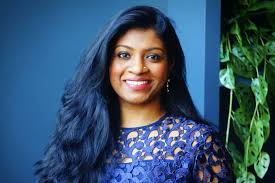
In an interview with Ashikha N for Maktoob, writer and caste-equity strategist Christina Dhanuja discusses her book Dalit Women and the Fullness of Life, challenging reductive representations of Dalit women, the politics of joy and fullness, and the need to centre Dalit authored knowledge in conversations around caste, feminism, and social justice. What does it mean to imagine a full life for Dalit women in a society that has so often reduced their lives to stories of violence, labour, survival and resilience? Christina Dhanuja’s debut book, Dalit Women and the Fullness of Life, takes up this question by turning attention towards the less discussed dimensions of Dalit women’s lives. The book emerges from Dhanuja’s long engagement with questions of caste, gender, faith and justice, including her work as co-founder of the #DalitHistoryMonth project and as a founding member of the Global Campaign for Dalit Women. The book explores resilience, memory and liberation, while imagining what fullness means for Dalit women in a caste-bound world. Blending memoir with political and social analysis, the book explores Dalit women’s desires, contradictions, vulnerabilities, ambitions and joys and not merely as victims to systemic violence. Across ten chapters–-Identity, Movements, Work, Community, Sisterhood, Body, Desire, Trauma, Faith and Joy, the book moves from the political and collective to the intimate and interior. Dhanuja examines caste, gender, work, relationships, the body, faith and desire, gradually building towards her central idea of “fullness”: the right of Dalit women not only to dignity and survival, but to rest, pleasure, love, fragility, freedom and joy. In doing so, the book challenges the impulse to see Dalit women either as victims of oppression or symbols of resilience, making space instead for them to be seen, in Dhanuja’s words, as “wholesome human beings” entitled to the “full spectrum of possibilities that life has to offer.” In an interview with Ashikha N for Maktoob, writer and caste-equity strategist Christina Dhanuja discusses her book Dalit Women and the Fullness of Life, challenging reductive representations of Dalit women, the politics of joy and fullness, and the need to centre Dalit authored knowledge in conversations around caste, feminism, and social justice. Ashikha N: The title of the book itself is striking. What does “fullness of life” mean to you, and why did that phrase become the organizing principle of the book? Christina Dhanuja: Fullness of Life, in the way I see it, and in the way the book articulates it, is essentially the opportunity for Dalit women, at systemic, collective, and individual levels, to experience the full spectrum of possibilities that life has to offer. That needs far more than just symbolic inclusion and tokenistic representation. It is not enough that Dalit women be ‘included’ and ‘represented’ for the sake of having diversity. It is not okay for Dalit women to have only their most urgent priorities met; that is food, clothing, and shelter. Fullness demands a complete reimagination of the social, political, emotional, spiritual, and material realities under which Dalit women live and are expected to endure. It demands a revision of public and academic discourses, which, in turn, determine a host of other things: from policies to organizational dynamics to healthcare practices to how we run movements. Ashikha: The book blends memoir with social analysis. How did you decide on the structure of the book? Did you ever struggle with deciding how much of yourself to reveal? Dhanuja: My political writing has always stemmed from the personal, and, in some instances, the two are quite indistinguishable. At this point, it is more of a habit than a consciously structured process. And I pretty much wrote about everything I wanted to write about. There were a few passages that I edited out, but it was to protect the people I was writing about rather than hide parts of my story. Deciding on the structure of the book was also a pretty straightforward process. I’ve been ruminating on the theme of fullness for a few years now, and I wanted to explore that as a framework for an anti-caste, feminist praxis. So, to talk about the Political (Identity, Movements), the Professional (Work), the Social (Community, Sisterhood), and the Personal (Body, Desire, Trauma, Faith, and Joy) came easily. Ashikha: What were the most difficult narratives to challenge while writing the book? Dhanuja:There are very specific narratives I try to dismantle in each chapter, but generally speaking, this book required that I first peel away layers of existing—and limiting—popular and academic discourses before I could centre Dalit women’s rights to fullness. For example, in the Sisterhood chapter, I had to first critique the hyperfocus on Dalit–savarna relationships before I could discuss sisterhood among and between Dalit women. In the Identity chapter, I had to re-establish what intersectionality is, in the way Crenshaw intended it, and then see how we can apply it to caste contexts. I attribute much of this additional labour to the damage caused by academics, intellectuals, and writers—especially those writing from savarna locations—whose ‘expert views’ have ended up pigeonholing Dalit women Ashikha: What do you think society loses when Dalit women are only seen as symbols of oppression or resilience? Dhanuja: I think it is not just society in general but South Asian society in particular that has somehow ruined what it means to be human. Caste is our biggest fault line. Although my book centers Dalit women and their right to fullness, it also analyses how caste is extremely life-negating for all of us. Take joy, for example. Why should something as simple as joy be rationed based on one’s caste and gender? Or consider how ‘caste minds’ are sustained through so-called preferences in food and love and everything else. Caste societies have already lost so much, with or without Dalit women.. Ashikha: One of the book’s most powerful interventions is the insistence that Dalit women deserve to be understood beyond suffering. Why do you think joy remains such a radical subject when discussing Dalit lives? Dhanuja: I wonder if Dalit joy is
SC/ST welfare minister sees Dalit politics behind Manjhi-Chirag row
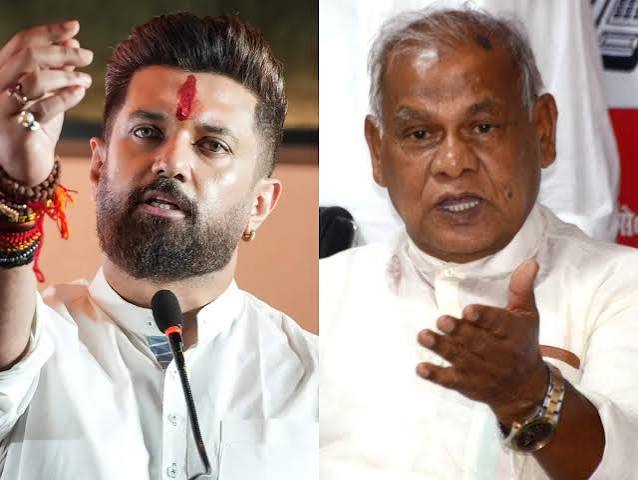
Patna: BJP neta and SC/ST welfare minister Lakhendra Kumar Raushan on Monday said the war of words between Union ministers Jitan Ram Manjhi and Chirag Paswan over the demand for a review of the SC/ST reservation system was largely aimed at establishing themselves as the principal political figures of the Dalit community in Bihar. Raushan said both Manjhi’s HAM(S) and Chirag’s LJP(RV) were part of the NDA at the Centre and in Bihar, questioning why the issue had become a source of confrontation between them. With the Supreme Court allowing sub-categorisation within Scheduled Castes and empirical data available in Bihar to identify relatively more deprived communities, Raushan said the issue should be approached sensitively and without political posturing. “Both Manjhi and Chirag are senior NDA netas. They should first honestly start giving opportunities to other people from their respective communities to contest elections from SC-reserved constituencies,” Raushan told this newspaper. He questioned how many people outside their families had been helped by the two to advance politically. Raushan, who belongs to the Paswan community, said reservation was a constitutional right and should not be treated as charity. He said as long as Narendra Modi remained Prime Minister, nobody could tamper with reservation or alter its basic framework. The minister said a war of words would not resolve the issue and termed demands for ministers’ resignations over the controversy futile. RJD state president Mangani Lal Mandal said there was nothing wrong with reviewing reservation arrangements, arguing a review did not mean its abolition. Senior BJP functionary and revenue and land reforms minister Dilip Kumar Jaiswal took a cautious stand, saying both Manjhi and Chirag were right from their respective perspectives. Former CM Nitish Kumar had created the Mahadalit category in 2007, covering 18 of Bihar’s 22 Dalit castes, to identify communities facing greater deprivation. Manjhi has sought sub-categorisation for greater benefits to the Musahar community, while Chirag fears such a move could affect the Paswan community’s political position within the larger Dalit constituency. Courtesy : TOI Note: This news is originally published on https:/timesofindia.com/bha and is used purely for non-profit/non-commercial purposes, especially human rights
PSC ‘scam’ case: ED raids multiple locations in Chhattisgarh, including ex-CM Baghel’s PA

RAIPUR: The Enforcement Directorate on Tuesday conducted searches at multiple locations in Chhattisgarh, including at the premises of a personal assistant of former chief minister Bhupesh Baghel. The searches are part of a money laundering probe linked to alleged irregularities at the state Public Service Commission, officials told news agency PTI. Officials said a total of seven locations are being raided as part of the investigation launched under the Prevention of Money Laundering Act (PMLA). The probe relates to alleged irregularities in the Chhattisgarh Public Service Commission (CGPSC). The premises being searched include those of K K Chandrakar, former chief minister Bhupesh Baghel’s personal assistant, officials said. Further details are awaited. Courtesy : TOI Note: This news is originally published on https:/timesofindia.com/bha and is used purely for non-profit/non-commercial purposes, especially human rights