
‘First you broke their bones, now filing FIRs’: Rahul Gandhi warns PM Modi, Amit Shah to not ‘threaten Gen Z into silence’
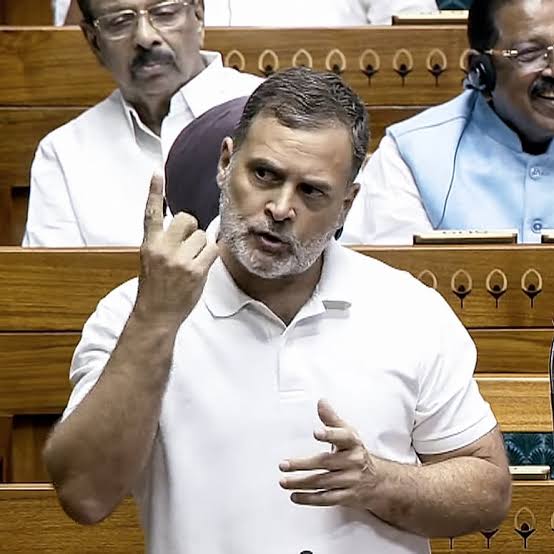
NEW DELHI: Leader of Opposition in the Lok Sabha Rahul Gandhi on Friday targeted Prime Minister Narendra Modi and Union Home Minister Amit Shah over the action against student protesters, alleging that the government was trying to “silence Gen Z” through FIRs and social media takedowns after directly attacking them during protests.Making a statement on X, the Congress leader said, “PM Modi and Amit Shah – you cannot threaten Gen Z into silence. First you broke their bones. Now you are filing FIRs and taking down their accounts.” Further taking a jab at PM Modi and Shah, he added, “You are India’s past. Be careful about how you treat India’s future.” This comes a day after Rahul demanded a Supreme Court-monitored, high-powered committee to investigate the alleged police action against student protesters during the July 20 demonstration at Delhi’s Jantar Mantar. In a post on X, the Congress MP had called for an impartial probe into the alleged use of force, saying, “Students deserve justice. An independent SC-monitored high-powered committee must be constituted to probe brutalities against our students.” Gandhi also shared a video purportedly showing police action against the protesters. The footage appeared to show police personnel lathi-charging demonstrators, while another clip showed a man in civilian clothes forcefully pushing a student carrying the Indian flag onto the road. His demand came as Opposition MPs from several INDIA bloc parties staged a protest at Makar Dwar in the Parliament complex over the alleged police action against students and the alleged embezzlement of donations meant for the Ram Temple in Ayodhya. The MPs gathered around 10.30 am, carrying placards questioning who ordered the police action at Jantar Mantar and raising slogans demanding accountability from the Centre over the alleged use of force and the alleged financial irregularities in donations to the Shri Ram Janmabhoomi Temple. The protest took place hours before the Rajya Sabha was scheduled to consider and pass the Public Examinations (Prevention of Unfair Means) Amendment Bill, 2026. Courtesy : TOI Note: This news is originally published on https:/timesofindia.com/bha and is used purely for non-profit/non-commercial purposes, especially human rights
Why are transgenders building a PM Modi temple in Bihar?
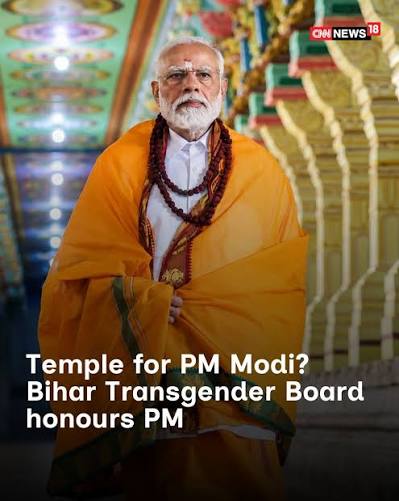
A proposal to build a temple dedicated to Prime Minister Narendra Modi has been approved by Bihar’s State Transgender Welfare Board. The board described the Transgender law passed by the PM Modi-led government as a milestone that gave the community institutional representation in the state. The Bihar State Transgender Welfare Board has approved a proposal to build a temple dedicated to Prime Minister Narendra Modi, saying the move is meant to honour him for giving the transgender community “respect and rights”. According to the news agency PTI, the proposal to build the temple was moved by the board member Ranjan Singh during the maiden meeting of the board under the Bihar Social Welfare Department. The proposal reportedly received unanimous support. Singh, who moved the proposal, said that the idea was brought by the fact that the transgender community in Bihar does not have a temple of its own and described the Transgender Persons (Protection of Rights) Act, 2019, passed by the PM Modi-led government as a milestone that gave the community institutional representation in the stat The temple proposal is less about religion than recognition. Members of the Bihar State Transgender Welfare Board say Prime Minister Narendra Modi is the first national leader who gave the community legal recognition and a formal place in governance. For the board, the temple is therefore a symbolic expression of gratitude rather than simply a place of worship. Its members see the proposal as an acknowledgement of what they consider the Centre’s role in bringing transgender rights into India’s legal and policy framework. WHAT CHANGED AFTER THE 2019 ACT? The Transgender Persons (Protection of Rights) Act, 2019, was the first central legislation dedicated to protecting the rights of transgender persons in India. Enacted by the central government, the law prohibits discrimination against transgender people in education, employment, healthcare, housing and access to public services. It also provides for the issuance of identity certificates, directs governments to frame welfare measures and calls for the establishment of institutional mechanisms to safeguard the community’s rights. The law also paved the way for the creation of bodies such as the National Council for Transgender Persons and prompted states to set up their own welfare mechanisms. In Bihar, the state government constituted the Bihar State Transgender Welfare Board in August last year under the Social Welfare Department to work towards the community’s social development and empowerment. It was this board that approved the proposal to build a temple dedicated to PM Modi, with its members describing the law as a milestone that gave the community greater institutional recognition. THE PROPOSAL TO BUILD TEMPLE FACES BACKLASH While the Bihar State Transgender Welfare Board has credited the central government for bringing legal recognition to the community, the Transgender Persons (Protection of Rights) Act, 2019, has also faced criticism from transgender rights activists across the country. Several organisations had opposed the law, arguing that its process for obtaining a transgender identity certificate placed unnecessary bureaucratic hurdles in the path of self-identification. Others criticised the absence of provisions for reservations in education and public employment, saying the legislation fell short of addressing the community’s long-standing demand for affirmative action. The differing reactions highlight that the transgender community is not monolithic. While the Bihar board sees the 2019 law as a milestone worthy of symbolic recognition, many activists continue to argue that the fight for equal rights and representation remains unfinished. For now, the temple remains a proposal. The Bihar State Transgender Welfare Board has approved the plan, but construction can begin only after the state government allots land and the necessary administrative approvals are in place. The proposal was unanimously backed by the board’s members during its maiden meeting, according to PTI. If it moves forward, the temple would be one of the rare instances in India of a place of worship being dedicated to a sitting Prime Minister. Written By: Gaurika Gulati Courtesy : India Today Note: This news is originally published on https:/indiatoday.com/bha and is used purely for non-profit/non-commercial purposes, especially human rights
Parliament passes Transgender Persons Amendment Bill, 2026 with Rajya Sabha approving it today
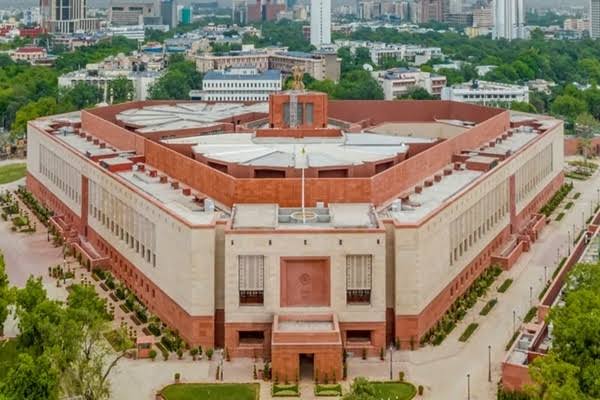
Parliament has passed the Transgender Persons (Protection of Rights) Amendment Bill, 2026, with the Rajya Sabha approving it today. The bill was passed by the Lok Sabha yesterday by a voice vote amid an Opposition-led walkout. The bill seeks to redefine the category of transgender, removes the provision of self-perceived gender identity and excludes several socio-cultural identities as well as transmasculine individuals from its ambit. It also further defines transgender persons within a biological framework, based on intersex variations and differences in sexual development. Replying to the discussion on the Bill in the Rajya Sabha, Social Justice and Empowerment Minister Dr Virendra Kumar said the government is compassionate towards the well-being of the transgender community. He said the Bill has provisions to empower the transgenders and give them dignity. The Minister said that the NDA government has taken several initiatives to bring transgender people to the mainstream and stop discrimination against them. Starting the discussion in the Upper House, Congress MP Renuka Chowdhury said this bill dilutes the privacy of an individual provided under the Constitution. Opposing the Bill, Ms Chowdhury said self-identification cannot be taken away through bureaucratic certification. Criticizing the government, she said that the proposed bill undermines the fundamental rights and dignity of transgender persons. Calling such a move wrong and illegal, she argued that forcing transgender persons to provide their identity through official certificates is against the spirit of equality and dignity guaranteed by the constitution. She also questioned the government’s approach for not properly consulting with the transgender community before bringing the Bill. She also referred to the Supreme Court’s landmark NALSA judgement of 2014, which recognized the right of transgender persons to self-identify their gender. Ms Chowdhury said the proposed Bill violates the principles laid down in that judgement and fails to respect an already established legal framework. DMK MP Tiruchi Shiva also opposed the Bill, saying that even if the Bill is passed in Parliament with a majority, it will be struck down by the Supreme Court. He further added that the Bill violates Articles 14, 15, 19 and 21 of the Constitution and it deprives the community of the right to freedom, dignity and self-determination. Supporting the Bill, BJP MP Medha Vishram Kulkarni said, ” This Bill ensures justice, dignity, protection from criminalisation and legal safeguards for transgender persons. She also thanked Prime Minister Narendra Modi for bringing this bill with certain amendments in order to ensure that the benefits reach the deserving people in a proper manner. She said there is a need for a law that brings justice to real transgender individuals and punishes fake ones. Mrs Kulkarni said the benefits should be extended to those who are transgender by birth. She said that the amendment to extend punishment will bring down the rate of crime and forced identities. TMC’s Saket Gokhale said that 31% of Transgender people in India have attempted suicide because of the discrimination that they are facing. He alleged that now the government is going to start discriminating against them as though social discrimination were not enough. He called it unacceptable. Mr Gokhale expressed concern that gender is going to be decided by the Chief Medical Officer and a District Magistrate, and the bill does not prescribe any qualifications for the Chief Medical Officer. Sanjay Singh of AAP said the Bill is a big let-down for the transgender community. He accused the government of not doing anything for the community. RJD’s Manoj Kr Jha said that prejudices against transgender people should stop, and they should be able to live with dignity. He added that self-determination of gender should not be taken away. CPI(M)’s John Brittas said it is a black-letter day and the Bill is taking India a century back. He pleaded with the government to either withdraw the Bill or refer it to a Select Committee. Jaya Bachchan of the Samajwadi Party also questioned the government over the legislation. She sought to know what the urgency was in bringing the Bill, without examining it with the depth and care that it deserved. Courtesy : NOA Note: This news is originally published on https:/newsonair.com/bha and is used purely for non-profit/non-commercial purposes, especially human rights
Bihar Transgender Welfare Board approves proposal to build temple in honour of PM Modi
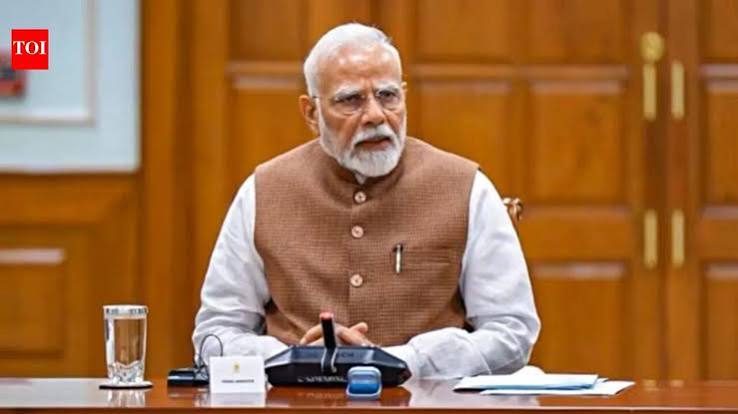
Board member Rajan Singh said the state government will bear all expenses for the construction of the temple. PATNA: Bihar State Transgender Welfare Board has approved a proposal to build a temple in honour of Prime Minister Narendra Modi in recognition of his efforts to give respect and rights to the community. A decision to this effect was taken on Wednesday in the Board’s first meeting, held at the social welfare department in the Old Secretariat. The Board works under the state social welfare department. Board member Rajan Singh, who presented the proposal during the meeting, said that the transgender community wanted to express its gratitude to Prime Minister Modi by constructing a temple dedicated to him. He said that the temple would be built in Patna and the construction work would start after the state government identifies the land for the purpose. The state government will bear all expenses for the construction of the temple, he added. Singh said the transgender community in Bihar did not have a temple of its own, adding that the proposal was unanimously supported by the members and approved by the Board. Referring to the Board’s first meeting, Singh said it was the inaugural session following the implementation of the Transgender Persons (Protection of Rights) Act, 2019, which provided the transgender community with institutional representation within the state secretariat. The Bihar State Transgender Welfare Board (Bihar Rajya Kinnar Kalyan Board) is a 28-member state panel under the Social Welfare Department, formed in August 2025 to protect community rights and drive social empowerment. Ramashankar Courtesy : TNIE Note: This news is originally published on https:/thenewindianexpress.com/bha and is used purely for non-profit/non-commercial purposes, especially human rights
32% Dalit Vote In Play: Why Every Party In Punjab Is Racing To Own Guru Ravidas Jayanti

Since the Jayanti is on February 20, it will fall right in the middle of the election campaign, making it a major event for all the parties Ahead of the Punjab Assembly elections, Guru Ravidas Jayanti has become more than just a religious occasion. With the Ravidasia community wielding considerable electoral influence, particularly in the Doaba region, every major party is using the celebrations to reinforce its outreach to Dalit voters. Guru Ravidas was a revered 14th-15th-century Bhakti movement saint, poet, and social reformer. He has a massive following among Scheduled Castes in Punjab. Punjab has the highest Dalit population in the country at around 32%, according to the 2011 Census. The community plays a decisive role in the electoral outcome of several assembly constituencies, making it a key political constituency for all major parties. Since the Jayanti is on February 20, it will fall right in the middle of the election campaign, making it a major event for all political stakeholders in the state. The Centre’s launch of a special train for Guru Ravidas Jayanti is also likely to add a political dimension to the festivities. The BJP is projecting the launch of the special train as part of the Narendra Modi government’s efforts to facilitate pilgrimage and honour the legacy of Guru Ravidas. The party is showcasing the initiative alongside its outreach to Ravidasia deras and religious institutions, seeking to strengthen its connect with SC voters. The BJP is also using the occasion to expand its social base beyond its traditional urban support. The BJP has already kickstarted seven-month-long celebrations from UP to Punjab under the banner of ‘Samrasta Sankalp Abhiyan’, coinciding with the 650th birth anniversary of Guru Ravidas. The ruling AAP government is highlighting the measures it has taken to mark Guru Ravidas Jayanti, including declaring it a public holiday, organising state-supported celebrations and facilitating devotees travelling to places associated with Guru Ravidas. The party is expected to present these initiatives as part of its broader commitment to respecting all faiths, while combining them with welfare and governance measures targeted at disadvantaged communities. The celebrations are likely to be used to reinforce AAP’s outreach to Dalit voters, who form a key pillar of its electoral support in Punjab. The Congress is expected to leverage its traditional support base among the Ravidasia community, particularly in the Doaba belt, by increasing the visibility of its senior Dalit leaders during the celebrations. The party is likely to argue that while symbolic gestures have their place, the place in Sikhism, with his hymns enshrined in the Guru Granth Sahib, while projecting itself as a party rooted in Punjab’s religious and social ethos. The Akali Dal is also likely to step up its engagement with Ravidasia organisations as it seeks to rebuild its support base before the 2027 polls. Reported by: Gurpreet Singh Chhina Edited by: Mohd Asim Courtesy : NDTV Note: This news is originally published on https:/ndtv.com/bha and is used purely for non-profit/non-commercial purposes, especially human rights
Shravasti News: LJP to hold Dalit Chaupal on August 1
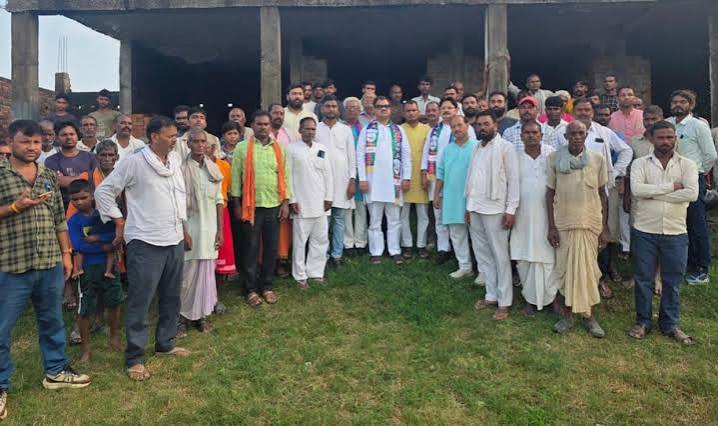
Shravasti. The Lok Janshakti Party (Ram Vilas) will organize a Dalit Chaupal program on August 1 in Sangampurwa village of Jamunaha tehsil. The chief guest at the program will be MP and Uttar Pradesh in-charge Arun Bharti. A divisional review meeting was held on Wednesday regarding the preparations for the program, chaired by District President Rahul Paswan. Program coordinator and State Vice President Manoj Pathak stated that the Chaupal is being organized to strengthen the party’s hold among Dalits. Officials from all districts of the division attended the meeting, and the program outline was prepared. Devipatan divisional president Jatashankar Valmiki, Ashwani Srivastava, Balrampur district president Gaurav Singh, and Bahraich district president Yunus Parvez, among others, were present. Courtesy: Hindi News
BJP flags off 6-month campaign to consolidate Dalit’s support
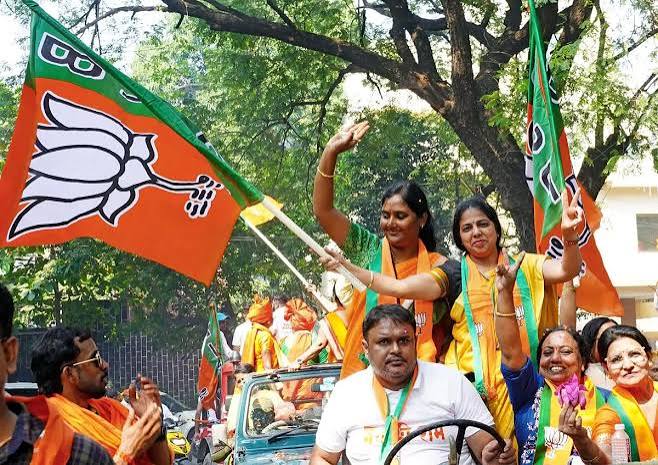
Lucknow: In a move aimed at strengthening its presence among Dalits ahead of key electoral battles in Uttar Pradesh and Punjab, the BJP on Tuesday launched its ambitious ‘Samrasta Yatra’ from Varanasi. UP Chief Minister Yogi Adityanath and state BJP president Pankaj Chaudhary flagged off 131 urns carrying soil from Dalit icon Sant Ravidas’s birthplace at Seer Govardhanpur in Varanasi, is being seen as an attempt to strengthen the party’s influence among Dalit communities in UP while making significant political inroads in Punjab. The yatra, which began on Guru Purnima, will continue for six months until February 20, 2027, making it one of the BJP’s longest social outreach campaigns. Although BJP national president Nitin Nabin was scheduled to attend the launch, his visit was cancelled at the last moment. Of the 131 urns, 75 will be distributed across villages and hamlets in UP, while the remaining will be sent to other states, with Punjab receiving special attention. Political observers believe the campaign’s impact could be more pronounced in Punjab than in UP. Sant Ravidas enjoys deep reverence among Jatavs, one of the largest Dalit communities, and Dalits constitute nearly 34% of Punjab’s population. In UP, Dalits account for around 21% of the population and hold significant electoral influence through 84 Assembly constituencies reserved for scheduled castes. However, the BJP faces challenges in attracting Jatav voters in UP. Despite its efforts and also by the SP-Congress alliance and Chandrashekhar Azad’s Azad Samaj Party to consolidate their support, a large section of Jatavs continues to remain aligned with the Bahujan Samaj Party (BSP). Analysts say this leaves limited room for the BJP to make rapid gains among the community in the state. Punjab presents a different political landscape. Though BSP founder Kanshi Ram hailed from Punjab and began his political journey there, the party has struggled to establish itself as a major electoral force in the state. The vacuum has allowed national and regional parties to compete for Dalit support, making the BJP’s Sant Ravidas outreach politically significant. Within UP, party insiders say the campaign reflects a broader strategy to strengthen ties with Dalit communities. BJP leaders are reportedly working on literature and outreach programmes centred on Dalit icons as part of preparations for the 2027 Assembly elections. The urgency stems from the BJP’s performance in the 2024 Lok Sabha elections, when sections of its traditionally supportive non-Jatav Dalit base, including Valmikis, Sonkers and Pasis, drifted away from the party. The SP-Congress alliance made significant gains, with the Samajwadi Party winning 37 seats and the Congress six, while the BJP’s tally dropped sharply from 62 to 33 seats in the state. Political observers attribute part of this shift to the Congress-SP alliance, while SP leaders argue that sustained grassroots engagement and the emergence of Dalit leaders within the party helped reduce long-standing mistrust among Dalit voters toward the SP. SP insiders say the party plans to further expand Dalit representation in the 2027 Assembly polls and may field Dalit candidates even from general seats where electoral conditions favour such a move. The political importance of Sant Ravidas’s birthplace has steadily grown over the years. Prime Minister Narendra Modi attended Ravidas Jayanti celebrations in 2016 and 2019 and visited the temple again in 2023. Congress leaders Rahul Gandhi and Priyanka Gandhi, AAP chief Arvind Kejriwal and former Punjab chief minister Charanjit Singh Channi have also paid visits in recent years. The site’s political symbolism dates back to 1997, when then chief minister Mayawati attempted to develop a grand park at Sant Ravidas’s birthplace. The proposal, however, faced local resistance and could not be completed. Nearly three decades later, the temple and Sant Ravidas’s legacy remain at the centre of competing political efforts to win over Dalit voters. Courtesy : TOI Note: This news is originally published on https:/timesofindia.com/bha and is used purely for non-profit/non-commercial purposes, especially human rights
‘Answer now’: CJP’s Saurav Das cites Rahul Gandhi’s claims, targets Amit Shah over July 20 police action
NEW DELHI: The Cockroach Janta Party (CJP) on Wednesday demanded ‘answers’ from Union home minister Amit Shah over the July 20 police action against student protesters, citing allegations made by Congress leader Rahul Gandhi in the Lok Sabha. CJP chief spokesperson Saurav Das shared on ‘X’ and wrote, “This raises serious concerns about the Home Minister’s role in July 20 Police Brutality case. He must be held accountable. Every life is precious. A student lost his vision for life at the Home Minister’s order! Answer now.” The remarks came after Rahul, speaking during the Lok Sabha debate on the anti-paper leak bill, alleged that Shah was responsible for the police action against students protesting over the alleged NEET paper leak. “The home minister put the pellets into the blood of our students; he ordered the students of India to be shot,” Rahul claimed in the House. He also alleged that only the home minister or the Prime Minister “can authorise” such use of force. Rahul further questioned Shah’s absence from the debate, saying he had seen the home minister sitting in his car but that “he is not present in the Lok Sabha because he is scared.” Many of Rahul’s remarks in the Lok Sabha were later expunged by the Speaker. However, outside Parliament and later at a press conference, the Congress leader repeated the allegations and demanded Shah’s removal. “There can be just two options – the Home Minister gave the order for firing (at protesters), the other is that the Home Minister did not know that there will be firing,” Rahul told reporters. “In the first case, he is culpable. In the second case, he is incompetent, there can be no other option,” he said. At a press conference, Rahul alleged that Shah either “ordered that students be shot with pellet guns and beaten with lathis having nails” or was unaware of the action. “If he ordered it, he is culpable and if he did not know then he is incompetent,” he said, adding that pellet guns could not be used without the home minister’s permission. Claiming Shah was “guilty,” Rahul urged the government to remove him from office. “Our advice to the government is to sack Amit Shah and order an independent high-powered committee monitored by the Supreme Court” to investigate the matter, he said. “Shah must go, he has shot our students and he must be held accountable,” Rahul alleged. The BJP rejected the allegations, accusing Rahul of making false claims. Parliamentary Affairs Minister Kiren Rijiju said Rahul was attempting to mislead the House by claiming Shah had ordered police firing during the protests. BJP spokesperson Sambit Patra also denied the allegations. “Rahul Rahul said that bullets were fired at the students. He lied. No bullet was fired. He also lied that Home Minister Amit Shah ordered the firing,” Patra said. The exchange comes amid continued political sparring over the July 20 CJP-led protest march to Parliament and the police action against demonstrators. Courtesy : TOI Note: This news is originally published on https:/timesofindia.com/bha and is used purely for non-profit/non-commercial purposes, especially human rights
Lok Sabha passes anti-paper leak bill after row over Rahul Gandhi’s remarks
NEW DELHI: Lok Sabha on Wednesday passed a bill making punishment in paper leak cases more stringent and trial speedier with a voice vote as the House was plunged into bedlam, as opposition members, including Rahul Gandhi, demanded a response from govt over the police crackdown on students during their Sansad Chalo march on July 20. An engaging and passionate discussion had unfolded in the House over the anti-paper leak bill as members from the opposition and the governing BJP-led NDA put forth their views and traded charges for over eight hours without any serious disruption. But fireworks flew when Rahul made the “firing” charge, the first by anyone, and repeatedly used an “unparliamentary” expression to target BJP leadership. Rahul had started off by accusing Shah of “putting pellets into the blood of our students” but soon amped up the attack to say that home minister had ordered firing. NEET protest row Minister for personnel Jitendra Singh, who piloted Public Examination (Prevention of Unfair Means) Amendment Bill, said govt acted swiftly in the NEET paper leak case, and as many as 52 FIRs have been lodged since the anti-paper leak law came into force in 2024. He also criticised Gandhi, stating that he lacks knowledge of parliamentary norms and the functioning of government. Utmost restraint was exercised to prevent casualties: Minister Expressing disappointment over the ruckus during the passage of the bill, minister for personnel Jitendra Singh said, “Instead of debating it seriously and offering suggestions, attempts are being made to politicise it.” The 2024 law was brought in when govt faced raging paper leak controversies. Before this legislation, there was no specific substantive law to deal with unfair means adopted or offences committed by various entities involved in the conduct of public examinations by the central government and its agencies. According to Public Examinations (Prevention of Unfair Means) Amendment Bill, 2026, investigations into paper leak cases are to be completed within two months. The bill says that individuals involved in paper leaks or unfair means in exams will get jail terms for a minimum of five years and a maximum of 10 years, and a fine of up to Rs 50 lakh. For organised crimes, the bill proposes a minimum sentence of seven years and a fine of up to Rs 10 crore. The Bill also allows state govts and UT administrations to designate special fast-track courts for cases registered under the law. Responding to Congress MP Gaurav Gogoi’s remarks alleging atrocities and oppression were inflicted on innocent children, Singh said, “Utmost restraint was exercised andit was made sure that casualties do not happen.” Countering the charge that the education sector has been in a decline under the NDA govt, Singh said the number of universities has risen to 1,293 from 760 and higher education institutions to 64,896 from 51,534. He questioned the source of Priyanka Gandhi Vadra’s claim of 152 incidents of paper leaks. He said the govt regrets any such death more than the opposition. Singh claimed that the rate of suicide due to paper leaks had reduced. Courtesy : TOI Note: This news is originally published on https:/timesofindia.com/bha and is used purely for non-profit/non-commercial purposes, especially human rights
‘Kannadigas ashamed’: Siddaramaiah targets Pralhad Joshi, calls him ‘ideological twin’ of Dharmendra Pradhan
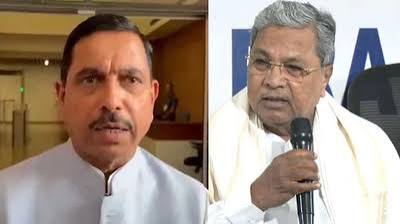
BENGALURU: Senior Congress leader and former Karnataka chief minister Siddaramaiah on Wednesday criticised the appointment of Pralhad Joshi as the Union education minister, alleging that the decision had left Kannadigas “ashamed” and demanding his immediate removal from the portfolio. In a post on X, Siddaramaiah wrote, “We should have been proud that a Member of Parliament from Karnataka had become the country’s education minister. Instead, Prime Minister Narendra Modi has appointed Pralhad Joshi – an MP who defended those convicted of raping a woman – leaving Kannadigas ashamed.” He alleged that Joshi and outgoing Education Minister Dharmendra Pradhan were “ideological twins” and claimed that both had entered politics through the RSS-affiliated Akhil Bharatiya Vidyarthi Parishad (ABVP).”Pralhad Joshi is no different from outgoing education minister Dharmendra Pradhan. Ideologically, they are twins. Both entered politics through the RSS-affiliated ABVP and share the RSS’s outlook towards women, Dalits, the poor, backward communities, Muslims and Christians. That is why Joshi has been brought in to replace Pradhan. Only the face has changed; the direction remains the same. He, too, will act according to the instructions of the RSS,” he said. Siddaramaiah also referred to the 2002 Gujarat riots and the Bilkis Bano case, alleging that Joshi had defended the Gujarat government’s decision to release those convicted in the case. “During the Gujarat riots, Bilkis Bano was subjected to gang rape. Pralhad Joshi defended the Gujarat government’s decision to release those convicted in the case on the grounds of ‘good conduct’ and spoke in their support,” he added. Siddaramaiah said Congress leaders Rahul Gandhi and Priyanka Gandhi Vadra had raised the issue in Parliament and demanded Joshi’s removal from the Education Ministry. “Our concern now is what will happen to the country’s education system under a person with such views. Leader of the opposition @RahulGandhi and MP @priyankagandhi have exposed Pralhad Joshi in the Lok Sabha and placed the truth before the country. Their voices may be silenced inside Parliament, but the voices of crores of people across the country cannot be suppressed. It may not be long before Joshi follows the same path as Dharmendra Pradhan,” he said. He further alleged that Joshi would “act according to the instructions of the RSS” and reiterated that “only the face has changed; the direction remains the same.” “If Prime Minister @narendramodi has even the slightest concern for teachers and students, he must immediately remove @JoshiPralhad from the Education Ministry and entrust this important portfolio to someone who is genuinely qualified,” Siddaramaiah added. Courtesy : TOI Note: This news is originally published on https:/timesofindia.com/bha and is used purely for non-profit/non-commercial purposes, especially human rights