
Cow vigilantes beat Dalit man and force him to eat dung
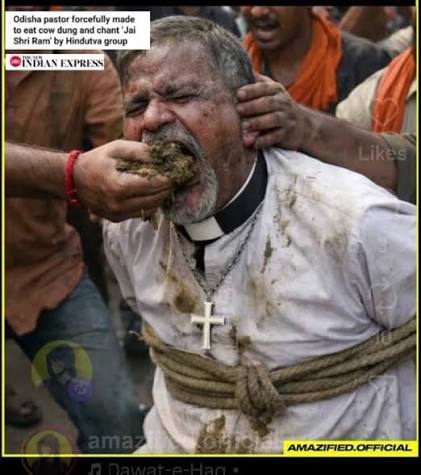
Six men face charges after allegedly assaulting Dalit cattle buyer in front of his young son, using caste slurs and accusing him of selling bull to Muslim butcher NEW DELHI, India (MNTV) — Police in western India have filed a case against six suspected Hindu cow vigilantes accused of assaulting a Dalit man and forcing cow dung into his mouth after accusing him of planning to sell a bull to a Muslim butcher. The attack allegedly occurred May 23 in Jalna district in Maharashtra state but came to wider attention months later after a video of the assault circulated on social media, prompting the victim to approach police on Aug. 21. Parameshwar Suhas Hiwale told police he was returning from a weekly cattle market in Deulgaon Raja with his 11-year-old son and an acquaintance, Narayan Maroti Kamble, after purchasing a bull when their vehicle was stopped in the Kanhaiyanagar area. The men who stopped them claimed affiliation with the Hindu extremist Bajrang Dal and cow-protection groups, according to Hiwale’s complaint. They accused Hiwale of intending to sell the animal to a Muslim butcher. He denied the accusation and produced documents showing that he had purchased the bull at the cattle market. The confrontation then allegedly took a casteist turn. Hiwale said the men demanded to know his caste before abusing him with caste-based slurs and assaulting him. He alleged that his attackers then forcibly stuffed cow dung into his mouth. The men also allegedly attempted to force dung into the mouth of Hiwale’s 11-year-old son, but Hiwale resisted. Kamble, who was traveling with them, was also allegedly abused and beaten, while their vehicle was damaged. Hiwale belongs to India’s Dalit community, historically placed at the bottom of the Hindu caste hierarchy and subjected for centuries to discrimination and practices once associated with “untouchability.” The alleged attackers recorded at least part of the assault and threatened Hiwale and his family with serious consequences if they went to police, according to his complaint. Hiwale said those threats prevented him from immediately reporting the attack. He eventually approached Jalna Tehsil police after learning that footage of the incident had appeared on Instagram. Police registered a case against six identified men under provisions of India’s criminal code covering offenses including wrongful restraint, voluntarily causing hurt and unlawful assembly. They also invoked the Scheduled Castes and Scheduled Tribes (Prevention of Atrocities) Act, a law intended to prosecute caste-based violence, intimidation and humiliation targeting members of historically marginalized communities. Police Inspector Santosh Sable confirmed that a case had been registered, while Additional Superintendent of Police Vikram Sali said the investigation was being handled by a senior divisional police officer. Courtesy : Muslim Network TV Note: This news is originally published on https:/muslimnetworktv.com/bha and is used purely for non-profit/non-commercial purposes, especially human rights
DMK and TVK spar in House over atrocities against Dalits
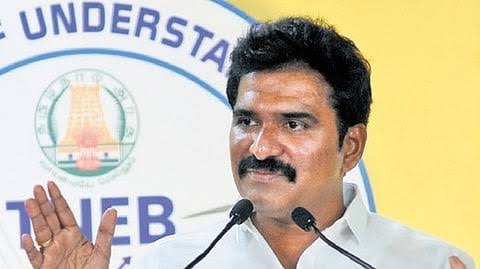
Further, Velu said the figures showed that the previous government had maintained law and order and ensured that cases were registered. CHENNAI: Tempers flared in the Assembly on Friday during a heated exchange between DMK floor leader E V Velu and Minister C T R Nirmal Kumar over atrocities against Dalits during the previous DMK government. Former minister Velu dismissed as “incorrect” the statement made by PWD Minister Aadhav Arjuna a day before in the Assembly that Tamil Nadu witnessed the highest number of atrocities against Dalits in the country over the past five years. Citing National Crime Records Bureau (NCRB) data, Velu said Uttar Pradesh had recorded the highest number of cases against people belonging to the Scheduled Caste communities, followed by Rajasthan, Madhya Pradesh, Bihar, and Maharashtra. He said Uttar Pradesh recorded around 71,000 such cases in five years, while Tamil Nadu had recorded 8,110 cases. Tamil Nadu stood 10th in cases registered under the SC category and 15th in cases involving Scheduled Tribes, he said. Further, Velu said the figures showed that the previous government had maintained law and order and ensured that cases were registered. However, Nirmal Kumar rejected the claim and alleged that many cases against Dalits were not registered during the previous DMK regime. He further cited an incident in Ramanathapuram, in which a minister had allegedly assaulted a Dalit tahsildar. Nirmal Kumar claimed that the minister’s portfolio was changed after protests, but no case was registered against him. He said that if all cases had been registered during the previous regime, Tamil Nadu would have topped the NCRB list. Courtesy : TNIE Note: This news is originally published on https:/thenewindianexpress.com/bha and is used purely for non-profit/non-commercial purposes, especially human rights
TN government school HM booked for abetment after dalit girl ends life

The HM passed a casteist remark during admission interview, ordered her out of premises MADURAI: The Caste-Hindu headmistress of a government higher secondary school was booked under abetment charges on Friday, after a 16-year-old Dalit girl died by suicide on August 25 allegedly after she ordered her out of the school for telling her mother not to keep her hands folded during an admission interview. Police identified the deceased student as P Nisanthi (16) of Ambedkar Nagar, Usilampatti. A case of suicide was registered on August 25, but altered to abetment of suicide and the HM Vimala’s name was included. Nisanthi’s uncle, P Sangili (52), a share-auto driver, said the incident took place on August 24 when Nisanthi went to the school with her mother, P Thavamani, seeking admission. Vimala inquired about the girl with her previous school. During the conversation, Thavamani was listening with folded hands, but Nisanthi tapped them down. The headmistress questioned the action, refused to admit her, allegedly passed a casteist remark, and ordered them to leave the premises. The next day, Nisanthi died by suicide. “Nisanthi was upset over the incident, which triggered her to end her life. She refused to eat and cried a lot the previous night. It happened to our child in this era and it should not happen again in society. We want action against the headmistress,” he said. Police said there was no CCTV inside the room and only the girl’s arrival and departure could be seen in the footage recorded outside. “The exact conversation between them was not clear, but the incident prompted her to end her life. Whether SC/ST Act will be invoked will be decided after the inquiry by Usilampatti DSP. As of now, the case has been converted into one of abetment of suicide,” a police source said. A school education official who held an inquiry with the headmistress stated that she denied the charges and claimed she had spoken casually without any casteist motive. A report has been submitted to the district collector. Further action against her will be decided in line with the police investigation. Nisanthi completed Class 10 at a government school in Thottappanayakanur before joining the first group at a government school in Poochipatti. However, she did not attend that school as she wanted to pursue nursing group. Later, the family approached a government-aided school in Usilampatti, where they were asked to pay `5,000. Unable to afford the amount, they approached the Government Model Higher Secondary School for admission. (To overcome suicidal thoughts, contact TN Health Department helpline 104 and Sneha’s helpline 044-24640050) Courtesy : TNIE Note: This news is originally published on https:/thenewindianexpress.com/bha and is used purely for non-profit/non-commercial purposes, especially human rights
After the Common Man, the Convenient Bahujan: CJP Fails the Litmus Test of Representation

Yogendra Yadav sees in CJP a new Bahujan politics. But a caste mix is not automatically a Bahujan distribution of power. The real test is whether communities historically excluded from power exercise authority across the organisation. After the Common Man, the Convenient Bahujan: CJP Fails the Litmus Test of Representation Cockroach Janta Party (CJP) founder Abhijeet Dipke, left, with team member Ratna Singh, centre, on August 5, 2026. Photo: PTI, via CJP Yogendra Yadav’s account of the July 20 protest at Jantar Mantar is fine political writing. It encapsulates the core of a youth mobilisation that broke through governmental fear and media silence. Nevertheless, its most ambitious claim is that this movement – led by Dalit activist Abhijeet Dipke and inspired by Sonam Wangchuk – could inaugurate a new phase of social-justice politics. “Instead of demanding its share in the nation,” Yadav writes, “Bahujan politics can now define what the nation is.” Can it, though? Or has the liberal intelligentsia simply found its next common man? The first real litmus test of CJP’s potential was not Jantar Mantar, but during a moment that occurred almost two weeks after it declared its national leadership team. According to CJP, its National Working Committee “ratified” the list of eleven leaders. It would appear from the publicly identifiable composition of CJP’s leadership that it is caste heterogeneous. However, it is disproportionately weighted towards upper-caste and regionally dominant caste groups, including Jats and Reddys. In any case, a caste mix is not automatically a Bahujan distribution of power. The relevant test is whether communities historically excluded from power exercise authority across the organisation. Representation is not merely the identity visible at the apex; it is the distribution of power throughout the institution. In the same vein, protests can tell us who is angry, but it is organisations and their composition that tells us who will get to exercise power. The CJP has yet to explain either the social rationale for this organisation or the process by which it was constituted. The importance of a Dalit convenor is undeniable, but that alone does not make it a Bahujan movement either. Representation does not lie in faces at the top; it lies in power structures below. Further, if the CJP derives its politics from the constitution, social justice cannot wait for the moment when it takes up the question with the state. It must begin at home – with who leads and holds power and whose concerns form its agenda. An organisation that cannot practice social justice in the first institution it has created cannot credibly promise to deliver it elsewhere. Yadav, especially, needs to understand this. He was part of the anti-corruption movement and was one of the founding members of the Aam Aadmi Party (AAP), which promised to transcend ordinary politics through the idea of the common man, with a discourse about corruption, education and service delivery that quietly excluded caste, class and social relations from its agenda. The similarities go beyond political ideology: six out of twelve members of CJP’s core team belong to AAP’s political world, either because they worked with the party or publicly supported it. The question that should have been asked of AAP then is the one that matters as CJP takes shape now: who, precisely, was the common man? The answer lies not in the social composition of AAP’s voters, but in the leadership it chose when it had real discretion – its national executive, Cabinet portfolios and Rajya Sabha nominations. The caste imbalance is visible without much excavation. Even after winning Punjab, where Scheduled Castes constitute nearly a third of the population, AAP sent no Dalit to the Rajya Sabha. Its 2022 nominations favoured party insiders, professionals and business figures; no Dalit, Adivasi or OBC candidate made the list. The language of the common man was addressed to lower-caste and marginalised citizens, while institutional power remained concentrated among upper-caste and socially privileged groups. Then there is Rajendra Pal Gautam, who held the position of Minister of Social Justice and Empowerment in AAP governments (2015-2022). He opposed the health department’s notification which excluded mohalla clinic contract workers from reservation policy in 2022. Months later, his presence at an event where Ambedkar’s twenty-two vows were recited was fabricated into a controversy. Being pressured by the BJP and due to the electoral sensitivity of AAP, he resigned. In private, he was questioned for supporting reservation and publicly sacrificed for being an Ambedkarite. It shows the yawning gap between symbolic and substantive representation: a Dalit minister represents inclusiveness; an assertive Dalit minister becomes a liability. The education model of AAP remains fascinating for the Indian liberal community – better classrooms, better exam results, all in the rhetoric of administrative efficiency rather than transformations of social relations. CJP seems to be joining the same league. Paper leaks and recruitment delays are real issues and readily become the agenda of “Indian youth”. Caste discrimination and the deaths of Scheduled Caste and Scheduled Tribe students inside these institutions remain, as ever, a sectional footnote. The Ministry of Education, say reports, recorded 122 student suicides in centrally-funded higher education institutions between 2014 and 2021, 24 of which were of Scheduled Caste scholars, three pf Scheduled Tribes and 41 from the Other Backwards Classes (OBC). Death is only the most brutal end of a longer exclusion. India still has no continuous, caste-wise registry tracking these deaths, dropouts and complaints – and that is not oversight but evasion of accountability. Across 21 IIMs with 1,880 sanctioned faculty posts, government data count only 62 Scheduled Caste, 16 Scheduled Tribe and 109 OBC teachers. The bureaucratic verdict “not found suitable” has refused to die: a parliamentary committee condemned its continued use against Scheduled Caste and Scheduled Tribe academics as recently as in 2025. An education movement that speaks only of paper leaks and examinations, silent on who teaches and who survives inside these institutions, is not confronting India’s educational crisis. It is choosing the part of the crisis liberal
Anaya Bangar fires back at Marizanne Kapp over transgender cricket debate

Anaya Bangar became the first Indian trans-cricketer to play in Women’s Community Cricket. She has been provided the green light by Cricket Australia (CA) to play the game. After CA allowed her to play, South Africa Women’s National Cricket Team icon Marizanne Kapp was fuming about the fact and questioned Bangar’s push for a WBBL opportunity. Now the former has replied with the same. The 25-year-old is the daughter of former India cricketer Sanjay Bangar and a former Mumbai youth-level player. However, she changed her gender back in March 2026, in Thailand, and has been outspoken for transgender athletes in the midst of a worldwide controversy over transgender rights in sports. She will look forward to many more opportunities. Anaya Bangar slams Marizanne Kapp Marizanne Kapp, while replying to CA’s post, stated that it is ridiculous to allow a player and voiced that it should not be allowed. Now replying to Kapp, Anaya Bangar said that the people and cricketers who are questioning her integrity, and also Cricket Australia, should go and educate themselves before making any comments on the fact. Australia cricket apparel Anaya, while speaking with PTI, said, “I think people who want to raise their voice against it should actually educate themselves on this topic, and I’ve already provided the necessary information in terms of not having any unfair advantage, and also complying with the guidelines set by Cricket Australia.” “If anyone’s personal opinion is in that sort of way, I hope they go and educate themselves,” she replied. She is planning to feature in the WBBL next season, but will only be allowed to play if her testosterone levels remain within prescribed limits.” “Yeah, it is very disappointing”: Anaya Bangar expresses disappointment over BCCI Apart from slamming Kapp, Anaya also shared her disappointment with the Board of Control for Cricket in India (BCCI) as the board did not reply to her and served her with silence, and she hopes that the BCCI changes its policies to allow some transgender cricketers to play for the country, as she is the first case in India. “Yeah, it is very disappointing and heartbreaking that I was sold with silence. And I knew that transitioning was gonna make me steer away from cricket. So I was, I’m, I’m just grateful that at least I’m getting this opportunity to play and I hope that BCCI is open to this and tries to form policies surrounding this topic since I’m the first case in India.”Choosing Cricket Gear Anaya Bangar sights eye for India Women team She further added that she would be happy to share her experience and insights with the team and through her journey and for the development of women’s cricket in the future. The BCCI currently does not have a formal regulatory policy or official guidelines regarding the participation of transgender cricketers in domestic women’s cricket. “I’d be happy to be a part of the team and provide my insights and gatherings throughout my whole journey and what would work best for our country and women’s sport in the future.” Anaya Bangar further added, “To be honest, transitioning was always about being happy and comfortable in my own skin. And I had to take the necessary steps during that time in my life to basically give up the sport that I loved.” By Anirban Bose Courtesy : Cricket Addictor Note: This news is originally published on https:/cricketaddictor.com/bha and is used purely for non-profit/non-commercial purposes, especially human rights
In uniform, back home: Trans constables return to Garima Grih for Rakhi

Raipur: For the transgender community at Garima Grih in Raipur, Raksha Bandhan this year was more than a festival of threads and sweets. The celebration carried a special sense of pride as newly appointed transgender constables returned to the centre to celebrate with members of the community. For many residents of the shelter home, who have experienced estrangement from their biological families, the sight of members of their community joining the police force and returning in uniform was a powerful symbol of acceptance, visibility and a growing place in institutions once considered beyond their reach. Residents tied rakhis to one another, recreating familial bonds within the community. One of the most touching moments came when trans woman Nikki Dhruv tied a rakhi on the wrist of her brother, Sparsh Kashyap. Poppy Devanath said Raksha Bandhan at Garima Grih was about experiencing the affection and security of a family. Transgender rights activist Vidya Rajput said many transgender persons grow up with painful distances from their parents and siblings, even though emotional bonds often remain. Celebrating Raksha Bandhan together, she said, helps recreate some of that lost sense of home. The participation of the transgender constables added a deeper significance to the occasion. In a space created to provide shelter and dignity to a community that has long fought for recognition, seeing members of their own community return in uniform reflected a larger journey from the margins towards the mainstream, with every rakhi strengthening the bond of belonging. Courtesy : TOI Note: This news is originally published on https:/timesofindia.com/bha and is used purely for non-profit/non-commercial purposes, especially human rights
‘Not publisher of Sonia Gandhi’s memoir’: Penguin rejects ‘editorial changes’ claim
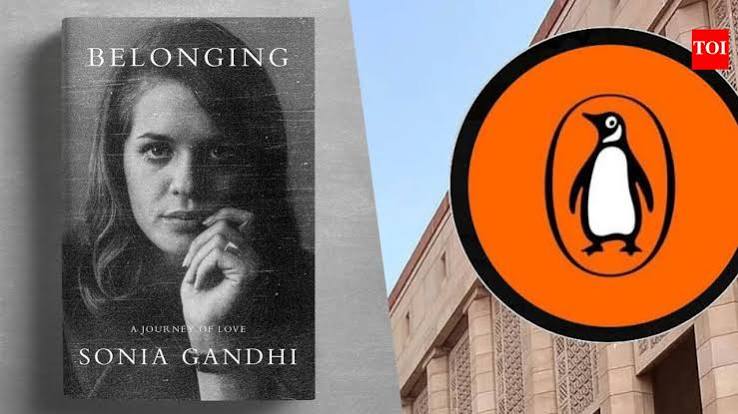
NEW DELHI: Penguin Random House India on Friday clarified that it is not the publisher of Congress leader Sonia Gandhi’s memoir Belonging: A Journey of Love in India. The Publishing house rejected reports that it decided against publishing the book because the author declined editorial changes. In a statement posted on X, the publishing house said it had remained “willing and keen to publish” the memoir and stressed that fact-checking and providing editorial recommendations are a normal part of the publishing process. “In response to the news reports about Sonia Gandhi’s book ‘Belonging’, Penguin Random House India is not the publisher of ‘Belonging’ in India. Any suggestion that Penguin Random House India decided not to publish ‘Belonging’ because the author declined editorial changes does not accurately reflect the circumstances. As a publisher, it is both our prerogative and our responsibility to fact check and provide authors with recommendations that are in the best interests of their books. This is a normal part of the publishing process. Throughout the relevant discussions, Penguin Random House India’s position was that we remained willing and keen to publish the book. We will not comment further on confidential discussions with the author.” — PenguinIndia (@PenguinIndia) The clarification comes weeks after US publisher Alfred A Knopf, an imprint of Penguin Random House, announced that Belonging would be released on November 10. The status of the memoir’s publisher or distributor in India remains unclear. An e-commerce listing has shown an ebook edition of Belonging available for pre-order at Rs 2,615, with William Collins, an imprint of HarperCollins UK, listed as its publisher. Sonia Gandhi, 79, is expected to offer a personal account of her life, including her childhood in post-war Italy, her marriage into the Nehru-Gandhi family and the death of her husband Rajiv Gandhi, according to Alfred A Knopf. The memoir will also cover her entry into the “public world of politics” following Rajiv Gandhi’s assassination and her decision to turn down the prime minister’s post in 2004. The publisher had earlier described the book as tracing Sonia Gandhi’s life “from her childhood in post-war Italy, to the romance that brings her to India, to the shattering losses that will reshape not only her own future but also that of her adopted home”. Sonia Gandhi has rarely discussed her private life at length in public, making the memoir one of the most closely watched political books ahead of its release. Courtesy : TOI Note: This news is originally published on https:/timesofindia.com/bha and is used purely for non-profit/non-commercial purposes, especially human rights
‘We are very clear’: TN minister says Rahul Gandhi is INDIA bloc’s PM pick for 2029
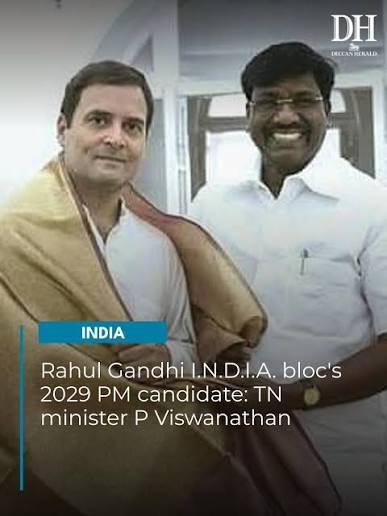
NEW DELHI: Tamil Nadu minister P Viswanathan on Friday dismissed calls to project TVK chief Vijay C Joseph as the INDIA bloc’s prime ministerial candidate for the 2029 Lok Sabha polls, asserting that Rahul Gandhi is the “definitive” choice.“As Congress leaders, we are very clear. Our beloved leader and leader of the opposition, Rahul Gandhi, is the INDIA bloc’s prime ministerial candidate for 2029,” Viswanathan said. His remarks came after several TVK leaders pushed for Vijay to be projected as a prime ministerial candidate for 2029 Lok Sabha polls , drawing sharp reaction from Congress. TVK leaders, including KA Sengottaiyan and D Sarathkumar, have compared Vijay with former Tamil Nadu chief ministers MGR and Jayalalithaa, claiming he would not only rule Tamil Nadu but also lead the country in the future. TVK legislator Kallanai, who organised an event marking the party’s 100 days in office, said people had immense faith in Vijay’s leadership. He expressed confidence that Vijay would eventually lead the country and hoist the national flag at the Red Fort as a representative of the Tamil people, news agency PTI reported. Meanwhile, Congress MP Karti Chidambaram said that while party workers may have deep admiration for their leader, national leadership ultimately depends on securing the numbers required to form a government. “I fully accept that they have great love, affection, expectation, and admiration for their party leadership. This is their party. What they say within their party makes no difference to the public discourse. In public discourse, what you should ask about is policy and the law. Their wishes within a party make no difference to me,” Chidambaram told reporters, according to ANI. He said every political party has its own ambitions and aspirations, but any prime ministerial aspirant must ultimately have the numbers to command a majority in the Lok Sabha. “Every party has dreams, ambitions, and desires. One cannot pass laws to stop that. Everyone expresses their own wishes and talks about their favourite leader in their party. But we know what the political reality is. There are 543 constituencies,” Chidambaram said. According to the Constitution, the leader of whichever alliance wins 272 constituencies, or whichever party wins, will be the Prime Minister of India. Anyone who achieves that number can become the Prime Minister, individually or collectively. You and I both know what that political reality is,” he added. Courtesy : TOI Note: This news is originally published on https:/timesofindia.com/bha and is used purely for non-profit/non-commercial purposes, especially human rights
Cong Using Tribal Students’ Stir to ‘Relaunch’ Rahul Gandhi: Bawankule
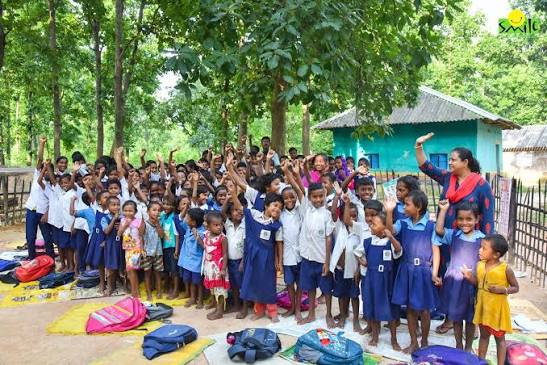
Nagpur: Revenue minister Chandrashekhar Bawankule on Friday accused Congress of attempting to use an agitation by tribal students as a political launchpad for leader of opposition in Lok Sabha Rahul Gandhi in Maharashtra. He alleged that Congress was keeping the protest alive for political reasons even as the govt has given assurances to students over their demands. Gandhi, during his “Chhatron Ki Goonj” interaction in Pune on Aug 22, publicly backed the tribal students’ agitation in Maharashtra. In a letter written to CM Devendra Fadnavis, he raised several of their demands. “The state govt has discussed the issues of students and is ready to engage with them repeatedly, if necessary. But why insist on continuing the agitation when the issues are moving towards resolution?” he said. The minister alleged that Congress was seeking to sustain the agitation until Gandhi’s next tour of Maharashtra, using the students to build a political narrative around their demands. “Maharashtra would not accept tribal students being drawn into such an exercise,” he said. As per Bawankule, political parties should not use educational concerns as a vehicle for political mobilisation. He said the immediate priority should be resolving issues affecting students rather than extending an agitation for partisan purposes. “This is like playing with the future of tribal students,” he said. The Nagpur and Amravati district guardian minister maintained that the administration had already moved beyond assurances by taking decisions on the demands raised by the students. He also sought to draw a political contrast between the govt’s approach and that of Congress. “The administration led by chief minister Devendra Fadnavis was working to expand facilities and educational opportunities for tribal students. Their academic future should remain at the centre of the issue,” he said, adding, “Congress appears more worried about saving the political careers of its leaders than those of students.” Bawankule urged Congress to engage with the govt directly if it wanted to pursue unresolved issues concerning the tribal community. Rather than turning students into participants in a political confrontation, he said, the party should help create conditions for negotiations and resolution. Courtesy : TOI Note: This news is originally published on https:/timesofindia.com/bha and is used purely for non-profit/non-commercial purposes, especially human rights
Parliament passes Transgender Persons Amendment Bill, 2026 with Rajya Sabha approving it today
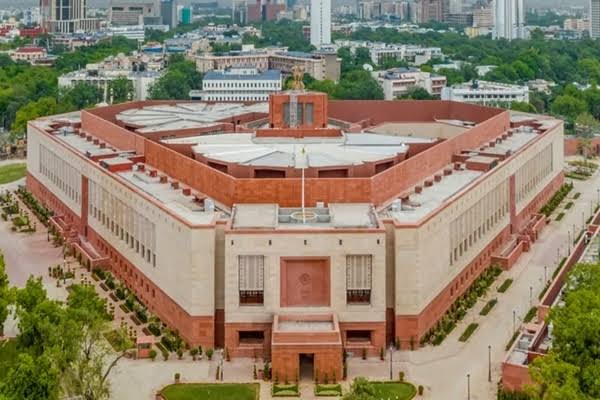
Parliament has passed the Transgender Persons (Protection of Rights) Amendment Bill, 2026, with the Rajya Sabha approving it today. The bill was passed by the Lok Sabha yesterday by a voice vote amid an Opposition-led walkout. The bill seeks to redefine the category of transgender, removes the provision of self-perceived gender identity and excludes several socio-cultural identities as well as transmasculine individuals from its ambit. It also further defines transgender persons within a biological framework, based on intersex variations and differences in sexual development. Replying to the discussion on the Bill in the Rajya Sabha, Social Justice and Empowerment Minister Dr Virendra Kumar said the government is compassionate towards the well-being of the transgender community. He said the Bill has provisions to empower the transgenders and give them dignity. The Minister said that the NDA government has taken several initiatives to bring transgender people to the mainstream and stop discrimination against them. Starting the discussion in the Upper House, Congress MP Renuka Chowdhury said this bill dilutes the privacy of an individual provided under the Constitution. Opposing the Bill, Ms Chowdhury said self-identification cannot be taken away through bureaucratic certification. Criticizing the government, she said that the proposed bill undermines the fundamental rights and dignity of transgender persons. Calling such a move wrong and illegal, she argued that forcing transgender persons to provide their identity through official certificates is against the spirit of equality and dignity guaranteed by the constitution. She also questioned the government’s approach for not properly consulting with the transgender community before bringing the Bill. She also referred to the Supreme Court’s landmark NALSA judgement of 2014, which recognized the right of transgender persons to self-identify their gender. Ms Chowdhury said the proposed Bill violates the principles laid down in that judgement and fails to respect an already established legal framework. DMK MP Tiruchi Shiva also opposed the Bill, saying that even if the Bill is passed in Parliament with a majority, it will be struck down by the Supreme Court. He further added that the Bill violates Articles 14, 15, 19 and 21 of the Constitution and it deprives the community of the right to freedom, dignity and self-determination. Supporting the Bill, BJP MP Medha Vishram Kulkarni said, ” This Bill ensures justice, dignity, protection from criminalisation and legal safeguards for transgender persons. She also thanked Prime Minister Narendra Modi for bringing this bill with certain amendments in order to ensure that the benefits reach the deserving people in a proper manner. She said there is a need for a law that brings justice to real transgender individuals and punishes fake ones. Mrs Kulkarni said the benefits should be extended to those who are transgender by birth. She said that the amendment to extend punishment will bring down the rate of crime and forced identities. TMC’s Saket Gokhale said that 31% of Transgender people in India have attempted suicide because of the discrimination that they are facing. He alleged that now the government is going to start discriminating against them as though social discrimination were not enough. He called it unacceptable. Mr Gokhale expressed concern that gender is going to be decided by the Chief Medical Officer and a District Magistrate, and the bill does not prescribe any qualifications for the Chief Medical Officer. Sanjay Singh of AAP said the Bill is a big let-down for the transgender community. He accused the government of not doing anything for the community. RJD’s Manoj Kr Jha said that prejudices against transgender people should stop, and they should be able to live with dignity. He added that self-determination of gender should not be taken away. CPI(M)’s John Brittas said it is a black-letter day and the Bill is taking India a century back. He pleaded with the government to either withdraw the Bill or refer it to a Select Committee. Jaya Bachchan of the Samajwadi Party also questioned the government over the legislation. She sought to know what the urgency was in bringing the Bill, without examining it with the depth and care that it deserved. Courtesy : News On Air Note: This news is originally published on https:/newsonair.com/bha and is used purely for non-profit/non-commercial purposes, especially human rights