
‘Erudite and deeply decent’: Congress, leaders across party lines pay tribute to Manmohan Singh on first death anniversary; Tharoor shares heartfelt video
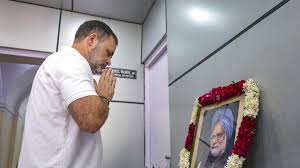
NEW DELHI: First death anniversary of former Prime Minister Manmohan Singh was marked on Friday with leaders paying tributes across the country. Manmohan Singh, who served as Prime Minister from 2004 to 2014, passed away last year at the age of 92. Leader of opposition Rahul Gandhi paid tribute, saying Singh’s decisions helped the poor and underprivileged, and his humility and hard work remained an inspiration. Rahul also paid floral tributes at Manmohan Singh’s residence at 24, Akbar Road in New Delhi. Party leaders and workers remembered Singh at events held in different states. Congress president Mallikarjun Kharge described Singh as a transformative leader who changed the direction of India’s economy. He said Singh’s reforms expanded opportunities and helped millions move out of poverty. — RahulGandhi (@RahulGandhi) Shashi Tharoor’s video tribute Shashi Tharoor shared a video message, describing Singh as an “erudite and deeply decent leader”. He said Singh’s quiet nature often spoke louder than political noise. “Today the nation pauses to mark a solemn milestone, the first death anniversary of a man whose silence often spoke louder than the clamour of our current political discourse, our former Prime Minister, the erudite and deeply decent Dr Manmohan Singh. It has been a year since we lost him, yet the void he left in the intellectual and moral landscape of Indian public life remains palpable Dr Singh was in many ways, in the famous phrase, an accidental politician, but he was a very conscious patriot,” Tharoor said in his video message. He said Singh would be remembered as a transformative Prime Minister who combined a quiet manner with firm conviction, pointing to his decision to stake his government on the civil nuclear deal that strengthened India’s position globally. Tharoor added that Singh’s years as Prime Minister were not only about economic growth. They were also about building a framework of rights, including the Right to Information, the Right to Education, MGNREGA, the right to work and the Right to Food Security. — ShashiTharoor (@ShashiTharoor) Leaders across parties remember Singh “On the death anniversary of former Prime Minister, ‘Padma Vibhushan’ Dr Manmohan Singh ji, humble tribute to him. As finance minister and Prime Minister, he made invaluable contributions to the nation’s development,” UP CM Adityanath wrote on X. West Bengal’s CM Mamta Banerjee wrote, “Remembering former Prime Minister of India, Dr Manmohan Singh, on his death anniversary.” Karnataka deputy CM DK Shivakumar, NCP (Sharadchandra Pawar faction) MP Supriya Sule, and Maharashtra deputy CM Ajit Pawar were among the many leaders who remembered Singh. Born in 1932, Manmohan Singh was an economist who served as RBI Governor and finance minister before becoming Prime Minister. Courtesy : TOI Note: This news is originally published on https:/timesofindia.com/bha and is used purely for non-profit/non-commercial purposes, especially human rights
Foxconn expansion: Karnataka chief minister accuses Centre of credit chori
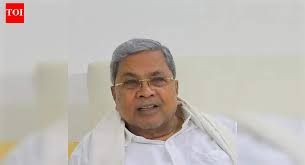
Bengaluru/New Delhi: A war of words has broken out between the state govt and the Centre over credit for Foxconn’s rapid expansion, with chief minister Siddaramaiah Friday accusing union minister Ashwini Vaishnaw of “stealing Karnataka’s success”. The CM questioned why BJP’s “double-engine govts” had failed to match Karnataka’s industrial performance after Vaishnaw linked Foxconn’s expansion in the state to the Centre’s Make in India programme. Vaishnaw’s remarks followed a Facebook post by Lok Sabha opposition leader Rahul Gandhi, who shared a news report titled “Foxconn hires 30k staff at new, women-led unit” and praised Karnataka for creating a manufacturing ecosystem capable of scaling quickly. In his post, Rahul Gandhi said, “30,000 staff hired in just eight–nine months – the fastest factory ramp-up seen in India so far…” He described the expansion as “transformative job creation”, noting that around 80% of the workforce were women aged 19–24. “Karnataka is setting an example by creating an ecosystem where manufacturing can grow at this scale and speed,” he said, adding, “This is the India we must build: jobs with dignity, and opportunities for all.” In his response, Vaishnaw said, “Thanks, Rahul Gandhi, for acknowledging the success of PM Narendra Modi’s ‘Make in India’ programme. As you have noted, we are becoming a producer economy as we implement our PM’s vision.” Responding on X, Siddaramaiah said, “If Make in India is truly a success, why can’t BJP’s ‘double-engine’ states match what Karnataka has delivered?” “When you have no achievements to show, you steal others’ success and take the credit,” he added. Foxconn, the world’s largest contract manufacturer of Apple devices, has its second-largest facility outside China at Devanahalli near Bengaluru. Once fully operational, the plant is expected to produce up to 20 million iPhones a year. Over the past 12 months, iPhones worth $22 billion have been assembled in India, accounting for nearly 20% of Apple’s global iPhone output. Quotes Thanks, Rahul Gandhi, for acknowledging the success of PM Narendra Modi’s ‘Make in India’ programme (reflected in Foxconn’s expansion). As you have noted, we are becoming a producer economy as we implement our PM’s vision -Ashwini Vaishnaw, Union minister If Make in India is truly a success, why can’t BJP’s ‘double-engine’ states match what Karnataka has delivered? When you have no achievements to show, you steal others’ success and take the credit -Siddaramaiah, chief minister Courtesy : TOI Note: This news is originally published on https:/timesofindia.com/bha and is used purely for non-profit/non-commercial purposes, especially human rights
Haryana: 12-year-old Dalit boy held captive and given electric shocks on suspicion of theft, case registered against 10 people
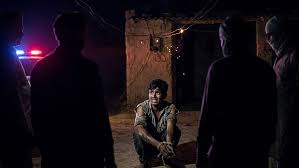
Palwal: Humanity shamed in Palwal: Minor returning home on the night of December 10th was held captive and tortured, also accused of sexual assault, case registered under SC/ST Act. Palwal: A shocking incident that shames humanity has come to light from Palwal, Haryana. Ten members of a single family have been accused of holding a 12-year-old Dalit boy captive for hours and brutally torturing him. The family committed this inhumane act after accusing the child of theft. The police have taken action in the matter and registered a case. What is the whole matter? This heartbreaking incident took place on the night of December 10th. The victim child, who works carrying lights at weddings to help his family financially, was returning to his village Banchari from Hodal town that night. According to the police, at around 11:30 pm, he was coming home with two other children when a car started following them. The people in the car were allegedly intoxicated. Frightened, the children started running. In an attempt to save himself, the victim boy jumped into the premises of a house, while his companions ran towards the village. The family living in the house where he jumped caught him, mistaking him for a thief. After that, what they did to the child before informing the police was horrific. The brutality inflicted on the child The police said that the accused allegedly tied the child’s hands and feet and repeatedly gave him electric shocks. Not only that, the victim minor told investigators that he was also sexually assaulted. The child has suffered serious burn injuries and is currently undergoing treatment in the hospital. The family held him captive for several hours and later called the police. Police action In this case, the police have registered a case against 10 members of the family. The accused have been booked under the following sections: Voluntarily causing hurt, Wrongful confinement, Scheduled Castes and Scheduled Tribes (Prevention of Atrocities) Act, and Juvenile Justice (Care and Protection of Children) Act. According to the latest information, one accused has been arrested so far in this case, while the three main accused are still absconding. What happened in court? The three main suspects, who are currently absconding, had filed an anticipatory bail application on Monday. The case was heard in the Sessions Court on Wednesday. During the hearing, the medical report related to the minor’s injuries was presented, after which the court adjourned the hearing. The next hearing in this case will be held on January 8. Rajan Chaudhary Courtesy: Hindi News
The Truth Behind the Death of the Dalit Girl: Tortured Over Fees, Then the College Itself Wrote the Exam Papers to Cover Up; FSL Report Exposes the Deception
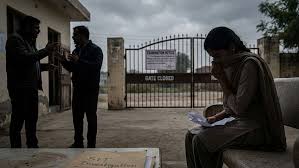
A new twist in the suicide case stemming from a fee dispute; forensic investigation exposes the college administration’s claims, handwriting in the answer sheet found to be someone else’s, SIT adds new charges. Bhiwani/Chandigarh: A shocking revelation has emerged in the suicide case of a 22-year-old Dalit college student in Loharu, Bhiwani district of Haryana, last year. The investigation by the police’s Special Investigation Team (SIT) has revealed that the handwriting on the answer sheet of the exam in question does not belong to the deceased student. This revelation has exposed the claims of the college administration. New Sections Added After FSL Report The Forensic Science Laboratory (FSL) report has confirmed that the handwriting on the answer sheet does not match the student’s handwriting. Based on this scientific evidence, the SIT has added new charges against college director Hanuman and his son Rahul under sections 338 (Forgery of valuable security or will, etc.), 336 (Forgery – making false documents with intent to cause harm or defraud) and other relevant sections of the Bharatiya Nyaya Sanhita (BNS). What is the whole case? The deceased student’s family had alleged that the college administration did not allow her to sit for the BA (5th semester) examination due to non-payment of fees. The family also claimed that the accused Rahul used to harass the student over the phone, which led her to commit suicide. The college authorities, however, had rejected these allegations, claiming that the student had appeared for the examination. But now the forensic investigation has changed the narrative. SIT Submits Report to Court The SIT, led by DSP Vikas Kumar of the State Crime Branch, filed its status report in the Bhiwani court on December 5. The DSP stated in the report, “On August 13, the student’s 5th-semester answer sheets and her diary were sent to the forensic lab in Delhi for handwriting matching and authenticity verification. On September 8, we received the FSL (Forensic Science Laboratory) report, which clearly stated that the handwriting on the answer sheets did not match that of the deceased.” Following the receipt of the report, new sections such as 338, 336, and 340 (using forged documents) were added against Hanuman and his son Rahul in the FIR registered on December 27, 2024 (which was earlier under sections 108, 3(5), and 238-B of the BNS). The investigation in the case is still ongoing. SC Commission’s intervention changed the direction of the investigation Earlier, the former investigating officer (IO), DSP Vivek Chaudhary, had claimed in his report that the student had committed suicide fearing that her parents would find out about her alleged ‘relationship’ with the accused Rahul. He had tried to give a clean chit to college director Hanuman, his son Rahul, daughter Sanju, and Principal Sarita. However, an application was filed on March 23 to acquit the accused, which the National Commission for Scheduled Castes took suo motu cognizance of. On May 14, the commission found the previous investigation unsatisfactory and procedurally flawed. The commission had clearly ordered that the student’s answer sheets, hall ticket, and call details be examined by the Central Forensic Science Laboratory (CFSL). The commission had directed that no closure report would be filed in court until the forensic results were received. Only after this was the investigating officer changed and a fresh investigation began. Demand to cancel the bail of the accused The student’s lawyer, Rajat Kalsan, said that he has today argued in court for the cancellation of the bail application of the accused father and son and demanded that the police also investigate the role of the college owner. The deceased girl’s father said that the FSL report has exposed the college management’s false claim that his daughter was allowed to sit for the exam. He demanded, “The police should investigate who sat for the exam in my daughter’s place, and strict action should be taken against all those involved in this conspiracy.” Rajan Chaudhary Courtesy: Hindi News
Samiti observes 98th anniversary of Manusmriti Dahan Divas by burning copies
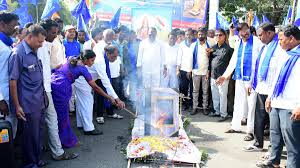
Members of the Karnataka State Dalit Sangharsha Samiti (DSS) on Thursday observed the 98th anniversary of Dr. B.R. Ambedkar’s historic burning of the Manusmriti by staging a protest and symbolically setting fire to copies of the text at Jagat Circle in Kalaburagi city. The protest was organised to commemorate Dr. Ambedkar’s act of defiance during the Mahad Satyagraha in 1927, when he publicly burnt the Manusmriti to challenge caste-based oppression and gender discrimination. As part of the demonstration, activists took out a protest march from Sardar Vallabhbhai Patel Chowk to Jagat Circle carrying a copy of the Manusmriti before burning it, symbolising the rejection of an exploitative and discriminatory social order. Arjun Bhadre, State convener of the Dalit Sangharsha Samiti, said the act of burning the text represented the rejection of centuries of exploitation and injustice imposed on marginalised communities. Mr. Bhadre recalled that Dr. Ambedkar firmly believed that as long as right-wing ideology dominated society, India could not achieve true progress. “Dr. Ambedkar burnt the Manusmriti on December 25, 1927, during the Mahad Satyagraha to send a powerful message against caste oppression. His struggle continues to inspire us even today,” he said. The agitators added that caste-based discrimination continued in various forms and that sustained ideological and political resistance was necessary to safeguard constitutional values. “We have been fighting caste oppression for centuries. Dr. Ambedkar was the first to raise his voice openly against such practices, and today it is our responsibility to carry forward that struggle collectively,” Mr. Bhadre said. Out of the country’s population of about 137 crores, nearly 85 crores of people live in rural areas, where the practice of untouchability continues in many forms. Despite constitutional safeguards and decades of social reform, caste-based discrimination remains deeply rooted in rural society, Mr Bhadre expressed. The Hindu Bureau Courtesy : The Hindu Note: This news is originally published on https:/thehindu.com/bha and is used purely for non-profit/non-commercial purposes, especially human rights
History-Sheeter Beats Dalit Family in Chhibramau: Case Registered on Court Order After Police Negligence
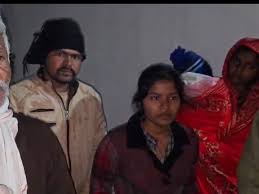
A case of assault on a Dalit family has come to light in the Uncha Viratiya locality of the Chhibramau Kotwali area. History-sheeter Anwar and his associates are accused of assault due to an old rivalry. After alleged negligence by the police, a case was registered on December 24 on the orders of the court. According to the victim family, the incident took place on September 27, 2025. It is alleged that history-sheeter Anwar, son of Nisar, along with his associates, ambushed and beat 65-year-old Ramdas Jatav and his son Ram Sachche Jatav on the road. When Ramdas’s other son, Durgesh Jatav, arrived at the scene, he was also beaten and subjected to casteist abuses. Following this, the accused entered the house and assaulted and looted the family members, including women and children. Other accused named in the case include Tariq son of Ali Daraz, Istkar Mallu, Sallu son of Sagar, and Suraj. The victim Dalit family had complained to the Chhibramau police, but their complaint was ignored. After more than two months of no action, a complaint was filed with the District Magistrate on December 19. Following this, the victim approached the court, which ordered Chhibramau Kotwali Station House Officer Inspector Vinay Tiwari to register a case. The complainant has also alleged that Additional Inspector Brajmohan Pal of Chhibramau Kotwali threatened him and said that he would file a final report (FR) in the case registered on the court’s order. Meanwhile, social worker Shreyansh alias Gudda Dubey, Advocate, has assured the victim family of all possible help to get justice. Ashwini Kumar Courtesy: Hindi News
Dalit Pride Raja Bijli Pasi’s Birth Anniversary: Celebrated with reverence in Unnao, sweets distributed
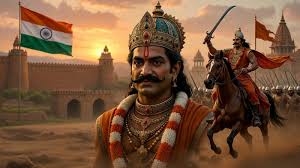
The birth anniversary of Bahujan hero and great 12th-century ruler Veer Raja Bijli Pasi was celebrated with reverence and enthusiasm in Unnao district. The event took place in Ahesa village of Hilauli block. While the entire country was celebrating the birth anniversary of former Prime Minister Atal Bihari Vajpayee, dozens of people gathered in Unnao under the leadership of District Panchayat candidate Rambabu Lodhi to remember Raja Bijli Pasi. They offered flowers to the portrait of Raja Bijli Pasi, paid their respects, and distributed sweets. The program began with the chief guest, former village head Chhote Lal, offering flowers to the portrait of Raja Bijli Pasi. Following this, other attendees also paid their tributes. Addressing the gathering, Chief Guest Chhote Lal shed light on the life of Raja Bijli Pasi and praised the program organizer Rambabu Lodhi. In his address, Rambabu Lodhi said that Raja Bijli Pasi was a great king and an inspiration for Dalits. Village head representative Ravi Rawat welcomed the guests. Prominent among those present were Mahesh Pasi, Ramchandra Madlali Pasi, Kabirbhan Pasi, Ramadhar Pasi, Udal Pasi, Puttan Pasi, Ganesh Pasi, Rinku Pasi, Ramesh Pasi, Lala Pasi, Ganesh Pasi, Lalu Pasi, Radhai Pasi, Umesh Pasi, Ramnaresh Dhobi, Vikas Pasi, Ashok Pasi, Sunil Pasi, Rammilan Pasi, Ramkumar Pasi, Guddu Pasi, Gyan Prasad Pasi, and hundreds of others. Rajesh Kumar Courtesy: Hindi News
Yogi Adityanath Accuses Opposition of ‘Selective Activism’, Questions Silence on Killing of Dalit Hindu in Bangladesh

Yogi Adityanath has sparked a fierce debate by accusing Opposition leaders and activists of ignoring attacks on Hindus in Bangladesh while vocally protesting violence in Gaza. Uttar Pradesh Chief Minister Yogi Adityanath has accused Opposition parties and sections of civil society of “selective activism”, alleging they hold candle marches for Gaza but remain silent when Hindus, including a Dalit youth, are killed in Bangladesh. Speaking during the winter session of the Uttar Pradesh Assembly in Lucknow, Adityanath launched a sharp attack on his political opponents, accusing them of double standards on human rights and minority safety. He said many leaders and activists “shed tears for everything that happens in the Gaza Strip” but fail to raise their voices with equal force when Hindus are targeted in neighbouring countries such as Bangladesh and Pakistan. The Chief Minister’s remarks came in the backdrop of reports about a young Dalit Hindu man allegedly killed in Bangladesh amid continuing concerns over the safety of minorities there. Without naming specific parties, Adityanath alleged that Opposition leaders see Dalits “only as a vote bank”, claiming their outrage is calibrated according to political convenience and religious identity. “Is humanity so selective that you will take out candle marches for Gaza, but not utter a single word when a Hindu, a Dalit, is murdered in Bangladesh?” he reportedly asked, urging lawmakers to adopt a more consistent moral stance. According to him, genuine commitment to human rights cannot be confined to one geography, faith or ideology. Call For Assembly Resolution, Pushback From Opposition Adityanath urged the House to pass a formal resolution condemning the alleged killing of Hindus in Bangladesh and to “warn” the Sheikh Hasina government over recurring attacks on religious minorities. Though foreign policy is primarily the Union government’s domain, the Chief Minister argued that state legislatures also have a duty to speak up on issues of basic human rights. Reports from the Assembly said his comments triggered sharp responses from Opposition benches, with leaders accusing the government of selectively spotlighting cross‑border crimes while ignoring hate speech, communal tensions and caste violence within India. Some legislators argued that the ruling party often internationalises atrocities on Hindus, but downplays attacks on Muslims, Christians, Adivasis and other vulnerable groups at home. Opposition voices also questioned whether such statements could strain India’s diplomatic engagement with Bangladesh, a key partner in trade, security cooperation and border management. They maintained that while any attack on minorities is condemnable, these concerns must be addressed through established diplomatic channels and without inflaming communal passions domestically. Civil society reactions have been more varied. Some commentators backed the Chief Minister’s demand for consistent outrage, pointing to repeated reports of temple vandalism, land grabs and targeted assaults on Hindus and other minorities in Bangladesh. Others cautioned that genuine solidarity must not be reduced to competitive victimhood, where one suffering is invoked primarily to dismiss or relativise another. Background: Minority Safety, Global Conflicts And Protest Culture The debate comes at a time when conflicts in West Asia, especially the ongoing war in Gaza, have drawn large‑scale protests, online campaigns and solidarity events across Indian cities and campuses. Candle marches, teach‑ins and social media campaigns demanding a ceasefire and protection of civilians have been widely reported. Critics of Adityanath’s remarks say such protests are part of a broader global peace movement and not evidence of indifference towards other victims. At the same time, minority rights groups have repeatedly flagged attacks on Hindus, Buddhists and other communities in Bangladesh, especially during times of political instability or communal tension. International watchdogs have documented instances of mob violence, forced displacement and destruction of places of worship. Activists argue that these patterns warrant more sustained international pressure, including from India, to safeguard basic rights. Within India, the conversation around “selective outrage” has become a recurring political talking point. Different sides routinely accuse each other of speaking up only when victims belong to their perceived support base. Whether it is lynchings, custodial deaths, caste‑based atrocities or cross‑border violence, public responses are often filtered through partisan and identity lenses, deepening polarisation rather than fostering a shared human‑rights framework. Adityanath’s intervention in the Assembly taps into this larger narrative. By juxtaposing Gaza protests with attacks on Hindus in Bangladesh, he sought to highlight what he views as an imbalance in empathy and advocacy. However, critics warn that framing suffering in competitive terms risks trivialising all victims, instead of building a broader coalition that opposes violence in every context. Syed Muskan Shafiq Courtesy : TLI Note: This news is originally published on https:/thelogicalindian.com/bha and is used purely for non-profit/non-commercial purposes, especially human rights
Mayawati expresses concern over ‘anti-Hindu incidents’ in Bangladesh

Lucknow: BSP president and former Uttar Pradesh chief minister Mayawati on Thursday expressed concern over “anti-India and anti-Hindu incidents” in Bangladesh and urged the Centre to take more effective steps. In a series of posts on her official X handle, Mayawati said, “In recent days, the manner in which antiIndia and anti-Hindu incidents are taking place in Bangladesh makes it necessary for the central government to act with greater alertness and take more effective steps in line with people’s expectations.” She said it is well known that Hindu minorities in neighbouring Bangladesh are being subjected to communal violence and persecution. “The way Hindu minorities in Bangladesh are being harassed by targeting their life, property and religion has created a wave of concern not only in our country but also elsewhere,” she said Referring to the recent killing of a Dalit youth in Bangladesh, the BSP chief said, “The public anger that has erupted on the streets across India over the brutal killing of a Dalit youth there is natural. The Government of India is expected to immediately take proper cognisance of this and play a more active role at every level, which appears to be the need of the hour.” Mayawati alleged that while atrocities, oppression and discrimination against Dalits and tribals had continued in India for centuries, the situation in Bangladesh is no less serious. “Although caste-based hatred, oppression and exploitation against Dalits and tribals continue in our country, the atrocities being committed in neighbouring Bangladesh are extremely painful and a matter of grave concern,” she said. She added that concerns in India over the condition of minorities in neighbouring countries remained constant. She expressed confidence that public support would be with the government on the issue and urged it to pay due attention. Courtesy : THI Note: This news is originally published on https:/thehansindia.com/bha and is used purely for non-profit/non-commercial purposes, especially human rights
30,000 Staff Recruited in Just 8-9 Months: Why Did Modi’s Minister Say Thanks to Rahul Gandhi’s Post?
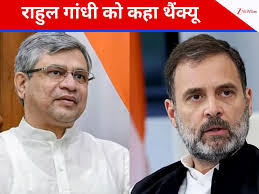
Ashwini Vaishnav Thanks Rahul Gandhi: 30,000 staff recruited in just 8-9 months, Rahul Gandhi posted this on social media. Why did Union Minister Ashwini Vaishnav thank him for this? Know the full story. Why did Ashwini Vaishnav thank Rahul Gandhi? New Delhi: Congress MP and Leader of the Opposition in the Lok Sabha, Rahul Gandhi, recently praised the Karnataka government. He said that Karnataka has helped iPhone manufacturer Foxconn recruit approximately 30,000 new employees in just nine months. This is the fastest factory expansion in India to date. Significantly, almost 80 percent of these employees are women. Union Minister Ashwini Vaishnav reacted to Rahul Gandhi’s comment. He commented on the Congress leader’s post in a humorous way, saying that the credit for this achievement goes to the central government’s policies and Prime Minister Narendra Modi’s ‘Make in India’ initiative. What did Rahul Gandhi say? Earlier this week, Rahul Gandhi shared a news report on Facebook and wrote that recruiting 30,000 employees in just eight to nine months is the fastest factory expansion in India to date. He further said that this is not just about numbers, but about providing employment opportunities that bring about a significant change in people’s lives. This achievement is even more special because about 80 percent of the employees in this unit are women, most of whom are between 19 and 24 years old. Rahul Gandhi further said that for many women, this is their first job. Karnataka is creating an environment where manufacturing can grow on such a large scale and at such a rapid pace. He continued, “This is the kind of India we need to build: dignified jobs and opportunities for all.” Ashwini Vaishnav reacts to the Congress leader’s post On this, Union Electronics and IT Minister Ashwini Vaishnav responded on X (formerly Twitter) by sharing Rahul Gandhi’s post. He thanked Rahul Gandhi, saying it was an acknowledgment of the success of Prime Minister Narendra Modi’s ‘Make in India’ program. He wrote in the post, “Thank you, Rahul Gandhi, for acknowledging the success of PM Modi’s ‘Make in India’ program. As you have noted, we are becoming a producer economy by implementing our Prime Minister’s vision.” The issue of jobs at Foxconn company Taiwan-based Foxconn is a major contract manufacturer for Apple devices, including the new iPhone 17. This company is expected to play a key role in shifting the production of Apple products from China to India. When the factory near Devanahalli in Bengaluru is fully operational, it is estimated that 20 million iPhones will be manufactured there annually. In the last year, iPhones worth $22 billion have been assembled in India, and the country now contributes approximately 20 percent to Apple’s total global iPhone production. Curated by: Ruchir Shukla About the Author Ruchir Shukla has been associated with Navbharat Times Online since February 2020. He started his career in 2011 with a news agency. During this time, he broke major news stories through his reporting. He specializes in political, social, crime, and positive news. He has been working in digital media for about 12 years. He is a graduate of Delhi University. Courtesy: Hindi News