
Indian national Raj Jasuja thrashed by transwomen in Thailand after allegedly refusing to pay for escort service

An Indian tourist was hospitalised after he was allegedly attacked by a group of transgender women in Thailand’s Pattaya city following a dispute over payment for sex services, according to the Thaiger.The incident happened on December 27 when rescue workers from the Sawang Boriboon Foundation received a call at around 5.30am about an injured foreign tourist near the beachside entrance of Walking Street. The victim was identified as 52-year-old Indian national Raj Jasuja, with visible injuries to his face and the back of his head, according to the responders who found him at the scene. He was given first aid before being taken to hospital for further treatment. An Indian man who refuses to pay for a “service” is beaten by a group of trans men in Thailand. pic.twitter.com/oSYav9bjg4 — RadioGenoa (@RadioGenoa) January 3, 2026 A 19-year-old Thai witness, Pongpol Boonchid, told police and rescue workers that the altercation began after Raj was seen arguing with a transgender sex worker near the entrance to Walking Street. The dispute escalated when the two began chasing and hitting each other. According to the witness, the transgender woman then called several friends, who joined in and assaulted the Indian tourist as a group. The dispute is believed to have started over money, after the tourist allegedly did not pay the full amount agreed for the service. Raj has not spoken publicly about what happened. Police later told local media that officers would ask the injured tourist to file a formal complaint once he had fully recovered, after which a legal investigation would proceed. Similar incidents involving Indian tourists and transgender sex workers have been reported in Pattaya in recent months, according to the Thaiger. In September, an Indian man was attacked after allegedly touching a transgender woman without consent during a dispute over services. In another case in October, three Thai transwomen allegedly assaulted two Indian nationals at a hotel following an argument over payment and fled with cash worth around 24,000 baht. Thai police said the investigation is ongoing, with officers checking more witness statements and available CCTV footage. Courtesy : TOI Note: This news is originally published on https:/timesofindia.com/bha and is used purely for non-profit/non-commercial purposes, especially human rights
‘Misleading narrative’: Siddaramaiah defends Rahul Gandhi on ‘Vote Chori’ claims; slams misuse of EC-linked survey
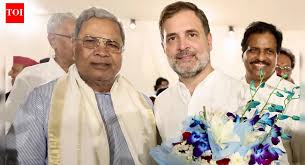
NEW DELHI: Karnataka chief minister Siddaramaiah on Friday came out strongly in defence of Congress leader Rahul Gandhi, accusing sections of the media and the BJP of misrepresenting an Election Commission-linked survey to undermine allegations of voter list manipulation. In a detailed post on X, the chief minister said an administrative survey conducted earlier this year was being selectively cited to suggest that concerns raised by Rahul Gandhi over electoral malpractice had been “disproved”, a claim he described as an attempt to ‘manufacture a misleading narrative’. Siddaramaiah said the survey in question was not a political or opinion poll but an end-line evaluation carried out under the Systematic Voters’ Education and Electoral Participation (SVEEP) programme. — siddaramaiah (@siddaramaiah) Conducted in May 2025, the exercise was meant to assess voter awareness efforts, not to validate the integrity of elections or respond to allegations that surfaced months later. “An awareness survey cannot be twisted into a certificate of electoral integrity,” he wrote. He also pointed to the timing of the exercise, noting that Rahul Gandhi raised allegations of organised voter list manipulation, which the Congress has described as “Vote Chori”, only in August 2025. Using data collected before those allegations emerged to counter later claims was not fact-checking, he said, but a distortion of facts. The chief minister questioned the statistical weight being given to the findings, highlighting that the survey covered 5,100 respondents in a state with over 5.3 crore adult voters. That, he said, amounted to less than 0.01% of the electorate. “In constituencies like Bengaluru Central, where allegations of voter list manipulation are most acute, the respondent count runs into mere double digits. Projecting this as the definitive “people’s verdict” is statistically indefensible,” he wrote. Siddaramaiah further alleged a conflict of interest, stating that the survey was conducted by an NGO called GRAAM, founded by Dr R Balasubramaniam, who currently holds a Union government-appointed position and authored a book praising Prime Minister Narendra Modi in 2024. He said this aspect had been ignored in much of the reporting. The chief minister also rejected claims that Rahul Gandhi was questioning democracy or the electoral process itself. He said the Congress leader had sought transparency on issues such as access to voter rolls, safeguards against surveillance, scrutiny of EVMs and the independence of the Election Commissioner appointment process, questions which he said remain unanswered. Referring to criminal investigations in Karnataka, Siddaramaiah cited the Aland case, where a police Special Investigation Team filed a 22,000-page chargesheet naming seven accused, including a former BJP MLA, for allegedly attempting to illegally delete nearly 6,000 genuine voters using OTP bypass technology. He said the probe was pursued by the Congress government despite winning the seat and led to systemic changes by the Election Commission. The controversy erupted after the BJP cited findings from a survey conducted across Karnataka to claim that a majority of respondents trust EVMs and believe elections in India are conducted freely and fairly. BJP spokesperson Shehzad Poonawalla said Rahul Gandhi gets a “reality check” every time he raises questions after electoral defeats. Congress leaders have since questioned the credibility of the survey. As quoted by news agency ANI, Priyank Kharge and Supriya Shrinate flagged concerns over the timing, sample size and neutrality of the agency that conducted the exercise, arguing that it cannot be used to dismiss allegations backed by criminal investigations. Siddaramaiah concluded that a limited, pre-event administrative survey cannot override evidence, chargesheets or unresolved questions, calling it unfortunate that these facts were ignored in favour of what he termed a distorted narrative. Courtesy : TOI Note: This news is originally published on https:/timesofindia.com/bha and is used purely for non-profit/non-commercial purposes, especially human rights
Who is inviting Rahul abroad so often, even Cong govts don’t: BJP
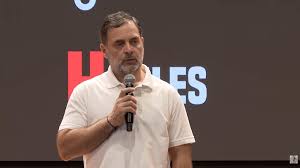
NEW DELHI: BJP Saturday jeeringly depicted Rahul Gandhi as the most “foreign travelled” LoP in India’s history and asked Congress to throw light on those inviting him abroad so frequently when even its state govts hardly seek his presence in their events. BJP spokesperson Sudhanshu Trivedi said Rahul is now travelling to Vietnam, as he linked his visits abroad to connect with “anti-India” forces and shape his criticism of the govt. “Rahul is notorious for spewing venom against India during his foreign trips. According to media reports, he is now visiting Vietnam after his recent trips to Malaysia, Colombia, and Germany,” he said. Trivedi claimed that Rahul will surely be hosted by some “anti-India” figures as he has been in his past visits abroad. Taking a swipe, he said that even Congress CMs or colleges and universities do not really invite the LS LoP to their programmes, and then asked who are those people frequently requesting him to visit different countries and criticise India. Congress should clarify, he added. BJP netas have also shared past pictures of Rahul’s meeting with US politicians. Courtesy : TOI Note: This news is originally published on https:/timesofindia.com/bha and is used purely for non-profit/non-commercial purposes, especially human rights
In Lucknow, a Dalit youth was beaten by thugs for sitting on a chair; allegations of caste-based abuse also made.

Lucknow News: In Lucknow, a thug not only used casteist slurs against two Dalit youths sitting on chairs at a shop but also brutally assaulted them when they protested. Sandeep Tiwari, Lucknow: Another shameful case related to caste discrimination and untouchability has come to light in Lucknow, the capital of Uttar Pradesh. In the Sairpur police station area of the BKT region, a Dalit youth and his companion were allegedly brutally beaten by a thug for sitting on chairs. Based on the victim’s complaint, the police have registered a case and started an investigation. Asked to get up from the chair, attacked upon protest The victim, Bablu Kumar Gautam, stated in his complaint to the police that he and his companion, Umesh Kumar Gautam, work at Monu Singh’s shop in Sairpur. On the evening of December 30, 2025, at around 7:40 PM, both were sitting on chairs at the shop. At that time, Amar Singh Yadav, a resident of Tarahiya village, arrived and asked them to get up from the chairs so he could sit down. When Bablu and Umesh protested, the accused became enraged. It is alleged that he insulted them using casteist slurs and started beating them with kicks and punches. Both youths injured in the assault In the assault, Bablu Gautam sustained serious injuries to his left ear, neck, and left eye, while Umesh Kumar sustained injuries to his stomach and chest. After the incident, both injured men were sent for treatment. Accused of being under the influence of alcohol Sairpur Police Station in-charge Manoj Kumar Kori said that the preliminary investigation revealed that the accused, Amar Singh Yadav, was under the influence of alcohol at the time of the incident. When the victim refused to get up from the chair, the accused abused and assaulted him. He said that a case has been registered under relevant sections based on the victim’s complaint, and the matter is being investigated. The police say that strict legal action will be taken against the accused if found guilty. Edited by: Devesh Pandey About the Author Devesh Pandey is a consultant at Navbharat Times Online. He has 8 years of experience working in TV channels and digital media. He has experience and interest in politics and sports. He covered several IPL matches and the World Cup 2023 in Lucknow. Courtesy: Hindi News
Dalit Teenager Stripped and Beaten in Bareilly After Instagram Argument, Video Made, FIR Filed Against 5
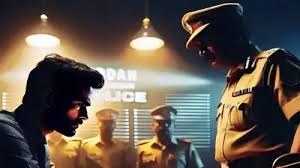
The teenager had a minor argument with Mukul Yadav on Instagram a few days ago. Mukul Yadav had then threatened to kill him by January 15th. Since then, the accused were searching for the teenager. RB Lal, Bareilly: In the Bareilly Cantt police station area, goons abducted a Dalit teenager from near his house and took him to a pond near Chanehta, where they stripped him naked and brutally beat him. During the beating, the accused stripped the teenager at gunpoint and knifepoint. The minor’s mother has filed a report against five accused. Police are searching for the accused. Aarti Devi, a resident of Dhobi Mohalla in Sadar Bazar, Cantt police station area, told the police that her husband works as a laborer and she works in a private school. On the night of December 31st, her 16-year-old son was walking near their house. It is alleged that Mukul Yadav, Subhash Yadav alias Eddy, Sultan, Ayush, and Basu, residents of Ahir Mohalla, arrived near his house. They forcibly put her son on a motorcycle and took him to a pond on Chanehta Road. There, the teenager was brutally beaten at gunpoint and knifepoint. The accused beat him, stripped him naked, and beat him again, making a video of the entire incident and circulating it on social media. During this time, the teenager somehow managed to snatch his shorts from the accused and escaped from the spot, saving his life. He reached home and informed his family about the entire incident. Bareilly Superintendent of Police Manush Parik said that based on the complaint of the victim’s mother, the police have registered a case against Mukul Yadav, Subhash Yadav alias Eddy, Sultan, Ayush, and Basu under sections 137(2), 191(2), 115(2), 352, 351(3) of the BNS 2023. It is being discussed that the teenager had a minor argument with Mukul Yadav on Instagram a few days ago. On this, Mukul Yadav had threatened to kill him by January 15. Since then, the accused were searching for the teenager. It is reported that Sultan, the accused in the case of stripping and beating the Dalit teenager and making a video of it, had fired at advocate Rajaram Solanki in the court premises in January last year. Contributed by: RB Lal • Edited by: Alok Bhadauria About the Author Alok Singh Bhadauria is an Assistant News Editor at Navbharat Times. He has been associated with the Times of India Group since 2008. After working at Navbharat Times, Delhi (newspaper), he has been working at NBT Online for the past seven years. Courtesy: Hindi News
Lingayat groups join Dalits to protest honour-killing of Dharwad woman
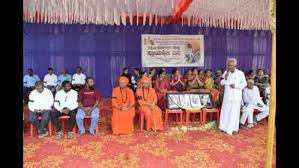
Gadag: Public anger has grown over the silence of Lingayat organisations and seers following the reported honour-killing of Manya Patil, a member of the community. While Dalit outfits actively supported the victim’s husband’s family and demanded justice, Lingayat organisations remained muted. However, breaking that silence, the Gadag district unit of Jagatika Lingayat Mahasabha (JLM) observed a ‘Repentance Day’ here Friday, joining hands with Dalit communities. Manya, 20, a Lingayat who was seven months pregnant, had married Vivekanand Doddamani, a Dalit. She succumbed to her injuries after being assaulted by her family members, including her father Prakashgouda, in an alleged honour-killing incident in Inam Veerapur village, Dharwad district, late last month. Police later arrested Prakashgouda and two of his relatives, who had also assaulted members of Vivekanand’s family. Tontada Siddharam Mahaswamiji of Tontarya Math said the Constitution has accorded every adult citizen of India the right to marry any person of their choice. “However, inter-caste marriages are still at stake because of the caste system. Though Sharanas of the 12th century tried to eradicate this, it is regrettable that a Lingayat family was involved in the killing [of Manya] owing to the caste system,” he said, adding that Manya had married a Dalit youth in keeping with constitutional provisions. Welcoming the govt’s move to frame an act to punish persons involved in such killings, Swamiji pressed for greater awareness among the public on inter-caste marriages. Ashok Baragundi, a functionary of JLM, said ‘Repentance Day’ by Lingayat organisations, to which Manya and her family belong, should serve as a model for upper caste communities across the nation. Writer and publisher Basavaraj Sulibhavi said ‘Repentance Day’ was meant to highlight humane qualities and good sense among all. Condemning the killing of Manya, several functionaries of Basava Kendra, Basavad Dala, Akkana Balaga, and Kadali Mahila Vedike clarified they never defended the accused, though they belonged to the Lingayat community. “Inter-caste marriages, even between Brahmins and Dalits, took place in the 12th century itself, and Sharanas accepted them wholeheartedly. Hence, many more Lingayat organisations and seers should come forward in condemning Manya’s killing,” they reasoned. Shantalinga Swamiji of Bhairanahatti, Girija Badigannavar, S S Harlapur, Shivanagoudra, Sahshidhar Todkar, KS Chetti, Shekanna Kavalikai, Sujata Varad, Sridevi Shettar, Gourakka Badigannavar, and other Lingayat leaders attended the ‘Repentence Day’ observance, where members of Dalita Kala Mandali sang songs on social awareness. More Lingayat groups are likely to come out openly in protest of the killing. Meanwhile, the silence of other Lingayat seers and organisations is being questioned on social media. Ramjan Darga, a Lingayat scholar, said seers, who often take Basavanna’s name, should take up a campaign against casteism and untouchability. “Their silence is an insult to Basavanna, who is accepted as a cultural icon of the state,” he commented. Kusuma Ayarahalli, a columnist, questioned community leaders who do not condemn the murders committed by their own community members. “It shows that Basavanna became a political tool for them,” she alleged. Courtesy : TOI Note: This news is originally published on https:/timesofindia.com/bha and is used purely for non-profit/non-commercial purposes, especially human rights
Muslims, Xians, dalits and BCs live in fear in India: Stalin
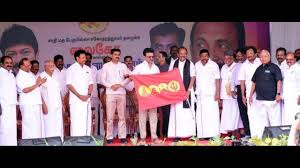
Trichy: Chief minister M K Stalin said Tamil Nadu should unite to prevent drug addiction and the much worse communal addiction from entering the state. Flagging off MDMK general secretary Vaiko’s ‘Equality March’ in Trichy on Friday, chief minister M K Stalin said caste and religious conflicts, along with drug abuse, have emerged as a major problem in the country. The march also aims to create awareness against drug abuse. “Even those holding responsible positions, including Union ministers, make hate speeches and instigate communal clashes,” Stalin said. “For their personal ideology, they are engaging in activities that undermine country’s unity and peace,” he added. Stalin said that a situation has emerged where Muslims, Christians, adidravidars and backward communities are living in fear. “Recent Christmas celebrations saw violence in many parts of the country. Did such a situation exist in India a few years back?” he asked. Stalin said the days when different communities came together and lived joyfully have become a thing of past. He said divisive forces were at work, turning people against one another. “Instead of using spirituality (aanmeegam) to teach love (anbu), some groups use it to create conflict (vambu),” he said. On drug abuse, Stalin said the state and union govts should work together to prevent drugs from entering the country and getting trafficked into states. “Drug trafficking must be dealt with coordinated efforts between state and union govts,” he said. TN govt was extending required support to the union and other state govts to tackle drug abuse, he added. He also urged the film industry not to glorify drugs in movies. “Film industry should create their works with responsibility. Glorifying drugs will destroy an entire generation,” Stalin said. MDMK chief Vaiko said that DMK would return to power with a thumping majority in the upcoming election. Functionaries from VCK, CPI, CPM, IUML, MNM, MMK, and DK participated. VCK chief Thol Thirumavalavan in a veiled attack at TVK and NTK said that entities supporting ‘sanatana forces’ wearing the masks of Dravidam and Tamil nationalism are engaging in divisive politics. “We must stand united to defeat such proxies. Dravidam is not against Tamil. It is because of Dravidam, Tamil is still alive in the state,” he said. Courtesy : TOI Note: This news is originally published on https:/timesofindia.com/bha and is used purely for non-profit/non-commercial purposes, especially human rights
Dalit minor girl raped: Police arrest and jail the accused
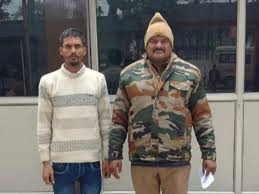
Fatehpur, Barabanki. In Fatehpur, Barabanki, Lallan Singh, son of Rajkishore Singh, has been arrested and sent to jail by the police on charges of raping a Dalit minor girl, threatening to viral a video, and using abusive language. A 16-year-old girl from a village in the Kotwali area had complained to the Superintendent of Police. The girl alleged that about a year ago, when she was returning home from her field, Lallan Singh and another unknown person from the village forcibly took her to the field after covering her mouth. There, Lallan Singh raped her and also made a video of the act. The accused threatened the girl that if she complained to anyone, he would make the video go viral. For a year after this incident, the accused continued to rape her by threatening to viral the video and promising to marry her. On December 23, Lallan Singh called the girl to his house late at night and raped her again. When the girl talked about marriage, the accused choked her and threatened to drive her out of the village. Kotwal Sanjeet Sonkar said that a case has been registered in this matter and the accused has been arrested and sent to jail. Sachin Kumar Courtesy: Hindi News
Dharamshala Dalit Student’s Death Case: College Claims Deceased Was Not Enrolled, Failed 3 First-Year Subjects

A 19-year-old woman allegedly subjected to ragging, sexual harassment and mental torture at a Dharamshala college died, sparking statewide outrage. Police booked four students and a professor, while the college denied her current enrollment, citing failed subjects. The family questioned the role of the college and police as investigations continue. Dharamshala: After the death of a 19-year-old female student, who was allegedly subjected to ragging and sexual harassment at her college, triggered widespread outrage across Himachal Pradesh, the college administration has come out in support of the accused professor and said that the woman was not enrolled as a student after she failed 3 subjects in the first year. About The Case The deeply disturbing case came to light on Friday from Dharamshala, where Pallavi, who was allegedly subjected to ragging and sexual harassment at her college, died while undergoing prolonged treatment. This case triggered widespread outrage and has raised questions over the role of the college and police administration. In connection with the case, police have registered an FIR against four female students and a college professor. However, the matter has taken a controversial turn as the college administration has refused to recognise the deceased as a student of the institution for the current academic year. This has led the victim’s family and guardians to question the conduct of both the college authorities and the police in handling the case. Following the death Pallavi, who was associated with Dharamshala Degree College, serious allegations of ragging, sexual harassment and mental torture have surfaced. Acting on a complaint filed by the victim’s father, Vikram Kumar, the Dharamshala police have registered a case under Sections 75, 115(2) and 3(5) of the Bharatiya Nyay Sanhita (BNS), which deal with sexual harassment, voluntarily causing hurt and common intention. The FIR also includes Section 3 of the Himachal Pradesh Educational Institutions (Prohibition of Ragging) Act, 2009. Confirming the development, Kangra ASP Veer Bahadur said the matter had earlier been taken up on the Chief Minister’s helpline. Addressing questions over police action, he said, “Questions are being raised about the police; the truth is that as soon as they received information about the case, they immediately contacted the victim’s family and learned that they were out of town for their daughter’s treatment.” He added that the family had been requested to inform the police after returning to Dharamshala. “The police are now investigating it, in which four female students and one professor have been named as parties,” the ASP said. Meanwhile, the deceased student’s father, Vikram Kumar, has raised strong objections to the conduct of the college administration, the police and what he described as the prevailing mindset of society. He alleged that the very institution where he had sent his daughter to pursue her studies failed to protect her. “Not only did the college students mistreat her, but even the professor did not leave any stone unturned in torturing her,” he alleged. Vikram further claimed that his daughter was subjected to casteist slurs and immense mental harassment. “My daughter was so mentally tormented that she ultimately left this world. This is a highly condemnable incident. If strict action is not taken today, then in the near future, other daughters will also continue to be tormented in the same way as my daughter, and there is no guarantee that they will get justice,” he told reporters. Expressing disappointment with the police, he said that the family was compelled to approach the CM’s helpline. “In this situation, they too had to take the matter to the CM’s helpline. If the police had been vigilant here, perhaps this wouldn’t have happened,” Vikram said. After the incident, the college administration has openly defended the accused professor. College Principal Rakesh Pathania said there was no dispute that the deceased had earlier been a student of the college, but claimed she was not enrolled during the current academic year. “Therefore, saying that she was studying in this college would not be fair to the college’s image,” Pathania said. He explained that the student had failed in three subjects in her first year and was repeatedly pressuring the department professor for admission to the second year, which was against university rules. “She left the college and was neither admitted to the first year nor the second year. However, she was seen in college again in July and then left again in September. Therefore, currently, the student has no connection with the college as a regular student,” he said. Pathania also asserted that the college follows a zero-tolerance policy on ragging. “Anti-ragging committee numbers are written in every block, yet we did not receive any complaint from anyone on which an enquiry could be conducted,” he said. Vikram Shri Vats, Associate Professor of Physics and Head of the Professors’ Unit at the college, also came out in support of the accused professor Ashok. While expressing sympathy for the bereaved family, he said, “The ground reality is that the allegations levelled against our college professor Ashok are completely baseless. I condemn them and stand with the professor in this matter.” Similarly, Monica Makkar, Professor of Psychology at the college, defended the accused faculty member. “We stand 100 per cent with Professor Ashok because he has been teaching children in this college since 2006, and to this day, he has not been seen misbehaving with anyone in this way or in any other way,” she said. The Akhil Bharatiya Vidyarthi Parishad (ABVP) has also stepped into the matter following the student’s death. Speaking to reporters, ABVP state secretary Nancy Atal said the organisation stands with the victim’s family and questioned the functioning of both the police and the college administration. “If they had taken timely action on this incident, perhaps this situation would not have arisen,” she said. Atal further accused the police of failing in their duty, alleging that they often delay action in criminal cases but act swiftly to suppress student movements. Meanwhile, an investigation is underway, and further details are awaited.
How India Systematically Excludes Its Transgender Population
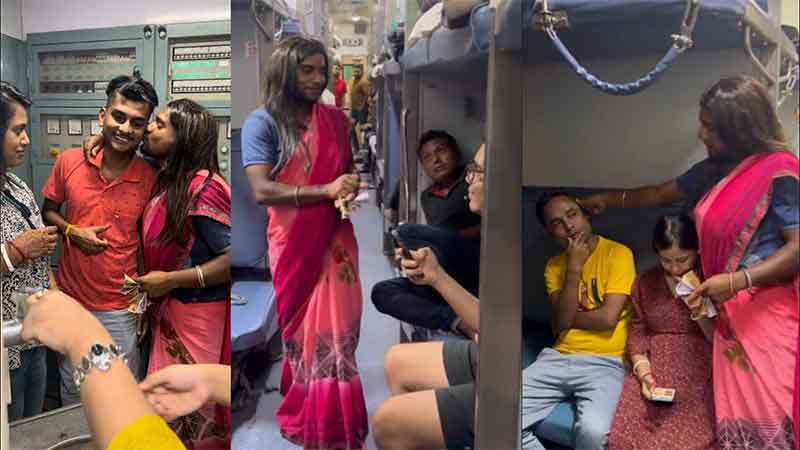
India systematically excludes its transgender population through deep-seated social prejudice, leading to familial rejection, educational dropout, economic marginalization (forcing many into begging or sex work), and barriers in healthcare and housing, despite legal recognitions like the NALSA Supreme Court ruling and the Transgender Persons Act. This exclusion stems from a binary view of gender, cultural stigma, and insufficient implementation of inclusive policies, leaving trans individuals vulnerable to violence, discrimination, and poverty, even as laws offer rights. The Indian Constitution promises equality before law, prohibition of discrimination, and the right to live with dignity. Yet for transgender persons, these guarantees remain largely ornamental. Despite judicial recognition, legislative frameworks, and rhetorical commitments to inclusion, transgender Indians continue to live as citizens without citizenship – visible in census numbers, invisible in policy outcomes, and excluded from the social contract. Their marginalisation is not episodic; it is structural, measurable, and deepened by a stark rural-urban divide. The evidence is unambiguous. According to the National Human Rights Commission, the literacy rate among transgender persons stands at around 56%, nearly twenty percentage points below the national average. Nearly half of all transgender persons never attend school, while many who do are forced to drop out due to relentless bullying, harassment, and institutional hostility. Schools, instead of functioning as sites of social mobility, become early theatres of exclusion. There are few mechanisms for redress, almost no trained counsellors, and little accountability for teachers or administrators who allow discrimination to flourish. This educational exclusion feeds directly into economic dispossession. The NHRC’s findings are staggering: 92% of transgender persons are denied participation in formal economic activity. Even when educated or skilled, they face routine rejection in hiring, promotions, and workplace retention. As a result, nearly 96% are pushed into informal, precarious, or socially stigmatised work — begging, ceremonial performances, sex work, or daily wage labour. Only about 6% have ever accessed formal employment in the private sector or civil society organisations. Income data reinforces the picture: barely 1% earn more than ₹25,000 per month, placing the overwhelming majority far below any threshold of economic security. Housing exclusion compounds this precarity. Transgender persons routinely face discrimination by landlords, are denied rental agreements, or are evicted under social pressure. Many are forced into unsafe shared spaces or community enclaves, while others experience homelessness. Despite being officially enumerated in the Census, transgender persons remain absent from housing policy design. Welfare housing schemes rarely specify transgender beneficiaries, and where state initiatives exist, they are small, urban-focused, and poorly implemented. Health outcomes reveal the human cost of systemic exclusion. HIV prevalence among transgender persons in India is estimated at 3.8%, nearly twenty times the national average. This disparity is not incidental; it reflects forced economic marginalisation, limited access to preventive healthcare, and discrimination within medical institutions themselves. Mental health indicators are even more alarming. Studies suggest that around 31% of transgender persons have attempted suicide, with nearly half doing so before the age of 20. These are not individual pathologies; they are predictable outcomes of sustained social rejection. Judicially, India has acknowledged these injustices. The Supreme Court’s NALSA judgment (2014) recognised transgender persons as a third gender and affirmed their entitlement to fundamental rights, including affirmative action in education and employment. Politically, however, this promise has been diluted. The Transgender Persons (Protection of Rights) Act, 2019 prohibits discrimination but avoids structural remedies. It offers no reservations, weak penalties for violations, and bureaucratic identity certification processes that many transgender persons experience as humiliating and exclusionary. Enforcement remains negligible, and accountability mechanisms are virtually absent. Within this already exclusionary landscape, the rural–urban divide intensifies marginalisation. Urban centres, for all their hostility, provide relative anonymity, access to NGOs, healthcare facilities, legal aid, and occasional employment opportunities. Cities host transgender collectives, shelters, and advocacy networks – uneven and insufficient, but real. Rural India offers almost none of this. Transgender persons in villages face near-total invisibility. Family rejection in rural settings carries harsher consequences, where social surveillance is constant and escape routes limited. Schools, primary health centres, panchayats, and police stations are often deeply uninformed or openly hostile. There are fewer NGOs, no shelters, limited digital access, and virtually no targeted welfare outreach. Documentation barriers – identity cards, residence proof, certificates — further exclude rural transgender persons from schemes that exist largely on paper. This produces a predictable pattern: distress migration. Transgender persons are pushed out of villages into cities, arriving without education, skills, housing, or safety nets. Their subsequent precarity is then moralised and criminalised, rather than understood as the outcome of systematic exclusion. Mainstreaming transgender persons cannot be reduced to symbolic inclusion or occasional welfare schemes. It requires constitutional seriousness. First, the state must honour the Supreme Court’s mandate by introducing reservations in education and public employment, treating transgender persons as a socially and educationally backward class. Second, anti-discrimination provisions must be enforceable, with clear penalties and independent grievance mechanisms. Third, economic inclusion must move beyond skill development to guaranteed job placement, supported by incentives and obligations for employers. Fourth, housing schemes — urban and rural — must explicitly include transgender beneficiaries. Fifth, public healthcare must integrate gender-affirming care and mental health services as standard, not optional, provisions. Equally critical is local governance. Panchayats, ASHA workers, school teachers, police personnel, and district officials must be trained not as benevolent actors, but as constitutional duty-bearers. Without decentralised accountability, rural exclusion will persist regardless of national laws. Finally, data is political. India cannot govern what it refuses to measure adequately. Comprehensive, disaggregated data on education, employment, housing, health, and rural–urban distribution is essential for evidence-based policymaking and democratic accountability. Transgender Indians are not seeking charity or exceptional treatment. They are asking for what the Constitution already guarantees: the right to exist without fear, to learn without humiliation, to work with dignity, and to belong as equal citizens. Until those rights are realised — in villages as much as in cities – their exclusion will remain one of the republic’s most profound moral and political failures. Dr. Ranjan Solomon