
16yo Dalit boy kidnapped, stripped & assaulted by 5 over social media comment

Bareilly: Three persons, including two minors, were nabbed after a 16-year-old Dalit boy was allegedly abducted, stripped naked and assaulted following an argument on social media, with the entire episode recorded in Bareilly, police said on Sunday. Two other accused are on the run. The incident took place on the night of Dec 31, and the video of the assault surfaced on Saturday. Circle officer (CO) Ashutosh Shivam said an FIR was registered under BNS sections 137(2) (kidnapping), 191(2) (rioting), 115(2) (voluntarily causing hurt), Section 67B of the IT Act and relevant sections of the SC/ST Act. Investigation revealed that the accused’s resentment stemmed from a dispute over comments made on social media. The accused claimed the survivor had made objectionable remarks about the sister of one of them. Police said the victim — son of a daily wage labourer — and the accused lived in the same neighbourhood. According to the complaint filed by the boy’s mother, her son was out for a walk when the accused (names withheld) arrived on motorcycles, abducted him at gunpoint and took him to a secluded spot near a pond. Police said the accused brandished knives and firearms, stripped the youth and beat him brutally. During the assault, they allegedly filmed the incident to intimidate and humiliate him further. The boy managed to escape and reached home, and narrated his ordeal to his family. He was taken to hospital and was discharged after treatment. Courtesy : TOI Note: This news is originally published on https:/timesofindia.com/bha and is used purely for non-profit/non-commercial purposes, especially human rights
Riley Gaines takes bold stand to attend Supreme Court hearings on transgender athlete participation in women’s sports

Riley Gaines has once again stepped into the national spotlight. The former collegiate swimmer announced that she plans to attend two major Supreme Court hearings that could shape the future of women’s sports in the United States. The cases focus on whether states can legally restrict transgender athletes from competing in women’s categories. Gaines said the upcoming decisions are extremely important. She believes the rulings will determine whether laws designed to protect women’s sports are constitutional. The hearings involve laws from West Virginia and Idaho. Both cases have drawn national attention and sparked strong opinions on fairness, safety, and equal opportunity in sports. Riley Gaines backs state laws and supports female athletes speaking out — riley_gaines_ (@riley_gaines_) Riley Gaines confirmed she will be present at the Supreme Court in two weeks for the hearings of West Virginia v. B.P.J. and Little v. Hecox. She explained that these cases will decide if states are allowed to protect women’s sports under the Constitution. Gaines also encouraged her supporters to make their voices heard by signing a related petition. The West Virginia case centers on a state law that prevents transgender girls from competing in female sports categories. A middle school athlete named Becky challenged the law, arguing that it violates constitutional rights and Title IX protections. Becky has reportedly been on medication since the start of puberty. Gaines believes the case will have a major impact on youth and school sports nationwide. The second case, Little v. Hecox, involves Idaho’s HB 500 law. This law banned transgender athletes from women’s sports. Lindsay, a transgender college student at Boise State University, was affected by the rule and challenged it in court. The Supreme Court agreed to review both cases. In addition to her legal advocacy, Gaines recently voiced strong support for San Jose State University volleyball player Brooke Slusser. In a Fox News interview, Slusser shared the emotional stress she faced after learning a transgender athlete, Blaire Flemming, was competing on her team. Gaines accused the school of failing to inform female athletes about the situation. Gaines said Slusser only spoke up after realizing she had been living with and sharing hotel rooms with a biological male during team trips. She added that Slusser eventually left school and returned home due to concerns for her safety and mental health. Gaines described the situation as abusive. Slusser later revealed that the experience deeply affected her health. She said the stress led to an eating disorder and caused her to temporarily lose her menstrual cycle. Gaines continues to argue that these stories highlight why women’s voices must be central in discussions about sports policies. Courtesy : TOI Note: This news is originally published on https:/timesofindia.com/bha and is used purely for non-profit/non-commercial purposes, especially human rights
‘Matter of deep concern’: MEA reacts to US strikes on Venezuela; urges restraint, calls for dialogue

NEW DELHI: The ministry of external affairs on Sunday reiterated India’s support for the safety and well-being of people in Venezuela as the situation in the country remains tense amid US strikes.”Recent developments in Venezuela are a matter of deep concern. We are closely monitoring the evolving situation,” the MEA said in a statement. “We call upon all concerned to address issues peacefully through dialogue, ensuring peace and stability of the region. The Embassy of India in Caracas is in contact with members of the Indian community and will continue to provide all possible assistance,” it added. This comes after Venezuelan President Nicolas Maduro and his wife, Cilia Flores, were captured in Caracas and flown out of the country in a joint operation involving intelligence agencies and US law enforcement, triggering heightened tensions and uncertainty. The ministry of external affairs had earlier advised Indian nationals to avoid all non-essential travel to Venezuela amid the unfolding developments. Donald Trump said that Maduro and Flores, captured during what he described as a US military operation, have been indicted in the Southern District of New York on charges of alleged “drug trafficking and narco-terrorism conspiracies” and will face trial. Meanwhile, Venezuela’s Supreme Court has directed Vice President Delcy Rodriguez to assume charge as interim president. Rodriguez, 56, is a senior figure in Venezuela’s socialist leadership and a close ally of Maduro. She has previously served as vice president, finance minister and oil minister, and has played a central role in economic decision-making as the country grappled with US sanctions and surging inflation. Courtesy : TOI Note: This news is originally published on https:/timesofindia.com/bha and is used purely for non-profit/non-commercial purposes, especially human rights
‘Scrapping MGNREGA is 2nd assassination of Gandhi,’ says Karnataka CM:Siddaramaiah calls BJP, RSS anti-women and anti-Dalit, says Sangh draws inspiration from Manusmriti
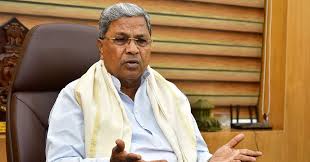
Karnataka Chief Minister Siddaramaiah on Saturday criticised the Viksit Bharat Guarantee Rojgar Ajeevika Mission (Rural) Act (VB-G RAM G), which has replaced the MGNREGA scheme. He said Mahatma Gandhi was first killed by Godse, and that abolishing MGNREGA amounts to killing Gandhi a second time. Speaking at an event in Bengaluru, Siddaramaiah said MGNREGA was meant to support poor people and small farmers. He accused the Modi government of taking the decision without consulting states, calling it a sign of a dictatorial approach. He also alleged that the BJP and the RSS oppose women and Dalits, and said scrapping MGNREGA benefits corporate interests while harming rural livelihoods. He demanded that the VB-G RAM G law be withdrawn and MGNREGA restored. The VB-G RAM G Bill was passed by both the Lok Sabha and the Rajya Sabha during the winter session of Parliament and became law on December 21 after receiving the President’s approval. Siddaramaiah said MGNREGA strengthened the economy Across India, about 12.17 crore workers are registered under the scheme, including 6.21 crore women, who make up around 53.6 per cent of the workforce. Around 17 per cent are Scheduled Caste, and 11 per cent are Scheduled Tribe workers. In Karnataka, there are 71.18 lakh active MGNREGA workers, including 36.75 lakh women, accounting for over 51 per cent. He said the scheme helped people live with dignity and boosted the rural economy by linking farm work with guaranteed employment. Highlighting key concerns Siddaramaiah said the law was rushed through Parliament, introduced on December 17 and passed the next day without debate or consultation with the states. He said it removes statutory powers from Gram Sabhas and Gram Panchayats. He also said the Centre earlier paid 100 per cent of wages, but will now pay only 60 per cent, leaving states to cover the remaining 40 per cent. He called this unconstitutional and said local bodies’ rights have been taken away. Attack on MGNREGA is an attack on the rights of crores of laborers says Kharge Congress president Mallikarjun Kharge said the party has launched a nationwide ‘MGNREGA Bachao’ campaign. He said attacking the scheme is an attack on the rights of crores of workers and their constitutional protections, and demanded that the law be withdrawn and MGNREGA restored. Courtesy : Bhaskar English Note: This news is originally published on https:/bhaskarenglish.com/bha and is used purely for non-profit/non-commercial purposes, especially human rights
Jaipal Singh Munda: The great hero of the tribal community, who was proud of being a tribal
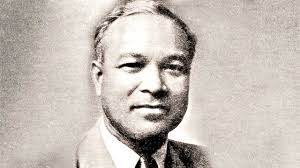
Jaipal Singh Munda was a man of many talents. Along with higher education in England, he also developed an interest in hockey. In the 1928 Amsterdam Olympic Games, he captained the British Indian hockey team. Under his captaincy, the team won the gold medal. In the same year, 1928, he passed the Indian Civil Service examination, becoming the first Indian tribal to do so. He was also quite successful in politics. He formed the Jharkhand Party, which in its very first election saw 4 MPs and 32 MLAs elected in Bihar. The stature that Babasaheb Dr. Ambedkar holds in the Dalit community, if accepted with an open mind instead of controversy, is the same stature that Jaipal Singh Munda holds in the tribal community. Just as Babasaheb Dr. Ambedkar studied at the world’s best universities and came forward to fight for the rights of the underprivileged, Jaipal Singh Munda’s life is more or less a similar example. A major contribution to the facilities that the tribal community enjoys in the country today is due to the tribal leader Jaipal Singh Munda. This is why the grateful tribals respectfully bestow upon him the title of ‘Marang Gomke’. Jaipal Singh Munda was born on January 3, 1903, in Takra Pahantoli, Khunti district, about 18 kilometers south of Ranchi, the capital of Jharkhand (formerly Bihar before 2000). His father’s name was Amru Pahan and his mother’s name was Radhamani. However, Jaipal Singh Munda’s initial name was Pramod Pahan. Jaipal Singh himself wrote in his autobiography: “I don’t know who changed my name and when. It was January 3, 1911, the day my name must have been changed. I must have been 8-10 years old then. My family members called me Pramod, and that was my name until January 3rd. But, on January 3, 1911, when I, holding my father Amru Pahan’s finger, hesitantly arrived at St. Paul’s School in Ranchi, not only was my date of birth changed, but my name was changed as well.” He received his early education at this same St. Paul’s School in Ranchi. The principal there had a special affection for Jaipal Munda. The reason was his sharp intellect. This is why the principal sent Jaipal Munda to England for further education. There he graduated from St. John’s College, Oxford, and also earned an M.A. in Economics. He also became a gold medalist in Economics. Jaipal Singh Munda was a man of many talents. Along with higher education in England, he also developed an interest in hockey. He achieved great success in it. In the 1928 Amsterdam Olympic Games, he captained the British Indian hockey team. Under his captaincy, the team won the gold medal. In 1928, he also passed the Indian Civil Service examination, becoming the first Indian tribal to do so. But during this time, he had to go to the Olympics, due to which he could not complete his training and had to leave the Indian Civil Service midway. In 1934, he served as the principal of a college in Gold Coast (Africa), now Ghana. In 1936, he was also the Foreign Minister of the Bikaner princely state. After that, in 1937, he was the principal of Ramkumar College, Raipur. During this time, he began to think about uplifting his tribal community from backwardness. Amidst all the turmoil, a major change came into his life, and leaving everything behind, he dedicated his life to the upliftment of the tribal community. For this purpose, in 1938, he formed the Adivasi Mahasabha in Bihar (Jharkhand had not yet been created). Its main objective was to integrate the tribal communities into the mainstream. To achieve this, Jaipal Singh Munda first raised the demand for a separate state before the British government, requesting the creation of a Jharkhand state by combining parts of Bihar, Bengal, and the Central Provinces. He continuously struggled for this demand. He believed that creating a separate state for the tribal community would quickly improve their lives. In the 1946 elections to the Constituent Assembly, Jaipal Singh Munda was also elected as a member. What Dr. Ambedkar did for the Dalits by securing their rights in the Constitution, Jaipal Singh Munda did for the tribals. In his very first speech as a member of the Constituent Assembly, he clearly stated: “I stand here to speak on behalf of millions of people, who are the most important people, who are the unsung fighters for freedom, who are the original inhabitants of India, and who are called Backward Tribes, Primitive Tribes, Criminal Tribes, and what not. But I am proud of being a tribal.” He repeatedly opposed the use of the term “Scheduled Tribes” by the Constitution Committee. He wanted the word “Adivasi” to be used in the Constitution. Keeping the interests of the tribals in mind, Dr. Ambedkar included the Fifth Schedule in the Constitution of India, which included the rights and privileges of the tribals. Thus, through the joint efforts of Dr. Ambedkar and Jaipal Singh Munda, 7.5 percent of the seats in the Lok Sabha and State Assemblies were reserved for tribals, along with reservations in education and jobs. In this way, the tribals received special rights in the Constitution. Jaipal Singh Munda founded the Adivasi Labour Federation in 1948. However, to secure political participation for the tribal people, he transformed the All India Adivasi Sabha into the ‘Jharkhand Party’ on January 1, 1950. The Jharkhand Party achieved great success in its very first election, creating a sensation. Four MPs and 32 MLAs were elected from Bihar on the Jharkhand Party ticket. A similar performance was seen in the 1957 elections, where 34 MLAs and 5 MPs were elected. However, there was a decline in the 1962 elections, with only 22 MLAs and 5 MPs elected. After the elections, there was turmoil within the party, which led Jaipal Munda to merge it with the Congress Party in 1963, on the condition that the Congress Party would create a separate Jharkhand state after the
BJP govt insulted Dalits by not installing portrait of Savitribai Phule on her birth anniversary, says Saurabh Bharadwaj

The Aam Aadmi Party (AAP) on Friday called out the BJP-led Delhi government for insulting dalits by choosing to install portraits of Atal Bihari Vajpayee and Madan Mohan Malaviya in the Delhi assembly on the birth anniversary of Savitribai Phule, instead of honouring the pioneering social reformer herself, AAP said in a press release. AAP Delhi unit chief Saurabh Bharadwaj and Kondli MLA Kuldeep Kumar emphasised that the government not only failed to acknowledge a dalit icon who laid the foundation of women’s education in India, but also went a step further by initiating a privilege breach case against MLAs who raised the demand, calling it a clear reflection of the BJP’s anti-dalit mindset. During a press conference, AAP Delhi state president Saurabh Bhaadwaj stated, “It is a very strange thing that on the birth anniversary of Mata Savitribai Phule, portraits of Pandit Atal Bihari Vajpayee and Pandit Madan Mohan Malaviya are being installed. If even a Dalit icon’s portrait had been installed today, we could have struck a blow against the stigma of casteism that has existed for thousands of years. But the Delhi government missed this opportunity and instead installed portraits of two Brahmins. When it comes to installing the portrait of a Dalit icon, they face so much discomfort that they initiated a privilege breach case against MLAs, some of whom are Dalits and from the AAP.” Meanwhile, AAP MLA Kuldeep Kumar said, “A few days ago, a meeting was held in which we placed a proposal before the Assembly committee. Our MLAs said that Mata Savitribai Phule, whose birth anniversary is today, who opened the first school for women in this country, who faced immense atrocities yet never stopped educating women, should have her portrait installed inside the Delhi Assembly. I say this with great sadness that to suppress our voice, they initiated a privilege breach motion against our members, including against me personally, but they did not install Mata Savitribai Phule’s portrait there. Because she spoke about educating women. Because she came from the Dalit community and the backward community, her portrait was not installed.” Pointing to contrasting decisions, Kuldeep Kumar added, “Inside the Assembly, the entire government, along with the central government spent lakhs of rupees to install portraits of Atal Bihari Vajpayee and Madan Mohan Malaviya. We have no objection to that. But we say this clearly that if you insult Dalit heroes and show hatred towards them, then we will not tolerate a BJP that insults Mata Savitribai Phule and refuses to install her portrait on her birth anniversary while installing portraits of Atal Bihari Vajpayee and Madan Mohan Malaviya. This is their anti-Dalit mentality.” Courtesy : TOI Note: This news is originally published on https:/timesofindia.com/bha and is used purely for non-profit/non-commercial purposes, especially human rights
Rights groups seek action after death of 19-year-old Dalit student in Himachal Pradesh college

Dalit rights organisations on Friday demanded the arrest of three senior students and a college professor, and accountability from authorities, following the death of a 19-year-old Dalit female student who they allege was subjected to sustained ragging, sexual harassment and psychological abuse at a government college in Himachal Pradesh. Dalit Adivasi Shakti Adhikar Manch (DASAM) and its women’s collective, Mahila Kaamkaji Manch (MKM), said the student of Government Degree College, Dharamshala, died after enduring months of harassment that was ignored by the college administration and state authorities. In a statement issued on Friday, the groups described the case as a “grave instance of caste- and gender-based institutional violence” and said her suffering was overlooked until it culminated in her death. According to a complaint filed by the girl’s father and a first information report (FIR) registered by police, the girl, who belonged to a Scheduled Caste community, was allegedly subjected to ragging, intimidation, humiliation and physical assault on campus. The FIR names three senior students — Harshita, Aakriti and Komolika — for their alleged role in the abuse. The complaint also names Professor Ashok Kumar, a faculty member at the college, accusing him of sexually inappropriate behaviour and harassment. The allegations include abuse of academic authority and conduct of a sexual nature, the organisations said. DASAM said the alleged actions attract provisions of the Scheduled Castes and Scheduled Tribes (Prevention of Atrocities) Act, 1989, including sections relating to caste-based insult, intimidation and sexual harassment of Dalit women. The FIR also includes offences under the Bharatiya Nyaya Sanhita, such as sexual harassment, causing hurt and criminal intimidation, which the groups say must be read alongside provisions of the SC/ST Act that mandate enhanced punishment for crimes committed with knowledge of a victim’s caste identity. The organisations said the girl had been hospitalised repeatedly and showed signs of severe psychological distress before her death, pointing to what they described as a complete failure of the institution to provide counselling or protection. They said this amounted to a violation of the Mental Healthcare Act, 2017, and of the constitutional right to life with dignity. Holding the college administration responsible, DASAM said provisions of the SC/ST Act that penalise neglect of duty by public servants should be invoked against officials who failed to act on complaints or warning signs. The group also said the girl’s family was entitled to protection, relief and compensation under the law. The alleged ragging also falls under the Himachal Pradesh Educational Institutions (Prohibition of Ragging) Act, 2009, while the accusations against the professor invoke the Sexual Harassment of Women at Workplace (Prevention, Prohibition and Redressal) Act, 2013, the statement said. The organisations demanded the immediate arrest of all accused, noting that anticipatory bail is barred under the SC/ST Act. They also called for the resignation of the college principal and the state’s education minister, the termination of the accused professor, and the expulsion of the three students. In addition, they sought independent inquiries by the National Human Rights Commission and the National Commission for Women, a time-bound judicial probe into institutional responsibility, and compensation and rehabilitation for the girl’s family. Incidents of violence against Dalit women in educational institutions deter others from pursuing higher education and deepen social exclusion, the groups said, calling the case a systemic failure rather than an isolated tragedy. Maktoob Staff Courtesy : Maktoob Media Note: This news is originally published on https:/maktoobmedia.com/bha and is used purely for non-profit/non-commercial purposes, especially human rights
Dalit teenager sexually assaulted in Kannauj after Muslim man hides his identity: Exploited for two years on the pretext of marriage, beaten for refusing religious conversion
In Kannauj, a Muslim youth befriended a minor Dalit girl by concealing his identity. He sexually exploited her for two years on the pretext of marriage. When she turned 18 and asked him to marry her, the youth revealed his Muslim identity and pressured her to convert. When she refused, the youth, along with his family, beat her with a belt. She was admitted to the hospital. The incident took place in a neighborhood of Chhibramau. A Dalit girl from a village in the Talgram police station area had come to live there two years ago to study and prepare for competitive exams. While going to and from college, a Muslim youth befriended her by hiding his identity. He then started pressuring her to meet him. Afterward, he sexually exploited the girl on the pretext of marriage. When the girl turned 18 and asked him to marry her, the youth revealed his true identity. He started pressuring the student to convert to Islam. When she refused, the youth called her to his house on a pretext and beat her with a belt while hurling casteist abuses. The girl’s condition deteriorated. Upon receiving the information, her family took her to the 100-bed hospital, where she was treated. Based on the complaint filed by the girl’s mother, the Chhibramau Kotwali police have registered a case against Aman Siddiqui, Rahees Siddiqui, Haseen, Vishal Siddiqui, Imran, and Muskan, all residents of Sarafan Mohalla. Vikas Awasthi | Kannauj Courtesy: Hindi News
Karnataka: Dalit woman stabbed to death in Yellapur, later accused found dead in forest; Hindu outfits call for bandh

KAWAR: A 30-year-old Dalit woman was stabbed to death on a public road in Yellapur town of Uttara Kannada district on Saturday, allegedly by a man known to her, police said. The accused, identified as Rafique Imamsab, was later found dead on Sunday. His body was discovered hanging from a tree in a forest near Yellapur, police said. The killing has led to tension in the town, with several Hindu organisations calling for a Yellapur bandh on Sunday. They described the murder as a case of “Love Jihad”. The woman has been identified as Ranjitha Bhanasode (30), a resident of Kalamma Nagar in Yellapur. The accused, Rafiq, also lived in the same locality. Police said the two had known each other since their school days.“Preliminary investigation suggests that the accused was pressuring the woman to marry him. After she refused, he allegedly attacked her with a knife in public,” a police officer said. The attack took place on Saturday afternoon when Ranjitha was returning home from work. Police said Ranjitha had married Sachin Katera from Solapur in Maharashtra around 12 years ago and had a 10-year-old son. She had been living separately and was staying with her family in Yellapur. She worked as a mid-day meal helper at a government school. According to police, the accused frequently visited her house for meals. The situation worsened when he began insisting on marriage, which Ranjitha and her family opposed. After the murder, local residents and Hindutva activists staged a protest outside the Yellapur police station, alleging delay in the arrest of the accused. They warned that protests would continue until action was taken. Meanwhile, Rafiq was found hanging from a tree in a nearby forest. “It’s a 100 per cent case of Love Jihad where single women, widows or divorcee are targeted,” Sri Ram Sena chief Pramod Muthalik said. BJP state president B Y Vijayendra is expected to meet Ranjitha’s family on Sunday. In view of the situation, police have deployed additional personnel and tightened security in and around Yellapur. Courtesy : TOI Note: This news is originally published on https:/timesofindia.com/bha and is used purely for non-profit/non-commercial purposes, especially human rights
Trans woman found killed in tent

Chennai: A 36-year-old transgender person was found murdered inside a makeshift tent off the Vanagaram service road on Saturday. The deceased, 36, a resident of Chettiyar Agaram near Maduravoyal was a sex worker and frequented the Vanagaram service road, police sources said. She was last seen on the service road on Friday night. Investigators suspect that some people took her to a nearby tin shed in the Indira Nagar area, where she was assaulted and killed. Her body was found lying in a pool of blood inside the makeshift structure on Saturday morning. Upon information from residents, Vanagaram police reached the spot and sent the body to Government Kilpauk Medical College and Hospital for postmortem. Police have registered a case and are combing CCTV footage from the service road and surrounding areas to identify the suspects. Further investigation is underway. TNN Courtesy : TOI Note: This news is originally published on https:/timesofindia.com/bha and is used purely for non-profit/non-commercial purposes, especially human rights